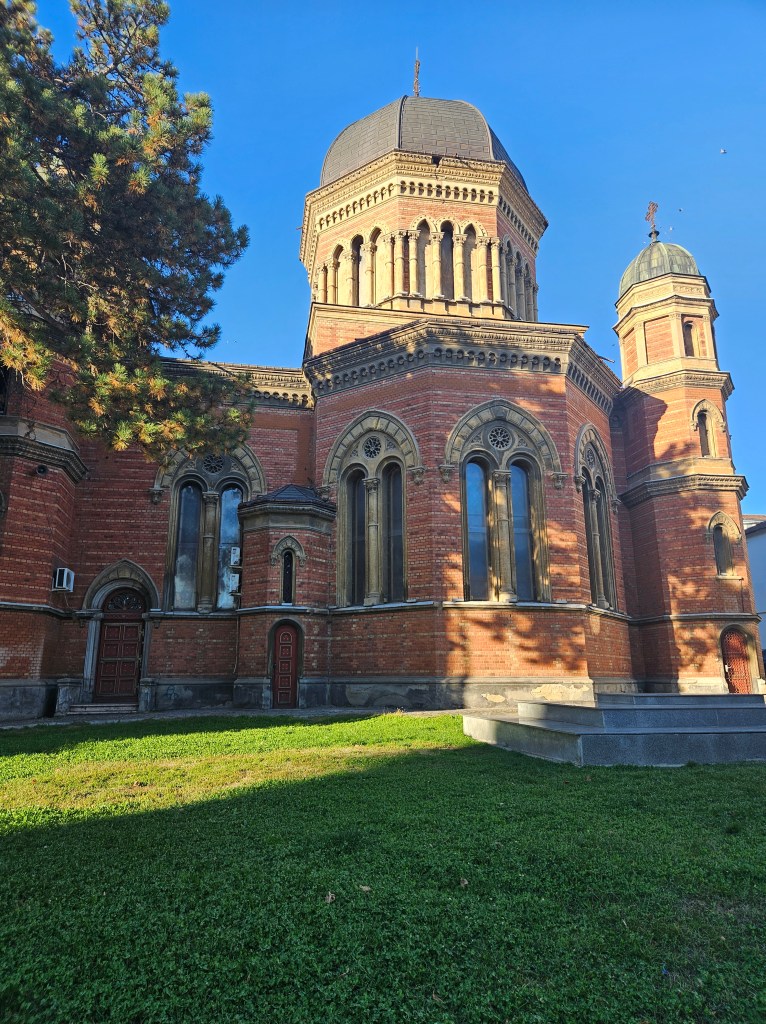
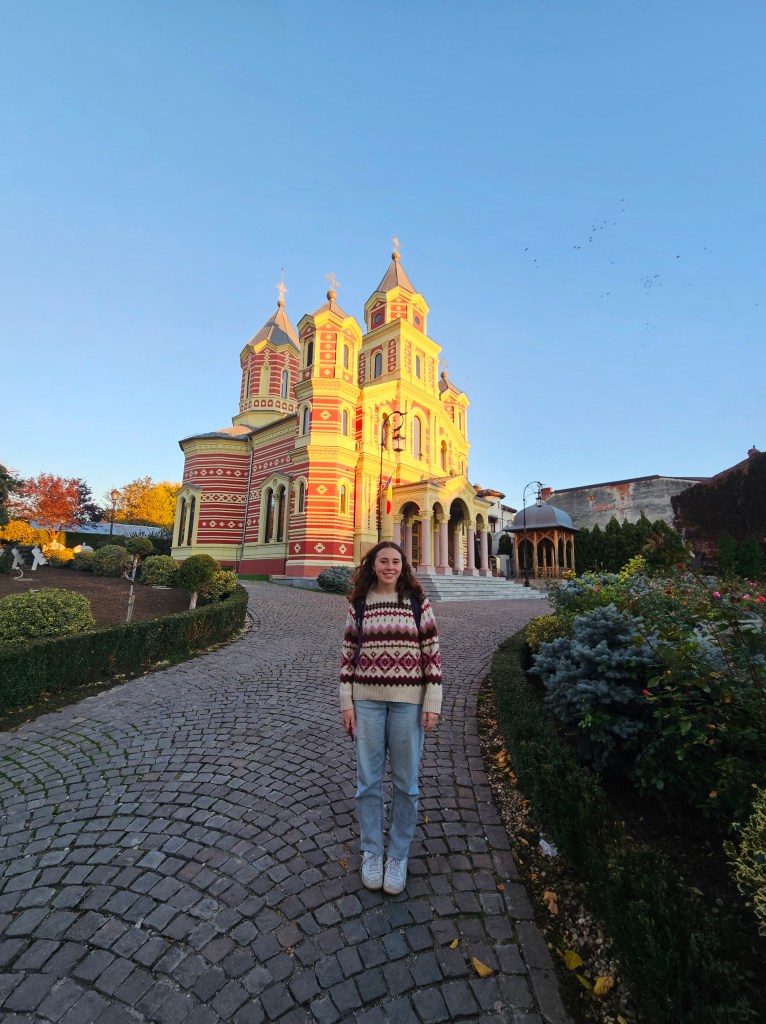
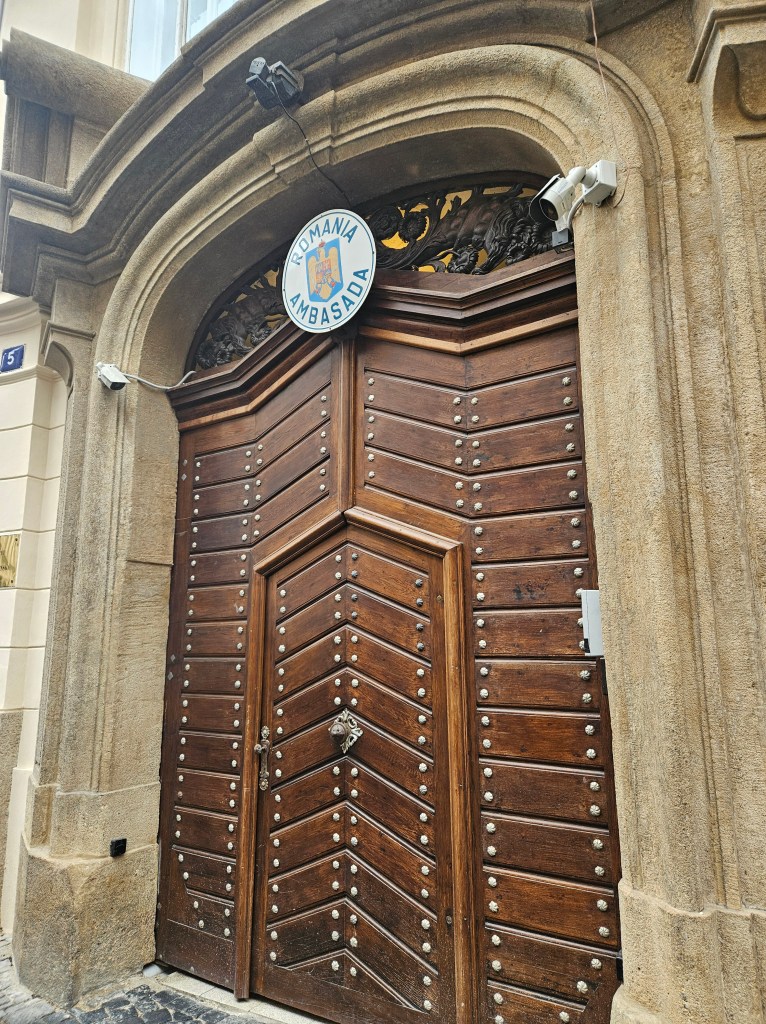
• On Saturday, we left Prague and flew Tarom Airlines to Bucharest. After landing and dealing with some very confusing directions, we rented a car and headed out for the two and a half hour drive to Craiova.

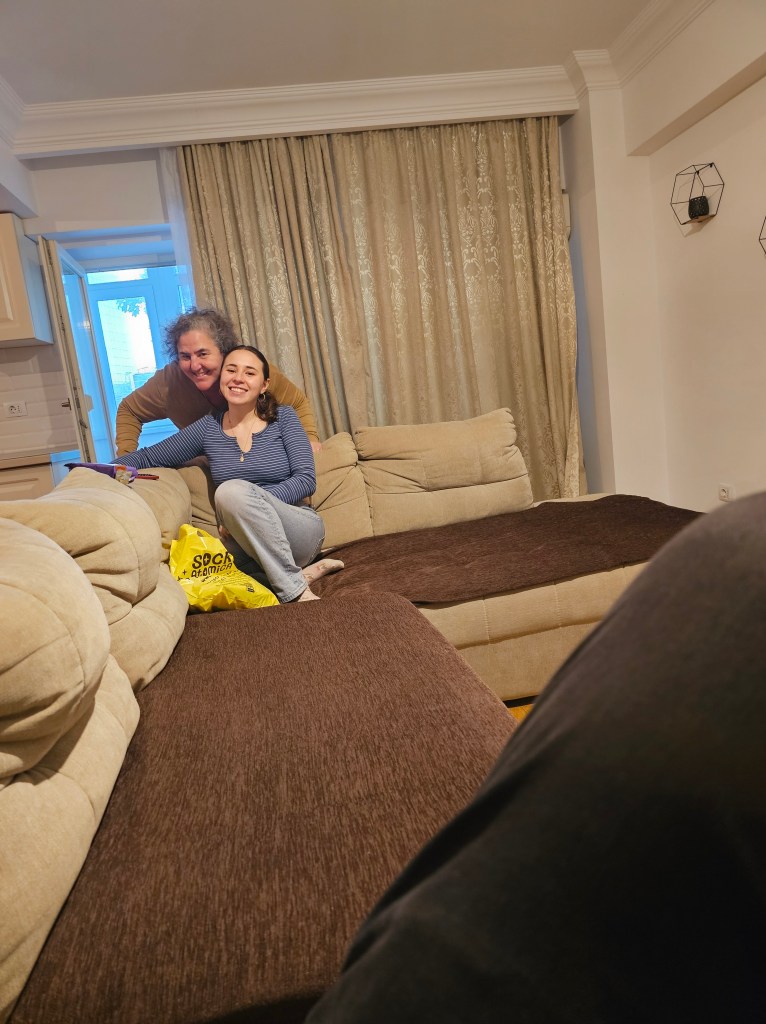
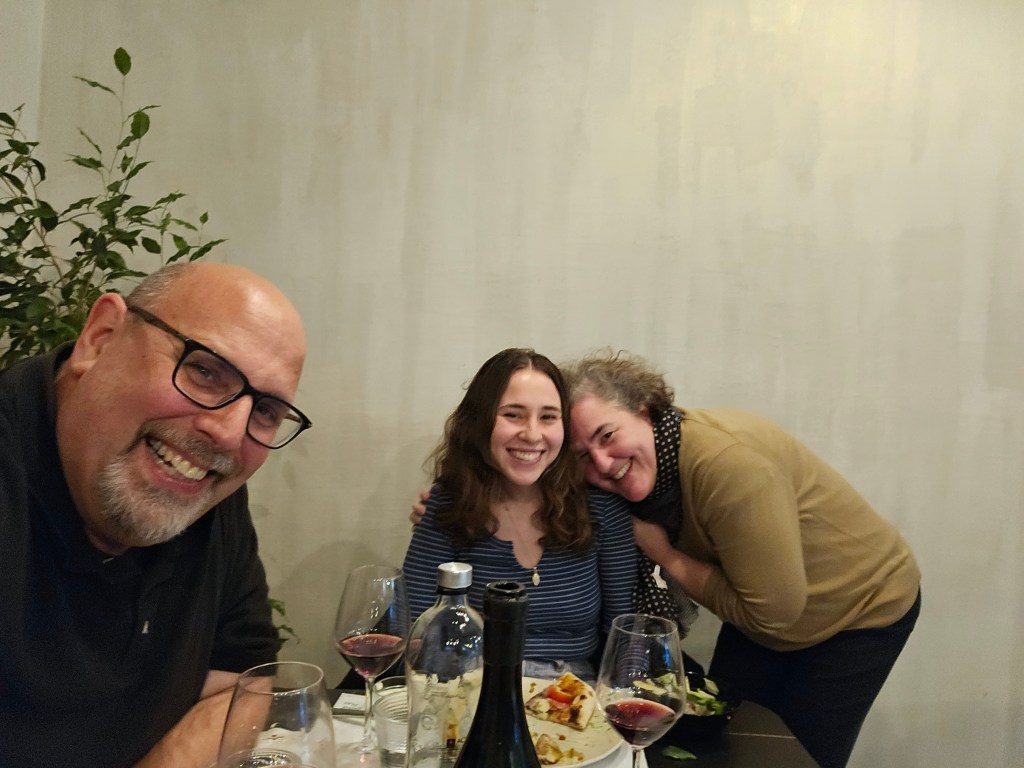
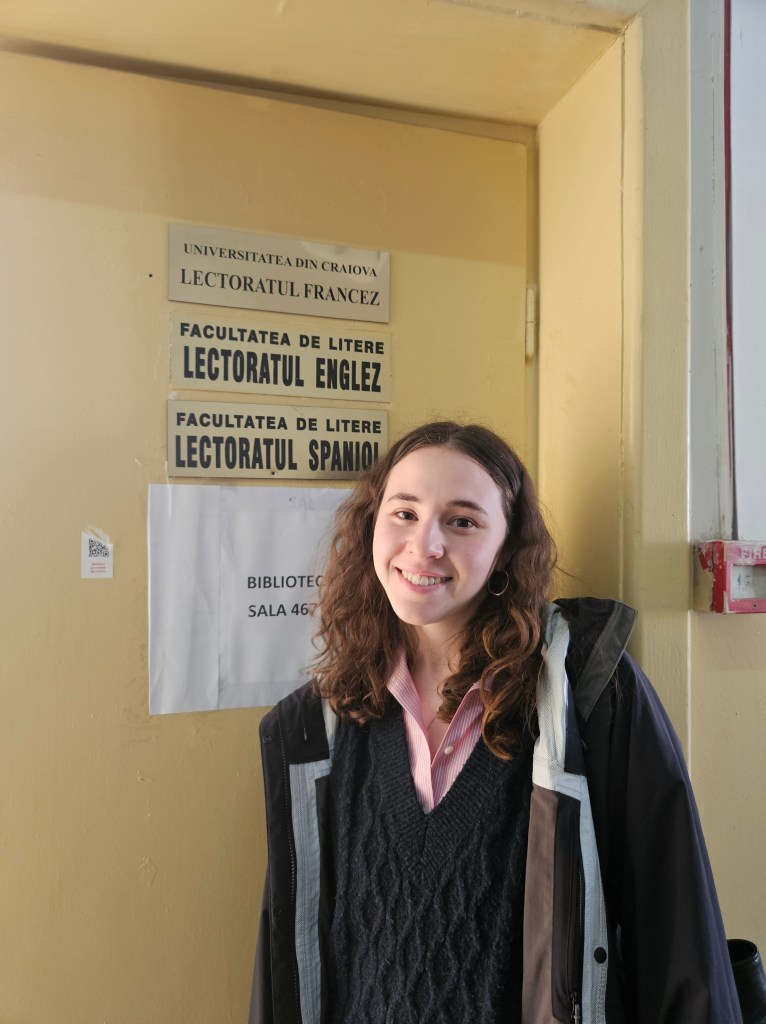
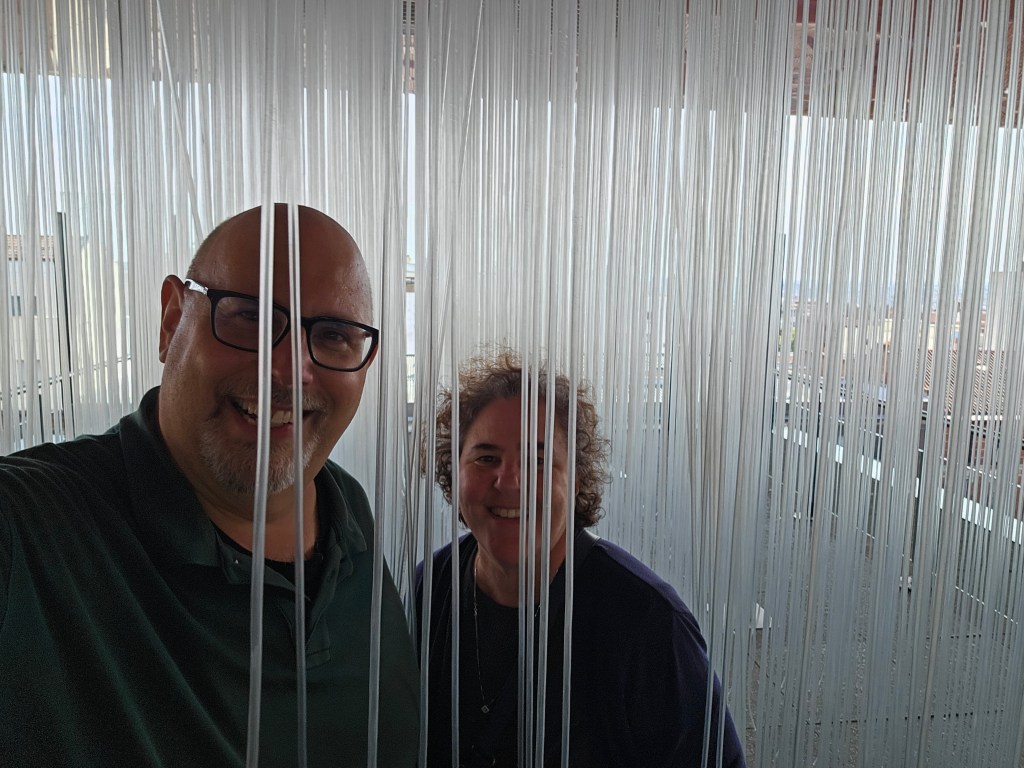
    After checking in to our Airbnb, we saw our girl!
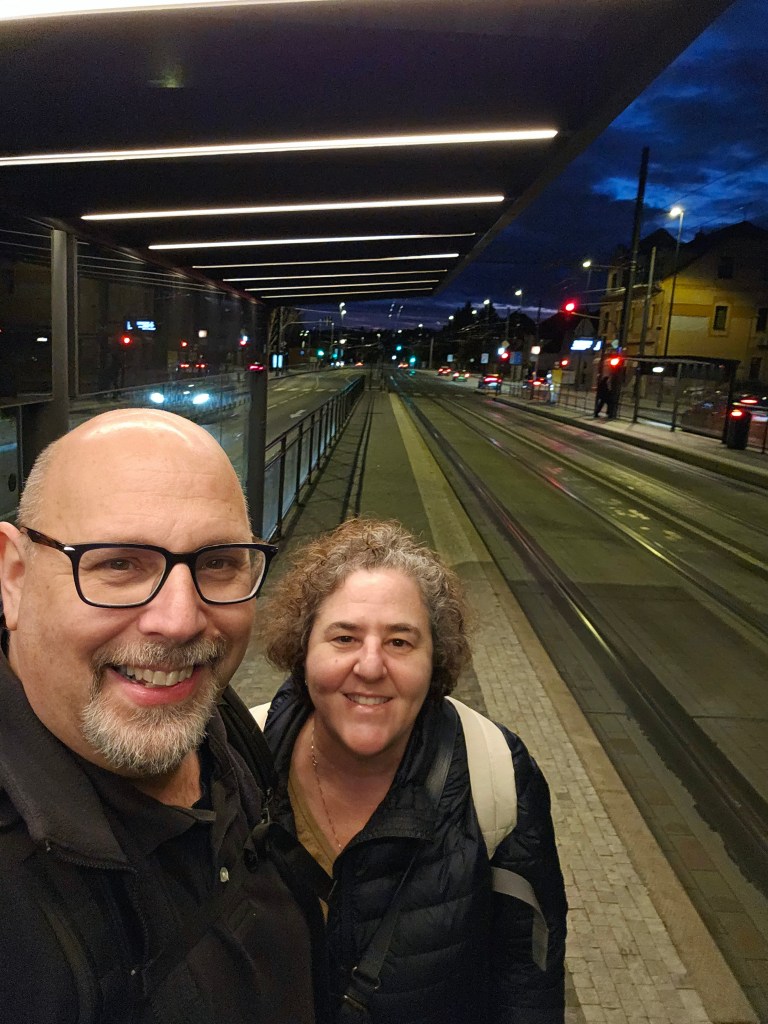
    We had dinner at a pizza place near our apartment. It was great to see her! Not to speak too much for Marina, but she is doing well. Her semester started out challenging (she has around 100 students!) but she is getting more comfortable with the lesson planning and leading classes. She is teaching four sections of conversational English and one of text analysis. She really likes the students and they are responsive to her creativity. She is taking an intensive Romanian class – that language is hard! Meeting people is a challenge and she is exploring more ways to do so.

    On Sunday, we all went to… the big mall! Marina hadn’t been there before and it was good to see stores where she’d be able to get some more winter clothes. Our destination was the giant Carrefour. We got groceries (including a big stock pot) and also a few things for stocking Marina’s apartment and making it more comfortable.

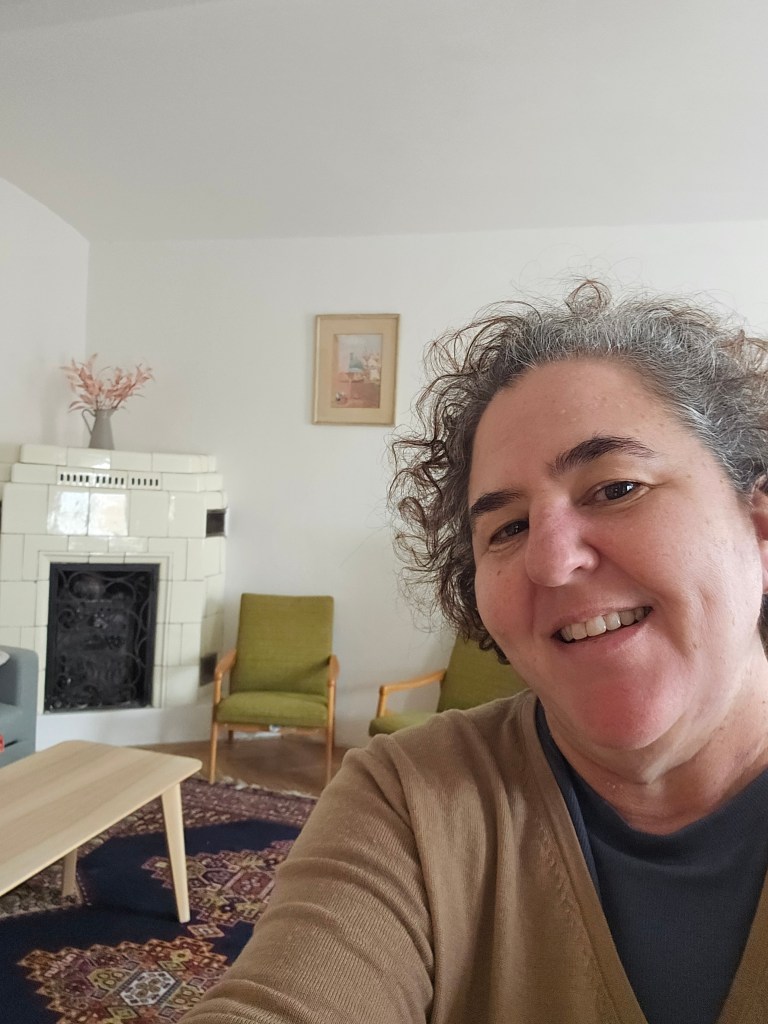
    Marina had found a great apartment (flashback – she signed the lease when we were on top of a waterfall in Iceland)! It is in a newish development (you can see another building going up in the background). It is safe, with a security guard at the entrance, and clean. She has a lovely terrace, and the apartment came comfortably, if not stylishly, finished. There is plenty of storage. And if there are more mirrors than she would actually chose to decorate, she can live with it!
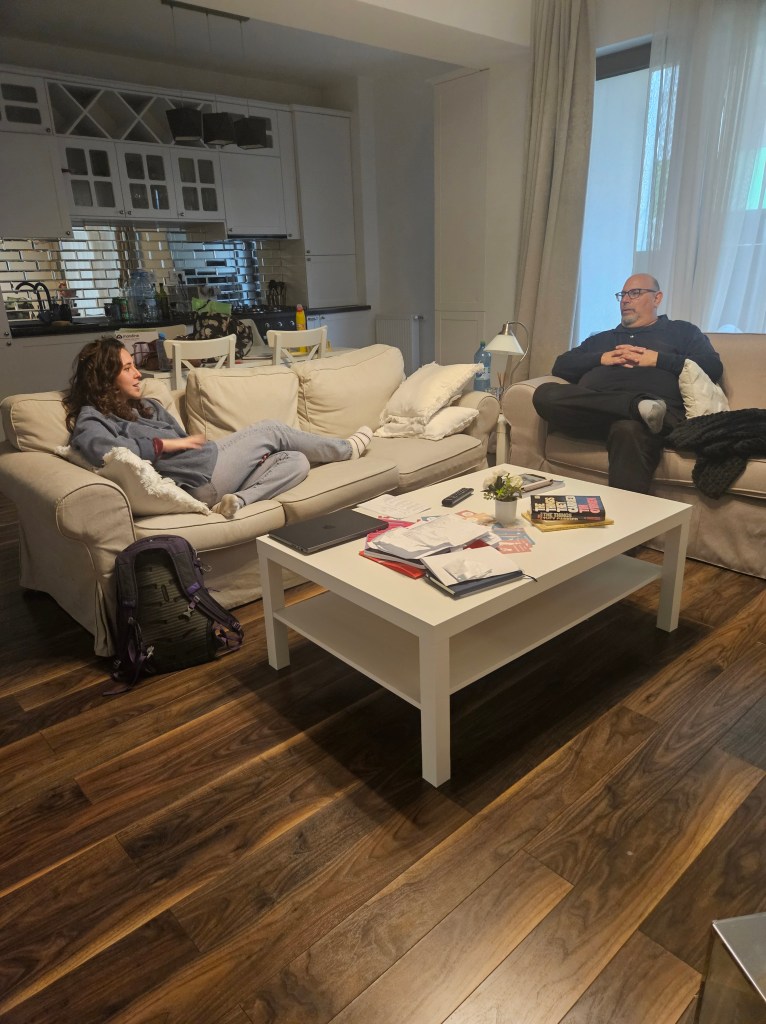
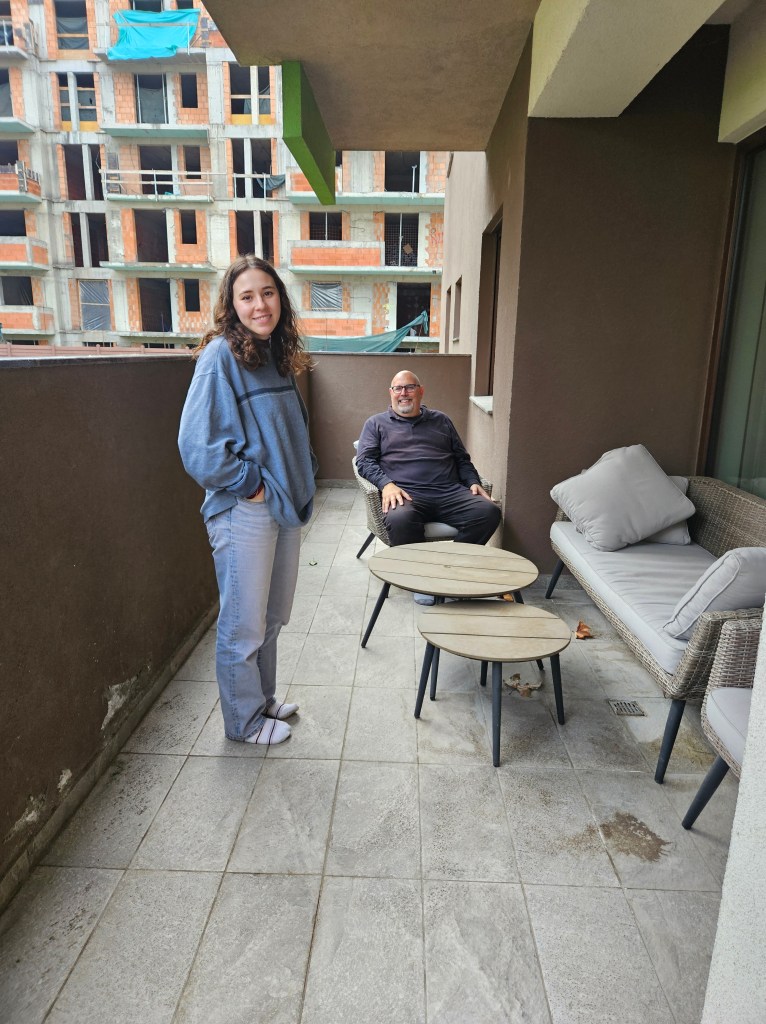
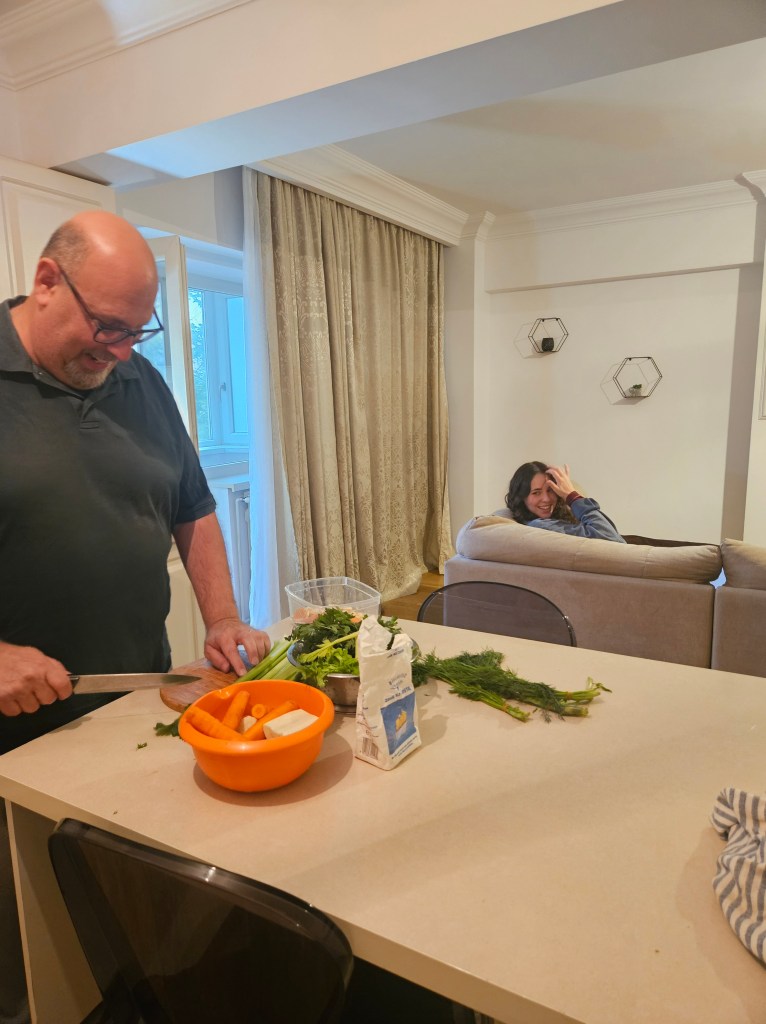
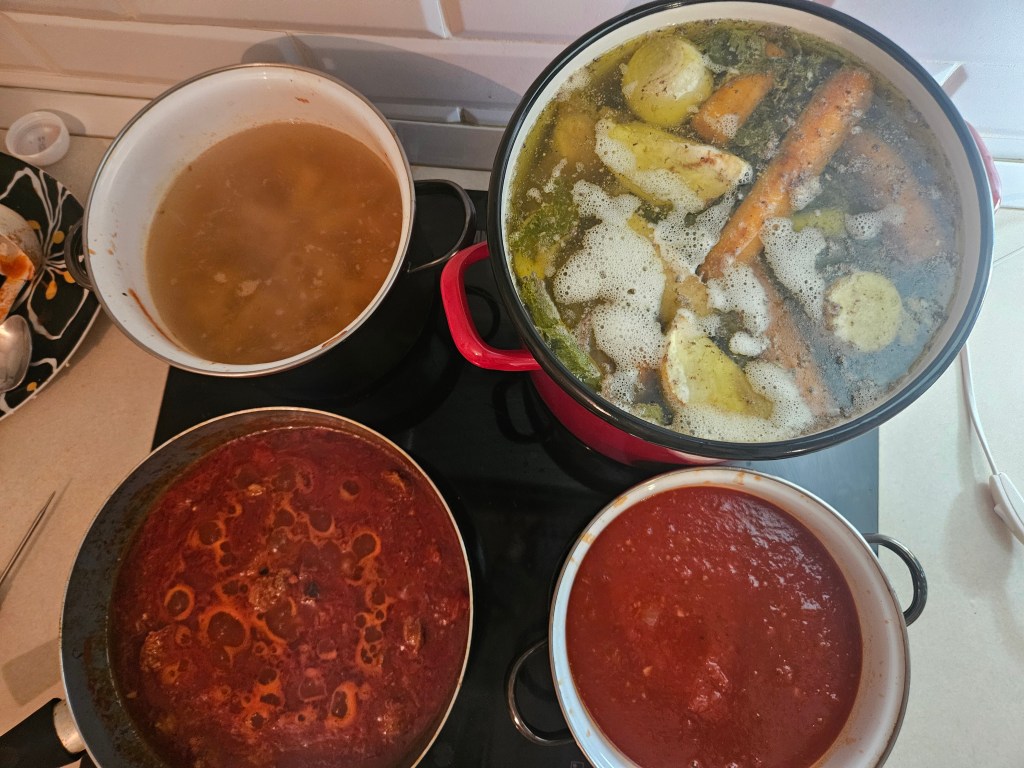
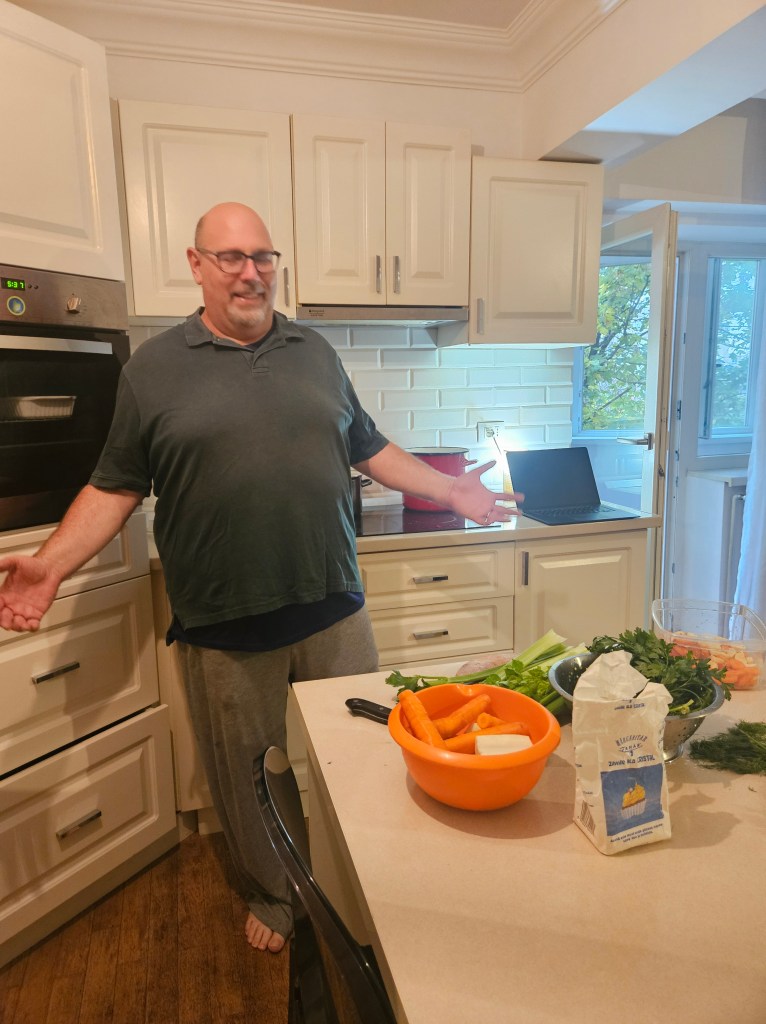
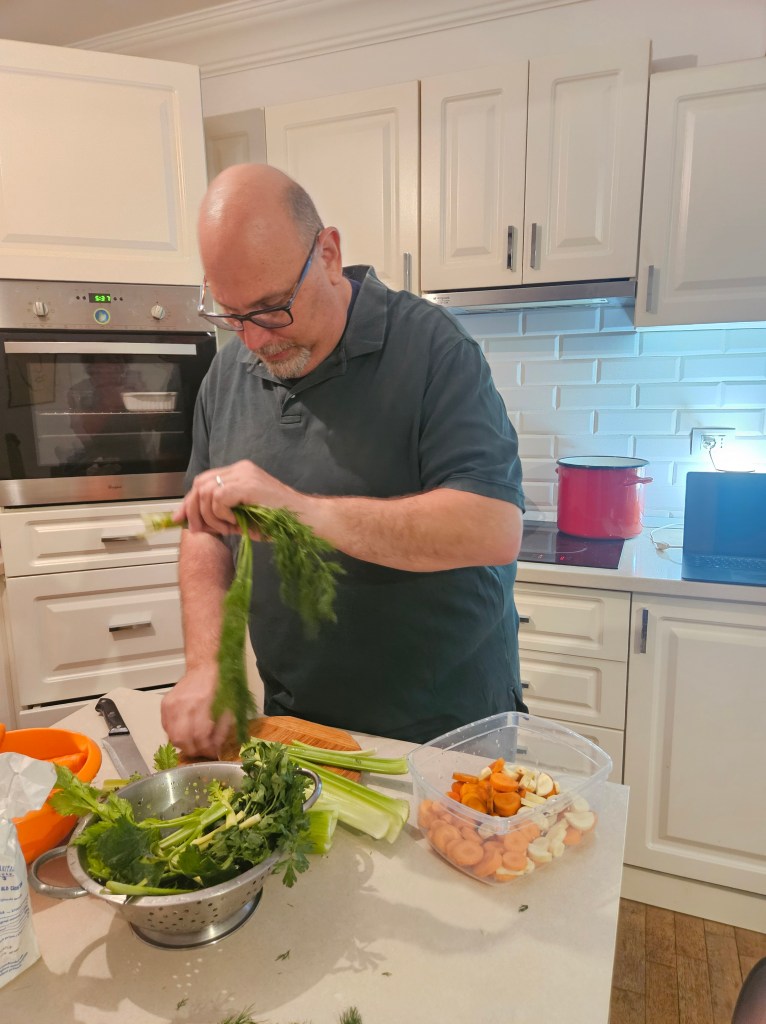
    We then headed back to our Airbnb. Our apartment wasn’t the best, but it was fine for hanging out and cooking, parking was fairly easy, and we could walk to most places, including Marina’s school and the old central part of town. Russell made Marina very happy by making a great pasta with red sauce and a giant pot of chicken soup! We even found alphabet noodles, which have disappeared from supermarkets in Central New York. The alphabets did not have diacritical marks.
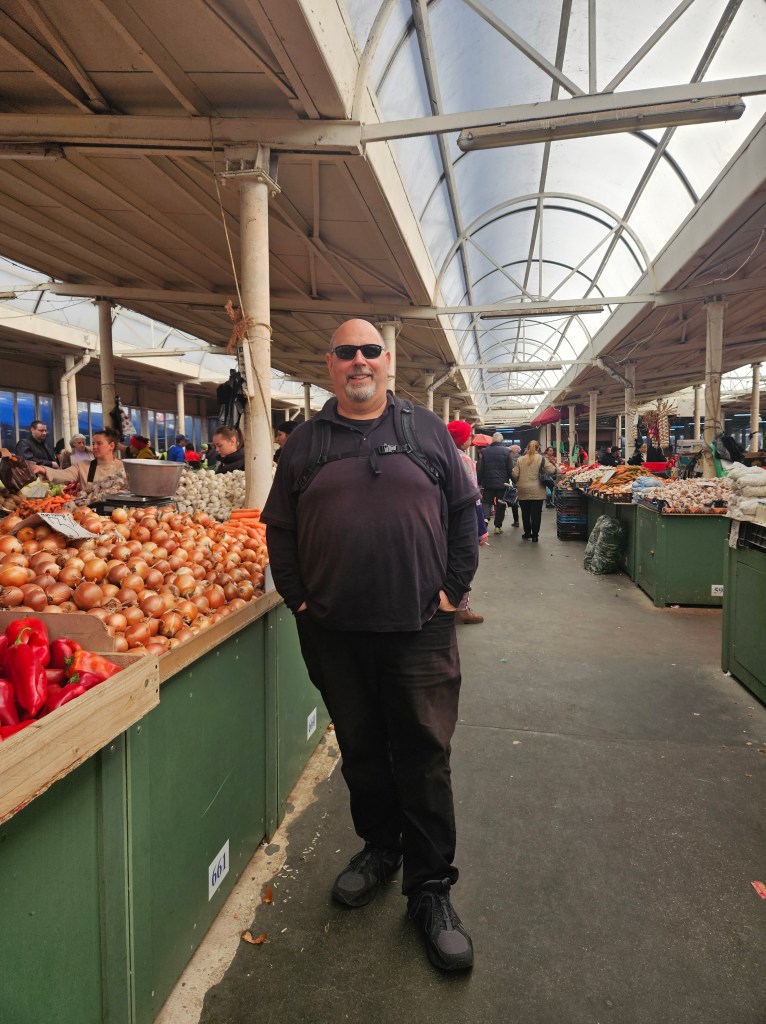
    On Monday, Marina was working and taking her Romanian class. Russell and Emily went to the nearby produce market.
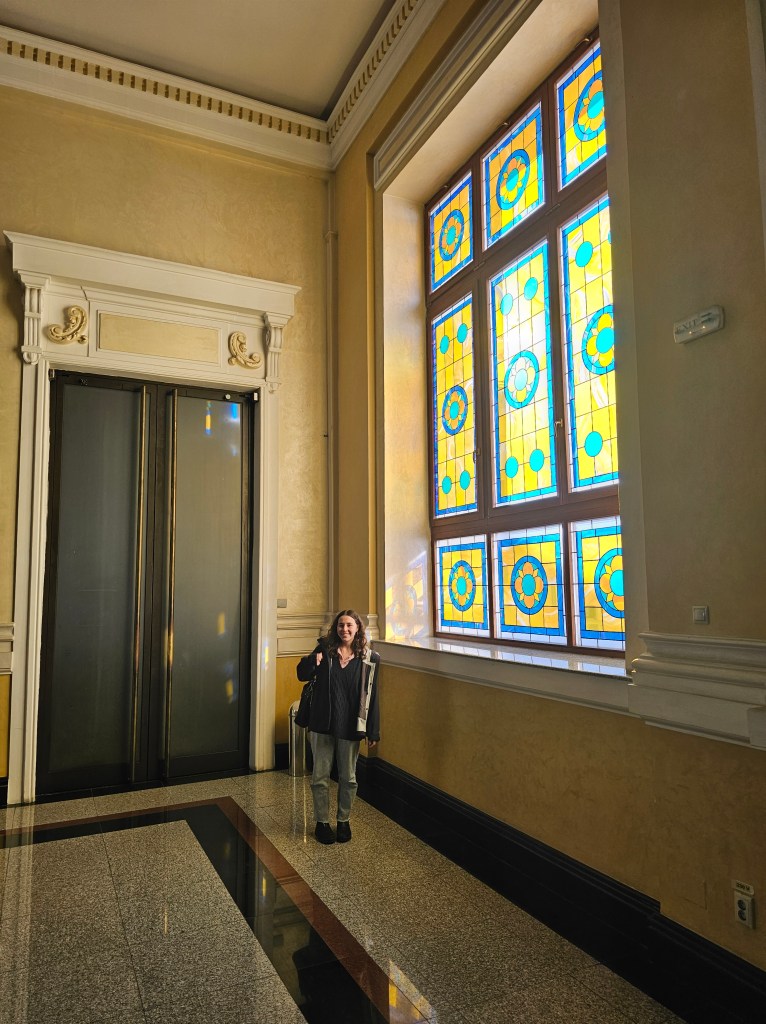
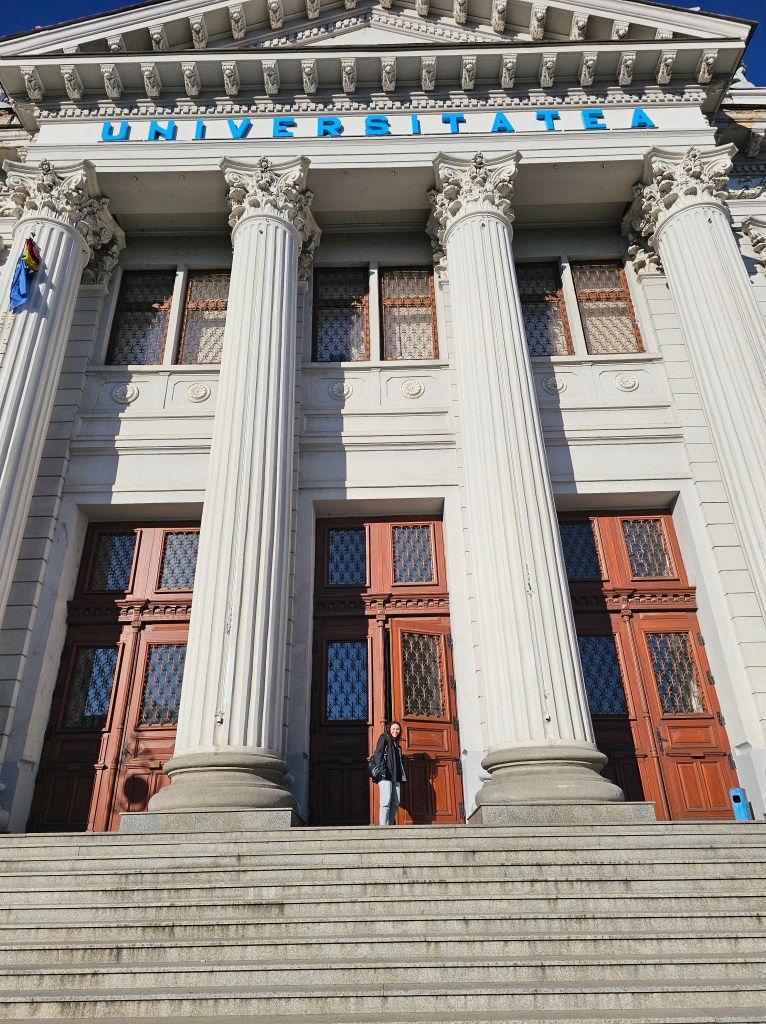
    In the midday, we went to the University of Craiova to meet Marina. She gave us a tour of the historic building. Resources are more limited than she was used to, coming from the US, but the faculty works well with what they have.
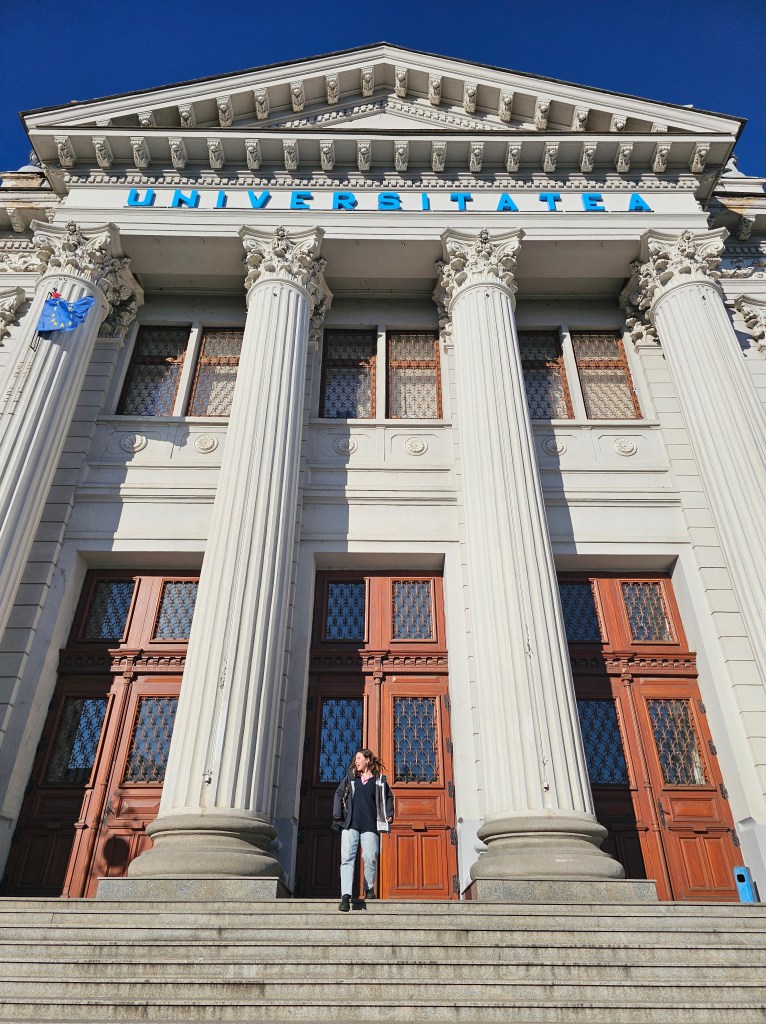
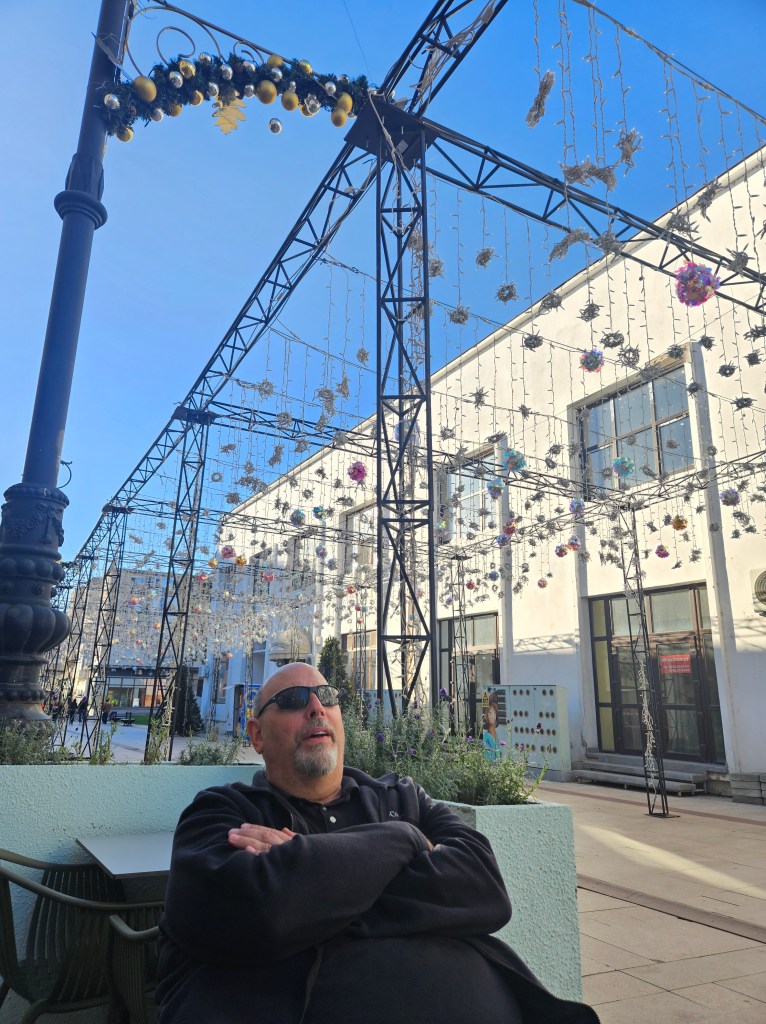
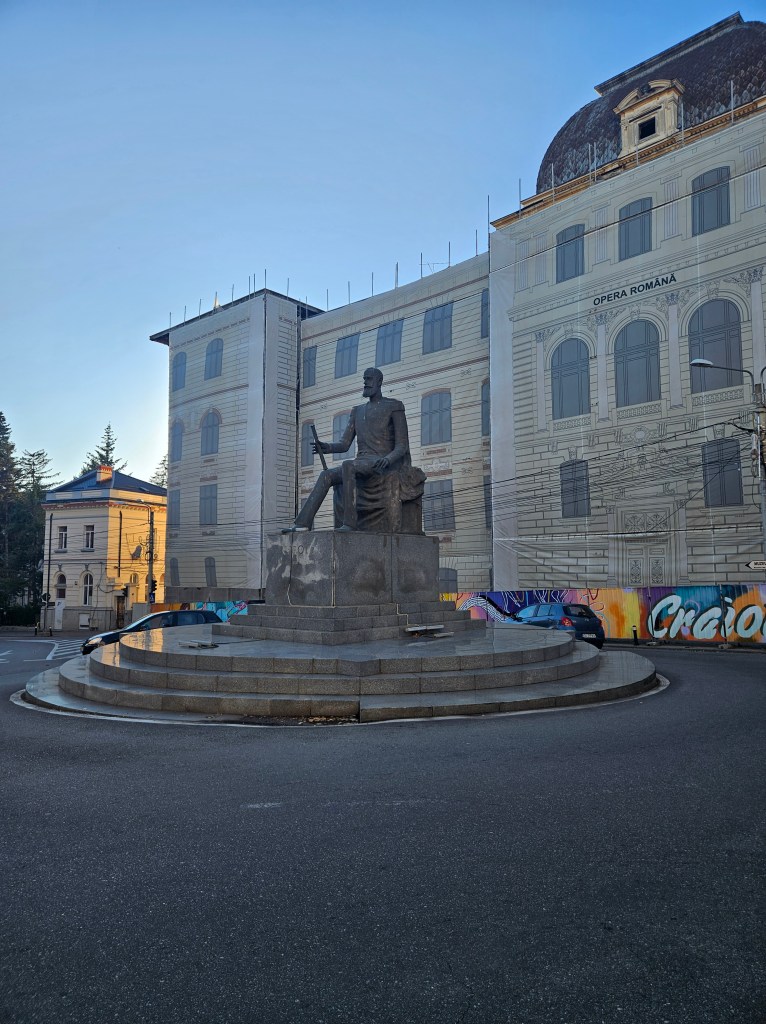
    We three wandered around the Craiova Old Town. Craiova is famous all over Central and Eastern Europe for its Christmas market, and they were in the process of setting it up.
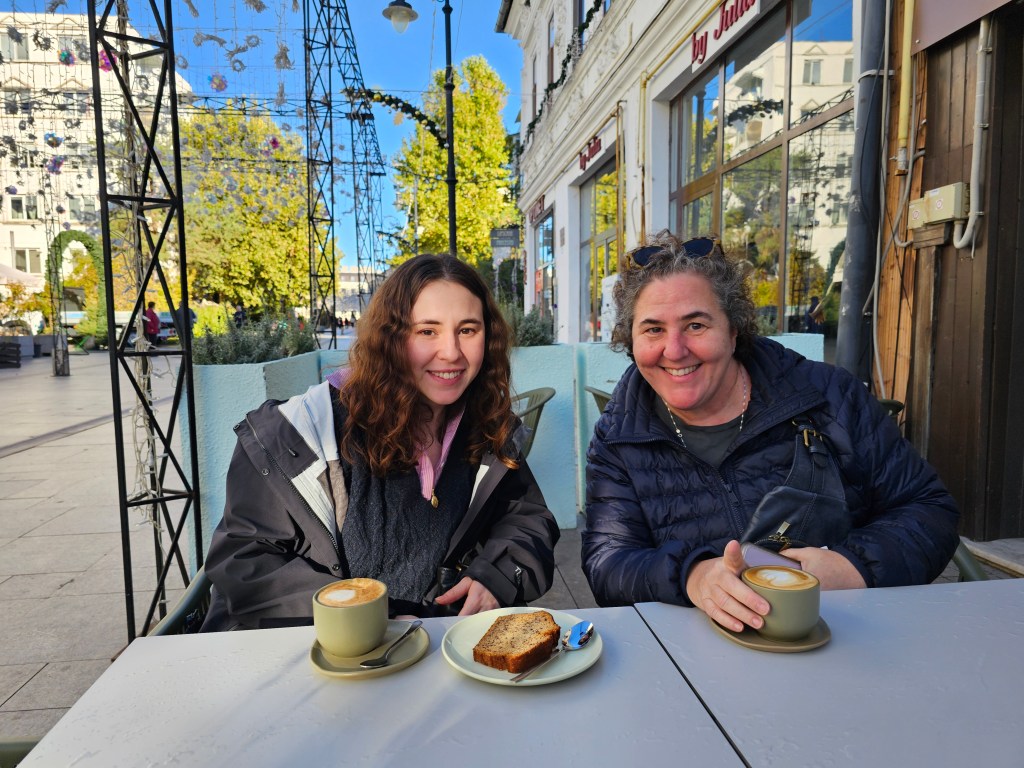
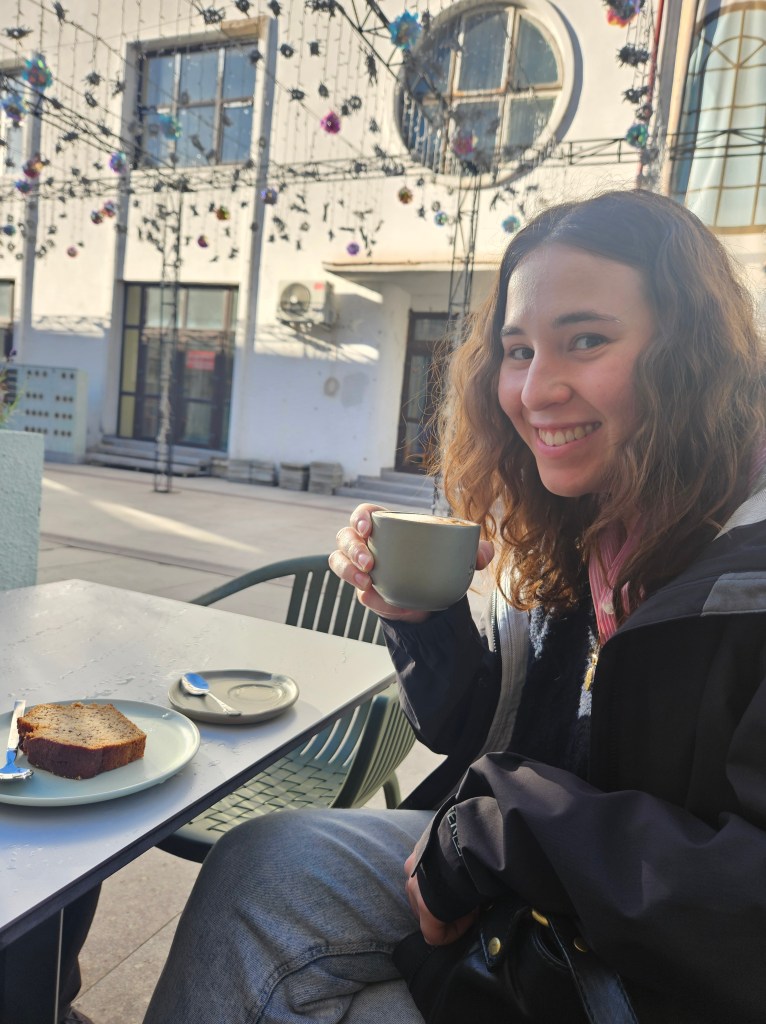
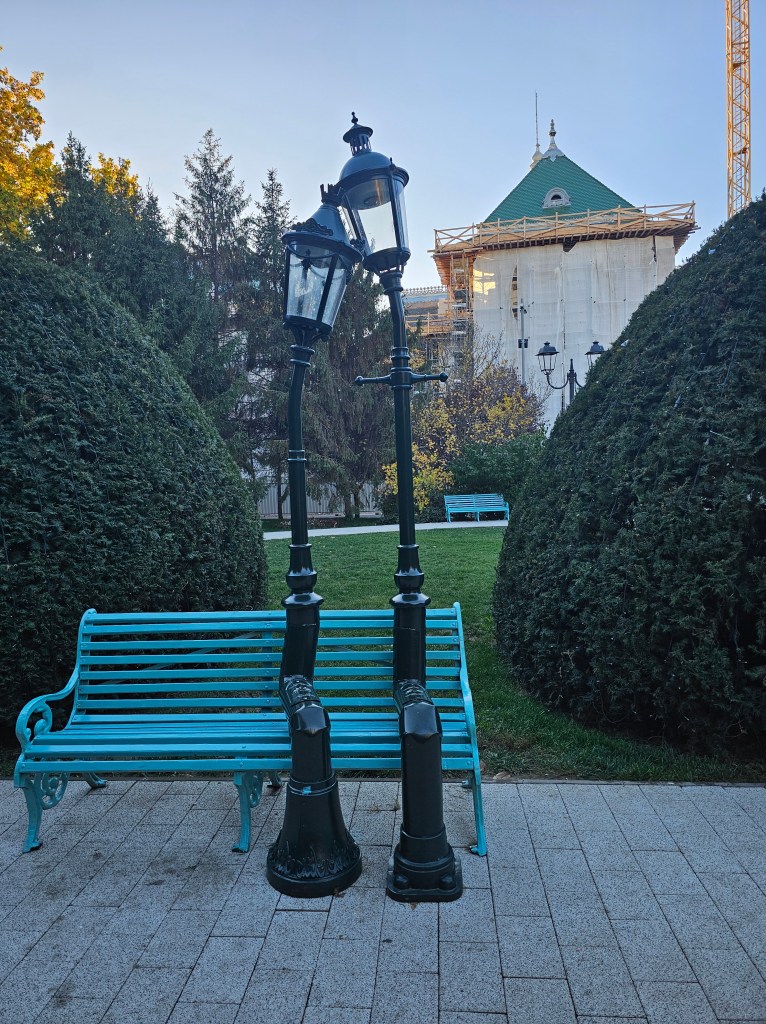
    Craiova has a lot of parks and gardens, and the green spaces make Marina happy. Outside of the Old Town, there are plenty of Soviet-style buildings, but the Old Town has classic European charm.
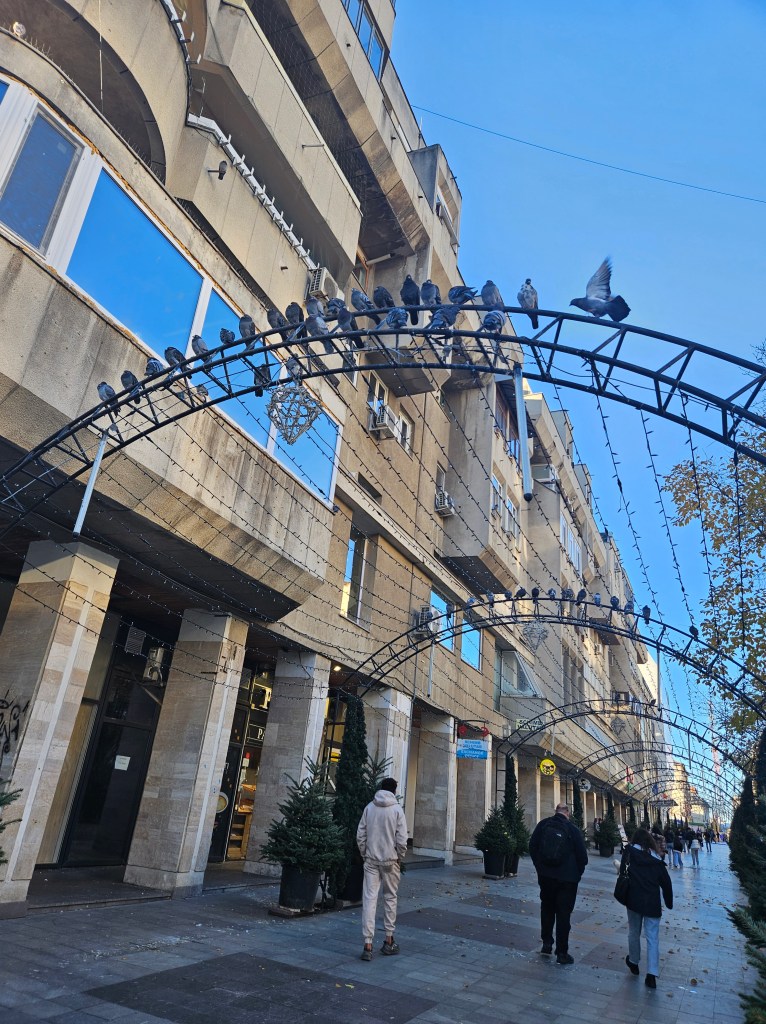
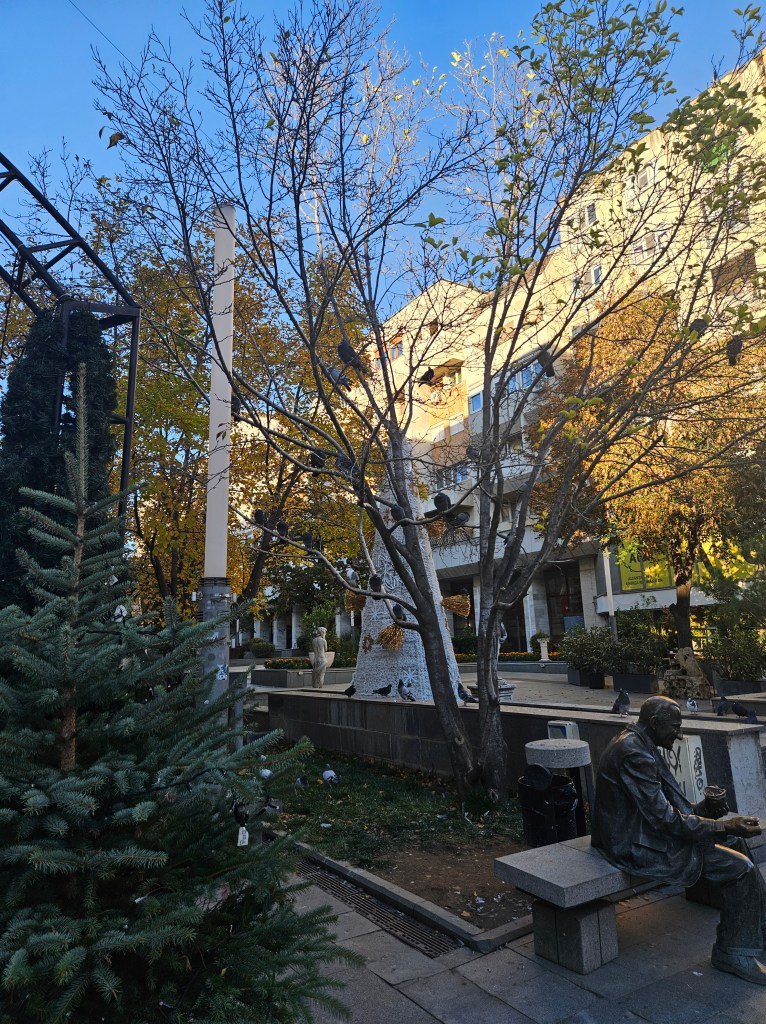
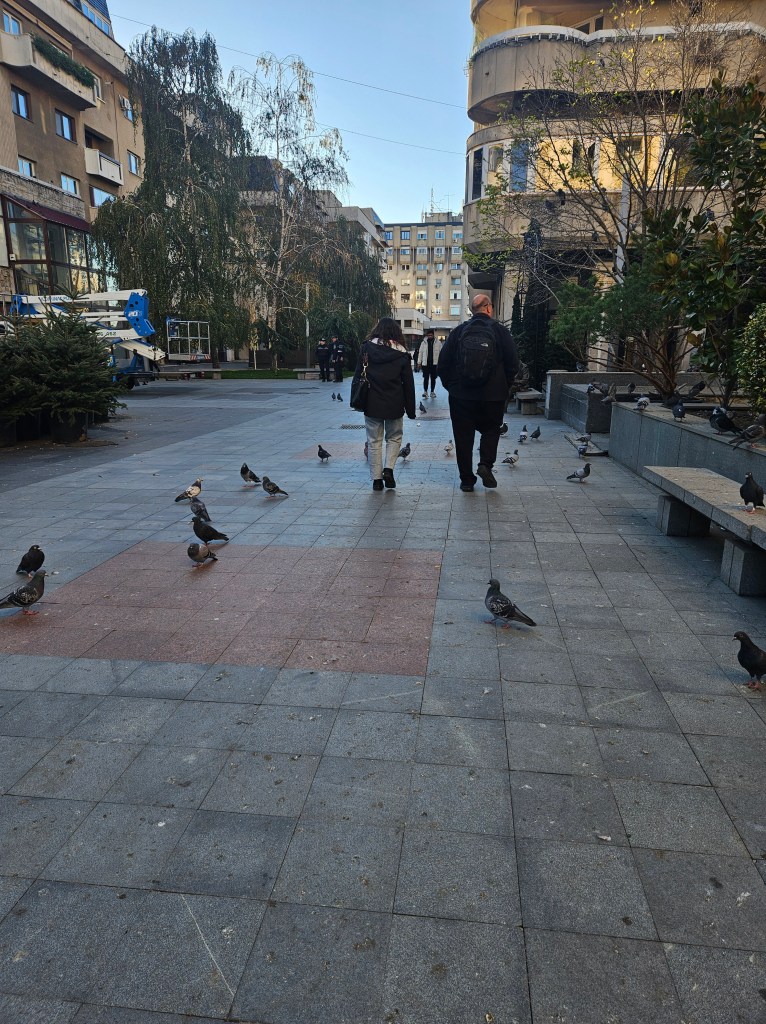
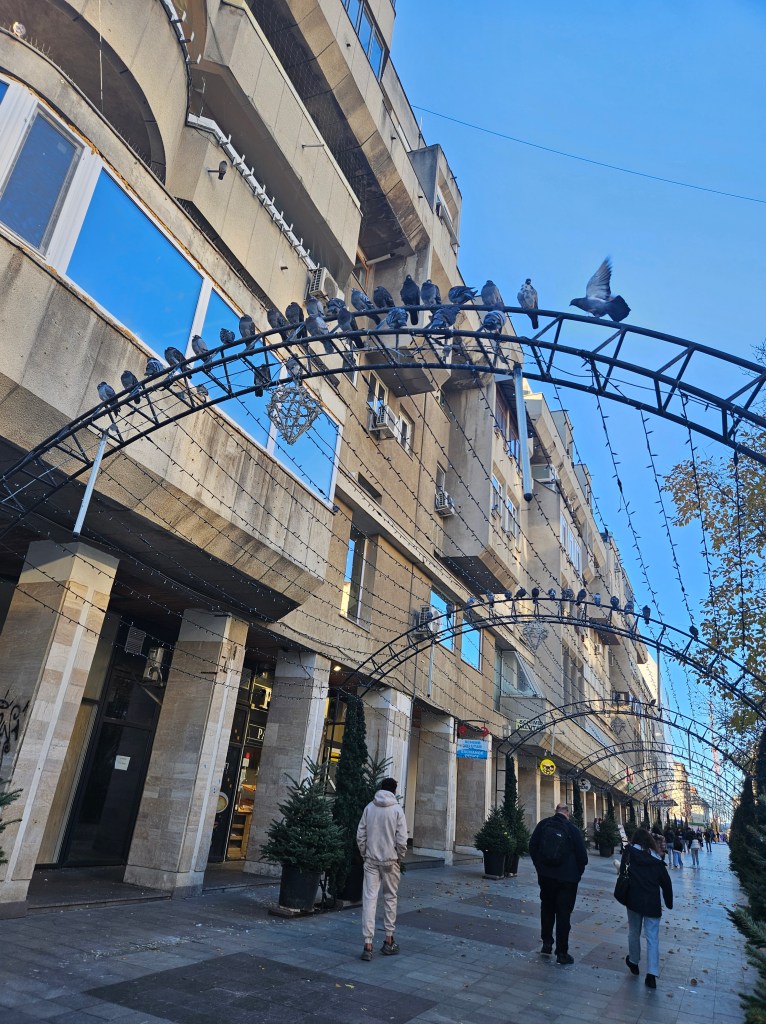
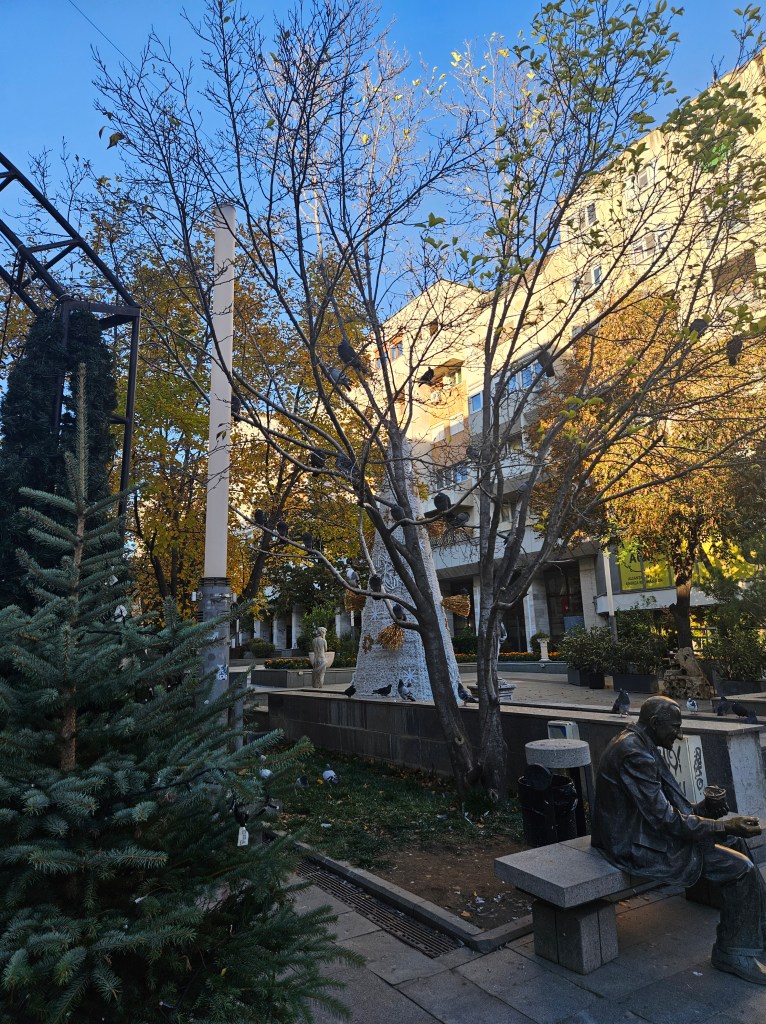
    Craiova is full of birds, pigeons in the Old Town especially. Yep, lots of pigeons, which people are encouraged to feed??!!!??
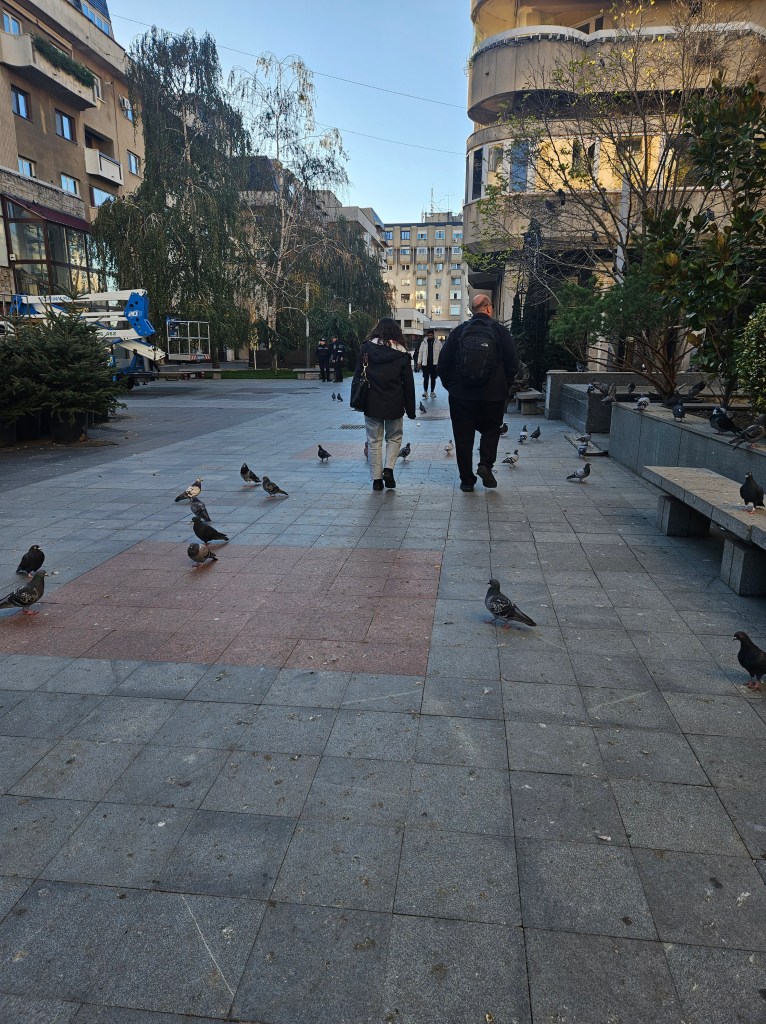
    In the evening, Russell went back to the apartment to have a few online advising appointments. True confession: it took us a full twenty-four hours to realize that daylight savings time had ended on Sunday, a week before the clocks changed in the US. Russell had to double and triple check his appointment times!

    Emily and Marina wandered a little more and then headed back to the apartment for chicken soup.
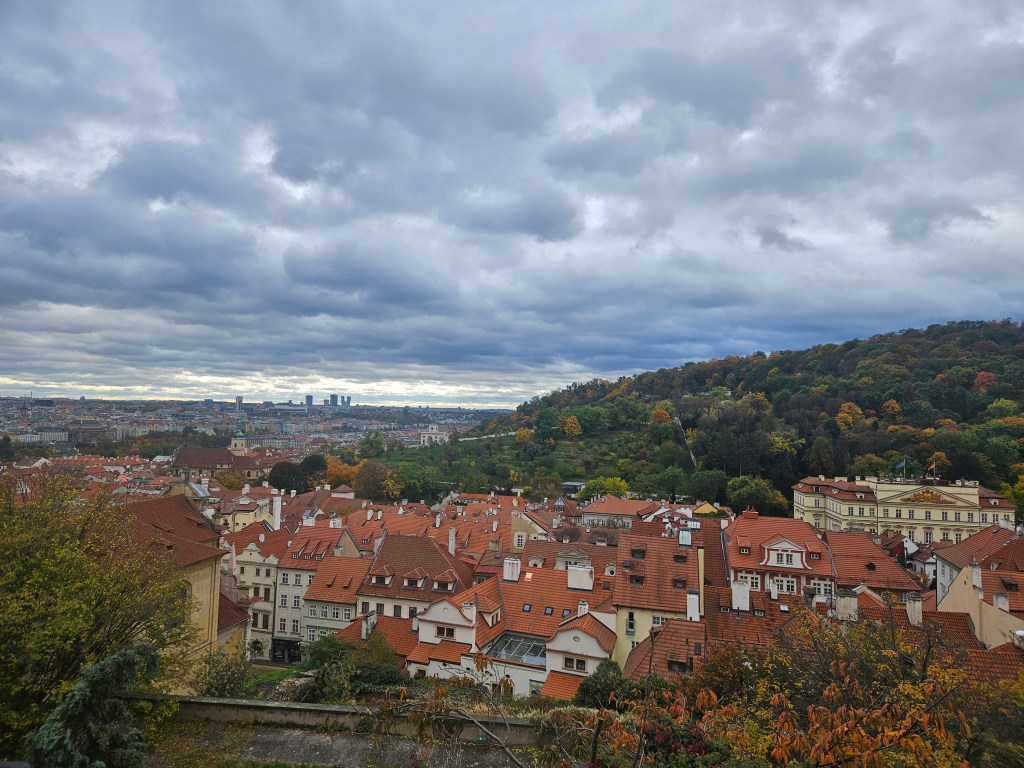
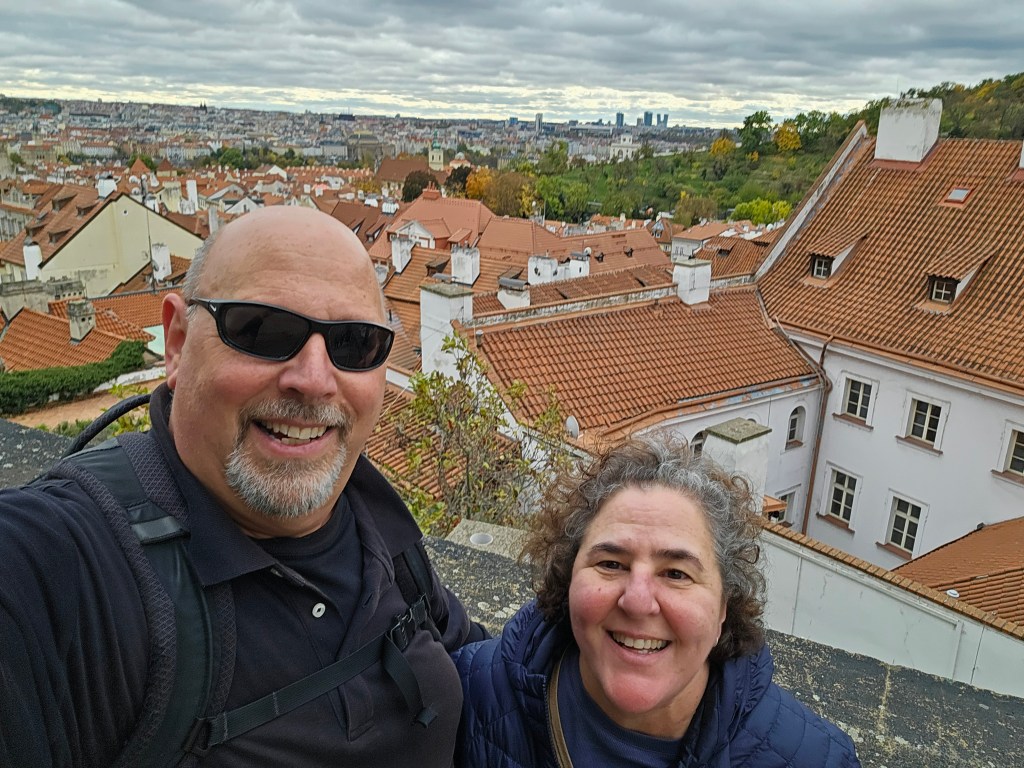
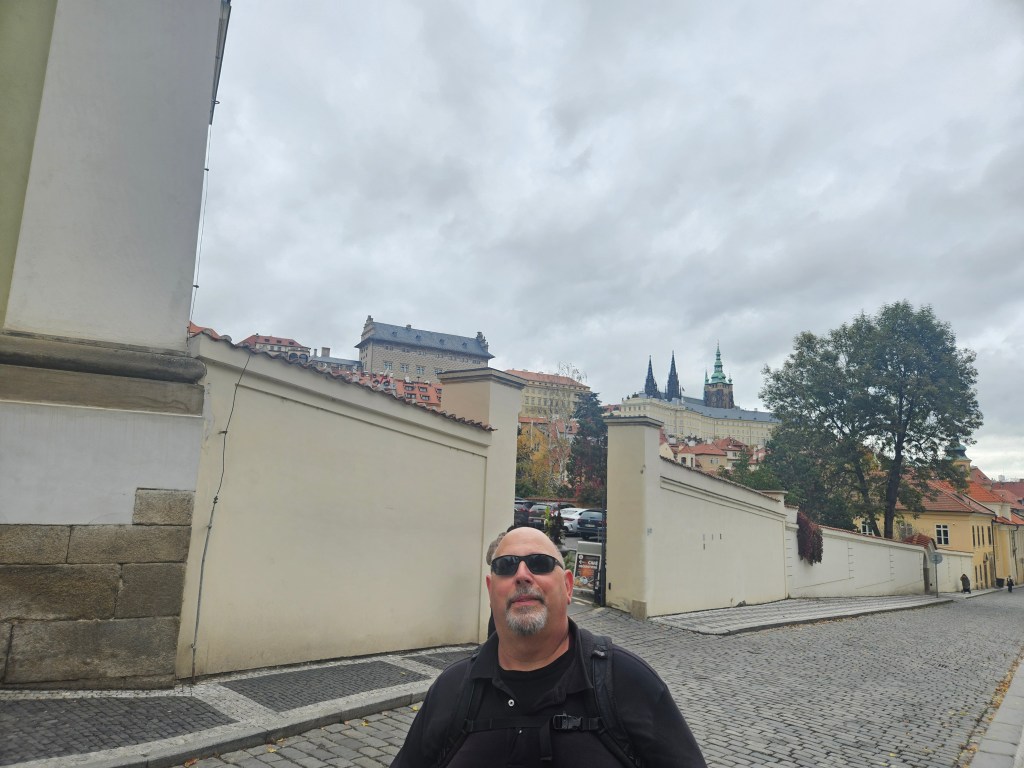
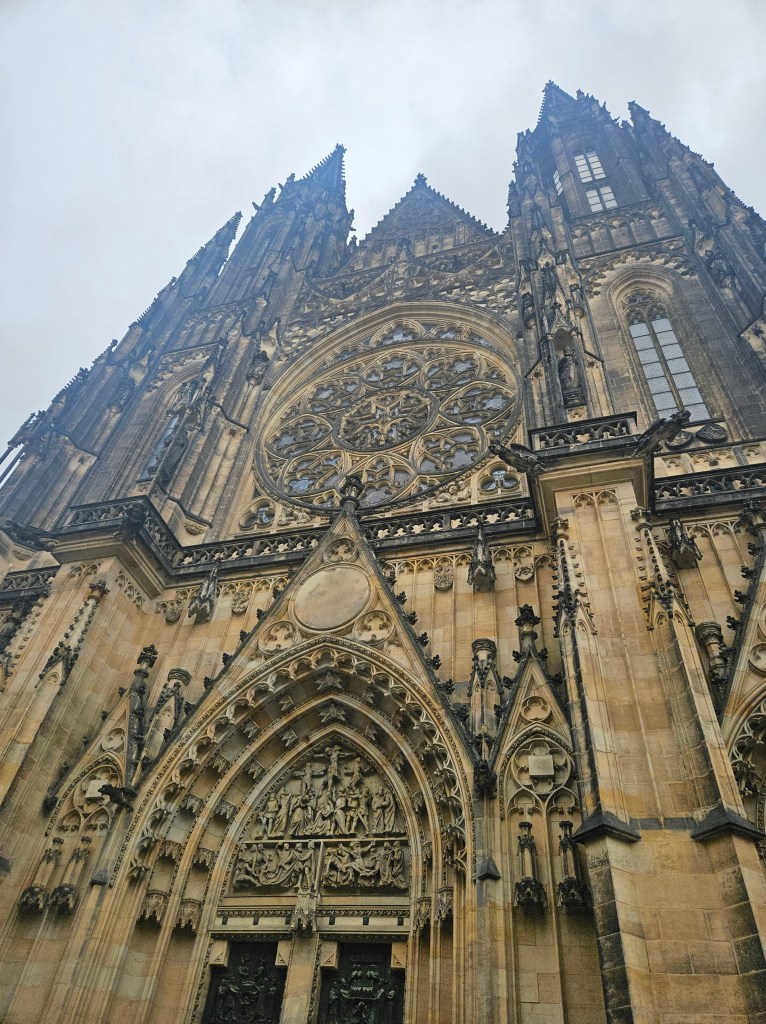
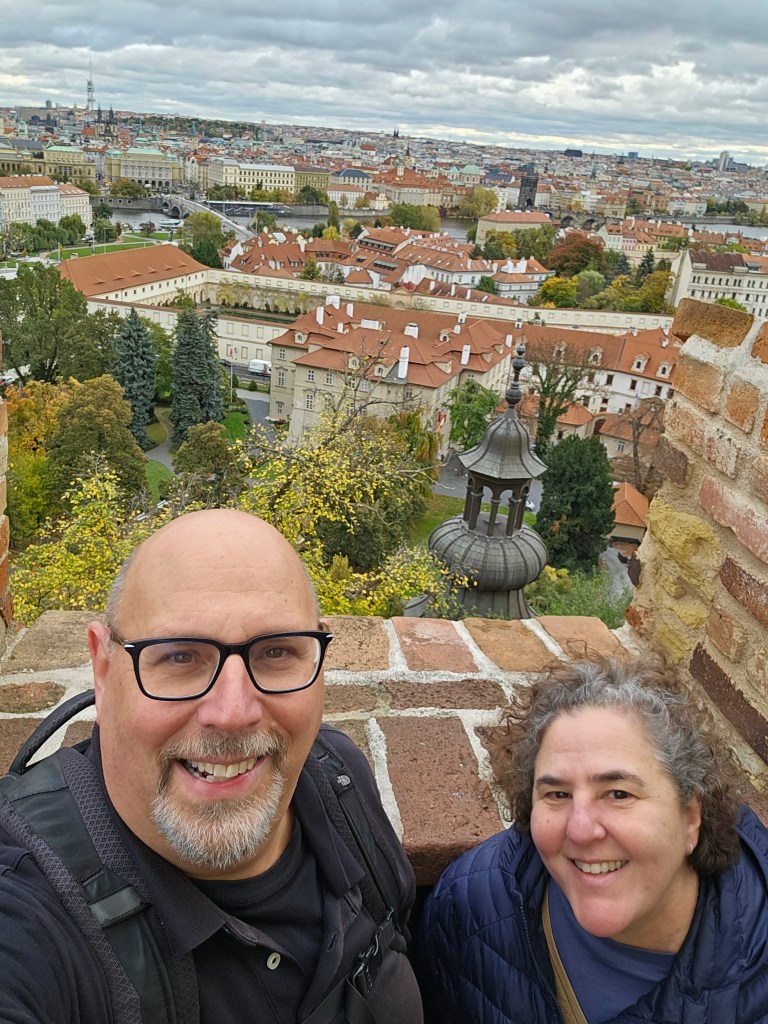
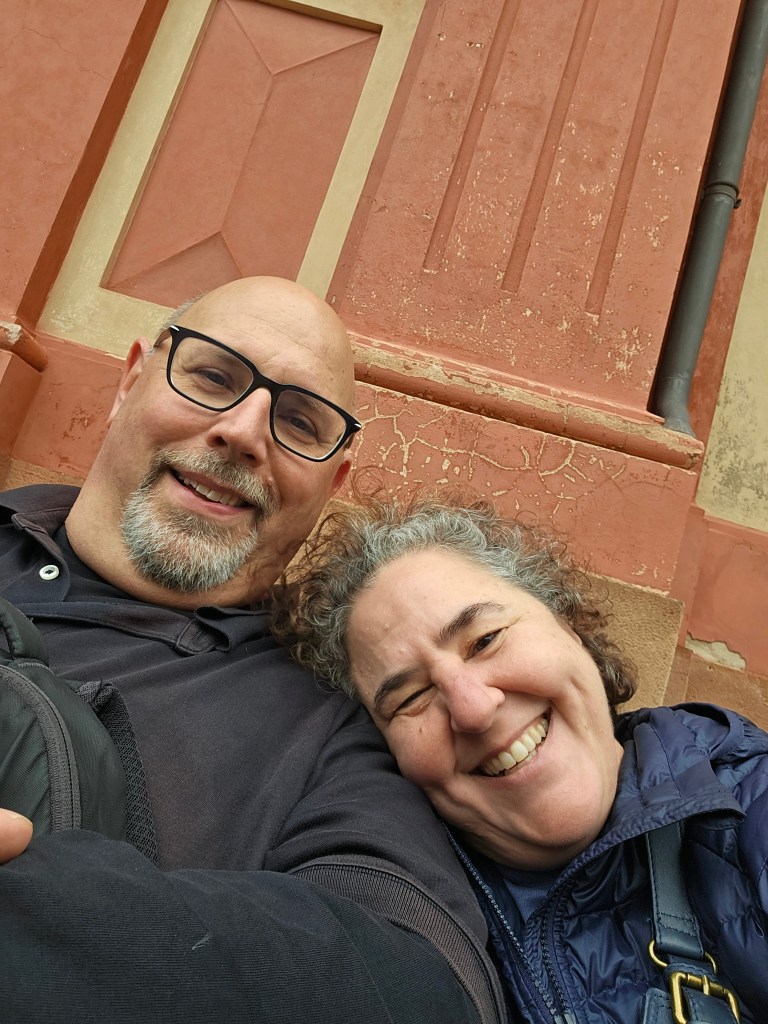
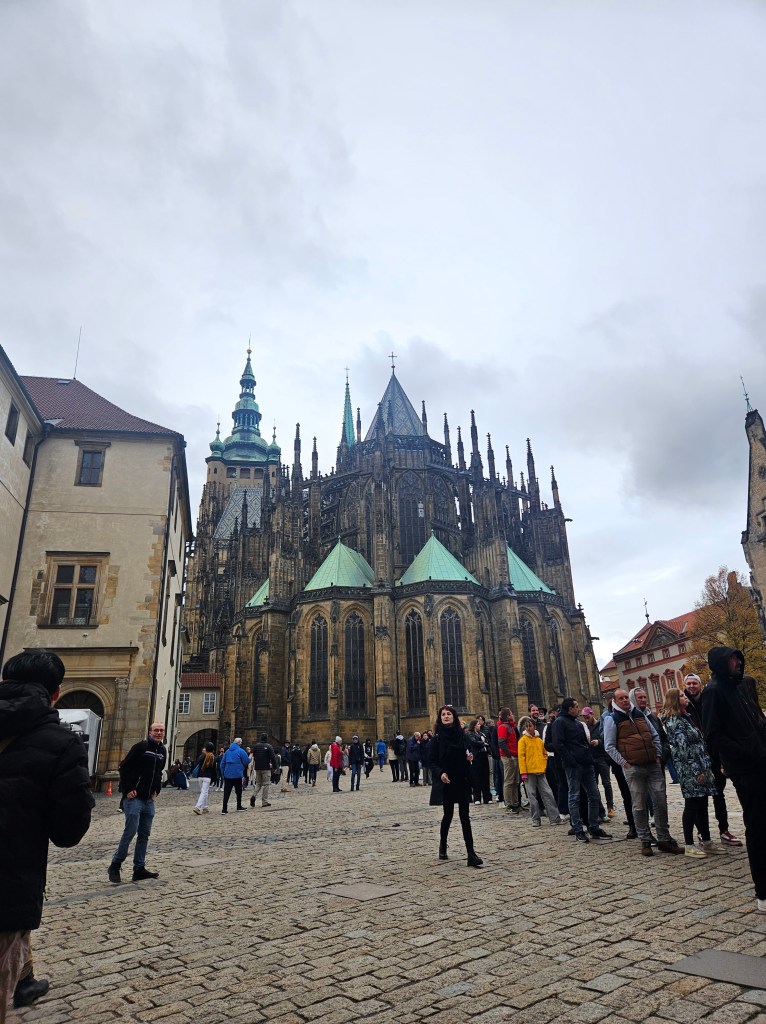
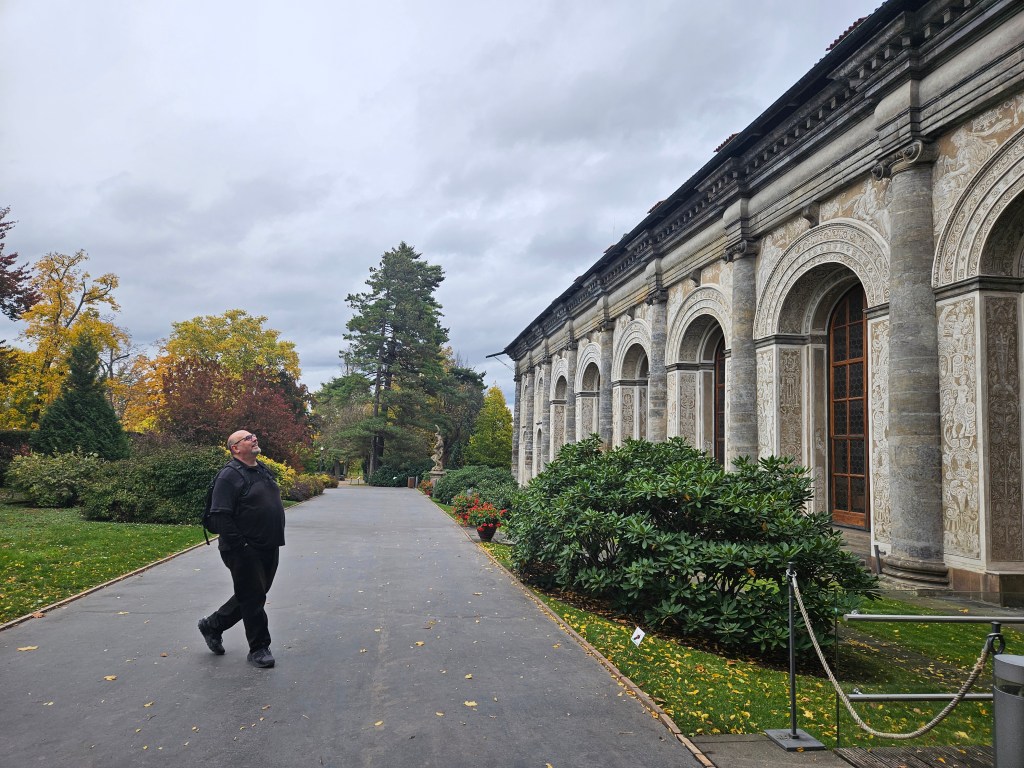
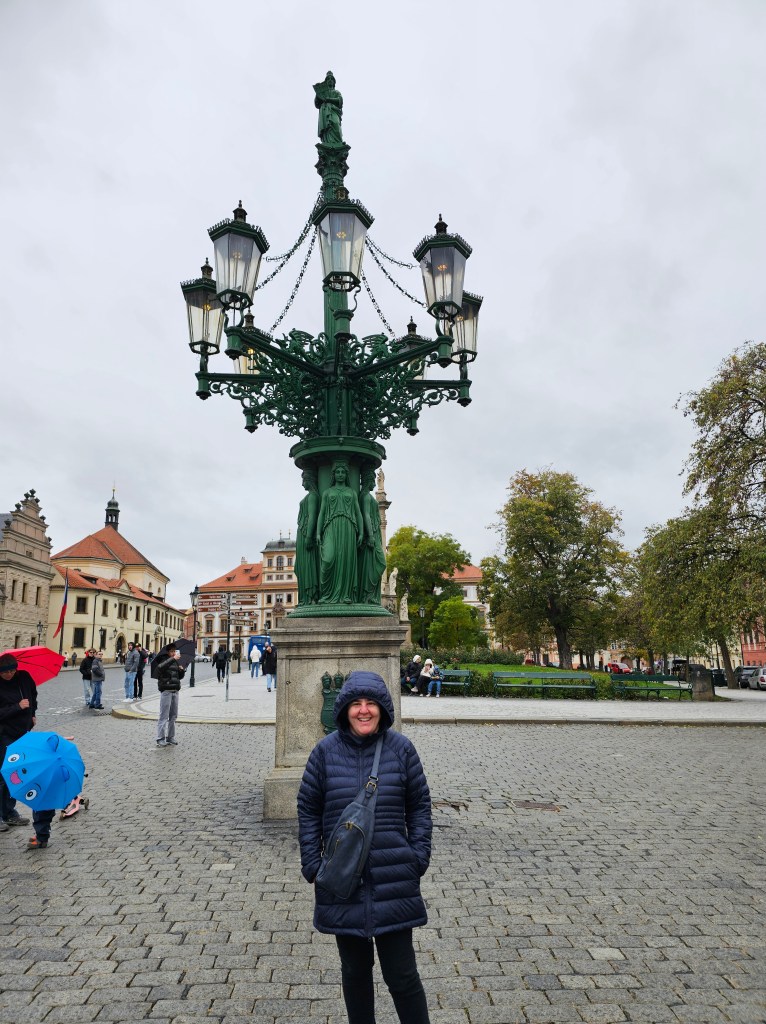
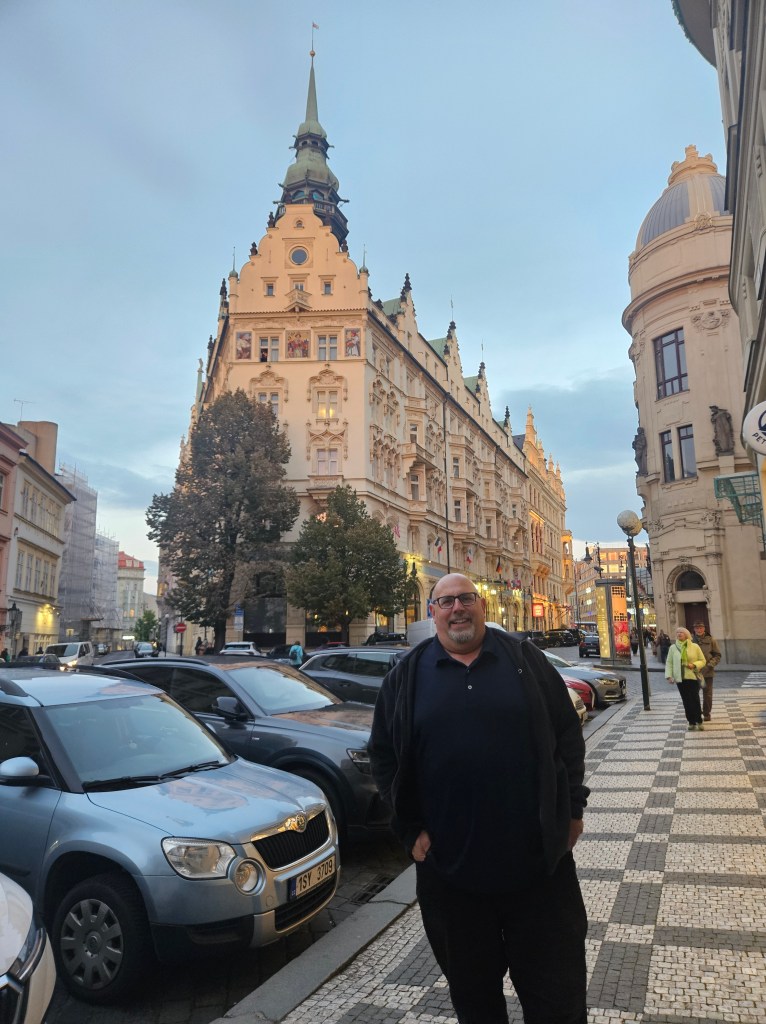
  • For our last day, we wandered up to the Prague castle, which looms over the western side of the city. It is the seat of the government, and is a massive complex of palaces, churches, and government buildings.

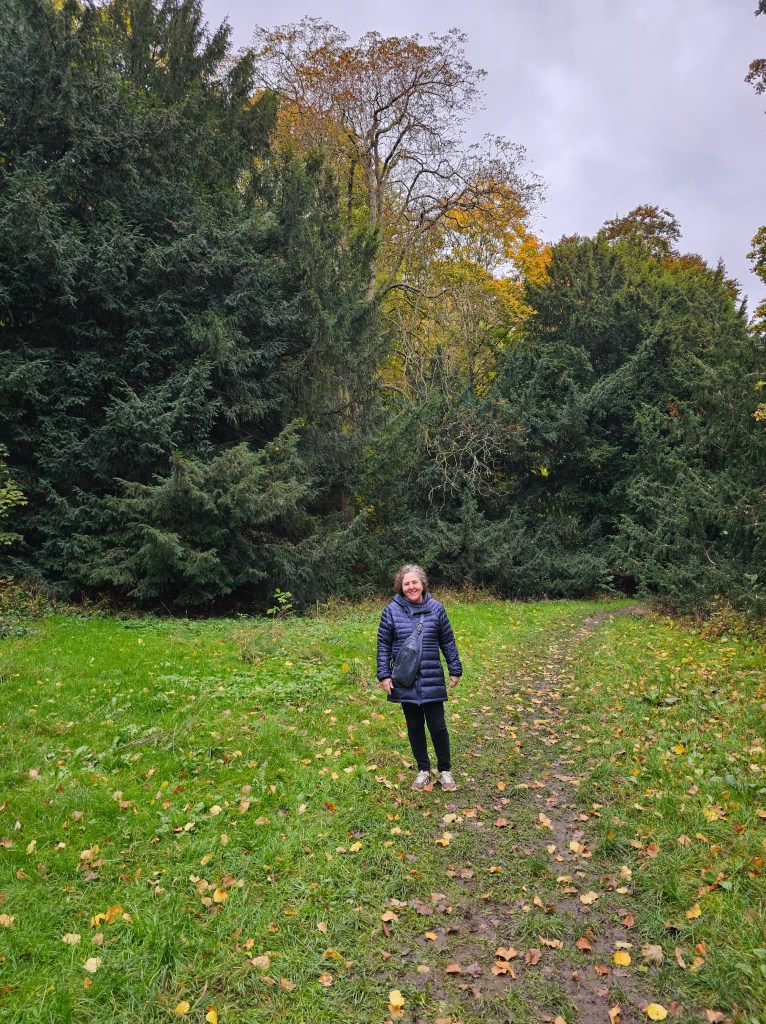
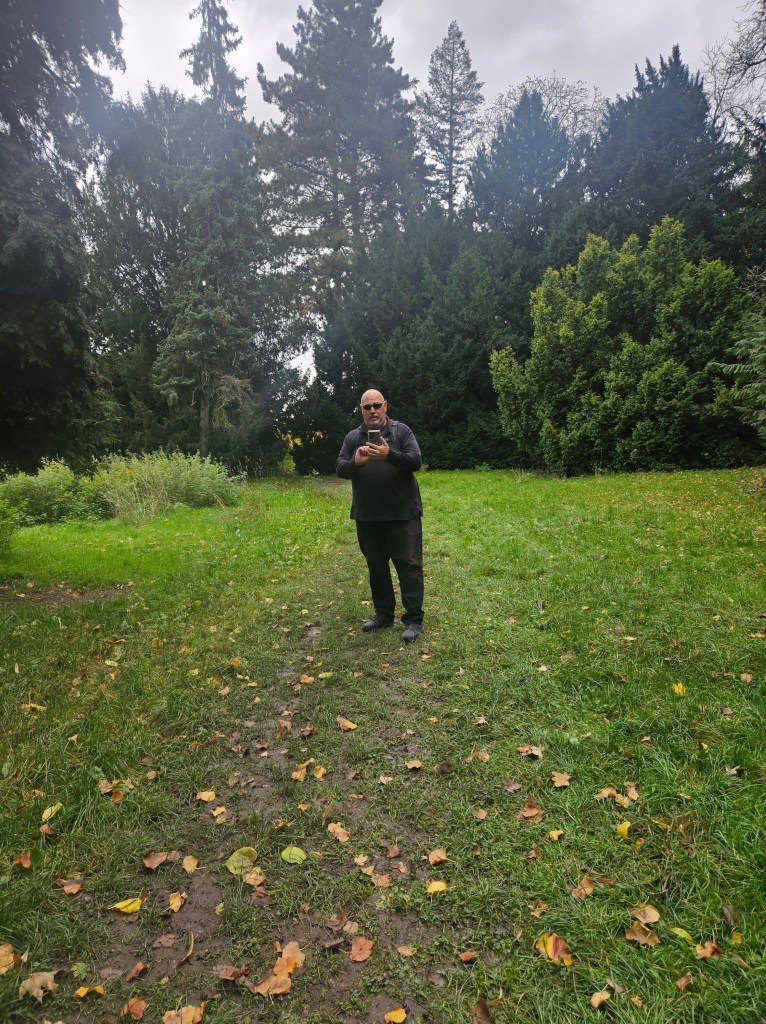
    We first tried and failed to take a walk in the huge park nearby.

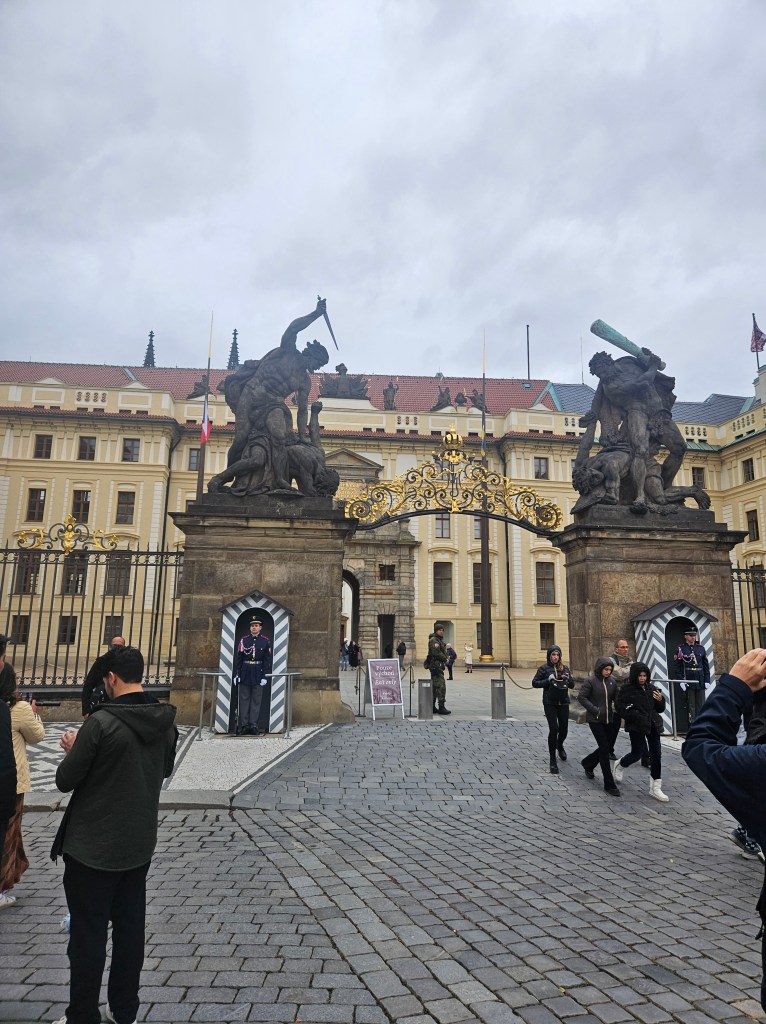
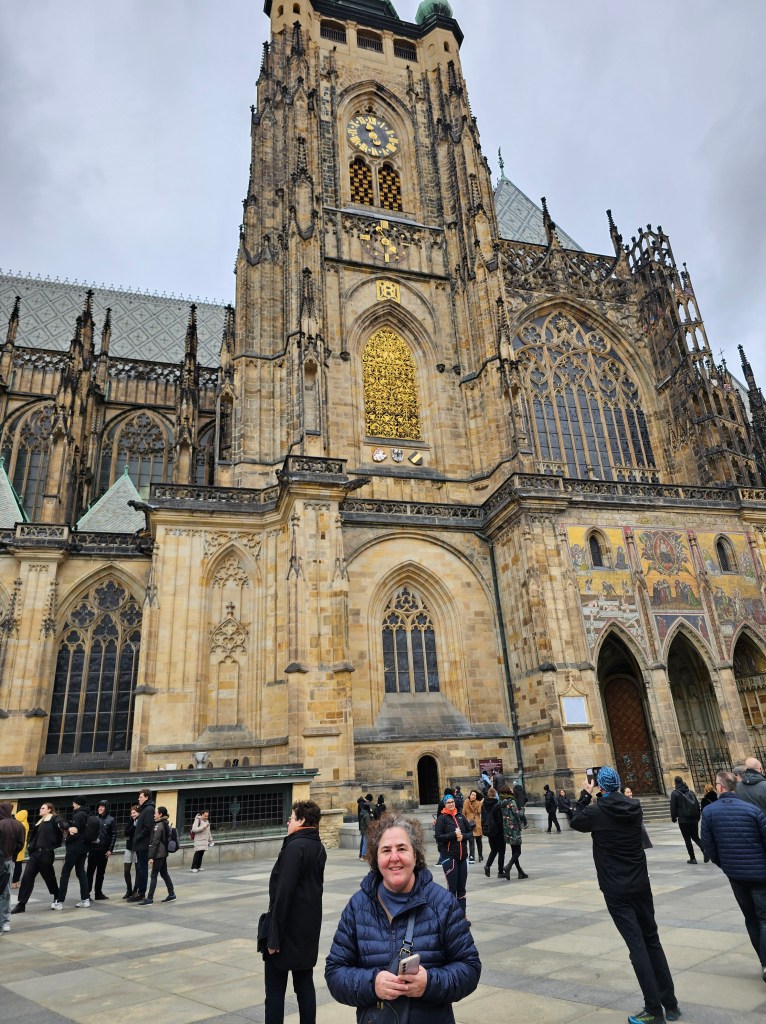
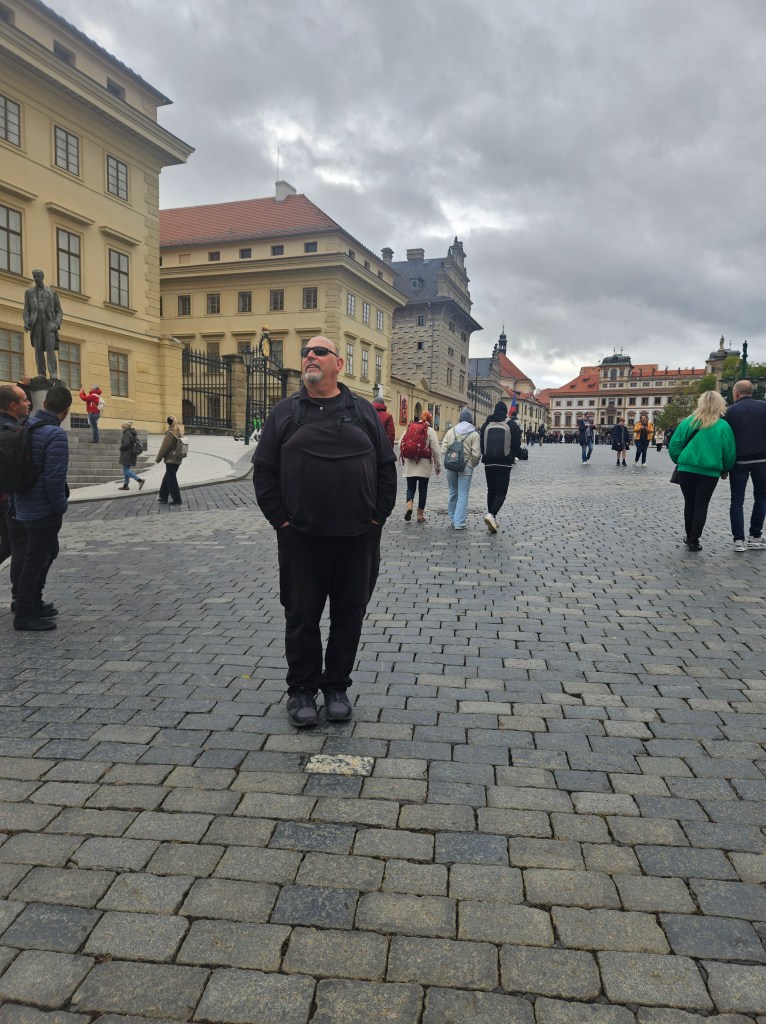
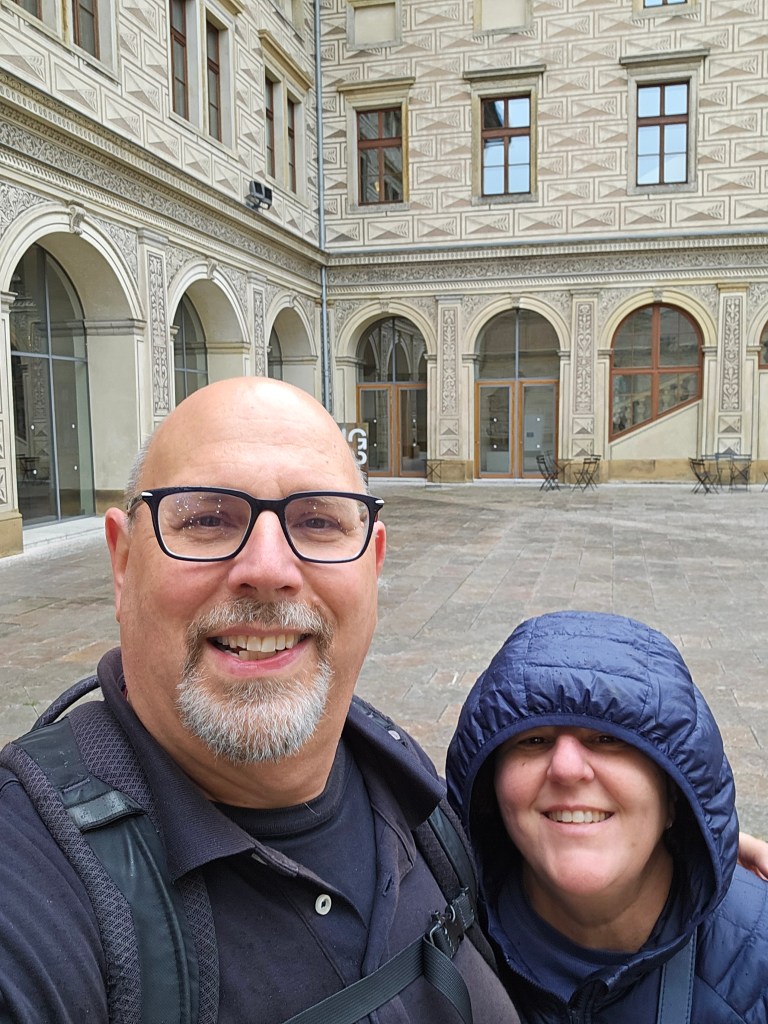
    We made our way to the castle. We knew that it would be crowded and did not expect to go into buildings, since we hadn’t bought tickets in advance.

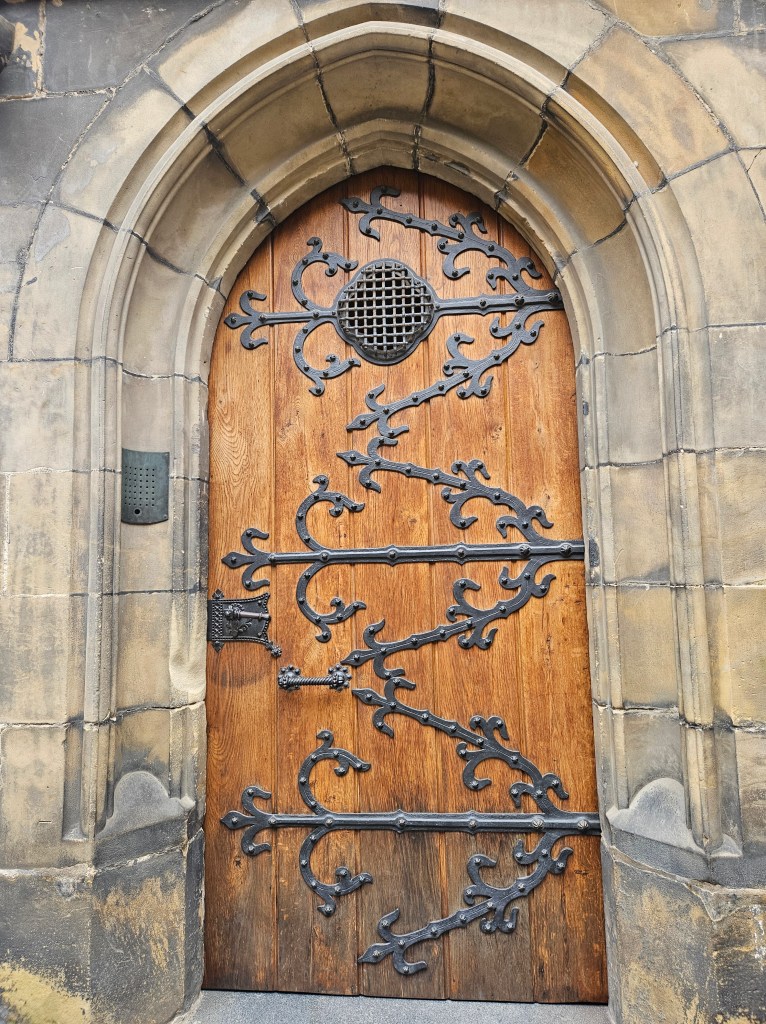
    Just walking around the complex was satisfyingly stunning. We were happy to see no East Wings were being torn down.

    Miriam later told us that the windows from the Defenestration of Prague are in this complex, and we choose to believe that we saw them.

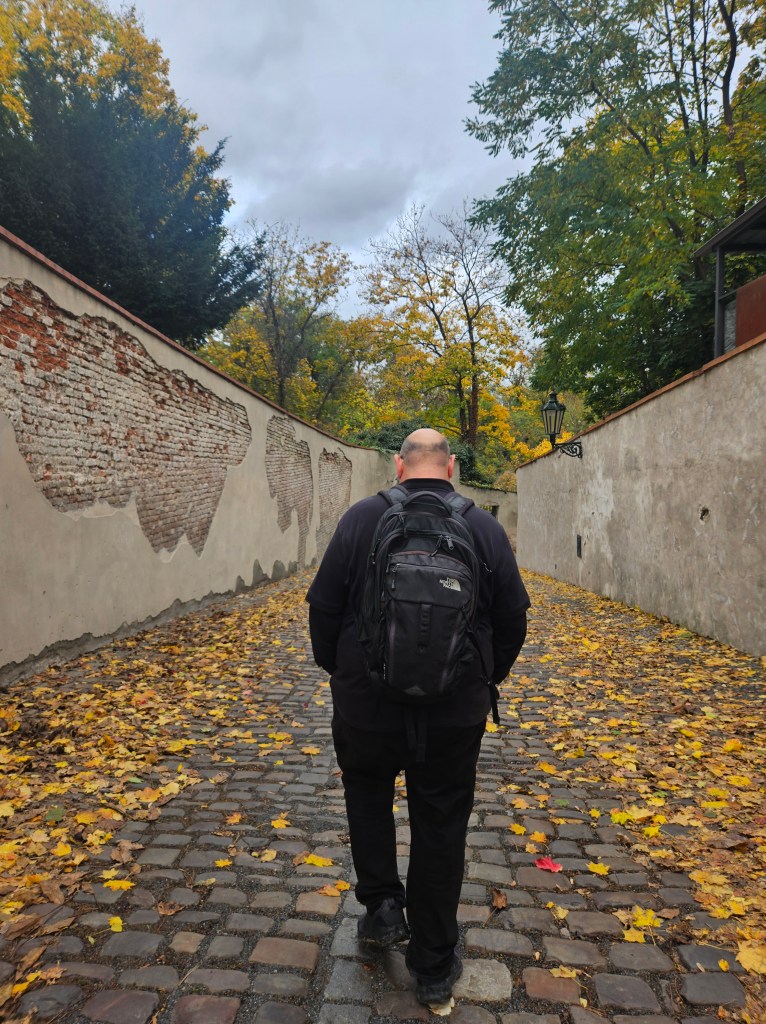
    We continued to wander.

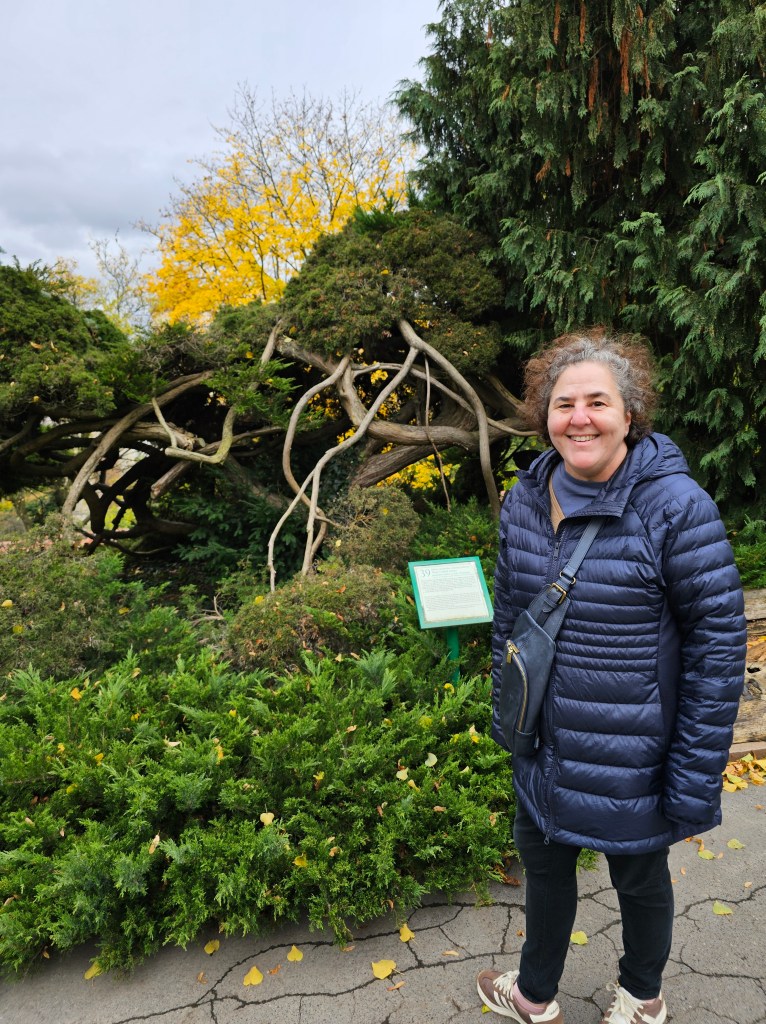
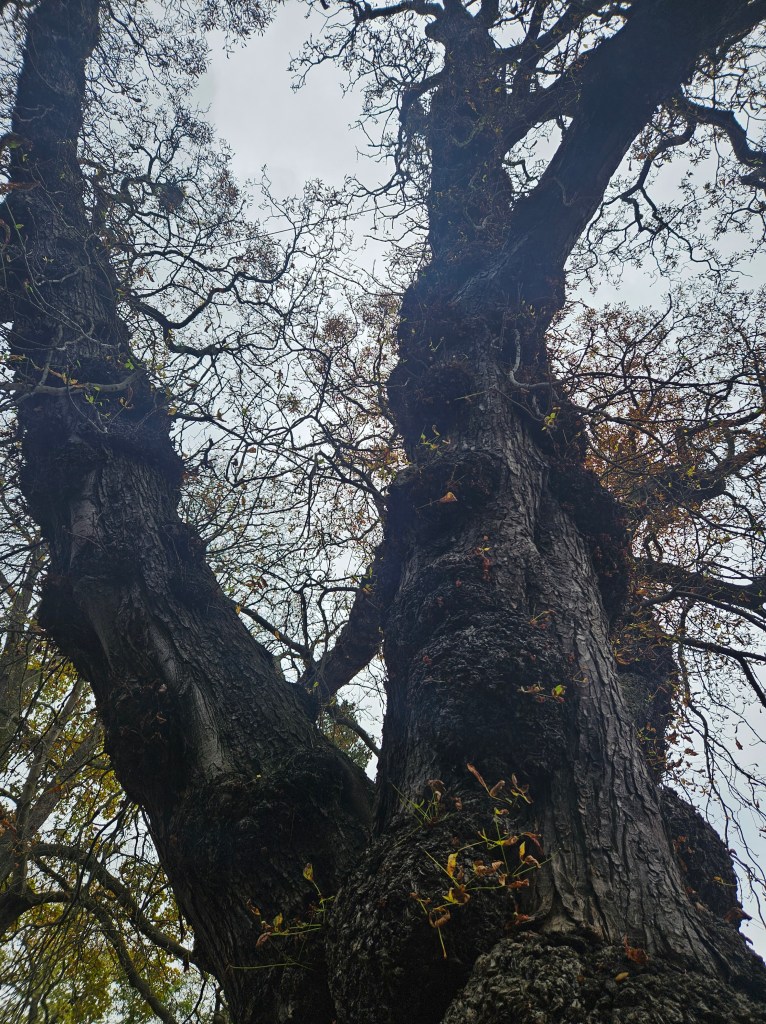
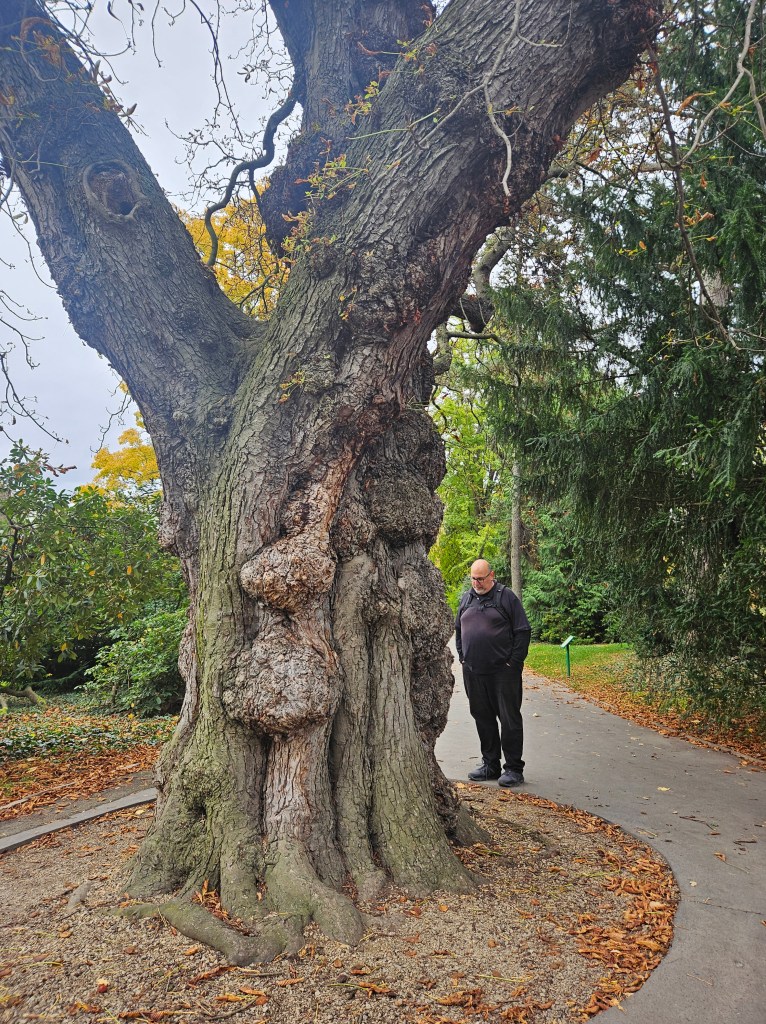
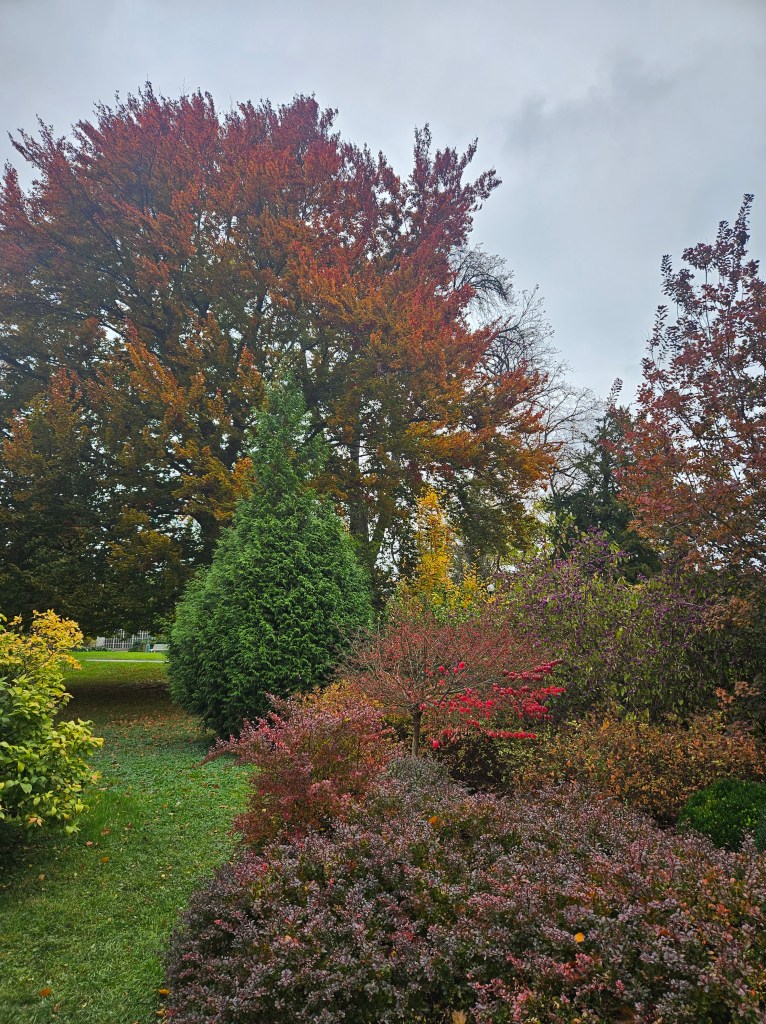
    The grounds include a botanical garden, looking very pretty in autumn.

    We headed home as the rain started to fall.

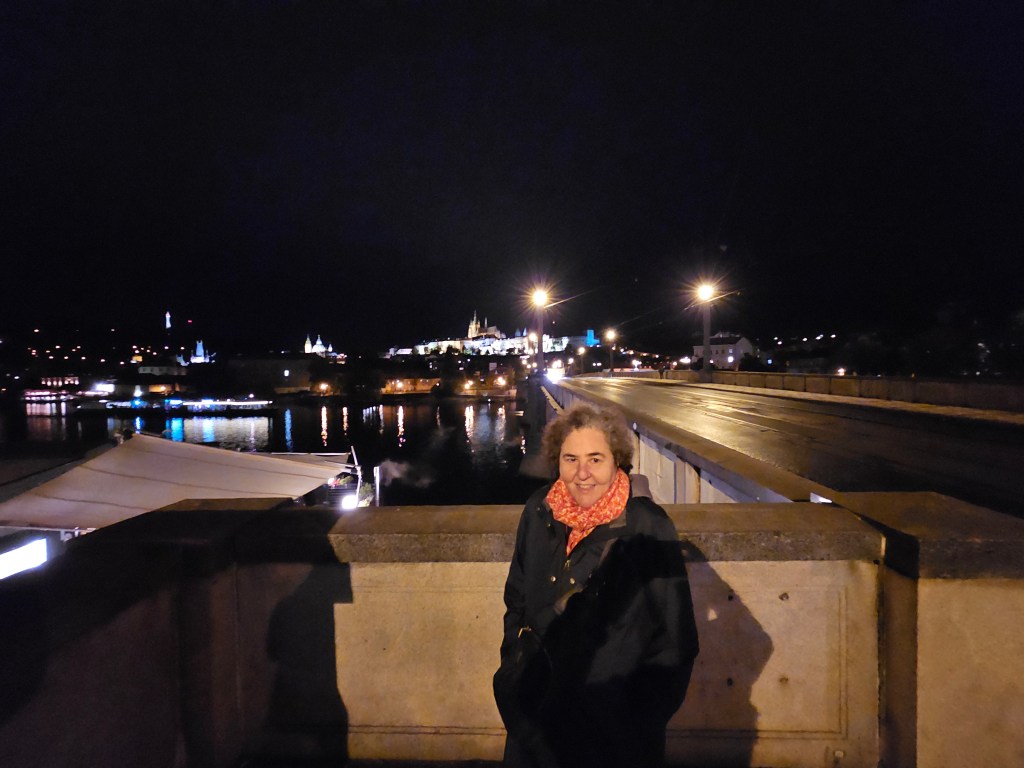
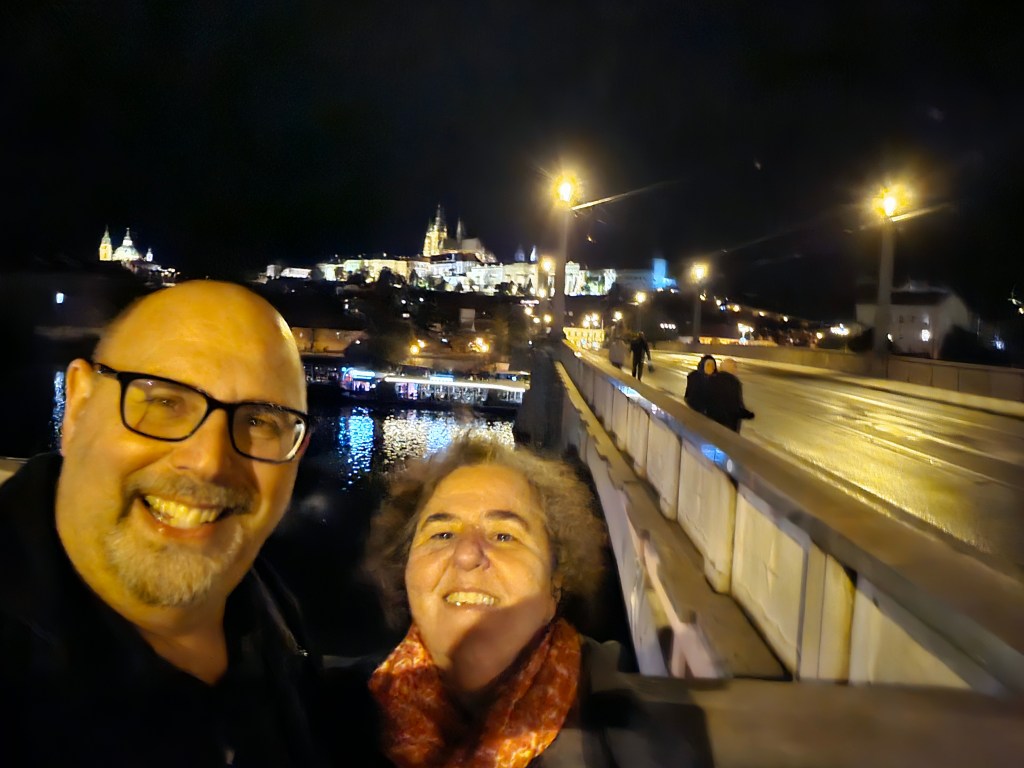
    After a rest at home, the skies had cleared and we headed out for our final evening,

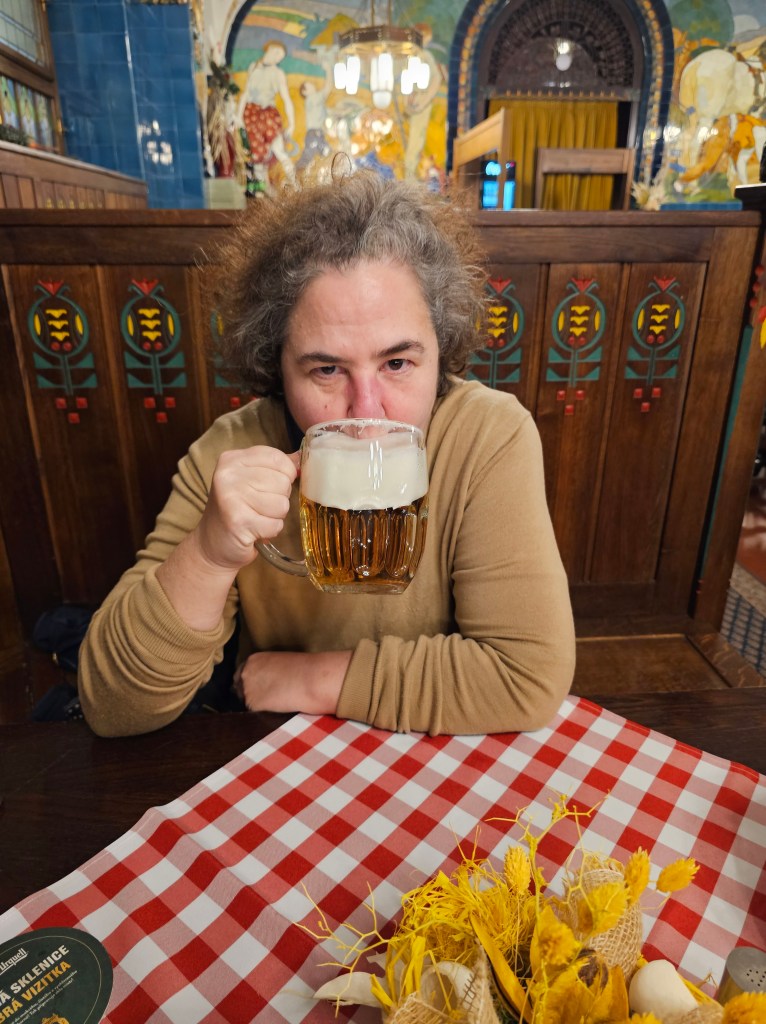
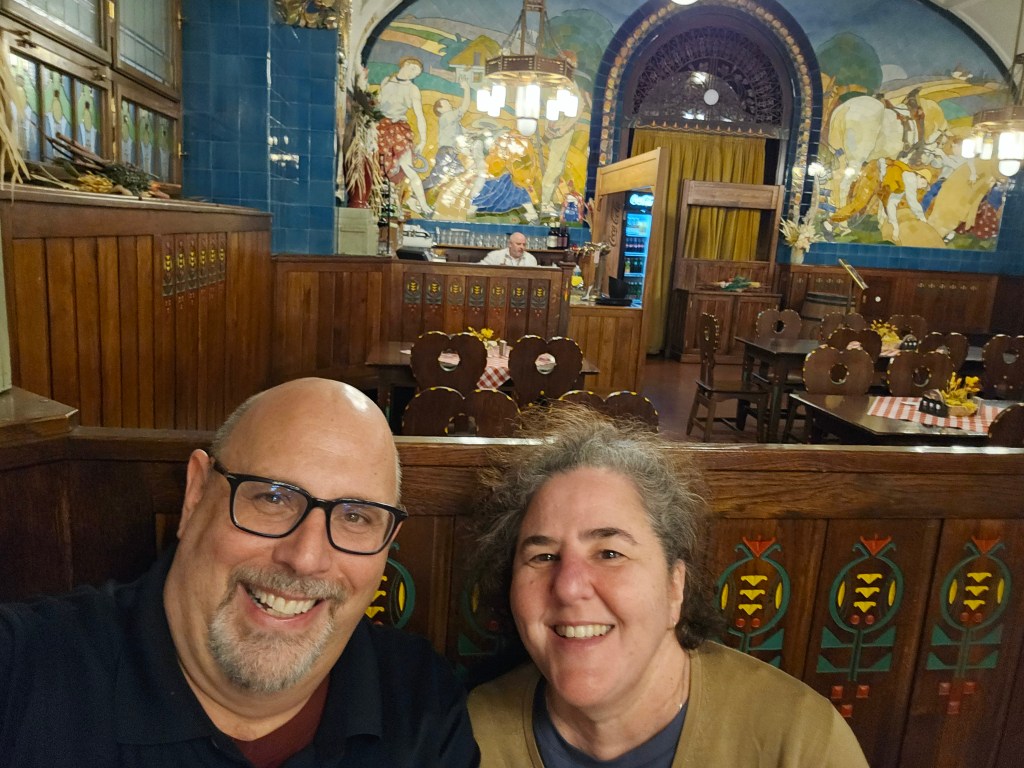
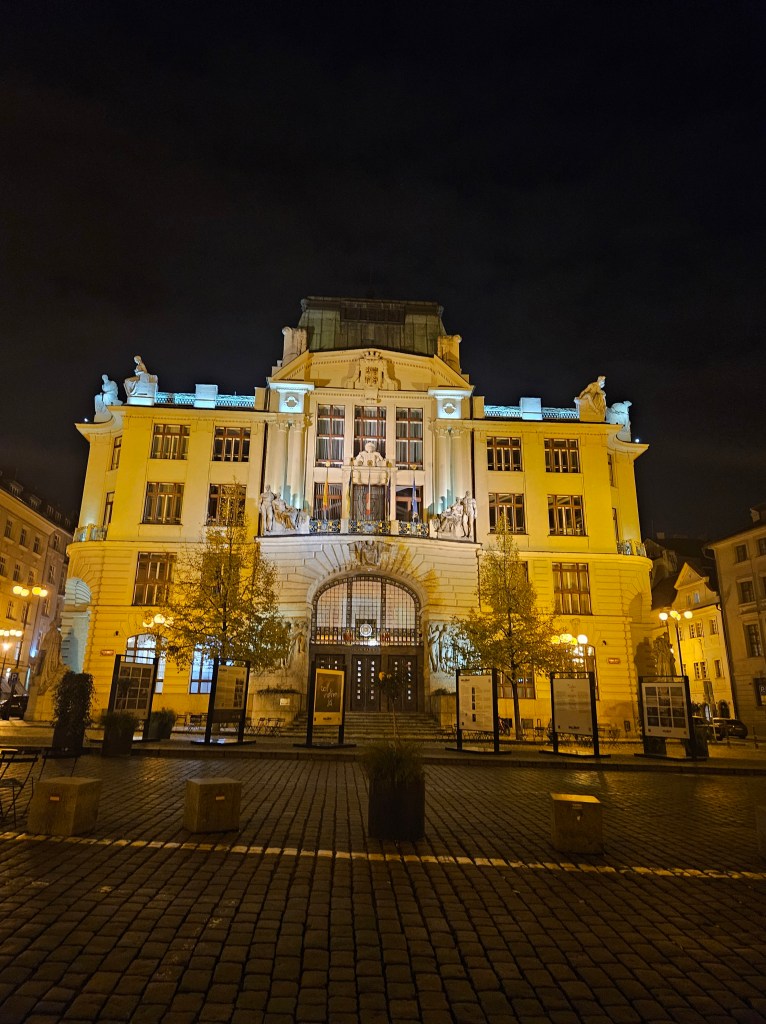
    On Benj and Louisa’s recommendations, we headed to the Old Municipal House, Obecní dům. We had made reservations for dinner at the beer hall and bought tickets for a concert afterwards.

    We had another wonderful meal at the beer hall. Emily had goulash and kneidls, Russell had ribs. No more beer for him. There was live music and it all felt pretty Czech, touristy but not inauthentic.

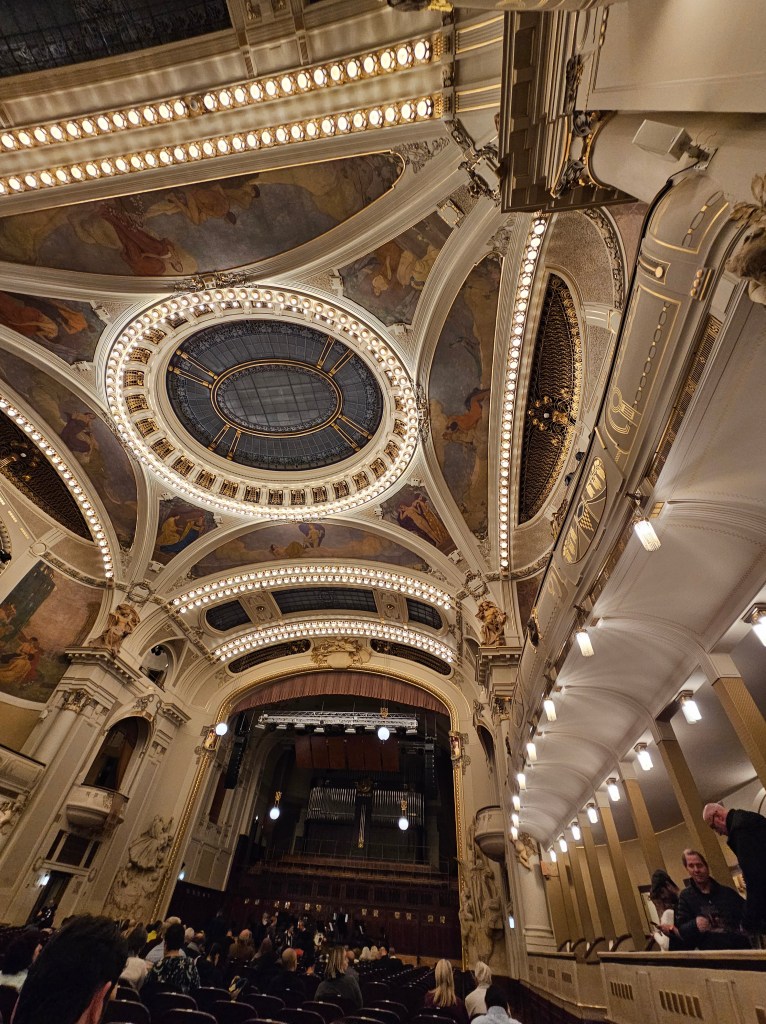
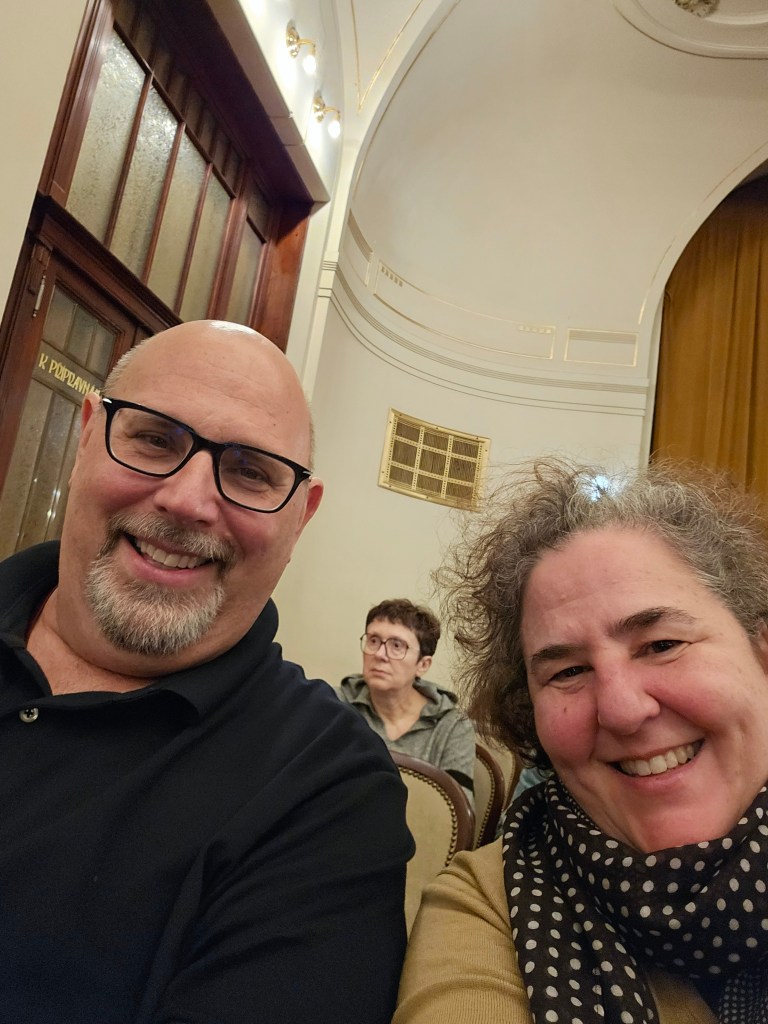
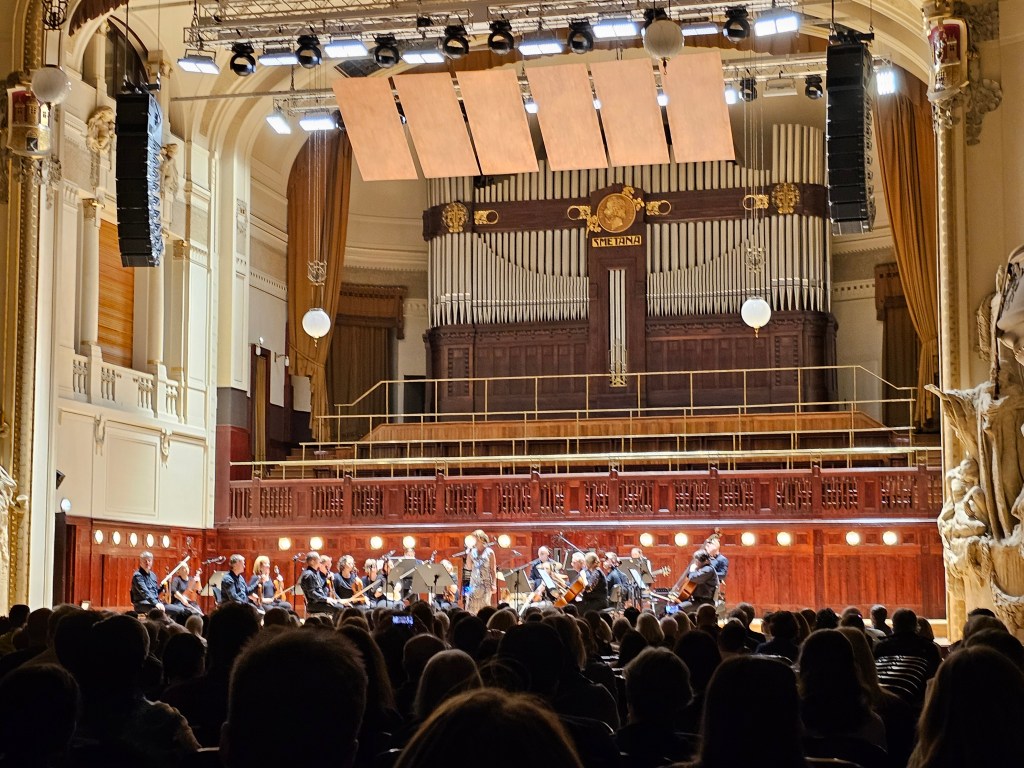
    The show was in a beautiful, turn of the century concert hall. he theme was music from movies, and well, it was a fun experience. Don’t knock “My Heart Will Go On” until you’re heard it live in a theater that looks kind of like the Titanic. (I mean, Titanic.)

    Emily observed, “That’s quite an organ.” Russell tried to restrain himself.

    We headed home, sad that we had such a short time in Prague. We had been enervated by the crowds, but charmed by the beauty, quiet moments, and food. And we were excited that we would be seeing Marina the next day!

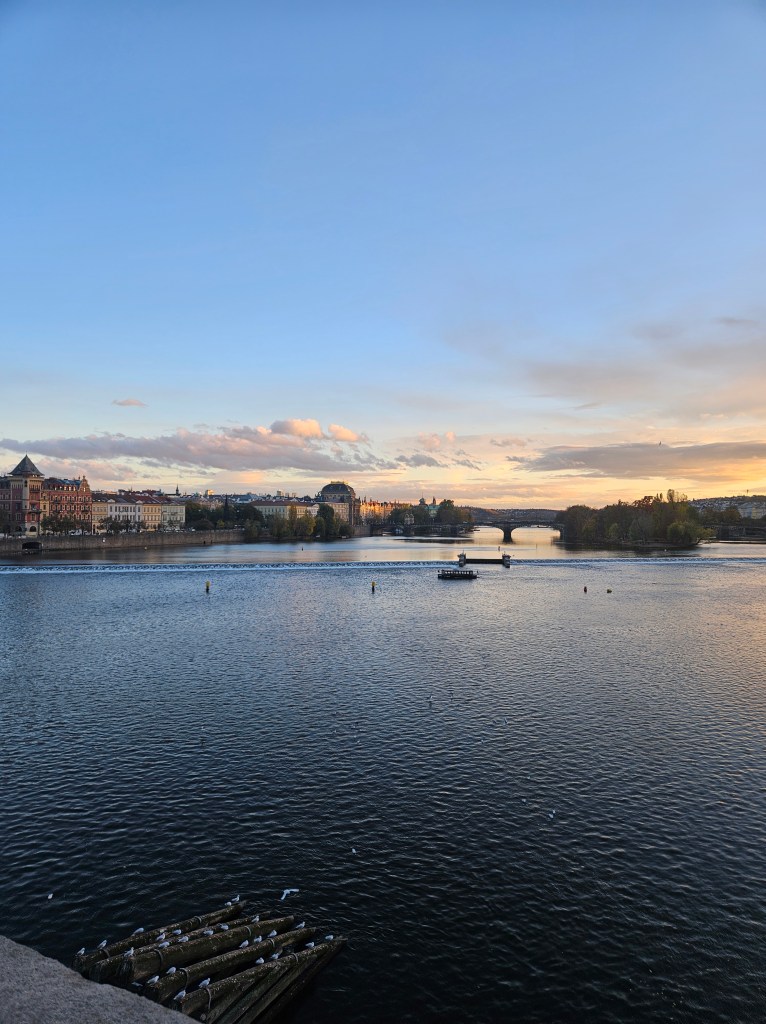
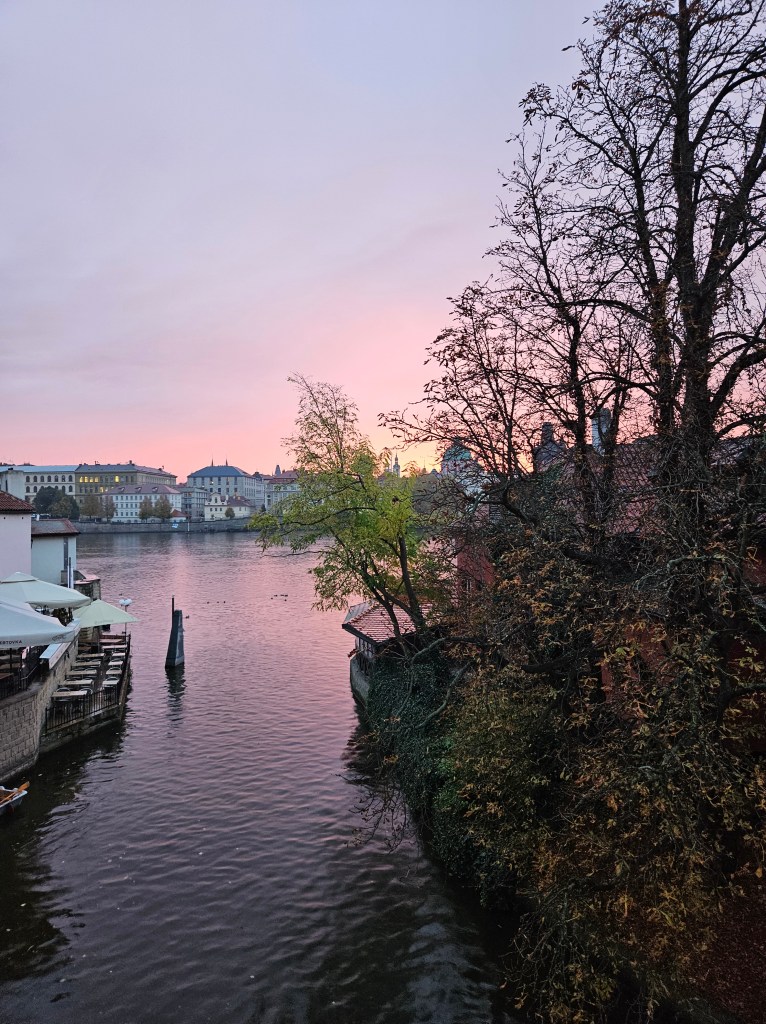
  • One of the best parts of where we were staying in Prague was the view of the sunrise, which never got old.

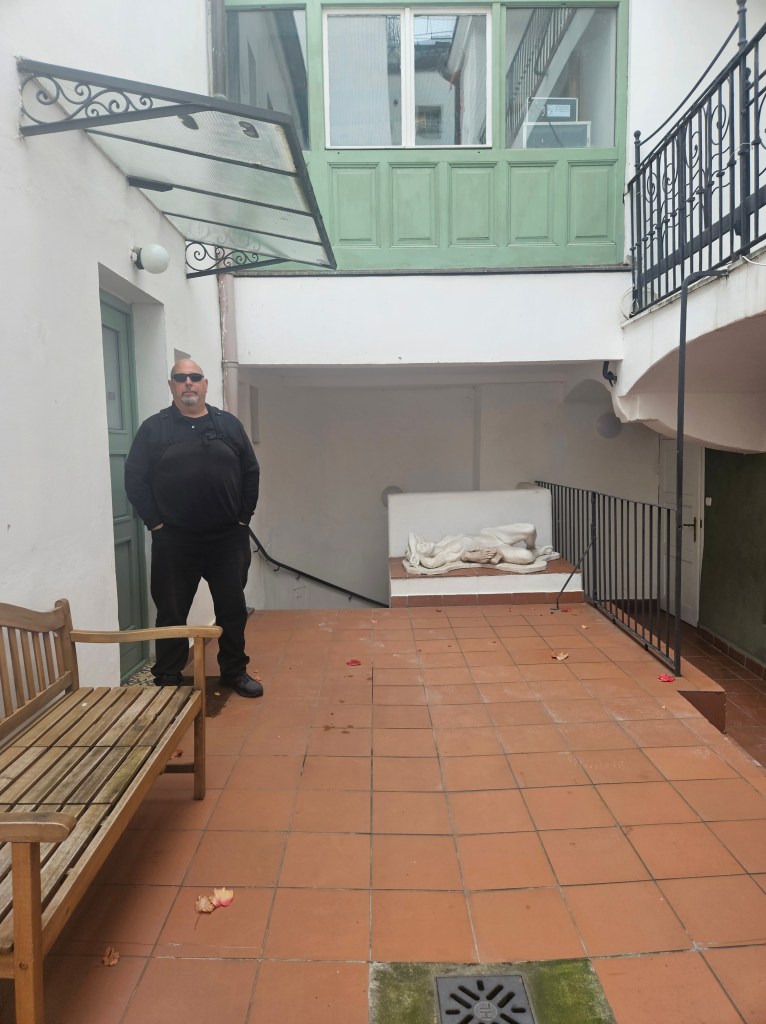
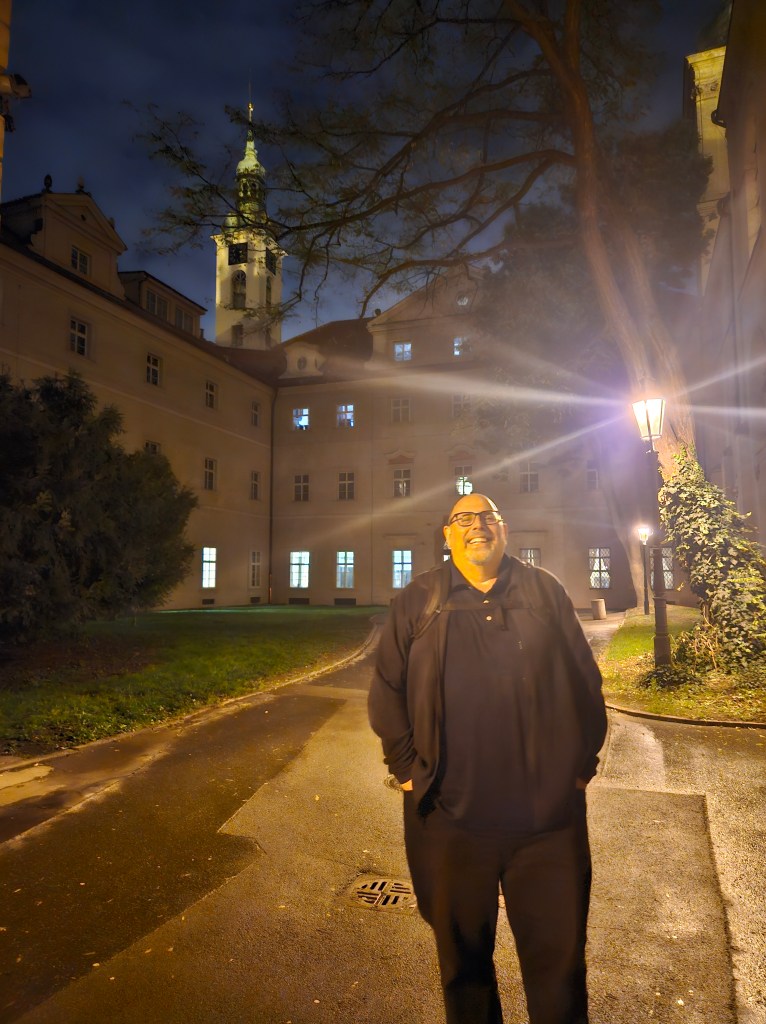
    The courtyard of our apartment was a litte dramatic.

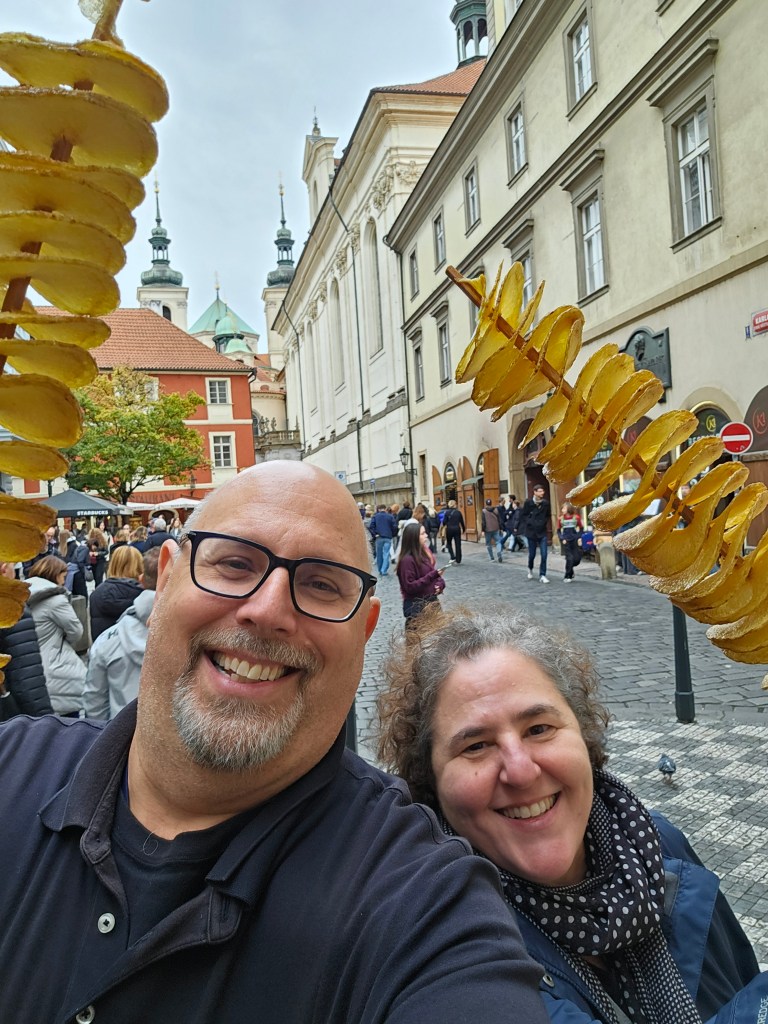
    After our tour of the Jewish ghetto (our previous post), we indulged in silly tourist food #2, spiralized fresh potato chips on a stick, before heading home to recover.

    In the evening, we headed out to what had appeared to us to be a non-touristy Czech restaurant, U Rudolfina, and we think we were right. Diners are seated at benches and heavy wooden tables that are shared with others. Two young women who were sitting at our table were speaking in French but we quickly clocked the term “active learning,” which, you many know, is kind of a big deal for Russell. Even more surprise, they turned out to be philosophy graduate students, one Russian and one German, doing PhDs in the Czech Republic. Russell had fun chatting with them about Deleuze.

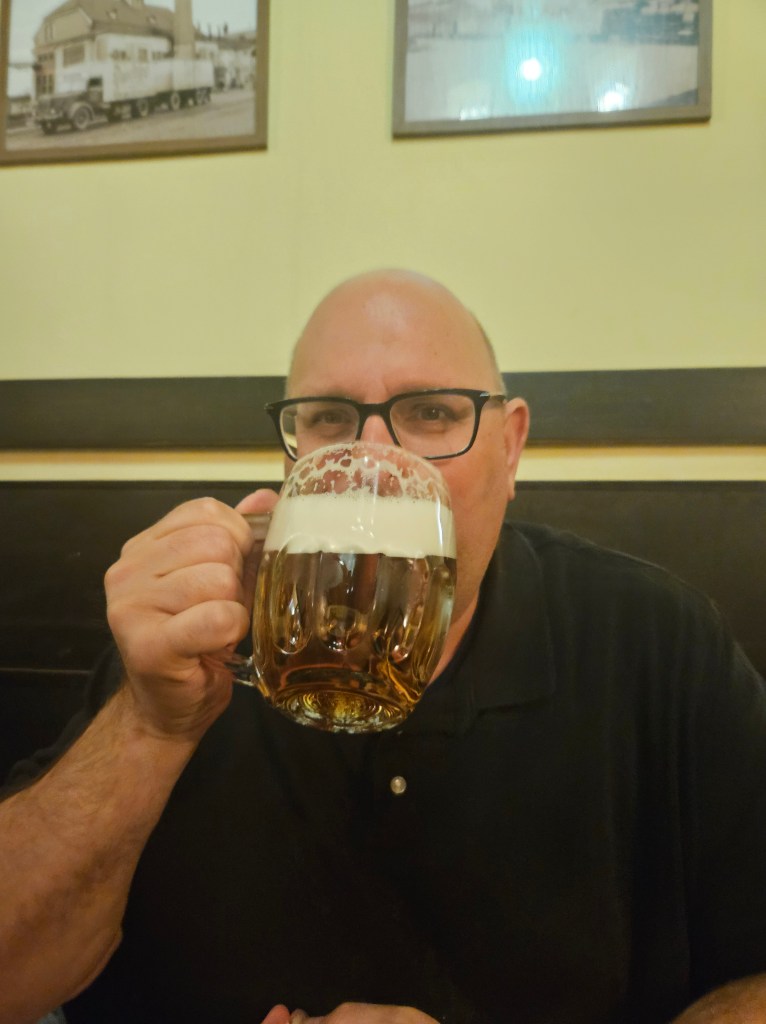
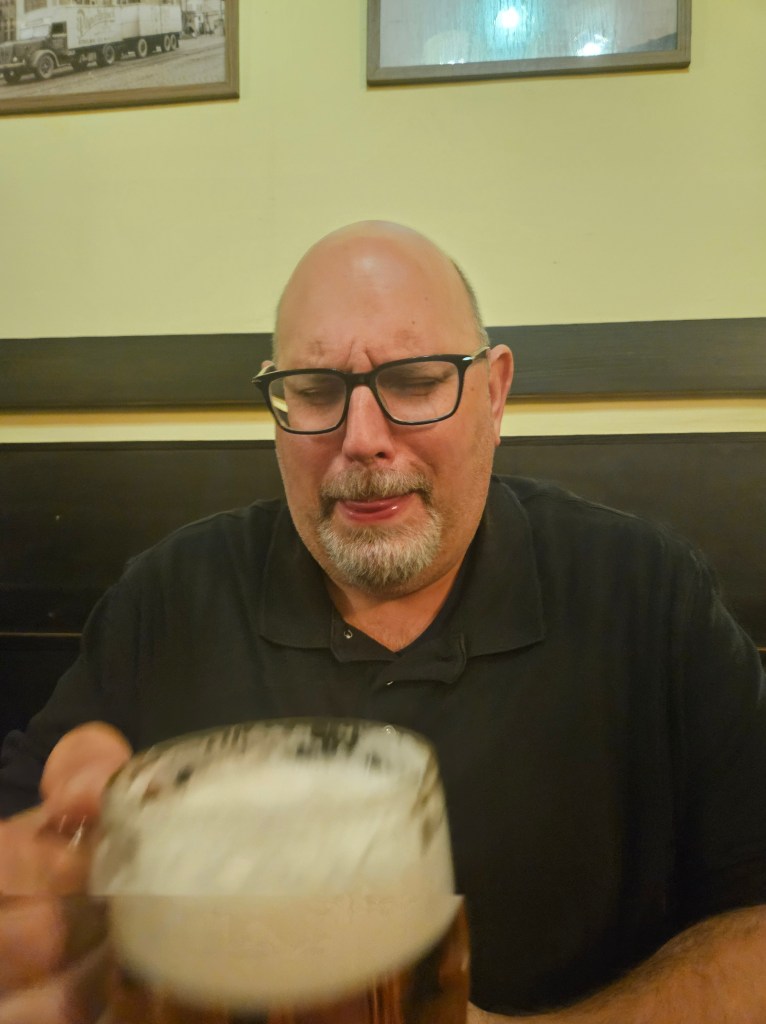
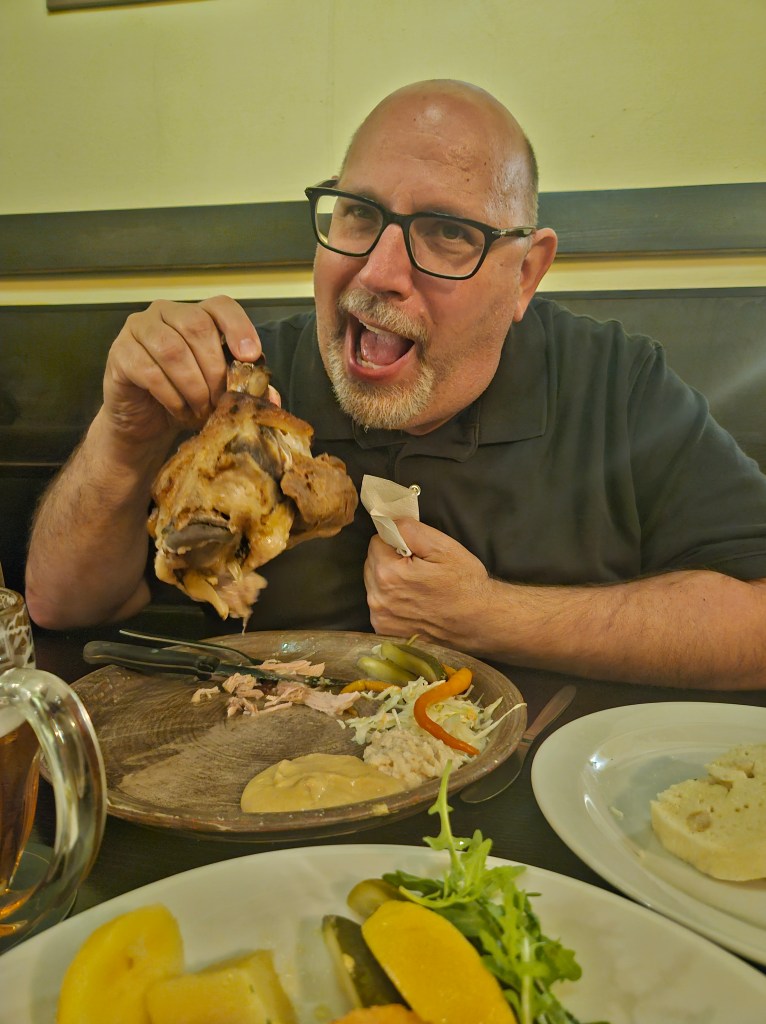
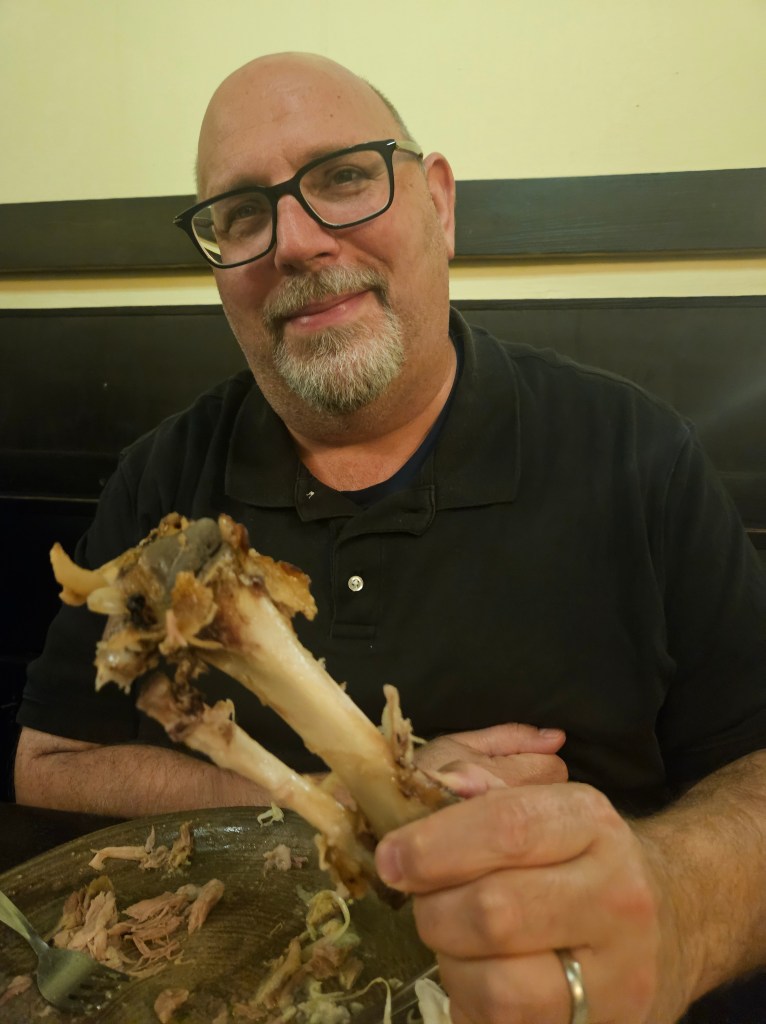
    He also tried beer. Still not a fan. Don’t worry, Emily enjoyed it. Luckily, he made up for it by really enjoying his dinner.

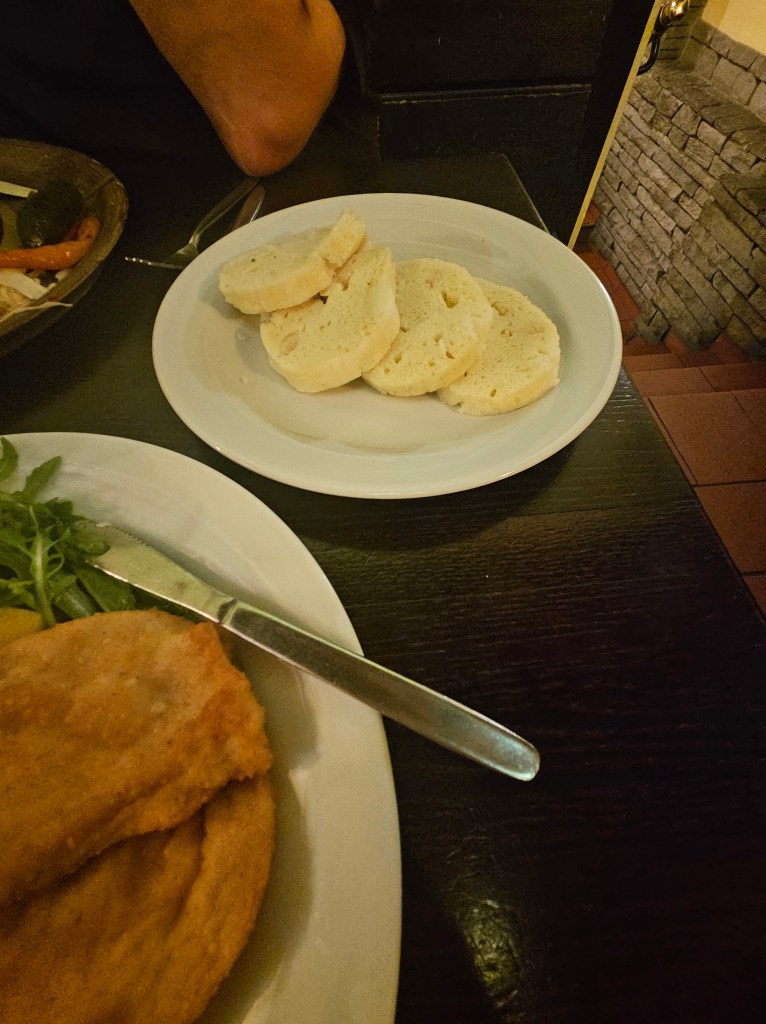
    Emily enjoyed her chicken schnitzel, too. We were curious to try kneidls, which is Yiddish for matzo balls. Our tour guide from the morning had warned us that they were different, and yeasty. Indeed, the Czech knaidls were tasty but really just seemed like steamed bread.

    We were definitely ready to call it a night!

  • On Thursday, we had arranged for a private tour of the Jewish Quarter of Prague. We found it edifying, depressing, and hopeful.

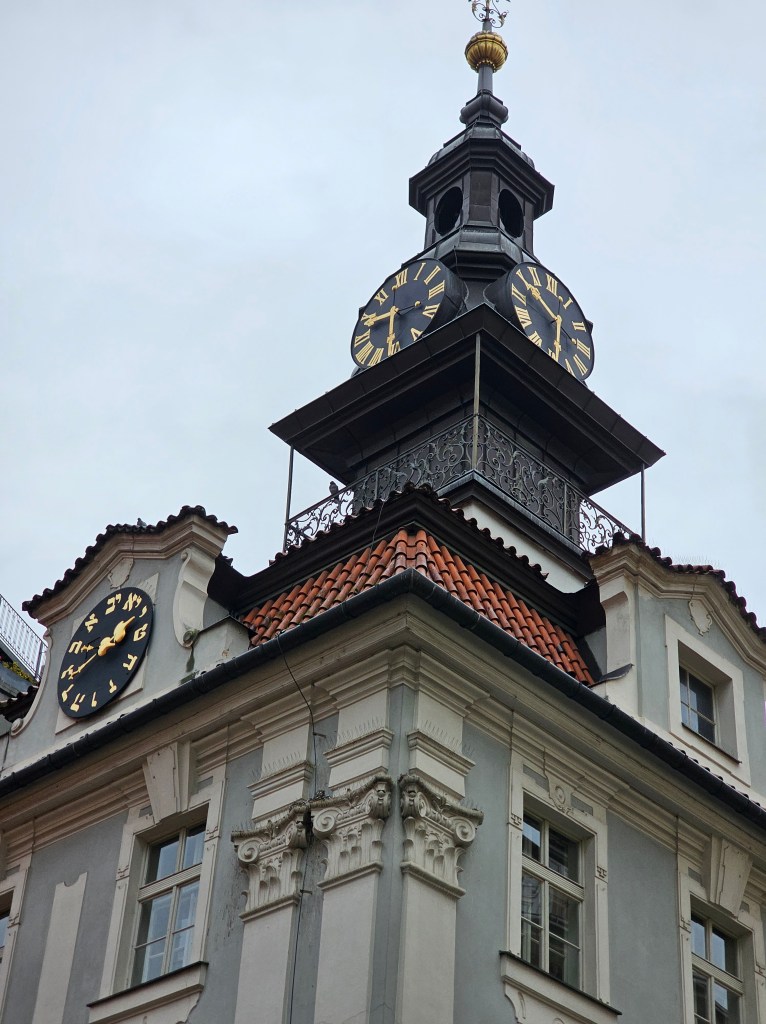
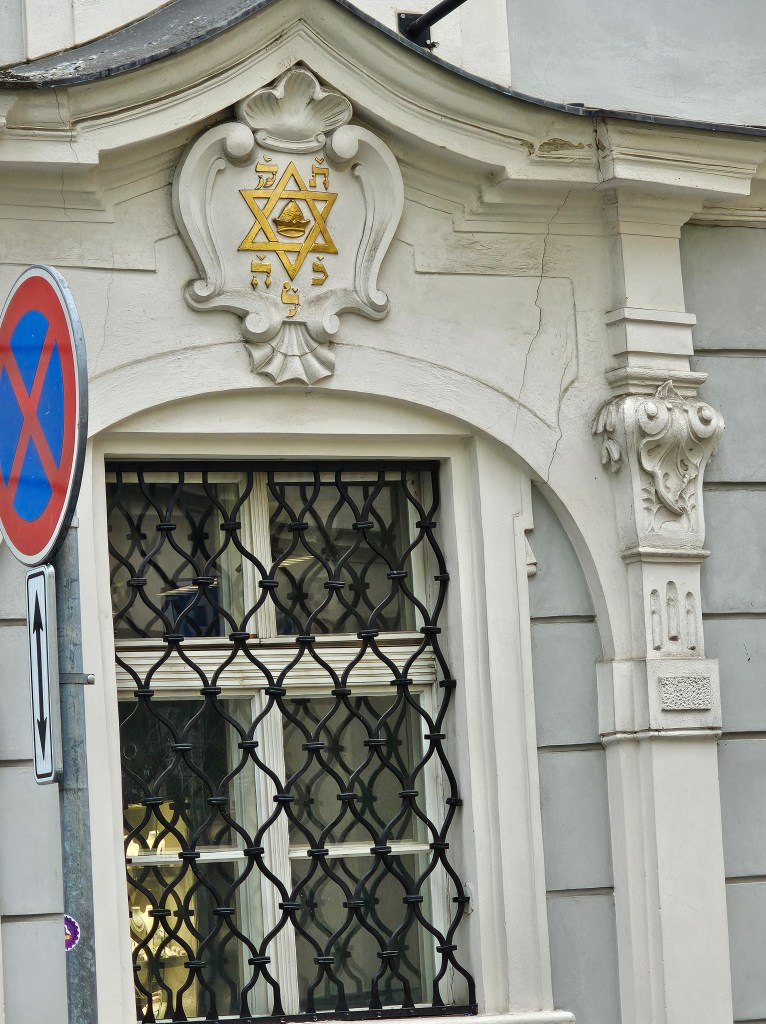
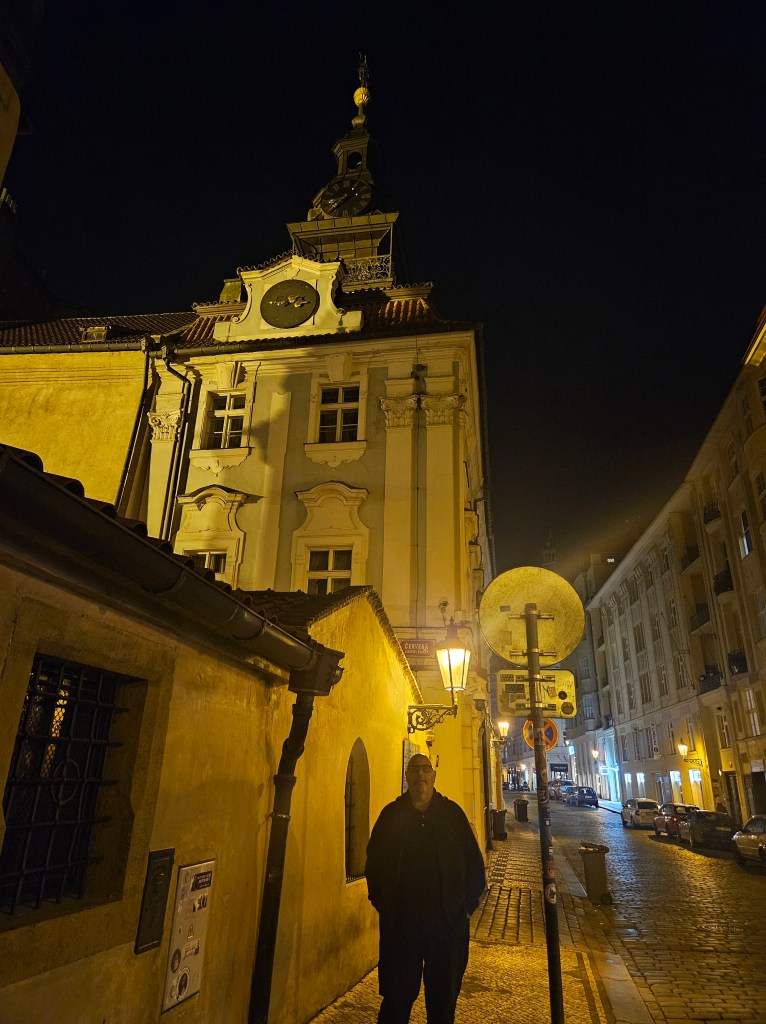
    At the start of the tour, we heard the clocks of the High Synogogue, with Roman and Hebrew numerals strike, 9am. We learned that the Jewish population dated back to the 10th century traders who settled by the river. By the 13th century, the community was restricted to a defined ghetto. The yellow hat that Jewish men were obligated to wear symolizes the Jewish community and eventually became a symbol of pride; you can see a representation inside the Magen David below. This building is an active shul and is open for regular services.

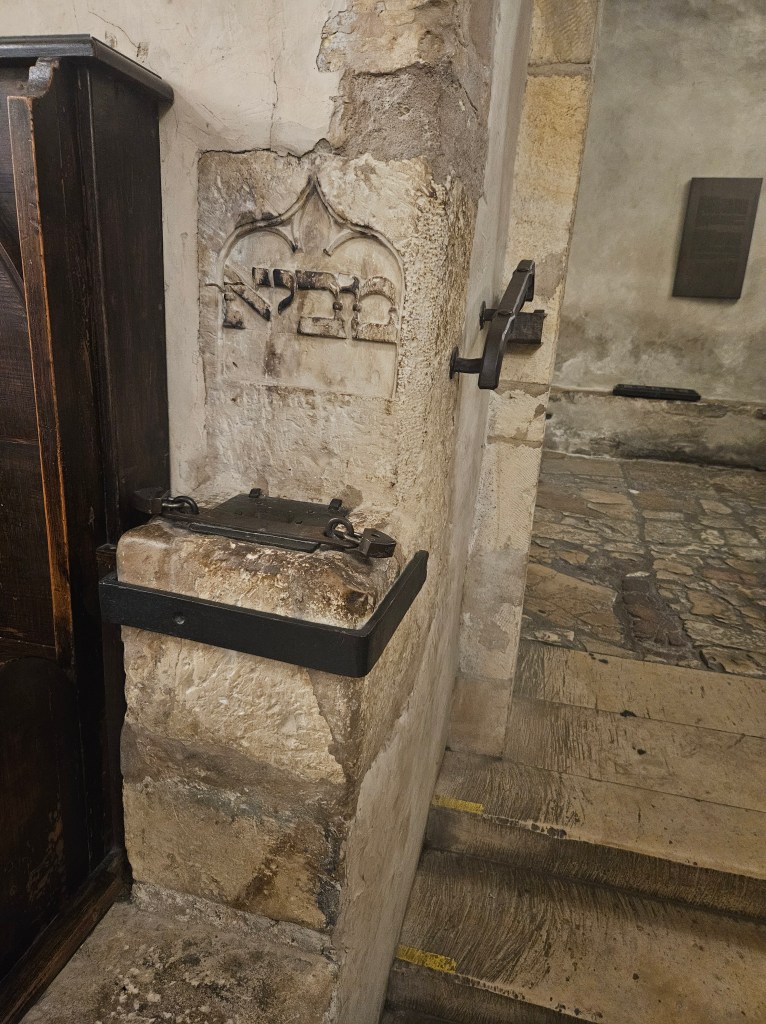
    We went into the Altneuschul (Old New Synogogue), which dates to the 13th century and is still in use. It was designed by a monk who had built a nearby chapel that the Jewish leaders admired. When the synagogue was built, the Jewish leaders saw that the intersecting gothic arches formed a cross, so they had ornamental arches added lest there be any confusion. Legend has it that a golem lives in its attic.

    Over the centuries, though the community thrived especially as traders, kings and queens subjected the Jews to a variety of restrictions, banishments, and heavy taxes, notably in the 18th century under Maria Theresa, sometimes repealed and reworked.

    We continued to walk through the area that was the ghetto. While many of the shuls and main buildings survive, homes were destroyed in the late 19th century to make way for the striking art nouveau style apartment blocks. Currently, many high-end stores like Prada and Gucci have shops in the district. They are largely devoid of shoppers, as it was mostly Russians who had frequented these, and sanctions prevent them from spending money in Czechia. (Side note, while Czechia is the name preferred by the government, everyone we met referred to the country as the Czech Republic. Indeed our tour guide seemed perplexed by our uses of the new name.)

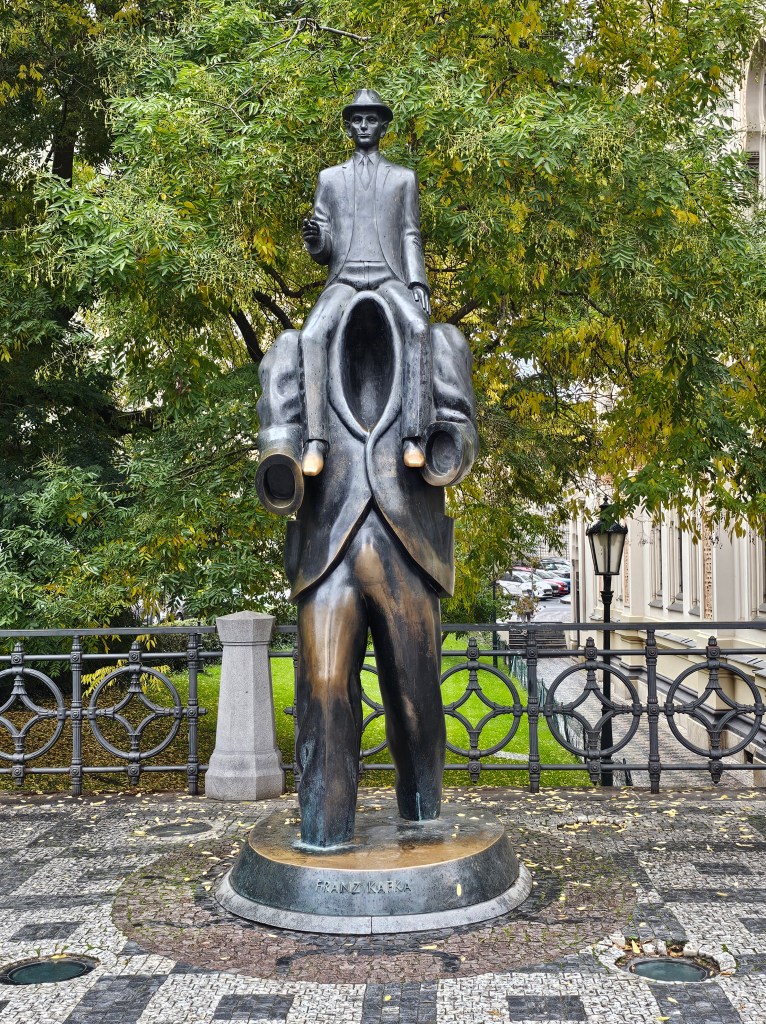
    Here is a statue of one of Prague’s most famous Jewish residents, depicting Kafka as the insurance employee that was his day job and his preferred role of writer.

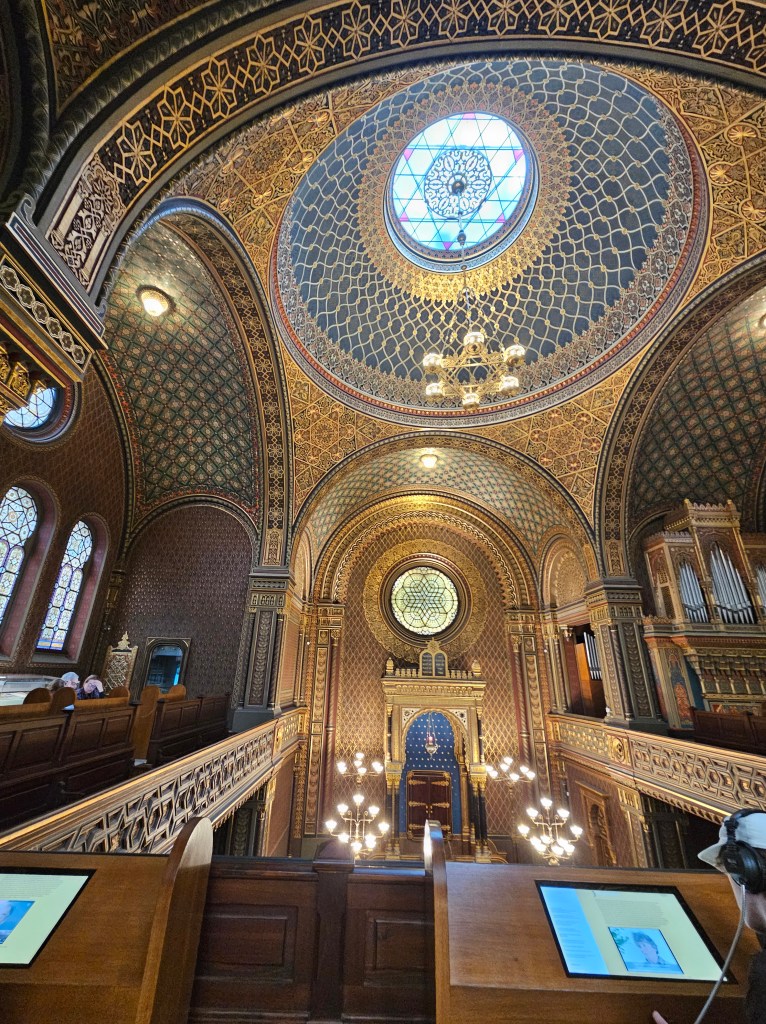
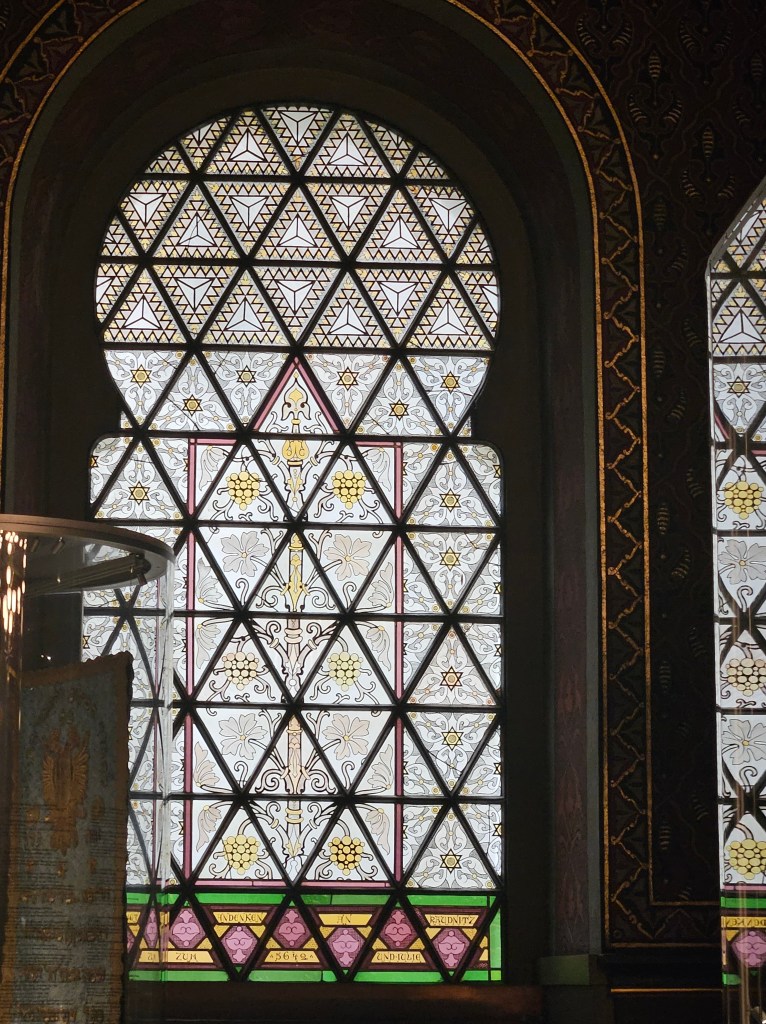
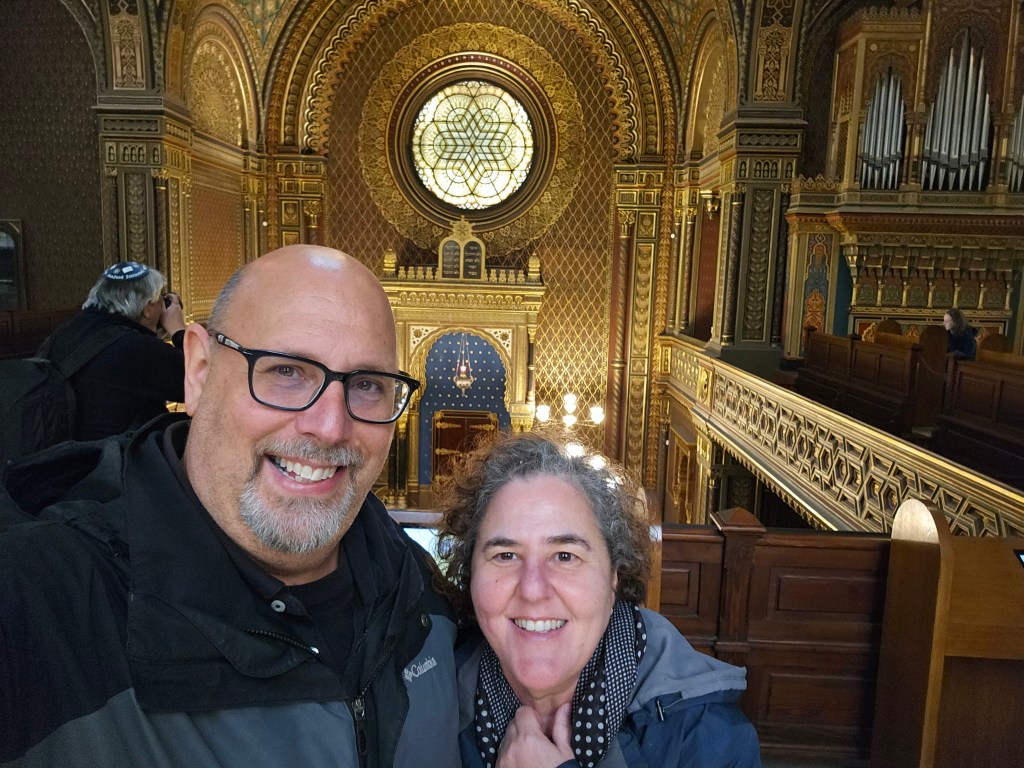
    The ghetto restrictions were lifted in the mid-1800’s, and the Jewish community thrived. A new shul was built on the site of the former Old Old Synogogue. This one was designed to echo buildings in Spain which combined elements of Jewish, Islamic, and Christian traditions. The feel of the shul is closer to Conservative and Reform. A favorite detail: hamentaschen stained glass windows.

    While the building is now a museum, it is rented out for weddings and events. An additional building, the Winter Shul, was built as an attachment in 1935, as a smaller, warmer sanctuary. The irony in the year is obvious. After the war, it was used to house Jewish children who had been hidden by Czech families, while their relatives were sought out.

    Our guide told us about Jewish life in the 70s and 80s, with a movement among Jews to reclaim traditions while being closely surveiled by the state. The newer Jewish cemetery (not the one seen below) was the best meeting place for the community. She said that now, Prague and the Czech governments are very welcoming to the 2,000 Jews living there. We saw kosher restaurants and hotels that serve both residents and visitors.

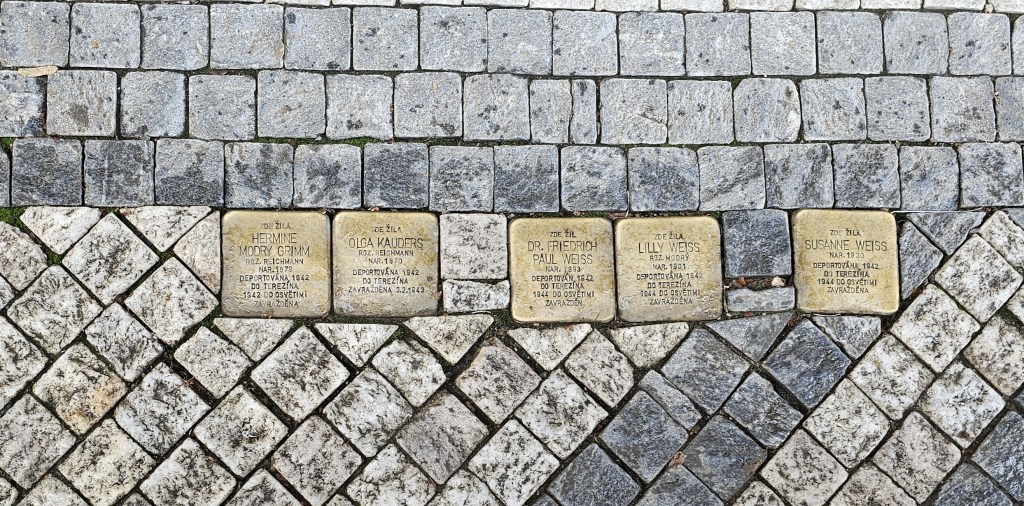
    As we walked on the street, we saw brass cobble stones marking the former residences of Jews who were murdered in the Shoah. Our tour guide encouraged us to look for similar stones all over Europe.

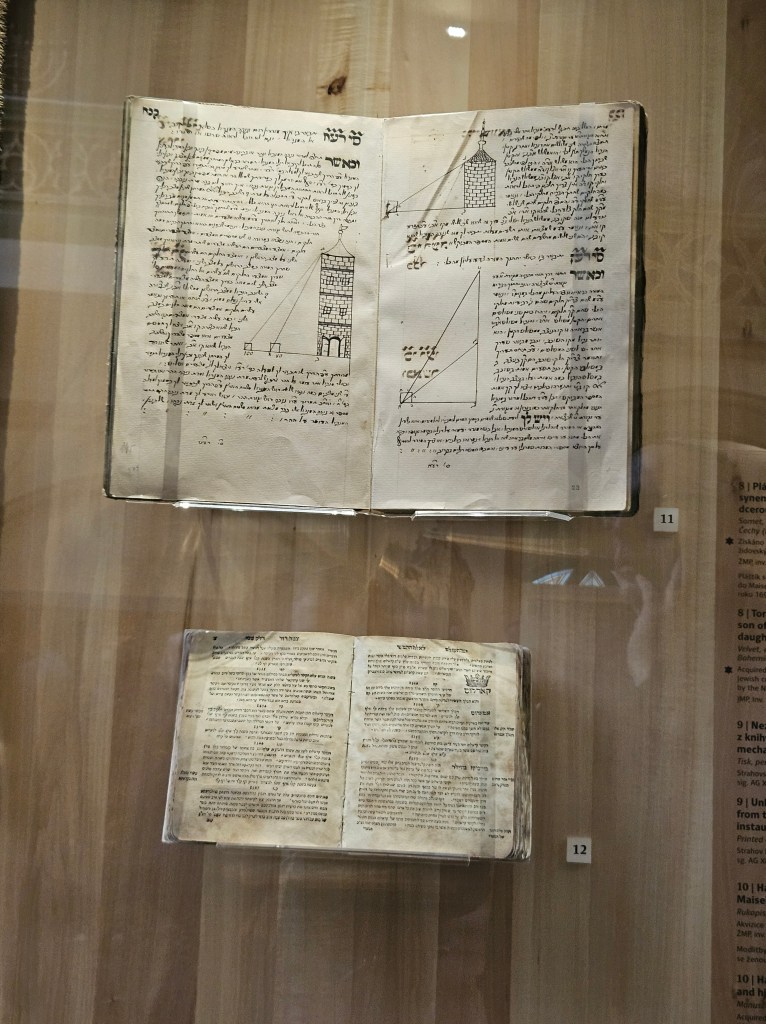
    We next visited a shul, the Maisel Synagogue, that had been constructed in the 1500s for and by the wealthy Maisel family. It is also now a museum. Like all of the buildings we entered, this one is administered by the Jewish Museum of Prague. The exhibit included a book with the building plan. Russell enjoyed the trigonometry.

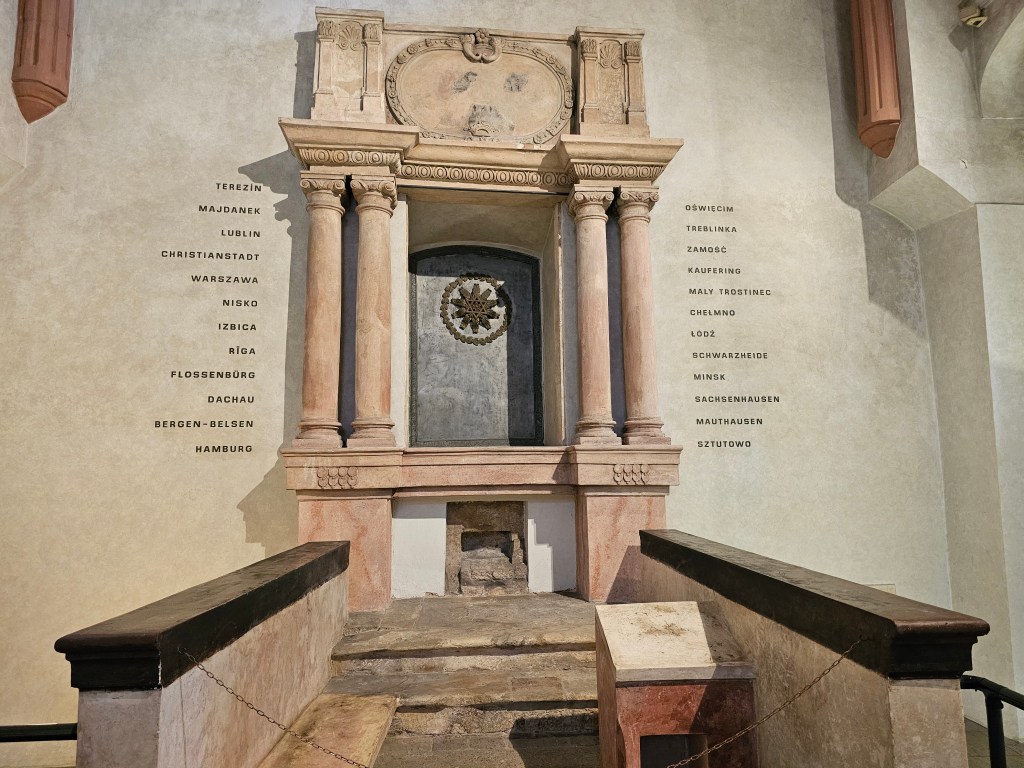
    Finally, we visited the Pinkas Synagogue, which was built by the wealthy Horowitz in the 16th century. It is now a memorial to the Czech victims of the Shoah. The names of 77,297 perished are written on the walls in red and black. We didn’t take a picture. The ark is surrounded by the names of death camps. A solemn place.

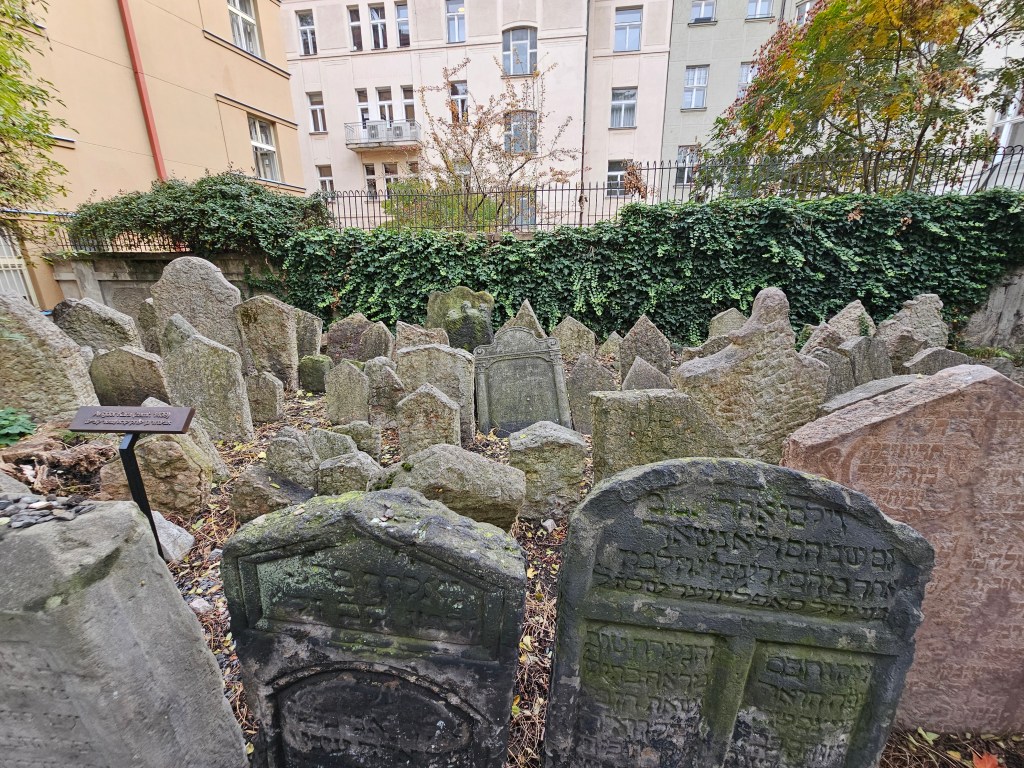
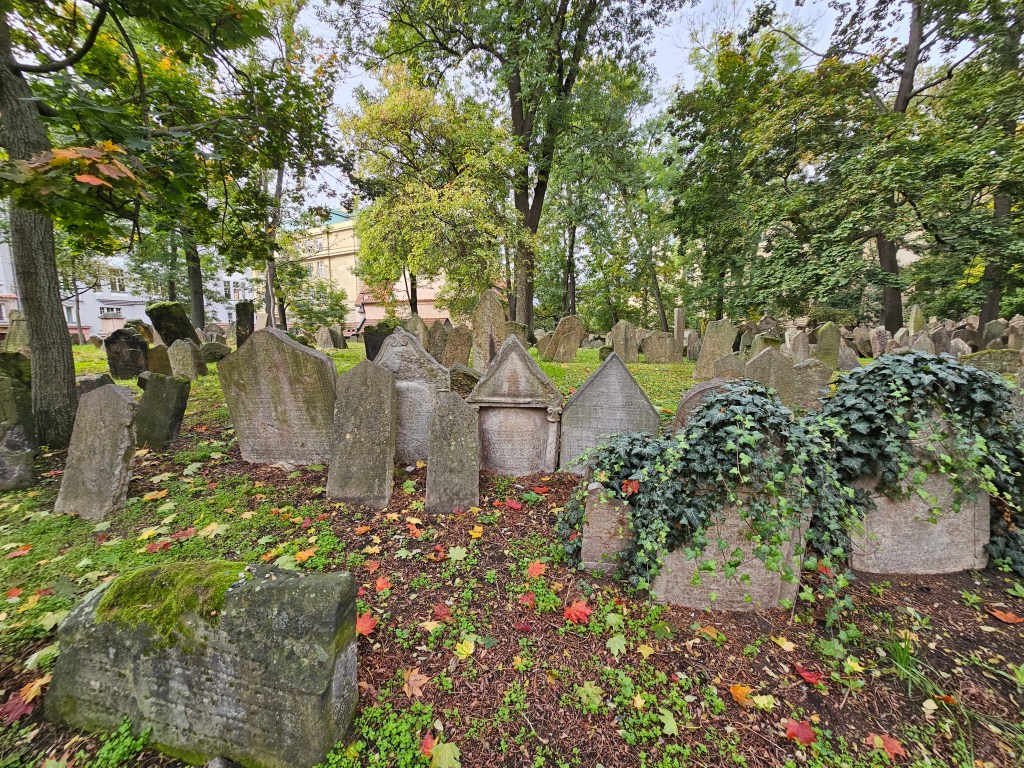
    Finally, we visited the old Jewish cemetery. With very little land available to the Jews, they managed by burying in layers. When they ran out of room, they put in another layer, as many as 12 deep, and then enough earth added to remain halachalically correct. The tombstones are all akimbo, some very easy to read, others worn away by the years.

    The tour was the rollercoster of Jewish European experience; rejection, acceptance, assimilation, thriving, expulsion, death, and rebuilding. It was an emotional experience. We left reminded of what the Jewish people have been through, how sad it is that we are so divided now, and yet, hopeful for the future as we always manage to survive. Am Yisrael chai.

  • We landed in Prague Tuesday afternoon. Russell was recovering after a very busy period of prepping for his interviews and presentation, and then traveling to Edinburgh and The Hague to do them over a 5-day period. All went well!

    That evening, we explored our neighborhood a bit and had dinner and a liter of white wine at a Baltic restaurant.

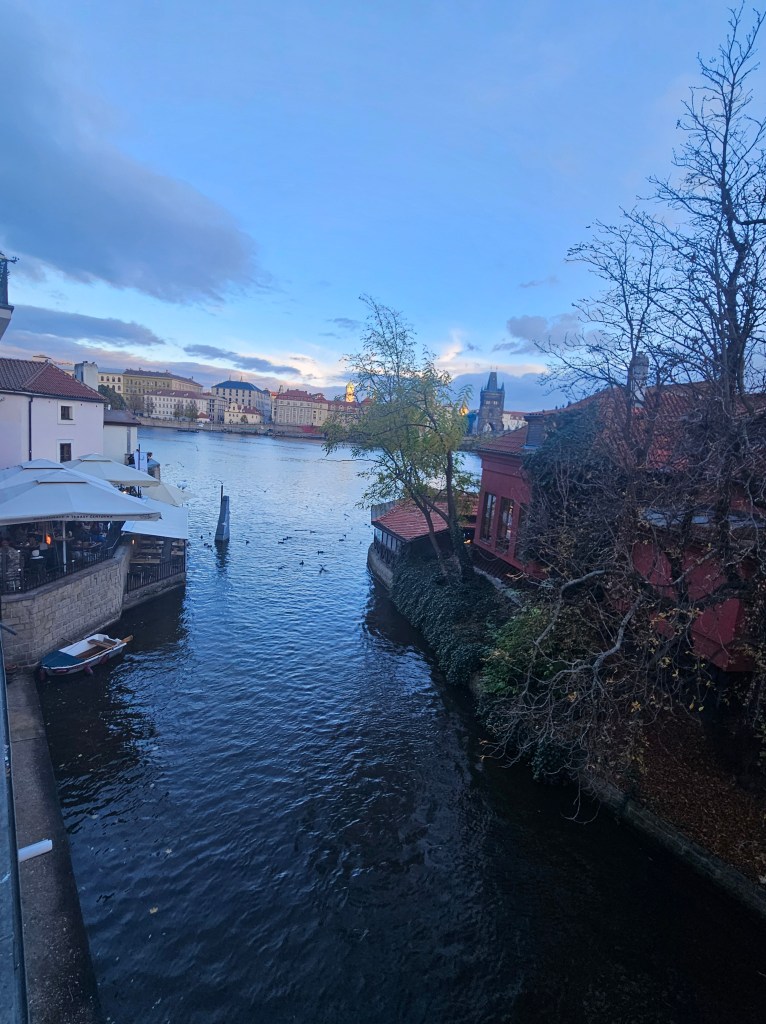
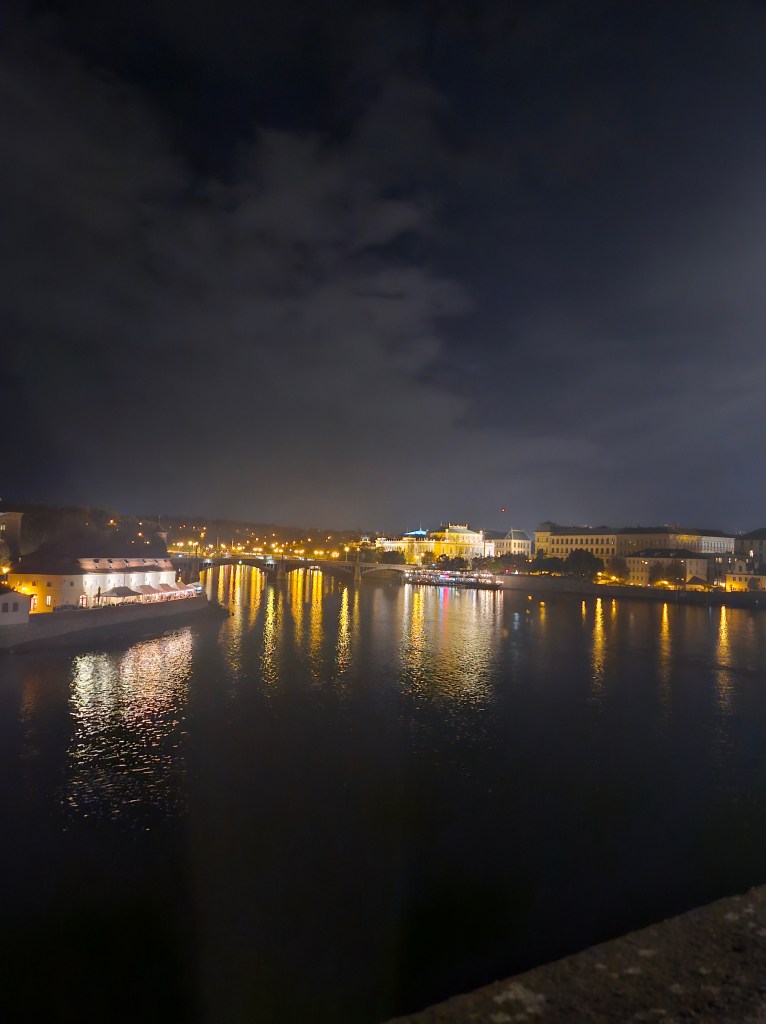
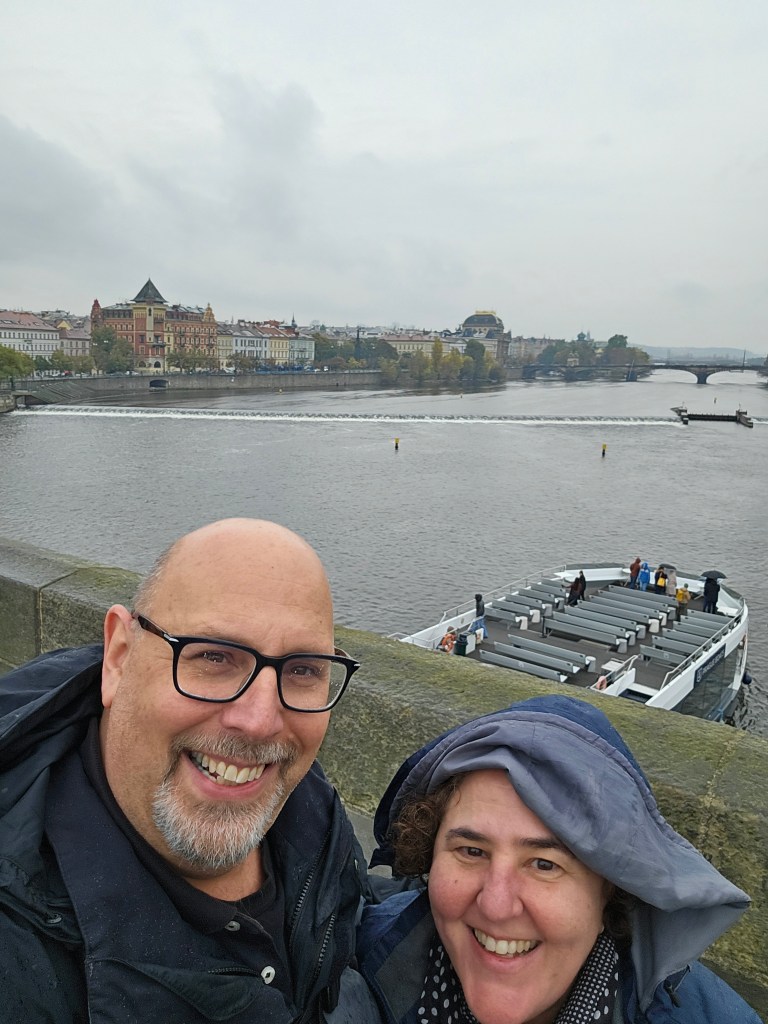
    Our comfortable, funky apartment (the toilet was in the kitchen; the bathtub and sink were in a closet in the bedroom) was right on a little branch of the Vltava river across from the Old Town, in the Malá Strana neighborhood on the west side of the Charles Bridge. We had a lovely view from our windows, especially leaning out a bit. We took things easy our first day, catching up on laundry and getting some rest. Our foray into the Old Town during the day was a bit overwhelming. The number of tourists was more than we had experienced anywhere, including Paris and Barcelona. The large tour groups following their leaders through the main sights of Old Town made for a claustrophobic atmosphere. We try to keep in mind that there is no denying that we’re there to see it too, but it was dizzying.

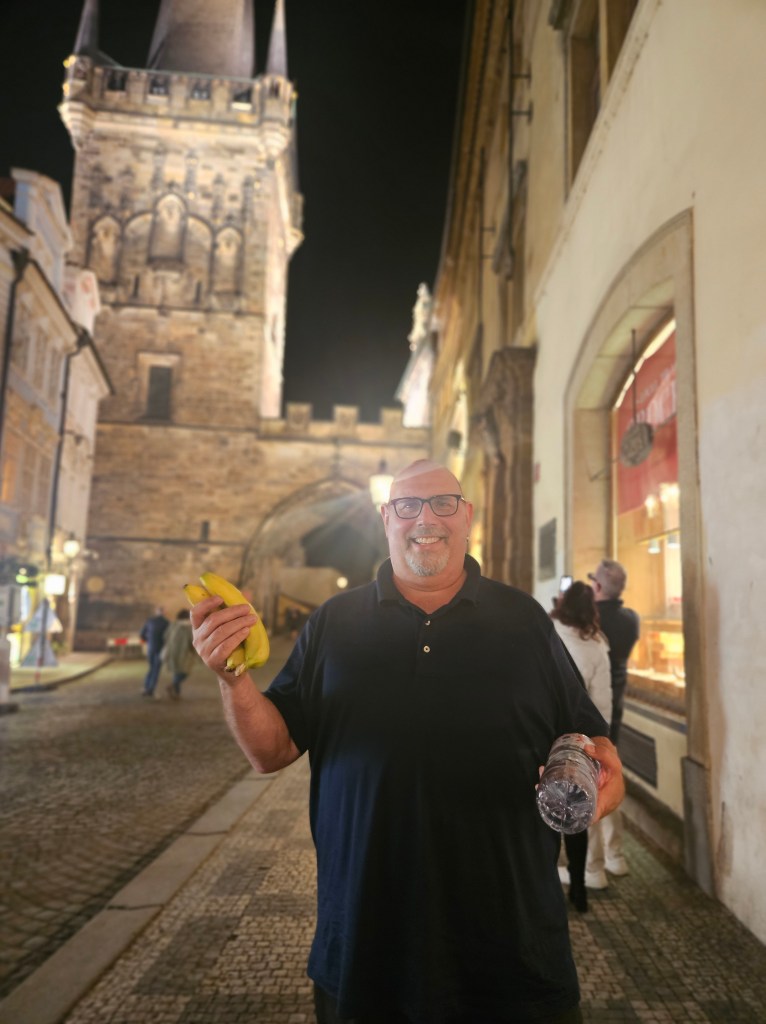
    In the evening, we went to a pizza place that happened to be in the old Jewish quarter, where we would later in our trip have a tour (more on that in a later post). Happily, we discovered on our walk to dinner that quick turns off of crowded blocks often led to quiet corners where we could breathe.

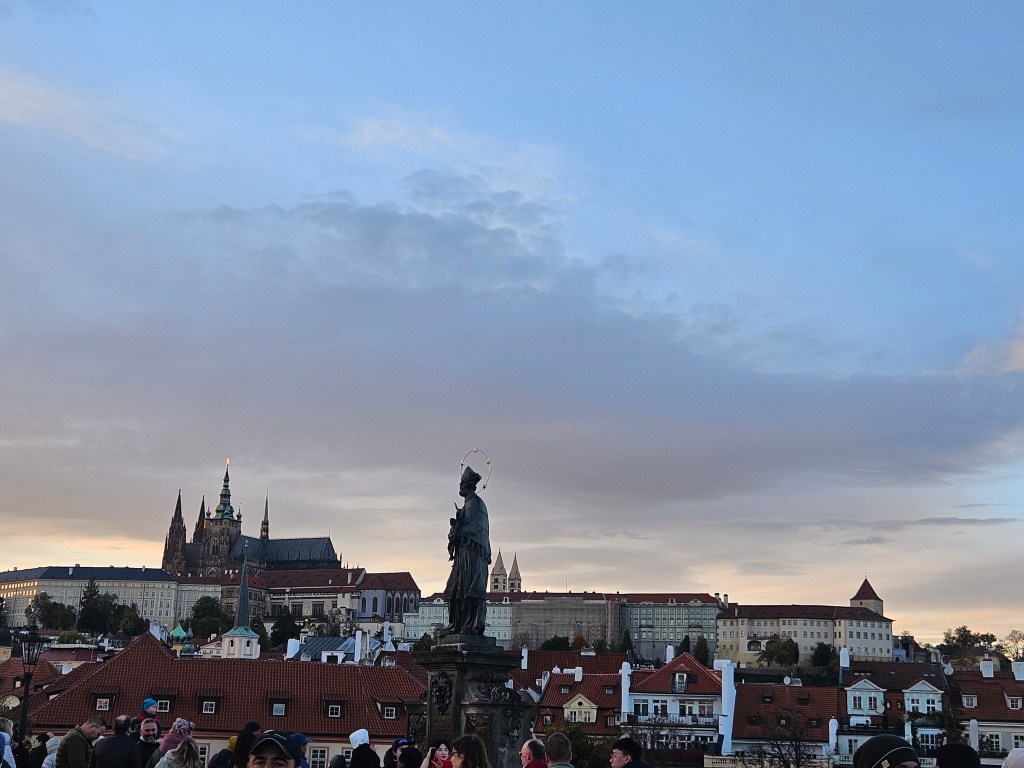
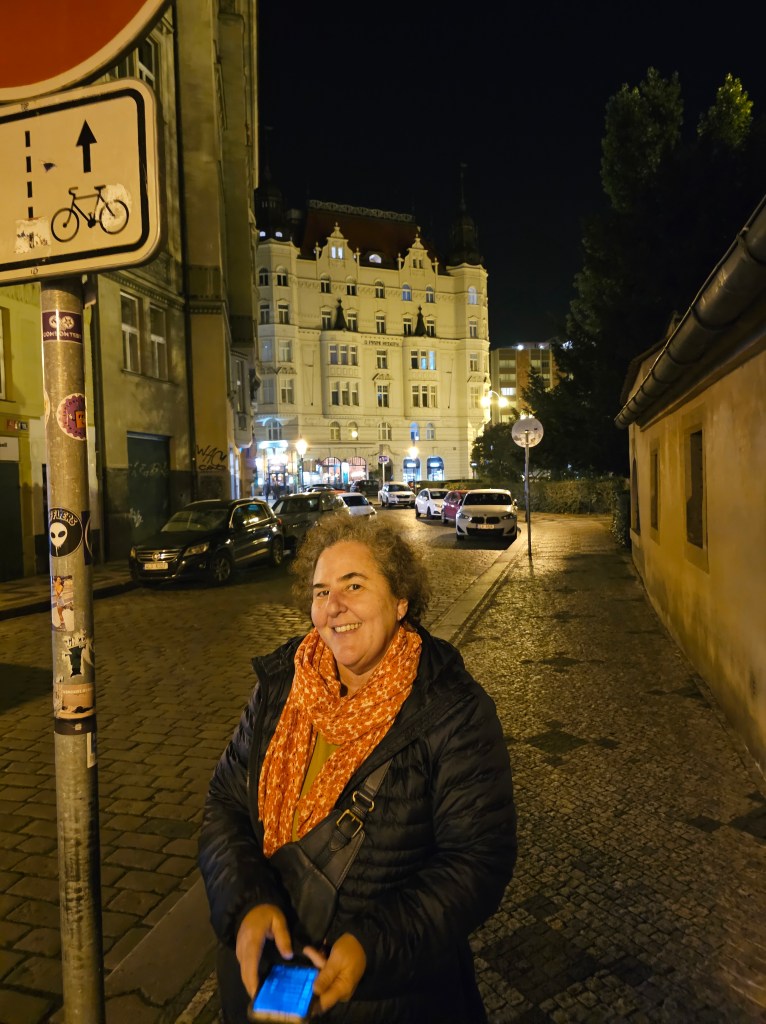
    It really is a beautiful city. Everywhere you turn there are spectacular buildings, with intricate detail, or long views of castles. And hordes of tourists.

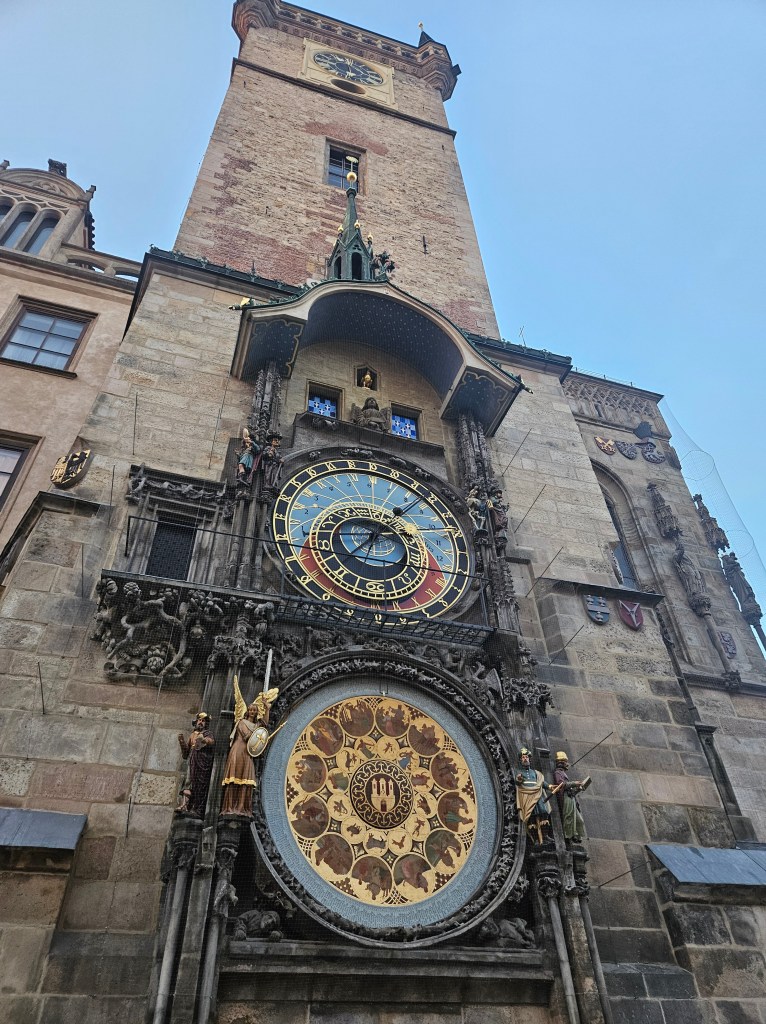
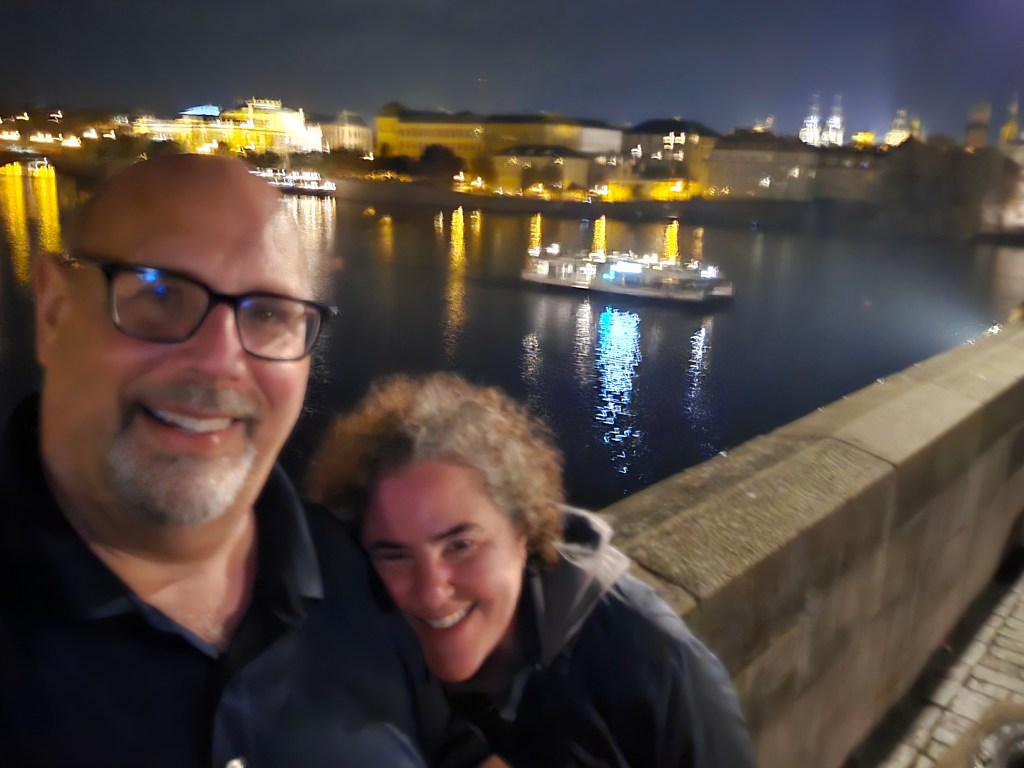
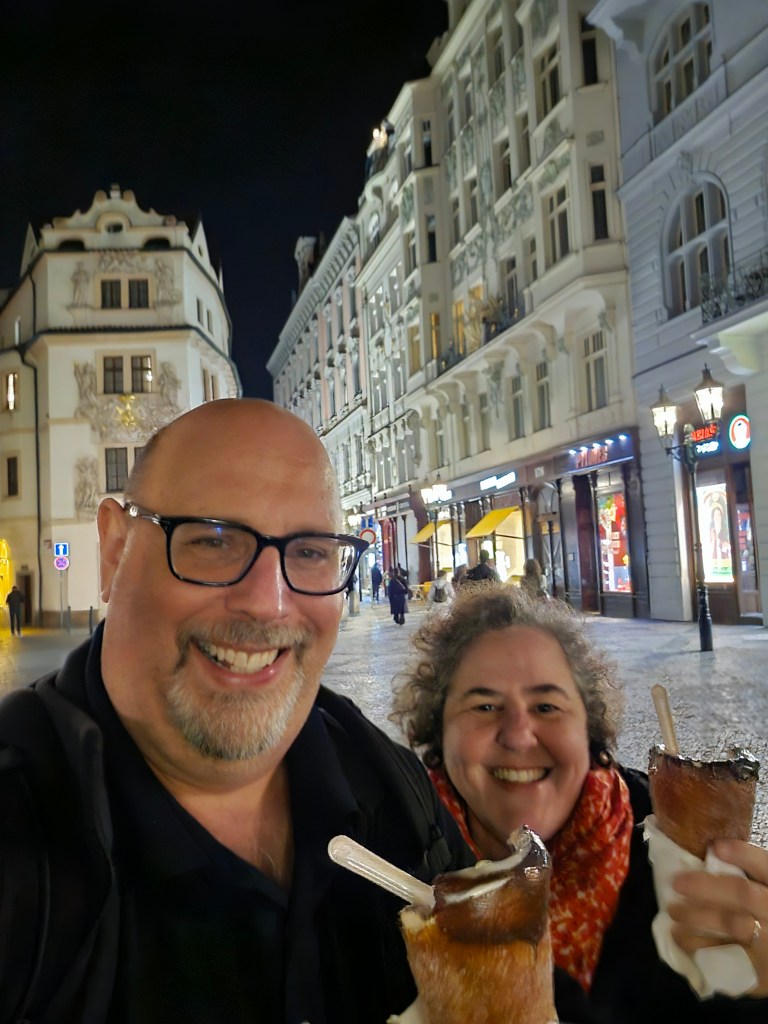
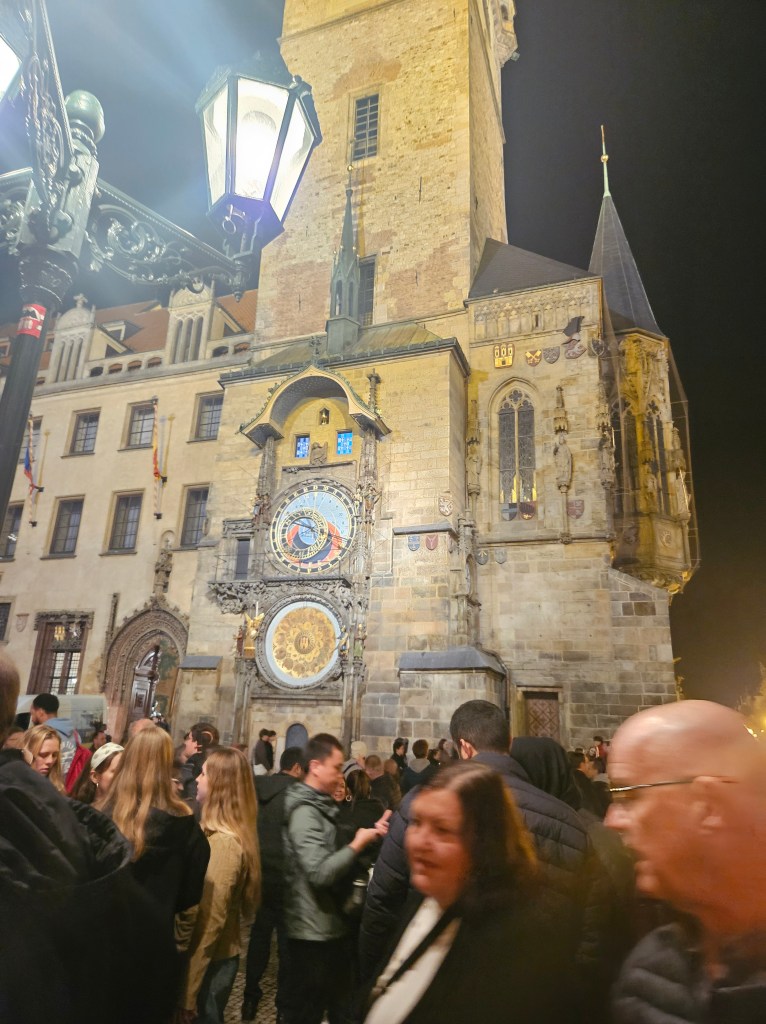
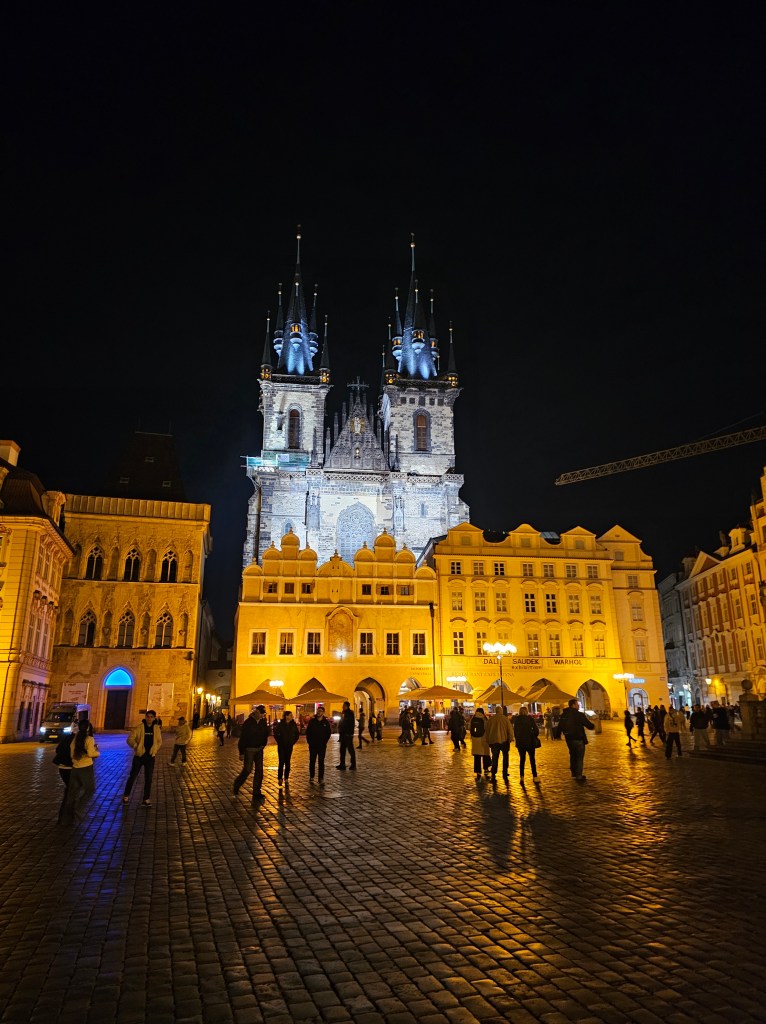
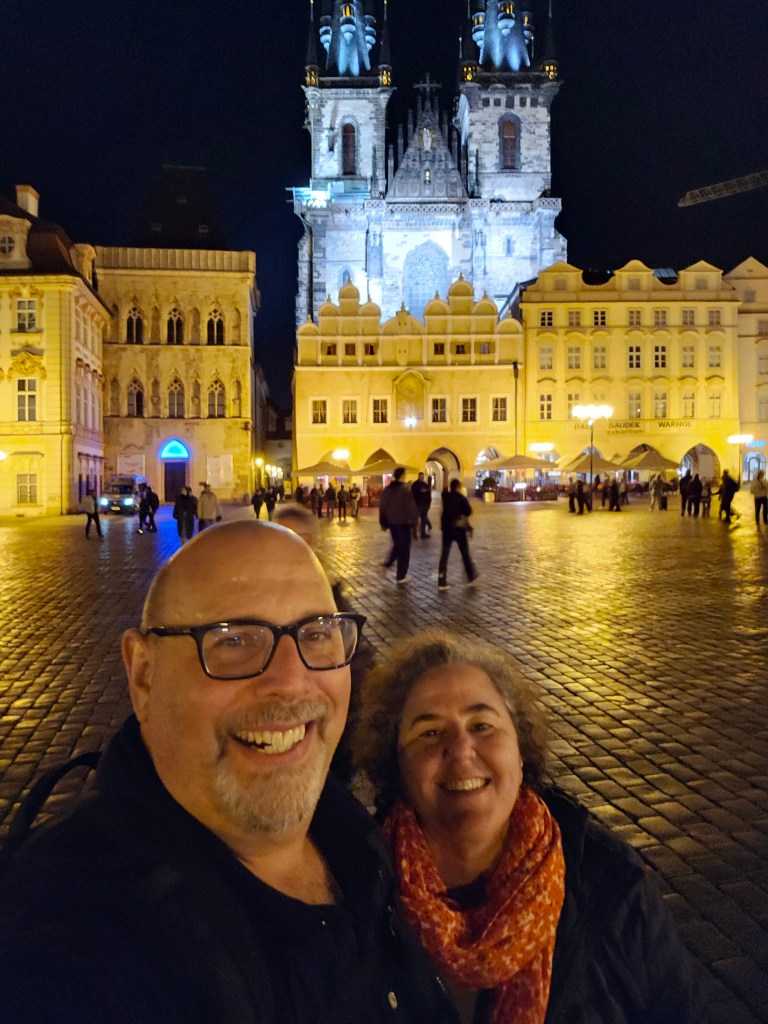
    We indulged in silly tourist food #1, Trdelník (chimney cakes) which aren’t authentically Czech from what we understand, but are nevertheless tasty: a fresh warm cake tube, in this case filled with chocolate sauce and vanilla soft serve. We stopped by the famous astronomical clock to see the apostles roll by with the hourly chimes at 9pm. We also saw the Disney church, so called because of its spires which look like Sleeping Beauty’s Castle, clearly the inspiration for the church. We headed home, having gone through a bit of a rollercoaster that day but also charmed by the city.

  • After an excrutiating 2 days apart, Emily and Russell reunited at Schiphol Airport and took the train to the Hague.

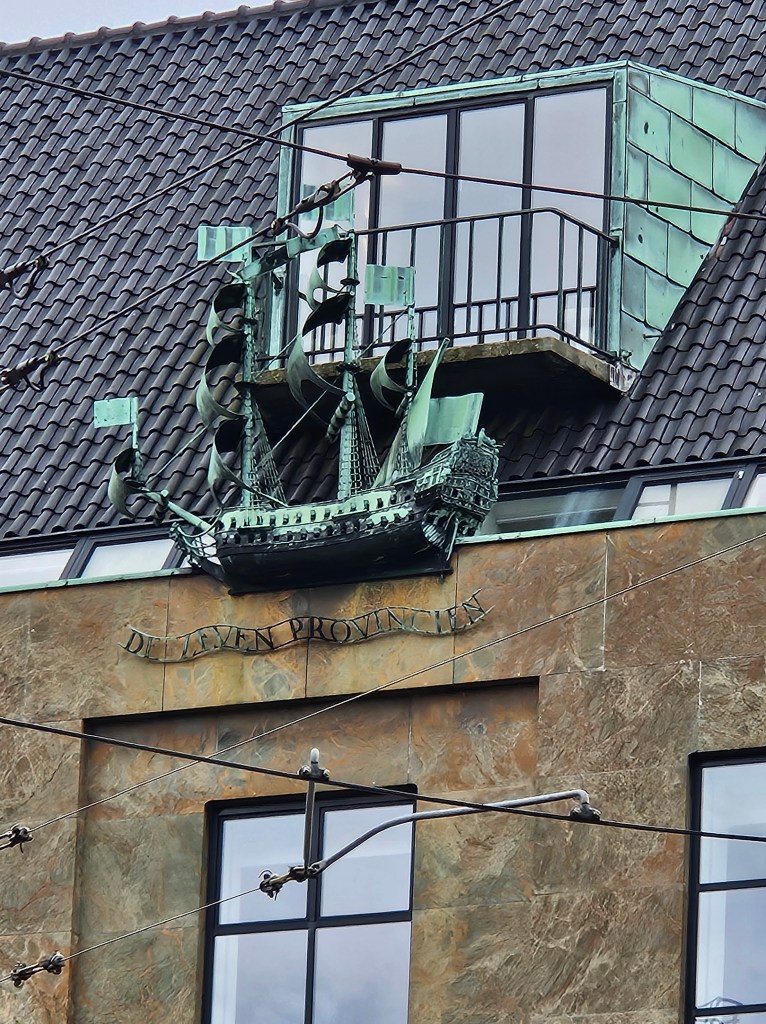
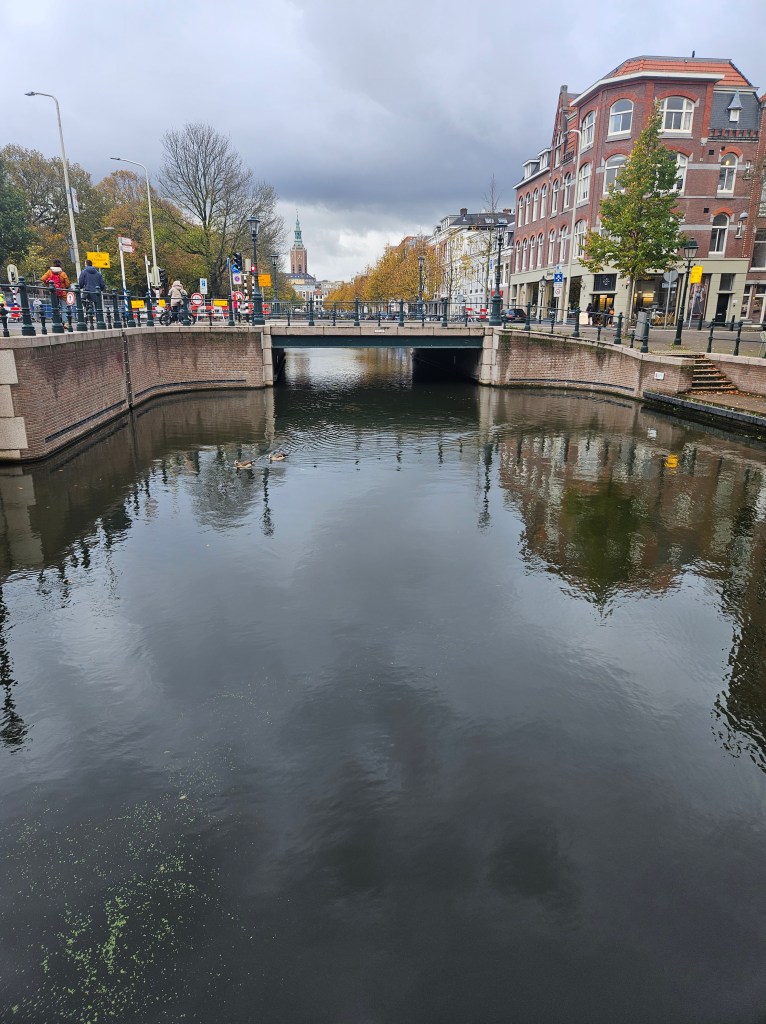
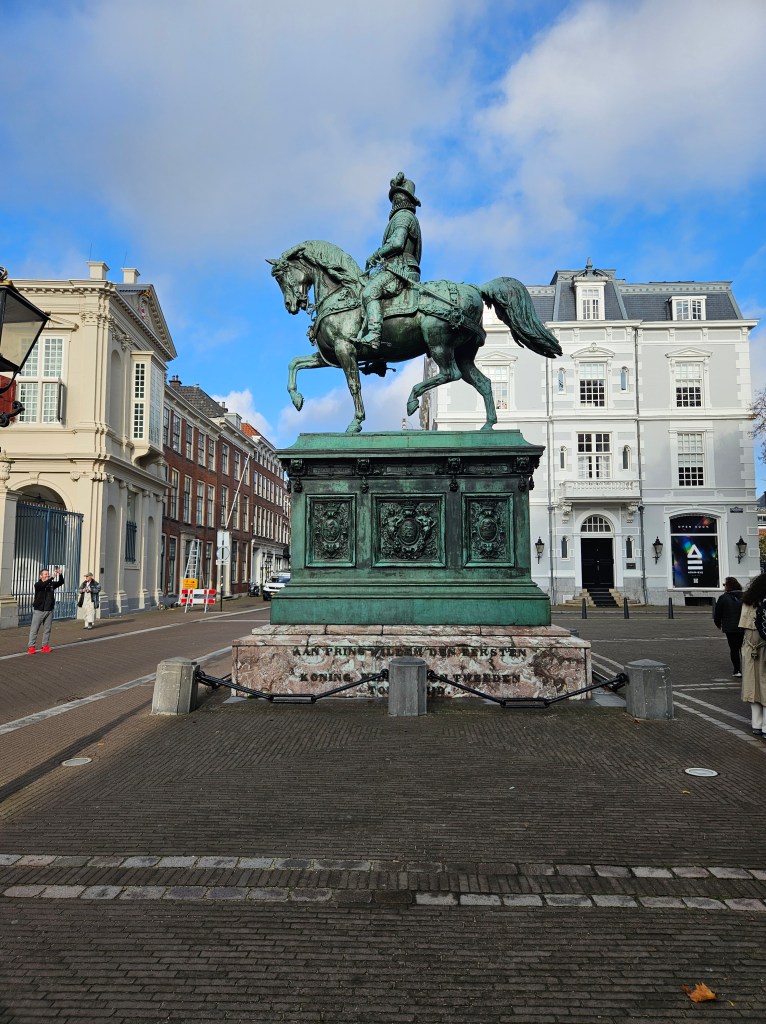
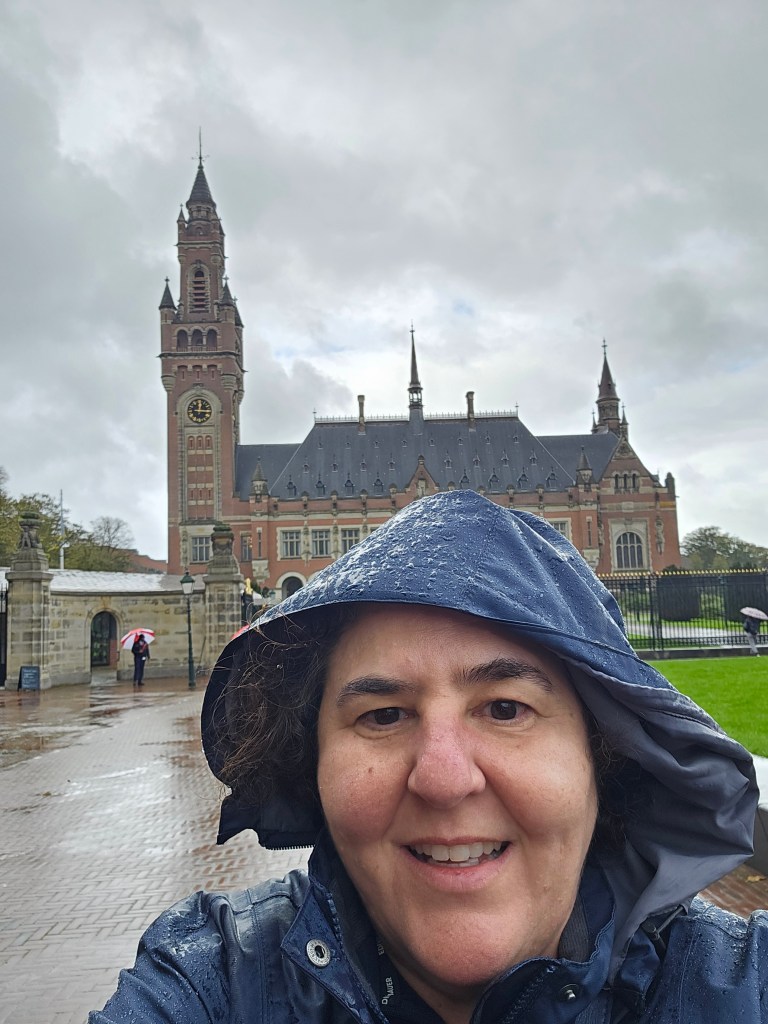
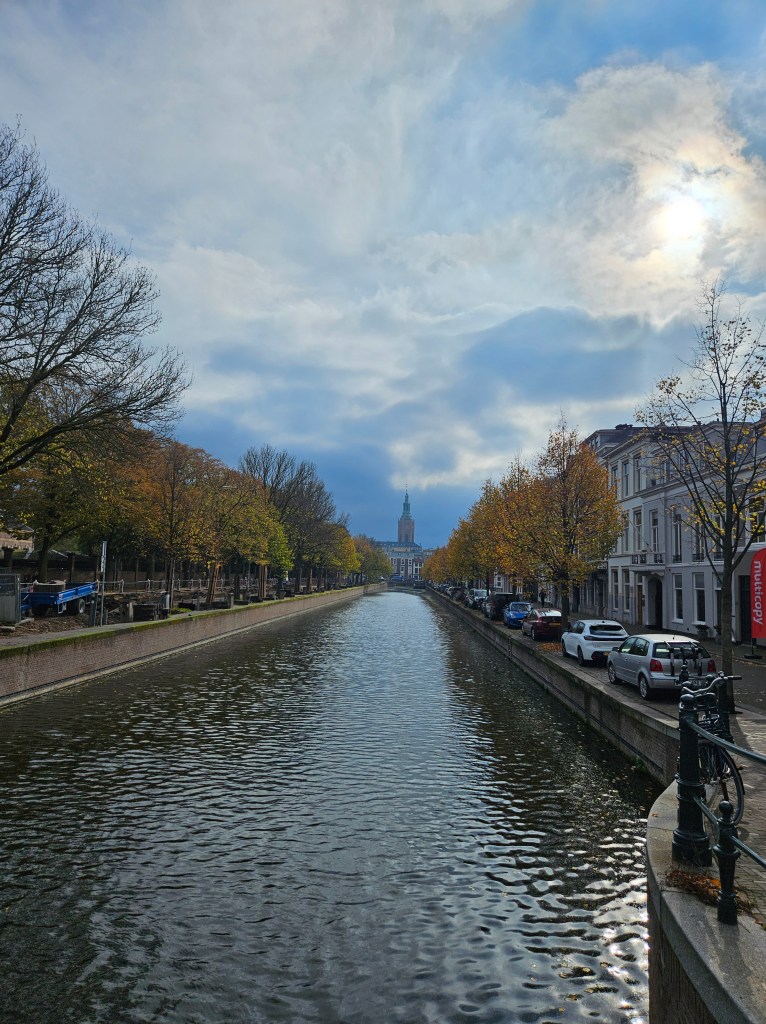
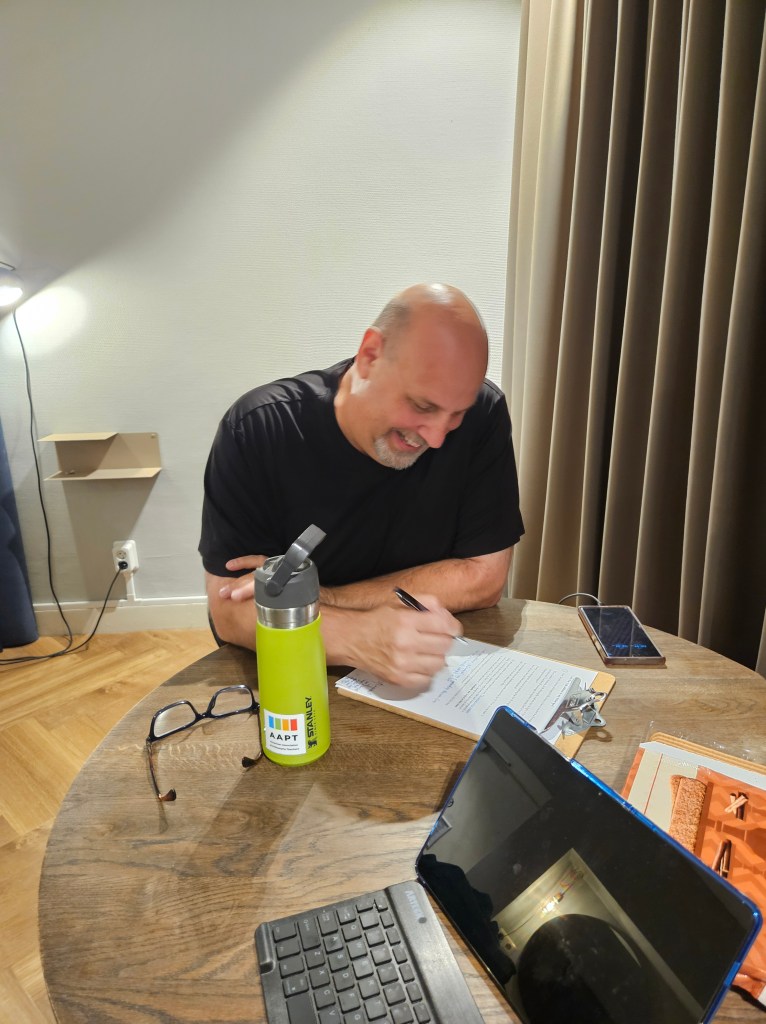
    The next day, Emiliy wandered around the charming Centrum old town. It was a little bit of culture shock after a month in Spain. The weather was colder and wetter, the people were taller, the vibe was quieter. But it was a lovely place to walk and the buildings were beautiful. Meanwhile, Russell led a successful workshop on teaching writing instruction in the age of AI at the International Baccalaureate Global Center, and then did the first part of his next interview.

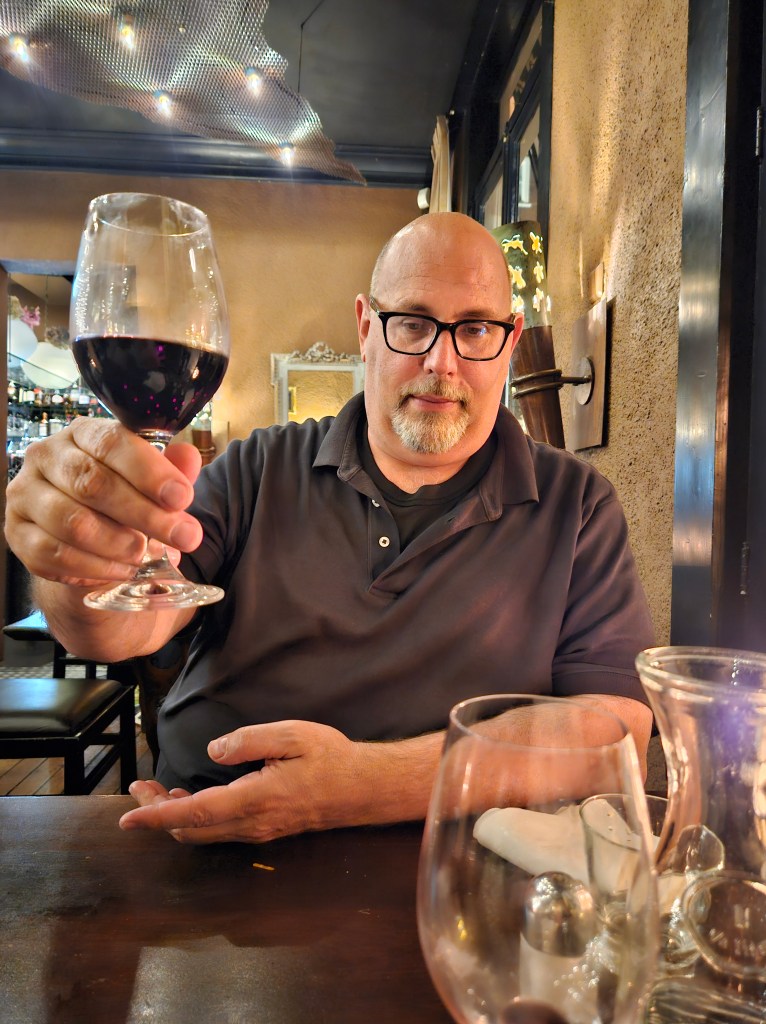
    Once again, earning his wine.

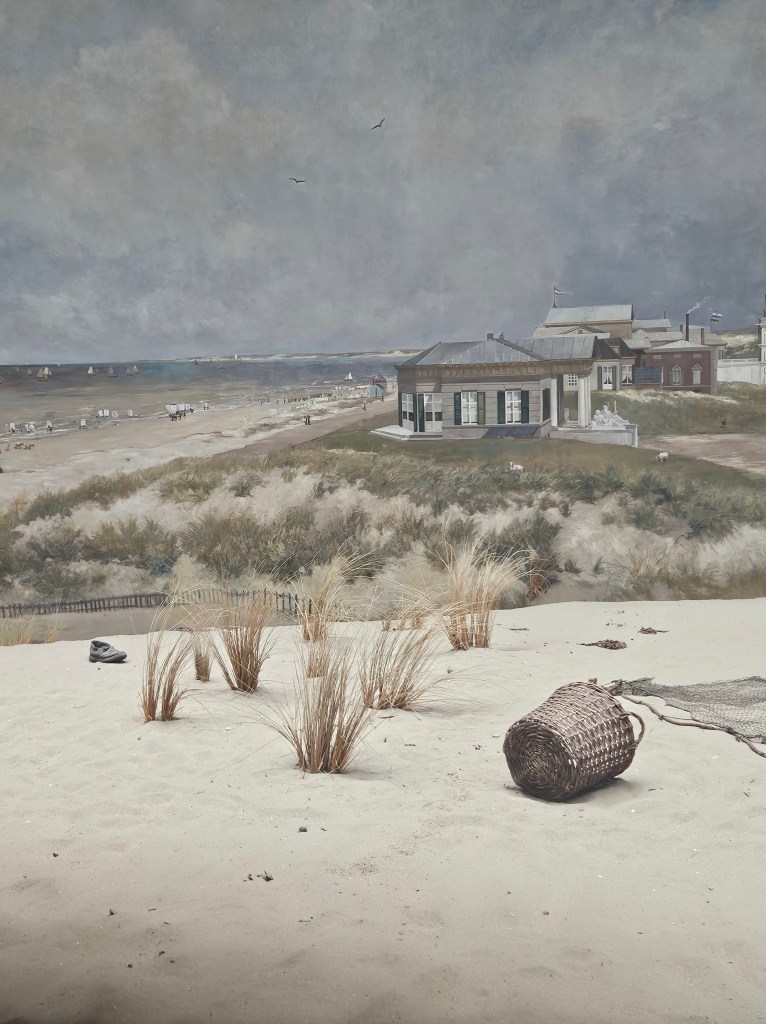
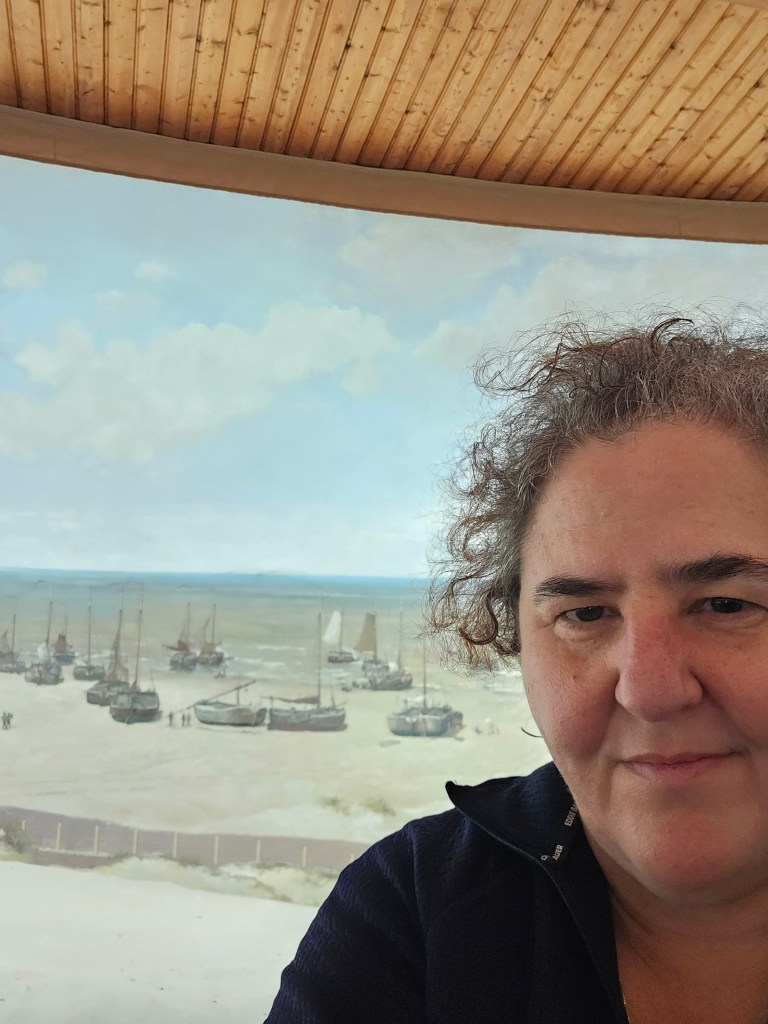
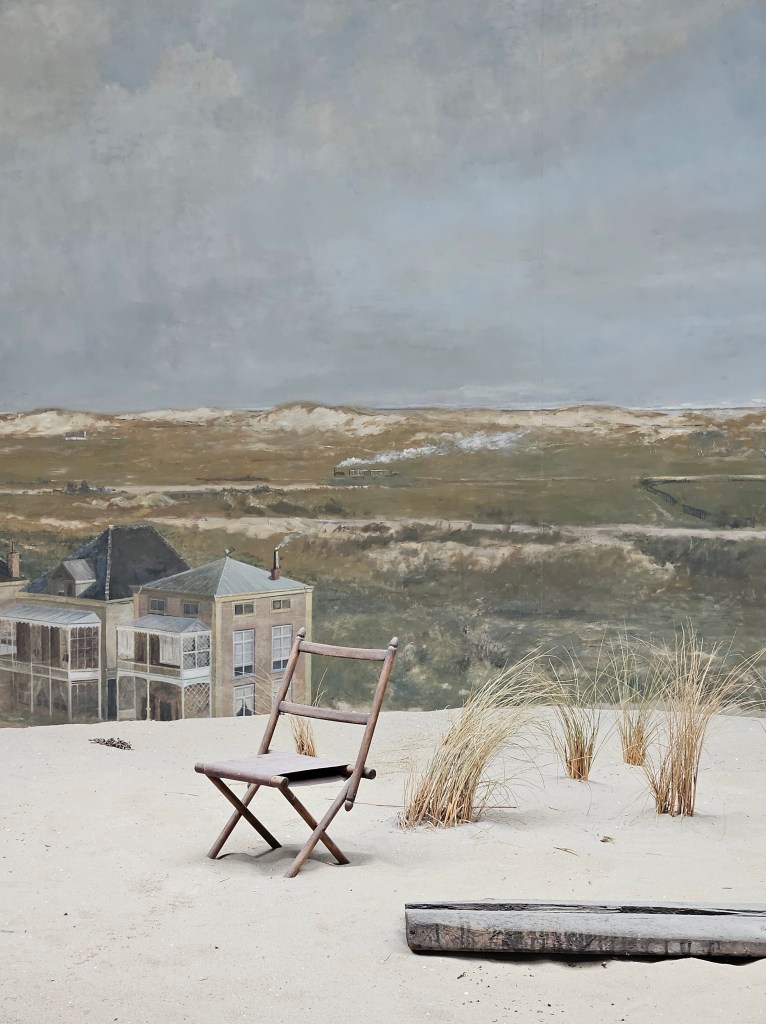
    The next morning, Russell finished up his interview while Emily went to the Panorama Museum, a stiking large-scale 360 multimedia art installation from 1881.

    Off to Prague!

  • Friday morning, Russell had an early flight to Edinburgh, while Emily continued on in Madrid.

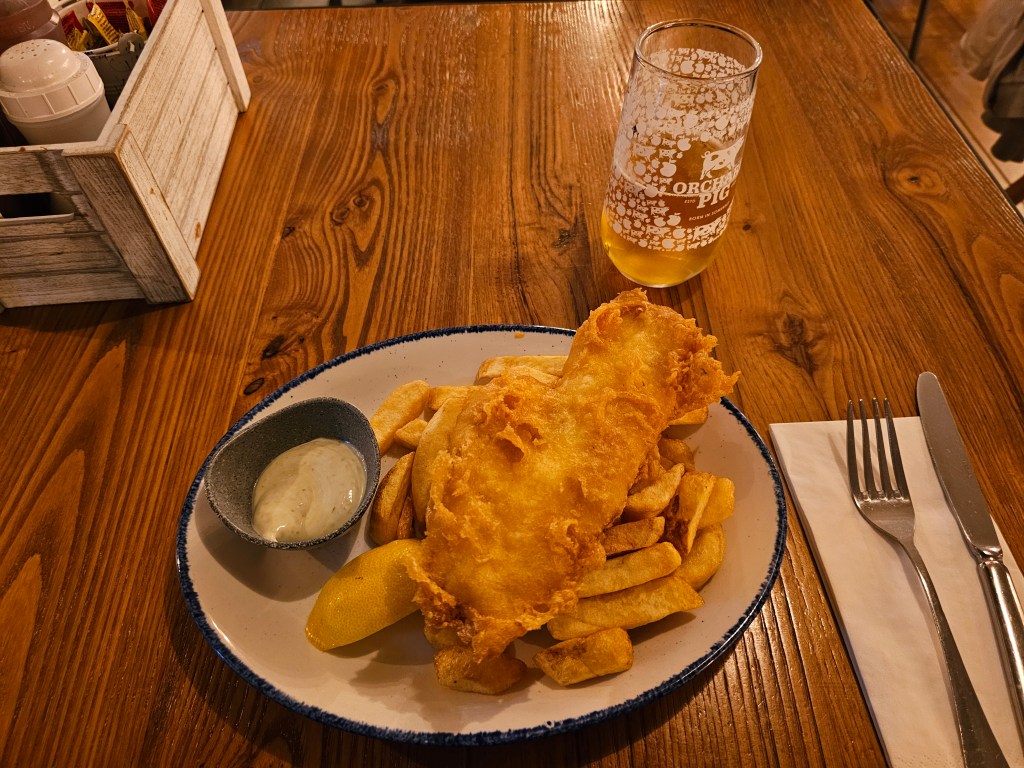
    Russell started with the most important work, securing fish & chips.

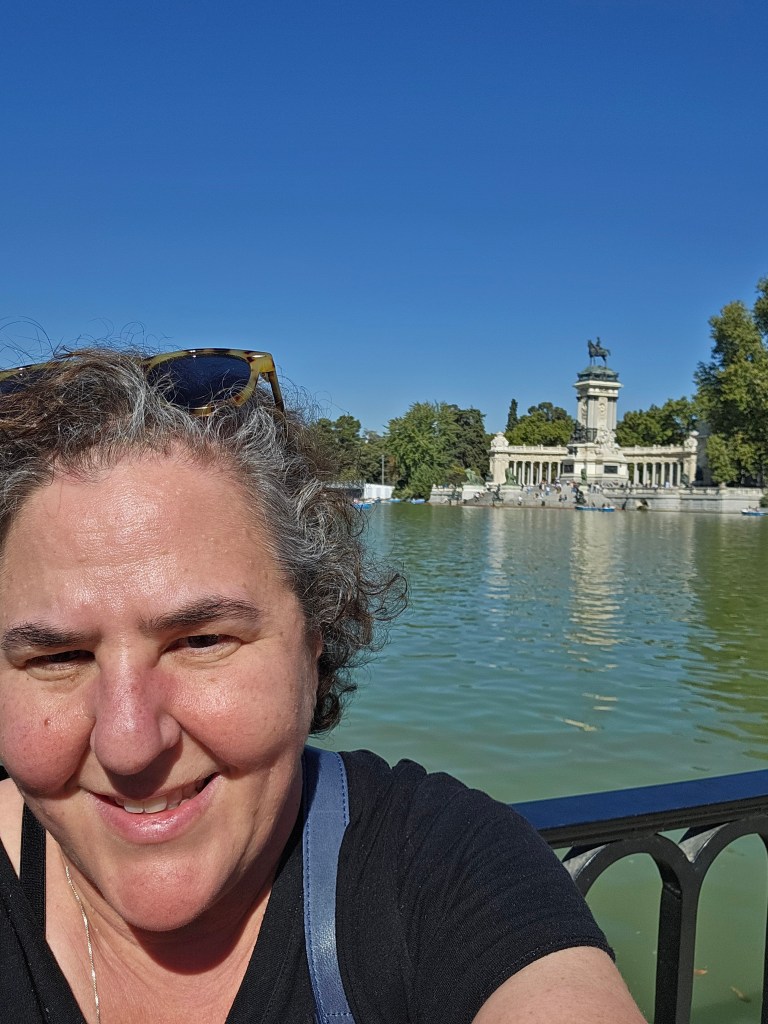
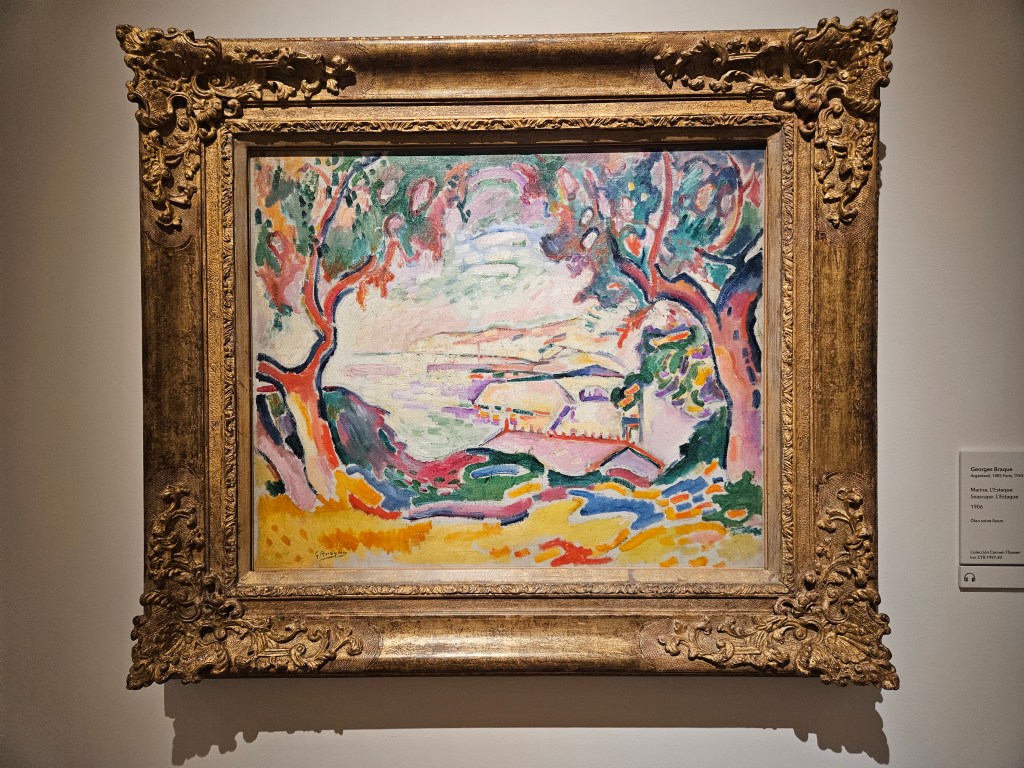
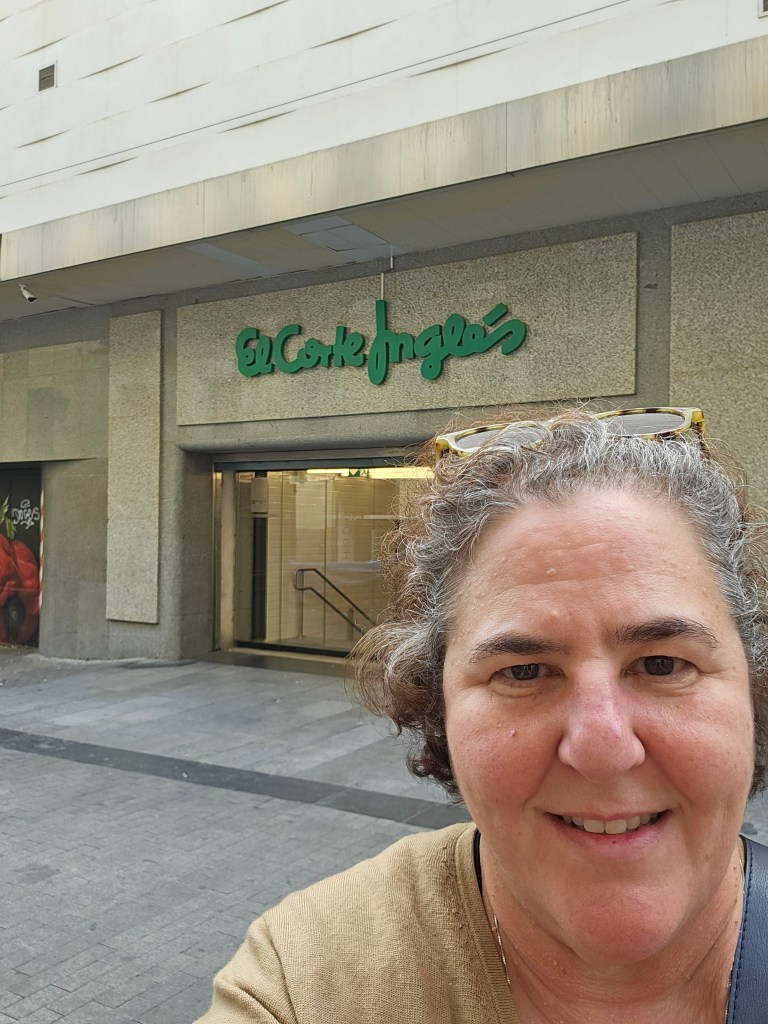
    Emily went to the Thyssen-Bornemisza National Museum, which was a comprehensive, if not exciting, collection of art from the last 500 years. There was some local art. She also strolled through the stunning Parque Retiro, which was packed with folks enjoying a lovely sunny day. She also stopped by the Corte Inglés department store, which back in 1988 had the best air conditioning in Madrid.

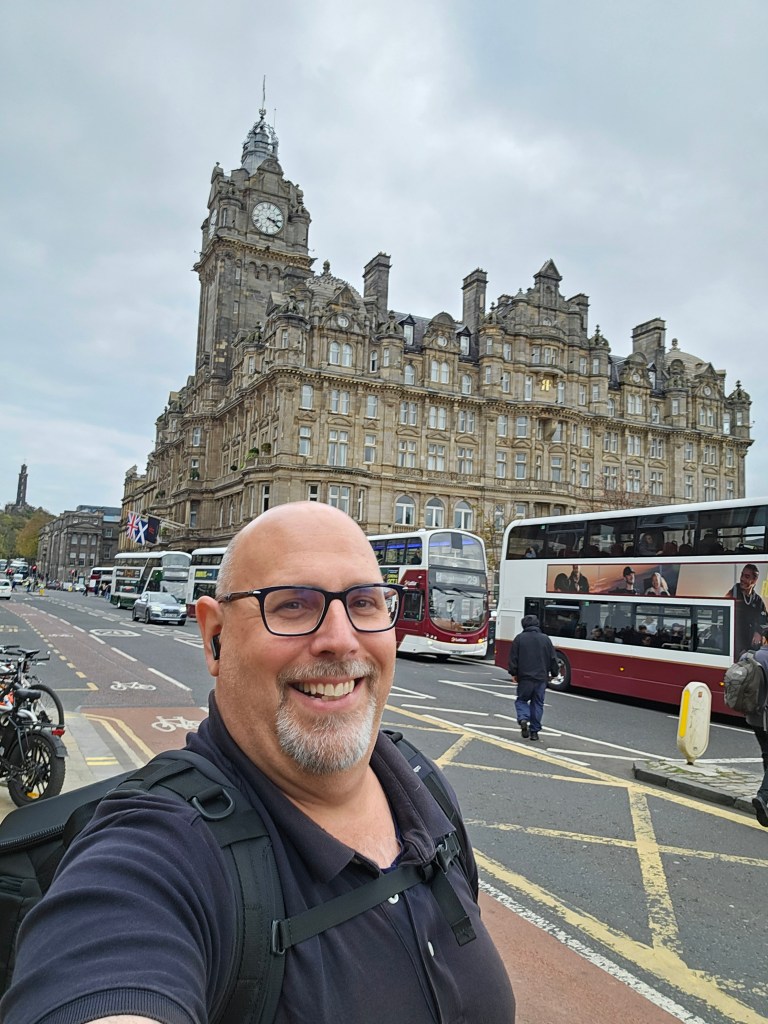
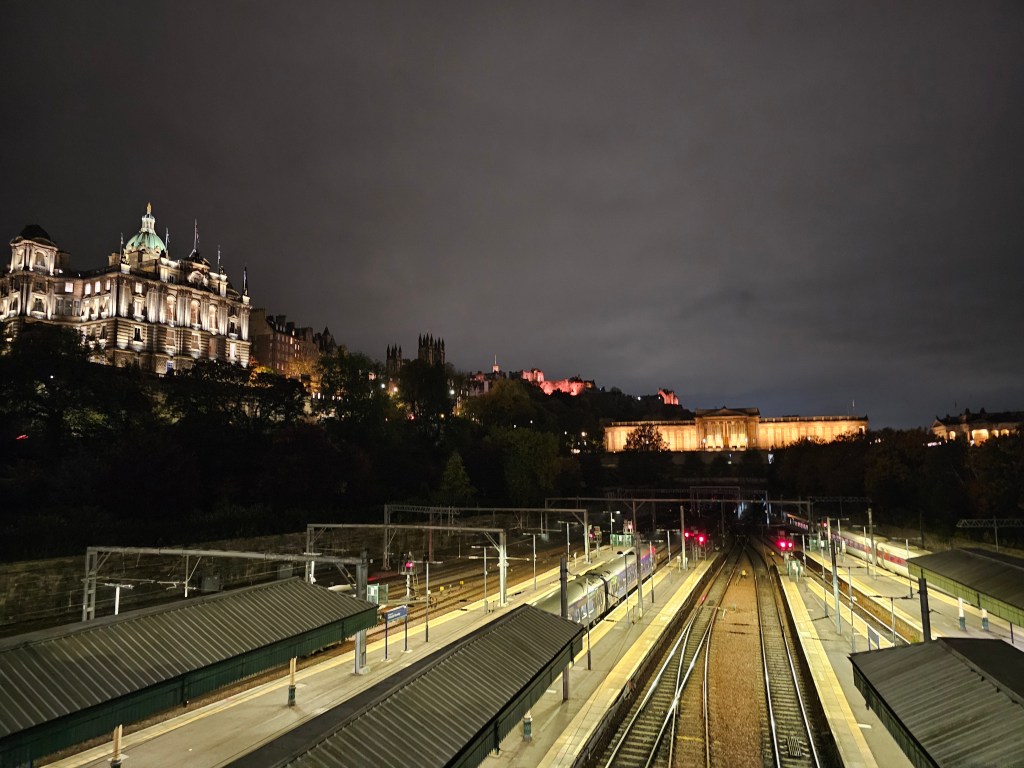
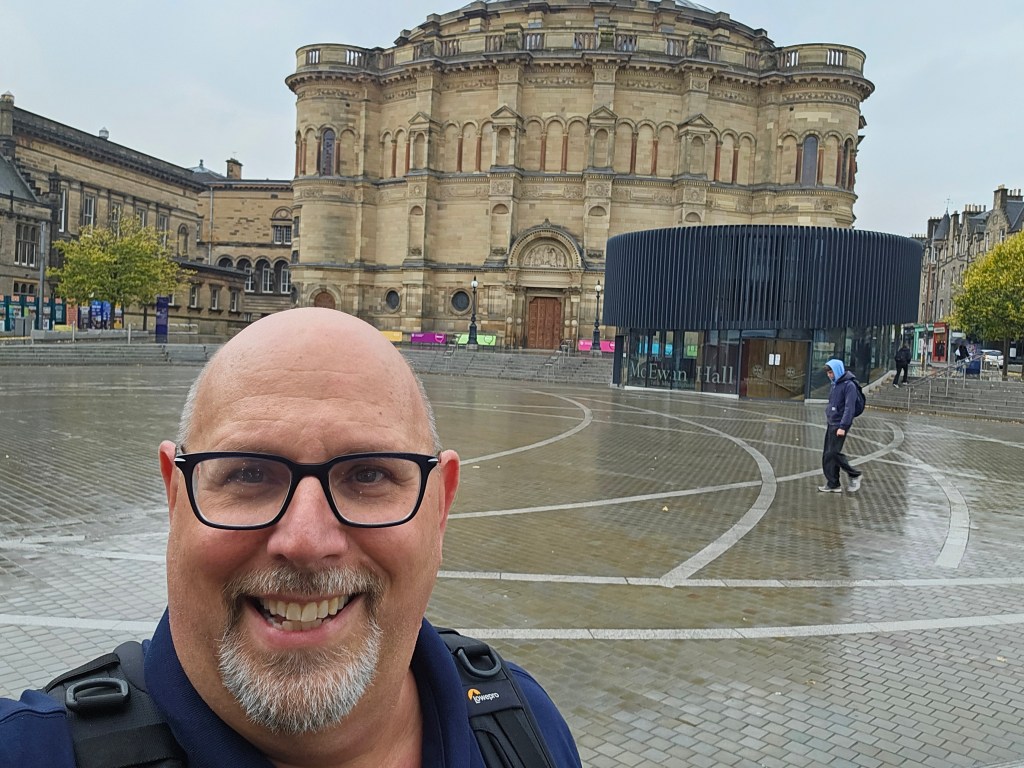
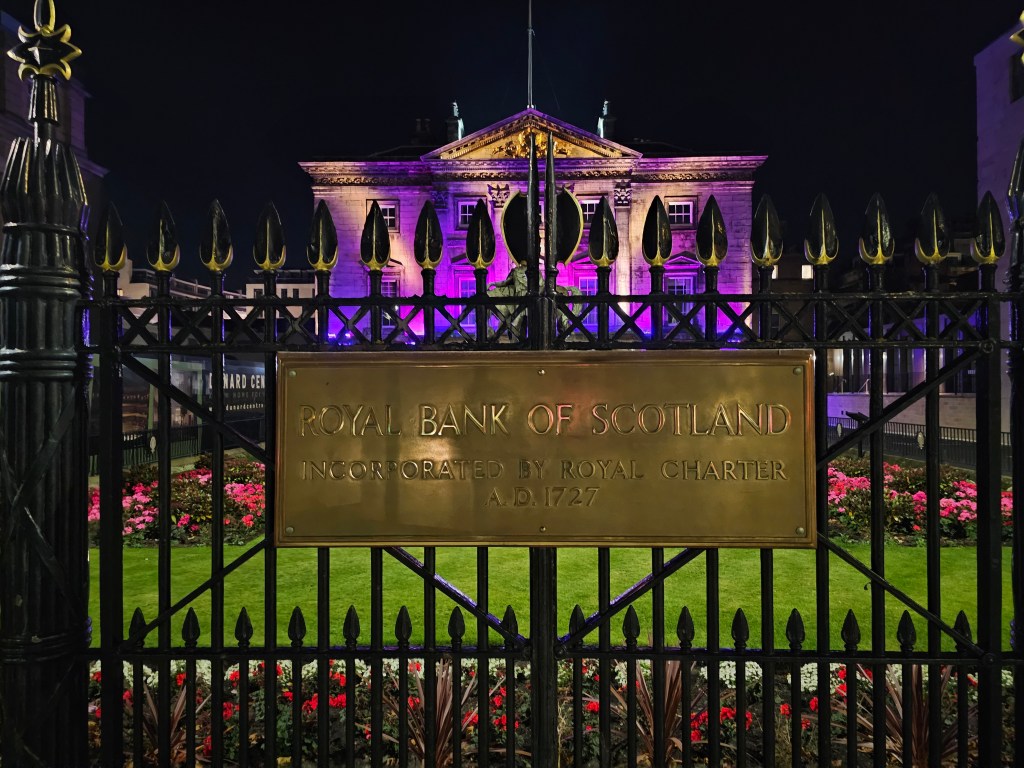
    In between his interviews, Russell saw a little bit of Edinburgh.

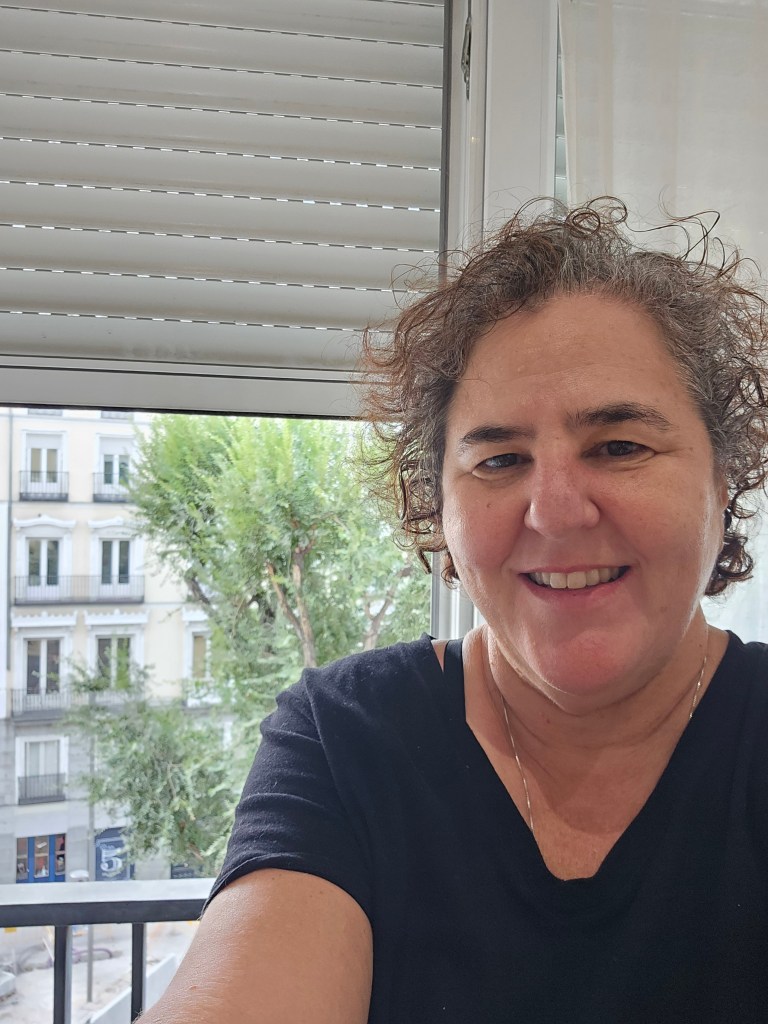
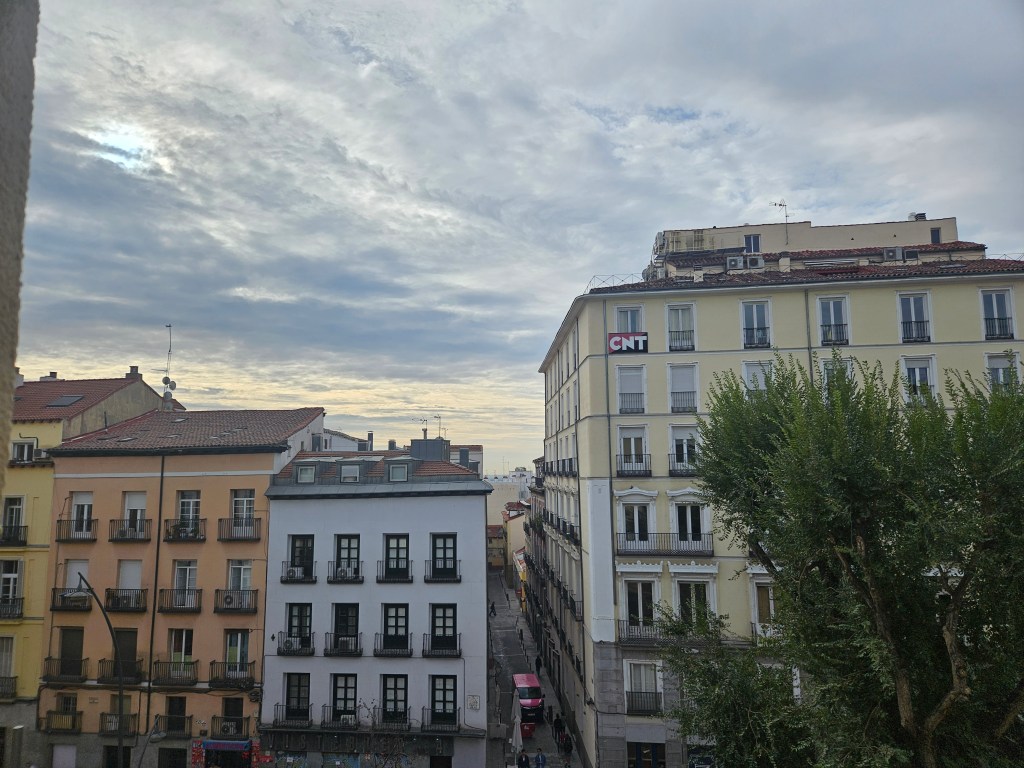
    Emily had one last morning with the beautiful view out of the Madrid apartment window (it is all about perspective) and then headed to the airport to reunite with Russell in the Netherlands!

  • After spending several weeks in less-traveled towns and the mountains, we headed for the big city. This would be Russell’s first time in Madrid, and Emily’s first visit since 1991. (She had studied there the summer of 1988!)

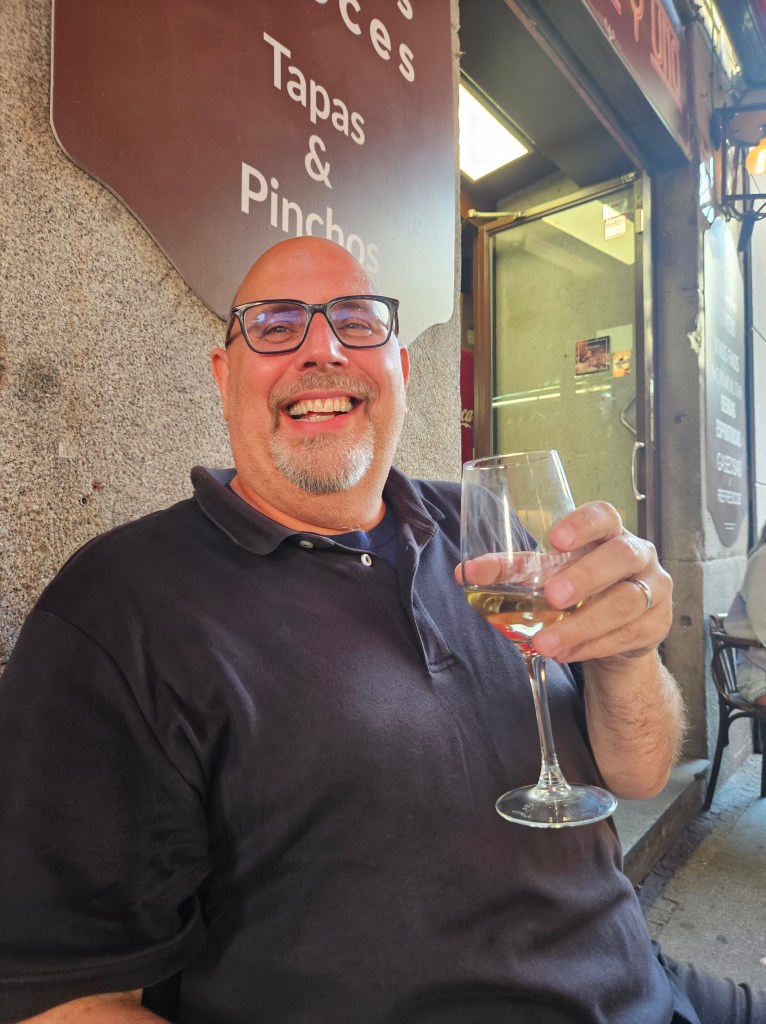
    No humans were split into outies and innies on the drive to Madrid (for any Severance watchers). It was hectic driving into Madrid to drop our bags at the Airbnb in Plaza de Tirso Molina and then returning our rental car after three weeks. Russell earned the glass of wine!

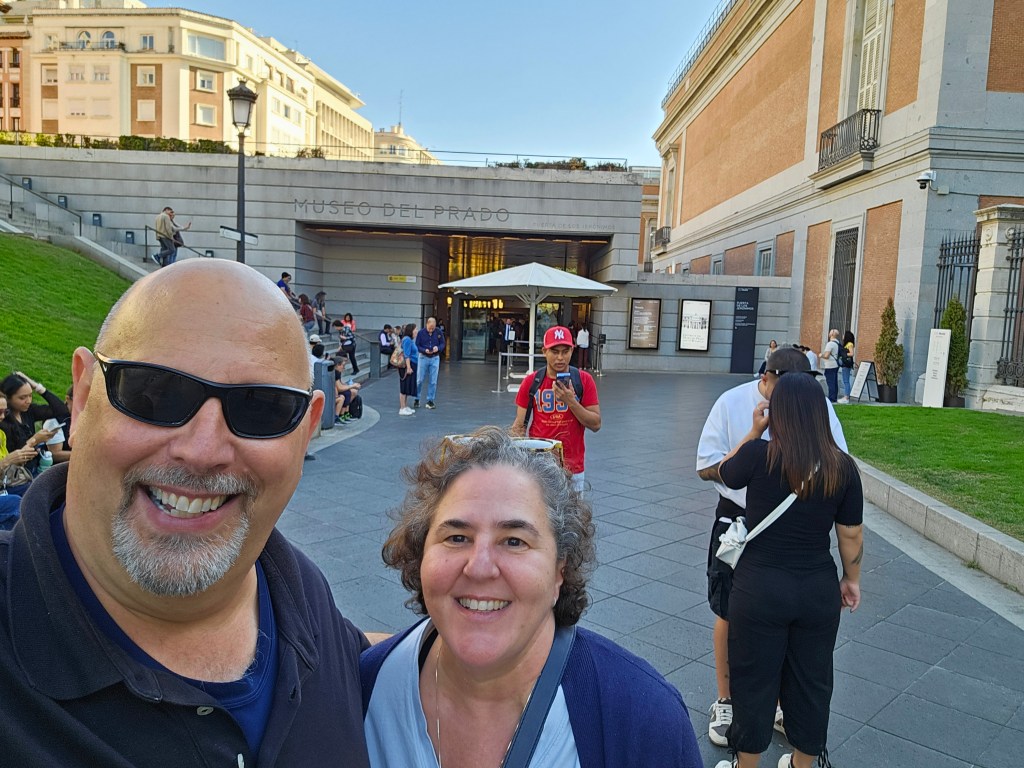
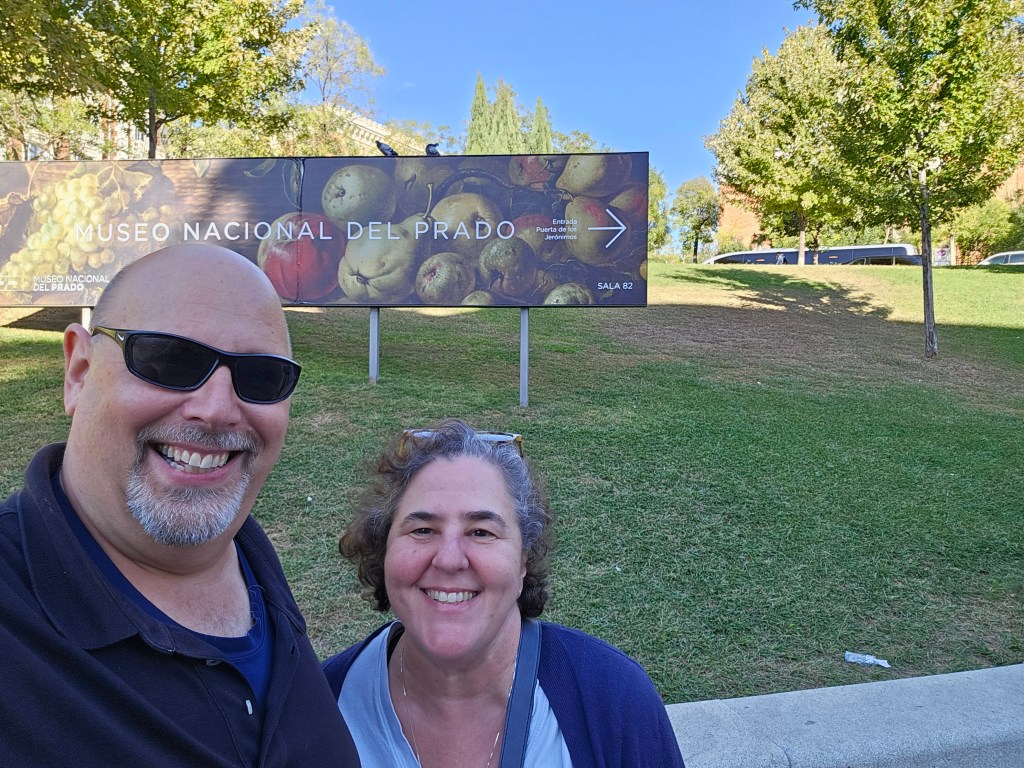
    The next day, Russell wrote in the morning and then we headed out to the Prado museum. One of the many wonderful things about this museum is that they don’t allow photographs. There was no one taking a selfie in front of the Garden of Earthly Delights, and that was a delight. With a bevy of Bosch, Bruegel, and Goyas, this is our favorite of the great European museums that we have visited.

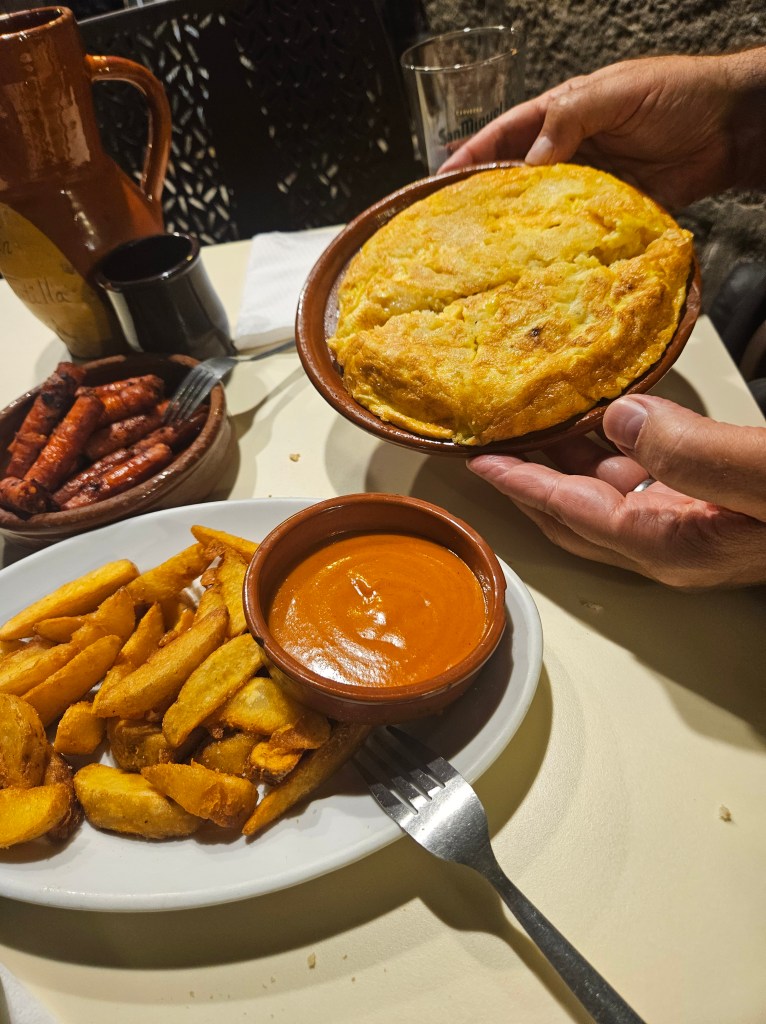
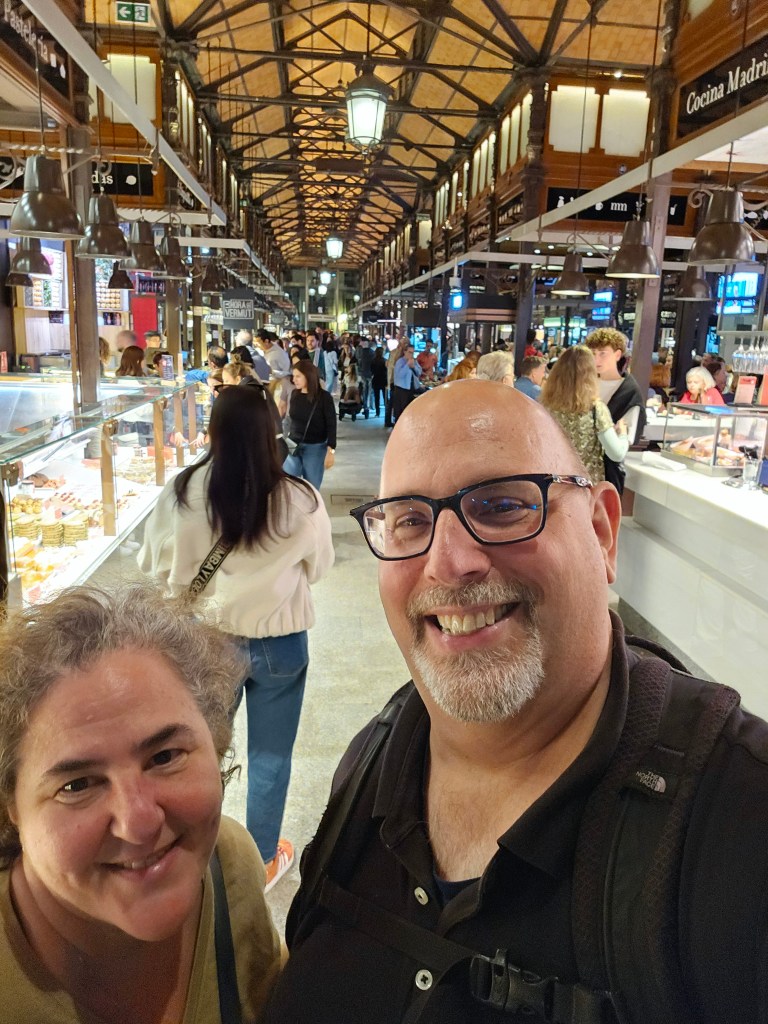
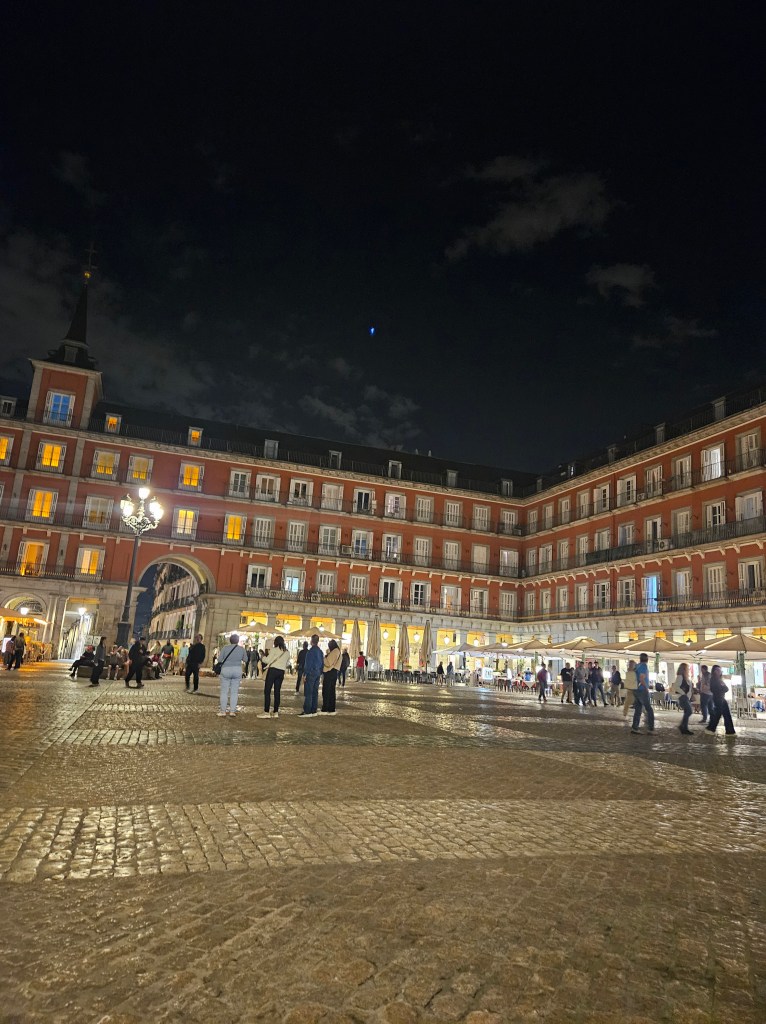
    We then went out for dinner, including Emily’s favorite tapa, tortilla española. We wandered through Mercado de San Miguel and had a vermut, which is a very popular drink in Spain, served over ice. We then strolled through Plaza Mayor where once again we were struck by how lively are Spanish cities in the evening.

    The next day, while Russell worked, Emily was very happy to meet up with dear friend Edna, who is directing the Hamilton program in Spain.

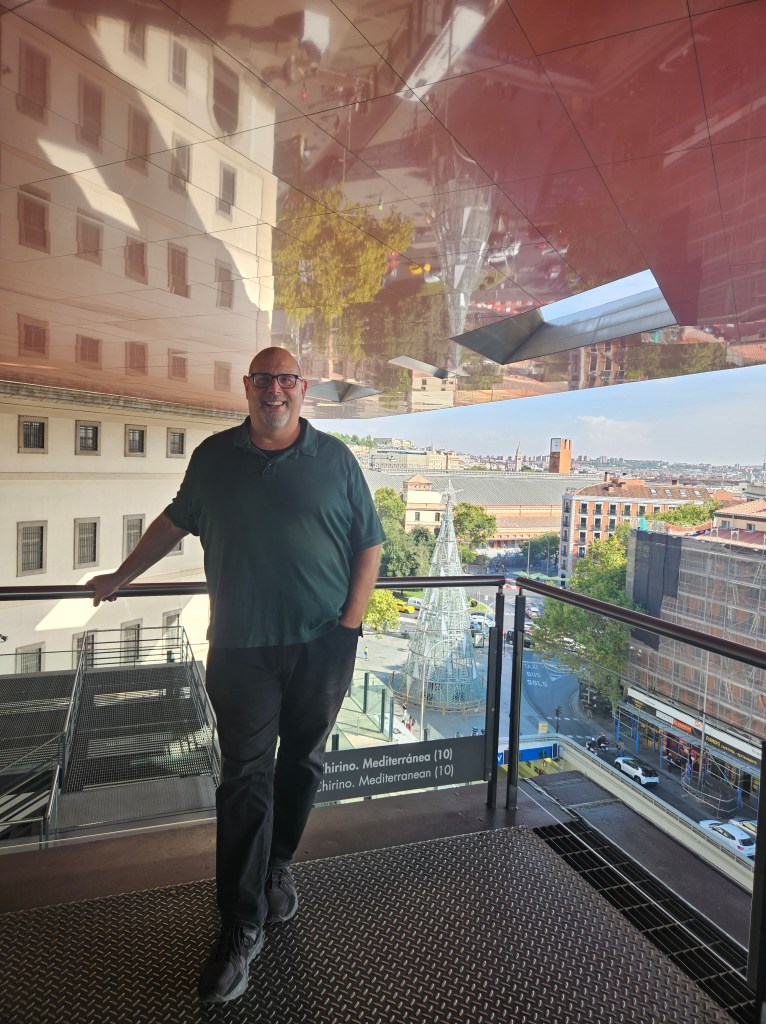
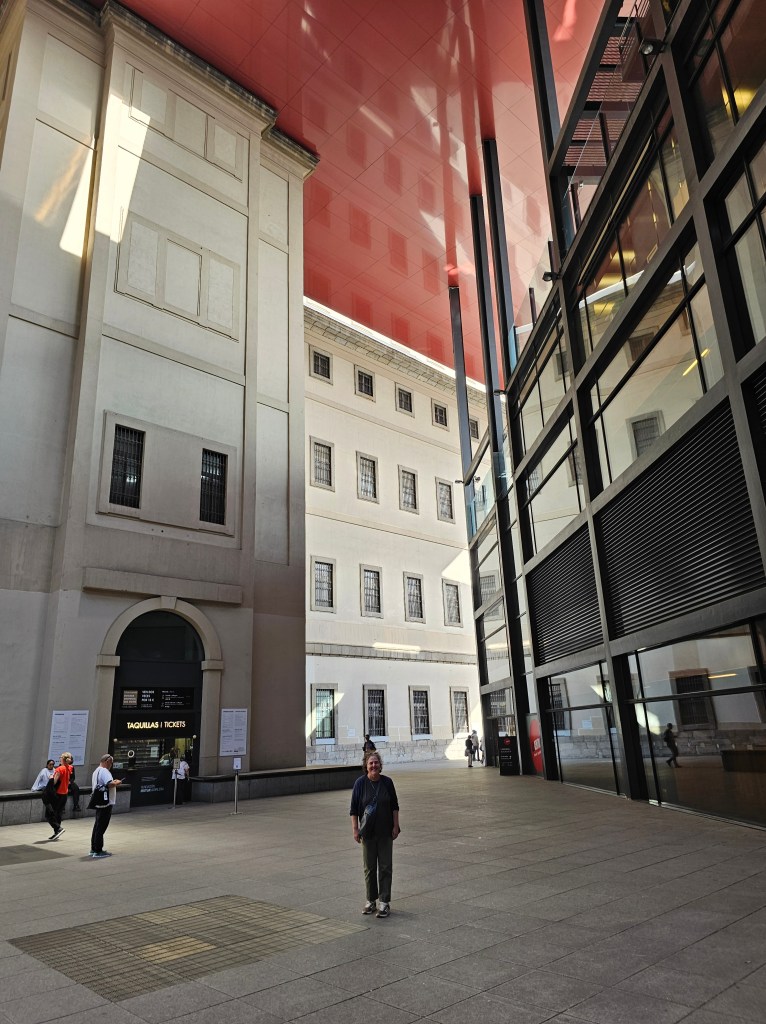
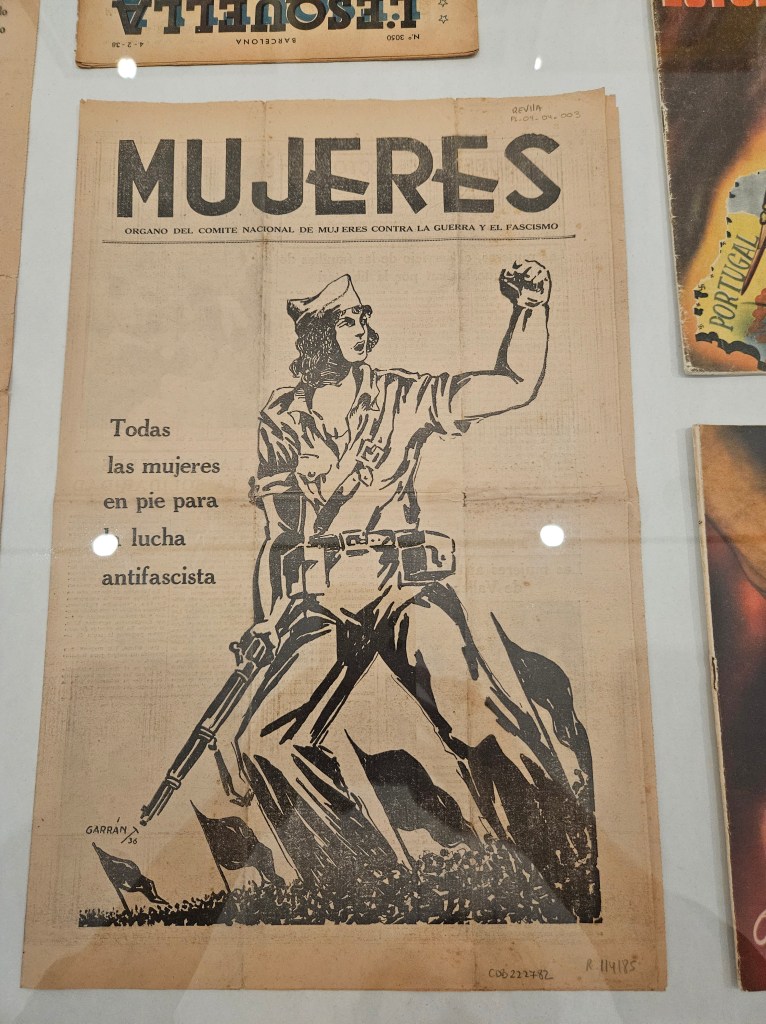
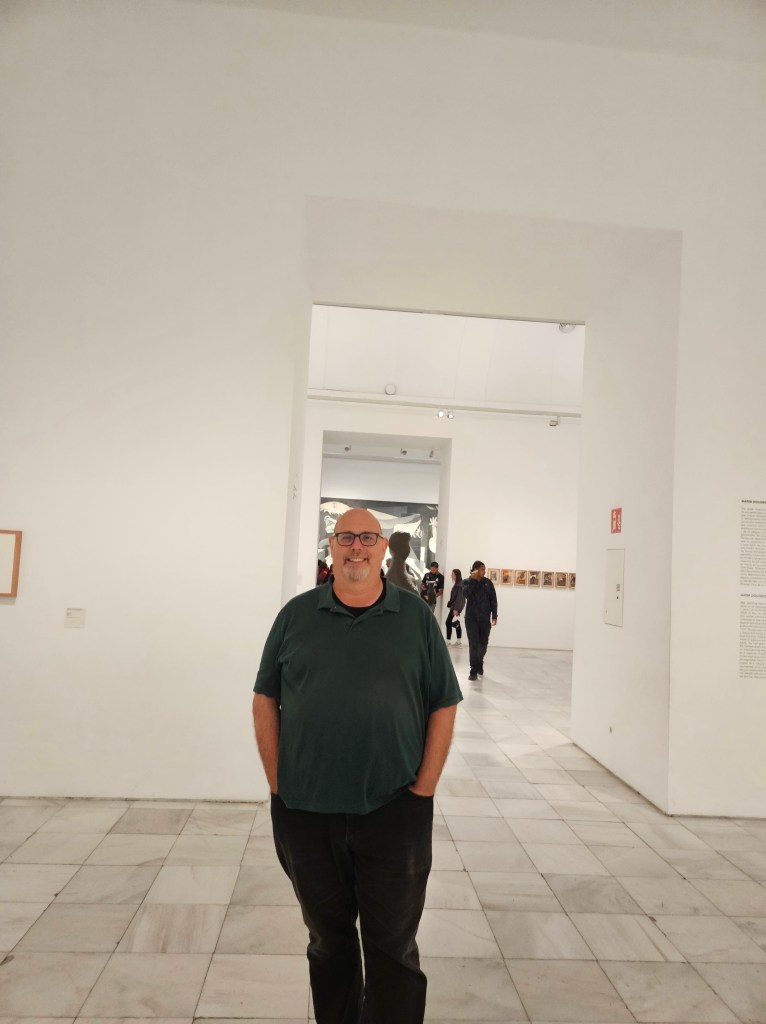
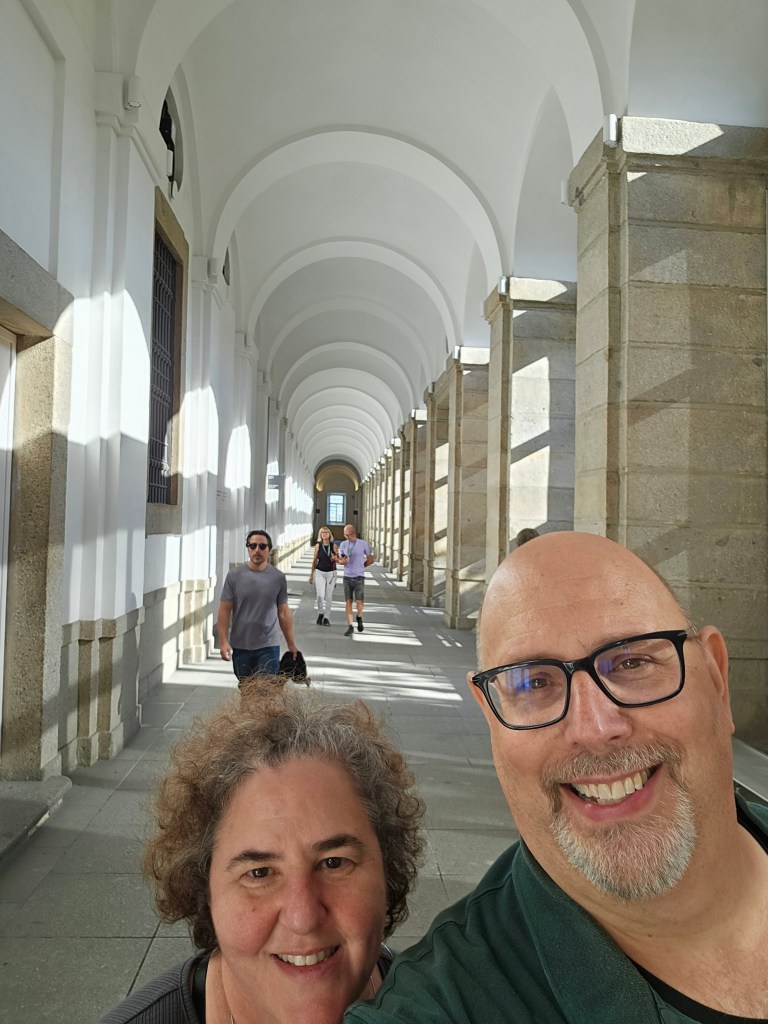
    And then it was on to another fabulous museum, Museo Reina Sofía, which houses art from the late 19th century onwards. Notably, it is the home of Picasso’s masterpiece, Guernica. Sorry to say, selfies were allowed and prevelent. We were still able to spend time appreciating the scale and terror of the work.

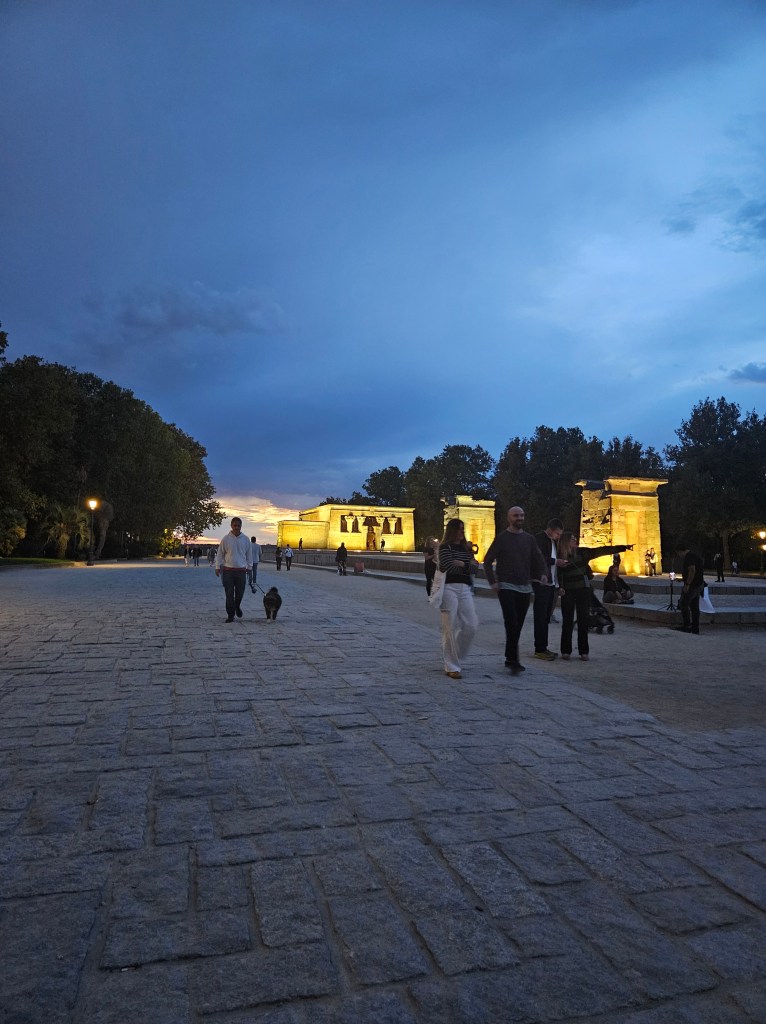
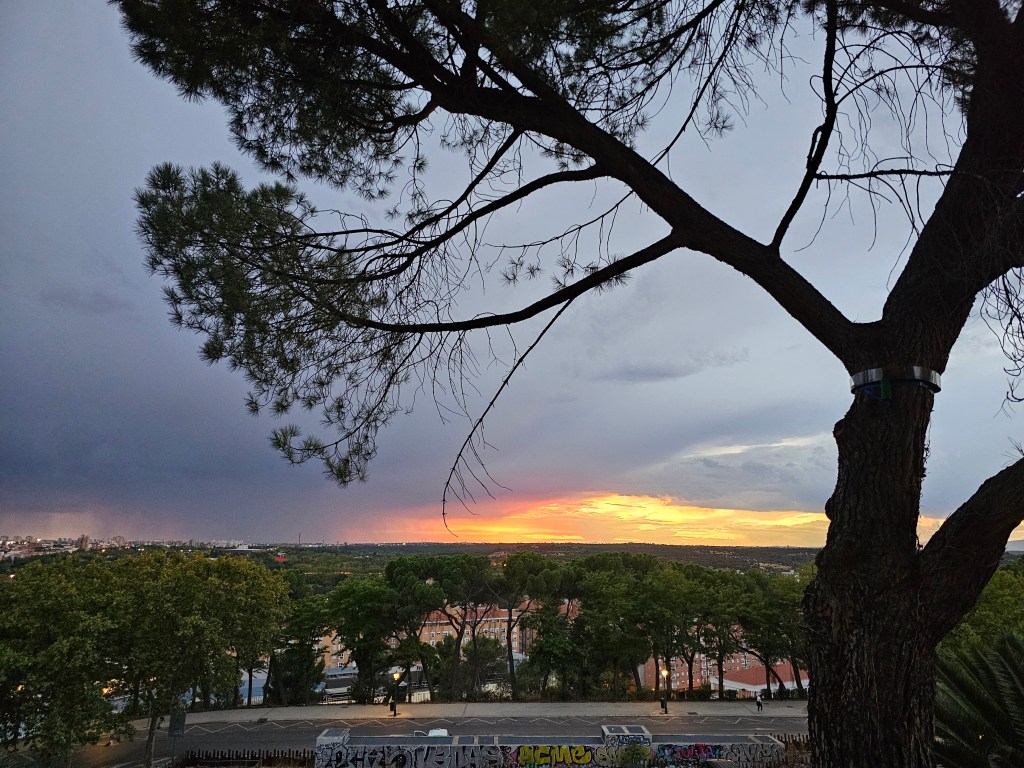
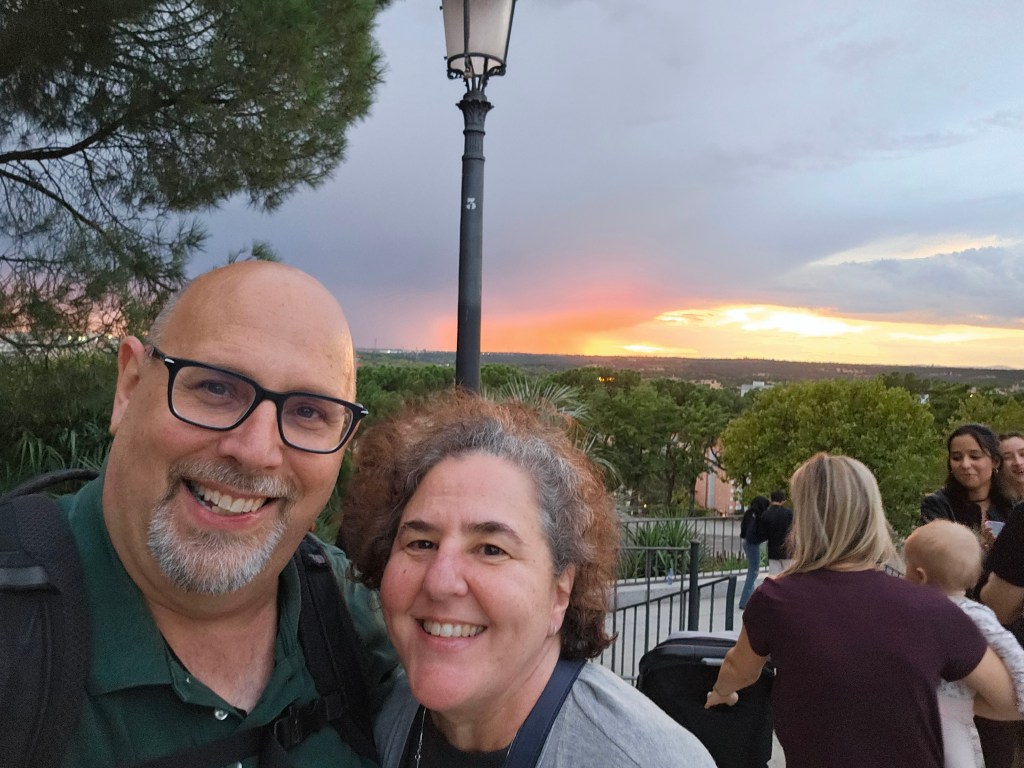
    That evening, on Edna’s excellent suggestion, we walked to the Templo de Debod to watch the sunset. Russell was headed to Edinburgh in the morning to do an interview for his project, while Emily was staying another two nights in Madrid.

    A lovely end to our time together in Spain!

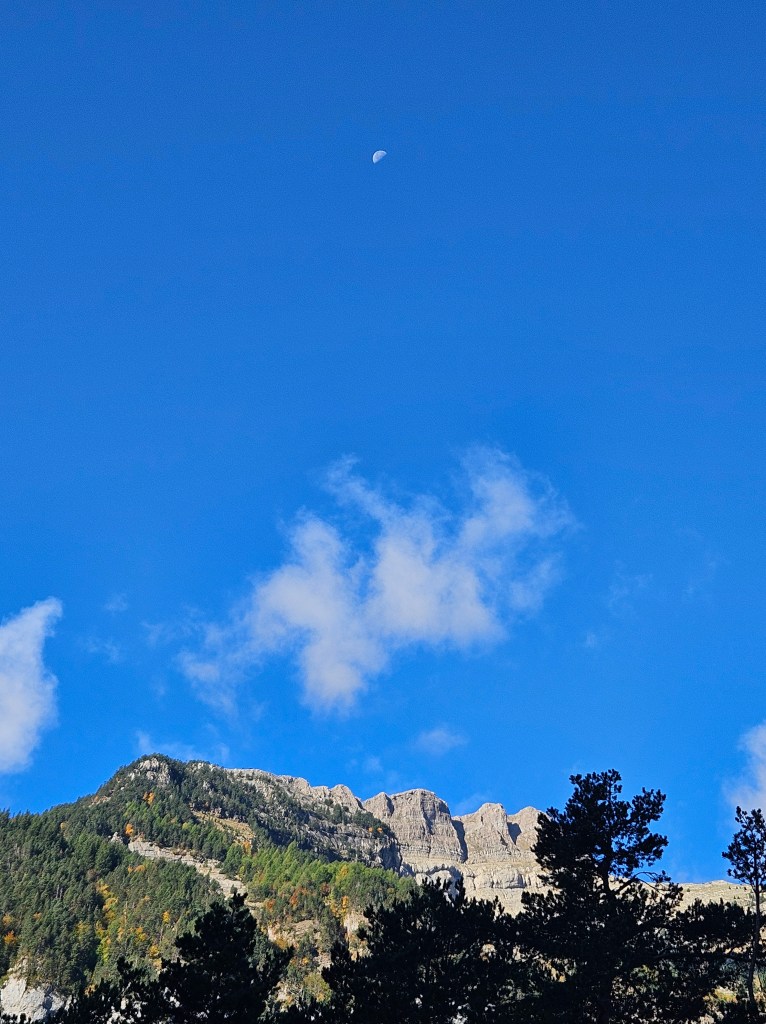
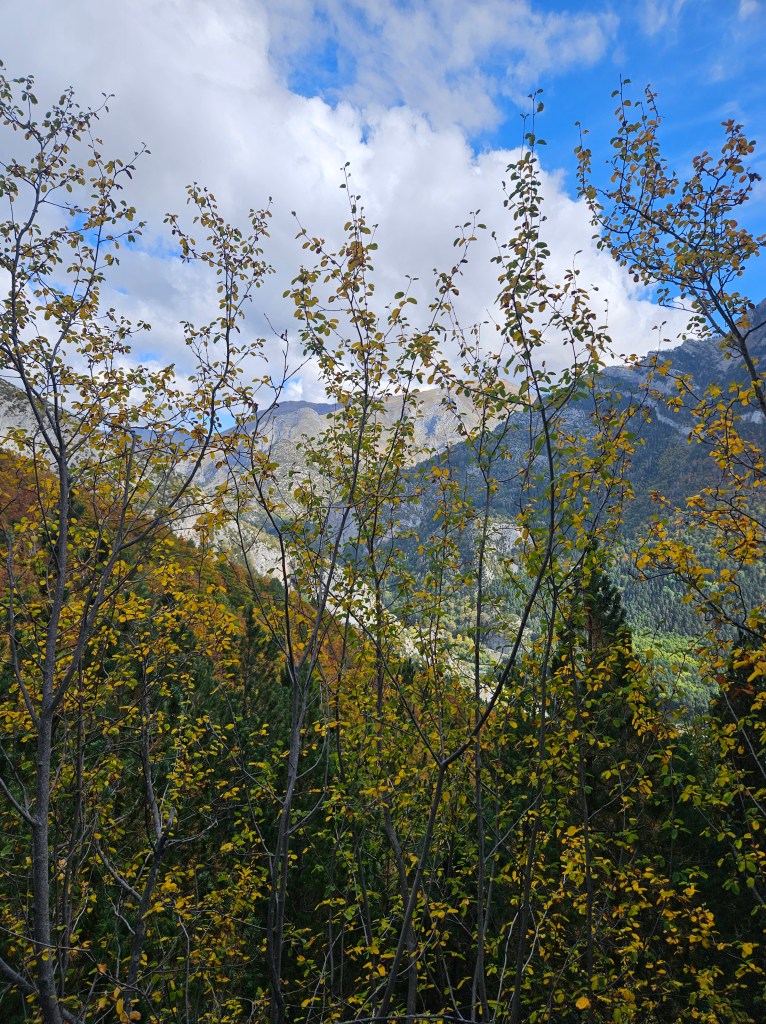
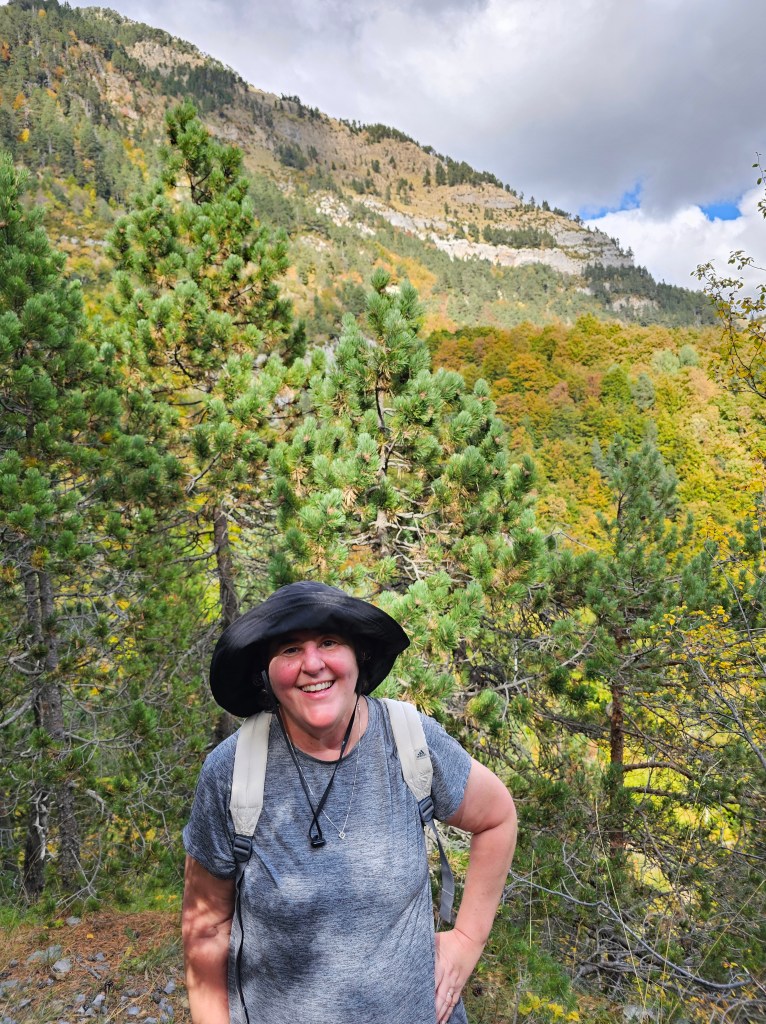
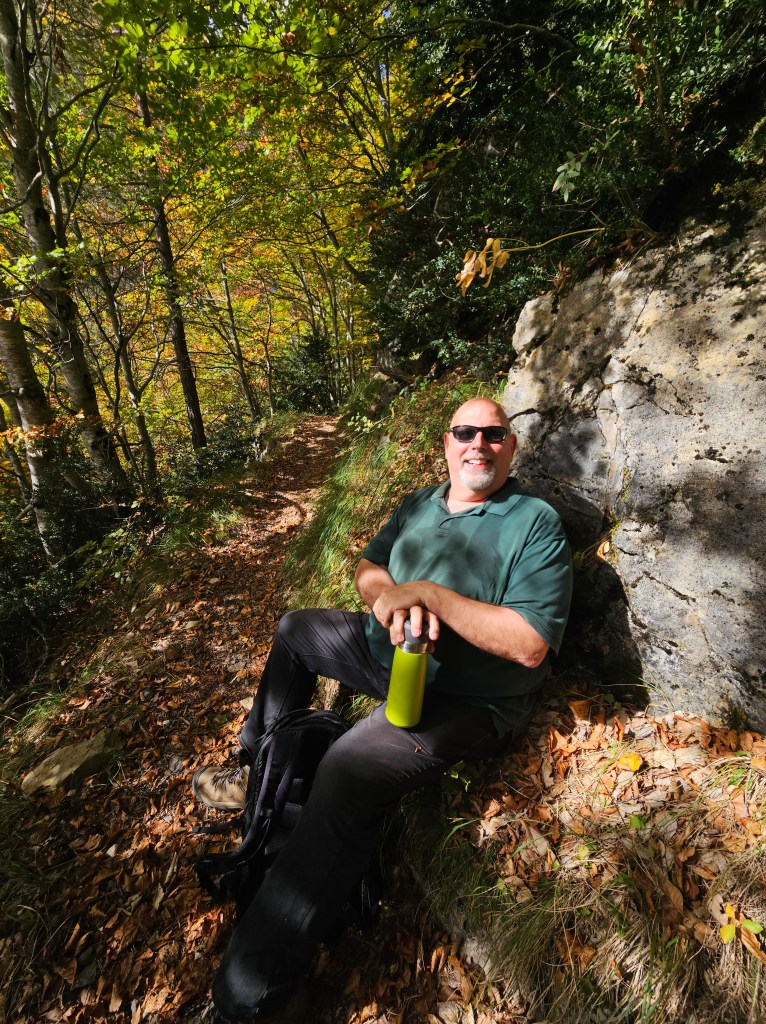
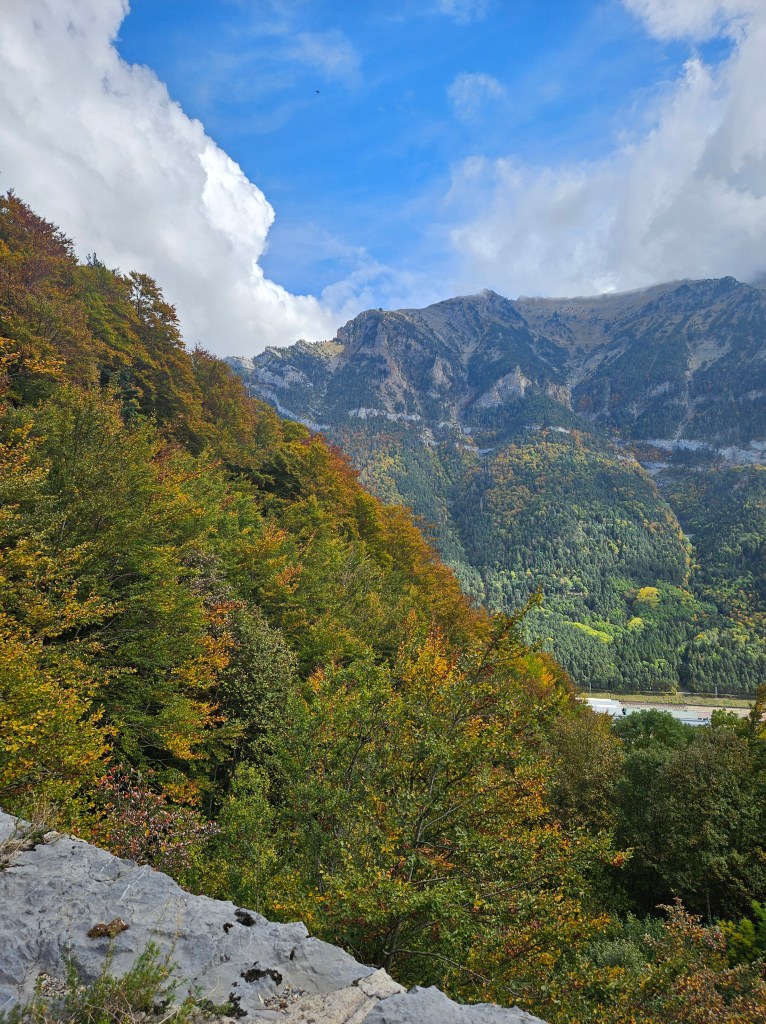
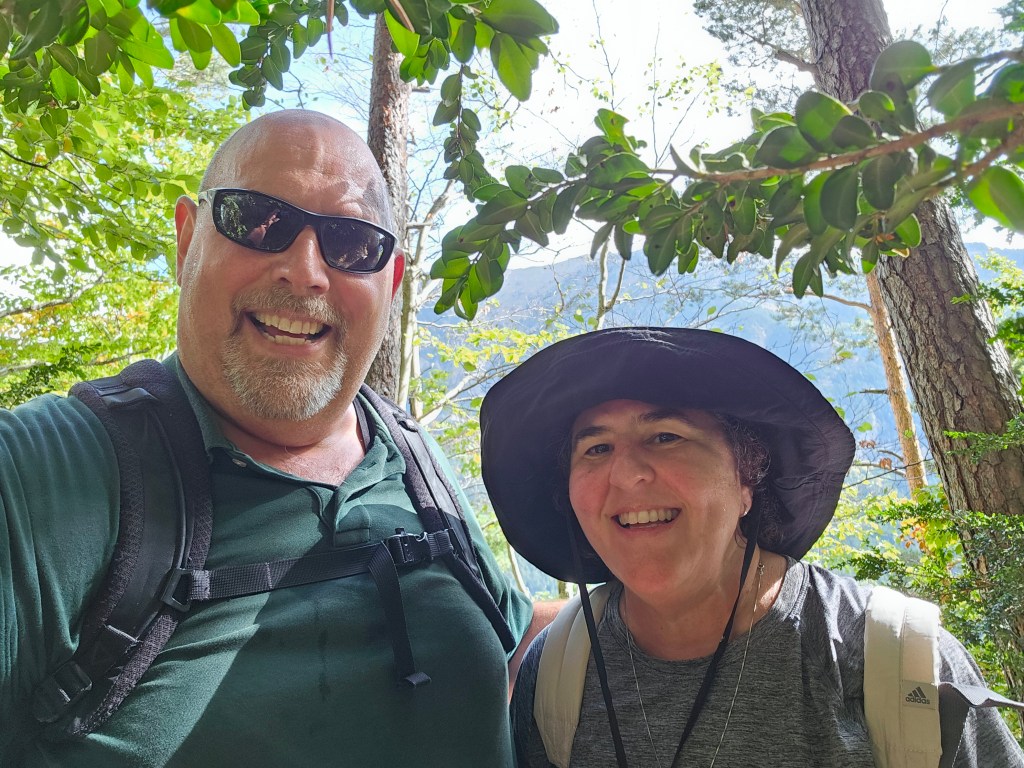
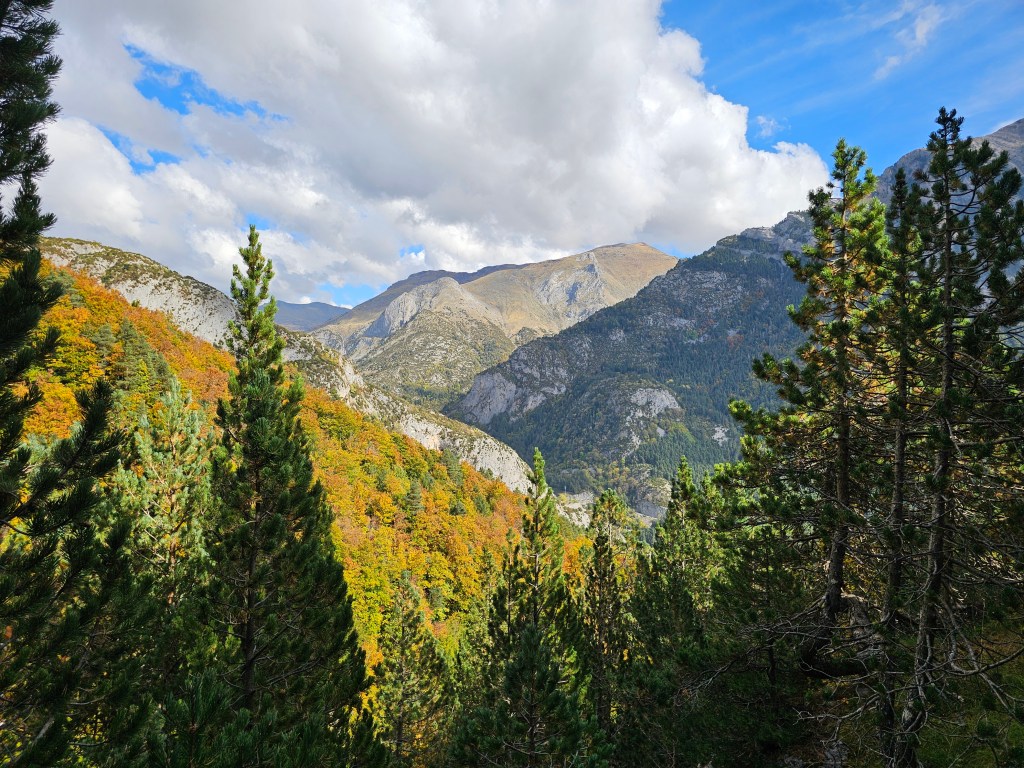
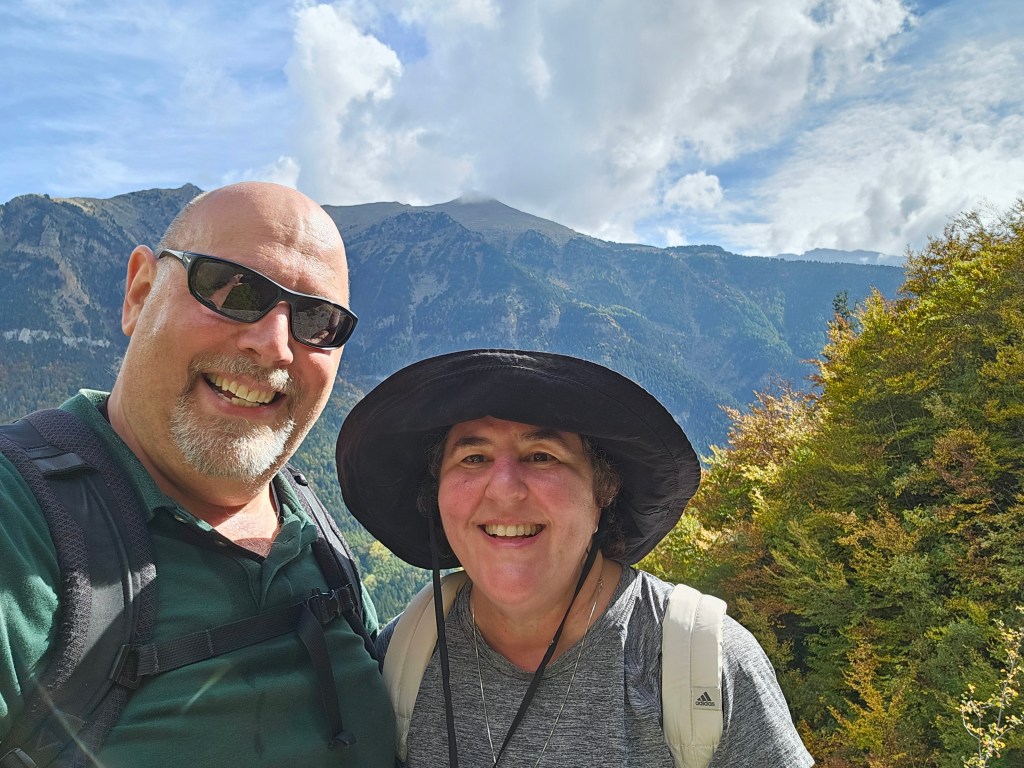
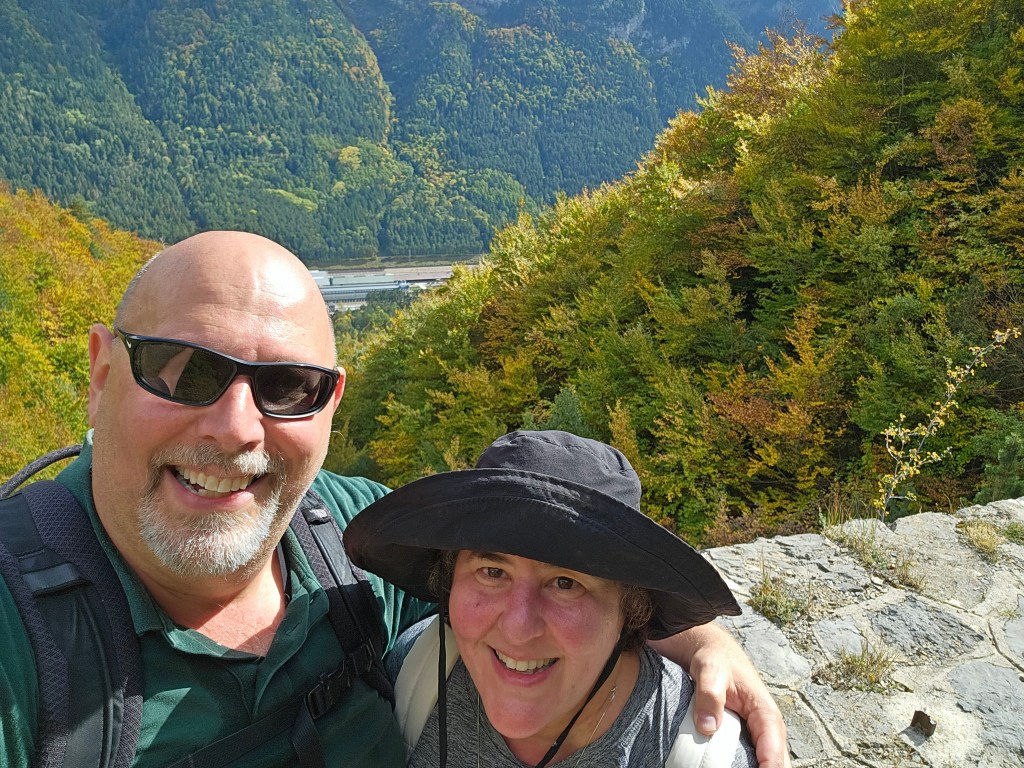
  • We only had one full day in Canfranc Estación and we took full advantage of it. After Russell finally got back to writing his book in the morning (after a week of preparing for two interviews and the presentation in The Hague), we hiked through the afternoon up the mountain on the west side of town and then, hey why not, drove to France for snacks and cheese.

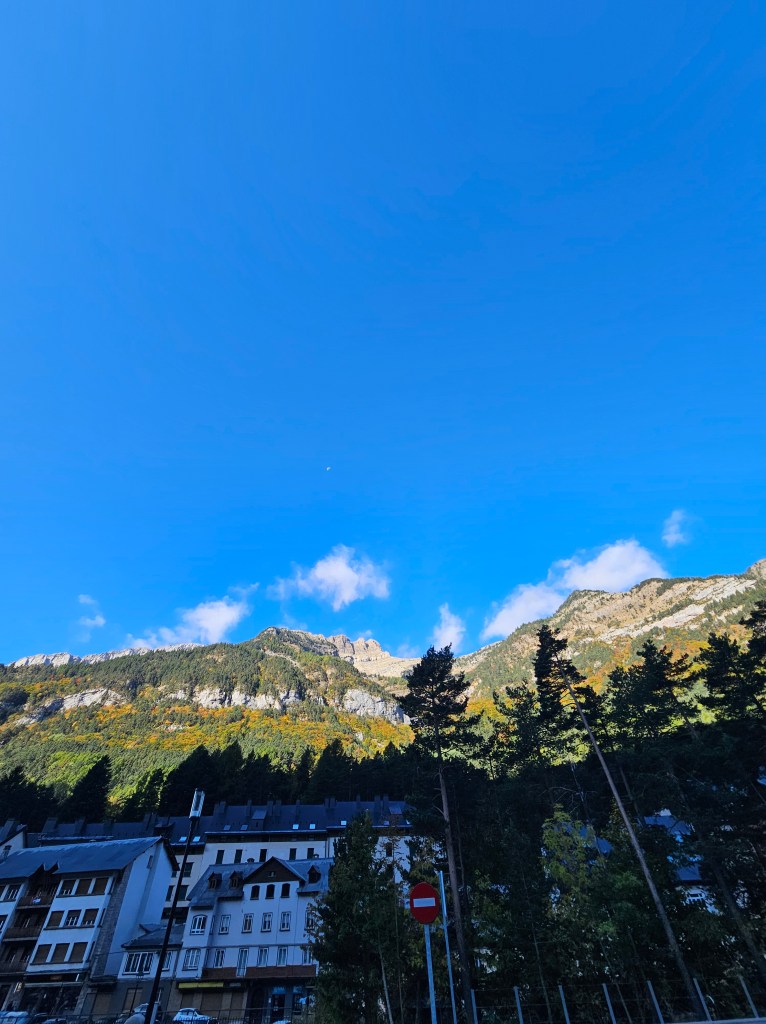
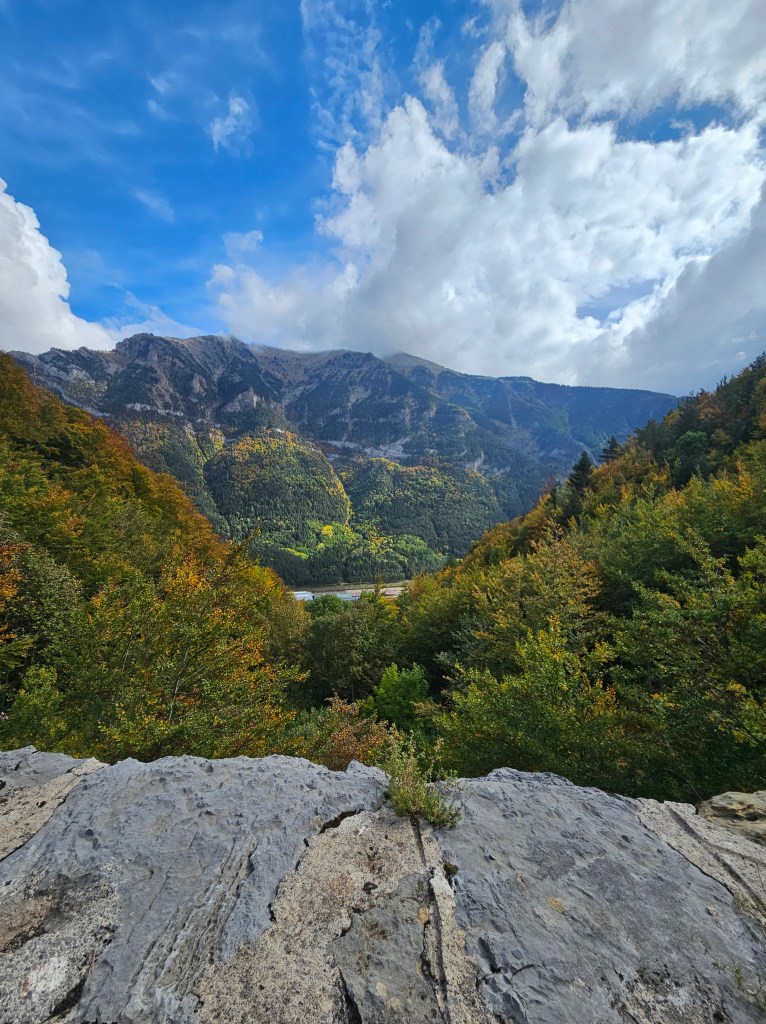
    Canfranc Estación is a little sliver of a town, mainly along a single north-south road with steep mountains to the east, west, and north (toward France).

    This is what we saw from our hotel room, looking west as the sun rose.

    We decided to go up there.

    Here’s a view of the hotel at Canfranc Estación from up on the western slope of town.

    We gained altitude very quickly!

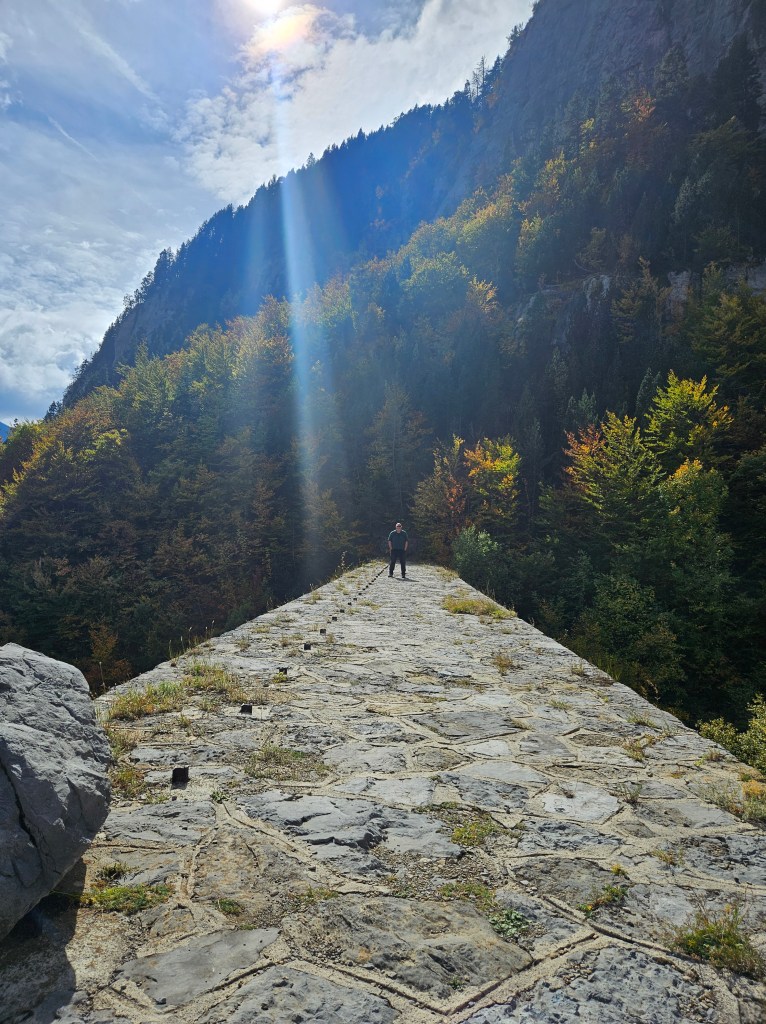
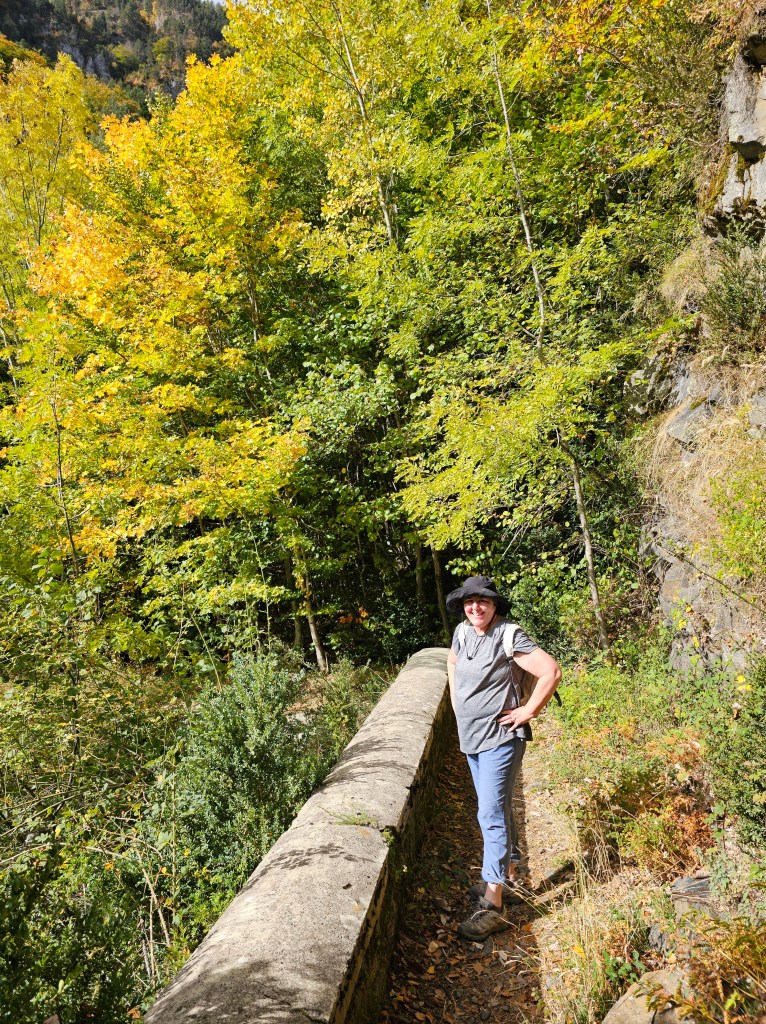
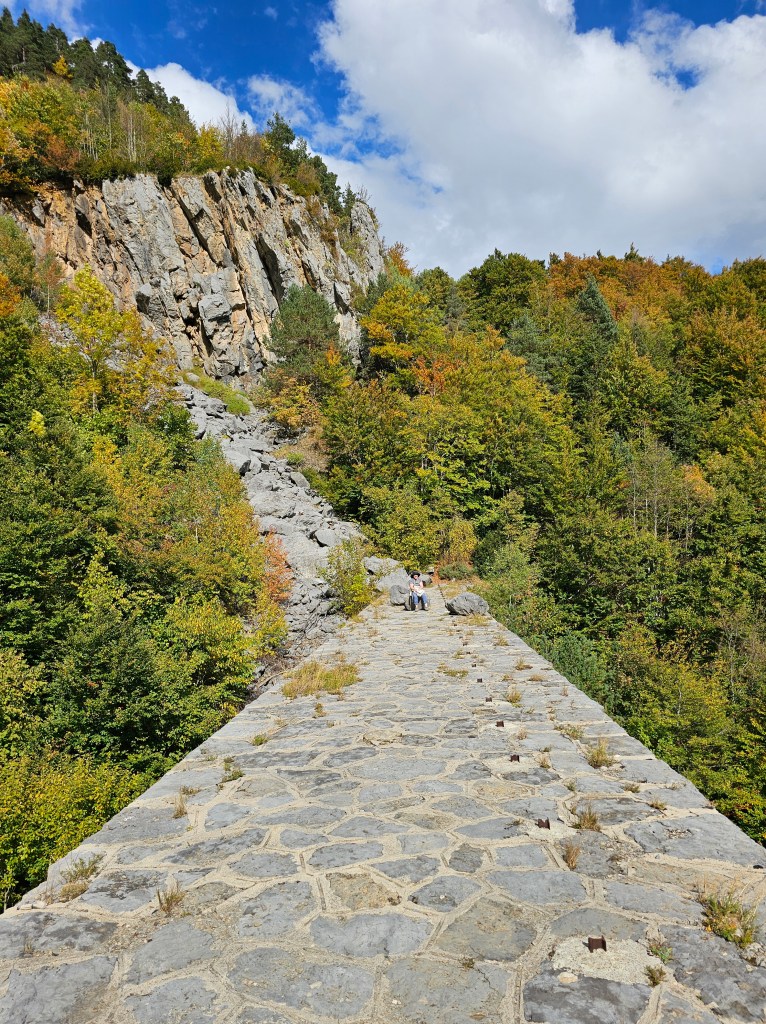
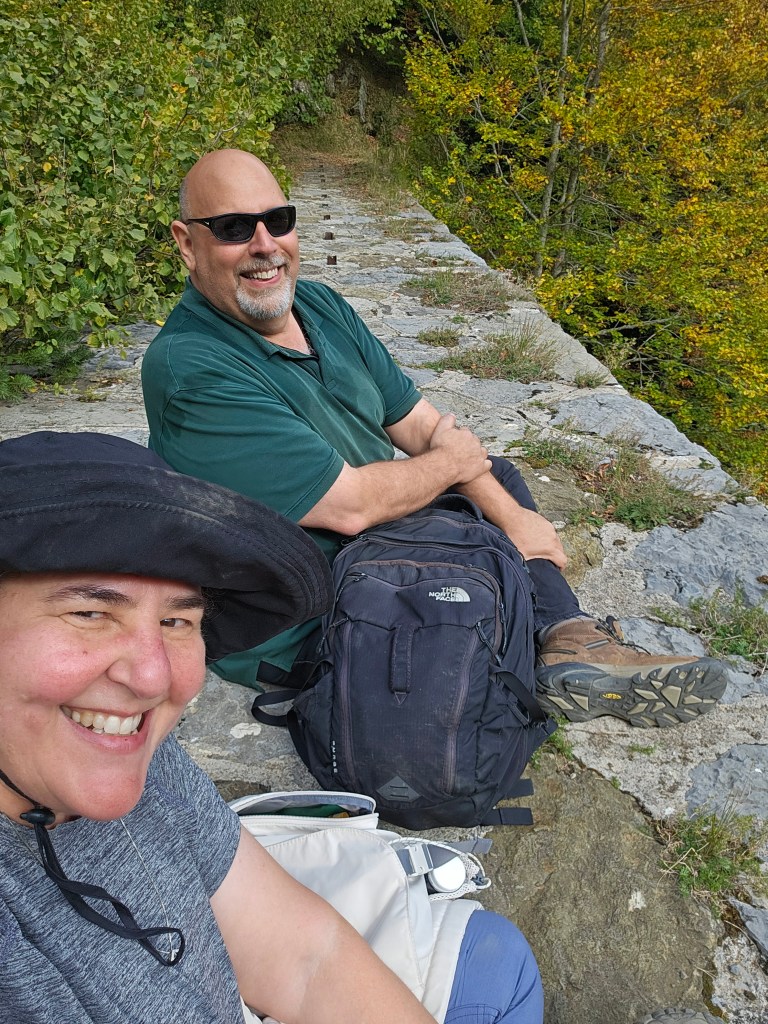
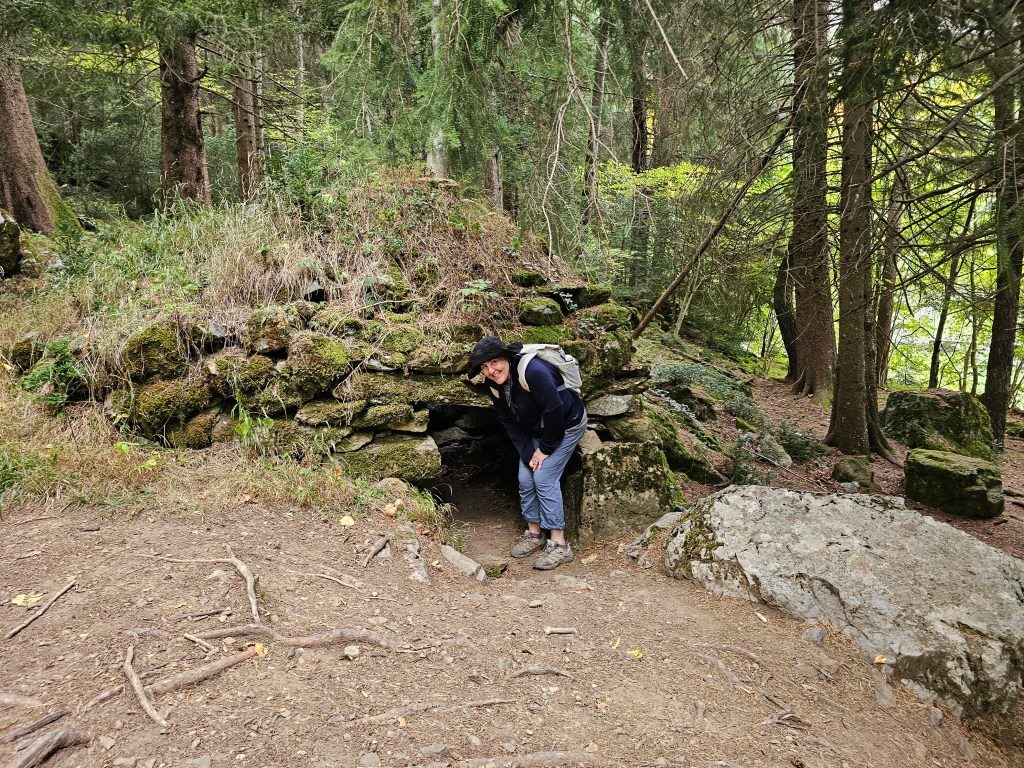
    The trail had history going back to the creation of the station and town. We could see some structures that were put in for avalanche control. And a little hut which recalled the elves’ houses of Iceland.

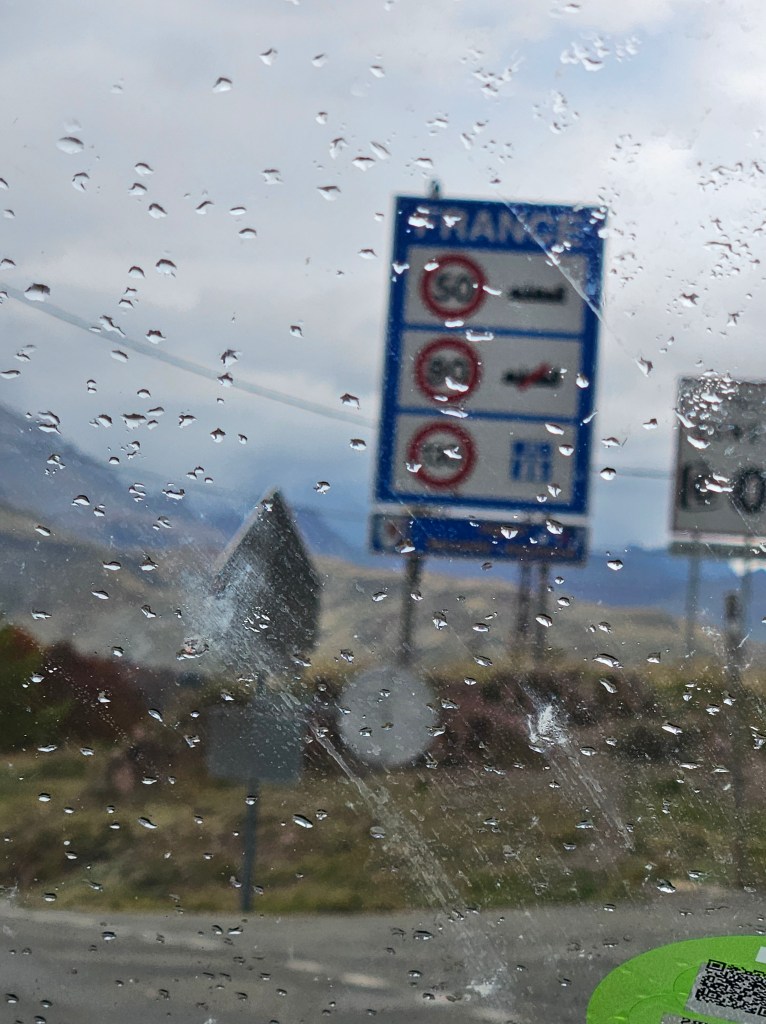
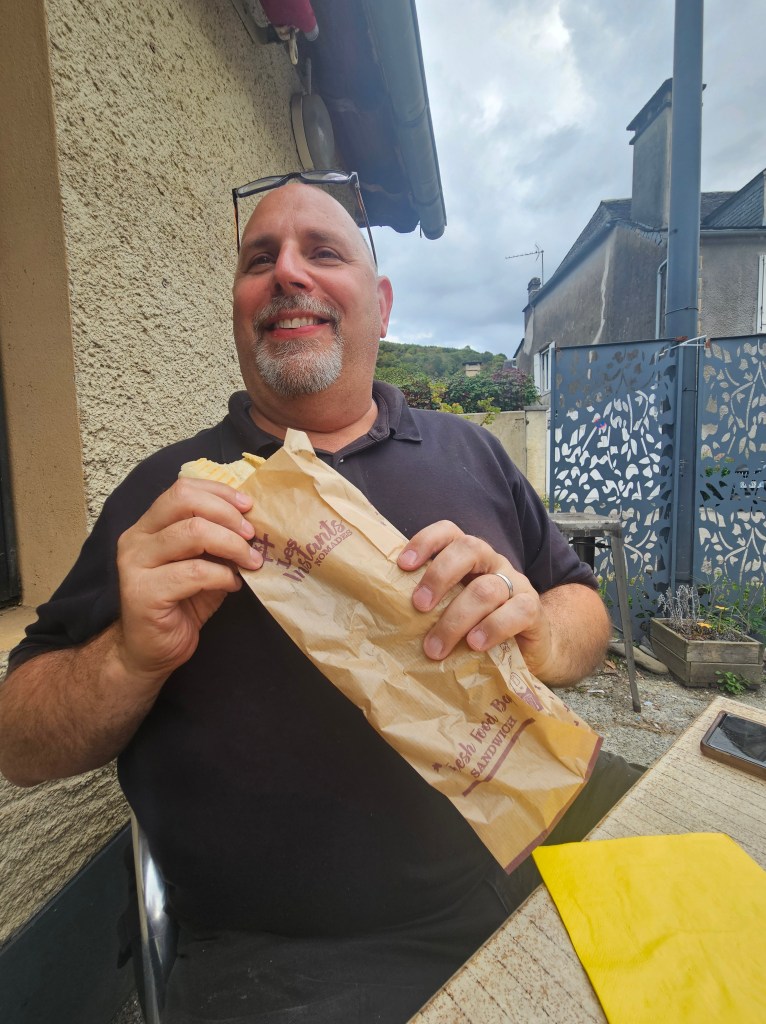
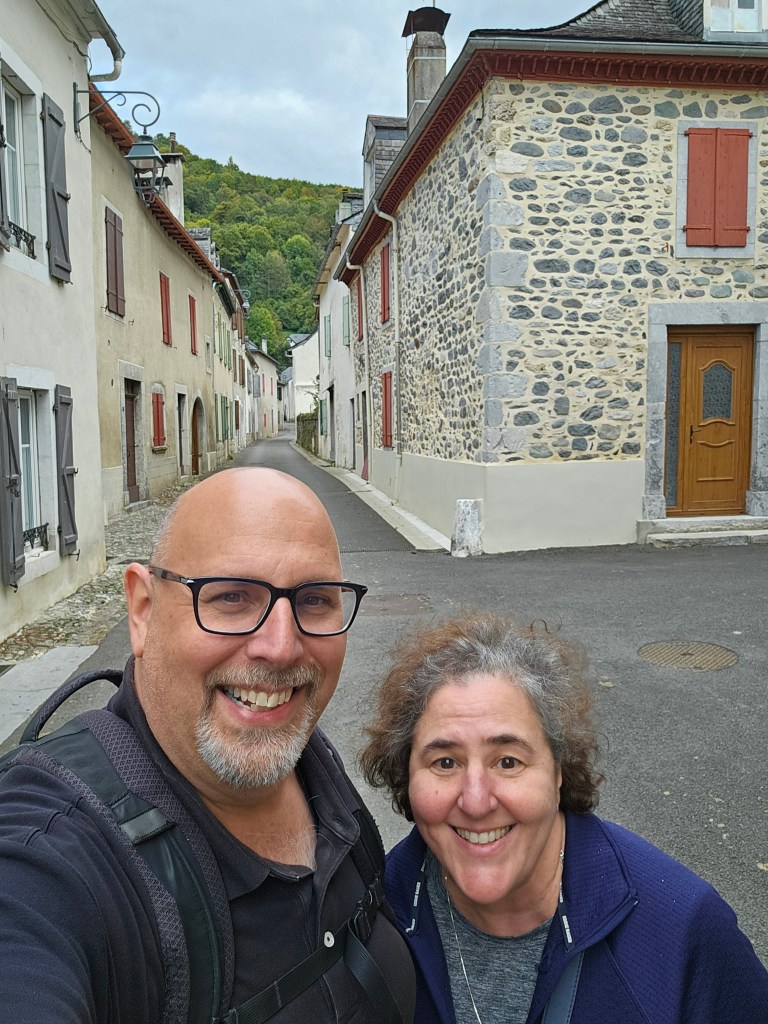
    Weather moves very quickly in this part of the Pyrenees. Clouds started rolling in, and we rolled over to France. We drove a mountain road about 15 minutes to get to France, and another half hour to get to a village for lunch. Just 15 minutes away, and the villages and farms looked very different from what we were used to in Spain.

    The town we ate in, Bedous, was quiet. Emily expected a young woman in a blue dress to start singing about adventure in the great wide somewhere.

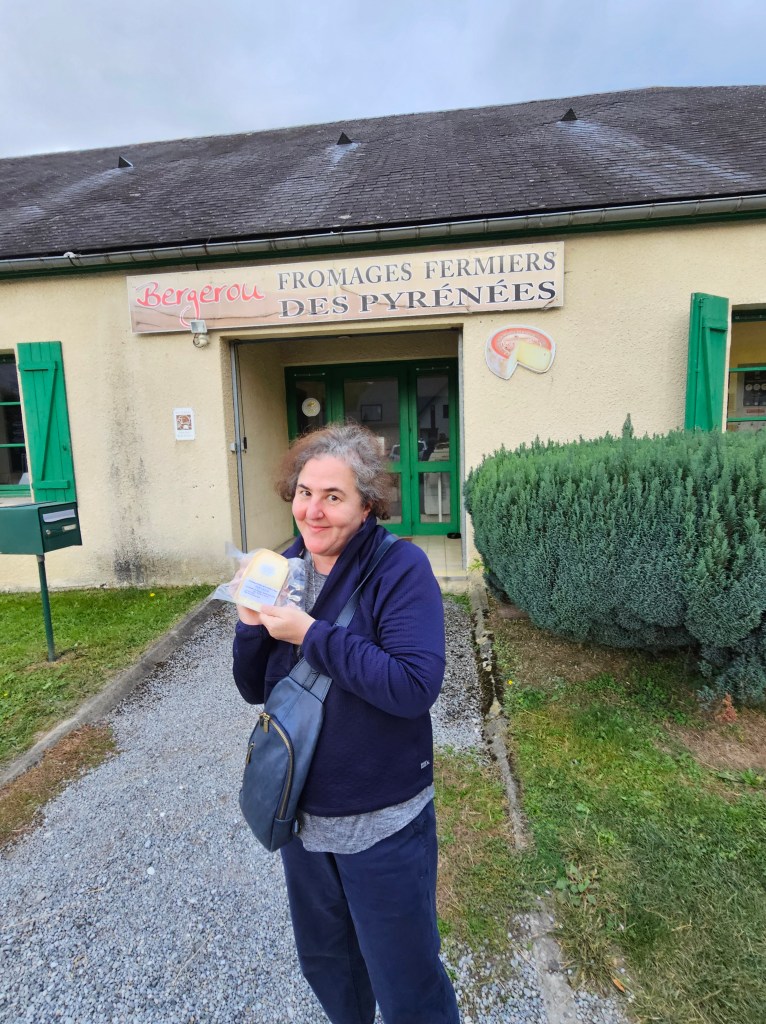
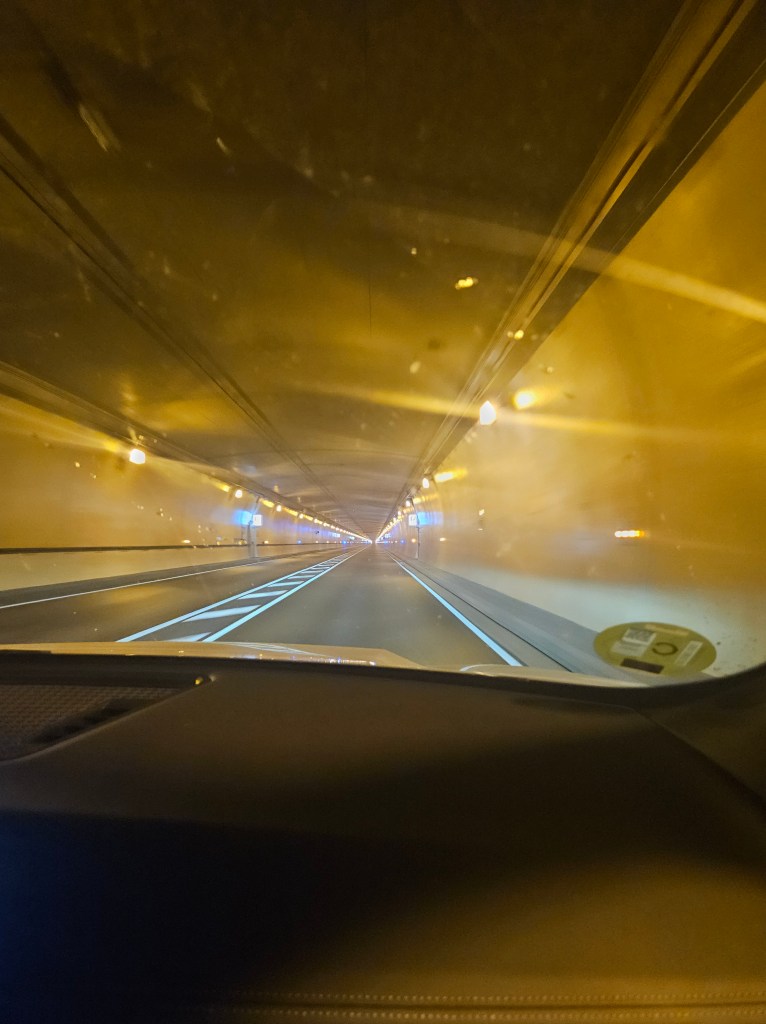
    We did manage to find an open cheese store. We then took the 8.6 kilometer tunnel back to Canfranc and had our final evening in the wonderful Spanish Pyrenees.

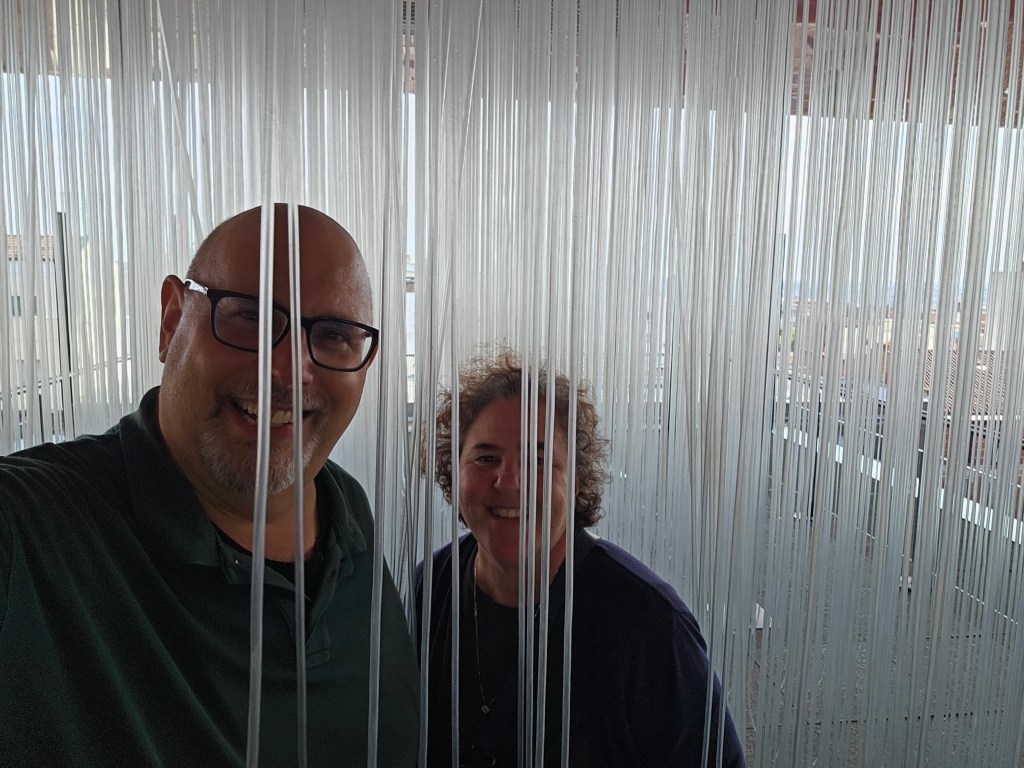
  • We haven’t posted recently because we were stuck in this polyurethane trap.
    Or, because we’ve been super busy in the intense hub of our journey. After we left the Pyrenees, we went to Madrid, where Russell was only for two days, while Emily stayed a bit longer. Russell went to conduct an interview in Edinburgh (two days) before meeting back up with Emily in the Amsterdam airport. From there, we went the The Hague for just another couple of days, where Russell did a presentation and another interview and Emily roamed the lovely little city. We’re now in the airport in Amsterdam, again, heading to Prague shortly, where we’ll be able to relax.
    Everything is still great with us! Out of impossibly good fortune, our travels have all gone according to plan. We’ve got lots of photos and thoughts to share, and we’ll do that soon.