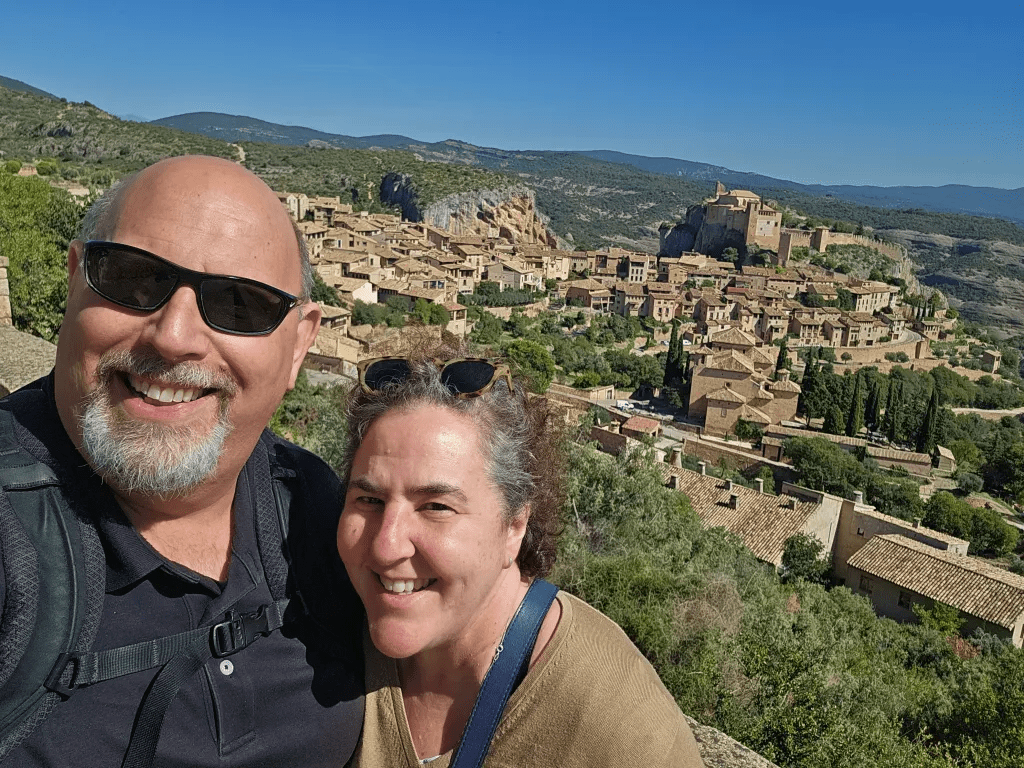
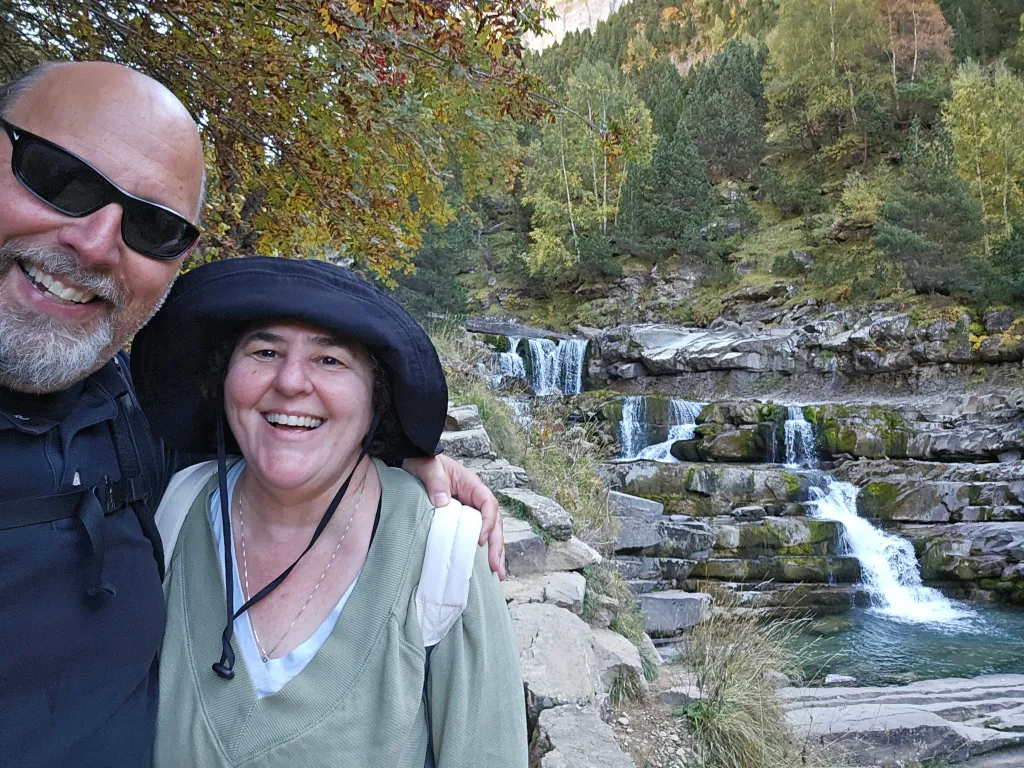
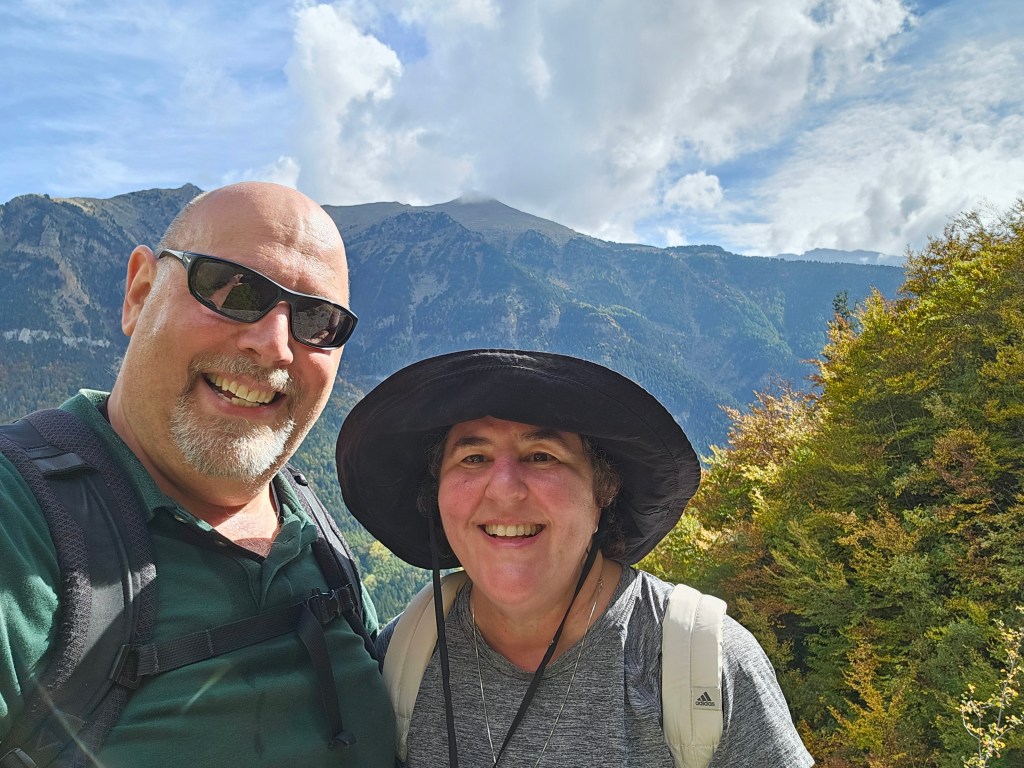
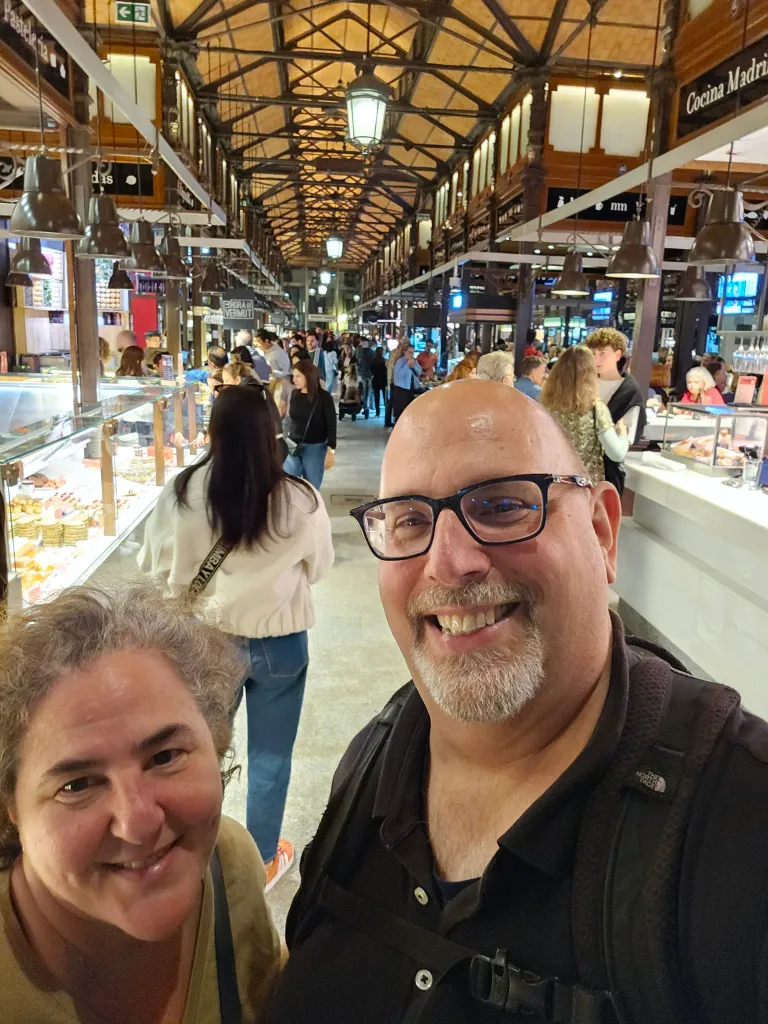
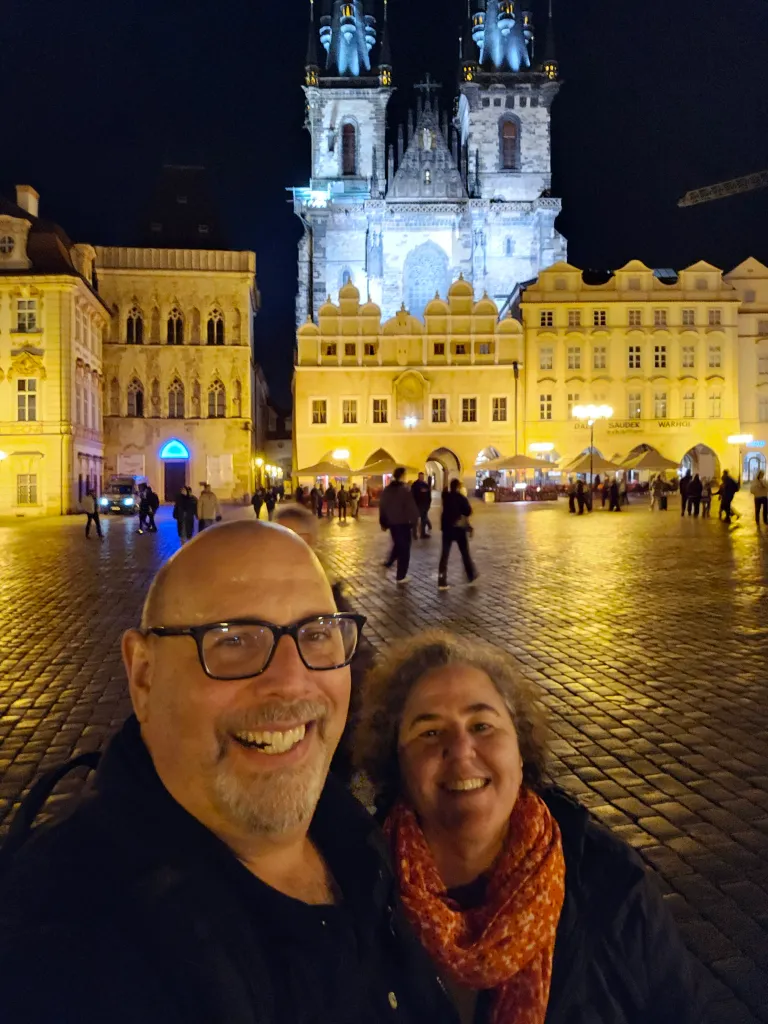
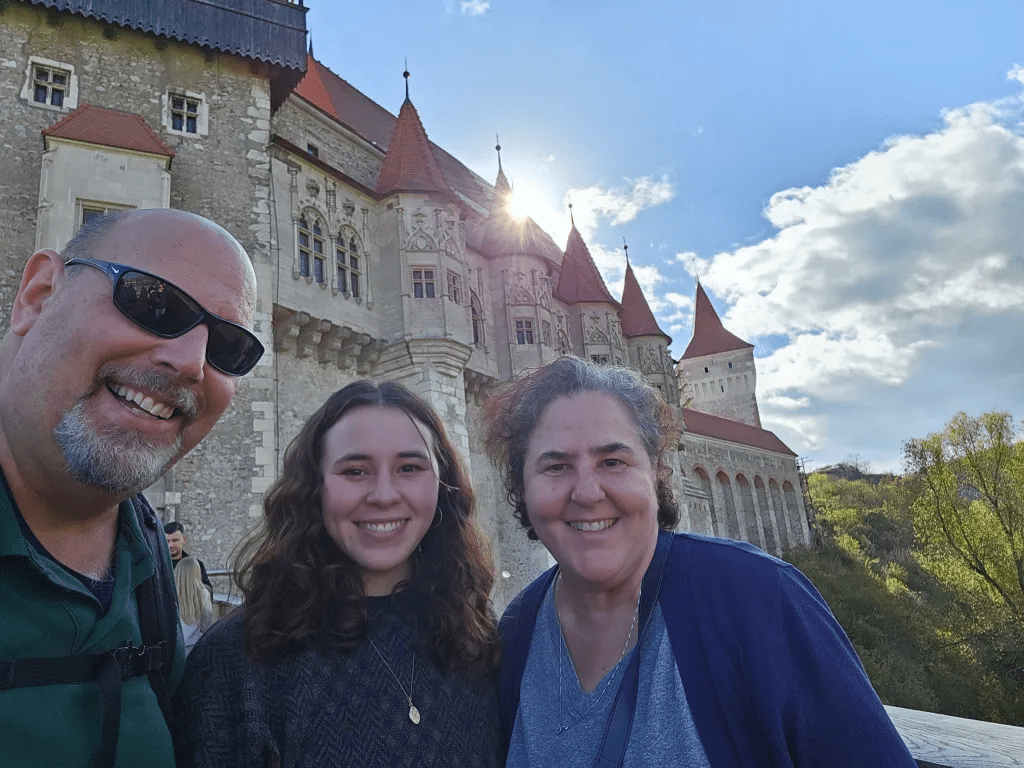
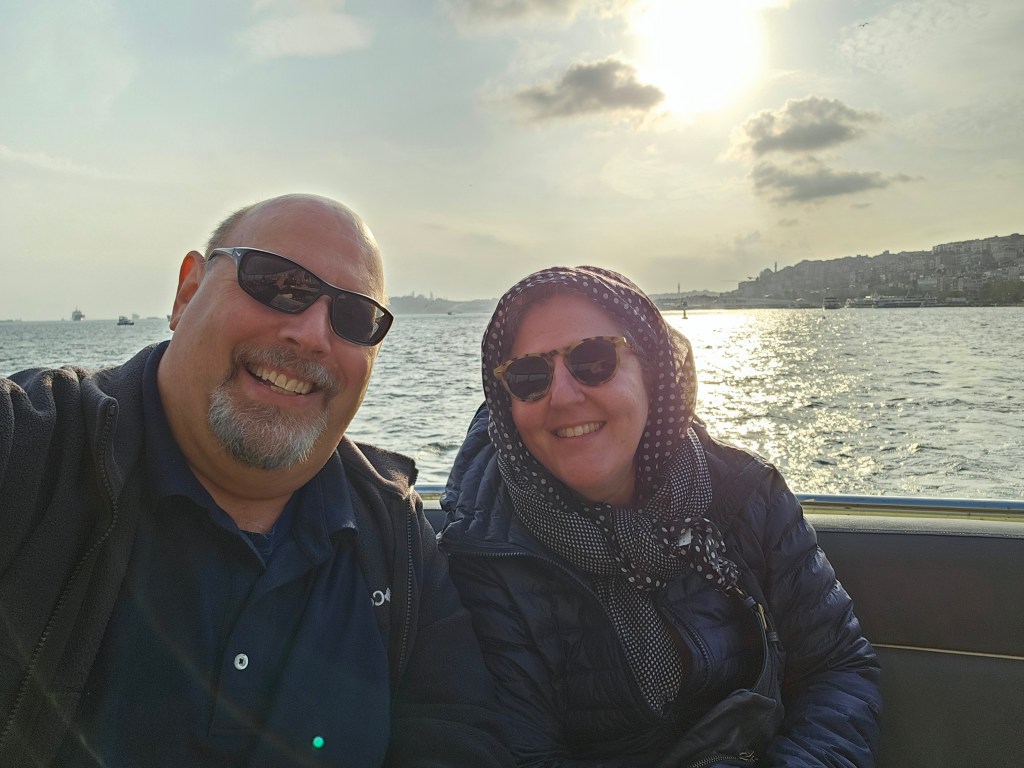
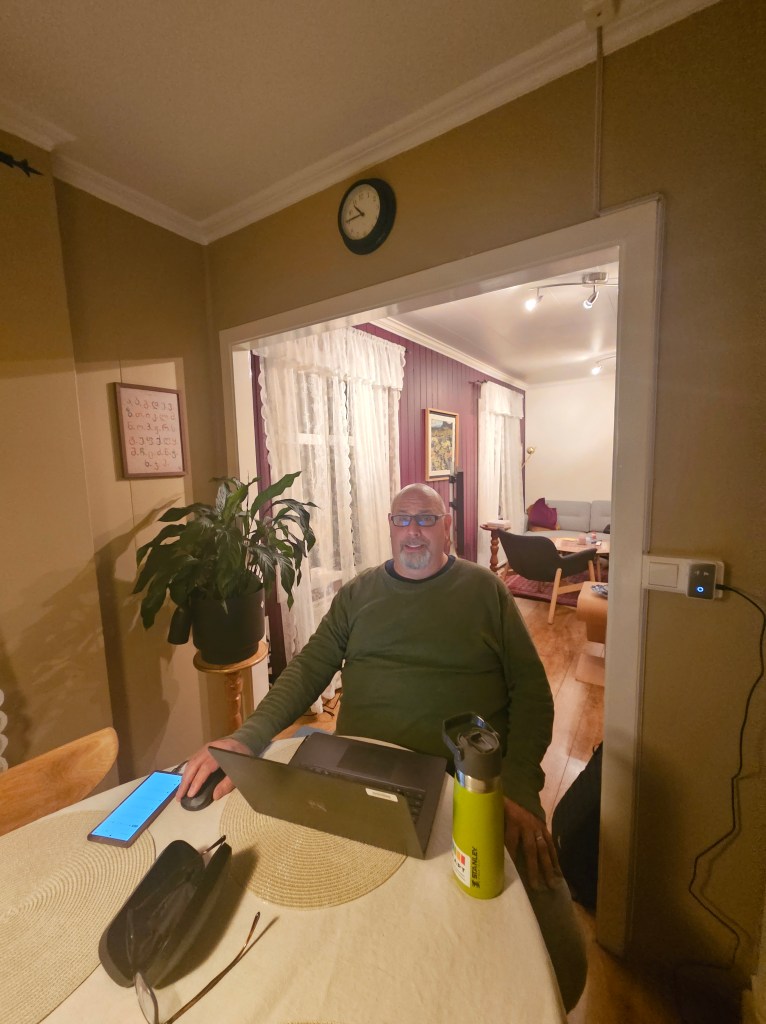
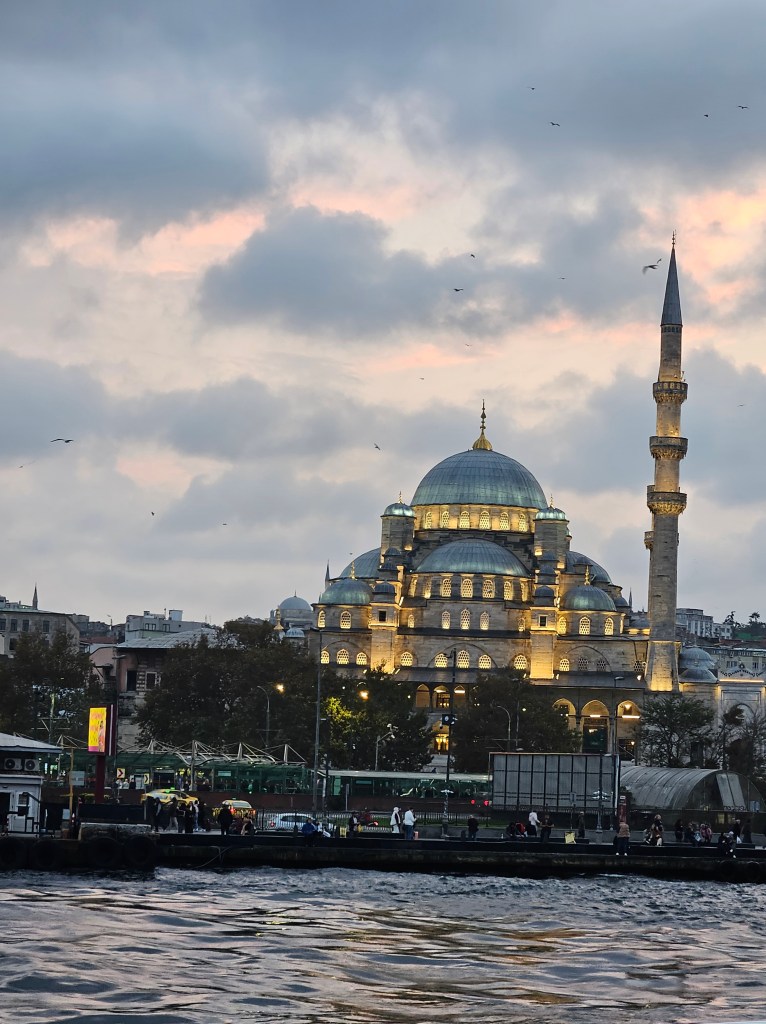
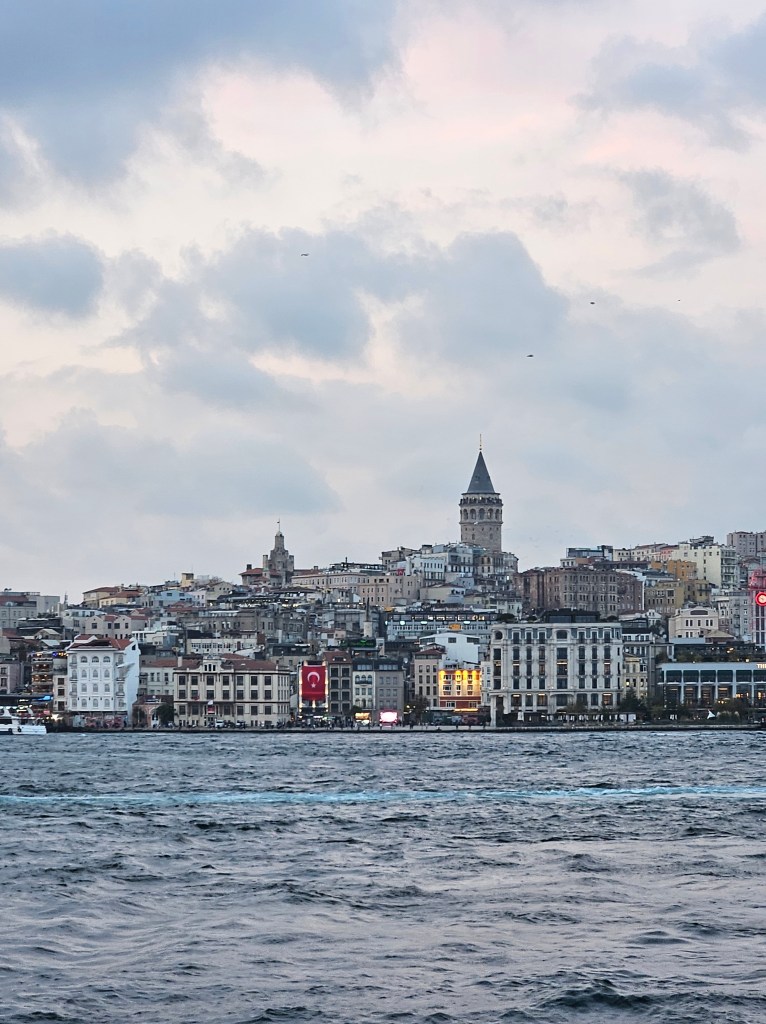
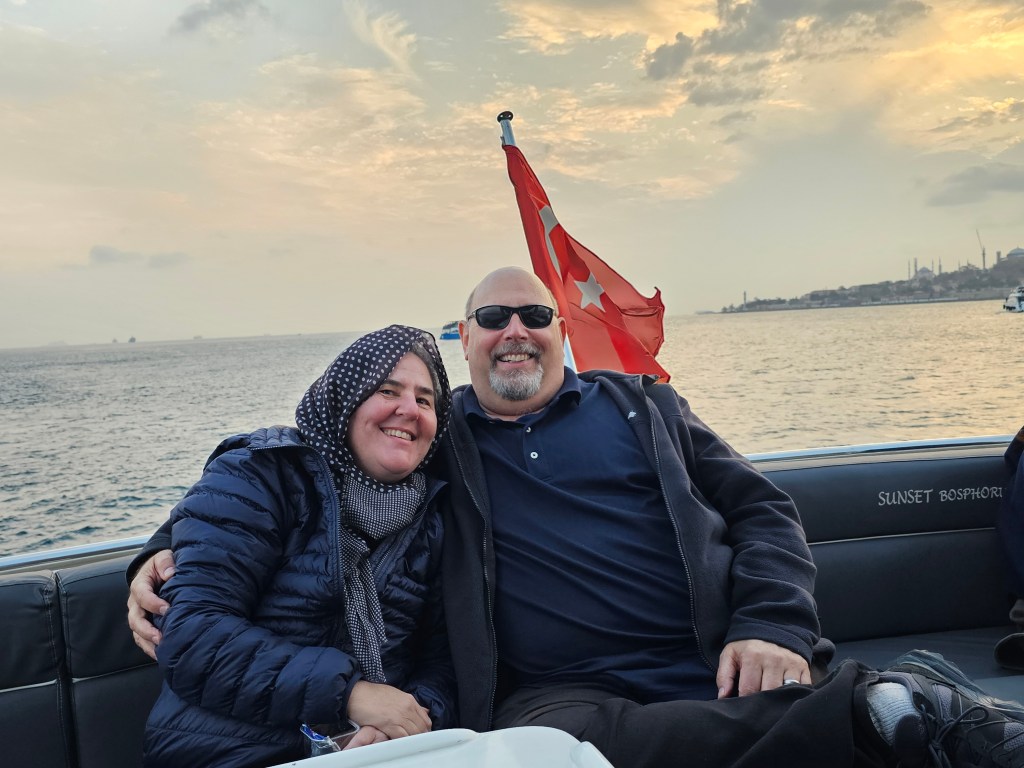
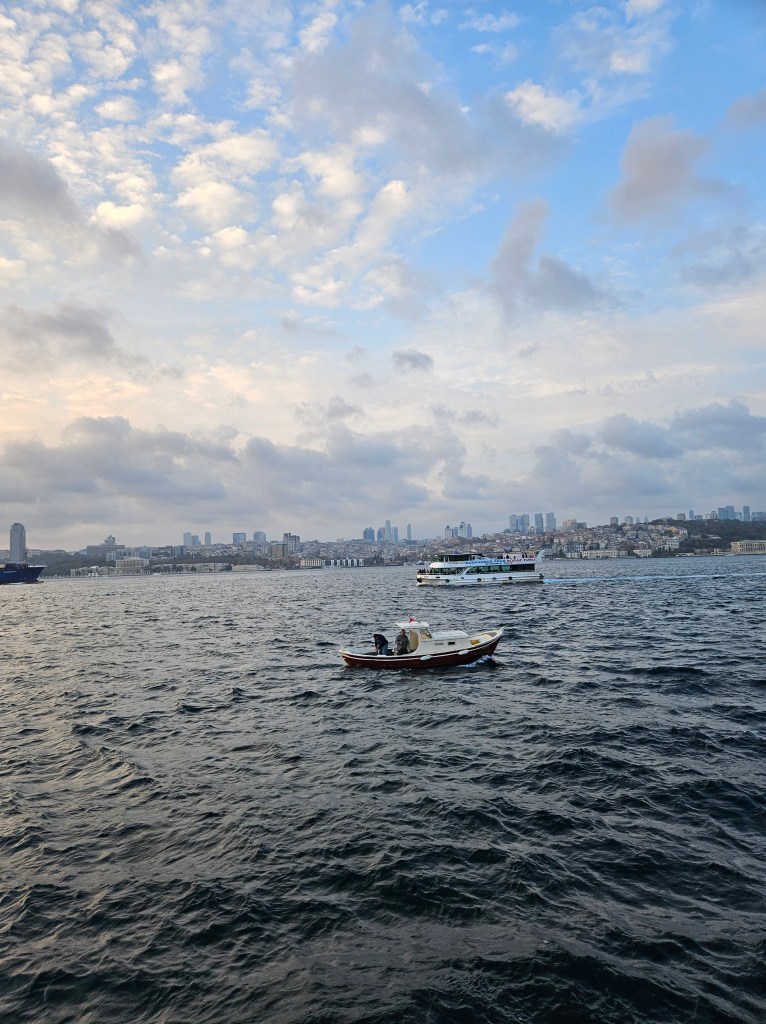
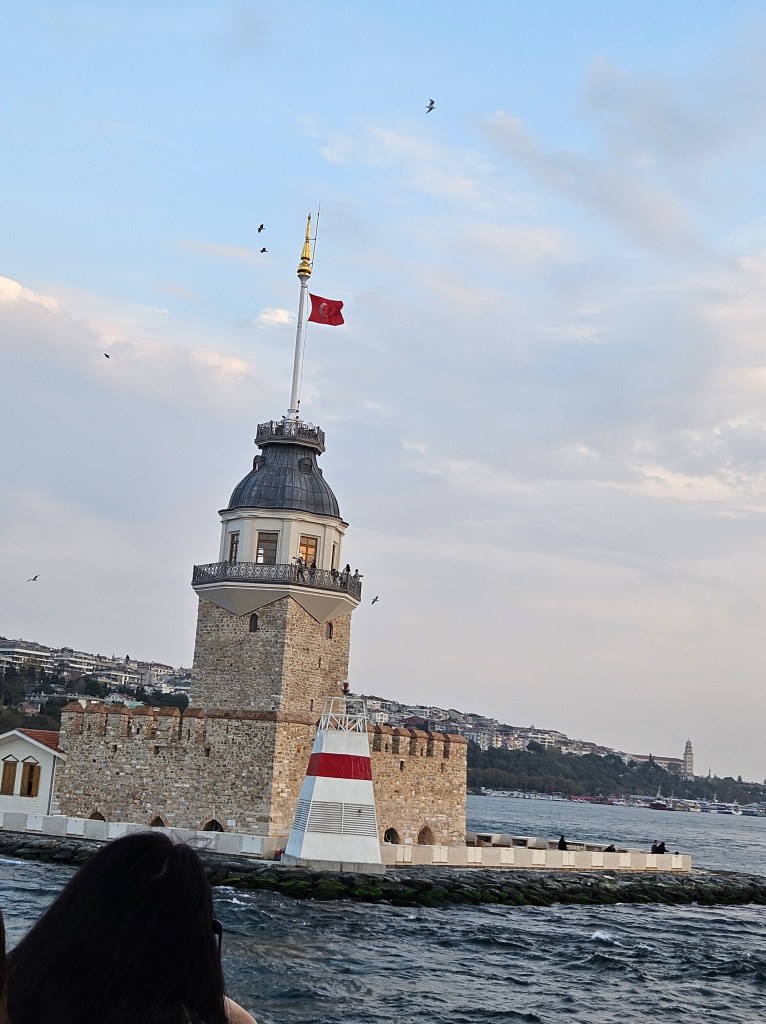
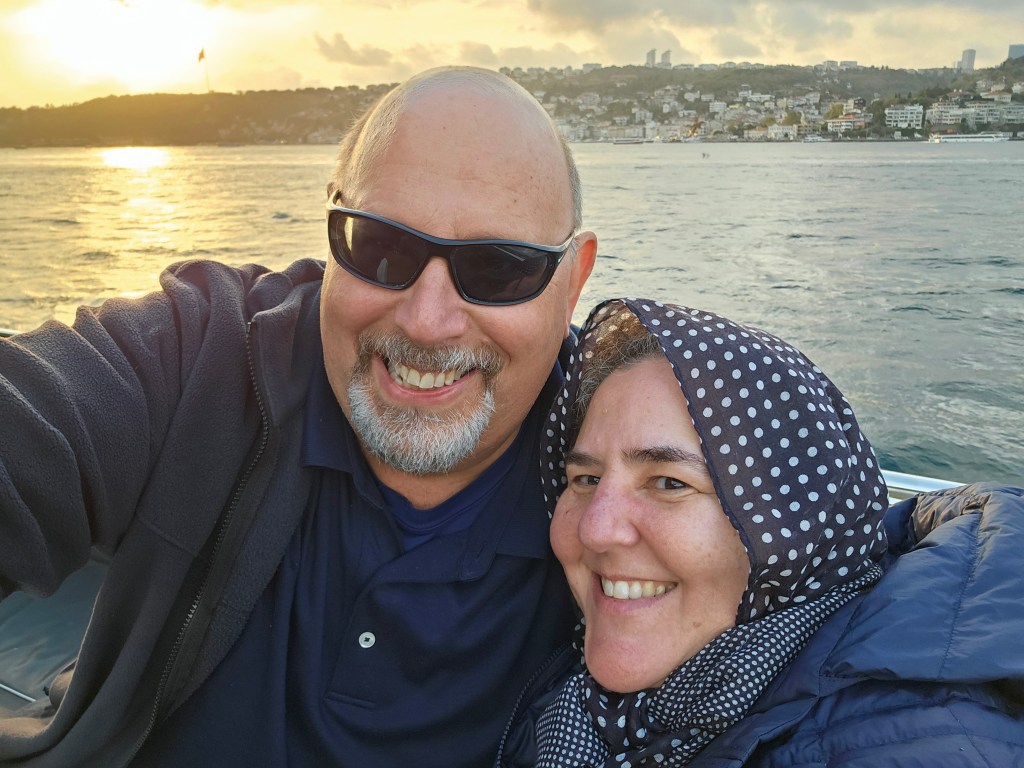
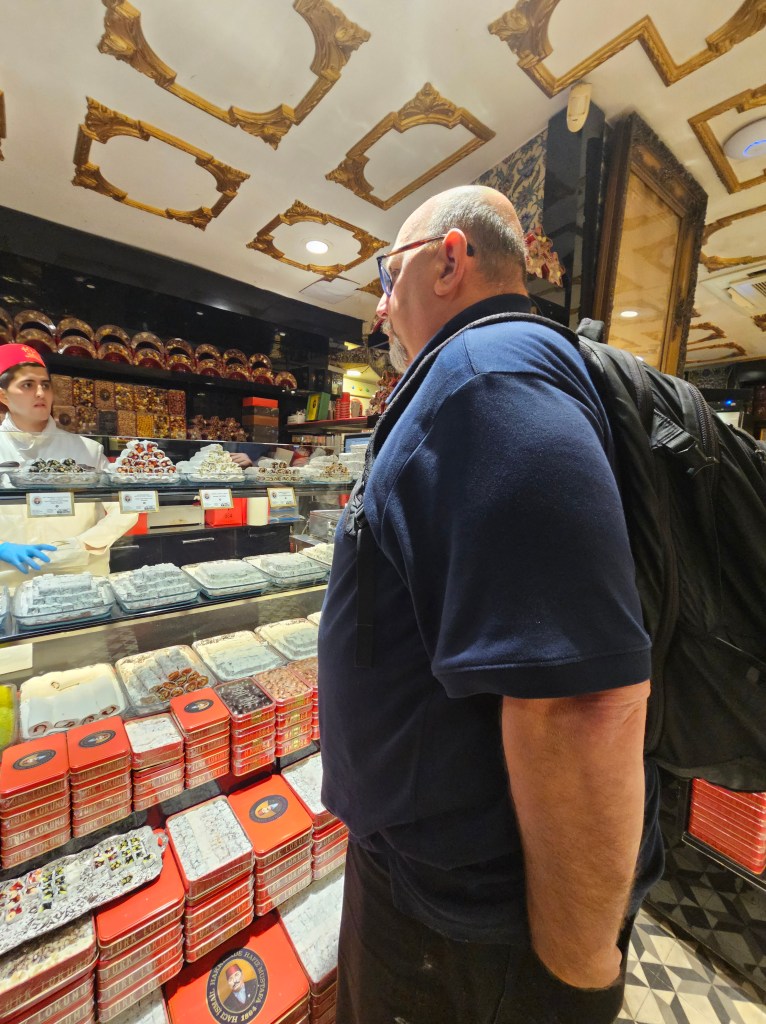
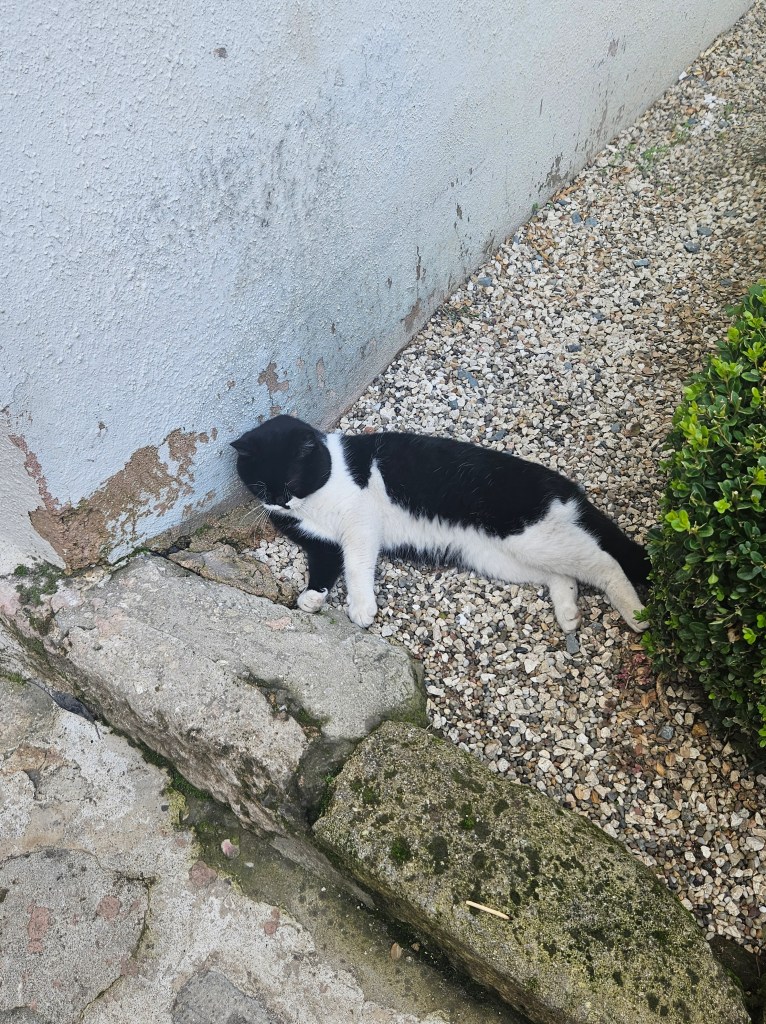
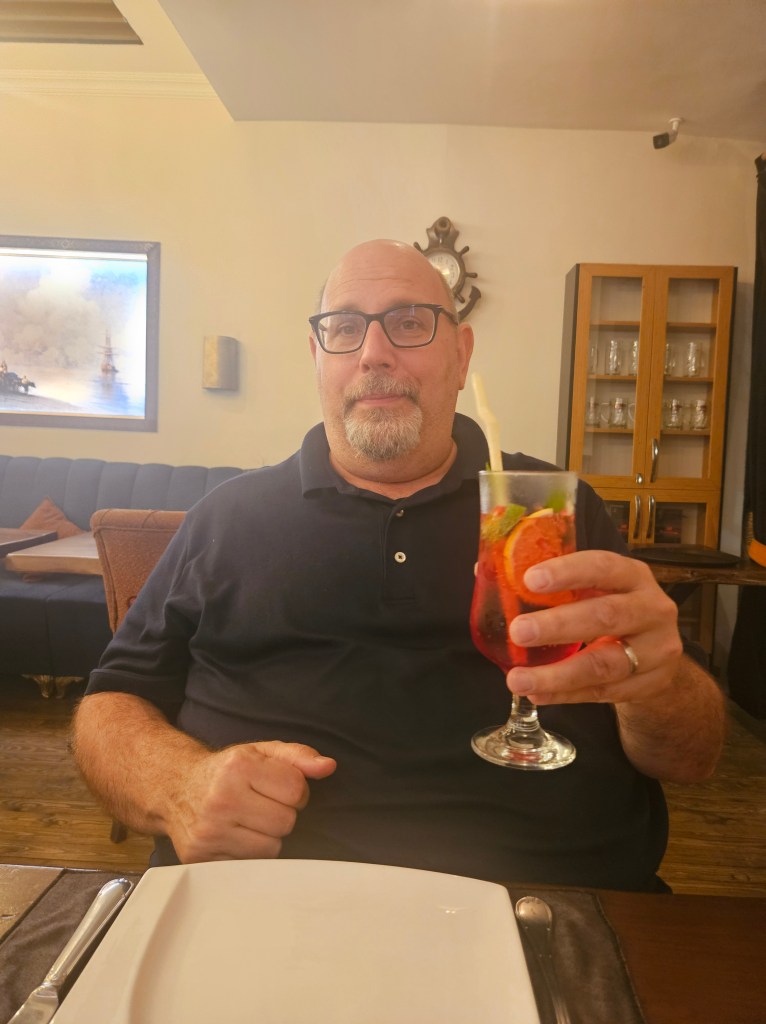
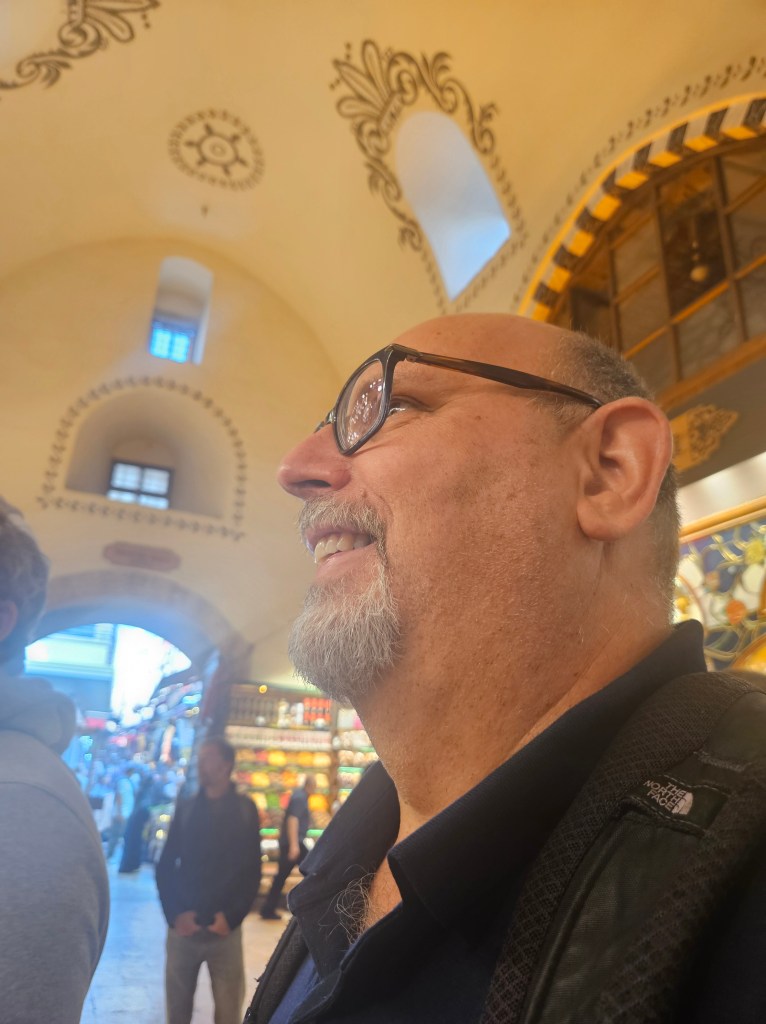
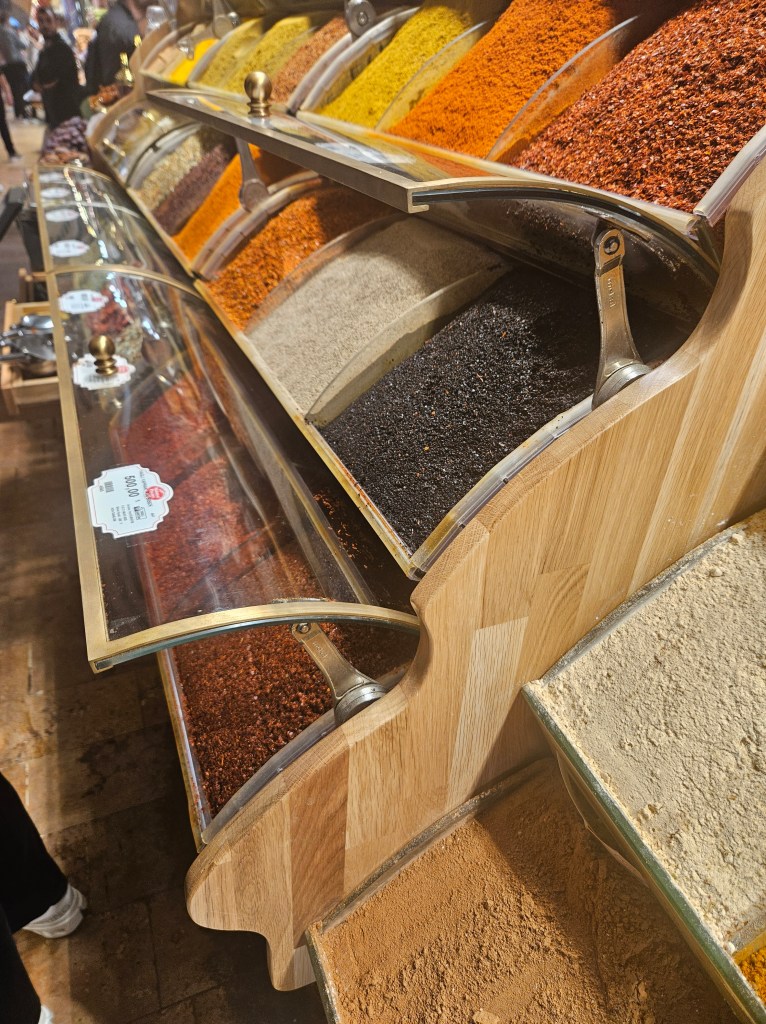
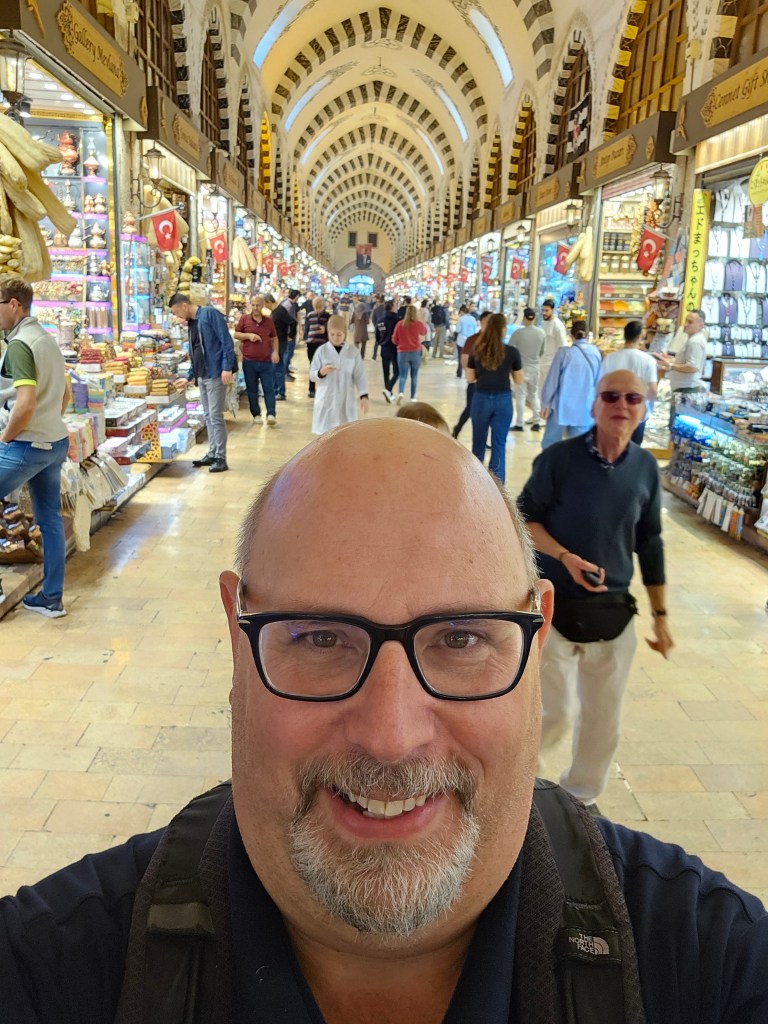
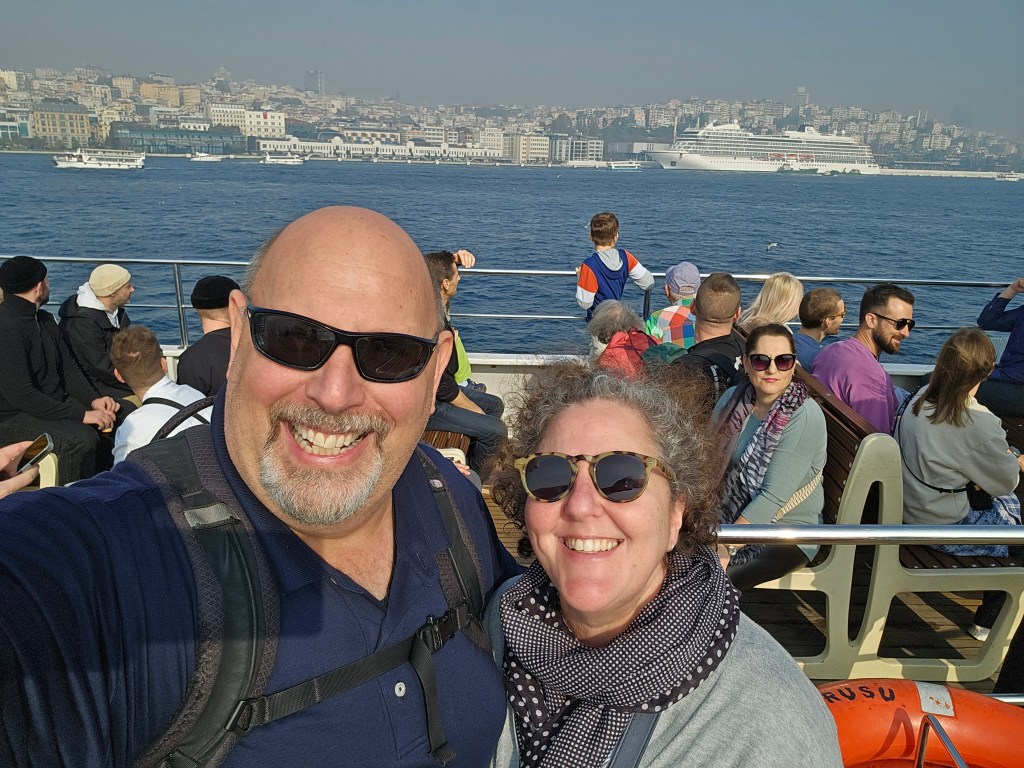
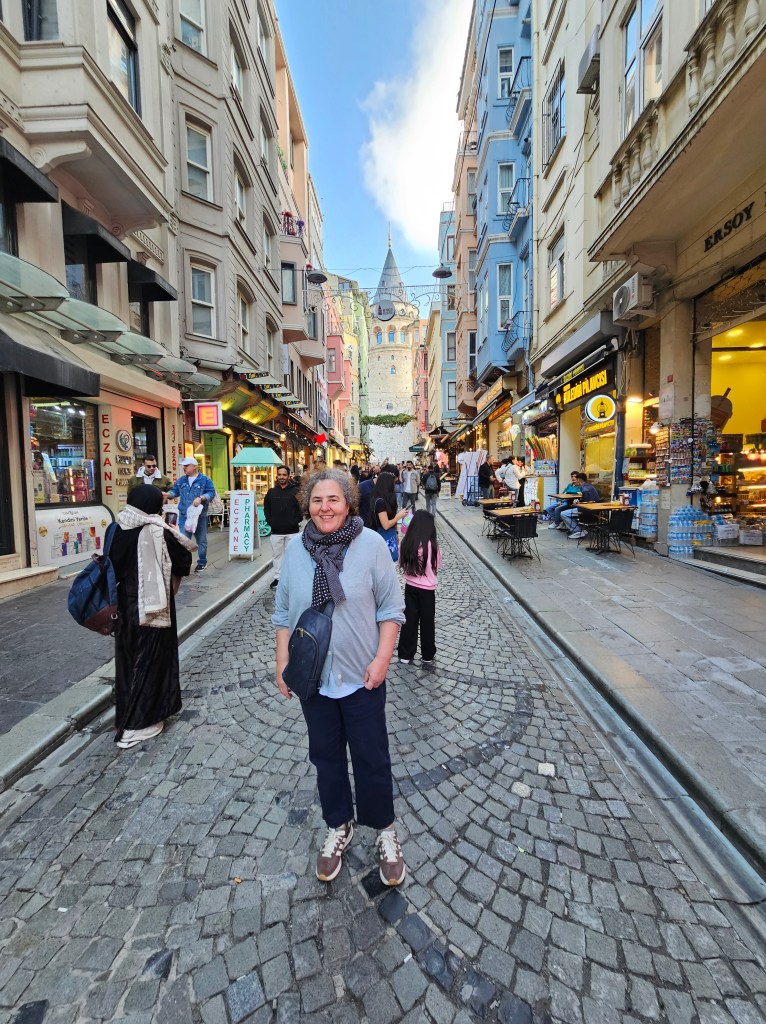
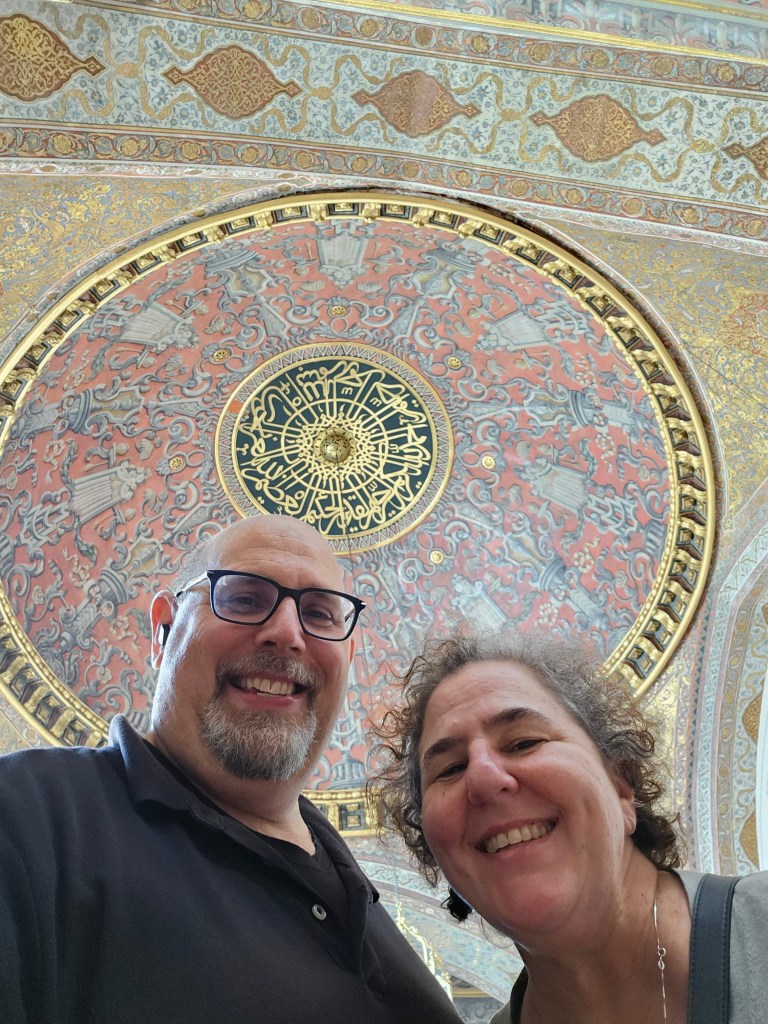
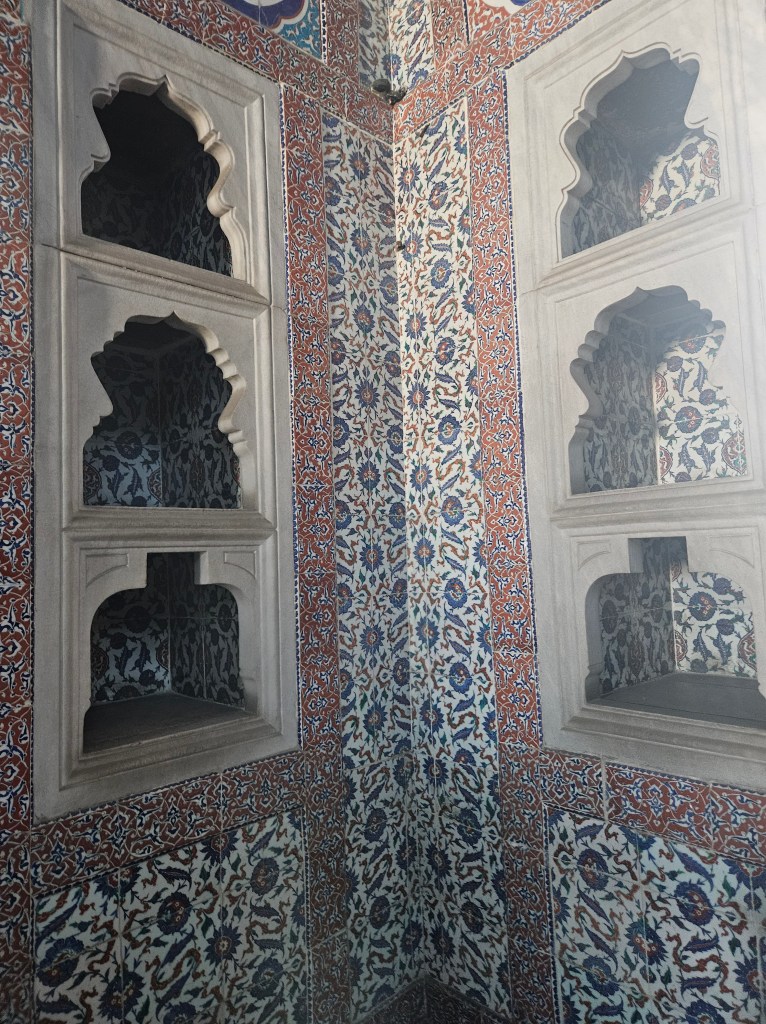
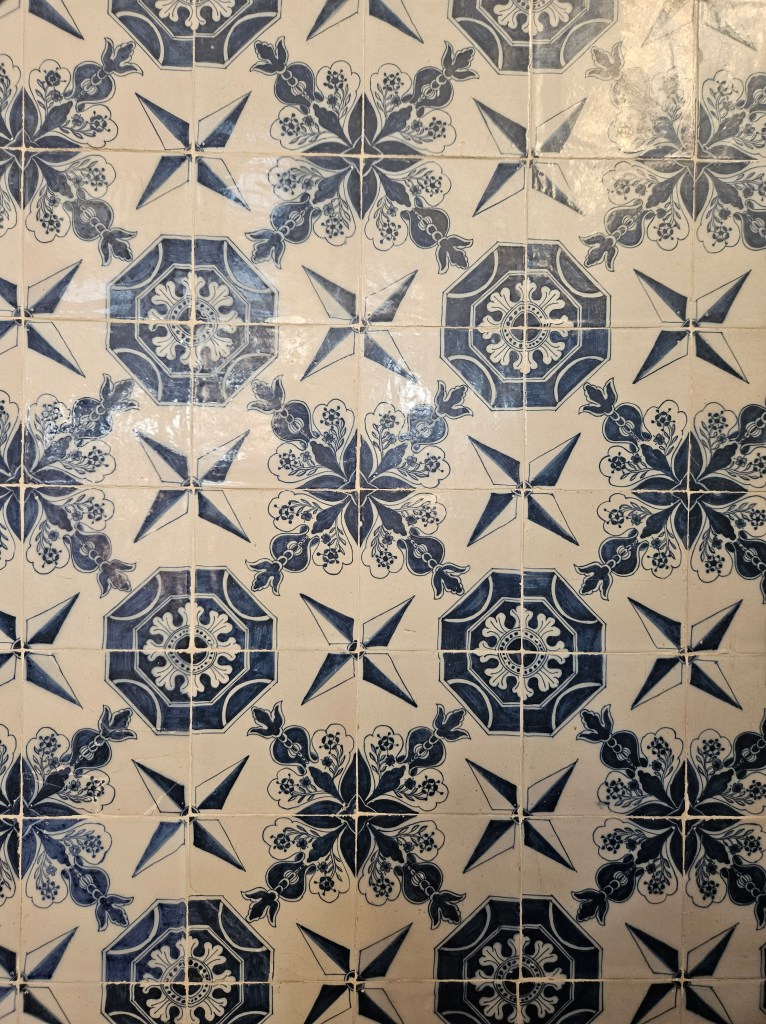
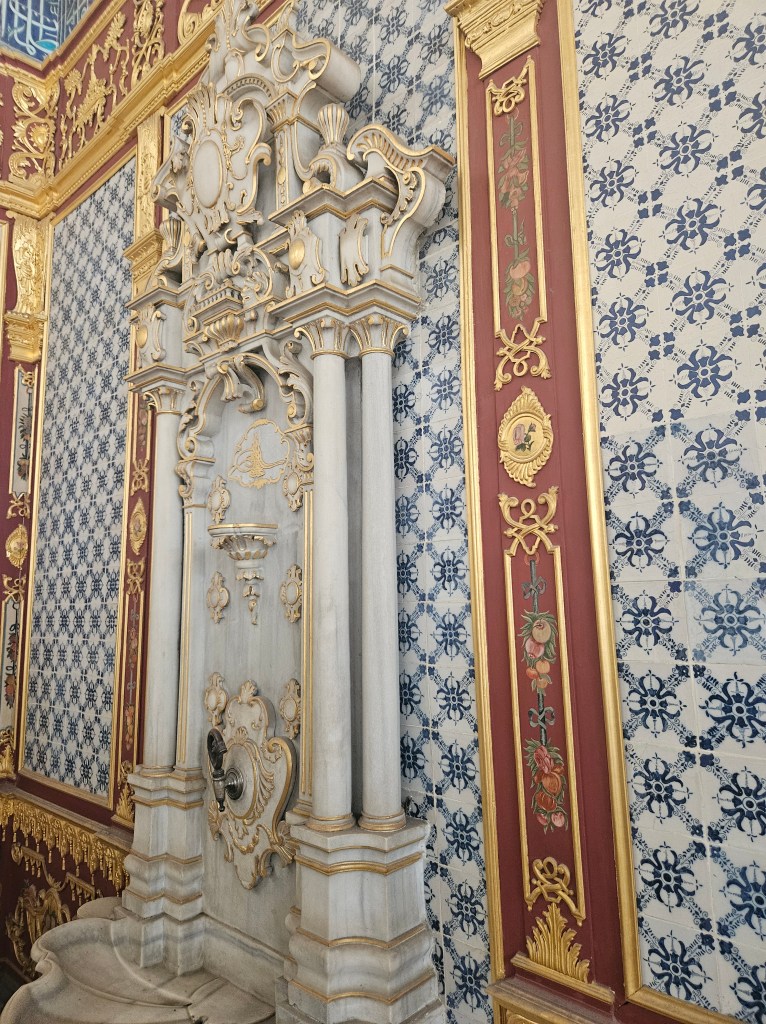
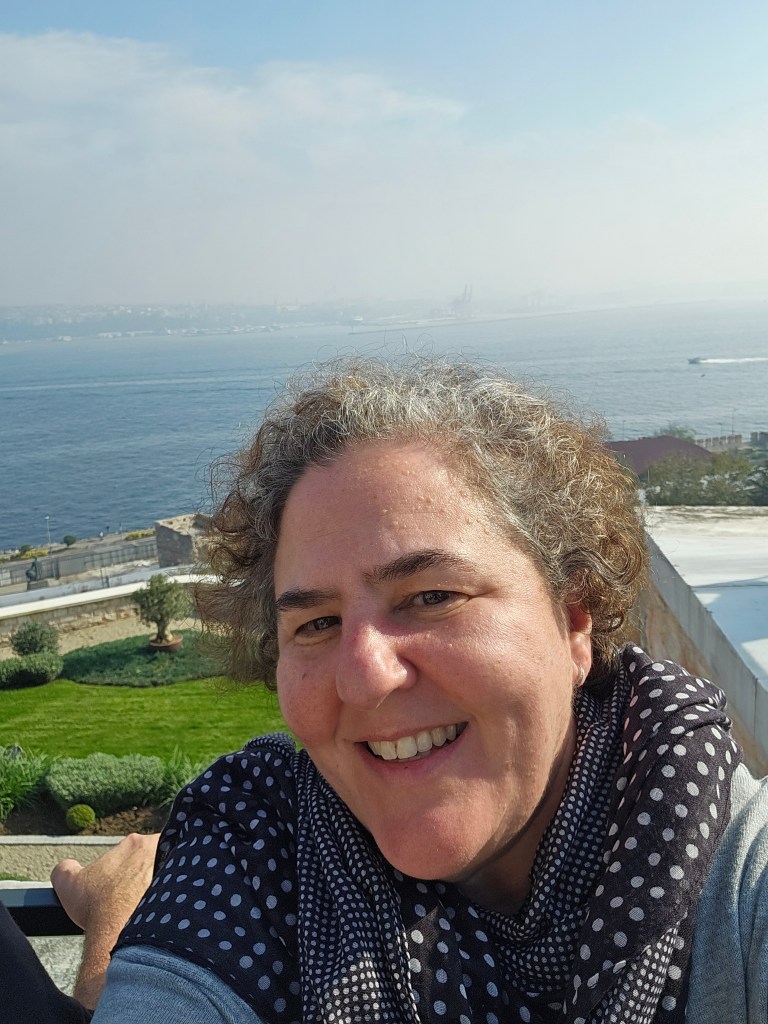
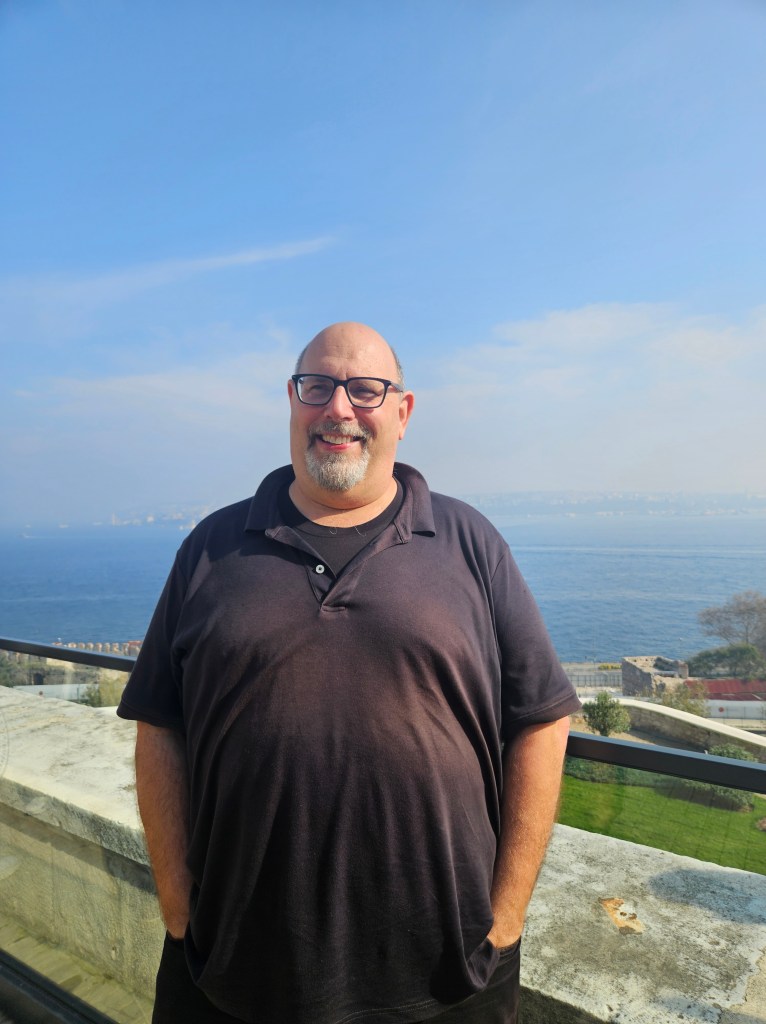
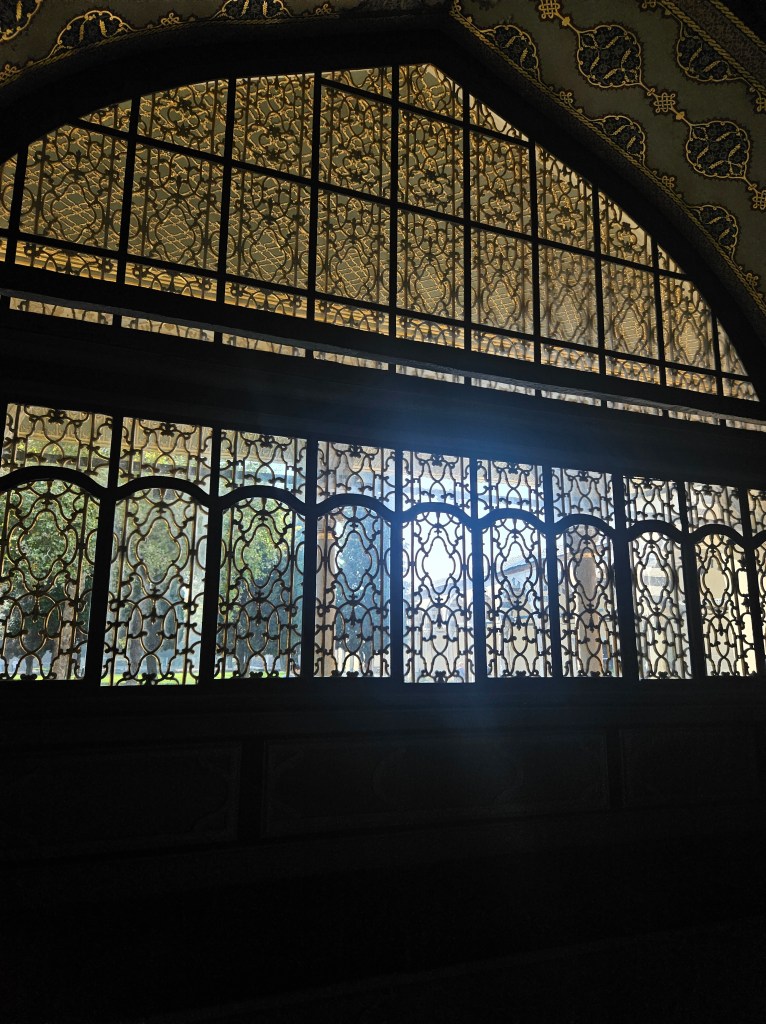
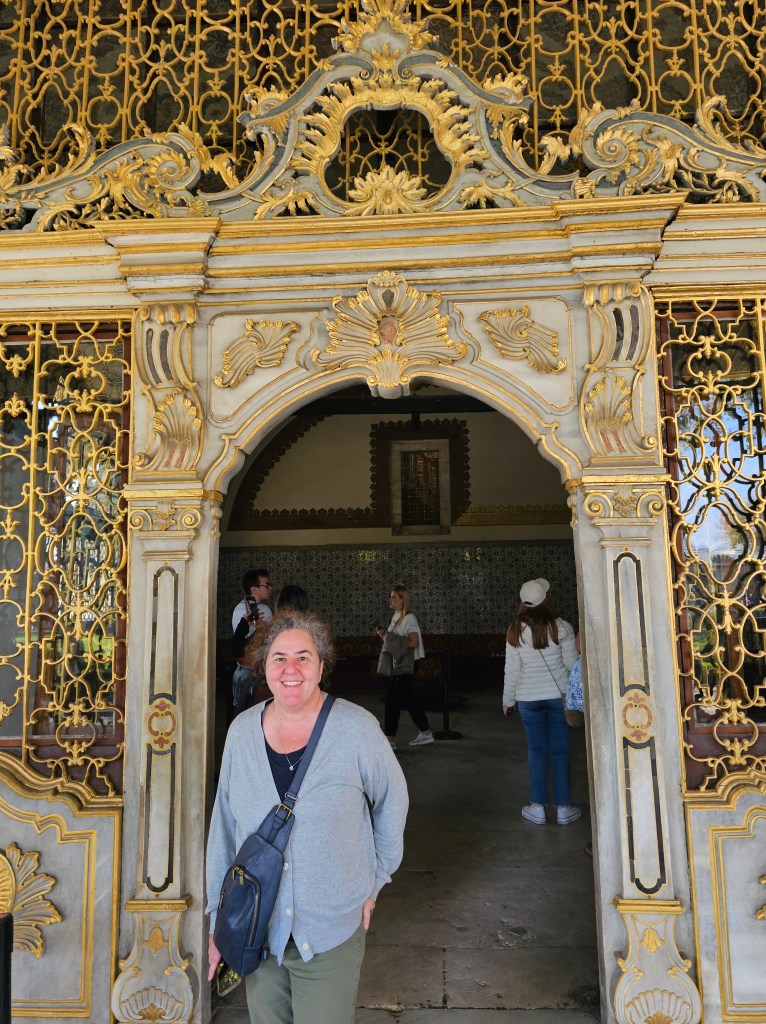
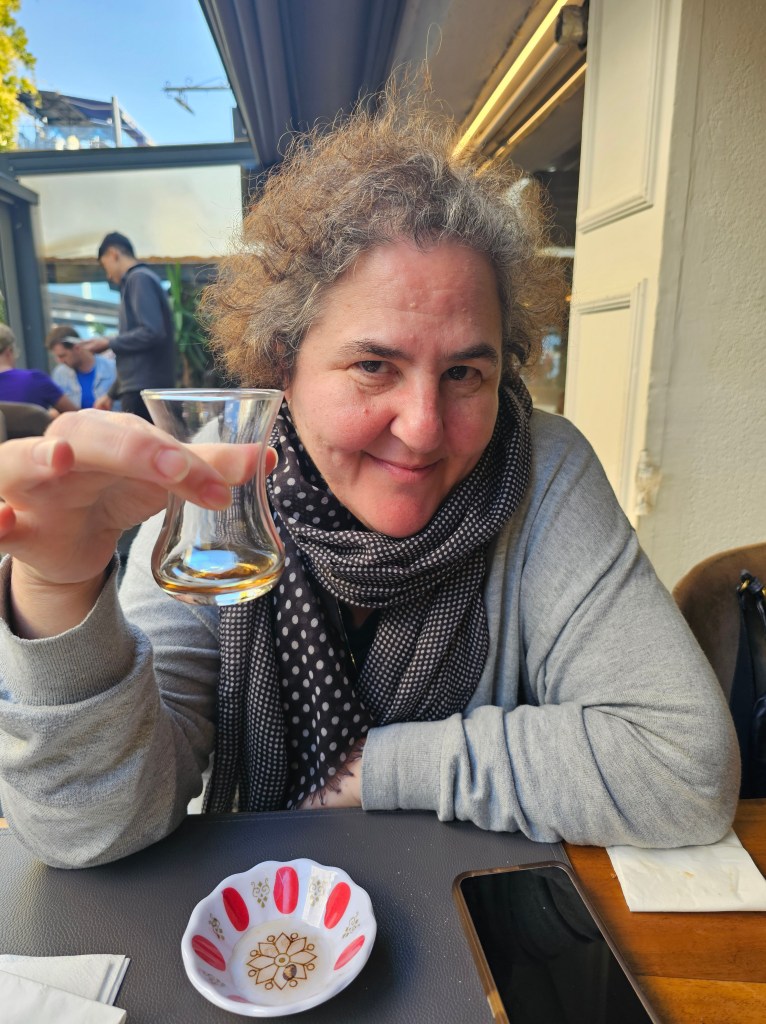
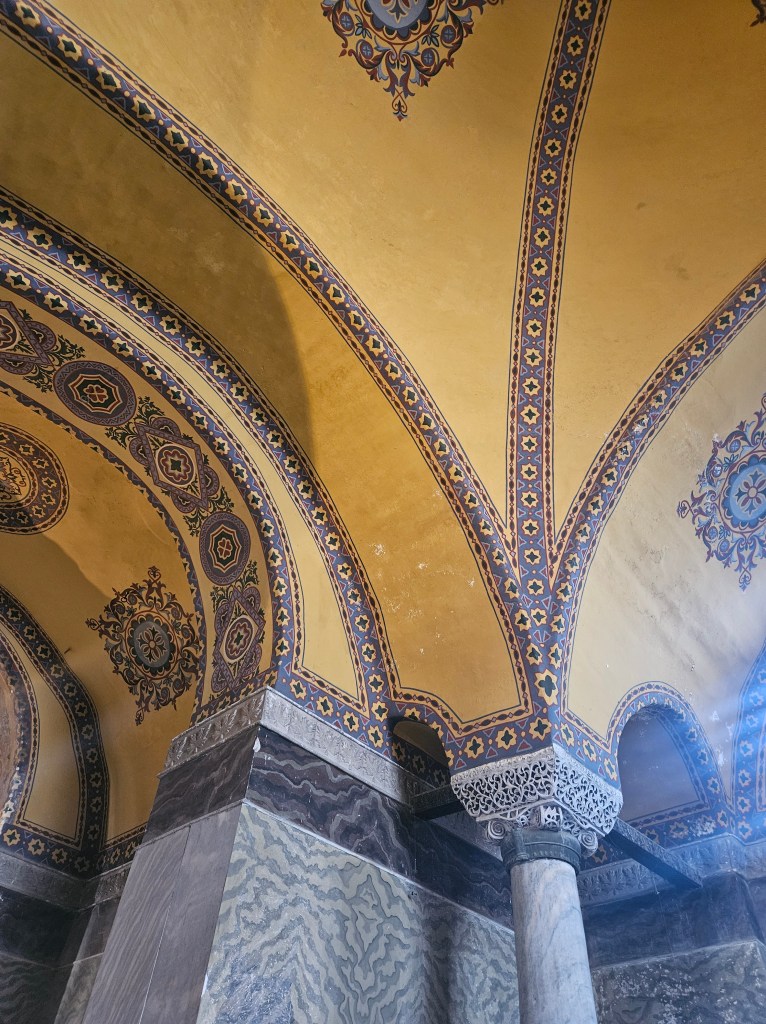
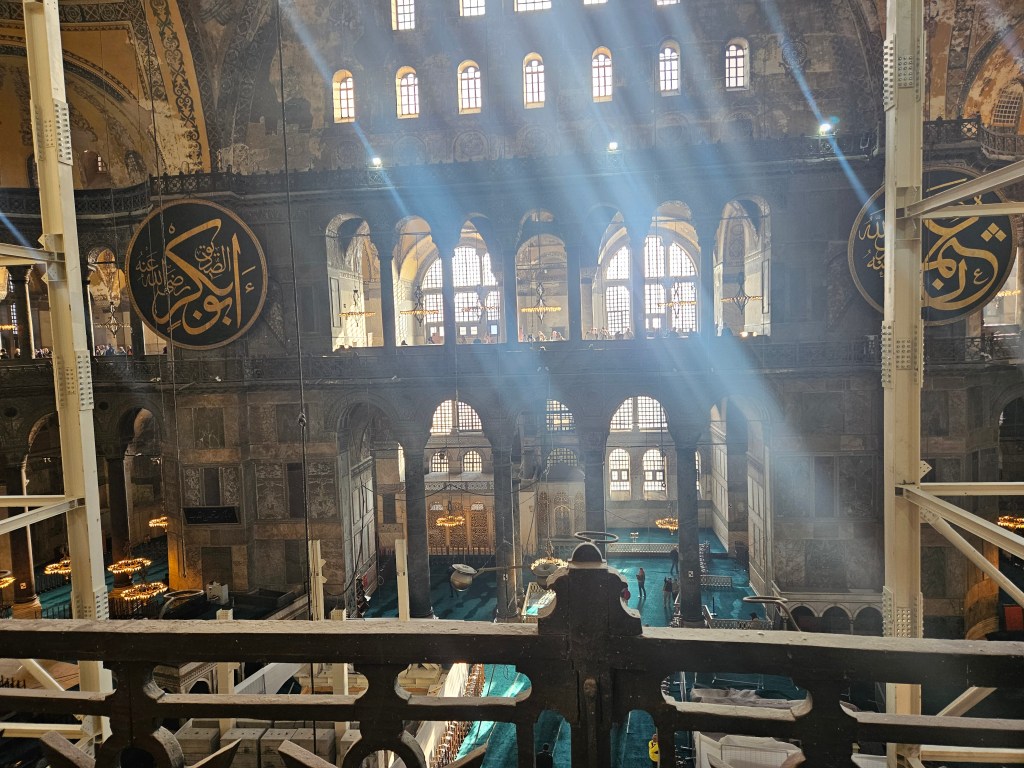
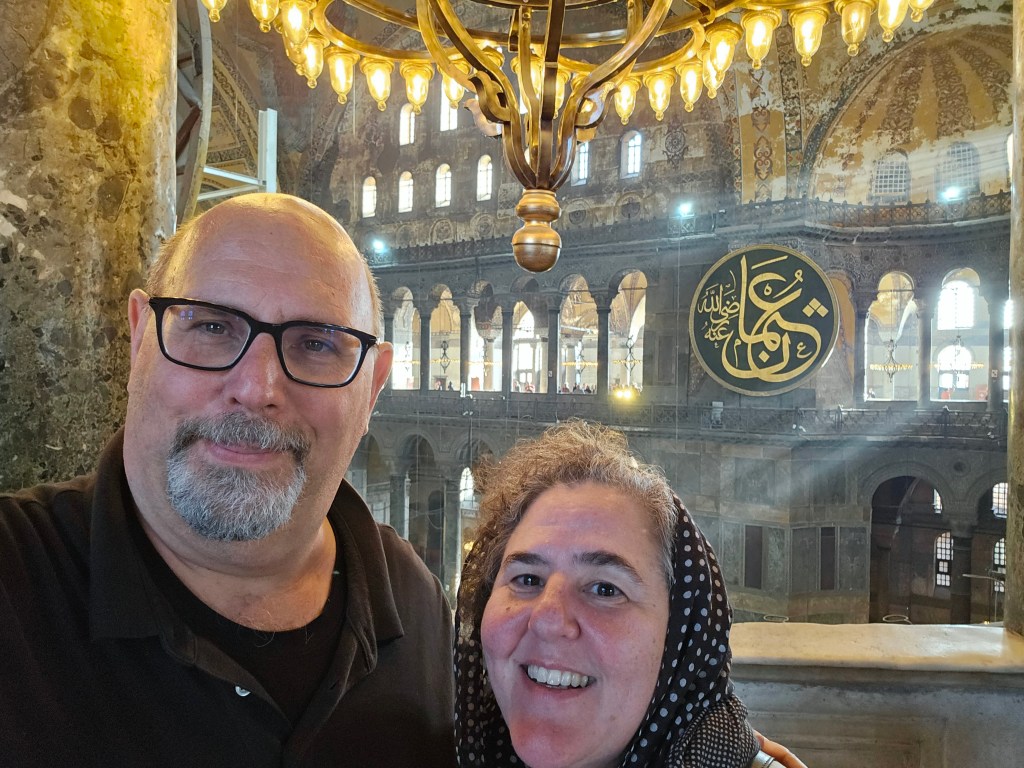
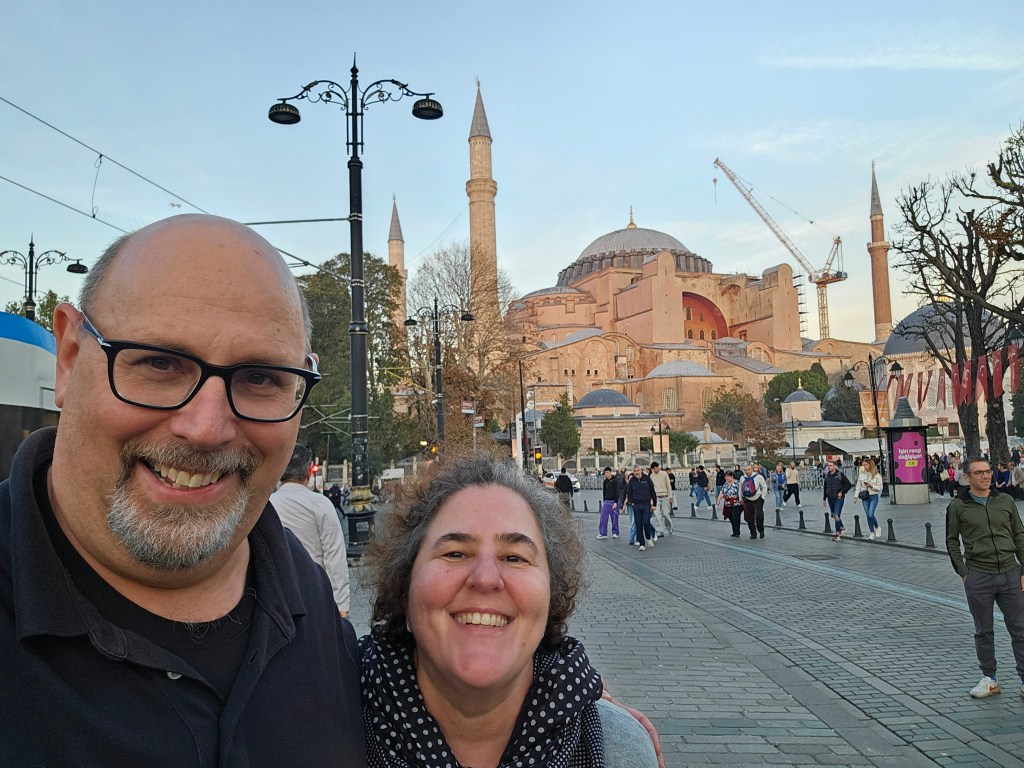
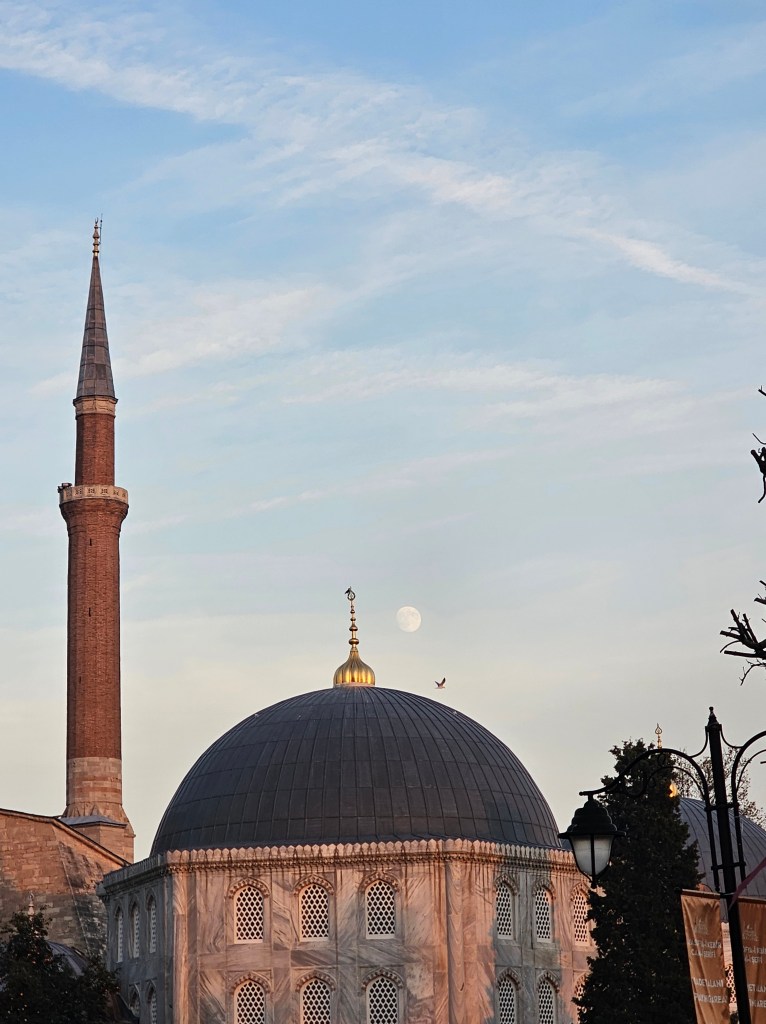
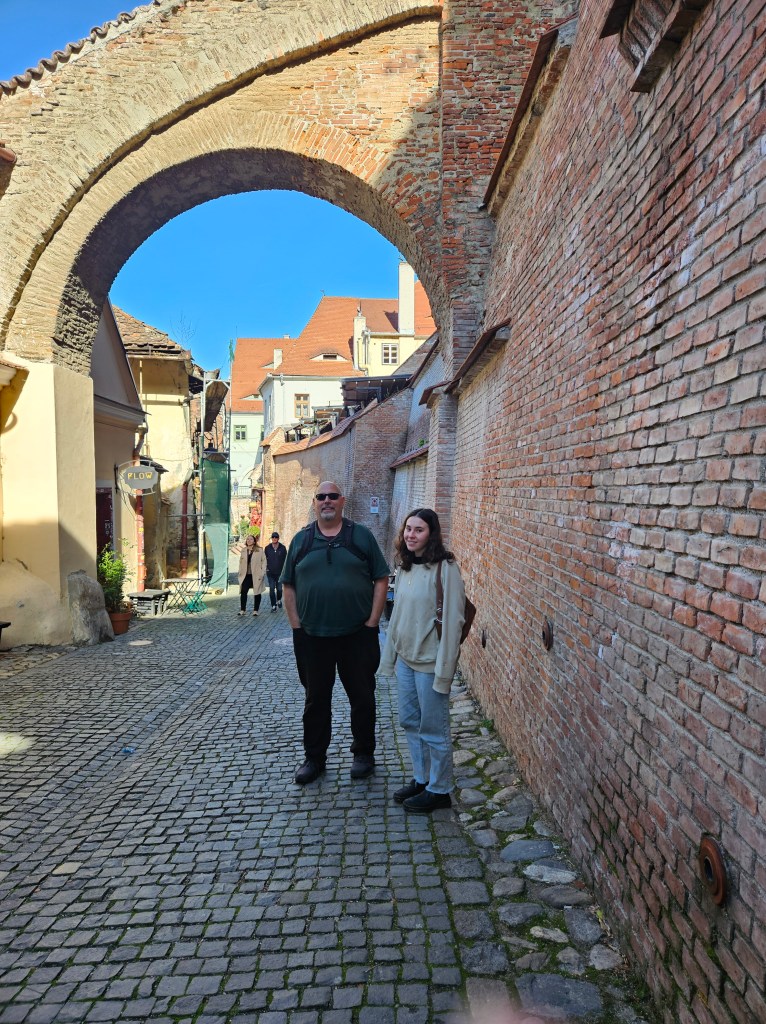
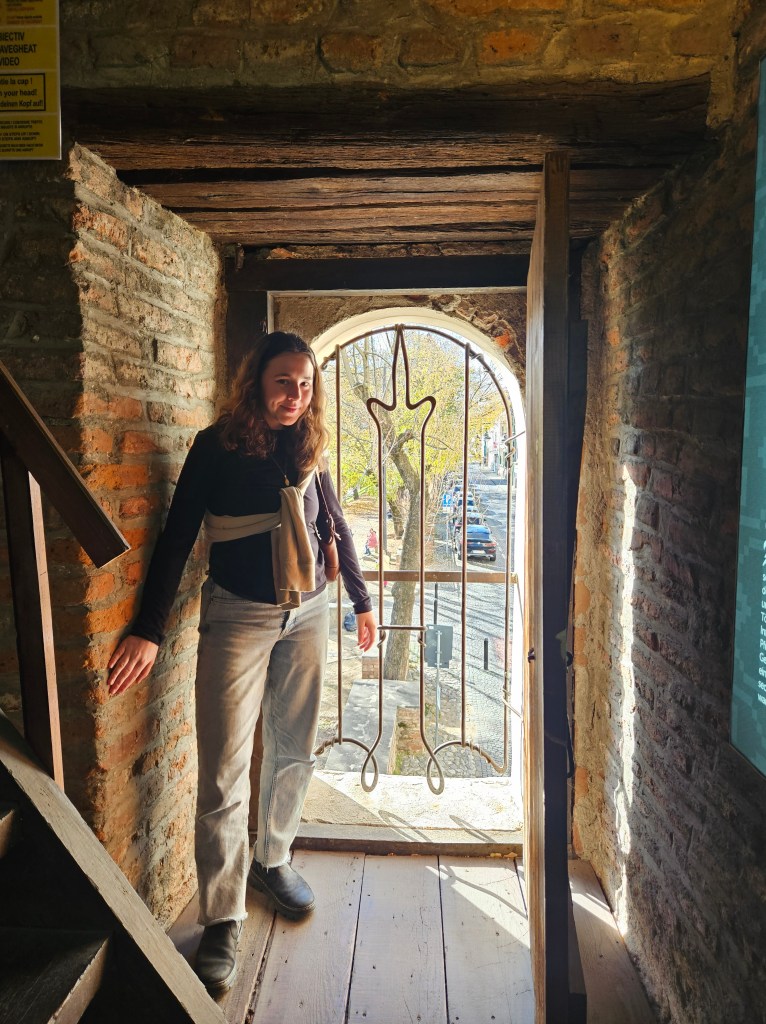
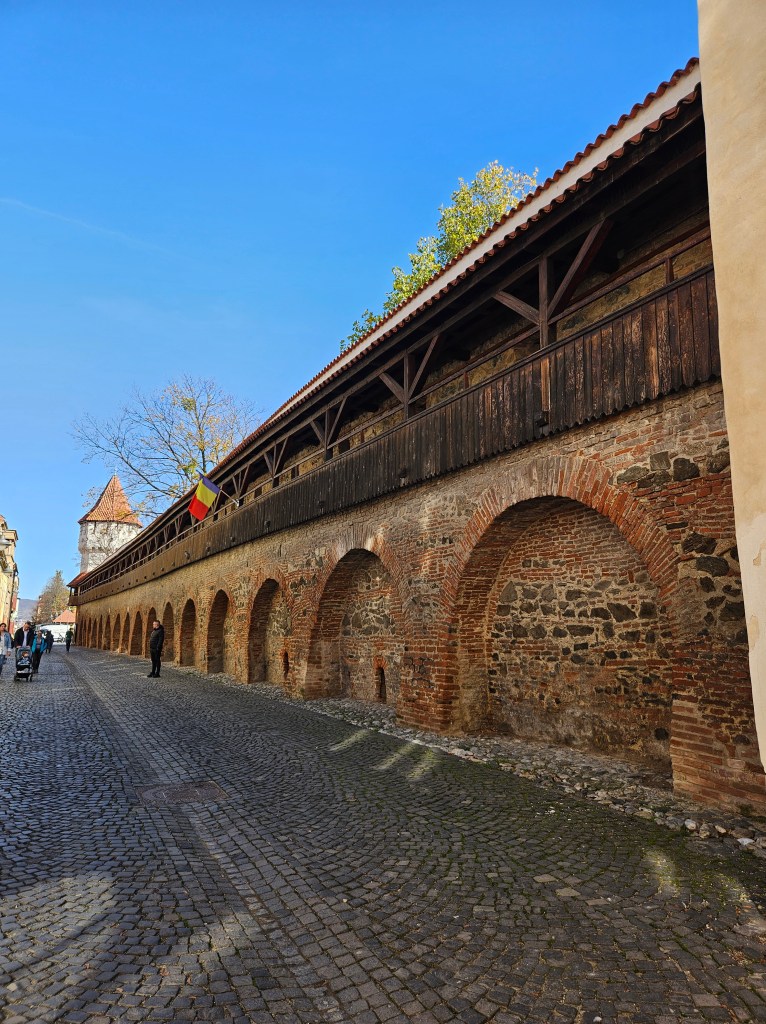
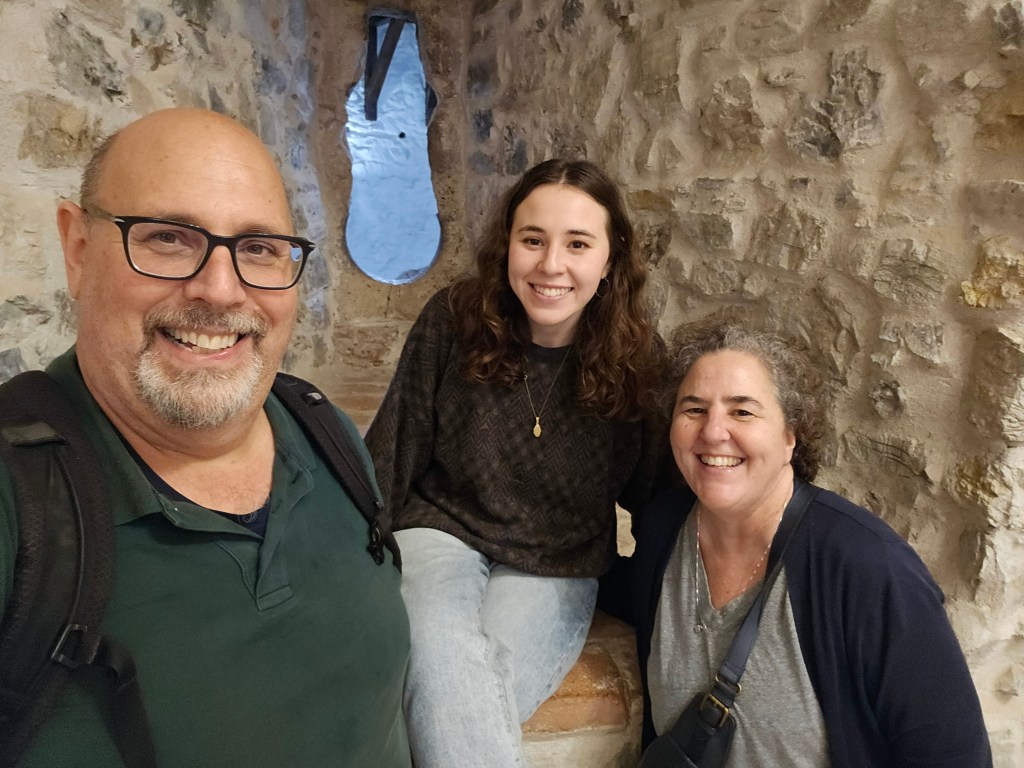
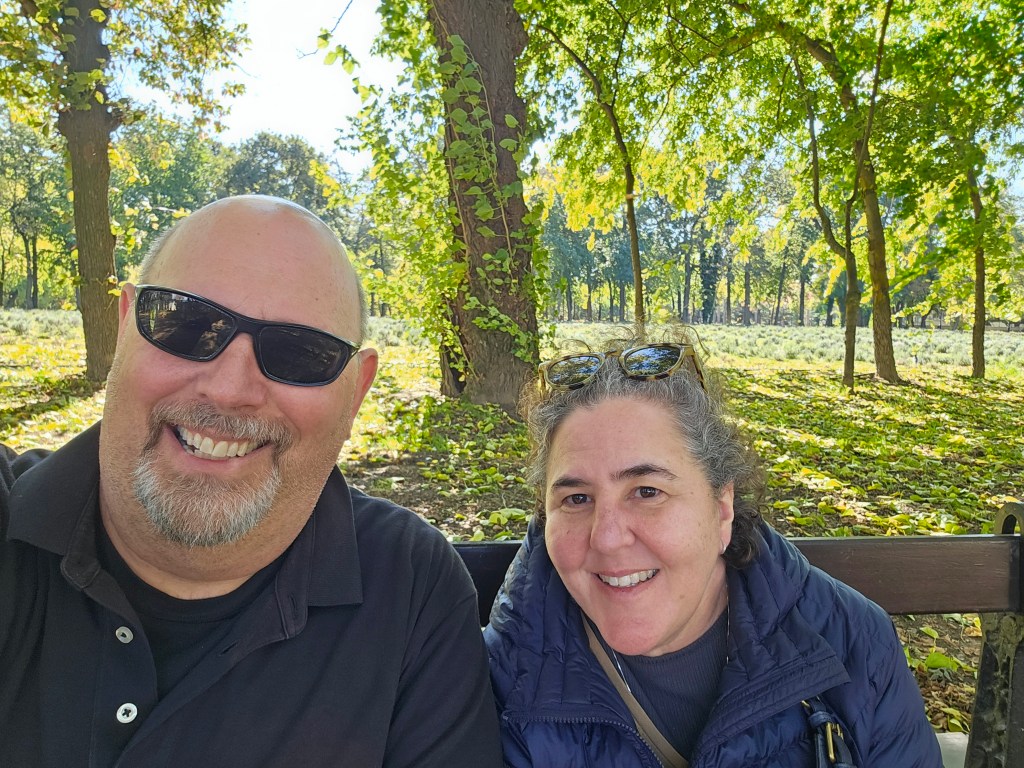
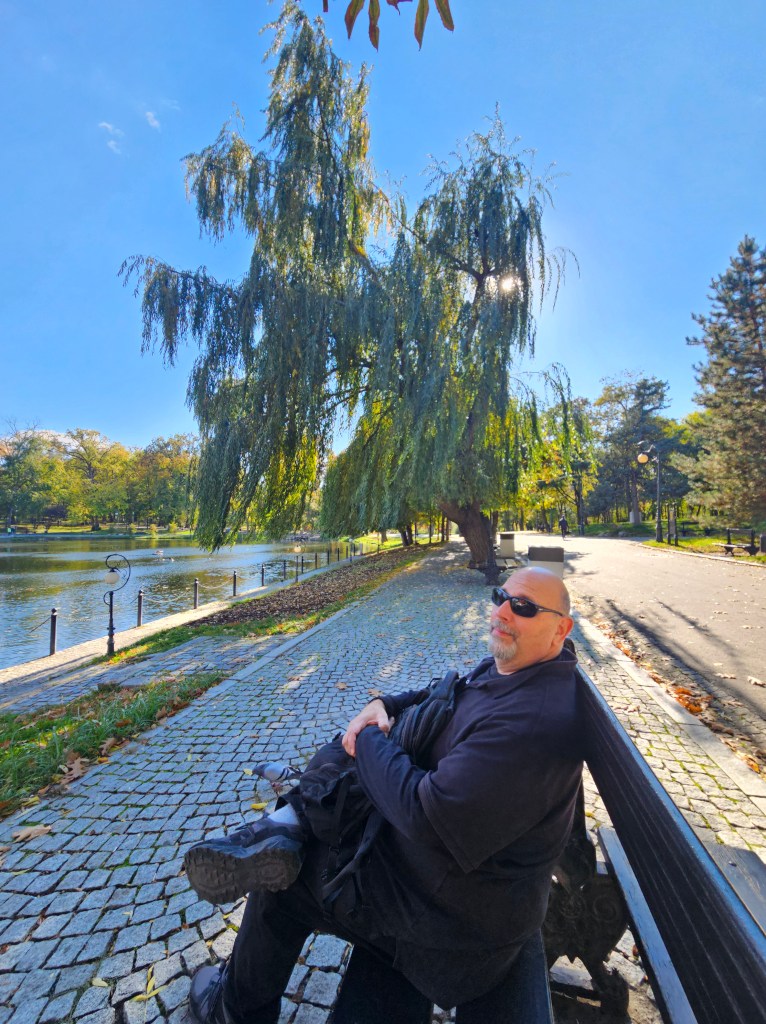
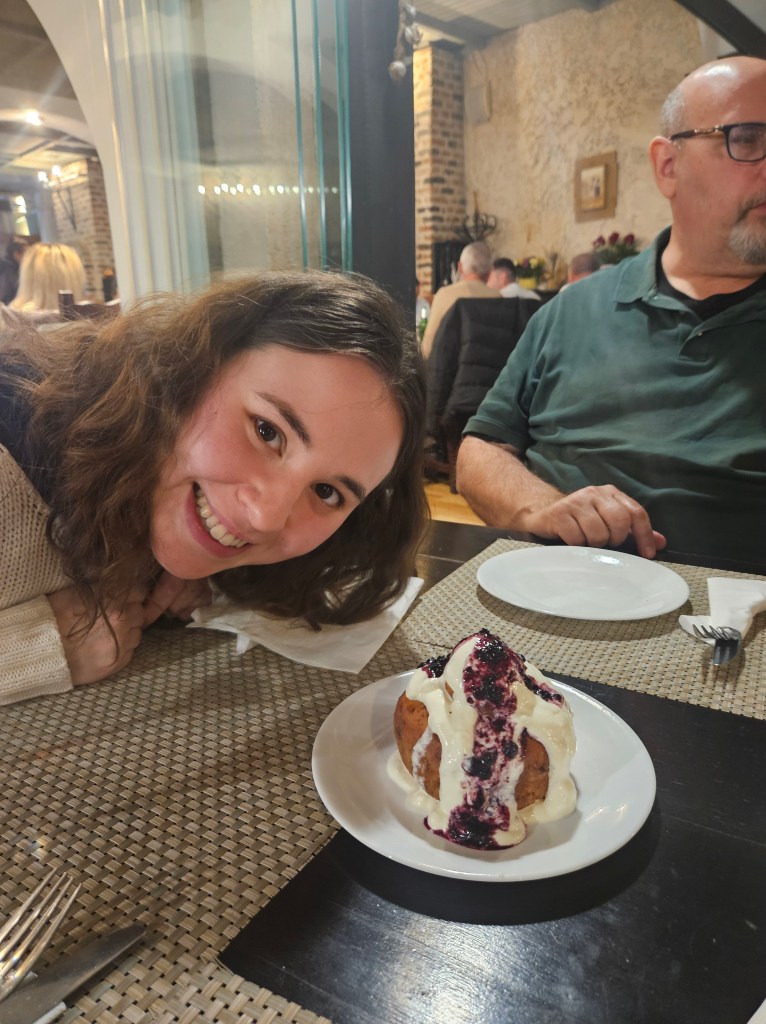
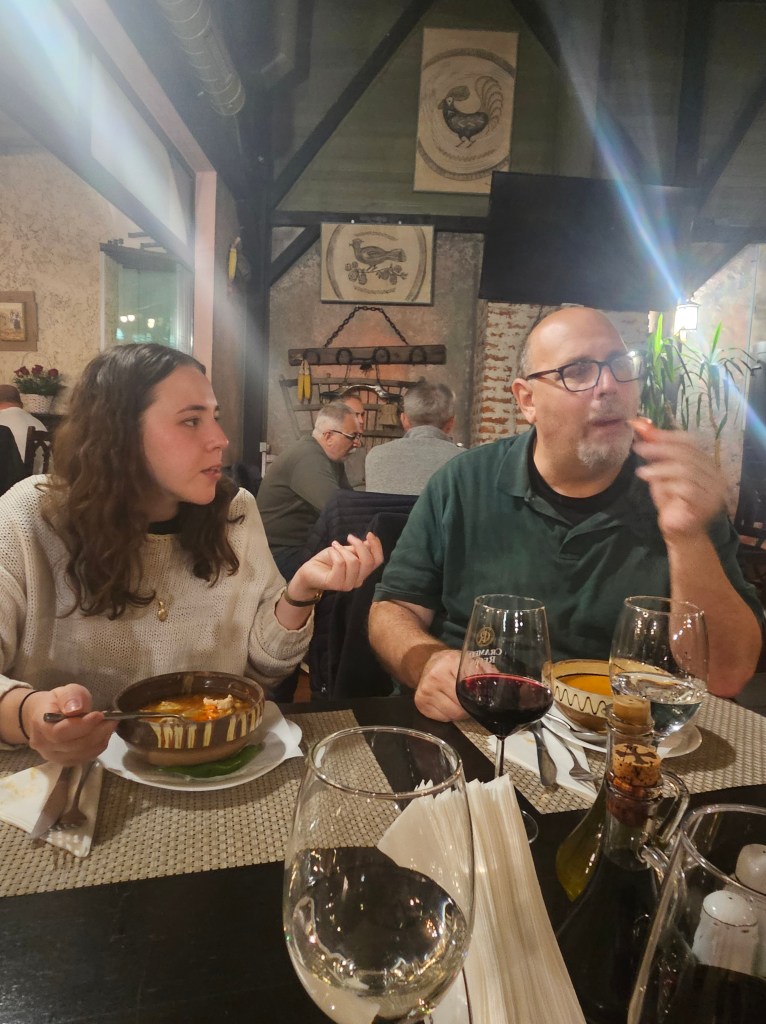
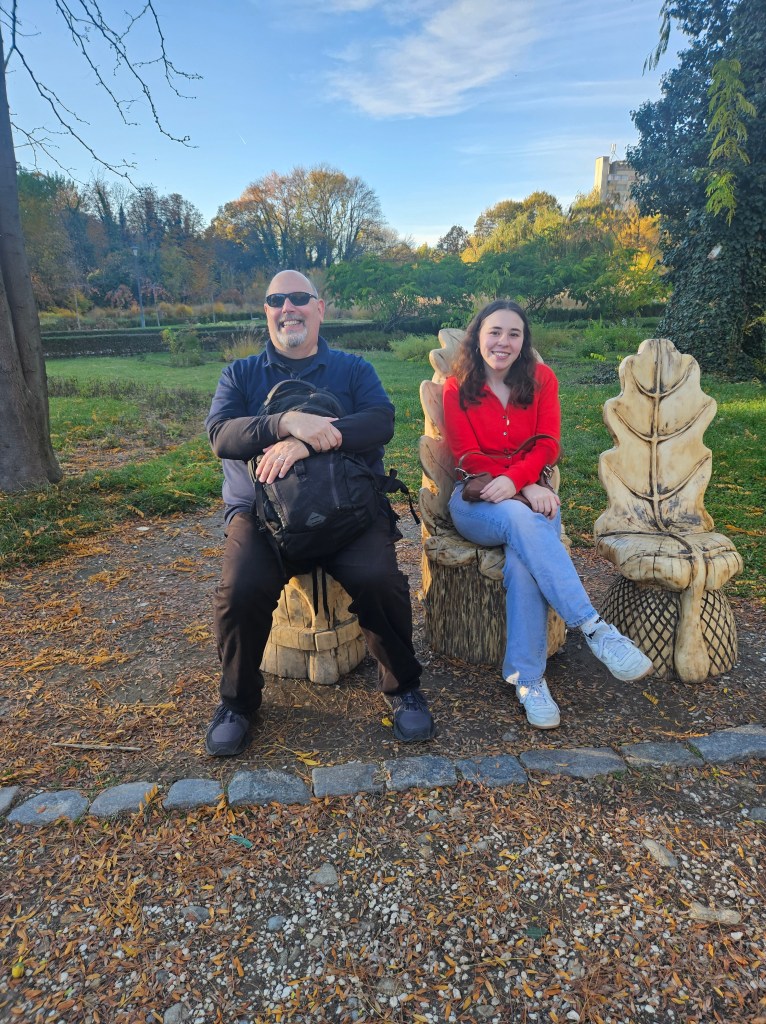
• On Friday, November 7, we headed home.

    To put it in the words of our beloved Amazing Race, we:

    • Traveled to nine (eight for Emily) countries
    • Tread on two tectonic plates, North America and Eurasia
    • Visited two continents (we spent an afternoon in Asia)
    • Experienced four time zones
    • Took nine (eight) flights
    • Flew, drove, or otherwise rode 15,801 miles
    • Walked 743,421 steps
    • Stayed in thirteen (twelve) Airbnbs or hotels
    • Managed locations with nine languages: Icelandic, French, Catalan, Spanish, English, Dutch, Czech, Romanian, Turkish. (Google translate was a big help for menus!)
    • Worked with six currencies: Icelandic Króna, Euro, British Pound, Czech Koruna, Romanian Leu, and Turkish Lira. (We did not use much cash, as credit cards were accepted just about everywhere. We mostly used cash for tips, especially in Turkey. There was not a big tipping culture in the other countries we visited.)

    We traveled with one suitcase each, weighing about 45 lbs. We had clothes for about eight days and planned stays in places where we could do laundry. Emily had 3 pairs of shoes (sneakers, hiking boots, flats), Russell had 2 (sneakers and hiking boots). We had a wide range of weather to contend with, which made packing trickier. Emily was very sick of the clothes she brought. Russell did not really experience this as he sort of wears the same thing every day everywhere. Russell’s carry-on was a tech backpack that had his cameras and recording equipment. Emily traveled tech-light, with a phone, tablet, and Kindle. Our Verizon plans worked well almost everywhere. (We’re looking at you, Paris.) We traveled with a kitchen knife, cutting board, and meat thermometer, which made for easier cooking in Airbnbs of various states of well-stockedness. At times, we also carried some spices and cheeses with us. In most places, we ate breakfasts and lunches in our Airbnbs and balanced cooking dinners (or eating leftovers) with visiting restaurants.

    We did hardly any shopping for non-consumables, in large part because we didn’t want cart around more than we had to. Before we got to Turkey, our purchases consisted of a cowbell in the Pyrenees, some postcards, a heating pad, and a dishtowel. In Istanbul, we bought a coffee pot, a couple of bowls, and a few gifts. We had left some things with Marina in Romania (the knife, cutting board, and dishtowel, the heating pad) which gave us some more space.
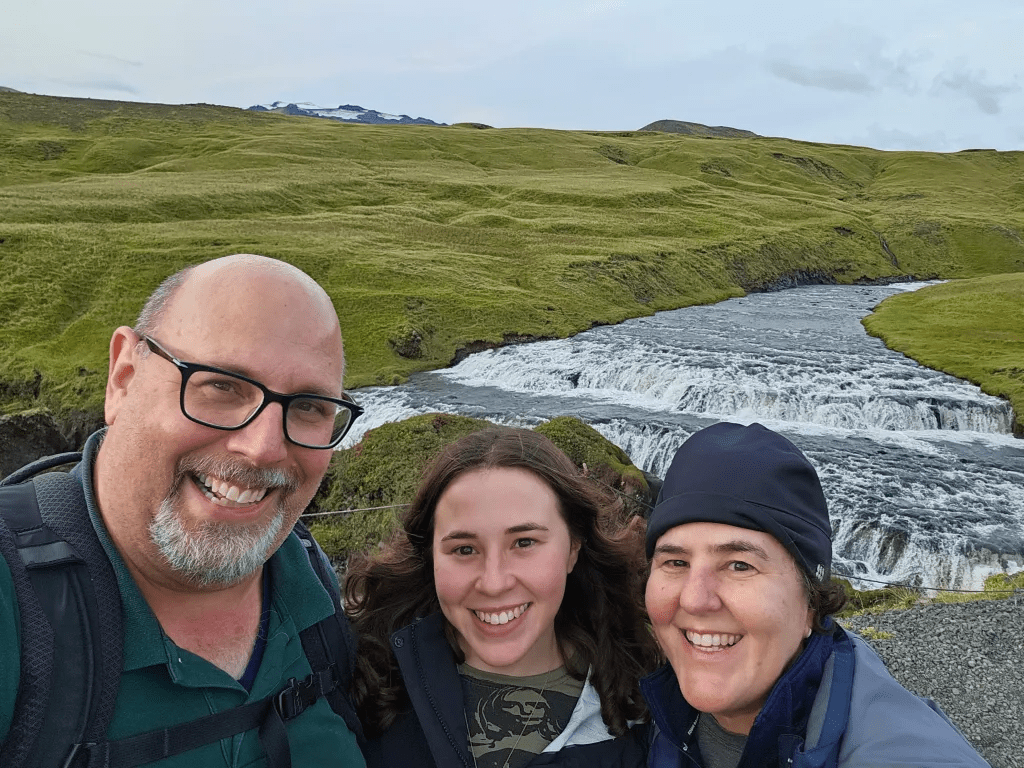
    Our time together was priceless. We were able to spend wonderful times with the kids in their European elements, saw places we had dreamed of, ate astoundingly good food, and enjoyed (almost) every moment together. Russell may not have achieved all of his work goals, but was able to get lots of writing done (he has since finished his book draft!) and interviewed two philosophers for his Why Teach Philosophy project.

    We’ve been asked how we got along, spending so much time together for two months, usually without anyone else around. The answer is that we did great! We spent a lot of time just enjoying each other’s company, marveling at our good fortune to be able to do this wild trip. Of course, there was some minor snipping at each other, mostly when we were tired or hungry or occasionally miscommunicating. There wasn’t a lot of pressure, we did what we wanted and didn’t do what we didn’t want to do. Having our own spaces for managing food, not having to manage restaurants for every meal, was essential. We typically stocked up on fruit, cheese, cold cuts, and bread when we arrived in a place, and so could have relaxing starts of our days. Russell would write a bit and Emily would walk or read. And then we would have the rest of the day enjoying the area and each other. We weren’t worried about seeing everything or missing a “must do.”

    Since our cross country trip with the kids in 2012, our ethos while traveling has been to do at least one cool thing a day and try not to regret what we don’t do. Sometimes we did do more than one cool thing, but we avoided overdoing things. We talked a lot about the ethos, as if it were a mythical protector, and it kind of was.

    Sometimes, we over-plan travel, exhausting ourselves. When our time in a place is limited, it’s hard not to try to pack a lot in. The more languorous nature of this trip allowed us to avoid the pressures of tourism. And it also, in a way, allowed us to enjoy the more touristy aspects at times. The few typically touristy things we did, like the food tour in Istanbul, were great. The trip made Russell think more positively about retirement. Our days had a lovely and sustainable rhythm, with quiet working mornings, active fun afternoons, and great food in the evenings.

    We had amazing luck on our travels. The weather was mostly beautiful, with just a few days with rain, and a couple of nights. None of our flights had any major delays. Our only little hiccup was a mixup with the Airbnb in Hunedoara that we were able to resolve within an hour. Flying home on November 7, the day that flight cancellations from the government shutdown were first taking effect, had us a little worried, but all was fine. It was a really long travel day, leaving our hotel at 5 am, and getting to Great Neck at 8 pm (with an 8 hour time change!) – just under twenty-four hours of travel just to Long Island, with another five driving home the next day.

    We returned to gray, freezing weather (boo!) and lingering colds (boo!), but also our dog (yay!) and bed (yay!). And a lifetime of memories.
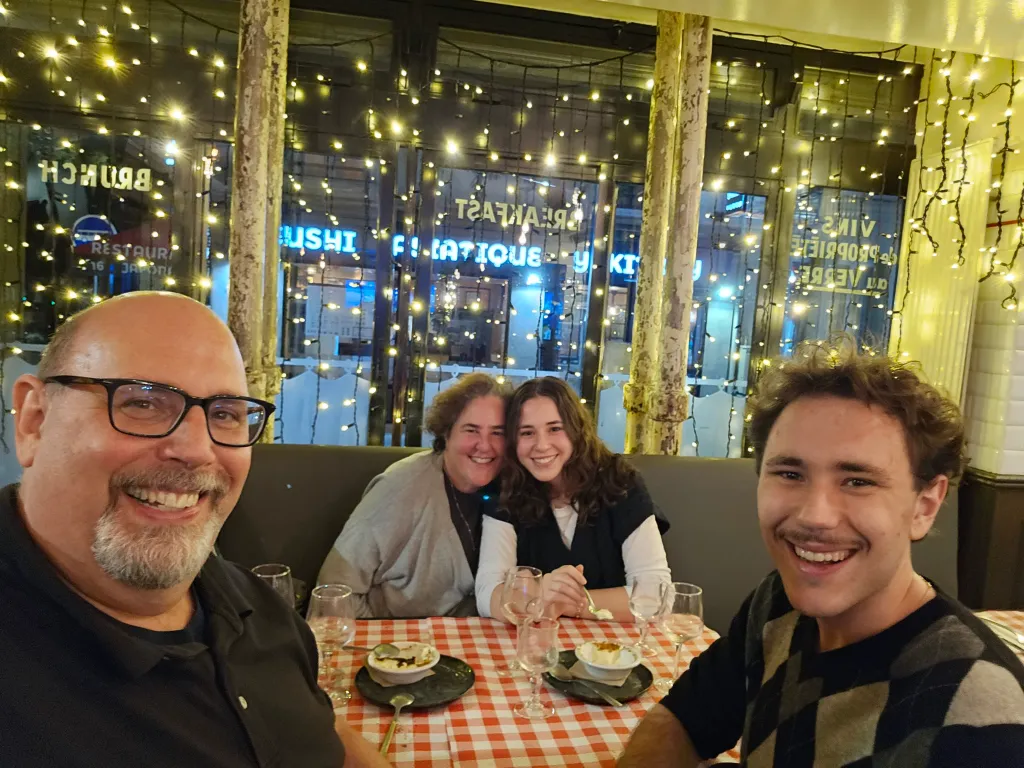
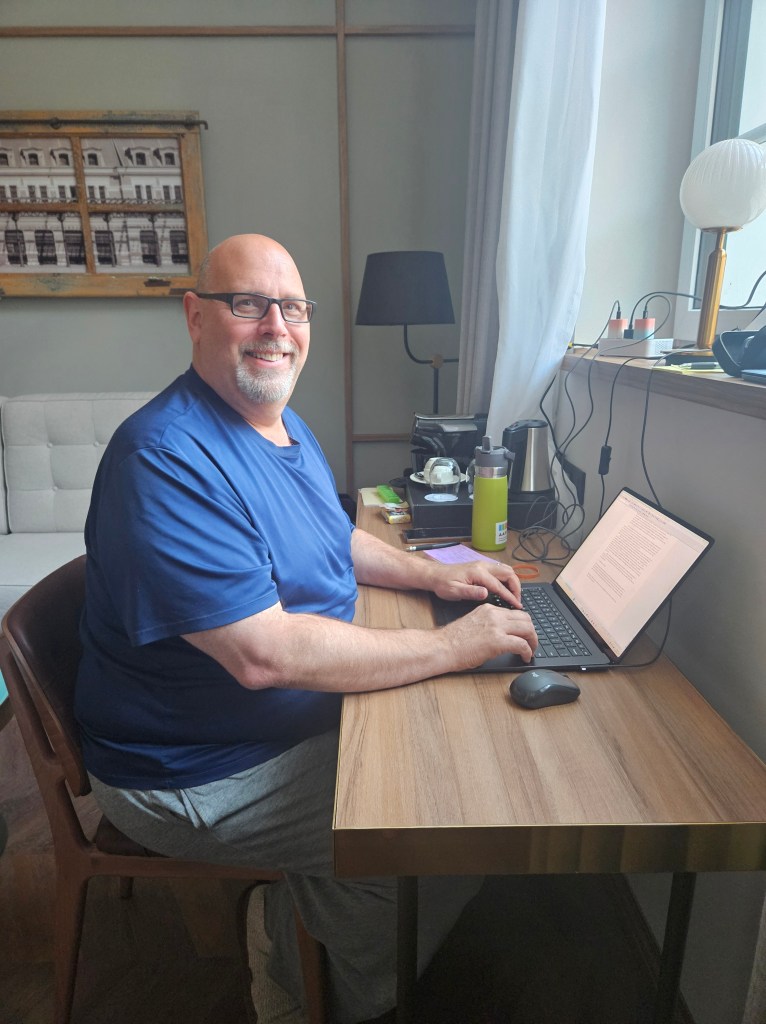
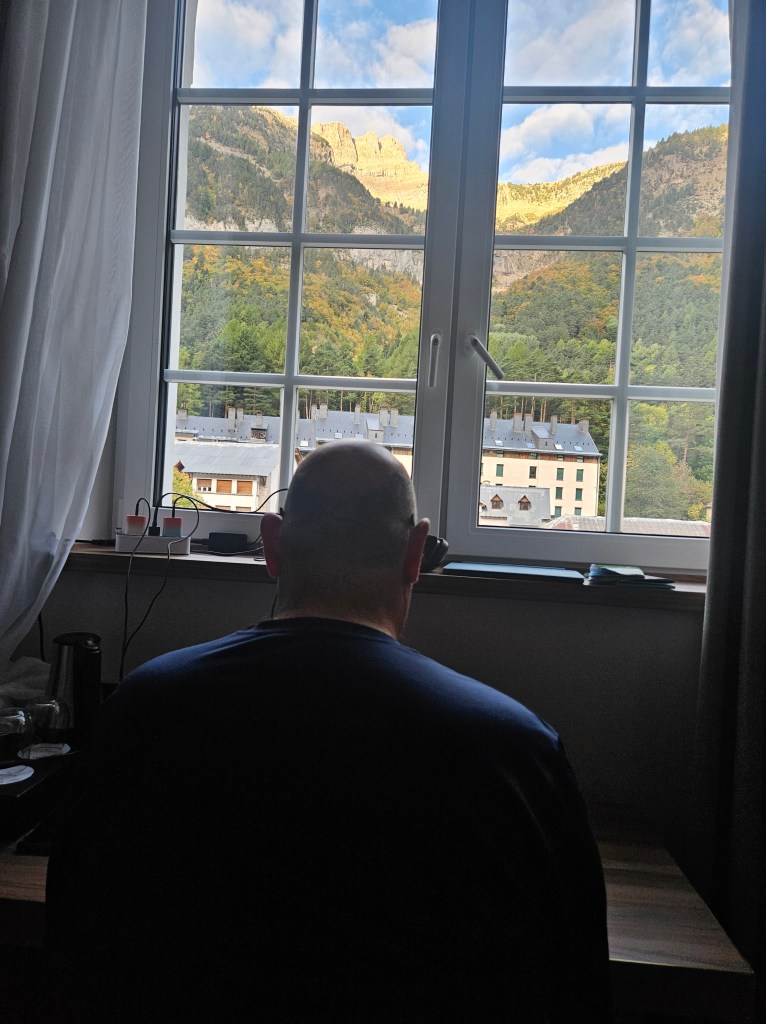
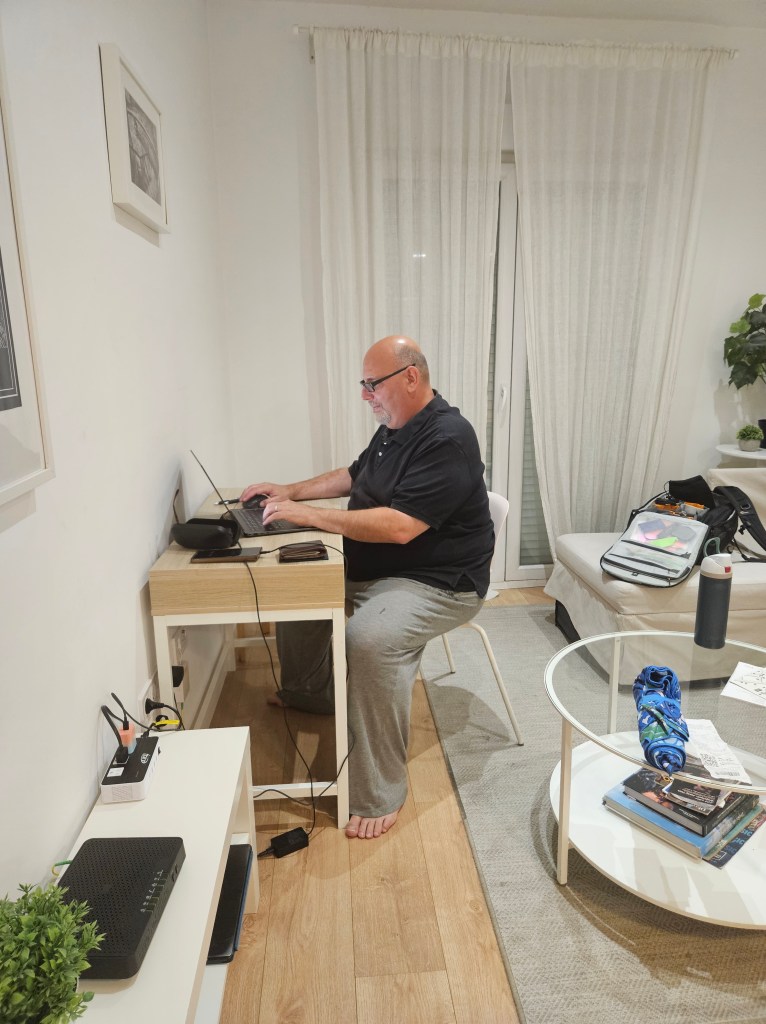
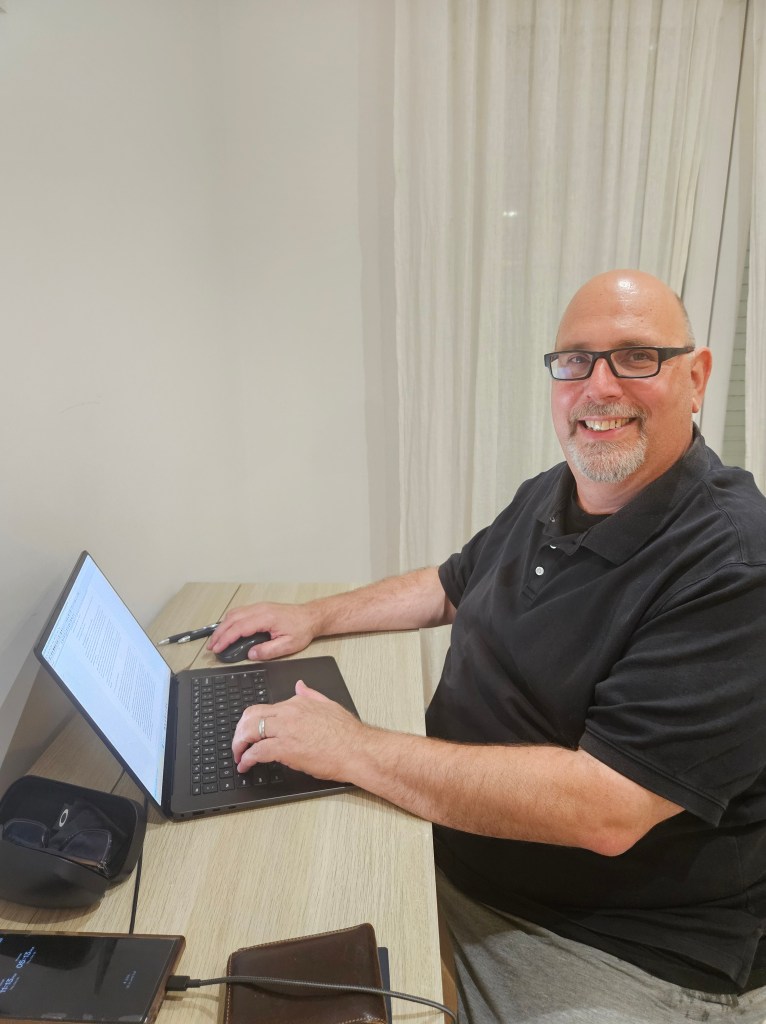
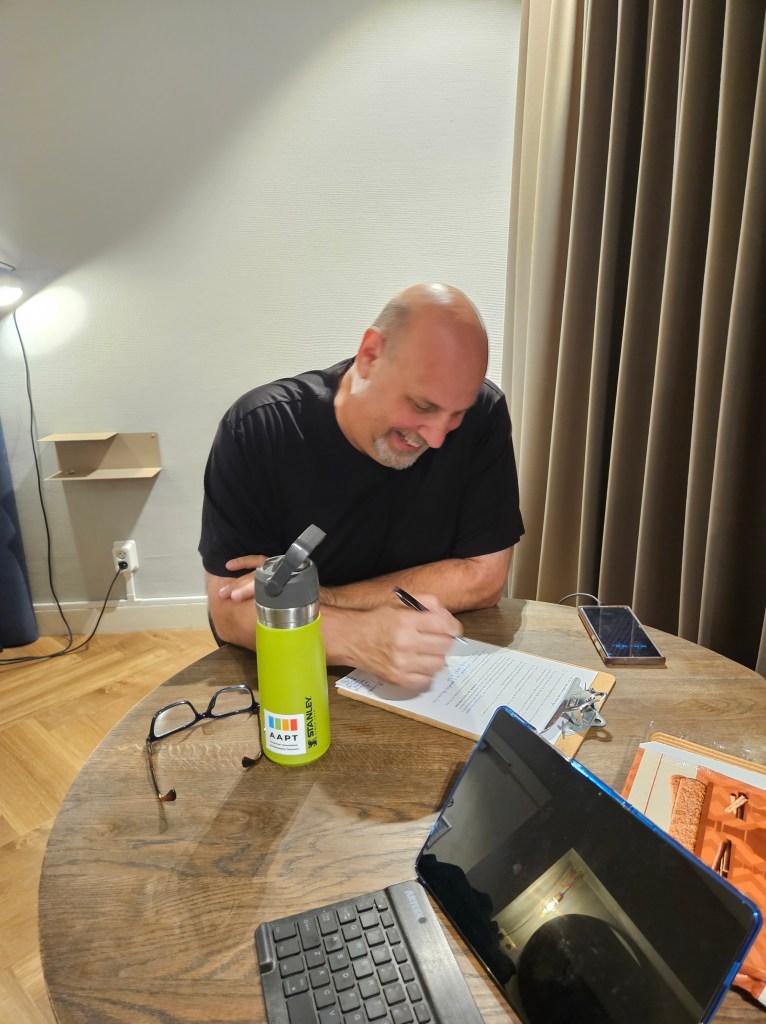
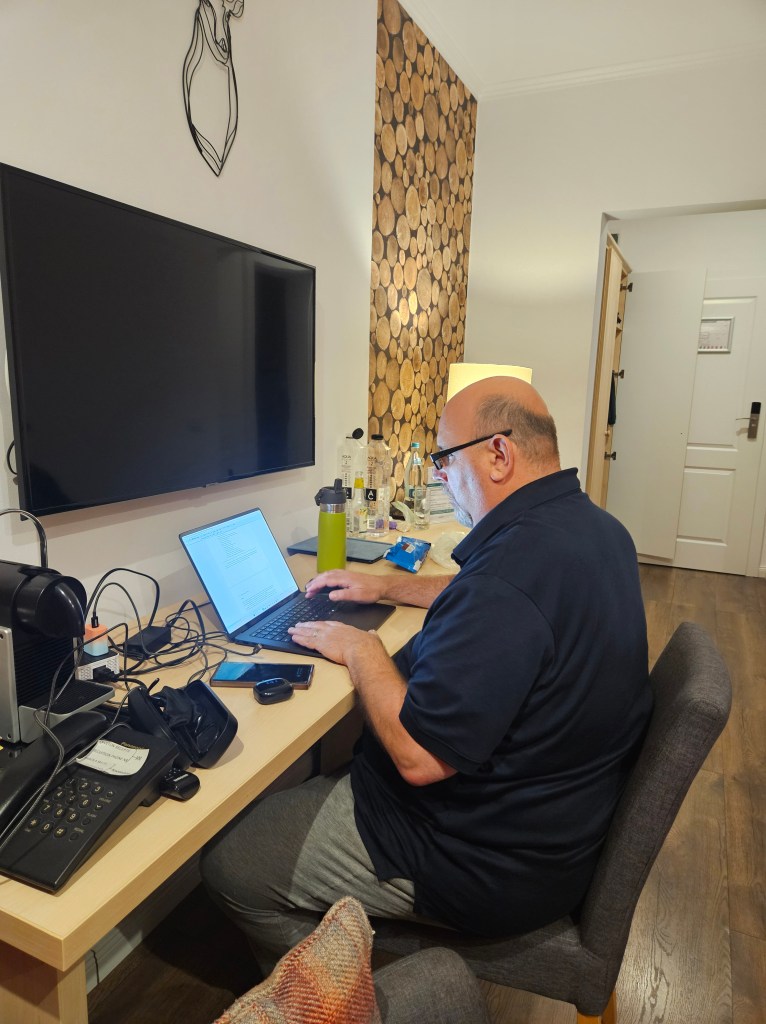
  • Most mornings through our travels, I, Russell, took a couple of hours to write, or otherwise work. The new manuscript on teaching philosophy with team-based learning is due at the end of December and my hope was to come home with a finished draft. I didn’t quite make it, largely because of the intrusion of a couple of other exciting tasks. I had a new article (co-authored with a student) accepted for publication and I developed a new workshop on teaching Writing with AI that I presented in The Hague. I did get about three-quarters of the way through the ms, though, which puts me in great position to finish on time.

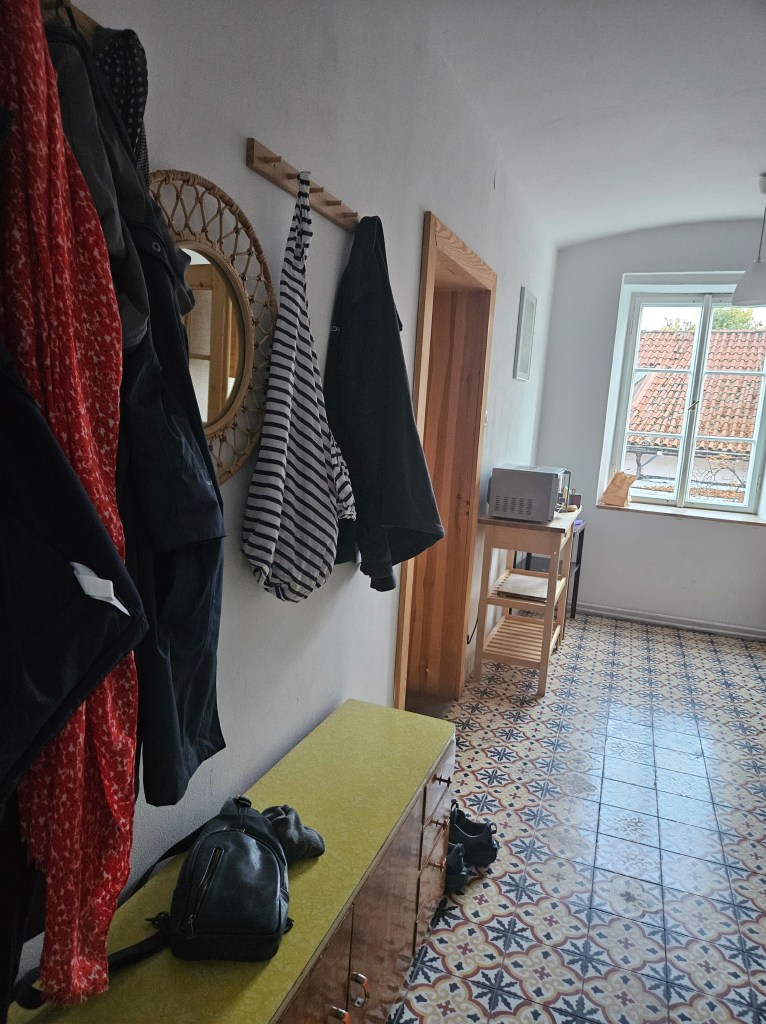
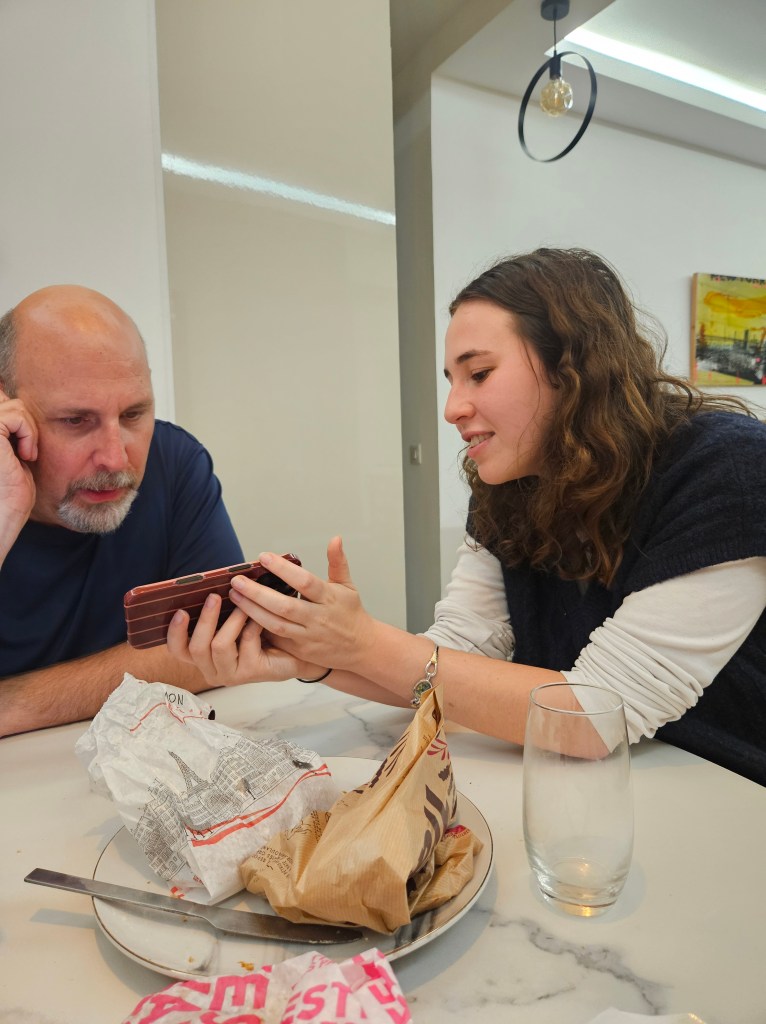
    We took photos of my various work spaces. In Reykjavik, I worked in the cozy dining space.

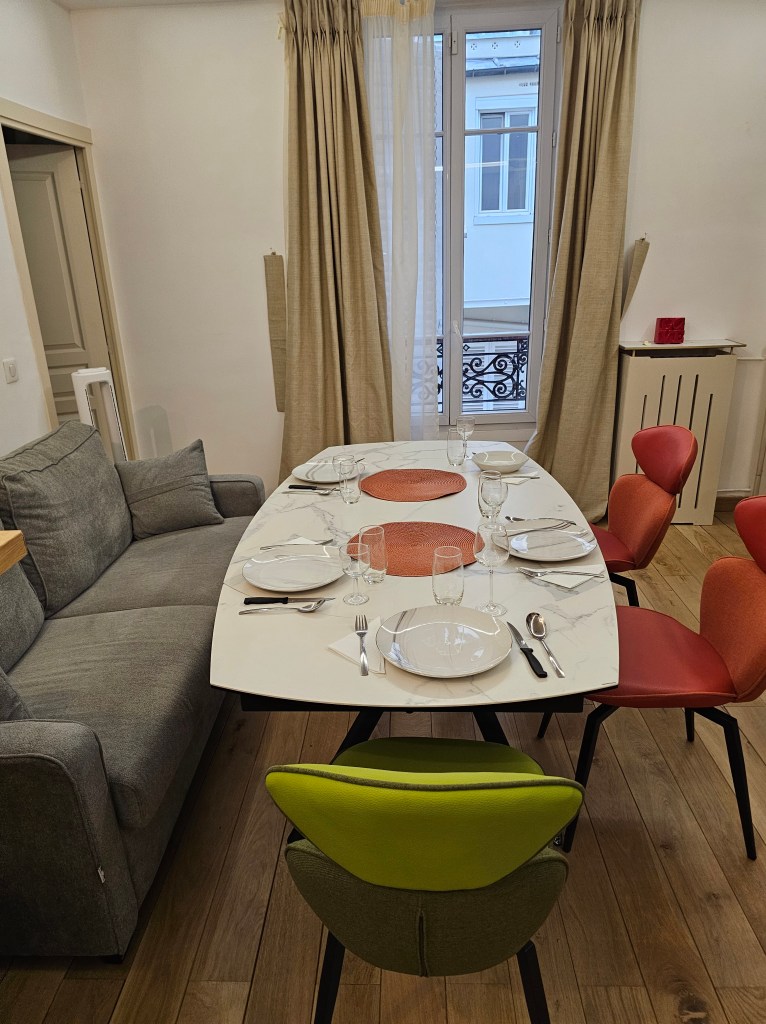
    We didn’t get a picture of me working in Paris, but it was at this dining table.

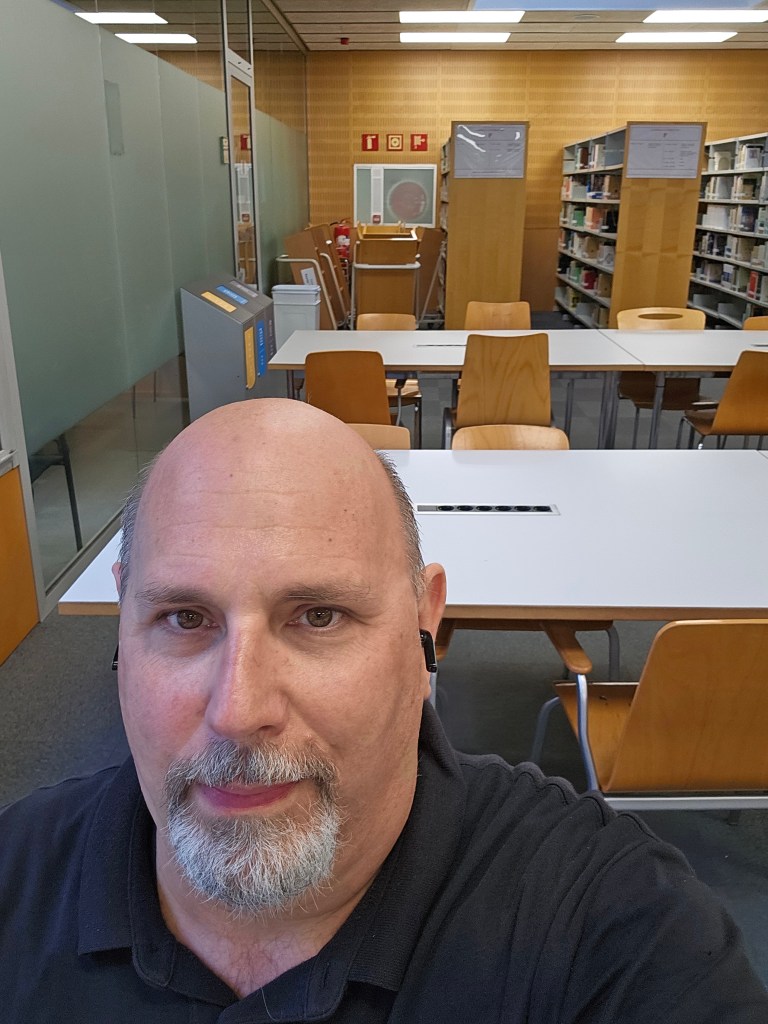
    In Barcelona, I walked from our tiny apartment to the library at the Ciutadella campus of the Universitat Pompeu Fabra.

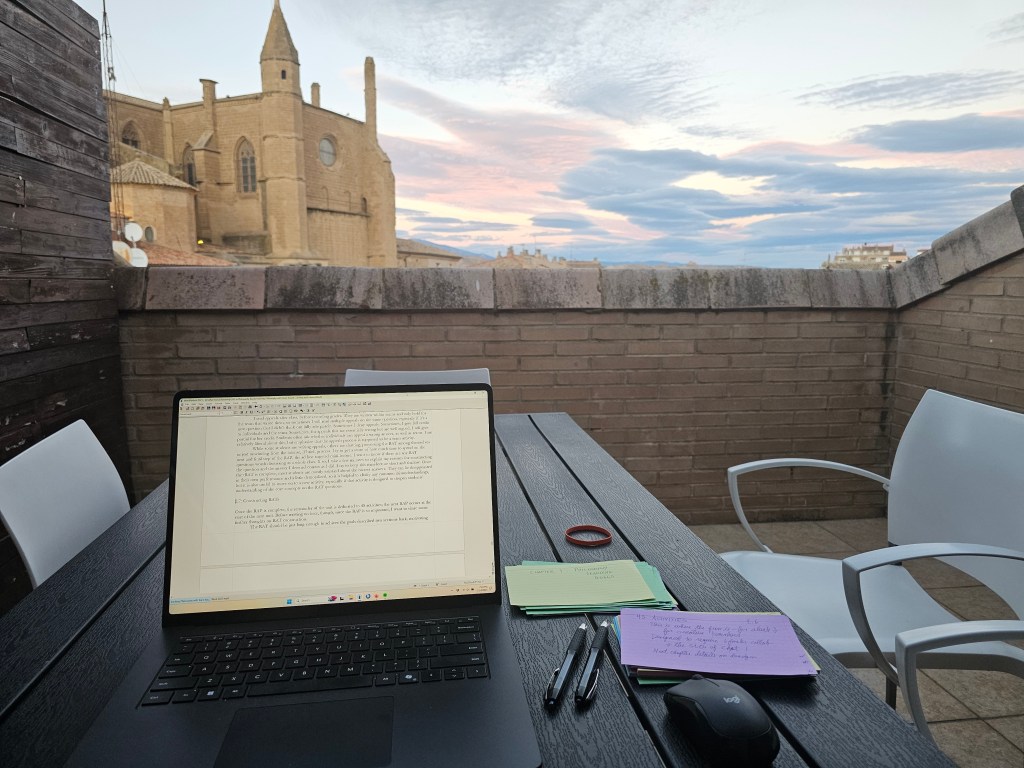
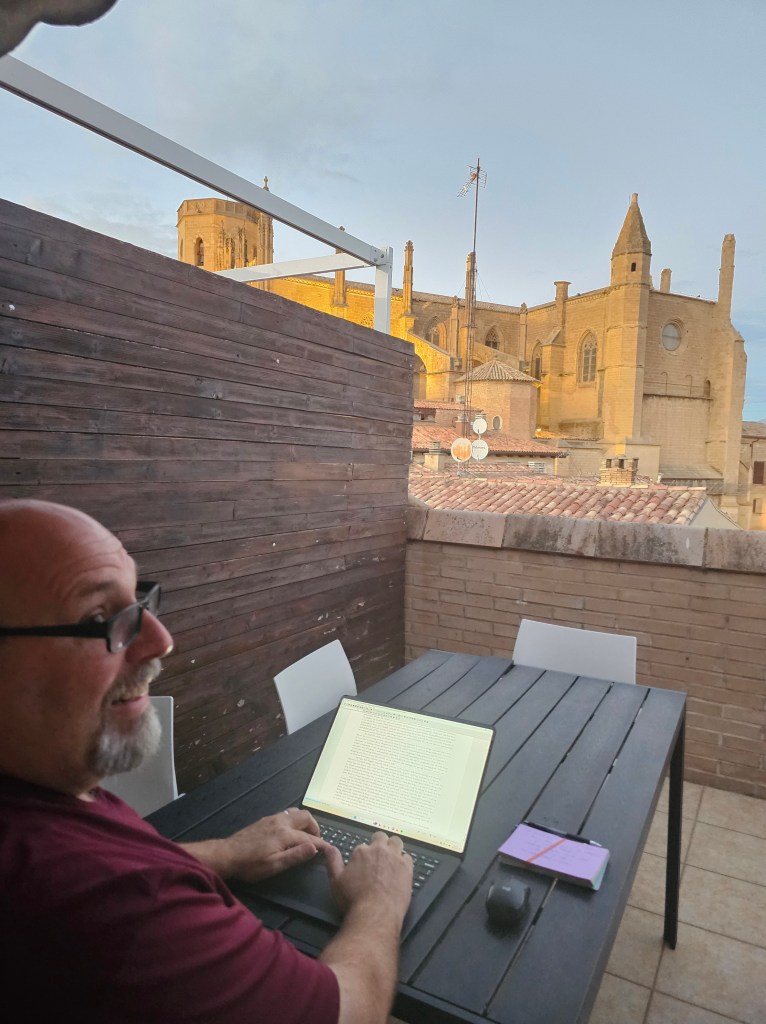
    In Huesca, we had a spectacular rooftop terrace overlooking the cathedral where I worked when it was warm enough in the morning, I worked inside when it was chilly.

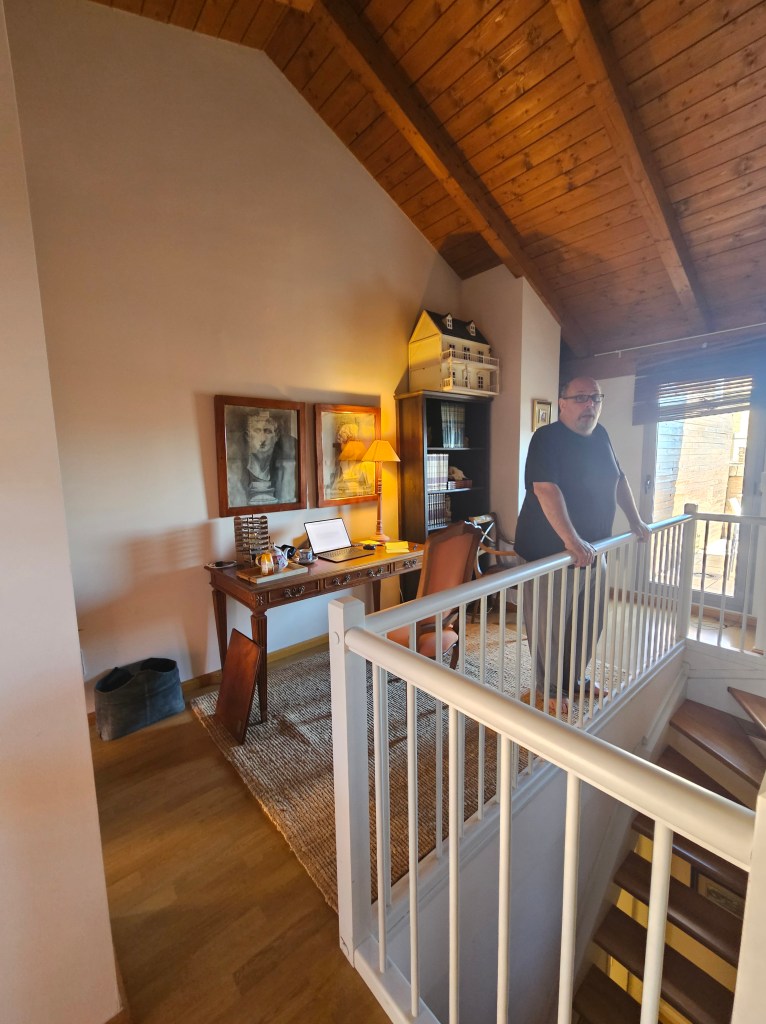
    This was a low-tech workday.

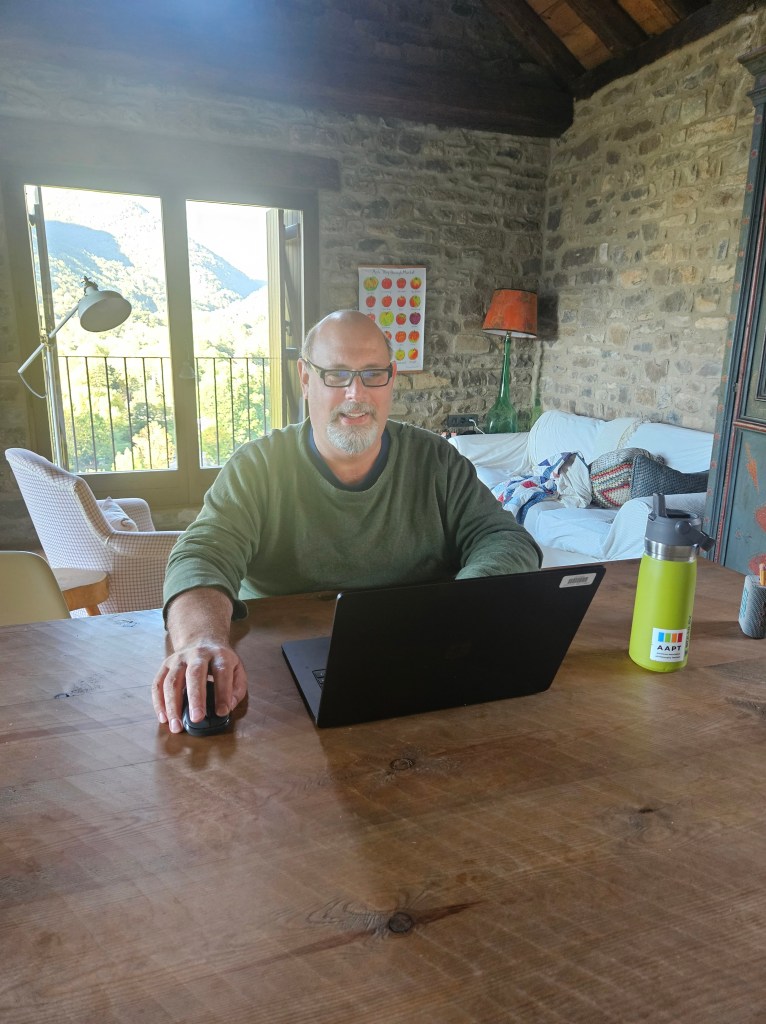
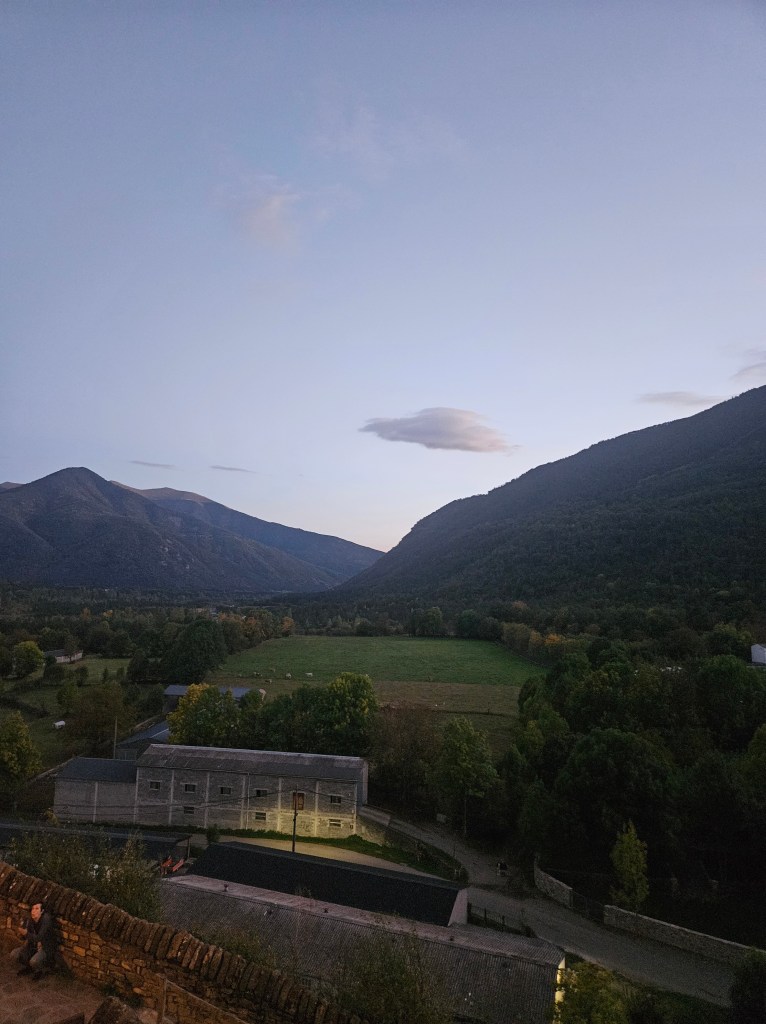
    In Oto, in the Pyrenees, it was too cool in the mornings to work at the outside table, but I could see the gorgeous views with just a turn of my head.

    We had a lovely hotel room in Canfranc, with a table looking west. I could watch the light from the sunrise behind me move quickly down the mountain.

    Our apartment in Madrid was utilitarian, but pleasant enough to work happily.

    I forgot to take a picture of my space in Edinburgh, when I went alone, but I did find this. IYKYK.

    We had another cozy space in The Hague, where I was able to prepare for my workshop.

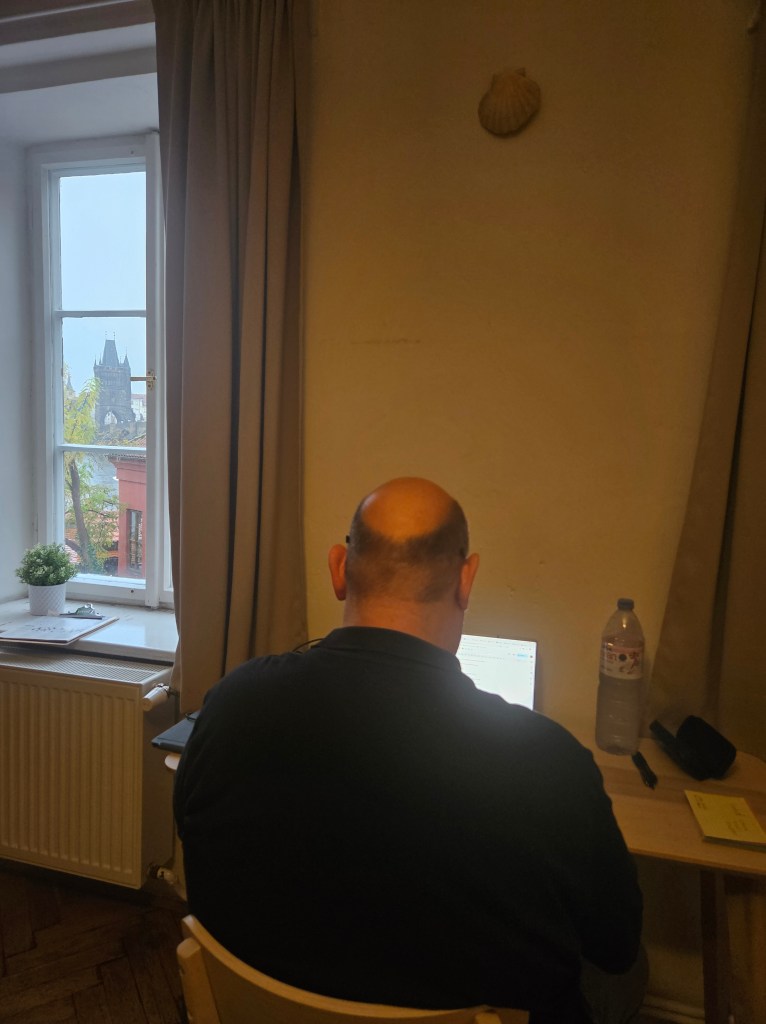
    In Prague, we had plenty of space. The windows looked east toward the Charles Bridge, which you can see through the window. We could watch the sunrise if we leaned in a bit.

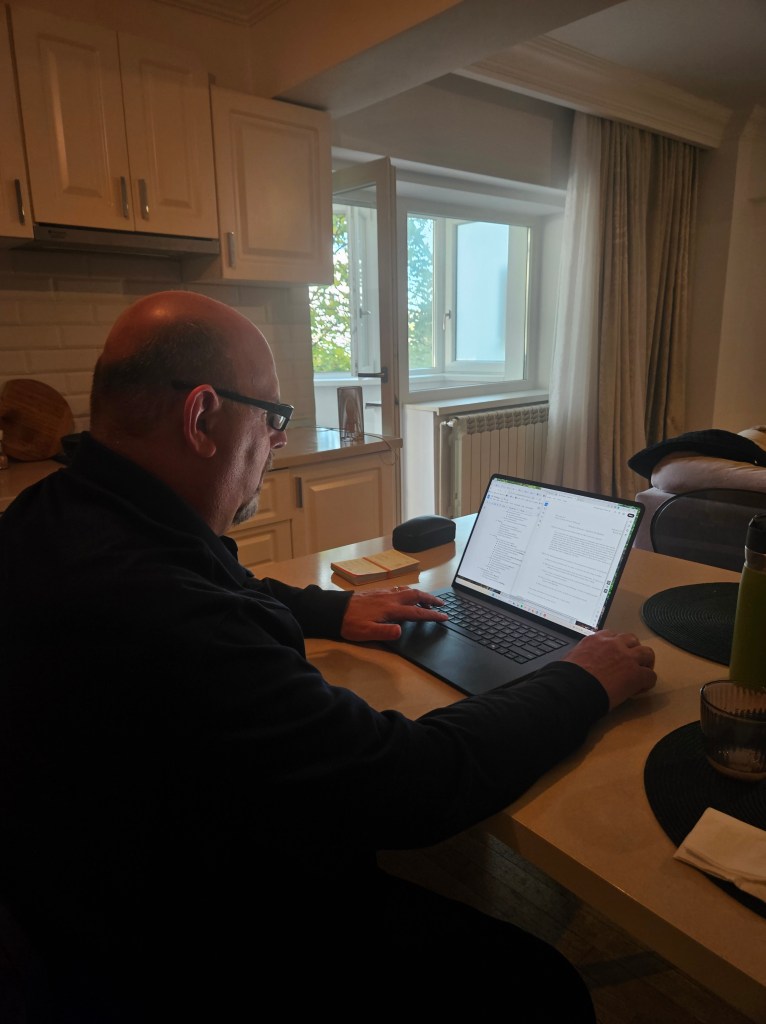
    Our apartment in Craiova, Romania, was not lovely, but the dining table was spacious enough for Emily and I to sit together comfortably in the mornings.

    In Hunedoara, Transylvania, we had a delightful hotel room in which I nearly wrapped up chapter three.

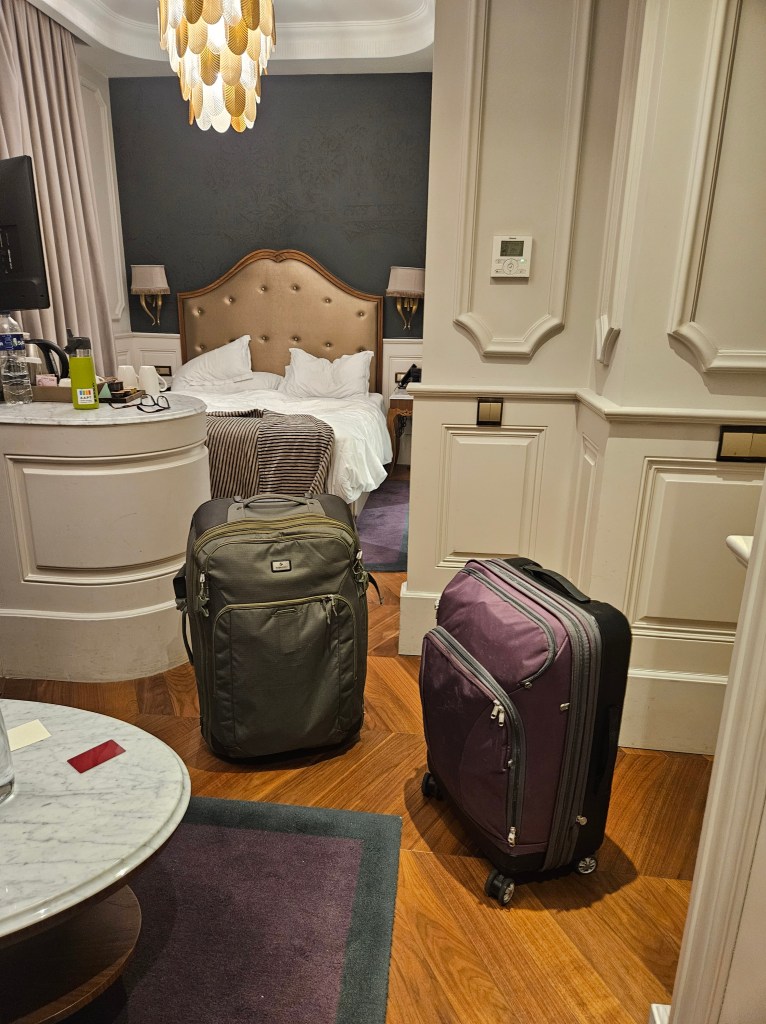
    I didn’t write much in Istanbul, but the room was adequate.

    We also didn’t take pictures of the airport lounge in Heathrow, on the way home, in which I indeed finished the third chapter.

    It was a privilege to be able to work in so many beautiful spaces. If I were the kind of person to post bragging comments on other folks’ blogs, I might add a link to this post in the Daily Nous on where philosophers write.

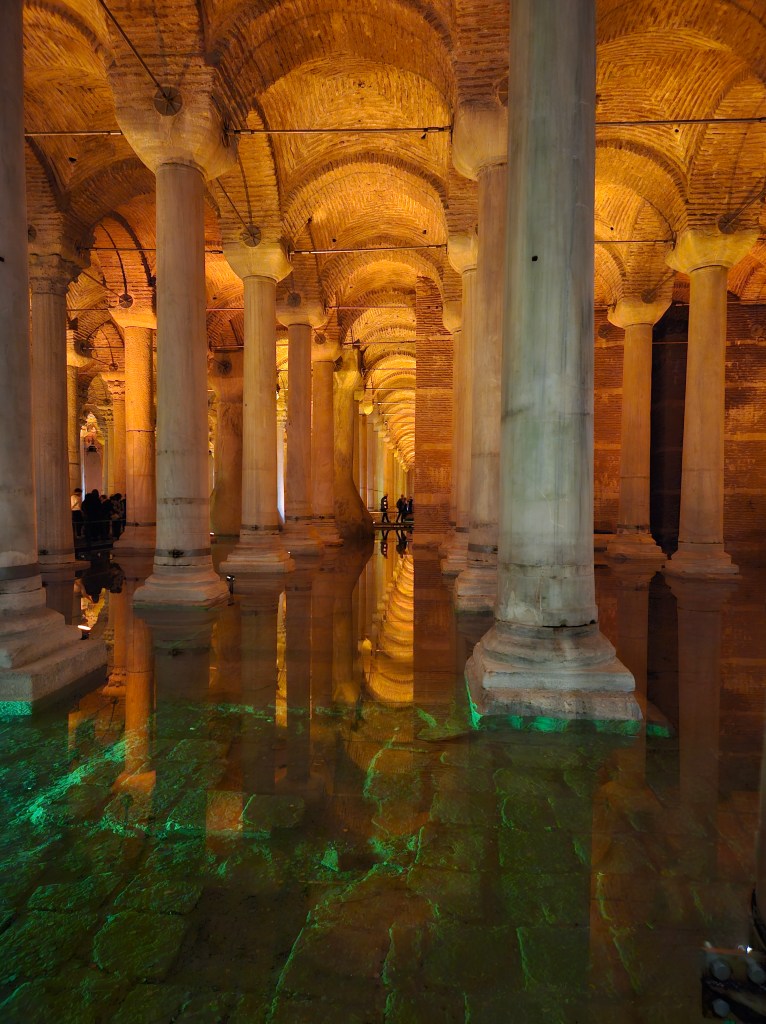
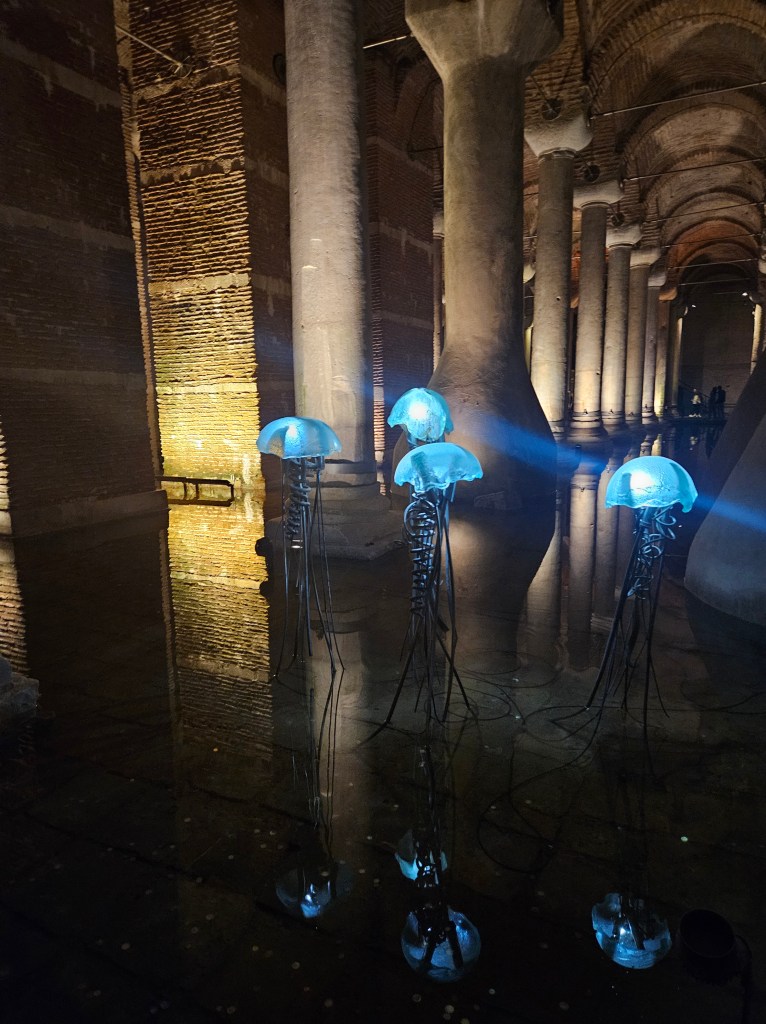
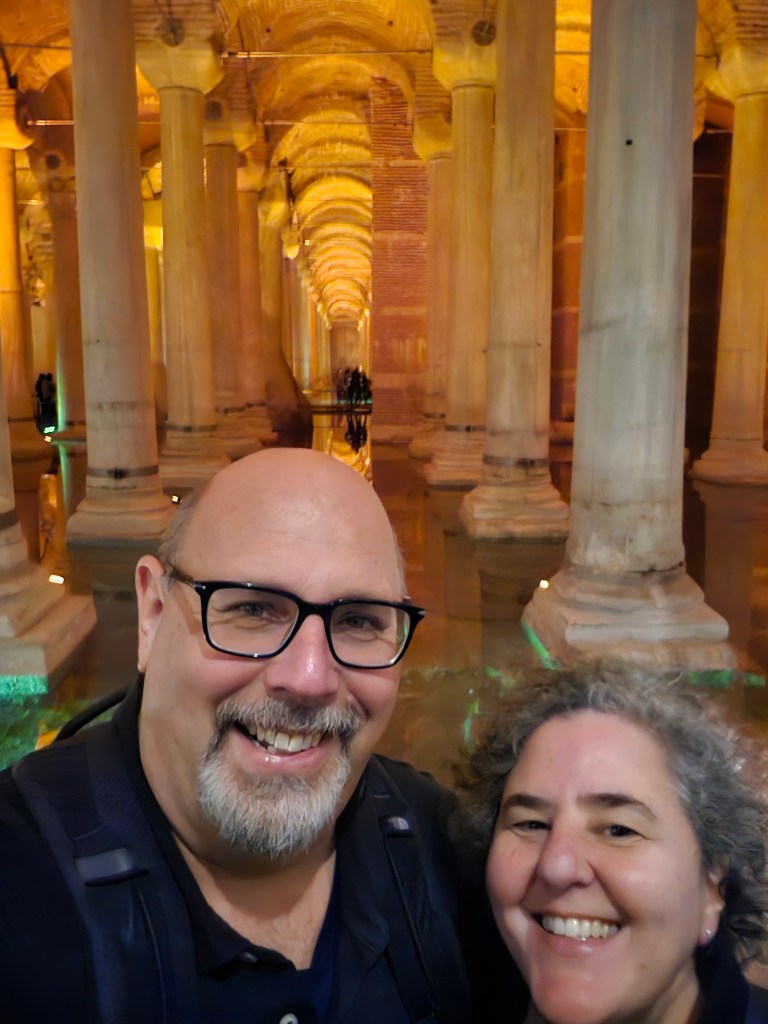
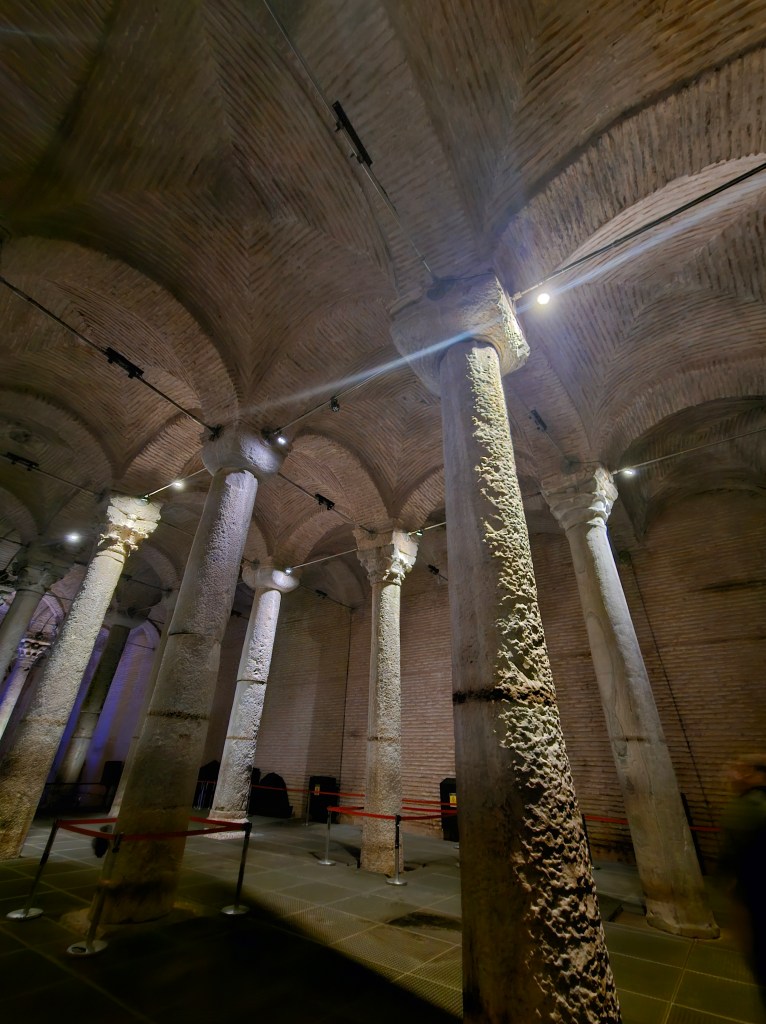
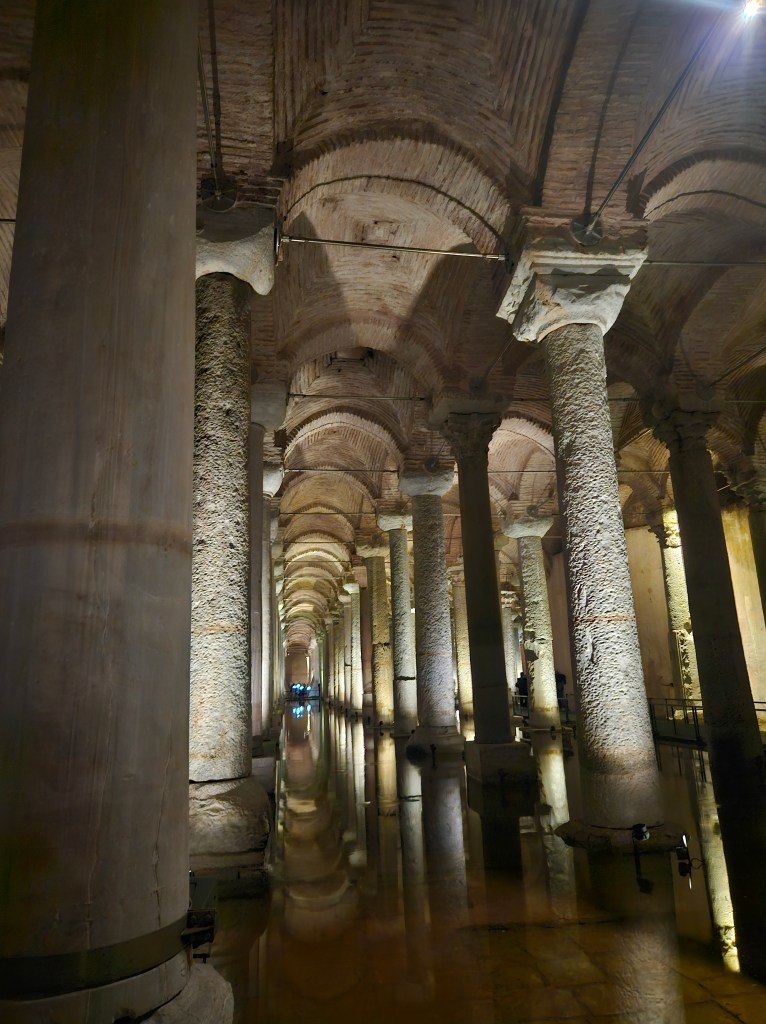
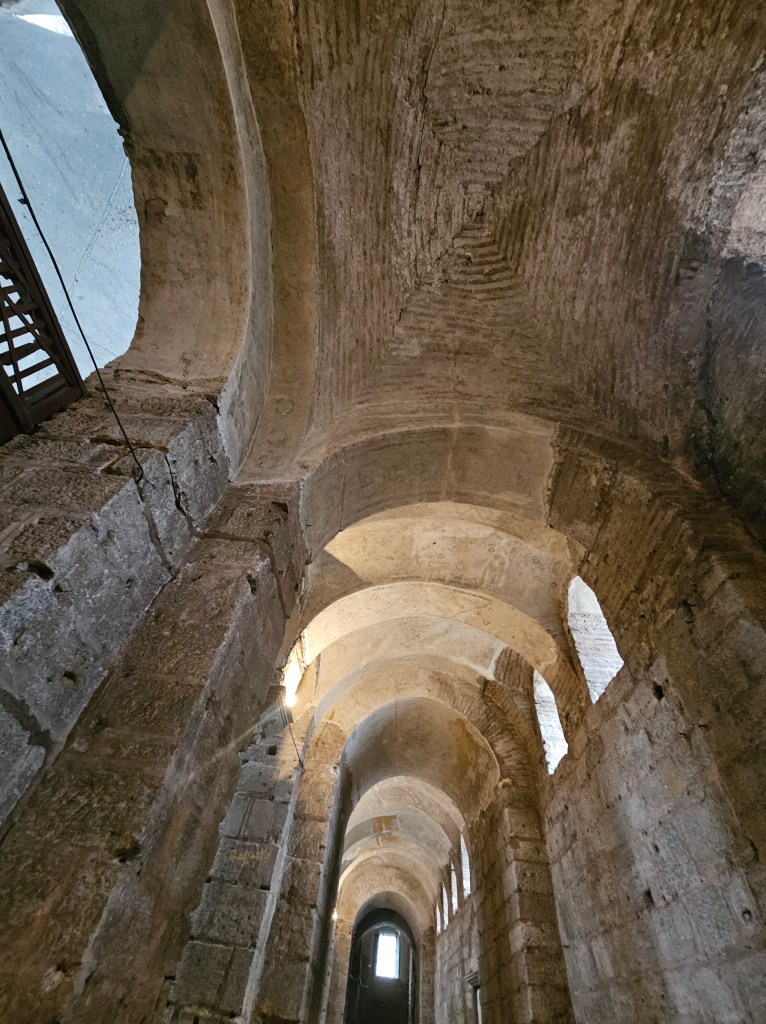
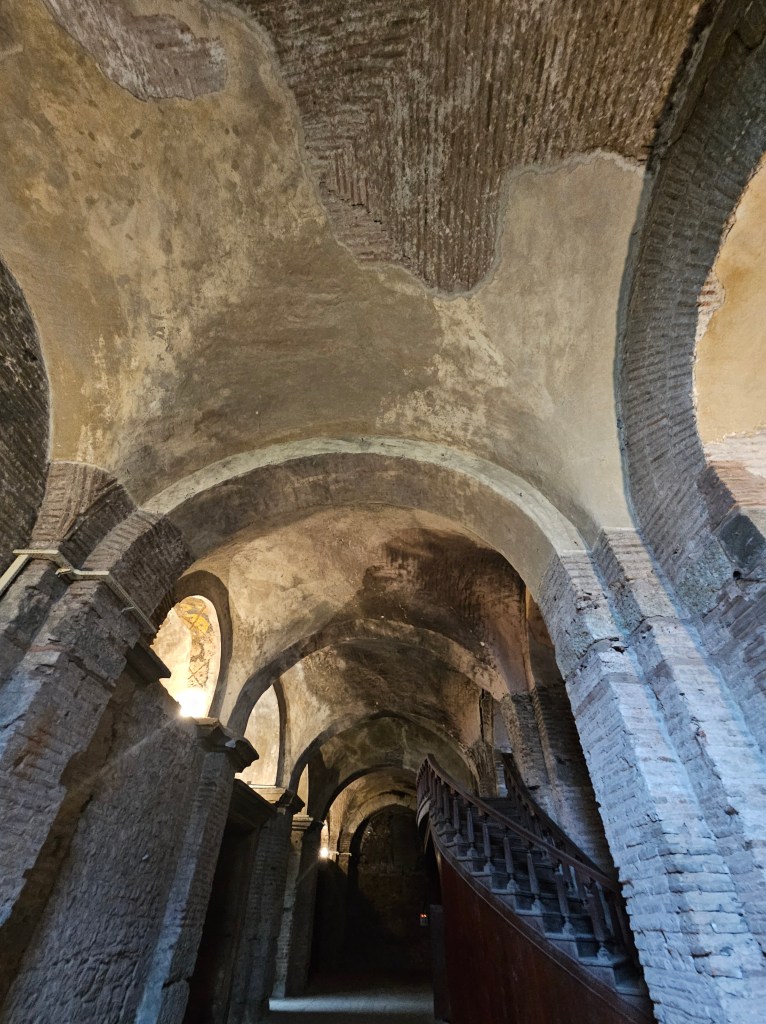
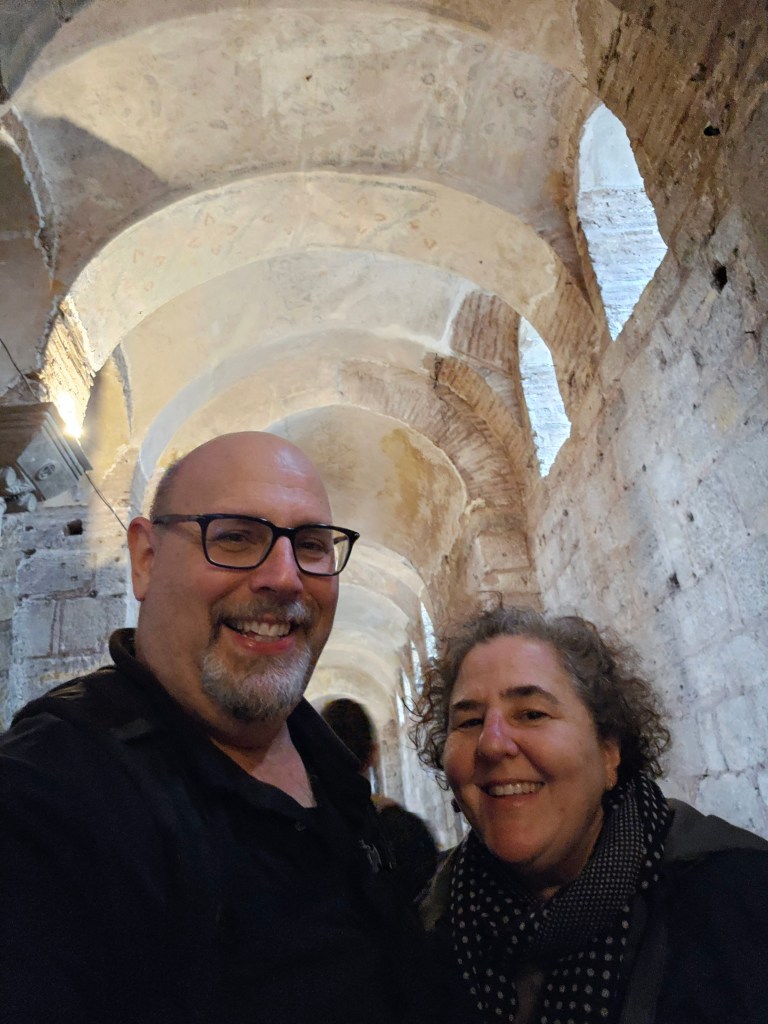
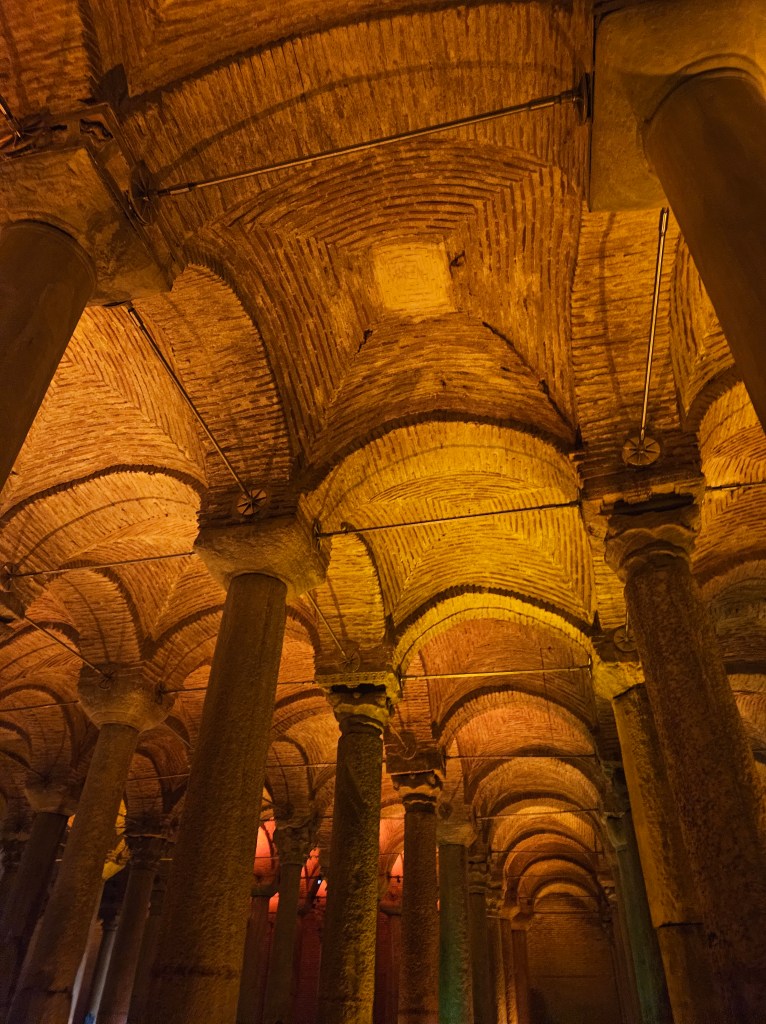
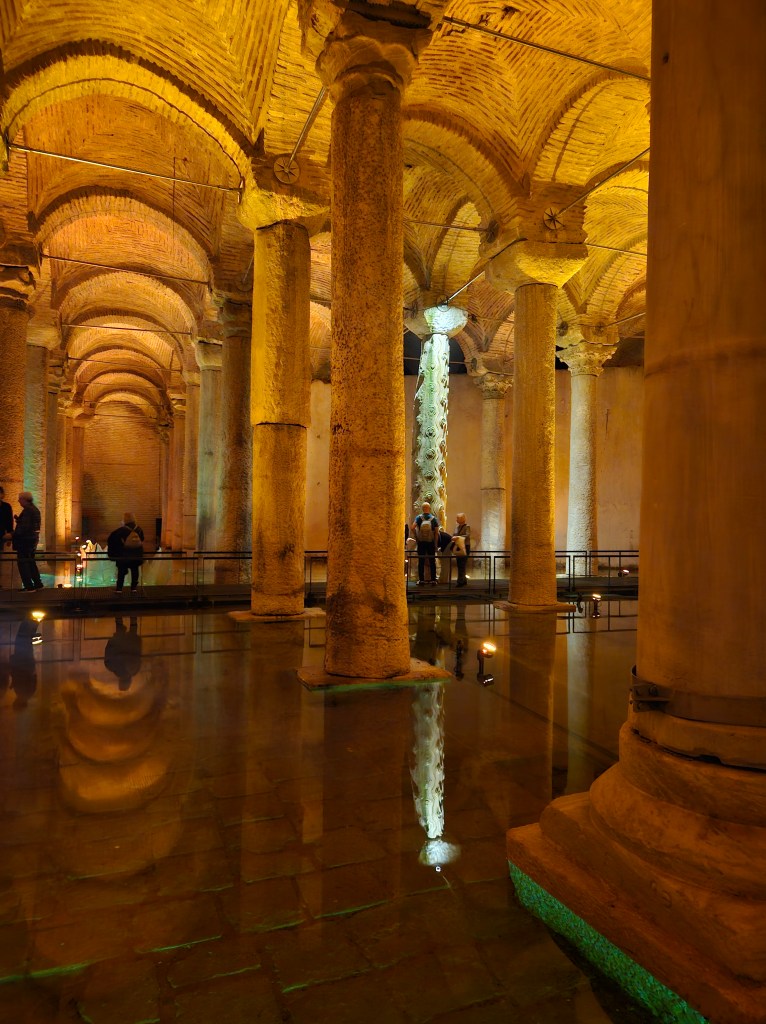
  • On our final full day of our eight weeks of travels, we headed to the Basilica Cistern. It hadn’t really been on our radar, but when another couple on our food tour mentioned it and we looked at pictures, Russell remembered it being featured in From Russia with Love, and looked really cool. So to it we went! After a yummy breakfast, of course. The egg dishes in Istanbul were delicious.

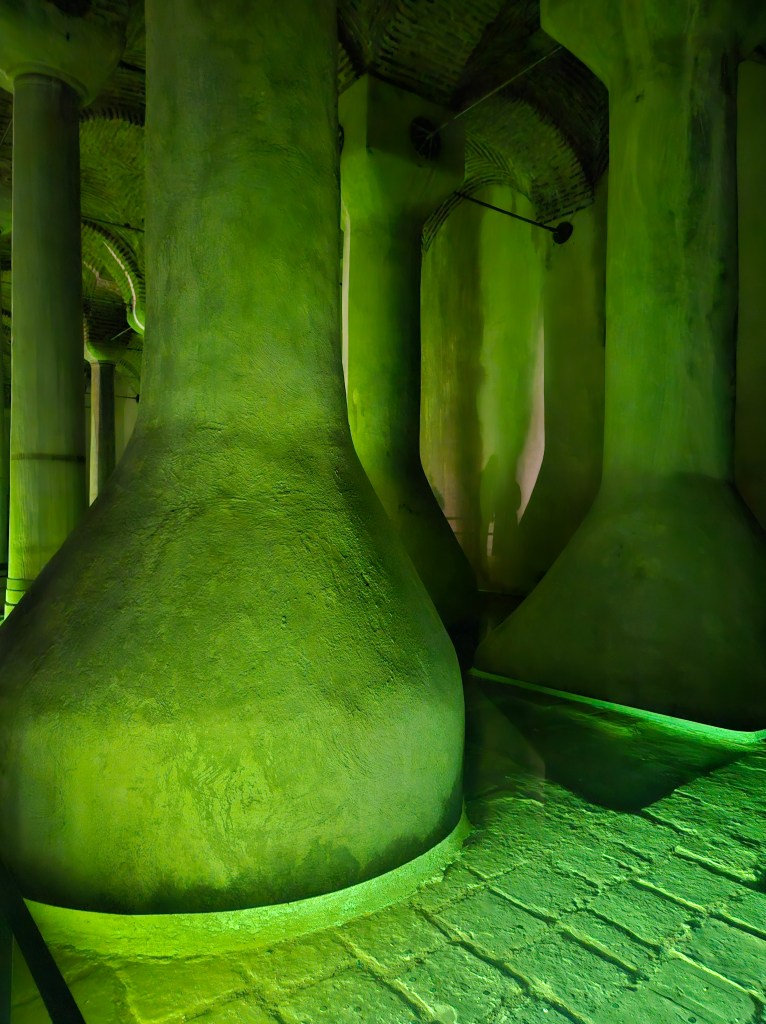
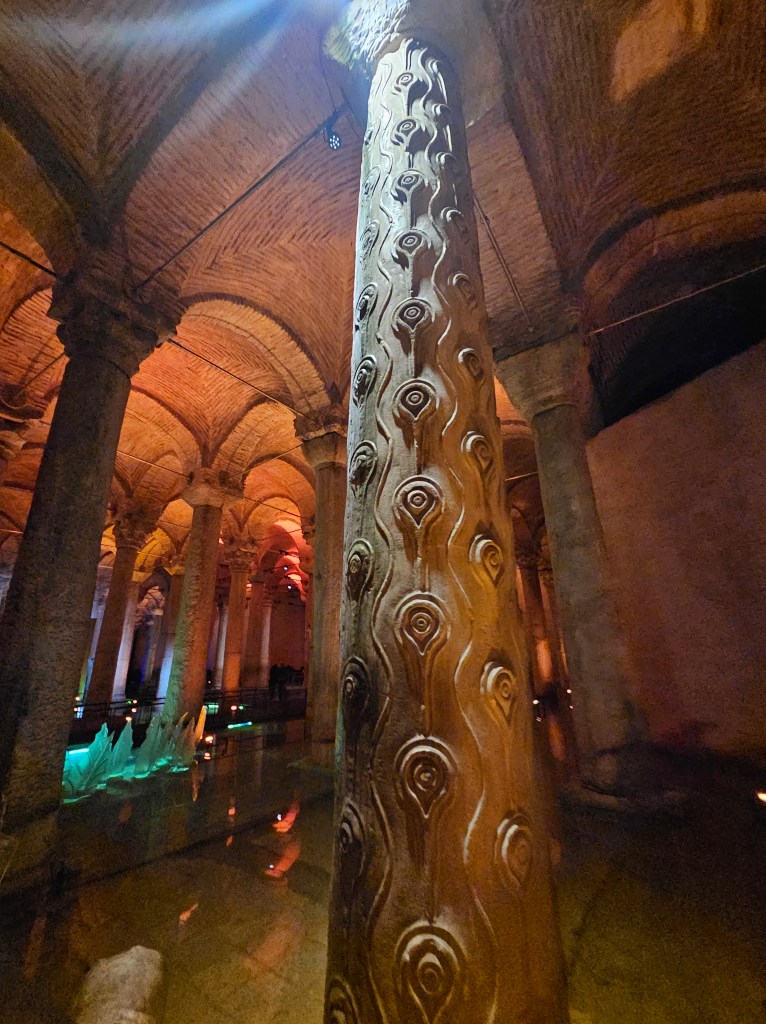
    The cistern was built by the Roman emperor Justinian in the sixth century to supply water to the city. Despite its location on the water, Istanbul has no source of fresh water. The cistern has gone through several rounds of restoration in the 20th and 21st centuries and is a very cool place to explore.

    The most recent renovations added some art and colored lights that change every few minutes, giving a different feel to the cistern each time.

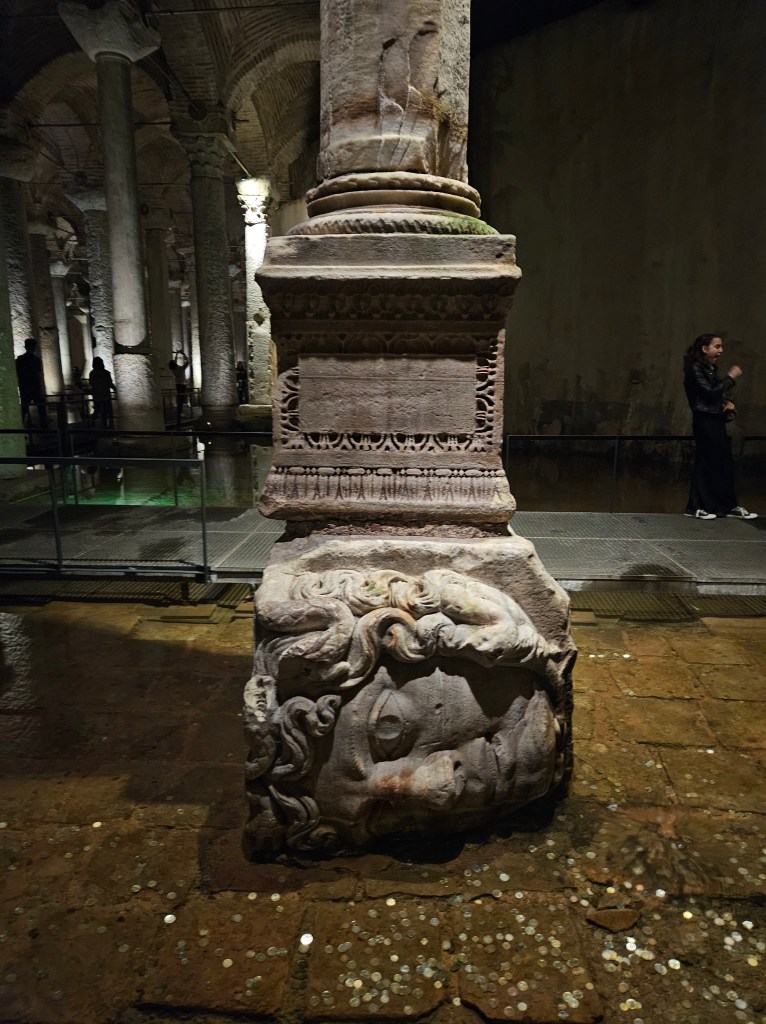
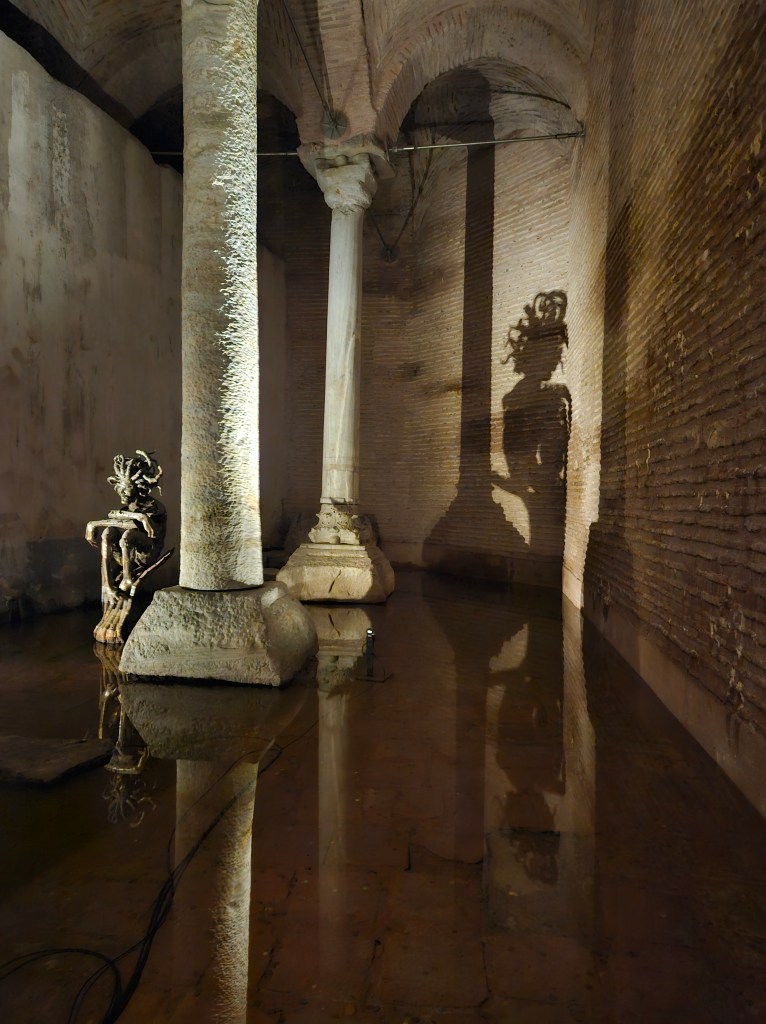
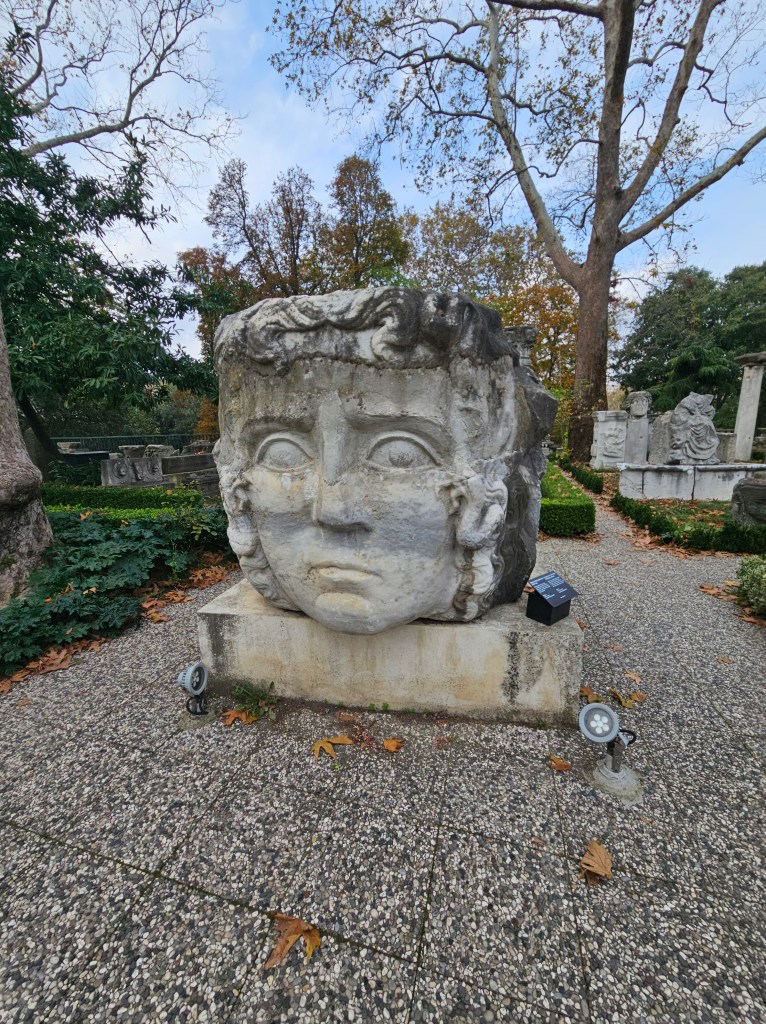
    Two medusa heads were used in the original column construction.

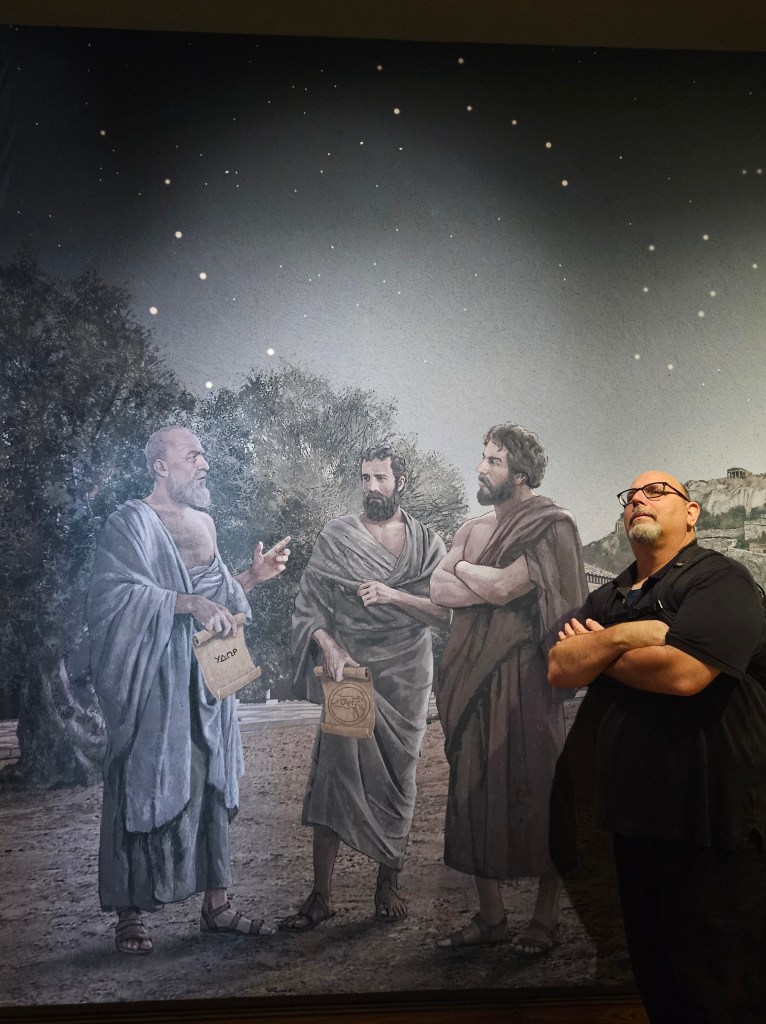
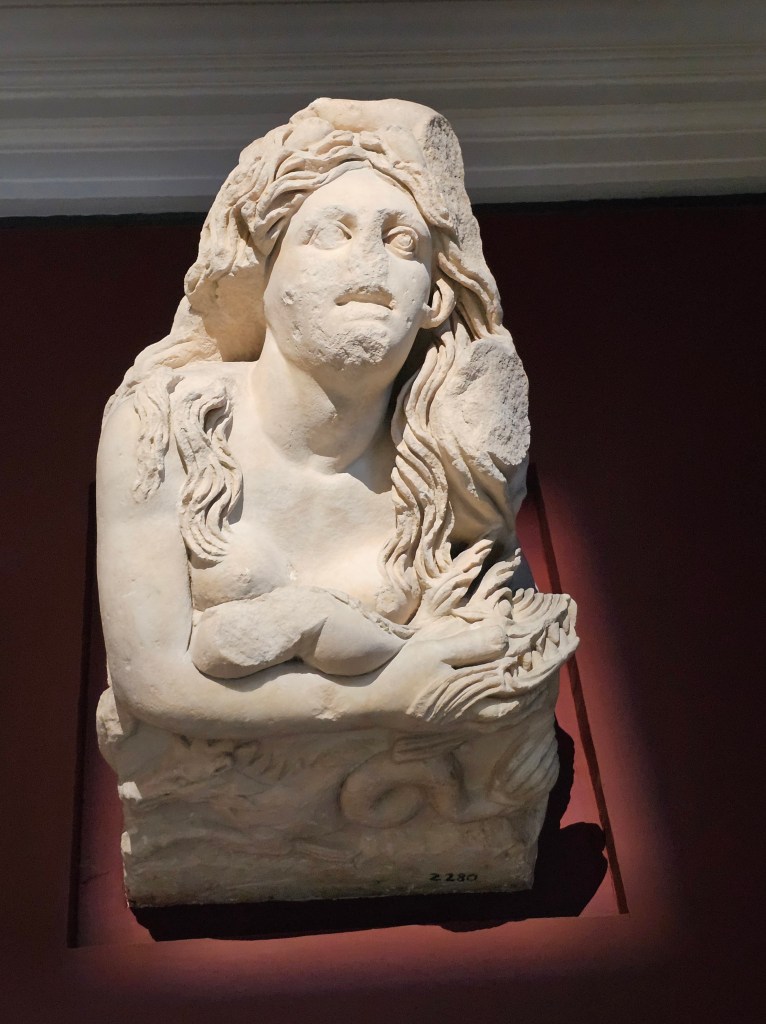
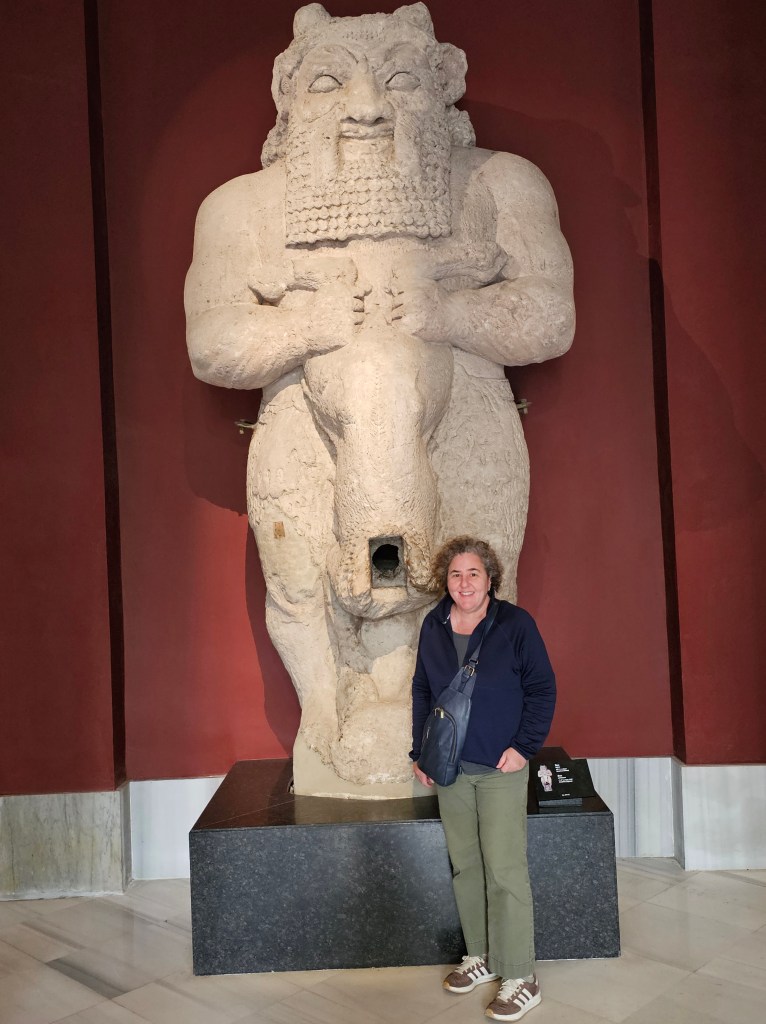
    After the Basilica, we headed to the Archeological Museum, which had a wealth of objects from Troy and other settlements. Russell found some colleagues to ponder with. We also found a statue of the Egyptian god Bes, which we are pretty sure is the inspiration for one of the greatest moments in television history.

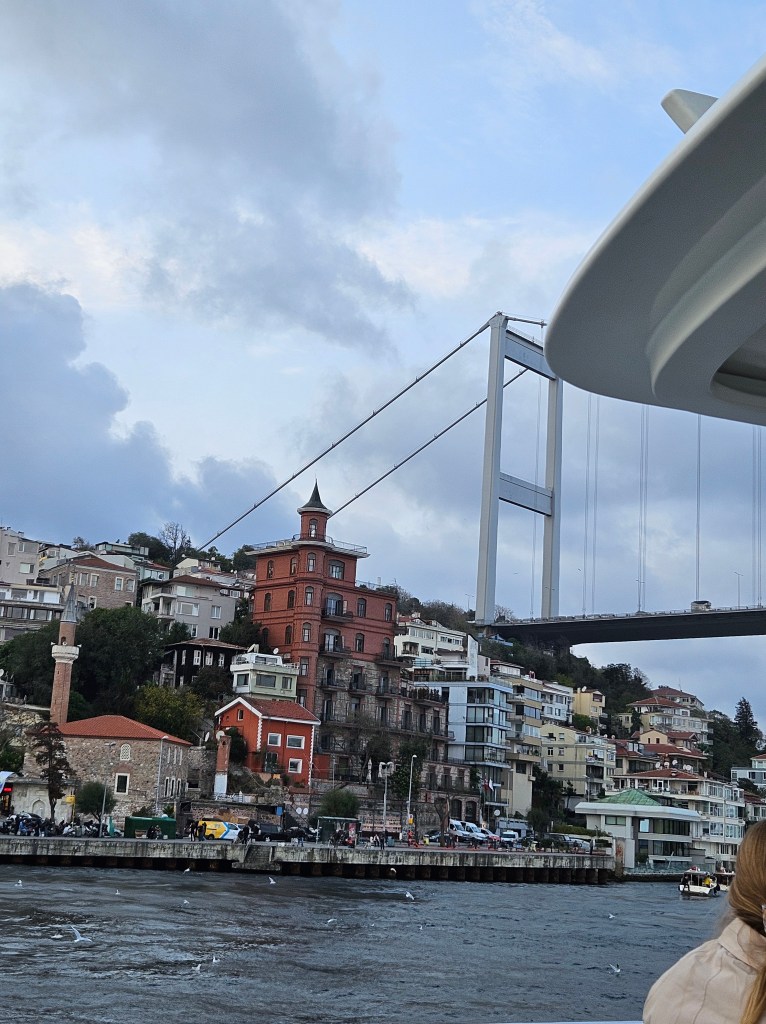
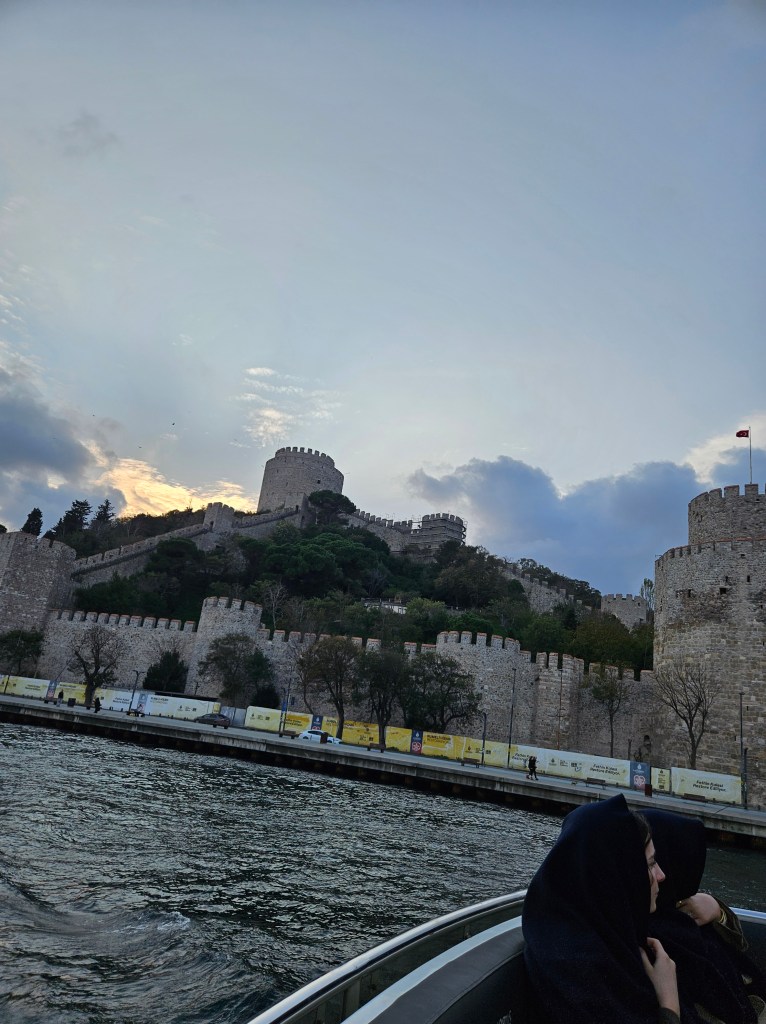
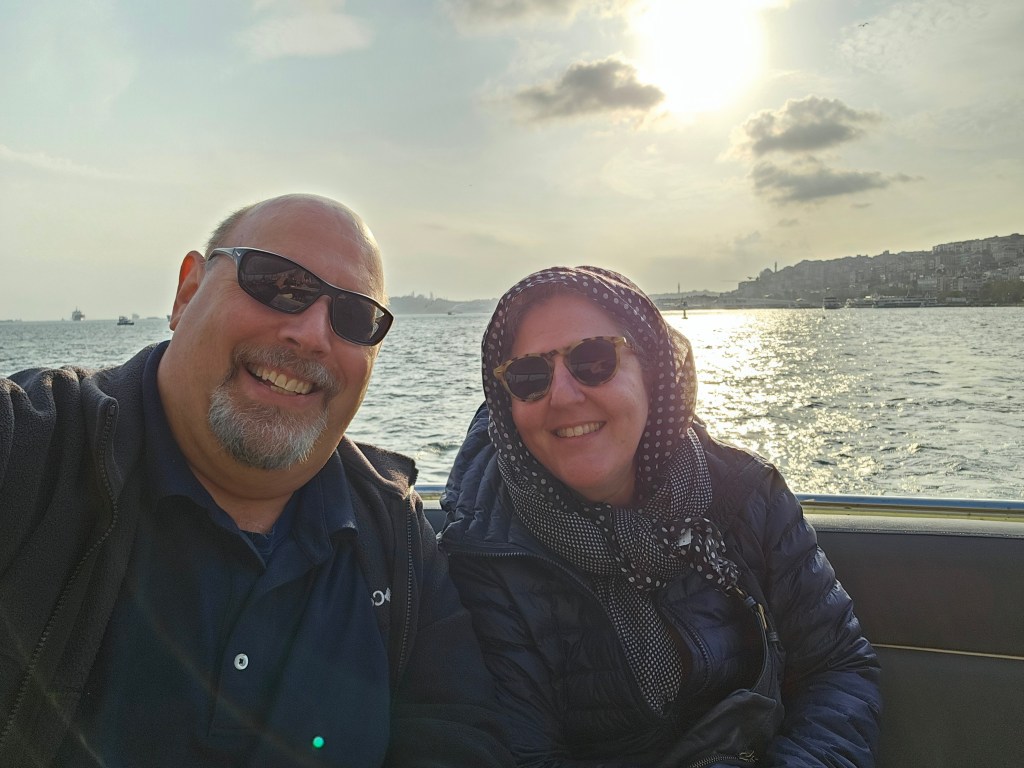
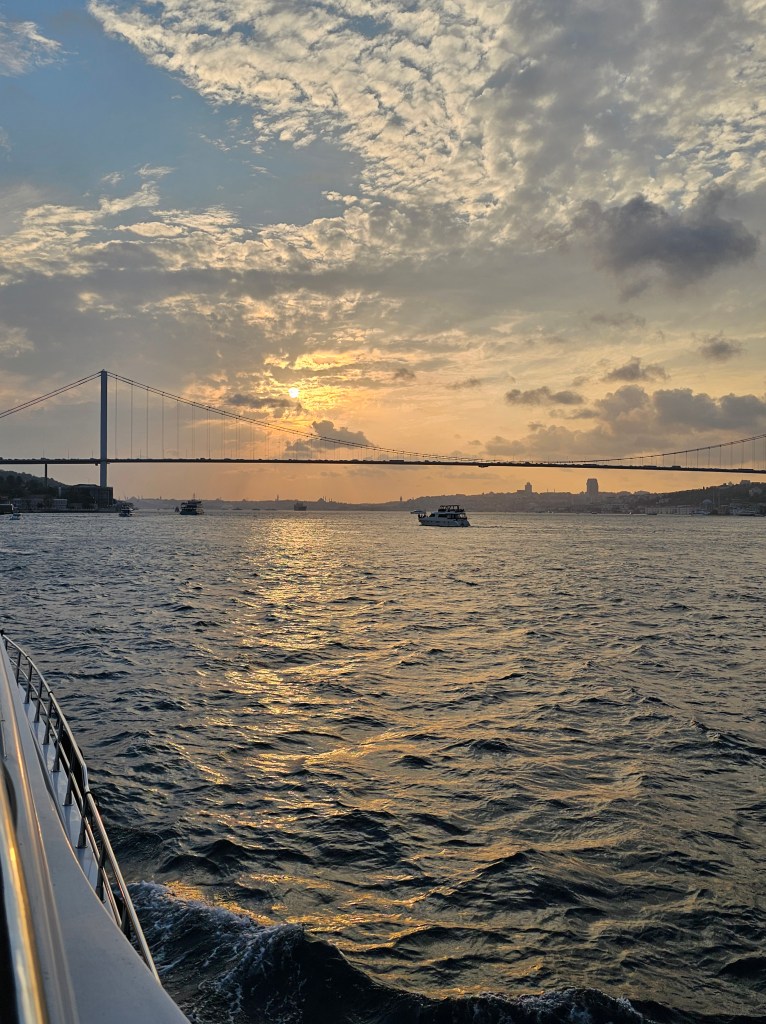
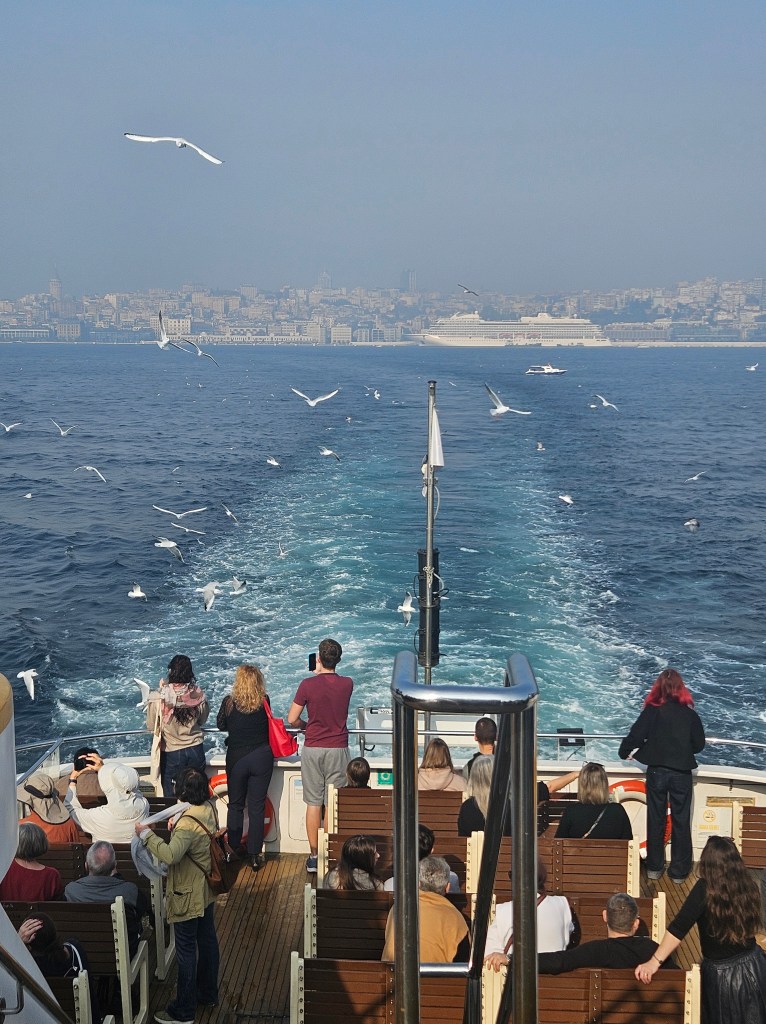
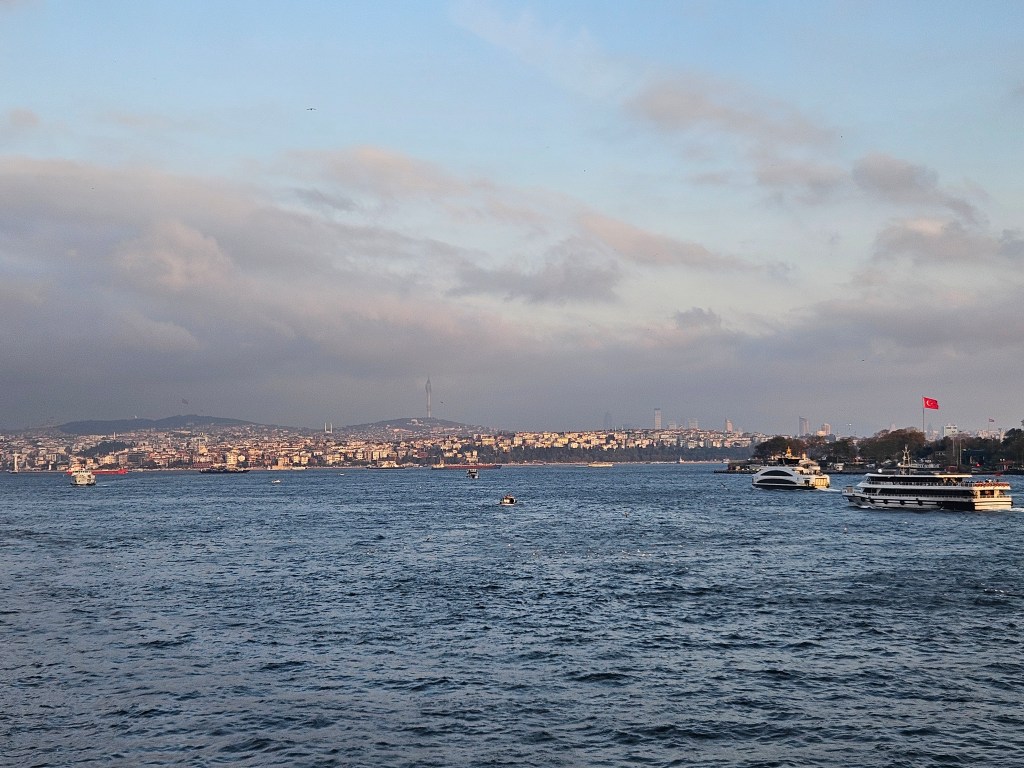
    For our final evening of our travels, we booked a sunset cruise of the Bosphorus. The two and a half hour cruise sailed around the Asian and European sides and we got snacks, beautiful views, and a good history of the sites. Russell had a full on cold by this point, but we soldiered on.

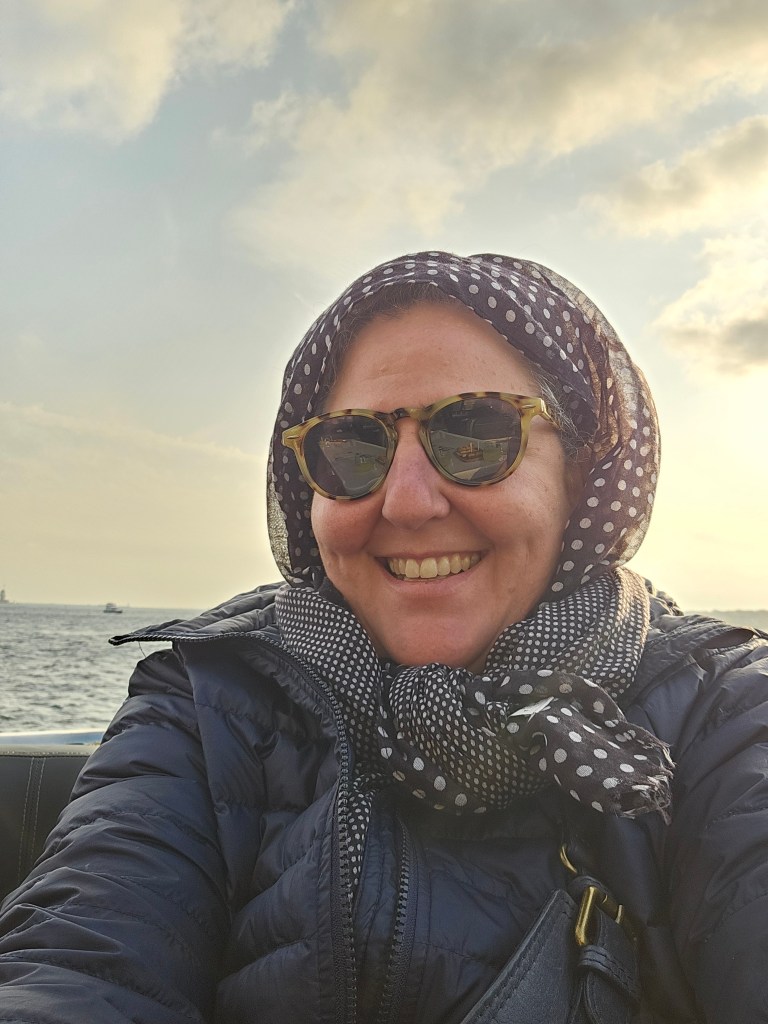
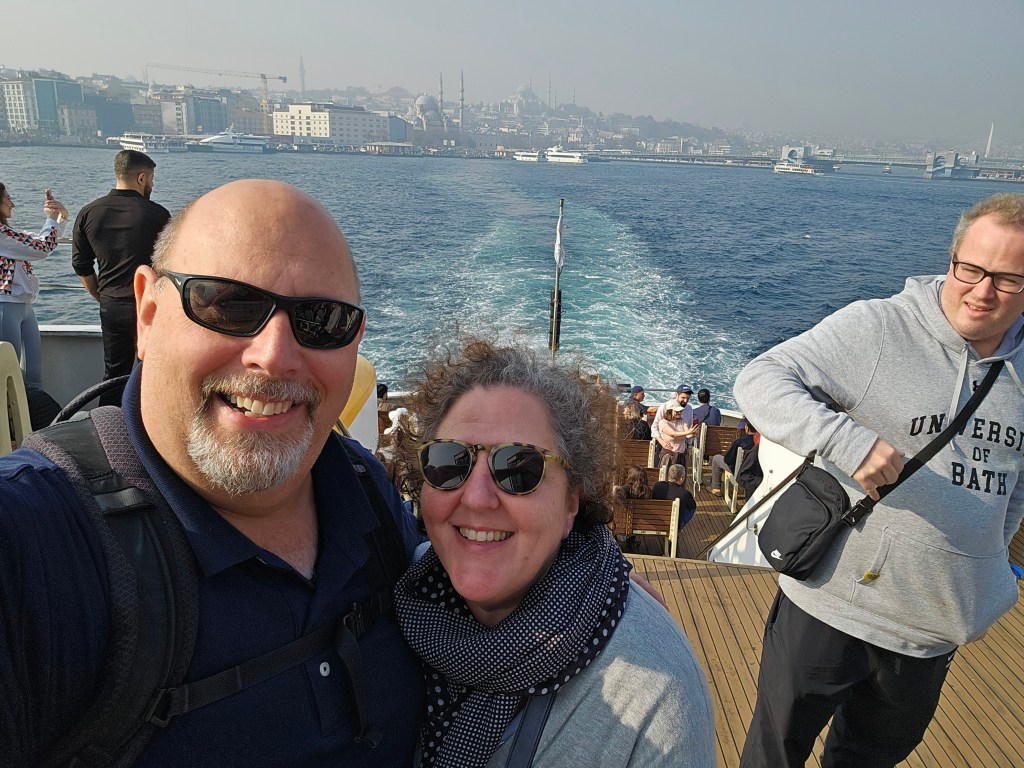
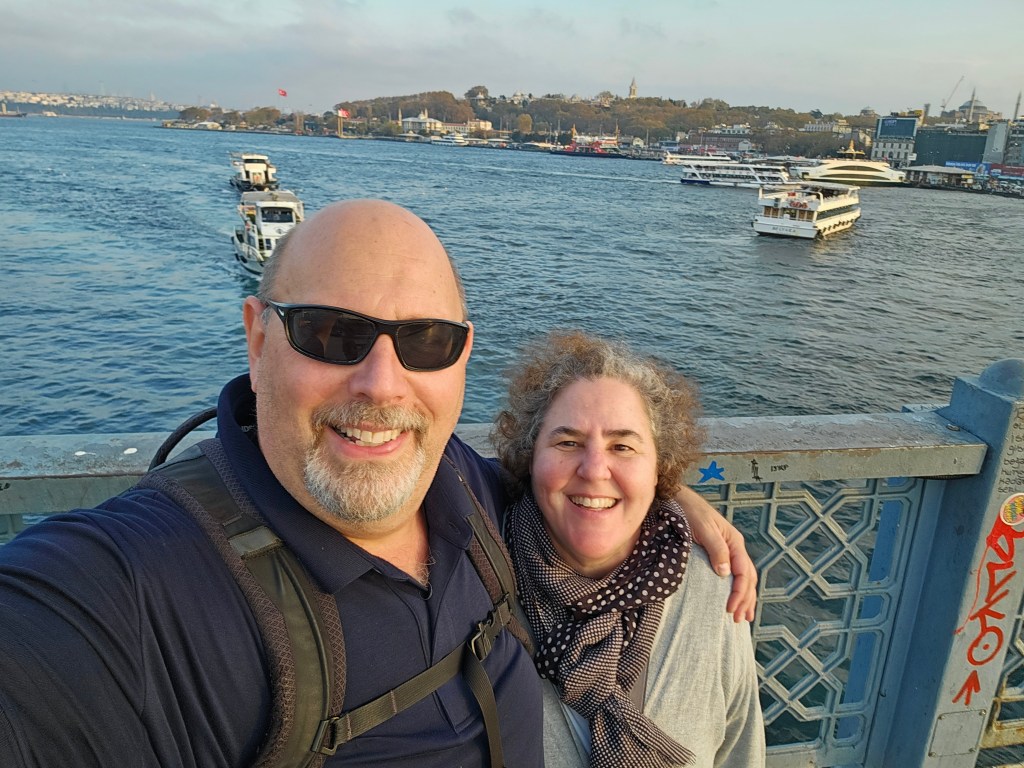
    It was windy, so Emily went full Jackie O with the scarf.

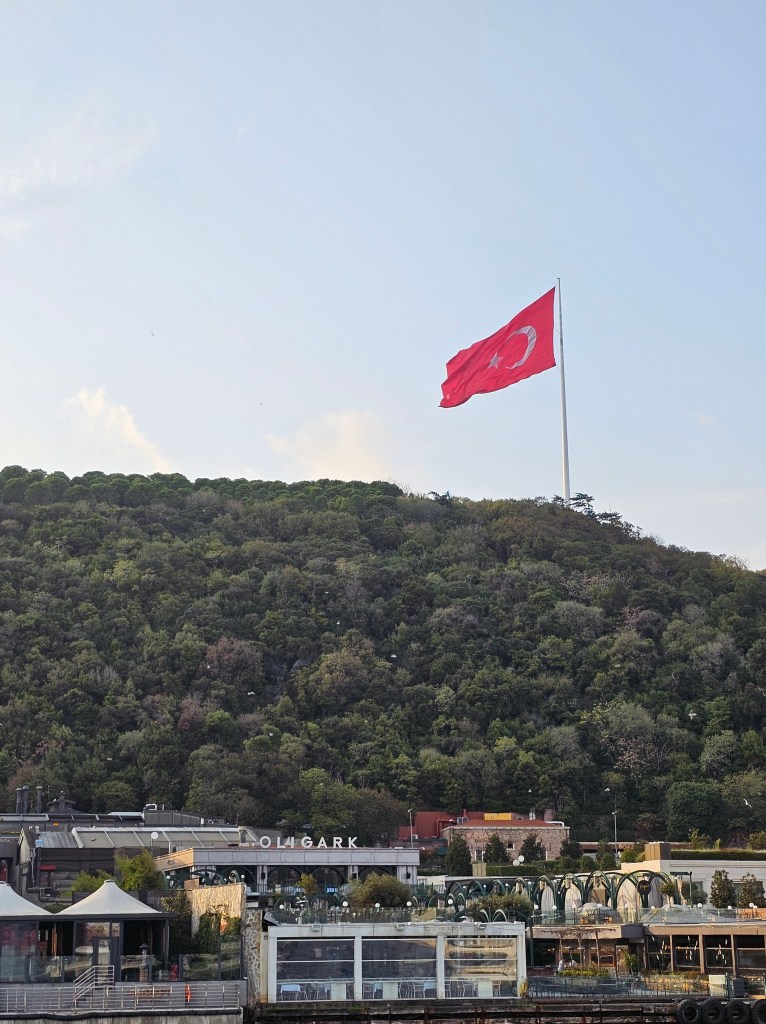
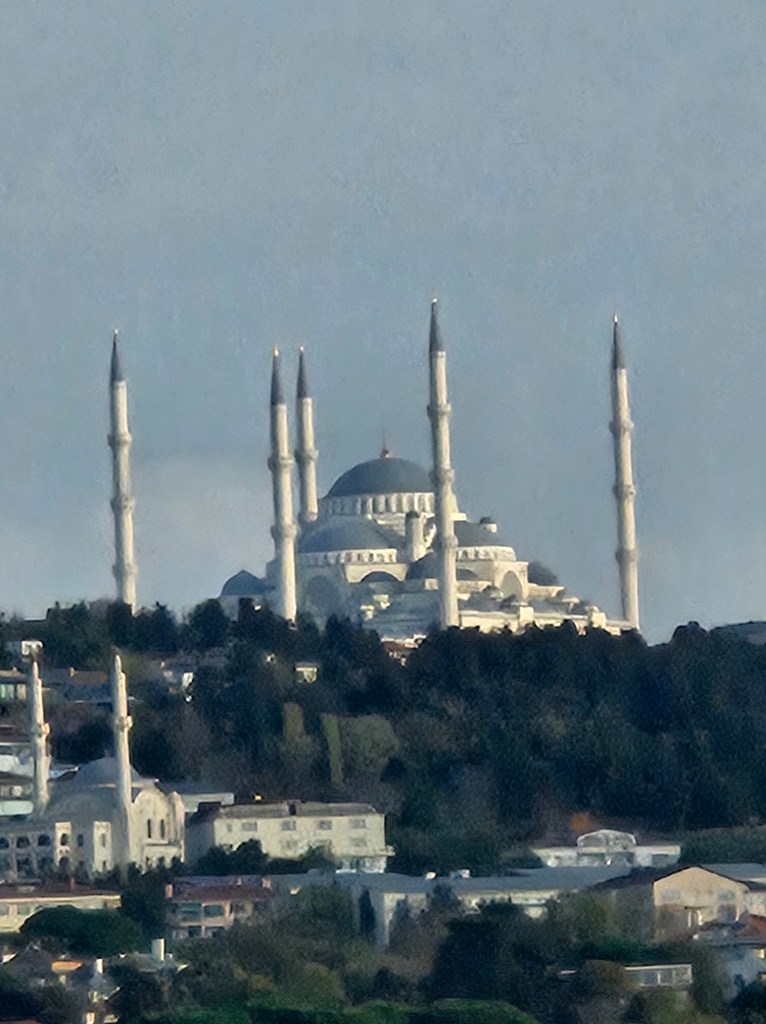
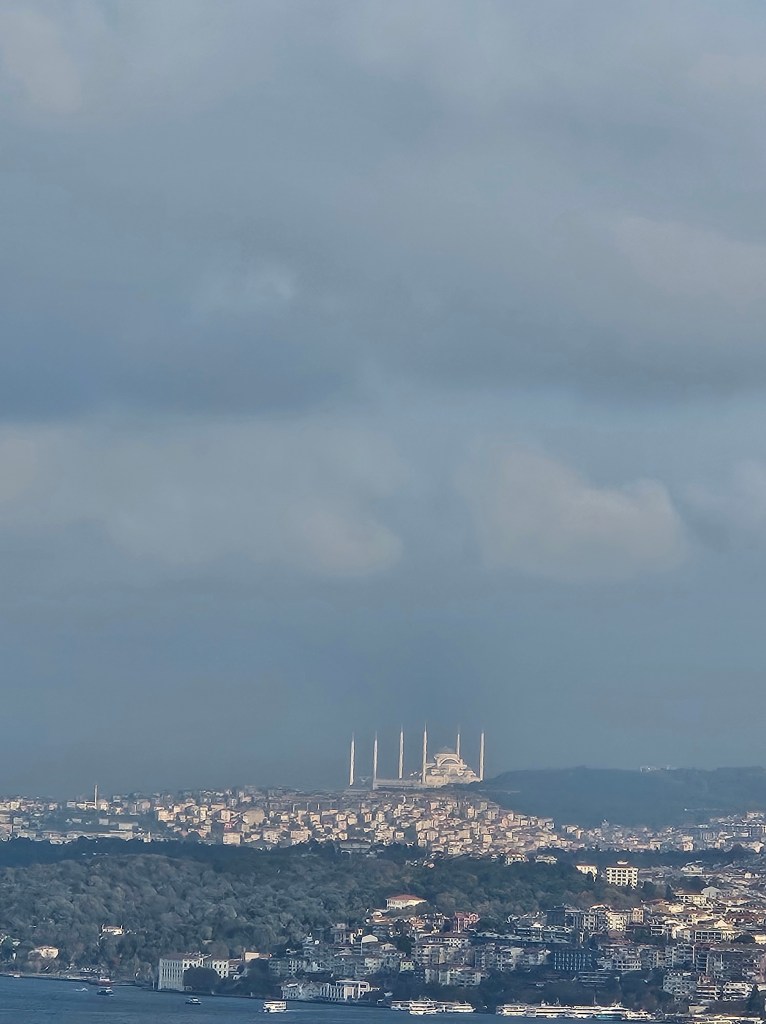
    Our guide was not a fan of Erdoğan, and pointed out the oversized flags and the new mosque he had built to accommodate 63,000 worshipers.

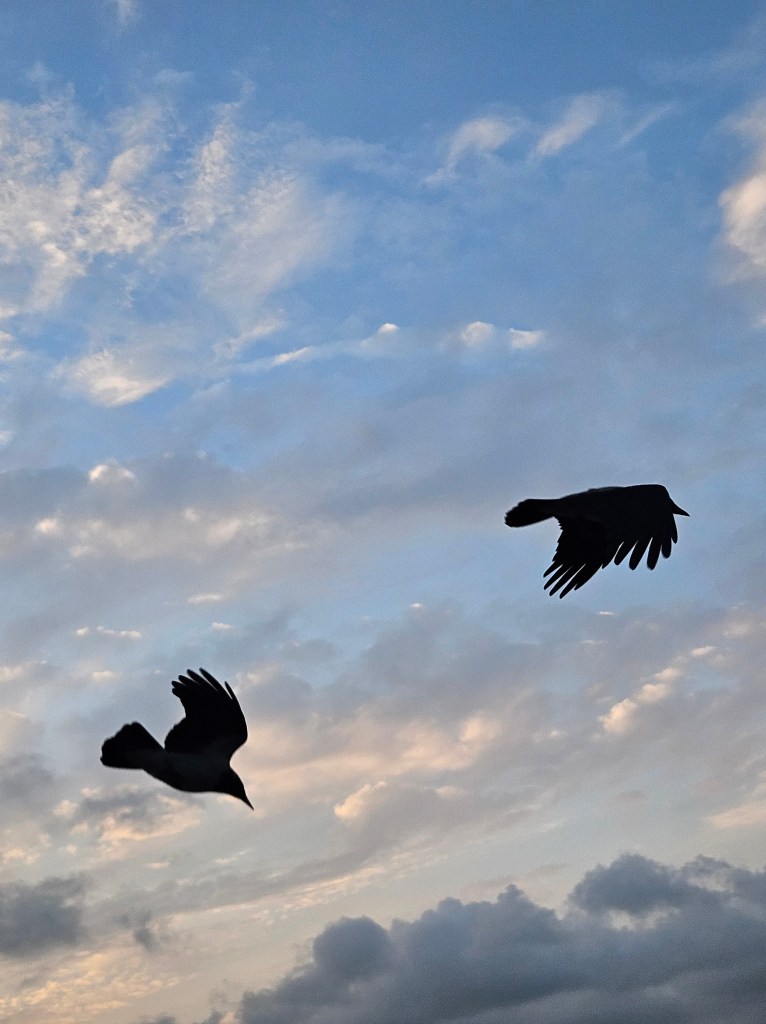
    As always, there were birds.

    The views kept coming. Emily is not particularly seafaring, but did okay seasickness-wise.

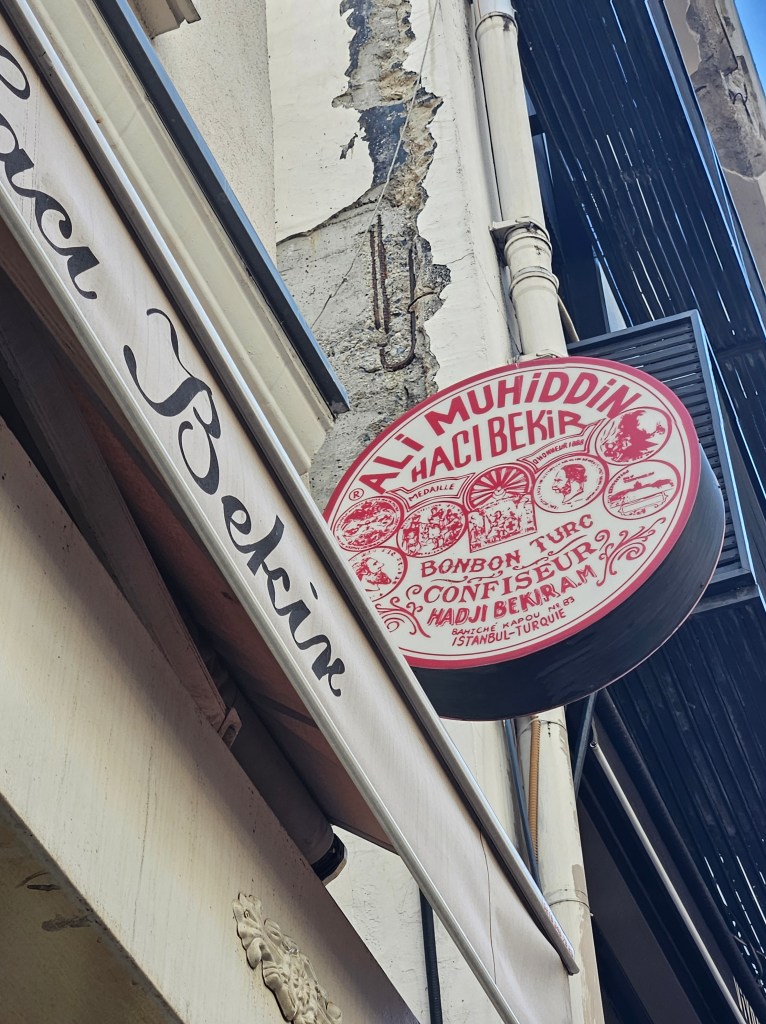
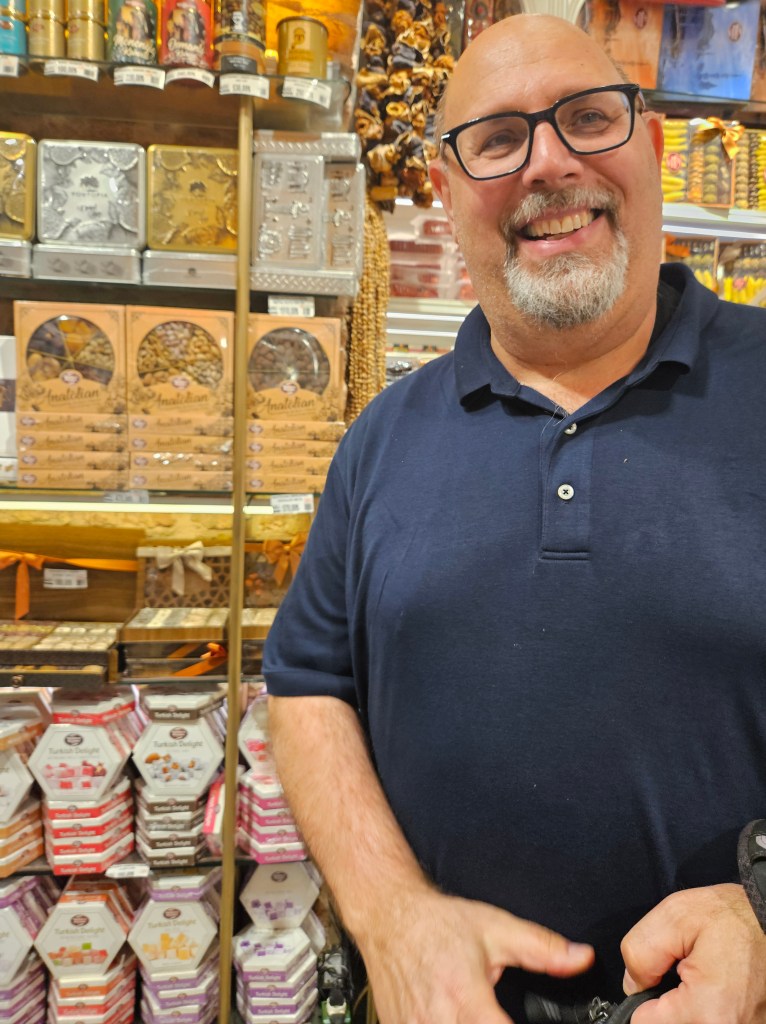
    After it was done, we picked up some last Turkish Delight at one of the original confectioners. Russell is a fan. Emily wishes she were. Then, we headed to our final dinner.

    Istanbul is a wonderful city, vibrant and beautiful and full of great food. Turkey is obviously very complicated now, in the Erdoğan era that we related to too well as Americans. But the people we spoke with were vocally critical of him and were hopeful for the future. The city is endlessly enjoyable and we felt safe and comfortable.

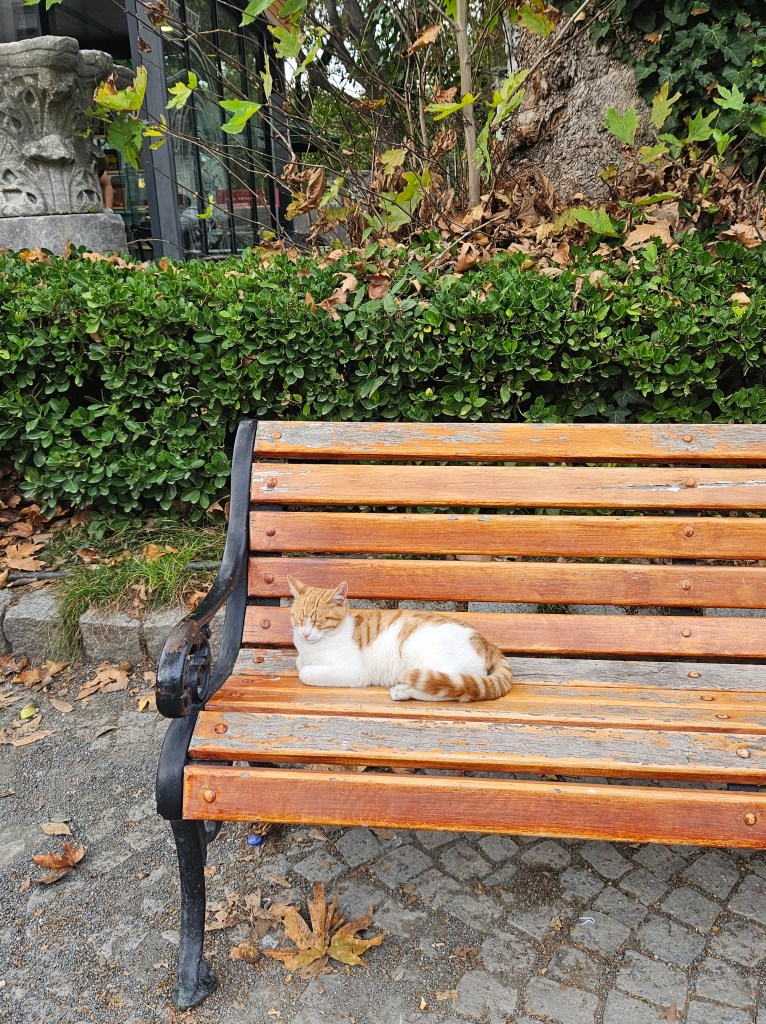
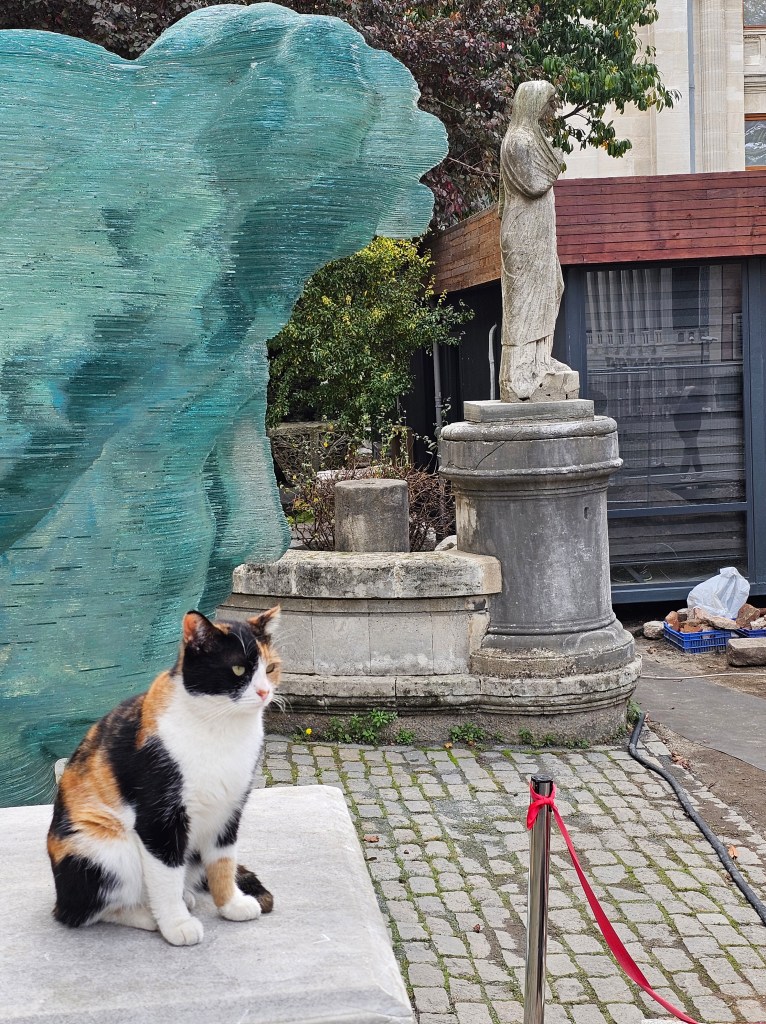
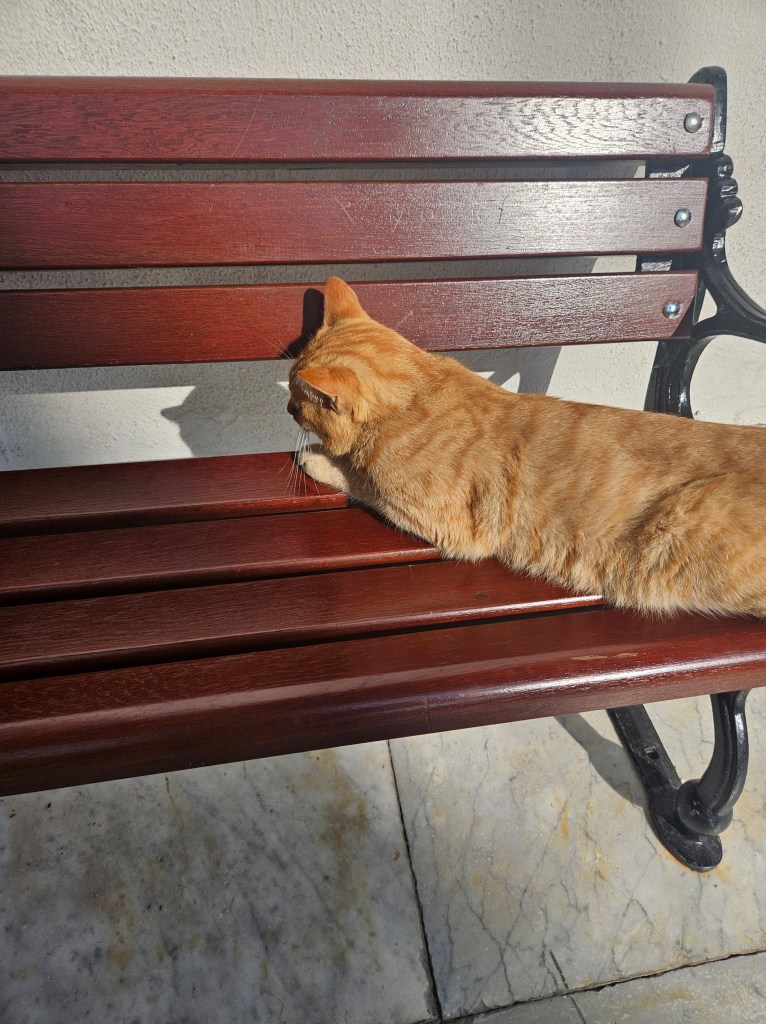
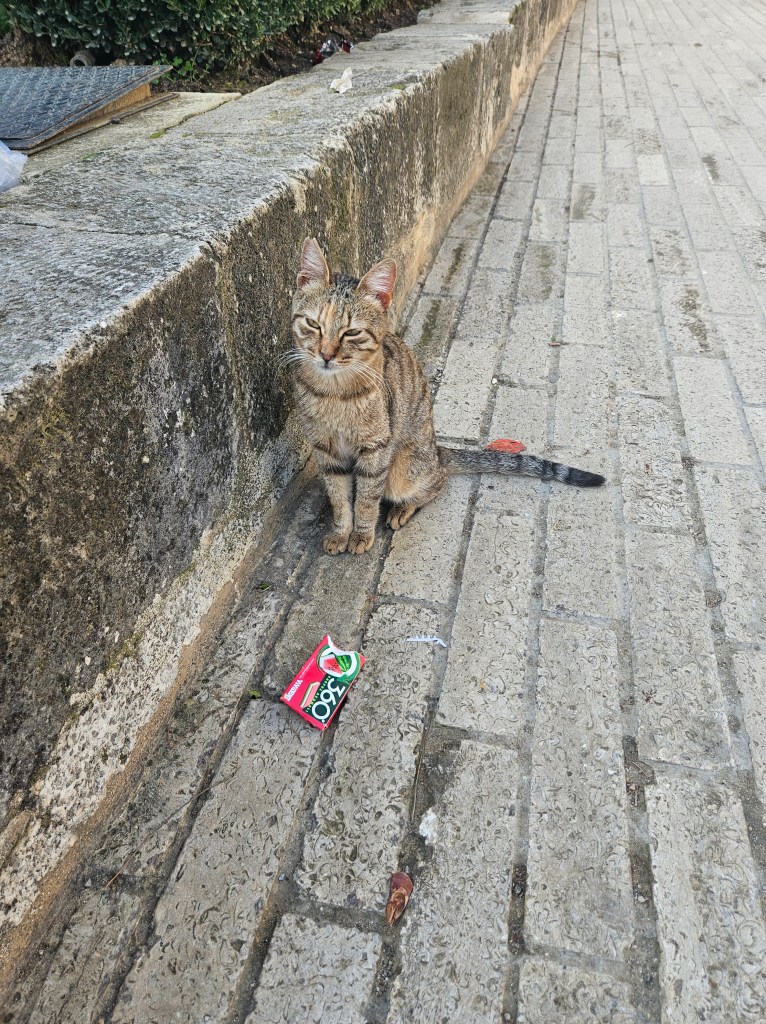
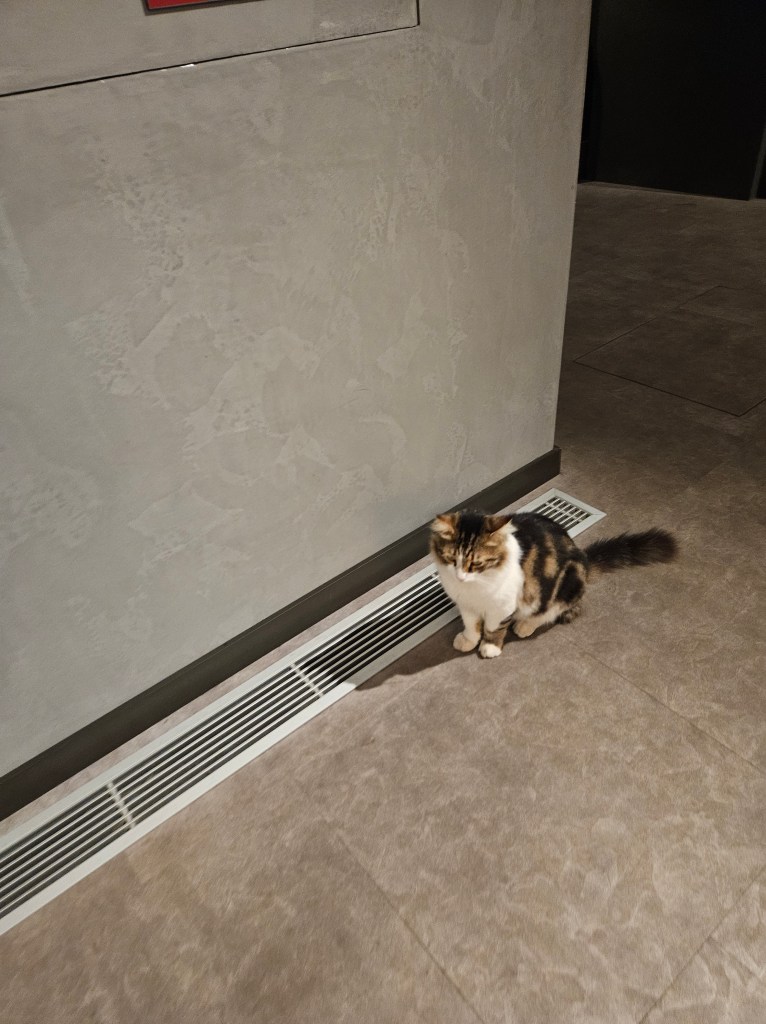
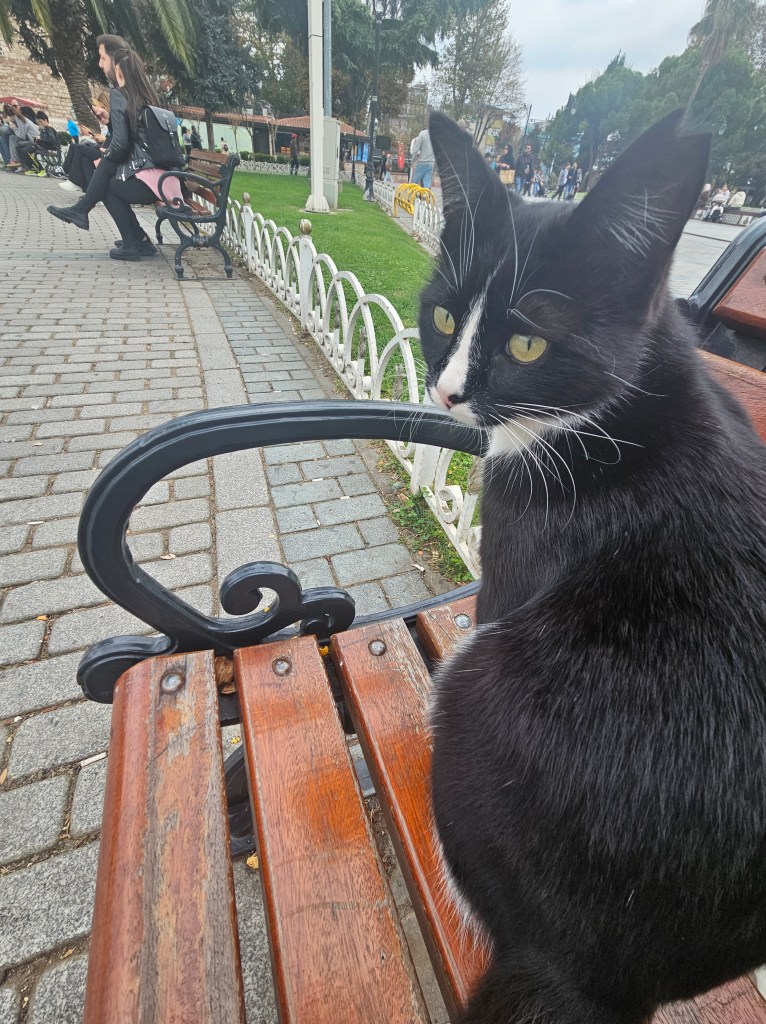
  • There were cats in many of the cities that we visited. Reykjavik, Oto, Prague, and Craiova can all hold their own. But no place had cats like Istanbul had cats. There were cats in every corner, bench, and garden.

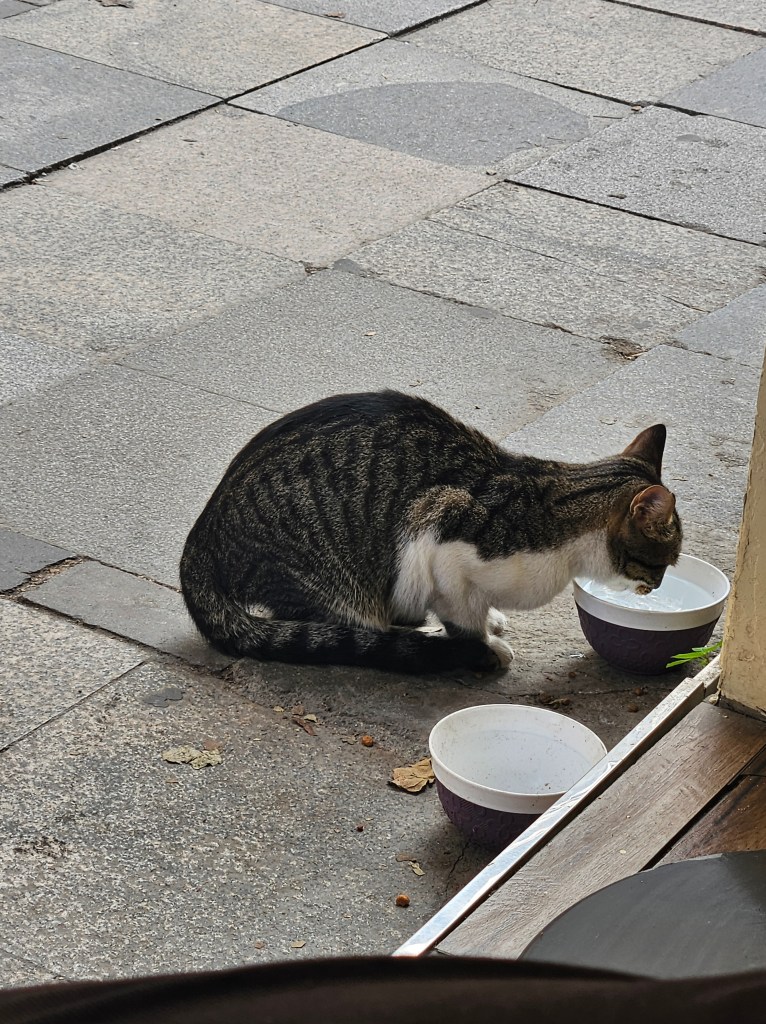
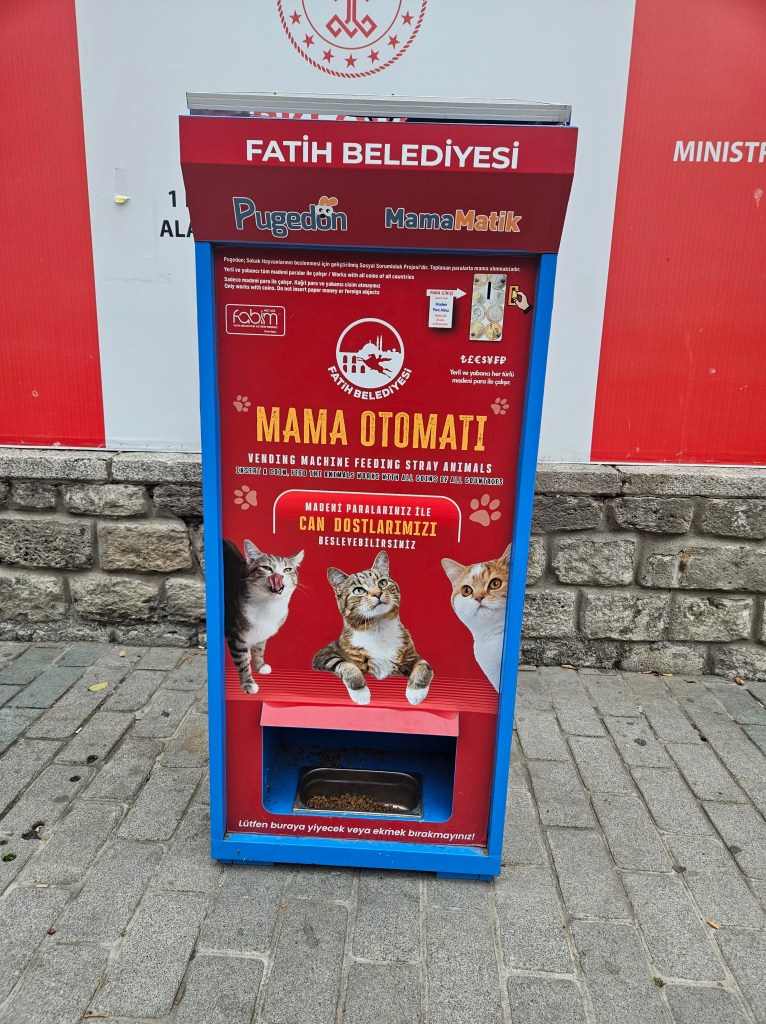
    The cats were generally well cared for. Ali, our food tour guide, said that there were no stray cats, only community cats. There were bowls of water and food left in front of many restaurants and shops. Taking it to the next level, there were cat food vending machines.

    Some cats seemed to be trying at camouflage.

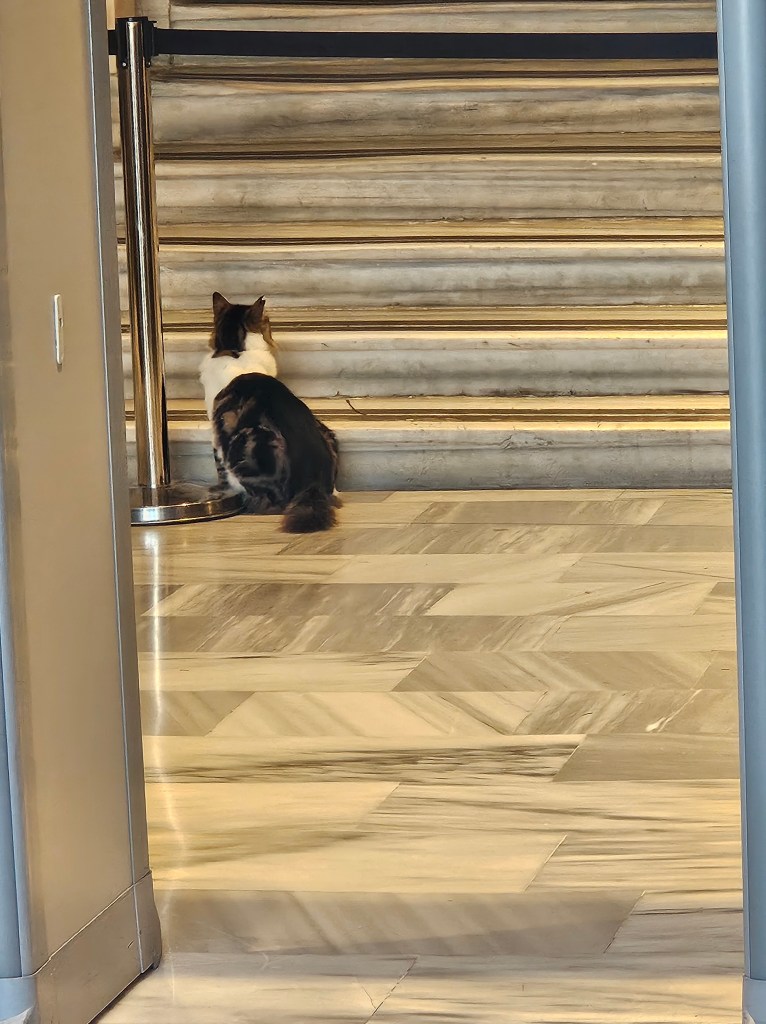
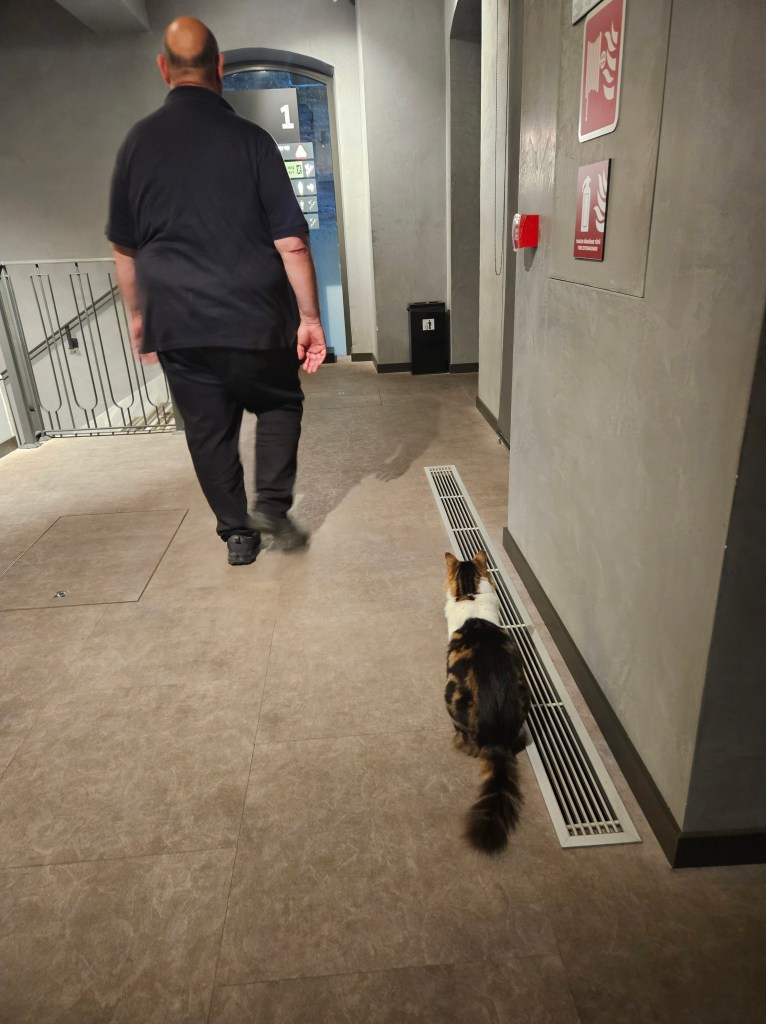
    This cat below wandered into the Hagia Sophia Experience Museum. We were sure the guard was going to remove it, but instead he just went over to scratch its ears. It was still there 45 minutes later on the second floor!

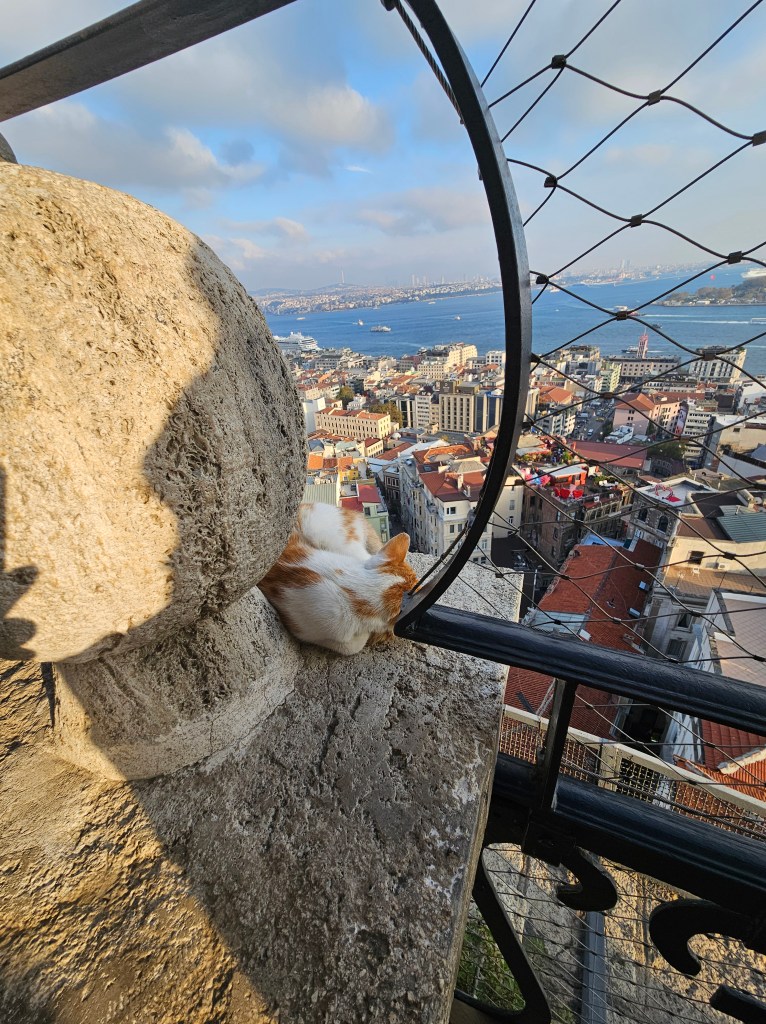
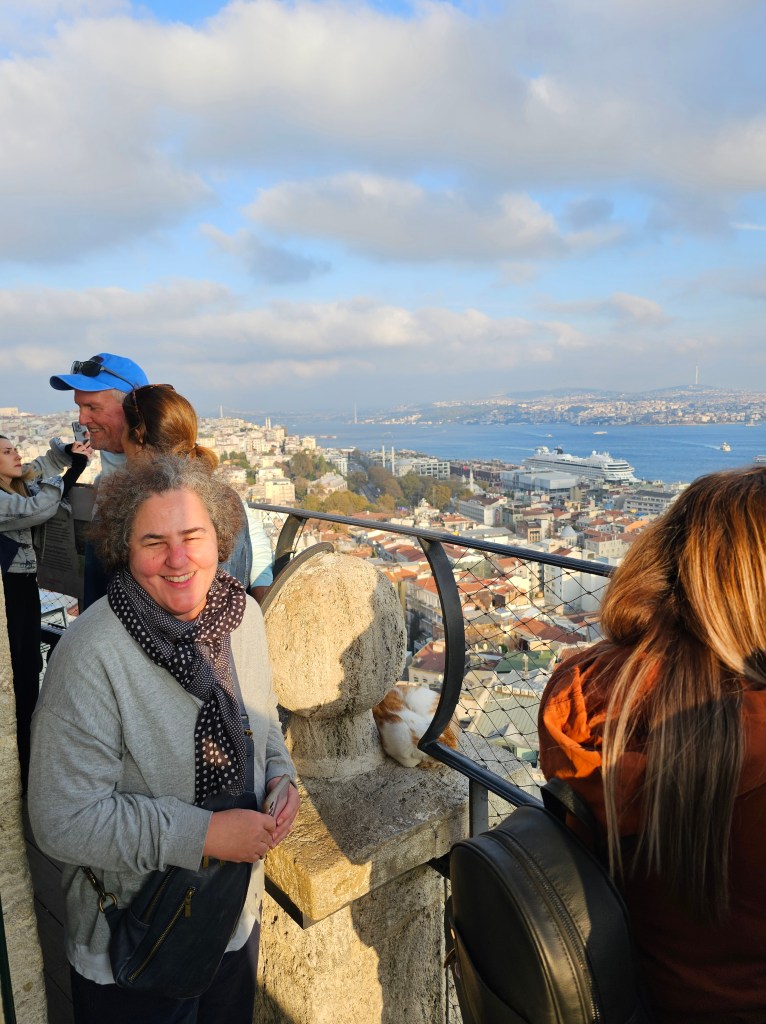
    This cat gave Emily a heart attack at the top of the Galata Tower, but we saw it later inside and it was fine.

    Many cats have clipped ears, like this one, indicating that it has been neutered.

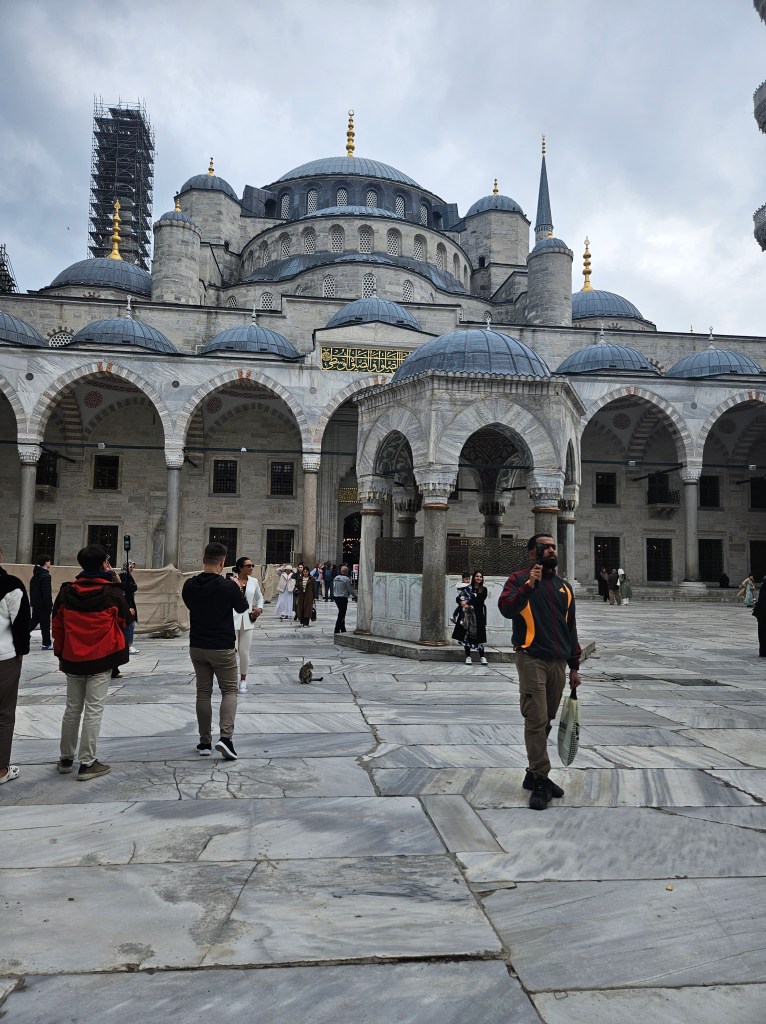
    Cats were even welcome at the mosques.

    There are worse things than a city of cats!

  • Wednesday was a little gloomy. Russell was getting hit with a cold and we were sad that our travels were coming to an end. We set out to enjoy the day without overdoing it.

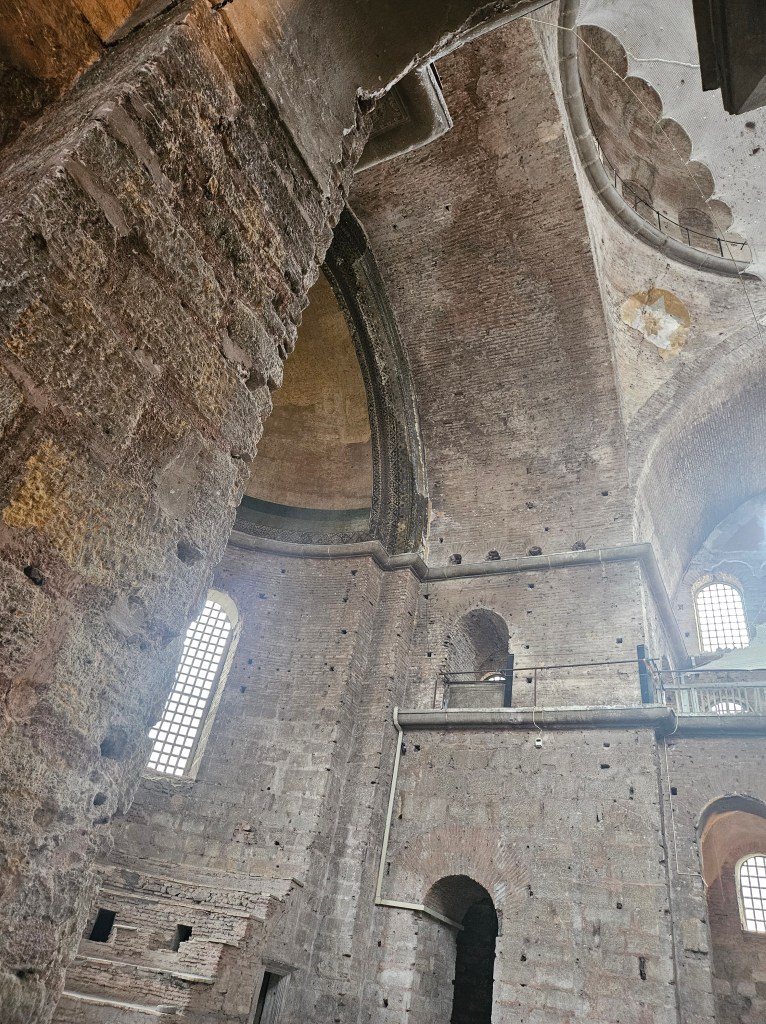
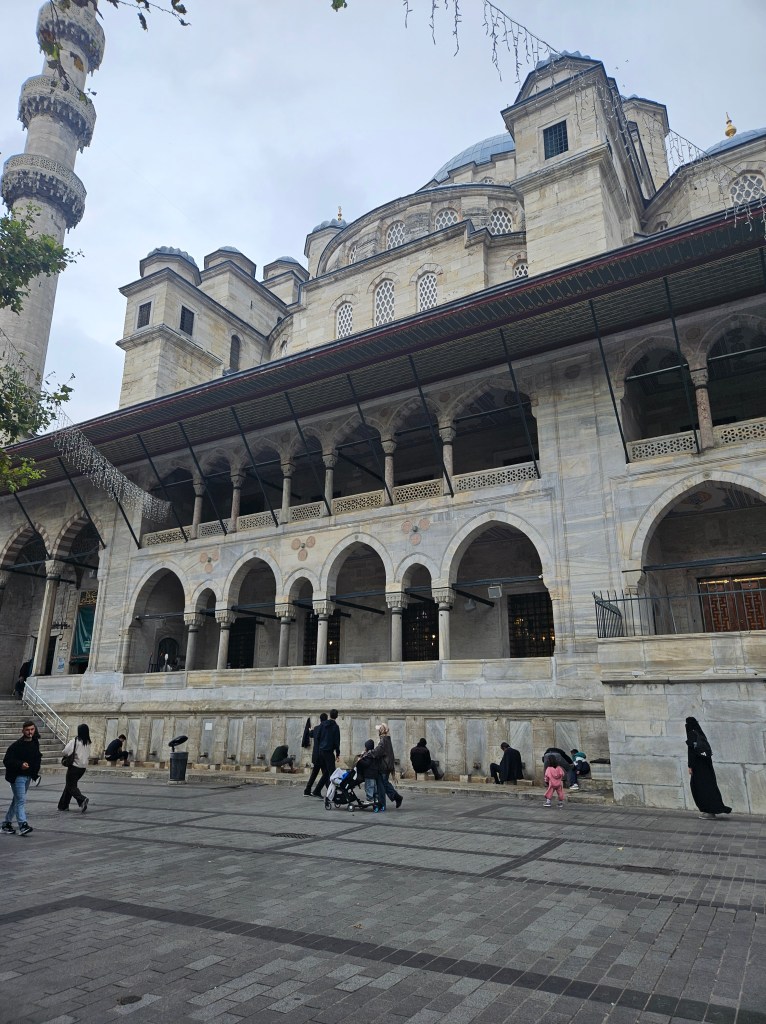
    After a delicious Turkish breakfast, we headed to the Blue Mosque, only to find it closed for prayers. So we headed to the Hagia Irene nearby. Built in the 6th century, Hagia Irene is only one of two Byzantine churches in Istanbul that were never converted into mosques. After the conquest in 1453, it was used as an arsenal and warehouse. Currently, is it used as a concert hall, although there appear to be extensive repairs going on. It was interesting to walk around, although there wasn’t much context.

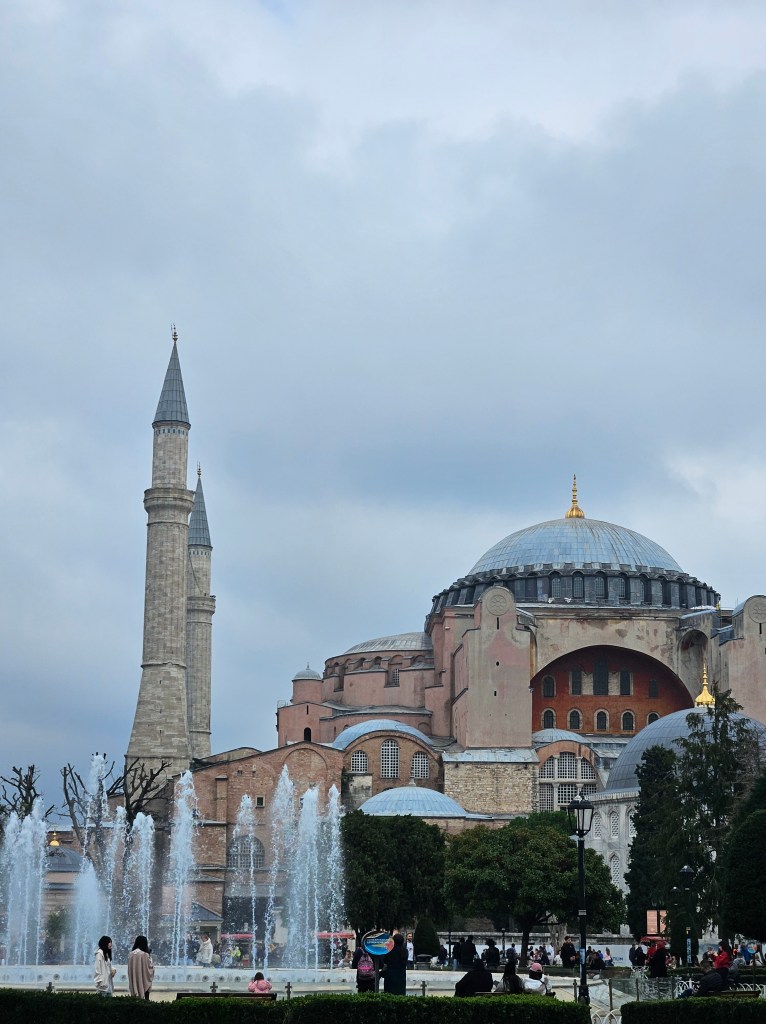
    We walked around and got another glimpse of Hagia Sophia, which is close by.

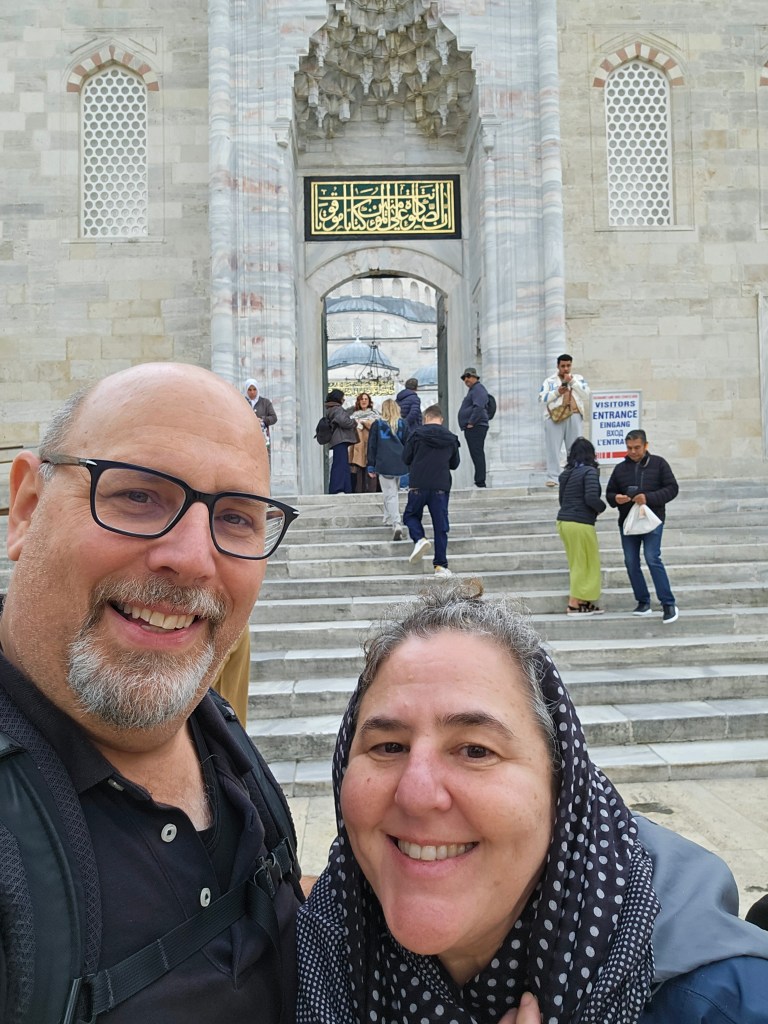
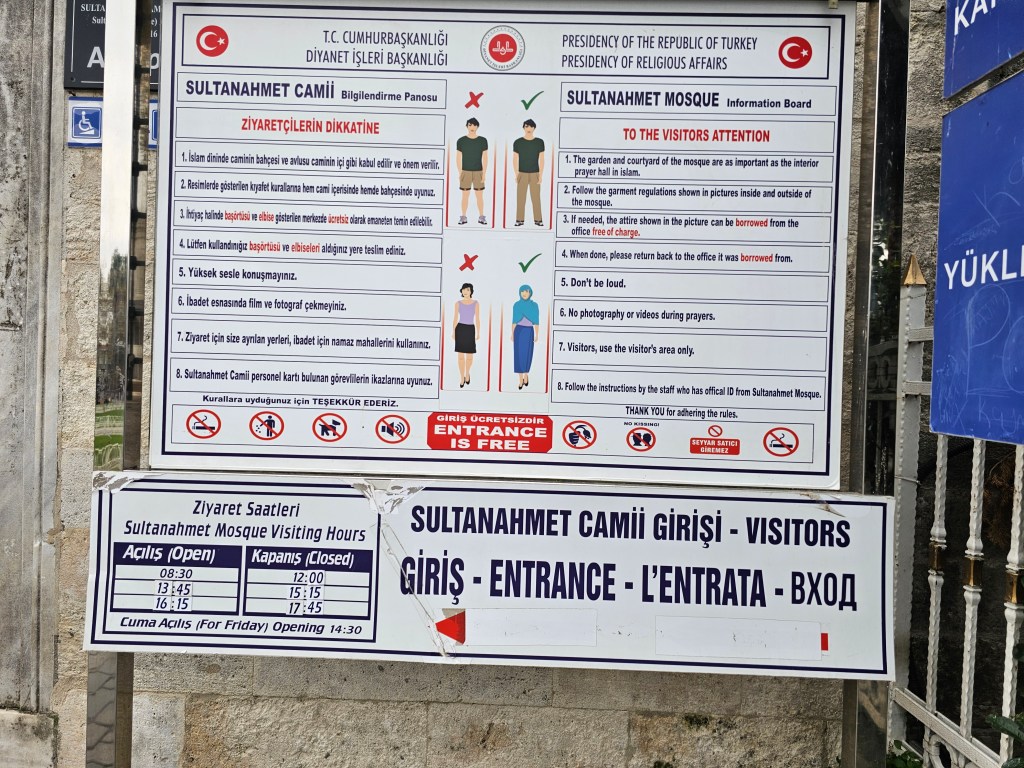
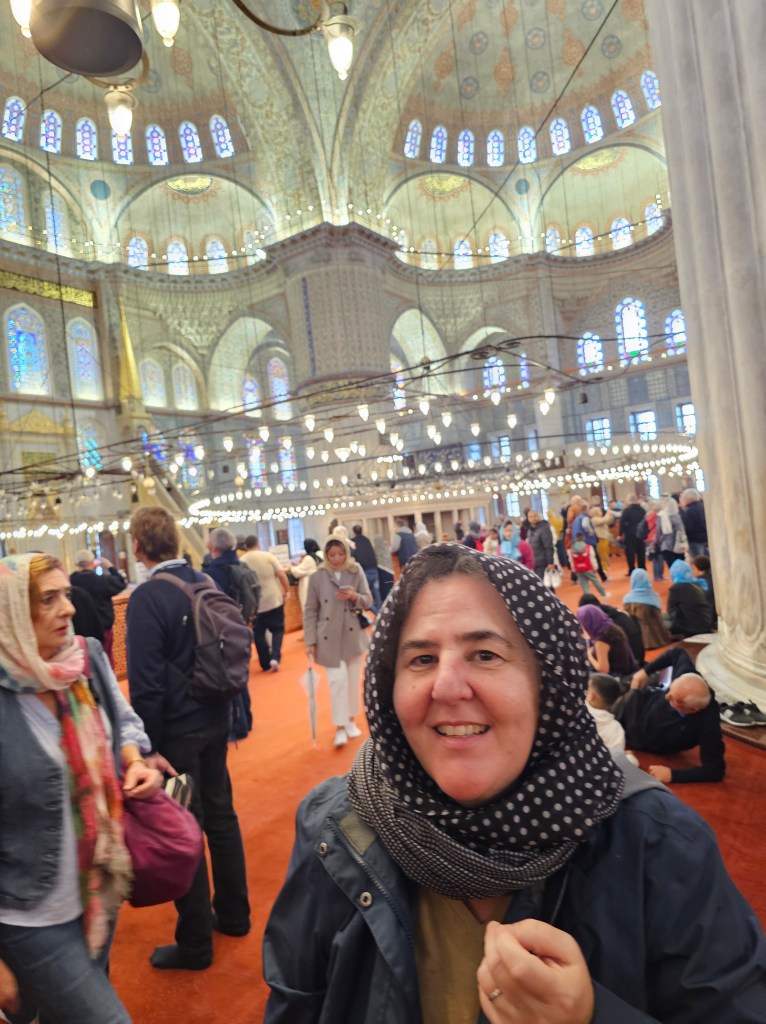
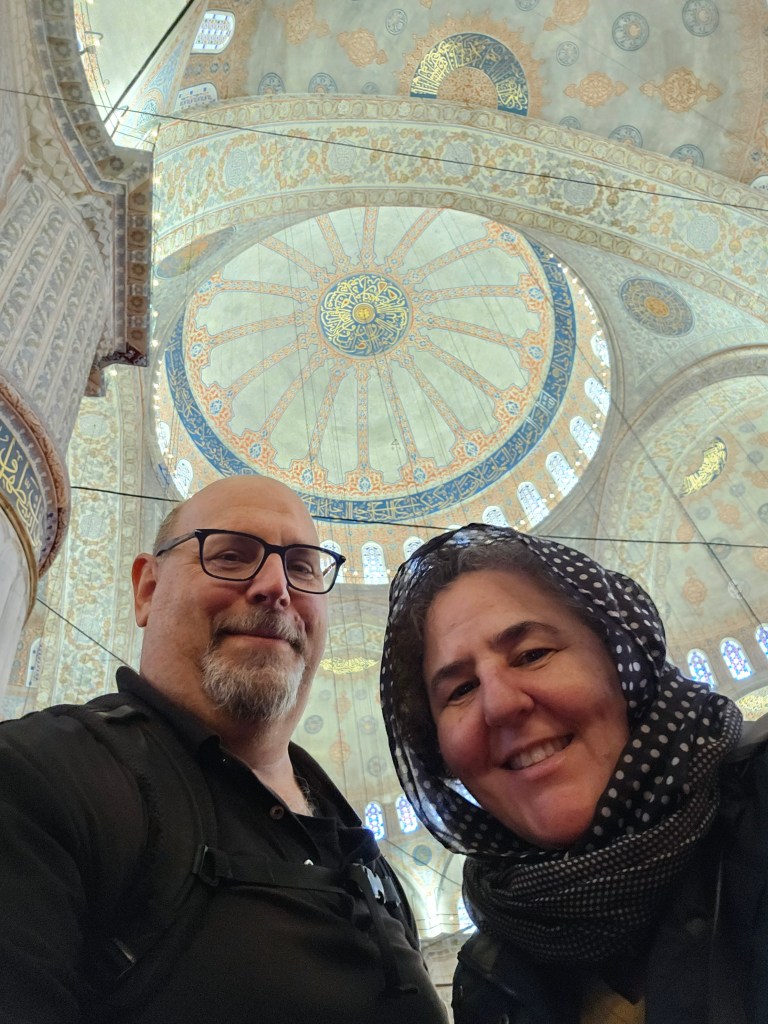
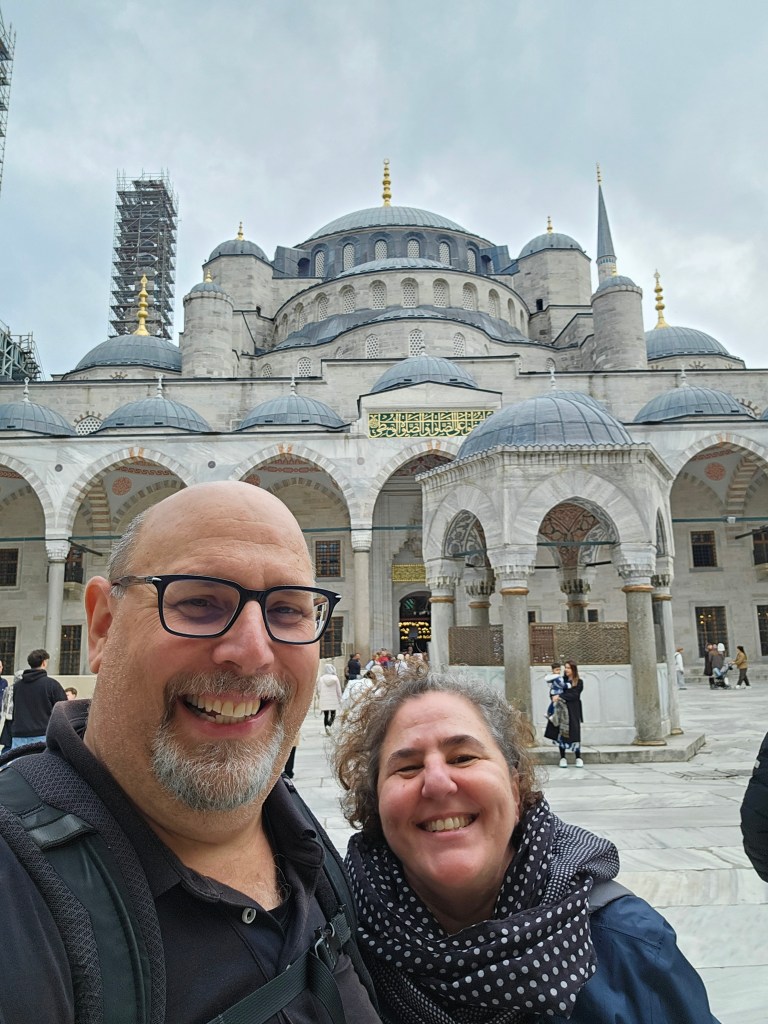
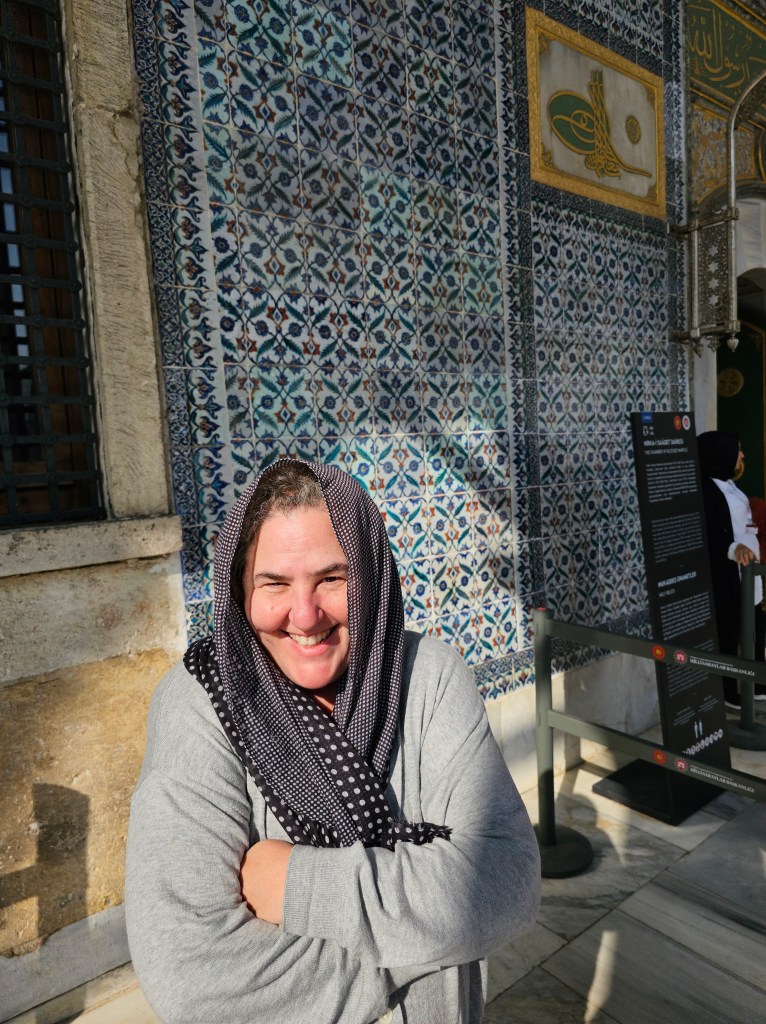
    We then returned to the Blue Mosque. The dress code is strictly enforced; they provide headscarves and leg coverings for those not properly dressed.

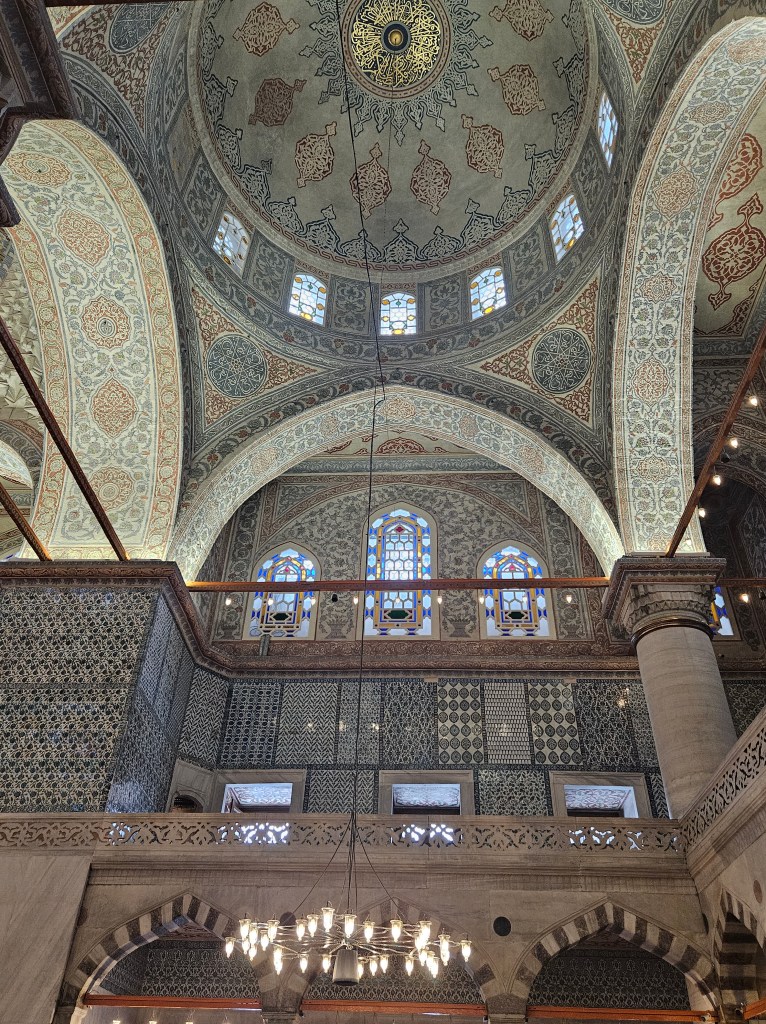
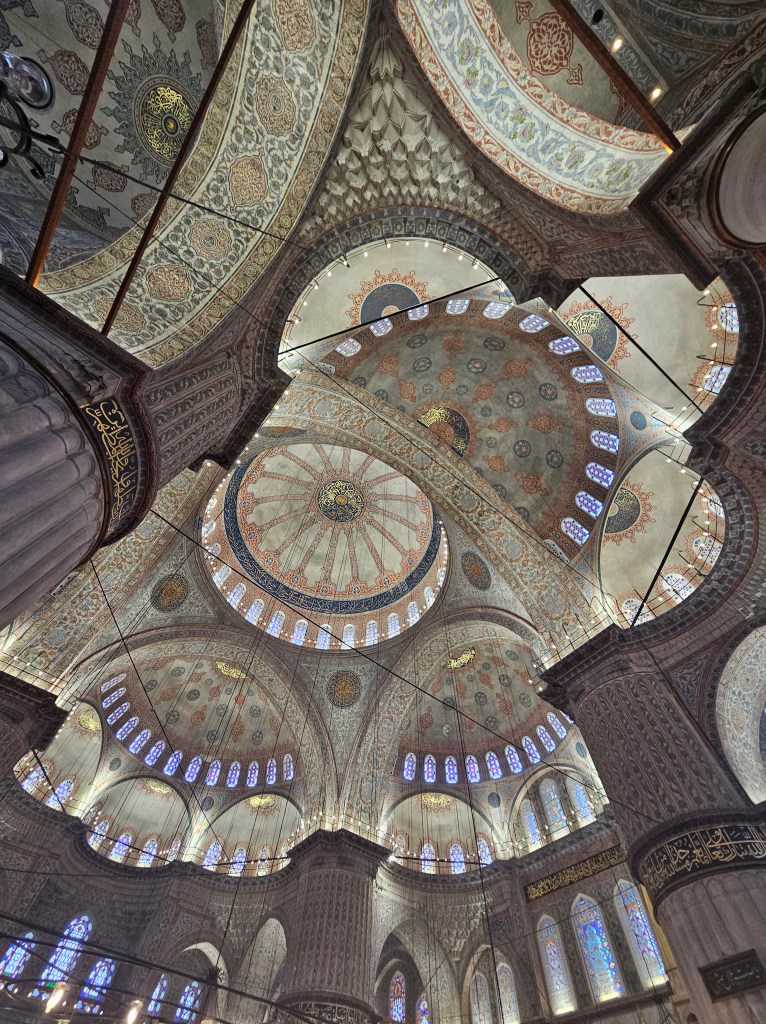
    We went through the visitors entrance and took off our shoes, as required. The interior is spectacular. The official name is Sultan Ahmed Mosque, but is called the Blue Mosque as that is the predominant color used in the decor. Emily’s tile obsession only grew during this visit.

    The visiting area had a desk to ask questions about Islam, and in the courtyard there was a display about the Quran, but overall there was not a lot of proselytizing.

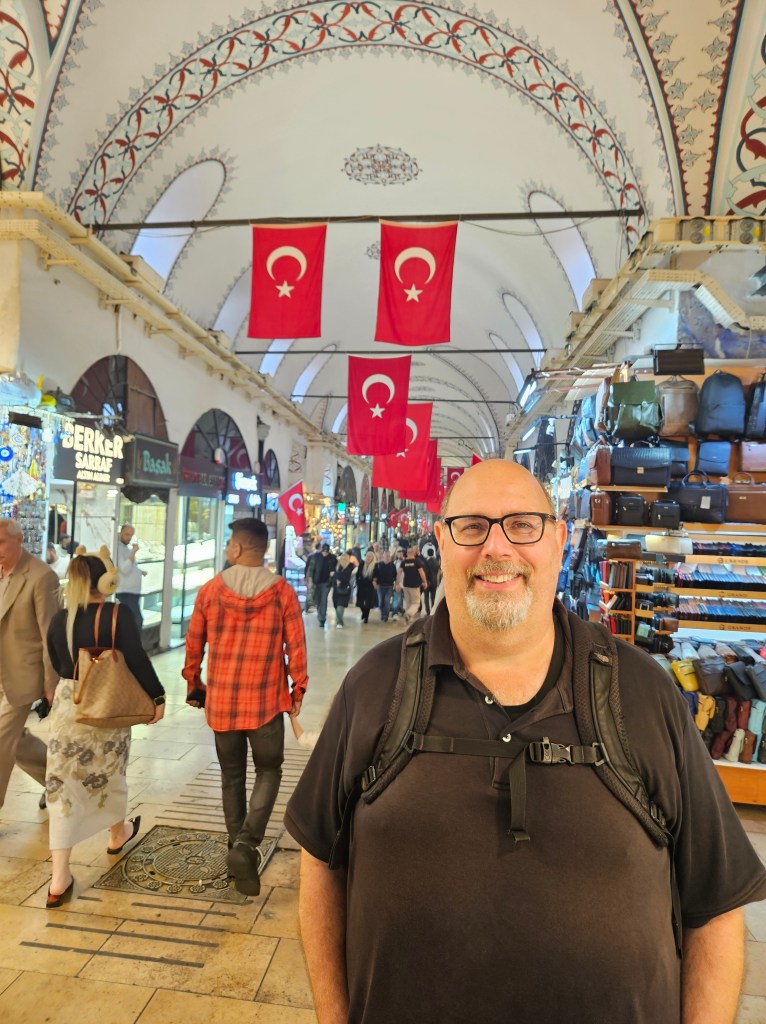
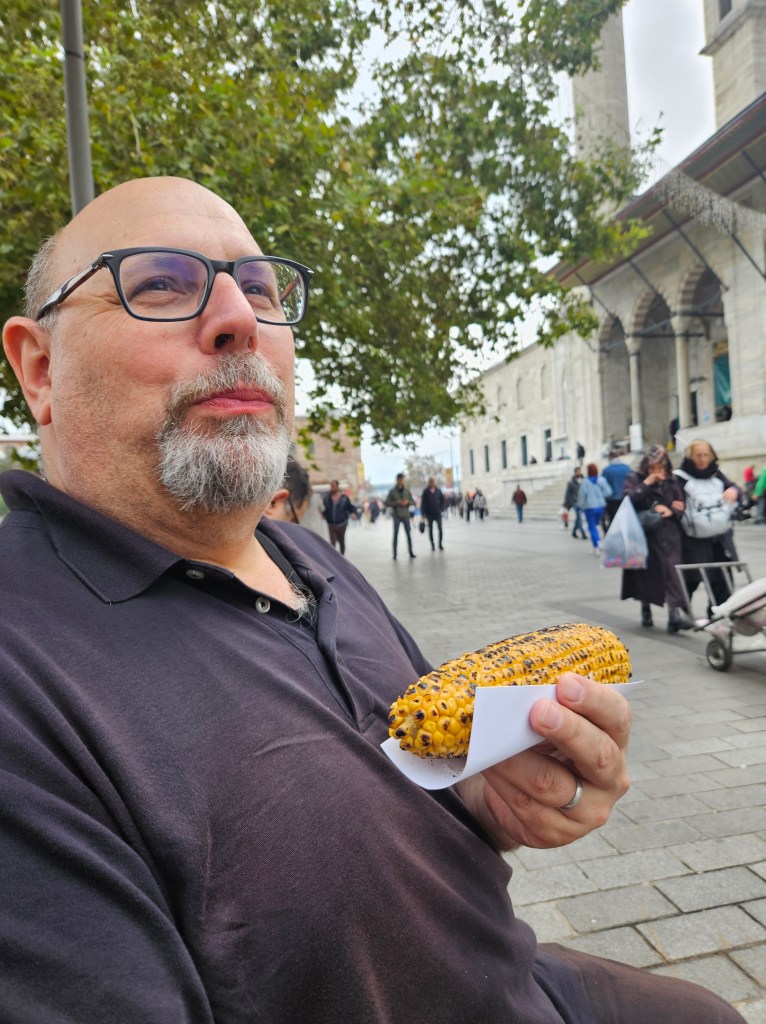
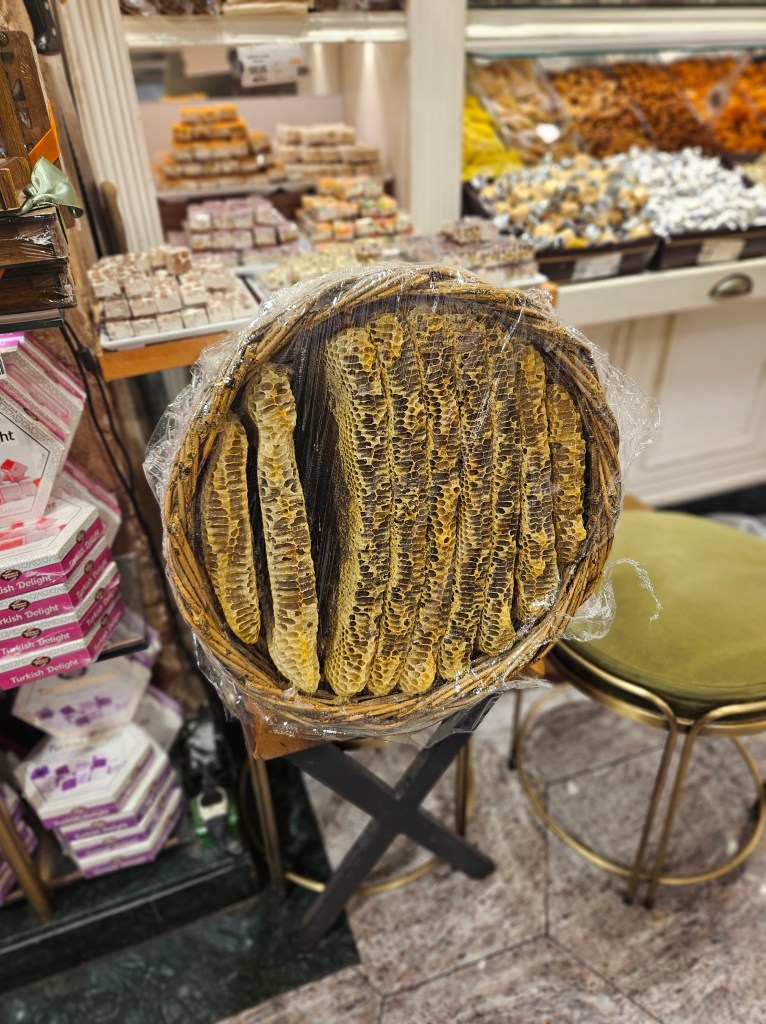
    After our visit to the Blue Mosque, we walked through the Grand Bazaar a bit. Though we were invited in to many shops, we did not buy anything. Our food guide Ali told us the the Grand Bazaar is mostly good for backgammon sets and high quality fake brand names. We had a snack of grilled corn, which is sold on just about every street corner, and did some shopping at the Spice Market before heading back for a rest.

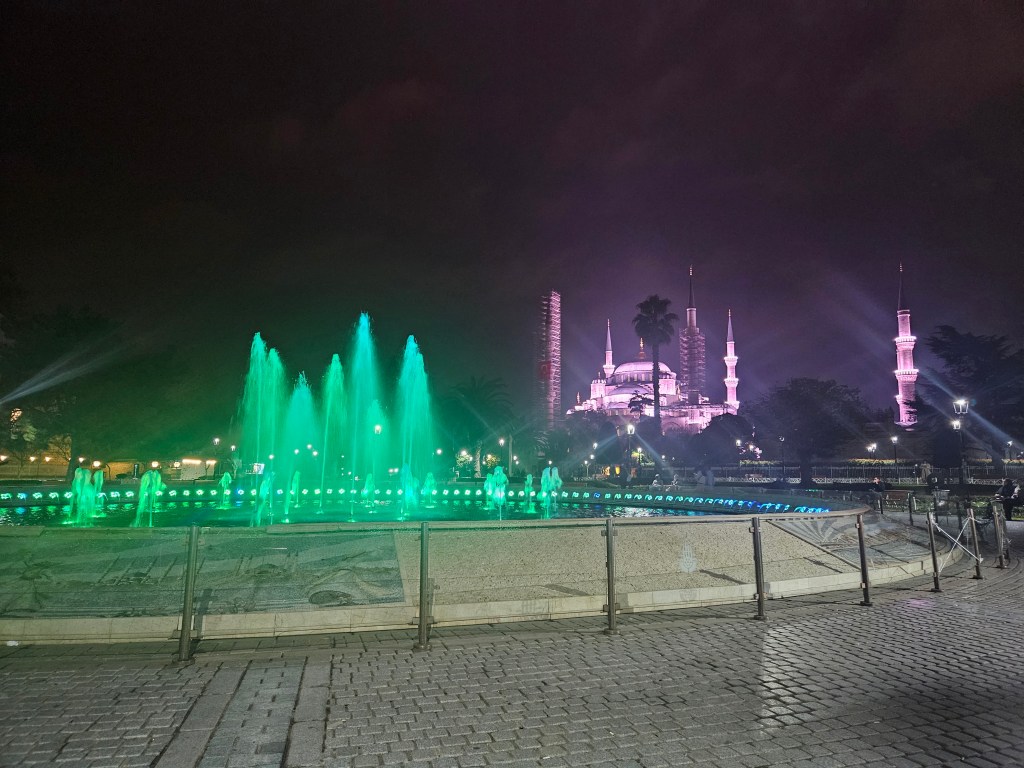
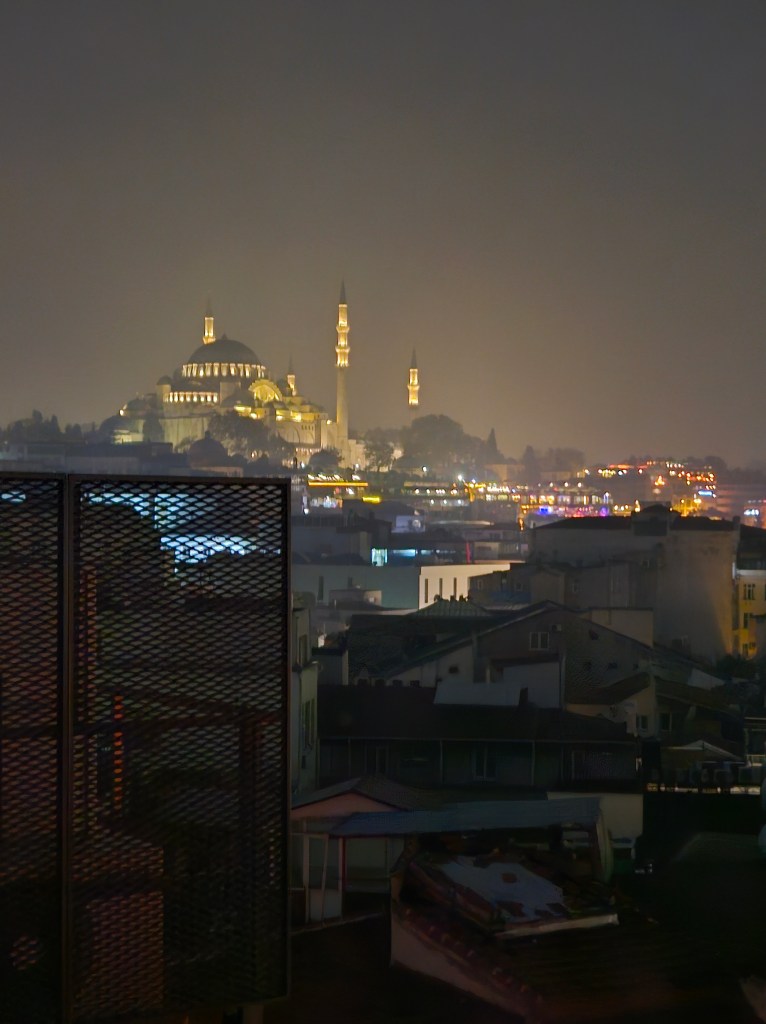
    We had another lovely dinner and returned for an impressive view of the beautiful Blue Mosque at night.

  • One of the very few activities we had pre-booked for our travels was a food tour of Istanbul. We did the Taste of Two Continents tour with Yummy Istanbul, and it was fantastic.

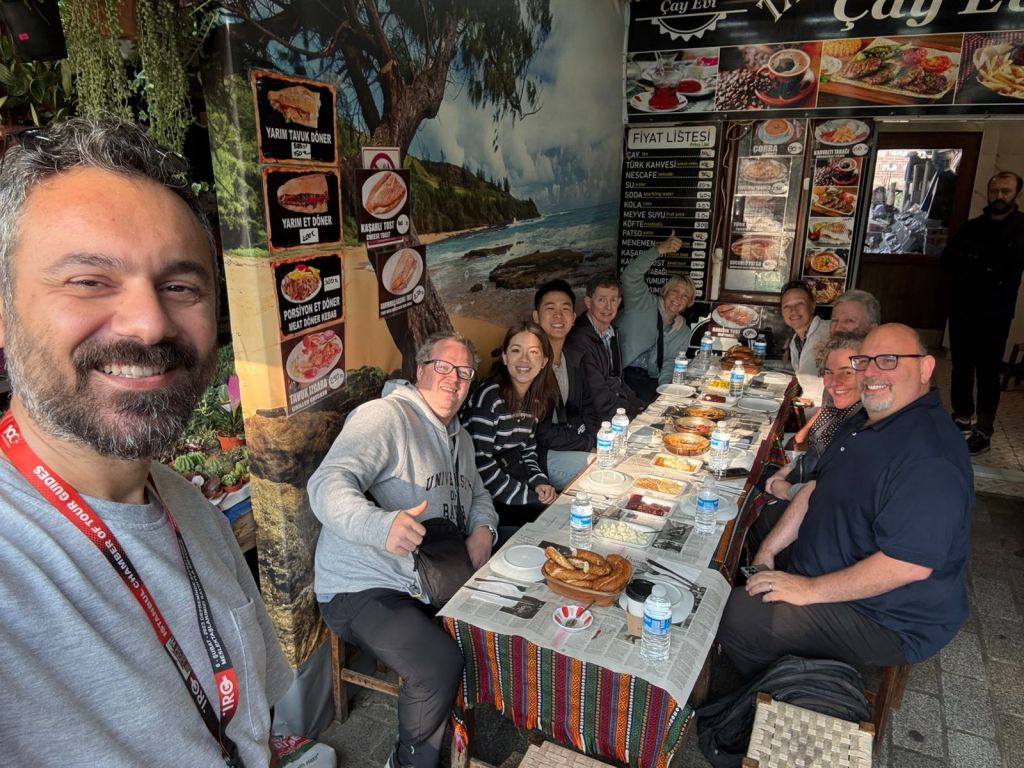
    We met at 9:30 near our hotel. There were 9 of us in the group: a young Australian couple, a French Canadian and a Floridian couple near our age, and a British traveler who lives in Mexico. Our guide was Ali, and it was a great mix of people. The tour was almost 6 hours, so we had plenty of time to chat with everyone.

    We started with breakfast. We went to a tea room near the Spice Market, and had a mix of food prepared there and items that Ali had brought with him. We learned that when you go to a Turkish home, your hands will be sprayed with lemon cologne before eating, and it is what the Turks used as hand sanitizer during covid. We also learned that coffee, while famous in Turkey, does not grow there. Coffee beans became very expensive during the Depression, which is when tea, which is cheaper and grown locally, became popular. Turks drink an average of eight glasses a day. Turkish coffee is served without milk, but can be ordered sweet, in which case it is prepared with sugar. You can’t stir Turkish coffee because it is unfiltered.

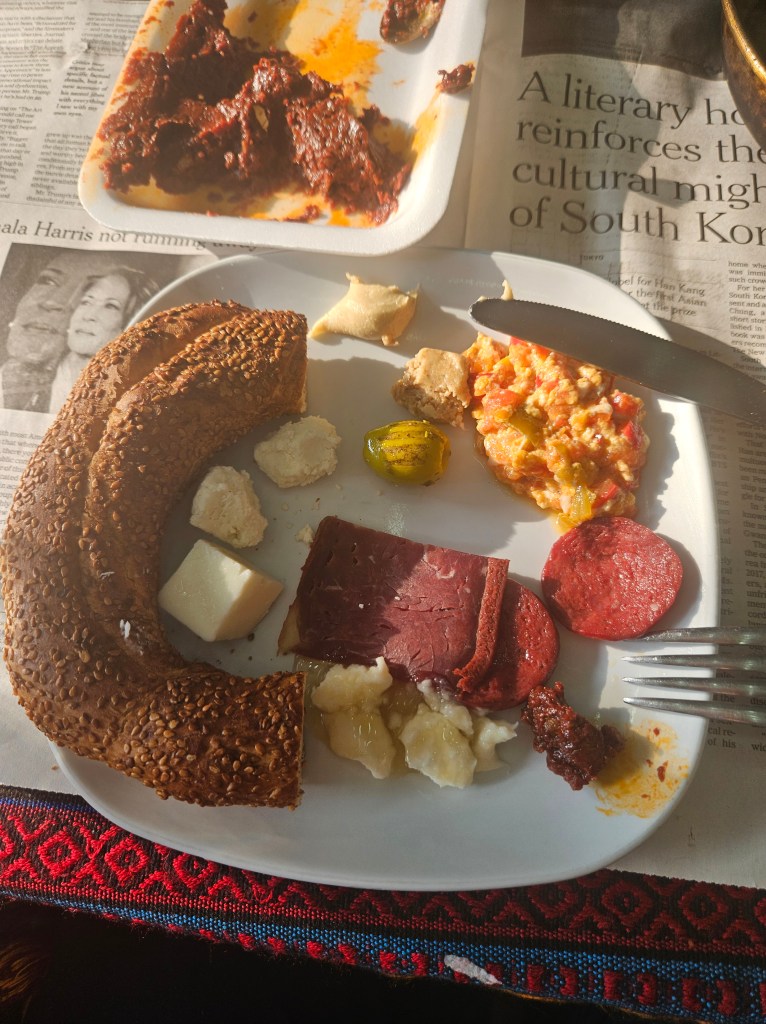
    The meal consisted of simit (Turkish bagel-like bread); menemen (similar to shakshuka); grilled olives; sausage; Turkish pepperoni; Turkish pastrami (the meats are all beef); clotted cream (kaymak) with honey; crunchy and smooth hazelnut butters (like Nutella without the chocolate; two kinds of cheeses (one was called tulum); a paste made from tomatoes that’s like a thick salsa; and Turkish coffee and tea. Everything was delicious. Except the olives.

    We then headed to the Spice Market, also known as the Egyptian Bazaar as it was built in the 17th century with revenues from the Egyptian arm of the Ottoman Empire. The Spice Market is much smaller than the Grand Bazaar, with 85 shops compared to over 4,000. Ali told us about the history of the market and gave us tips for shopping and bargaining in Istanbul. He took us to the Malatya Pazari stall to which returned (sort of) repeatedly for purchases later. (We learned that we had mistakenly been shopping at the stall next door, which was owned by cousins, but had the same merchandise. We didn’t really get it, but everything was delicious.) We smelled various spices, like sumac, many kinds of pepper, and oregano buds.

    We then took the ferry to the Kadıköy neighborhood on the Asian side of Istanbul. Kadıköy is a popular place for students and younger folk to live, and it has a lively food scene.

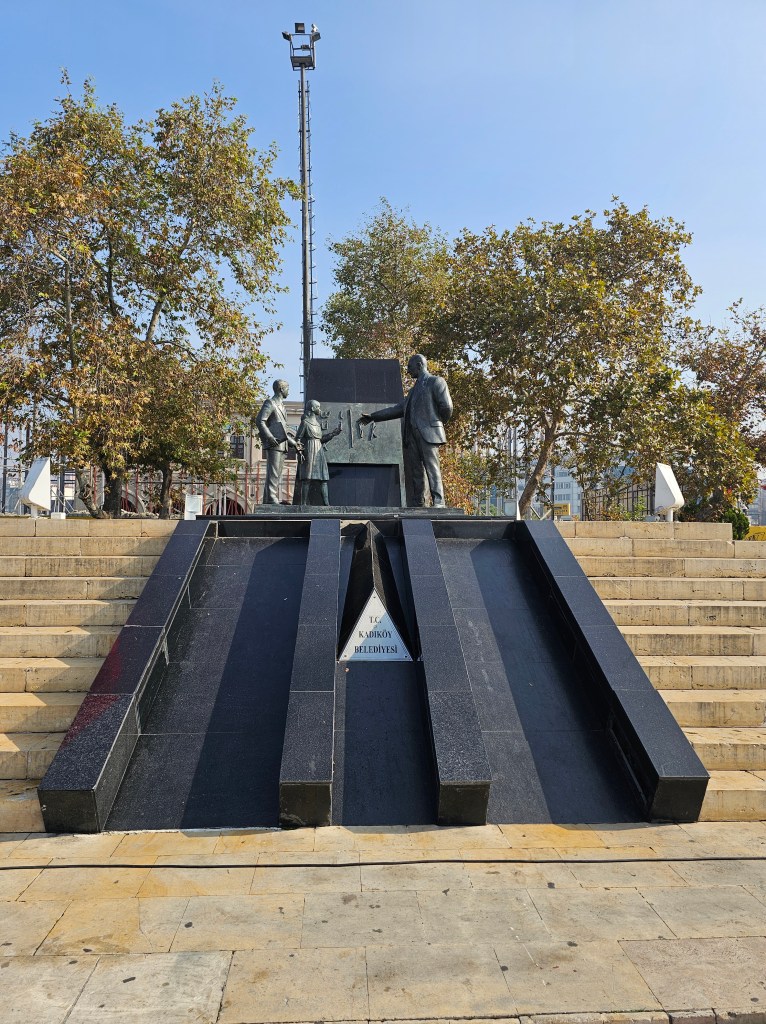
    We started at a statue of Ataturk celebrating the rise of literacy under his time as leader. Ataturk instituted the use of the Latinized alphabet which was better suited to Turkish than the previously-used Arabic alphabet.

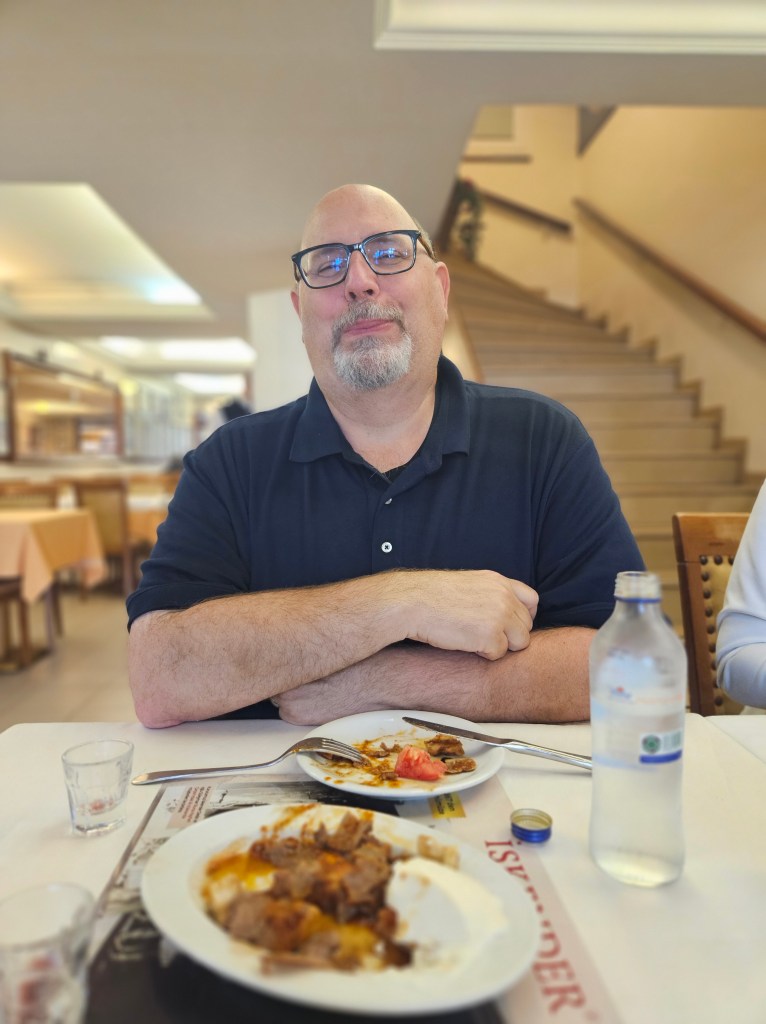
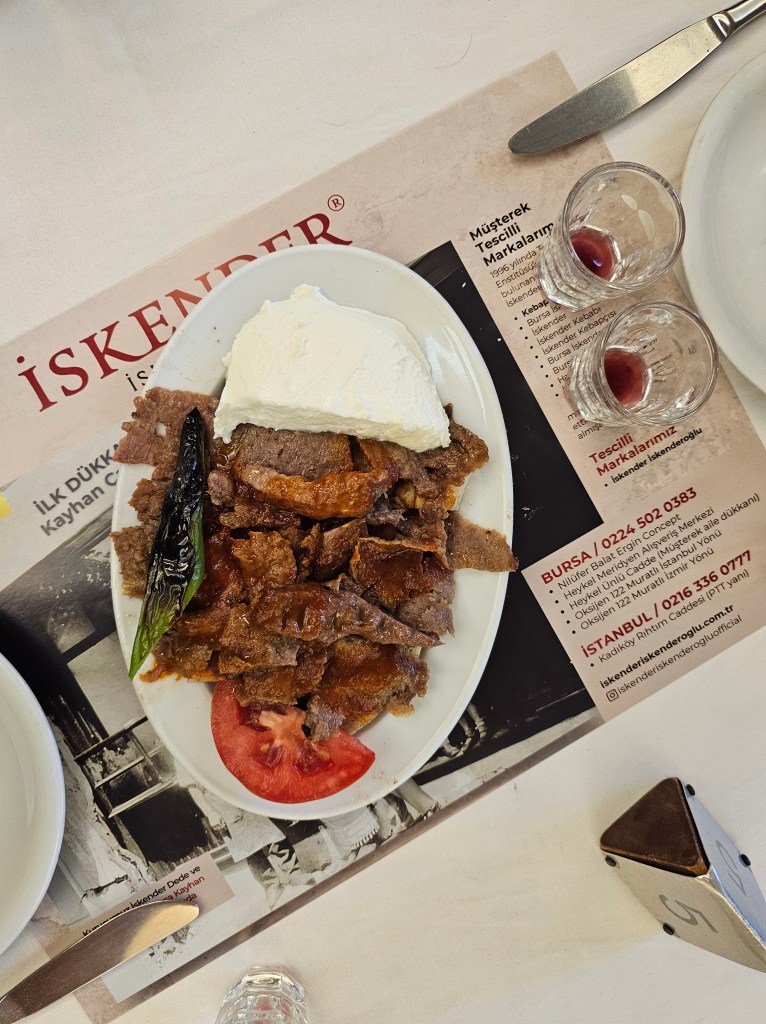
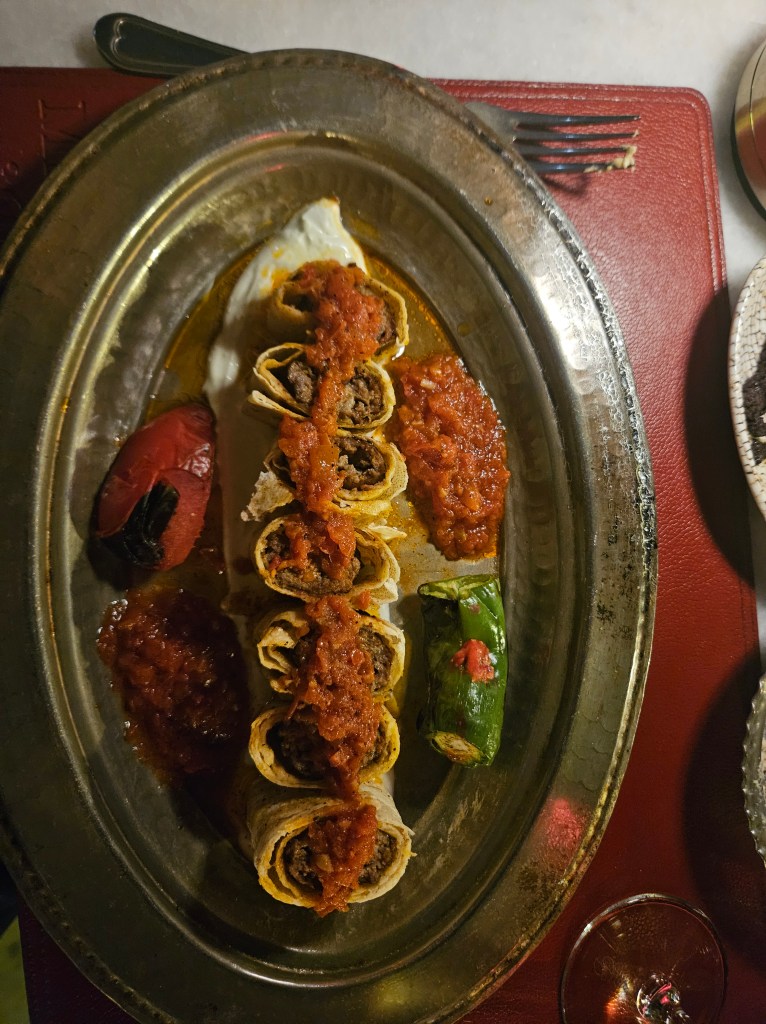
    We had first lunch at Iskender, still run by the family who had invented the Iskender Kebap in the 19th century. Thin slices of of meat topped by hot butter and served with pita, grilled tomato, and yogurt. Delicious!

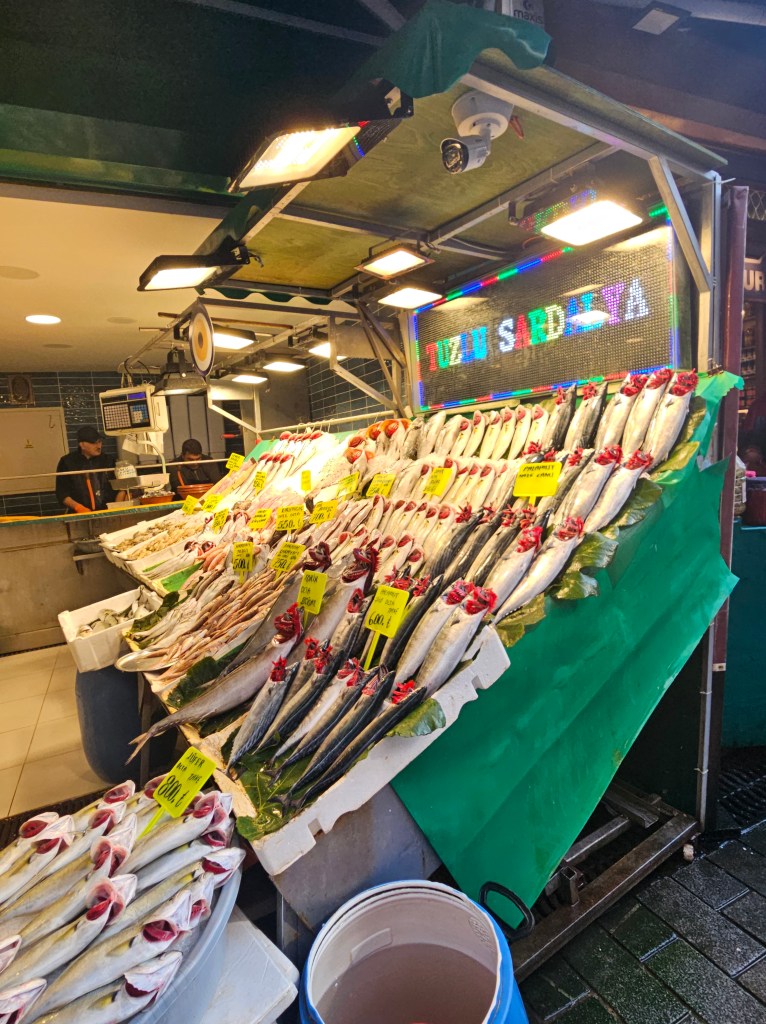
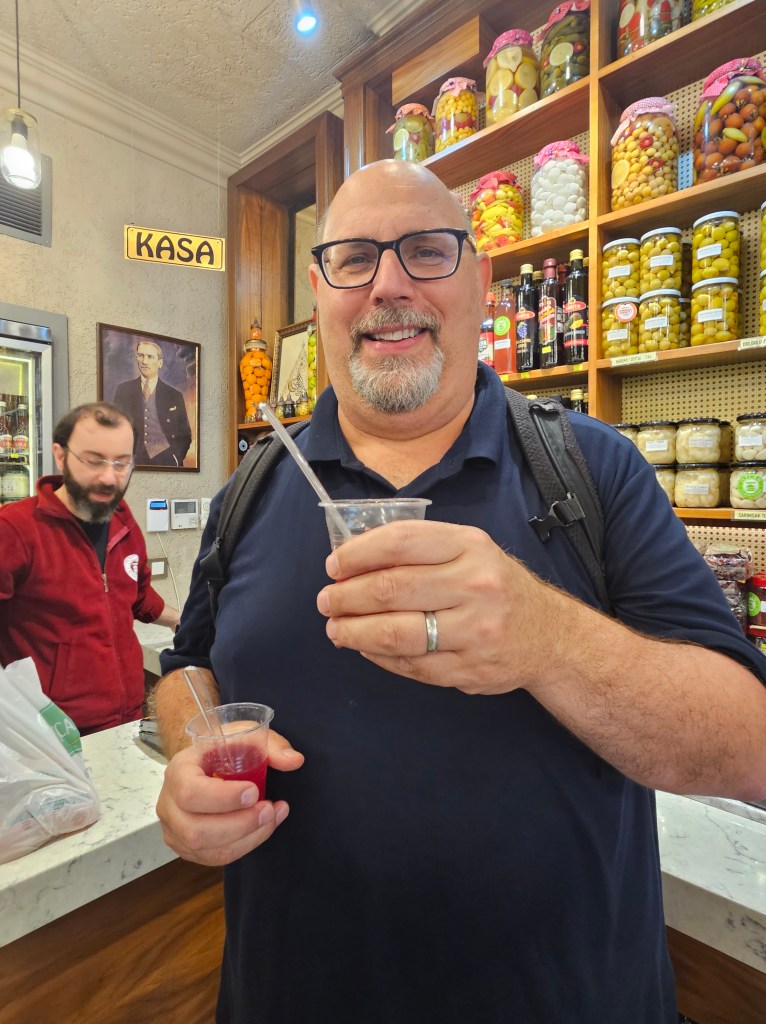
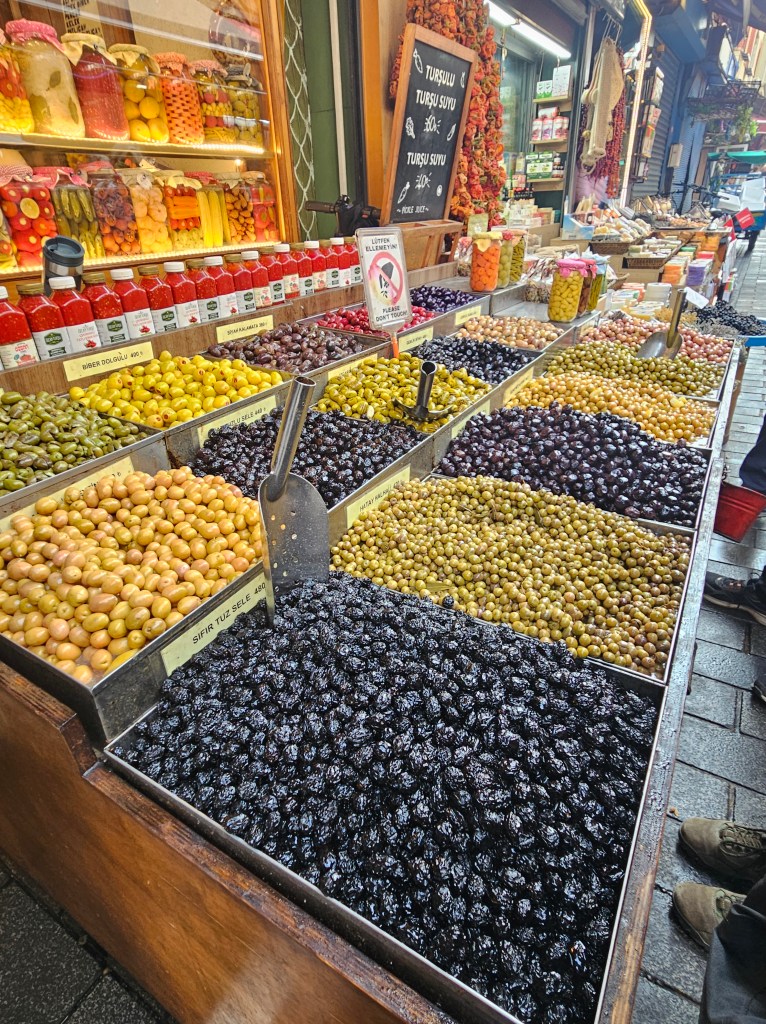
    Next, we walked through shop-filled streets, including the seafood section. We stopped at the pickle shop and had pickled plums, okra, and cucumber. Best okra we had ever eaten!

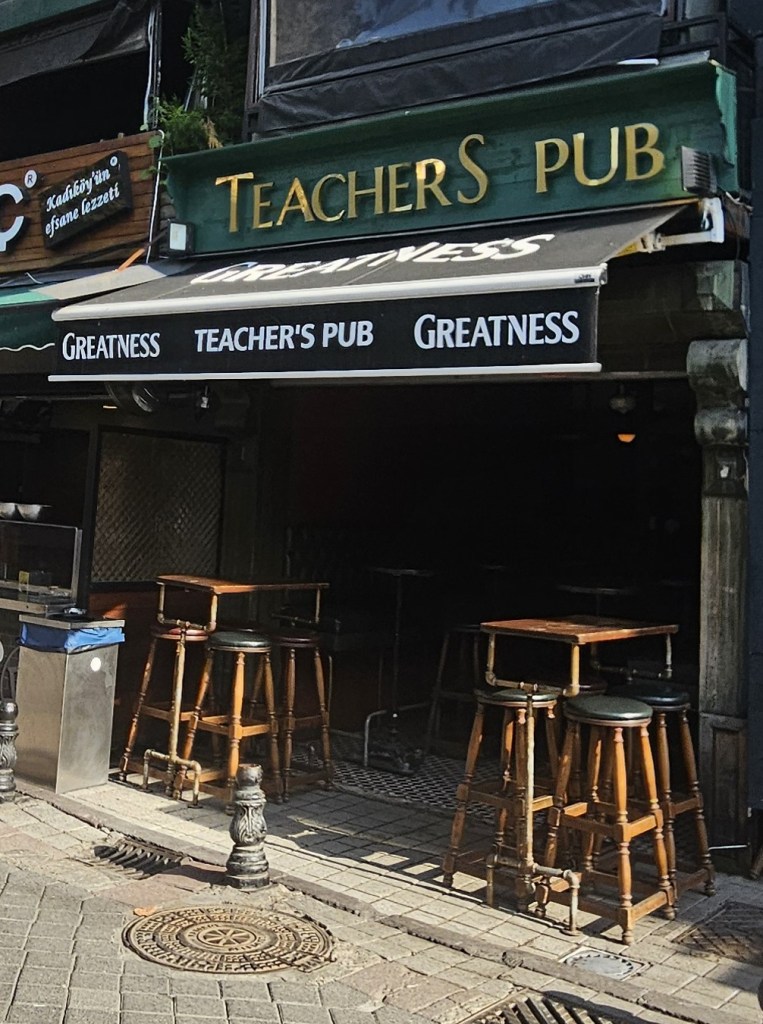
    Ali told us about alcohol in Turkey. While Islam forbids alcohol, Ataturk apparently said that alcohol was forgiveable. On the other hand, pork is absolutely not forgivable. So while we didn’t see pork anywhere, plenty of restaurants had full wine, beer and cocktail lists. The law changed a while back to ban advertising alcohol, so bars now have a code system. Greatness = Guiness. Probably = Carlsberg. Responsibly = Heineken.

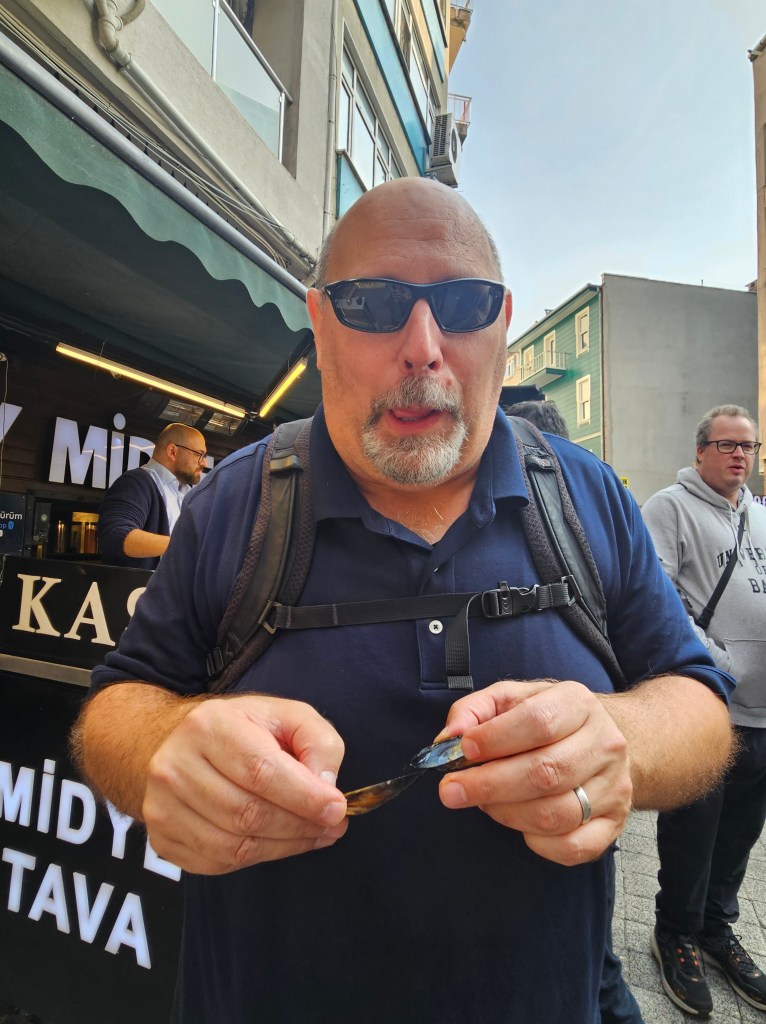
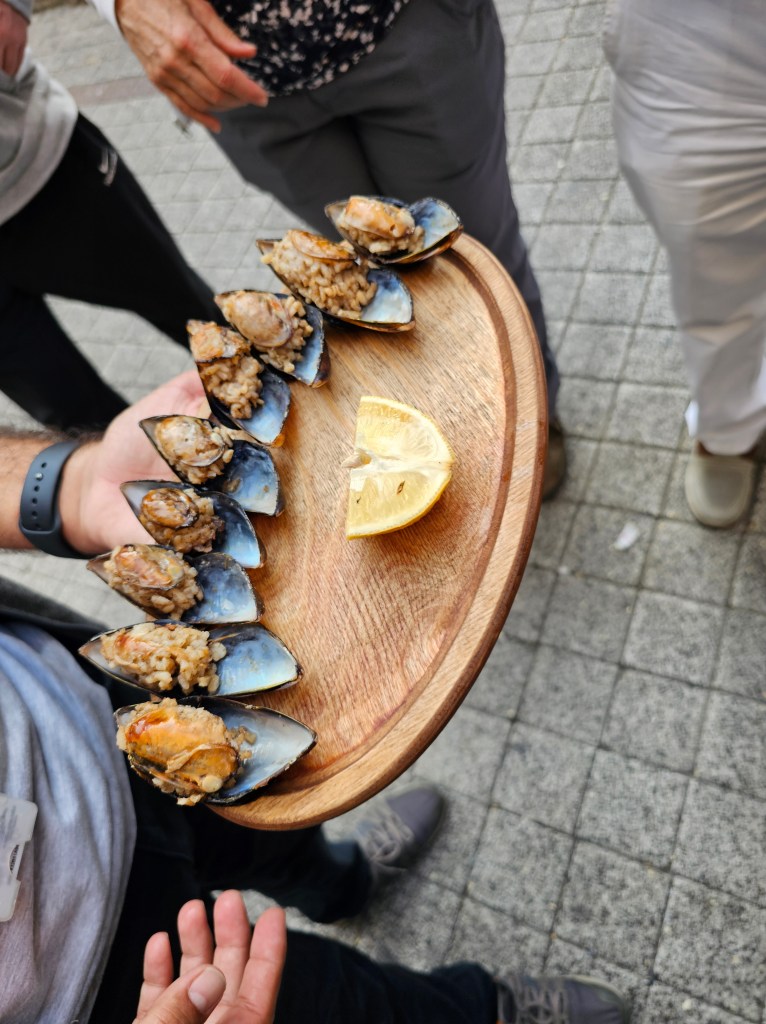
    We stopped at a mussels stand, for three kinds of mussels stuffed with rice and tomato. Emily tried one. Really not a fan. Russell enjoyed them all!

    We then had second lunch, with many small items like kibbeh; lahmacun (a lot like the sfiha we get at the Lebanese restaurants in Utica); and eggplant mezze. To drink, we had ayran, a salted yogurt drink, which was mixed on site. We then headed to our last stop for dessert (even though we had a dessert pastry at second lunch). We headed to Mado, for famous Turkish ice cream.

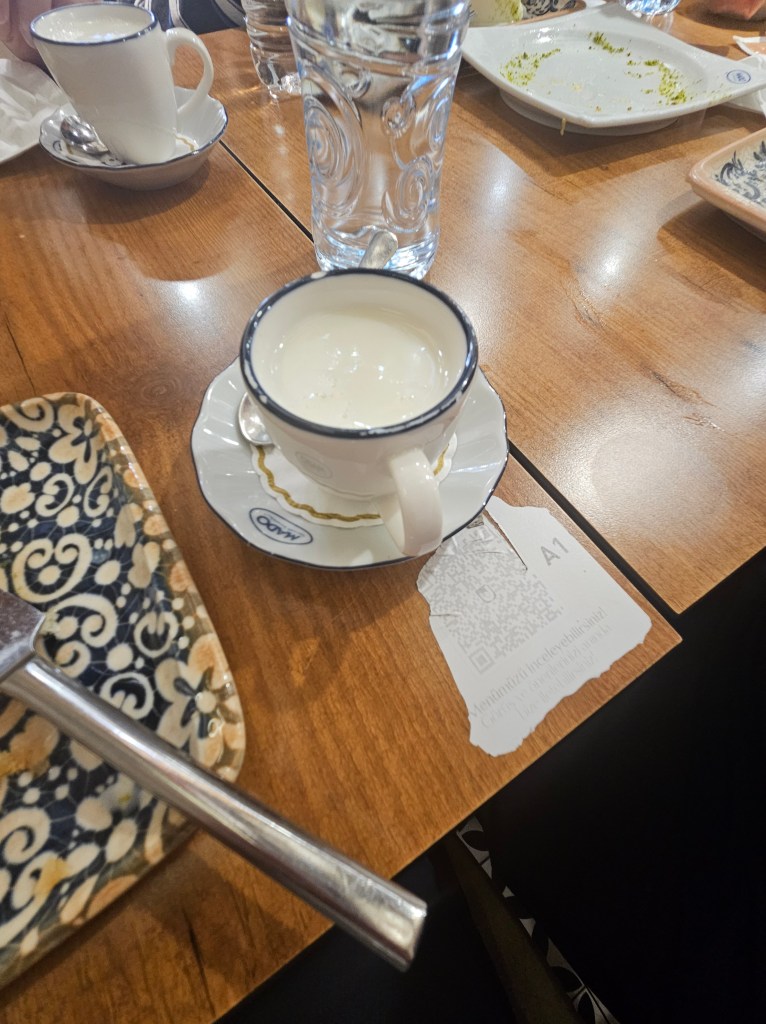
    Turkish ice cream is made with salep, a power made from orchid bulbs, which gives the ice cream a stiff texture; it is eaten with a knife and fork, and is delicious. Istanbul’s street ice cream sellers are famous for doing a show when they sell ice cream, tossing and pulling it dramatically. We were served in a manner that Ali found more dignified, on plates, along with baklava. (Almost all of our meals in Istanbul ended with free baklava and tea, brought with or before the check.) We also drank warm salep, which is the orchid powder heated with milk and sugar and sprinkled with cinnamon. It is delicious, like a light egg nog. We later bought Mado’s salep mix to bring home.

    We went around the table so everyone could name their favorite item of the day. Emily said the clotted cream and kibbeh. Russell said it was our guide Ali, which was cute. The group then parted ways. This tour was a highlight of all of our travels and helped us understand Istanbul and its food for the rest of our stay.

    The ferry back to our neighborhood stopped in Karaköy, and we decided to get off there to wander and then would walk back across the bridge.

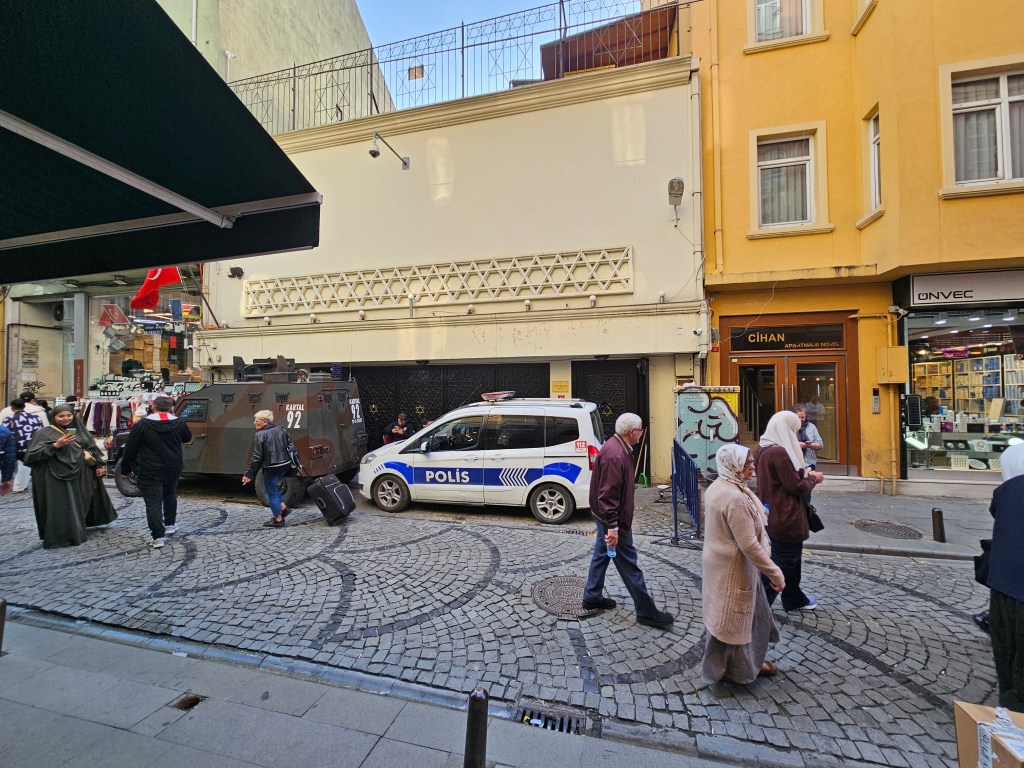
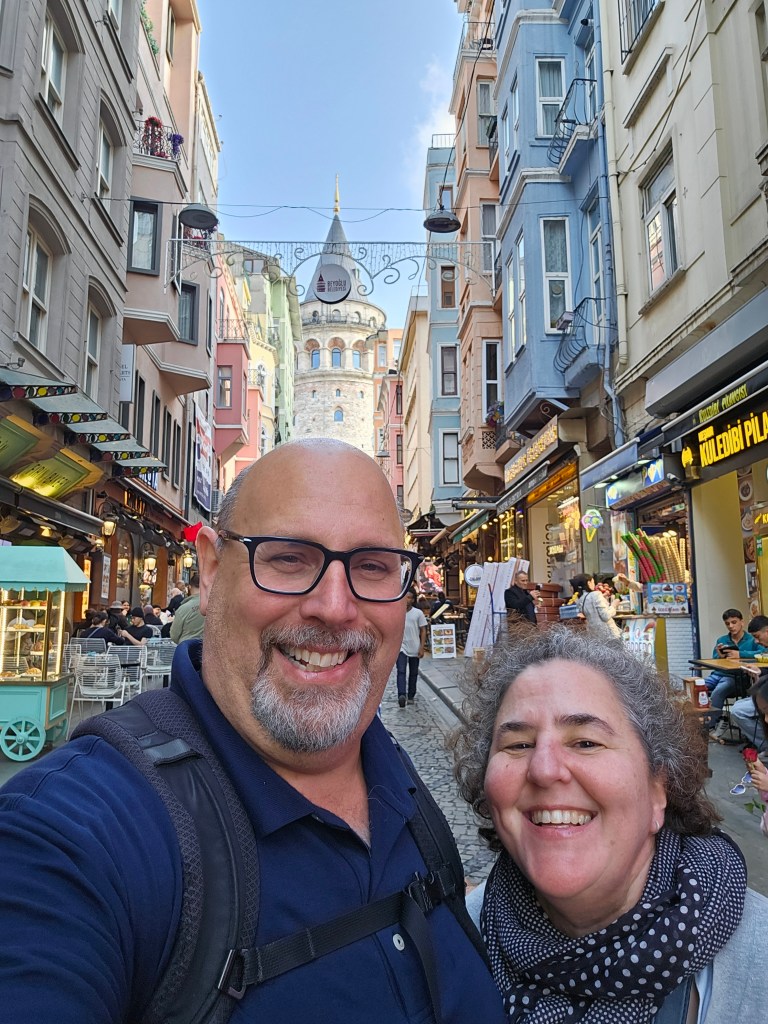
    We checked out (but did not enter) the synagogue, which had pretty intense security. We then made our way to the Galata Tower.

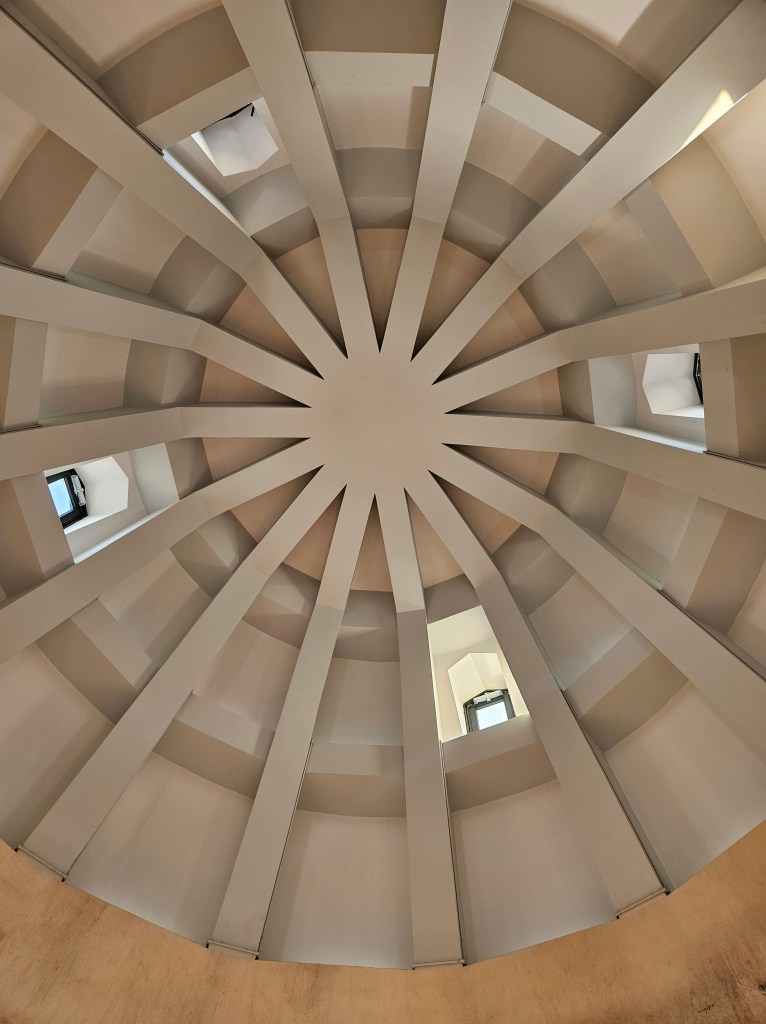
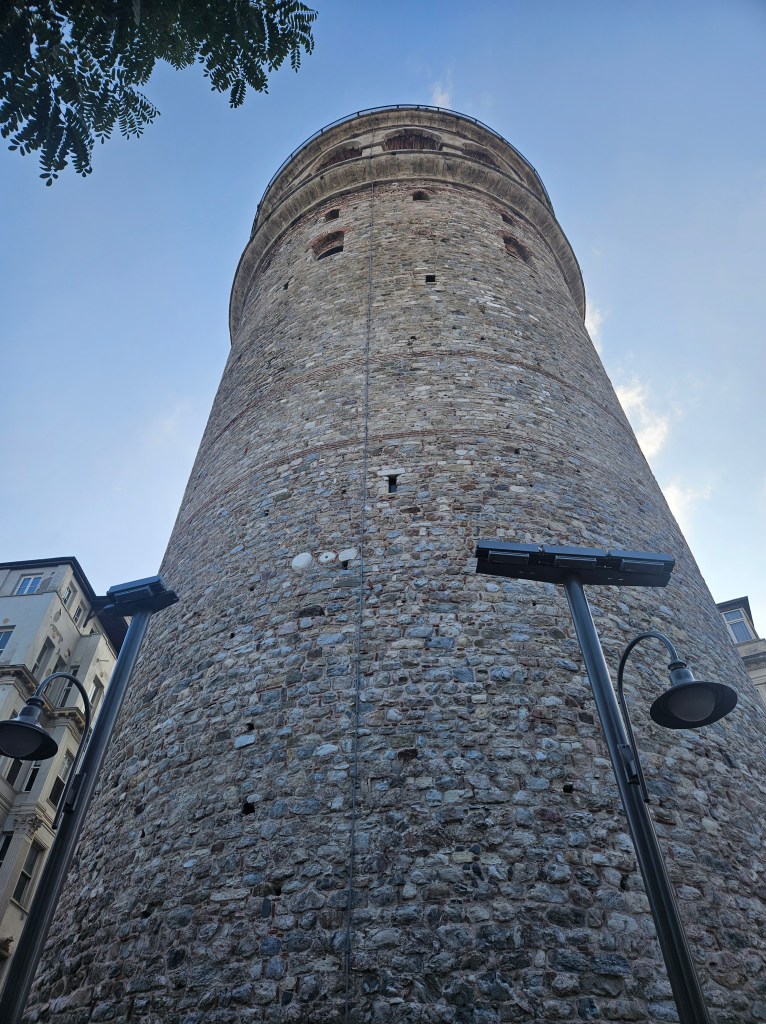
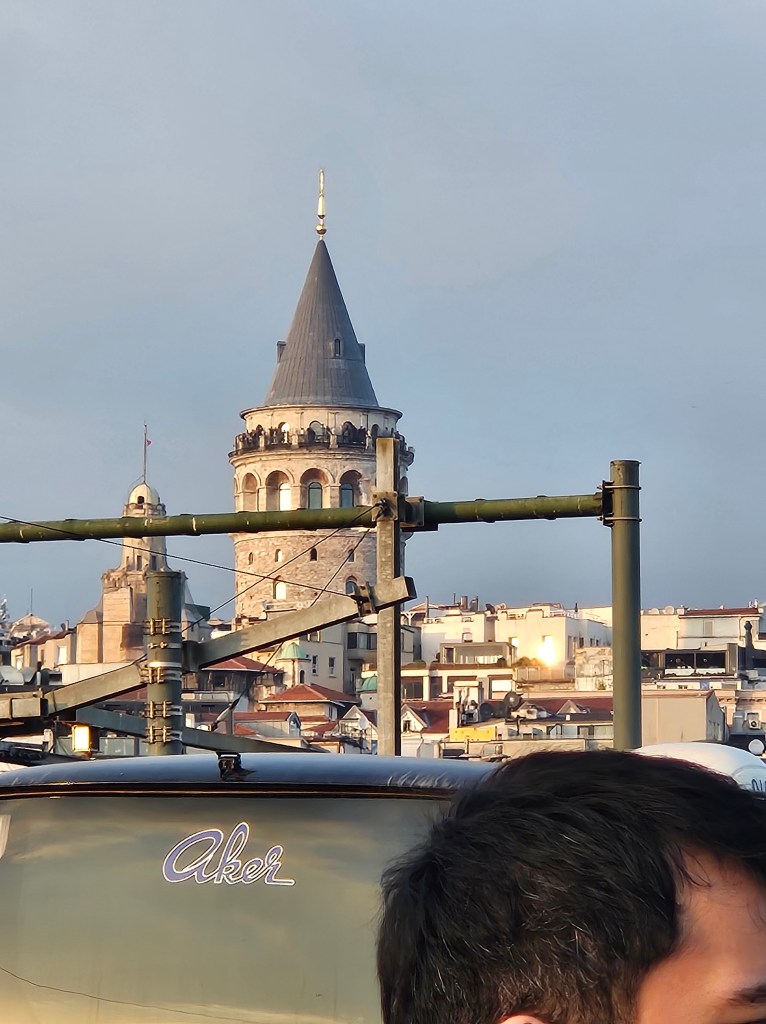
    The tower was built when the neighborhood was a Genovese colony in 1384, and later served a variety of purposes including watchtower and prison. In 2020, the tower was restored and opened as a museum. Visitors take an elevator to the 6th floor and then walk up the two final flights.

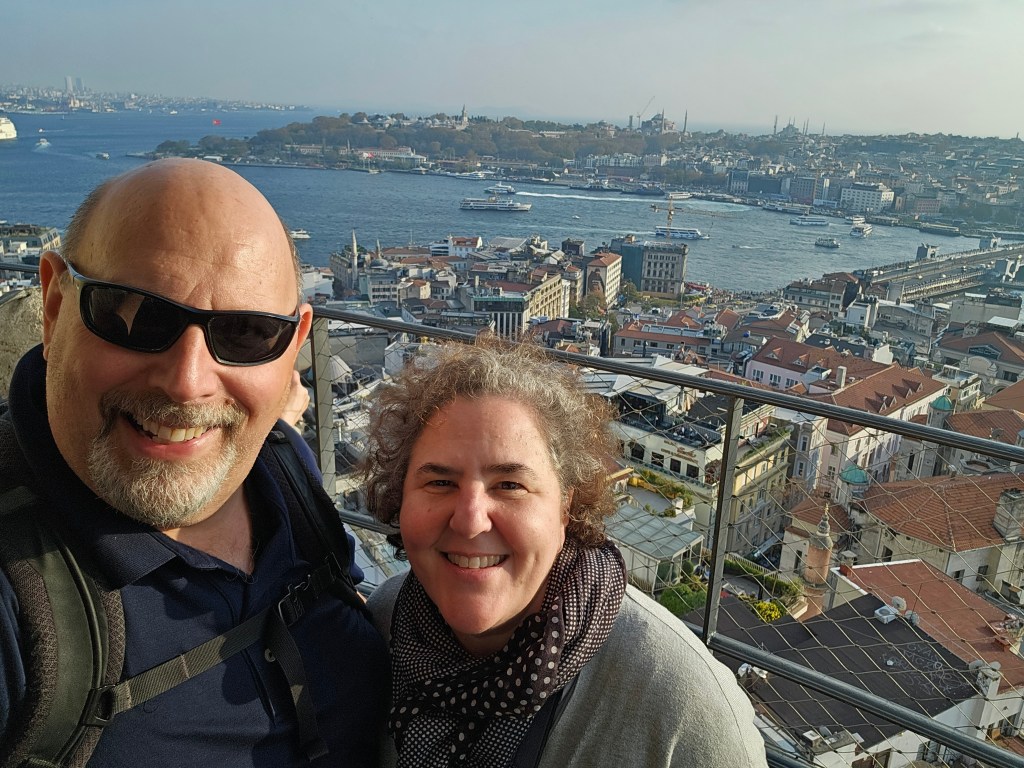
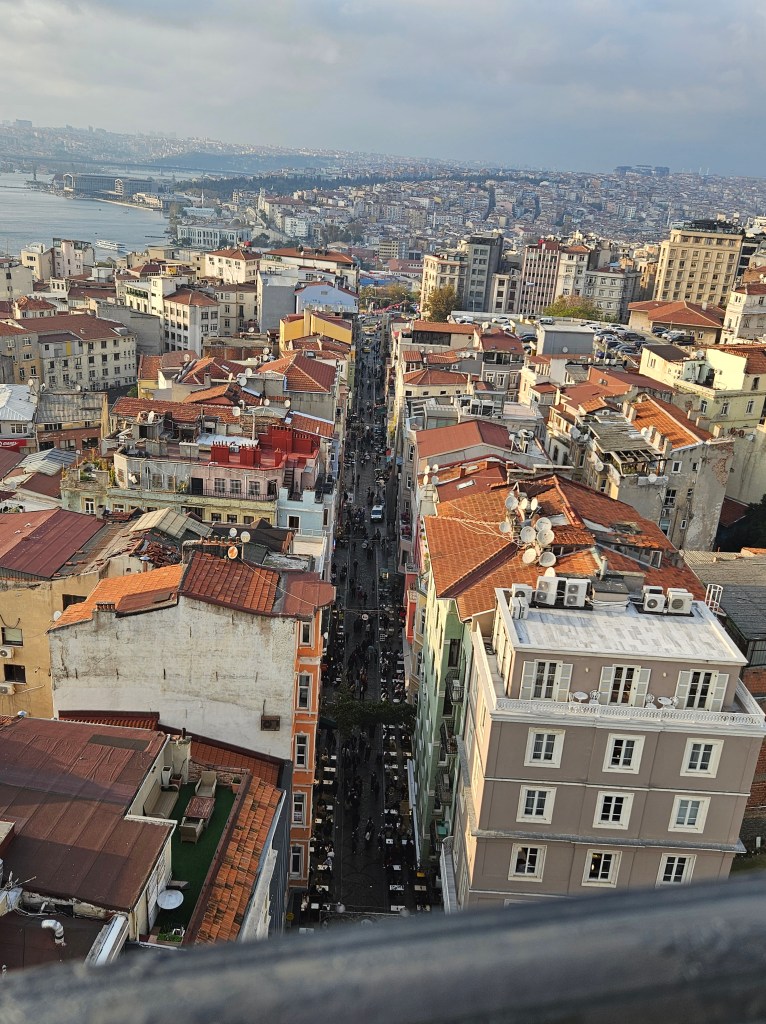
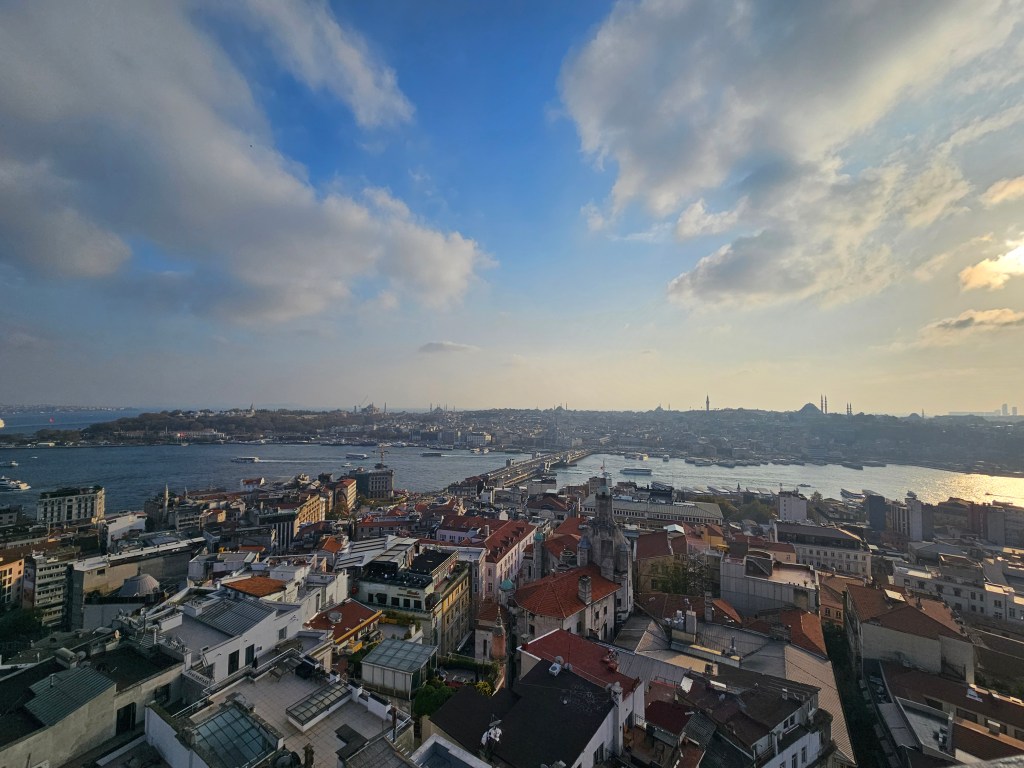
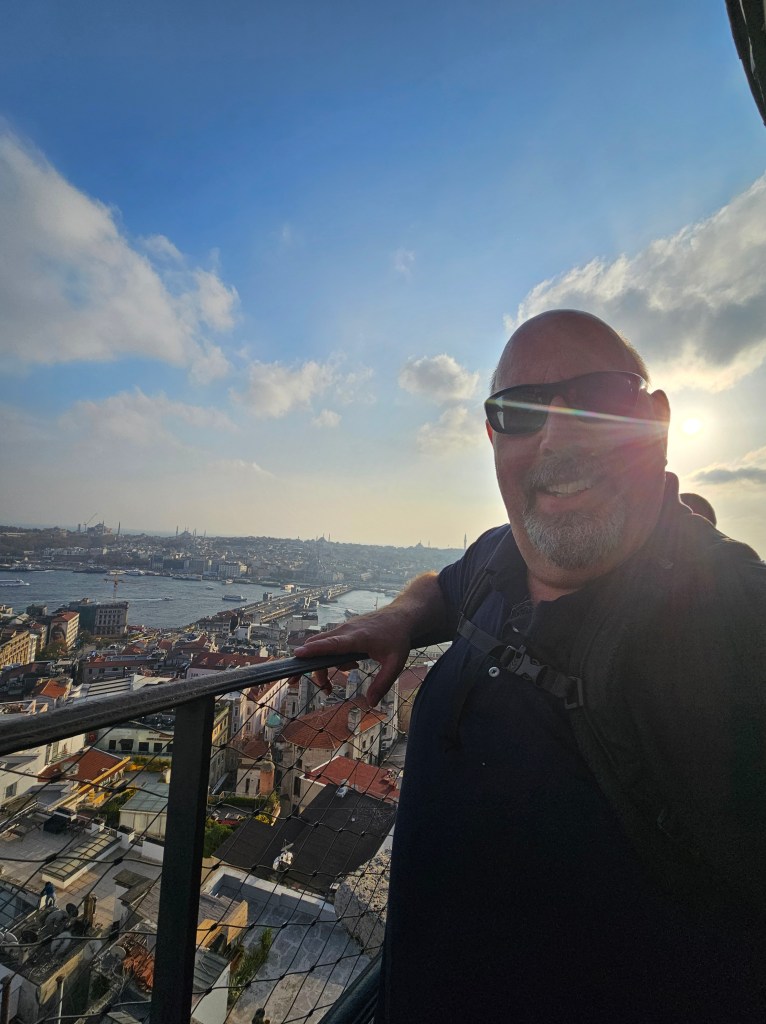
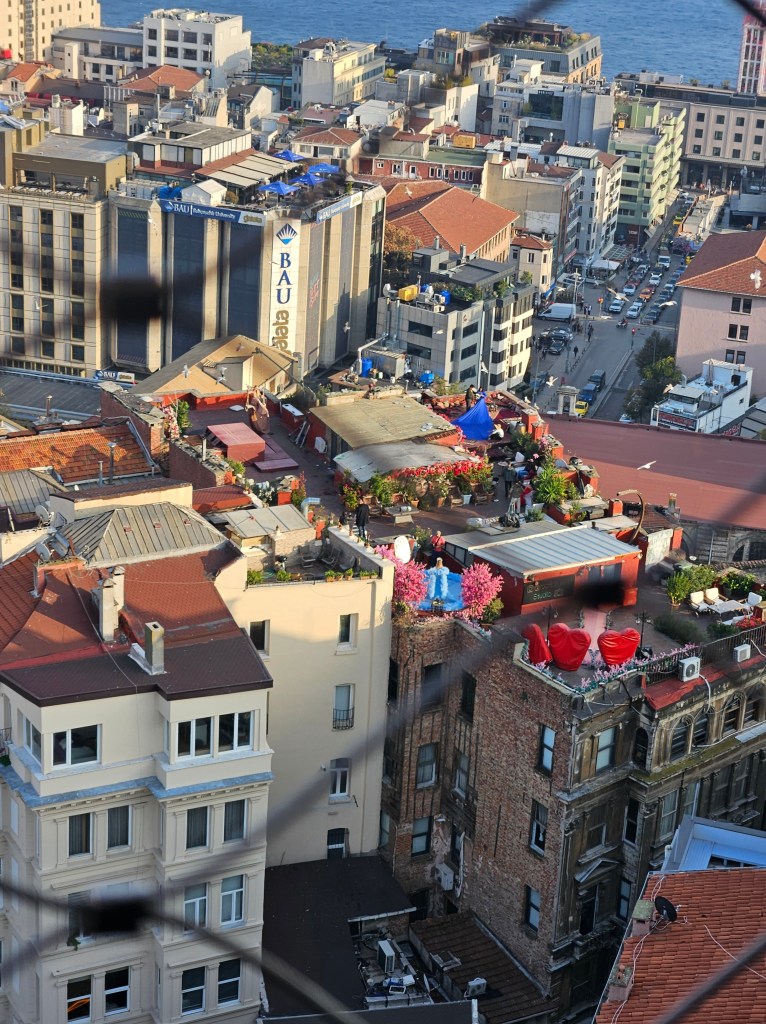
    The views of the city were amazing, especially as the skies were clear.

    A few funny things we spotted. The rooftop with the big red hearts was hosting multiple photoshoots. The cat on the post here was making Emily very nervous. (We saw it later and it was fine.) Looking at the building with the black roof, we saw quite an adventure as the people on the roof were locked out of the entrance back inside; one of them had to climb over the roof to try to open a door. When they made it in, we all cheered, which they seemed to appreciate.

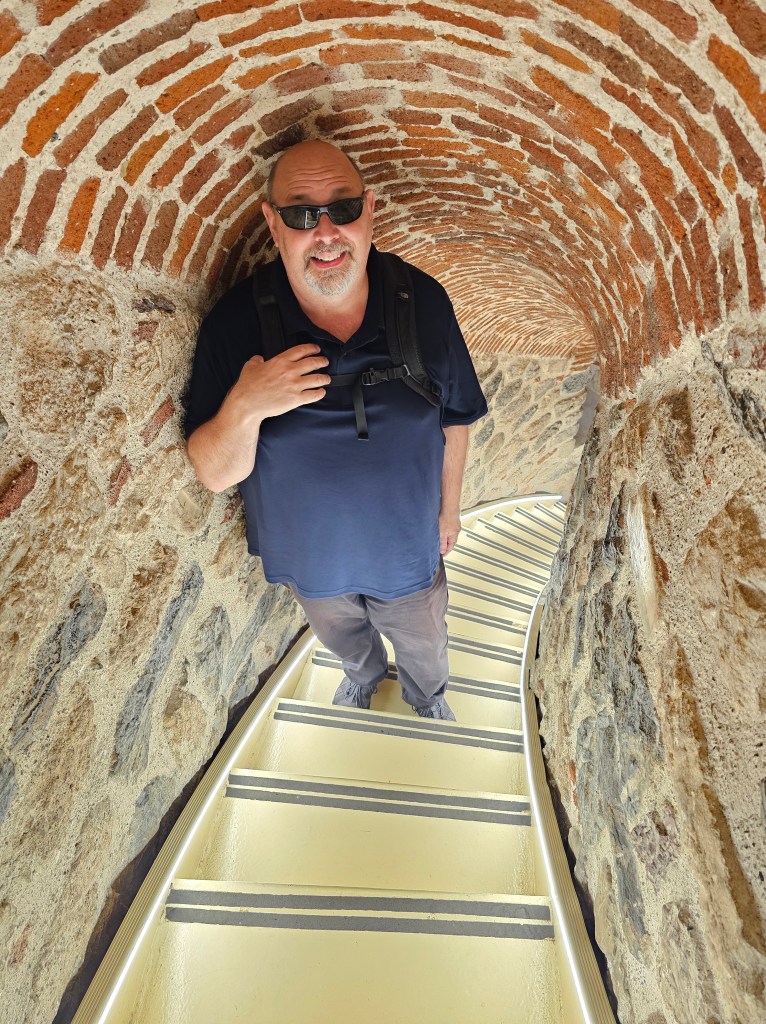
    Visitors take the stairs all the way down. There are exhibits on each floor. This chain is a segment of the chain that once went across the waters of the Golden Horn to keep out invaders, a secondary security measure to the walls of the city.

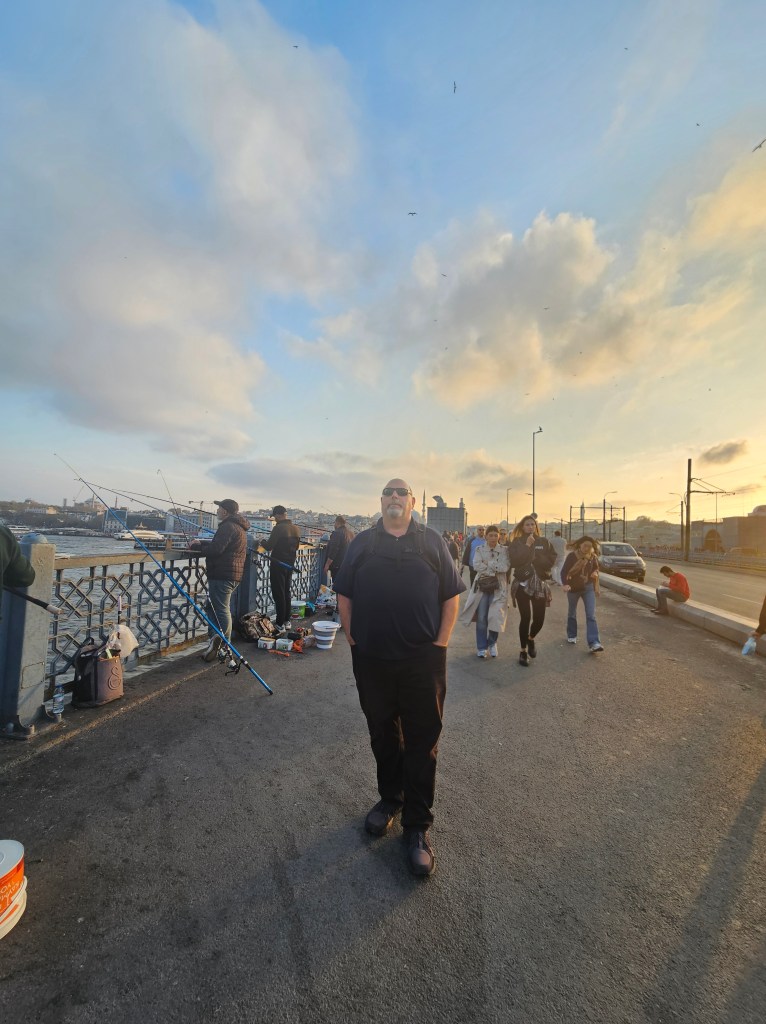
    We then walked across the Galata Bridge back to our neighborhood of Eminönü. Along the way, we stopped at the Spice Market for dried fruit and nuts. Russell was starting to feel under the weather, but nuts and fruit are his happy place. For dinner, as we were finally hungry again, more delicious Turkish food!

  • After saying goodbye to Marina in Craiova, we headed to Istanbul. We had a long drive to the Bucharest airport, and then a long wait at the airport, and when we made it to Istanbul, we had a long bus ride into the center to our hotel. The Istanbul marathon had been earlier that day, the same day as the New York City Marathon, and the streets had just reopened.

    We had decided to go for a comfortable hotel, as this was our last stop. When we arrived at the Orientbank Hotel, there was no check-in desk. Instead, they sit you down on couches, offer drinks, and then go through the check in process.

    The hotel building had been Deutschebank for many years, and was then vacant. As we were shown during check-in, it served as the building from which Daniel Cragi’s James Bond emerges at the beginning of this scene in Skyfall. The staff at the hotel was wonderful, and gave many helpful recommendations.

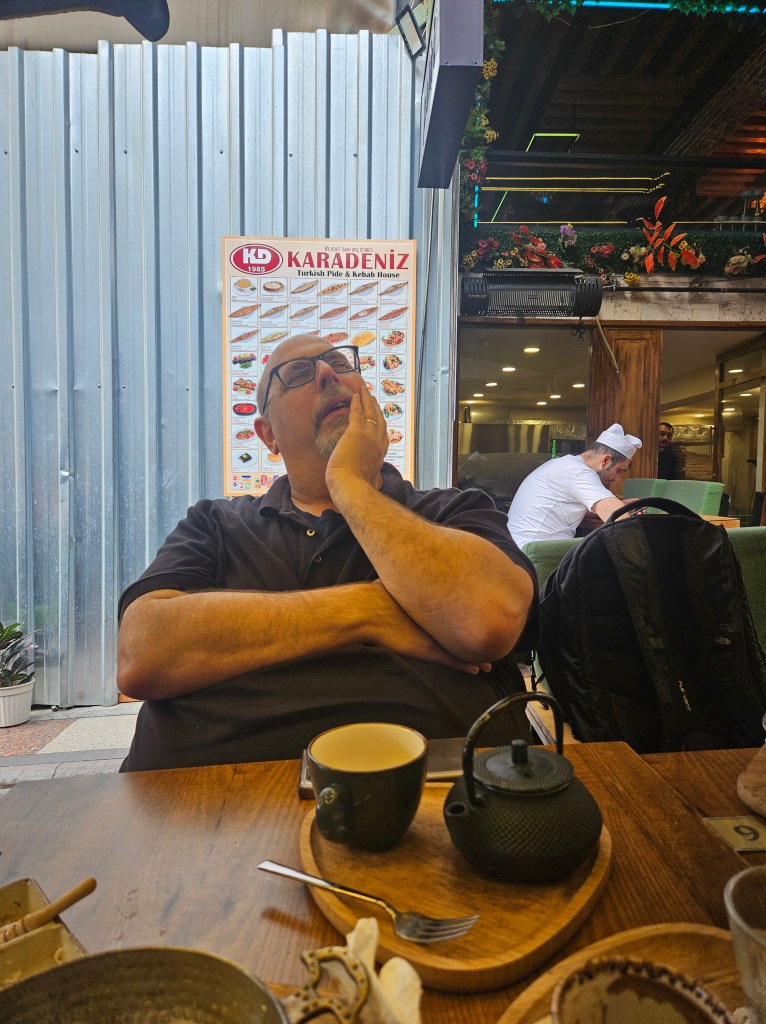
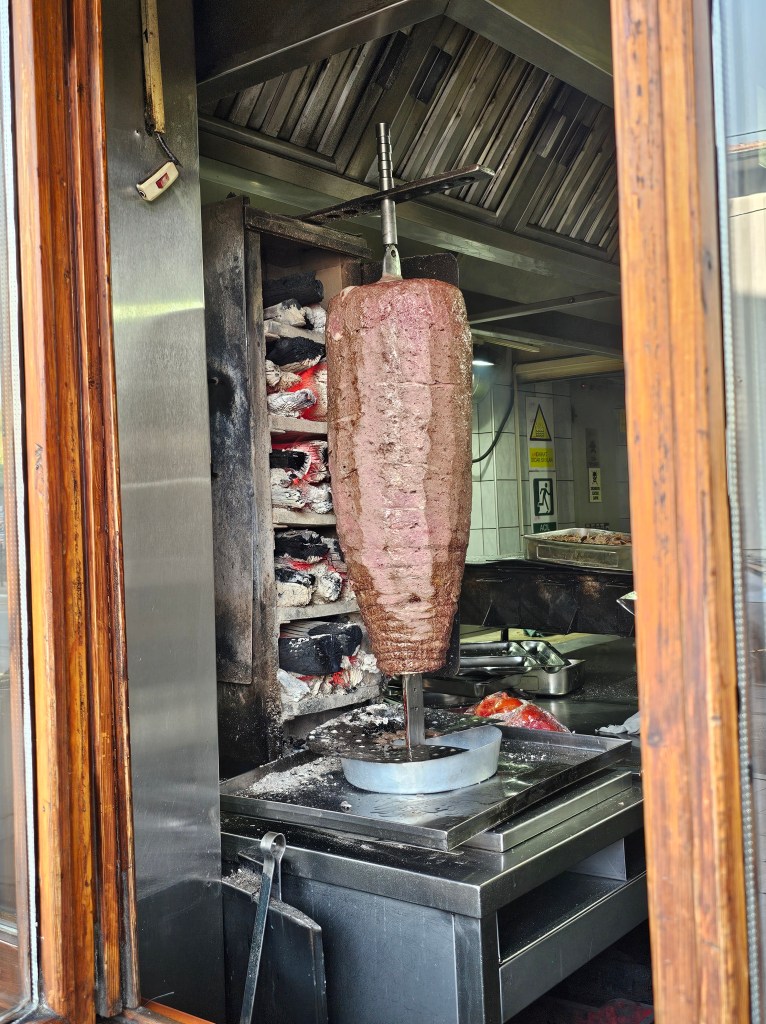
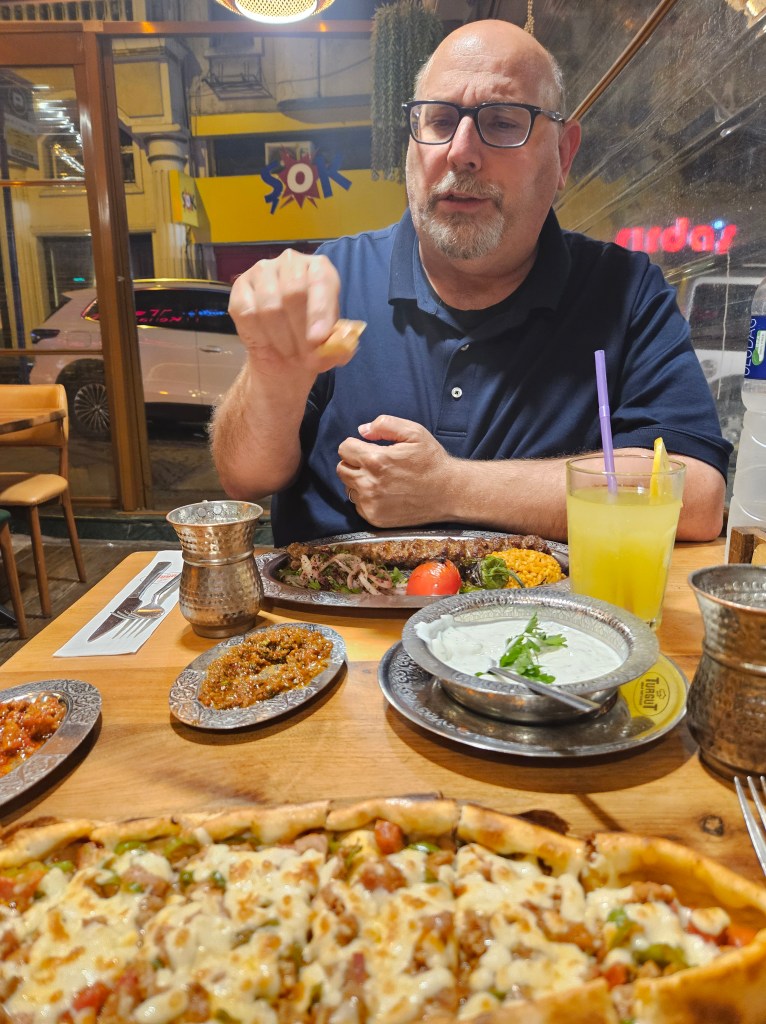
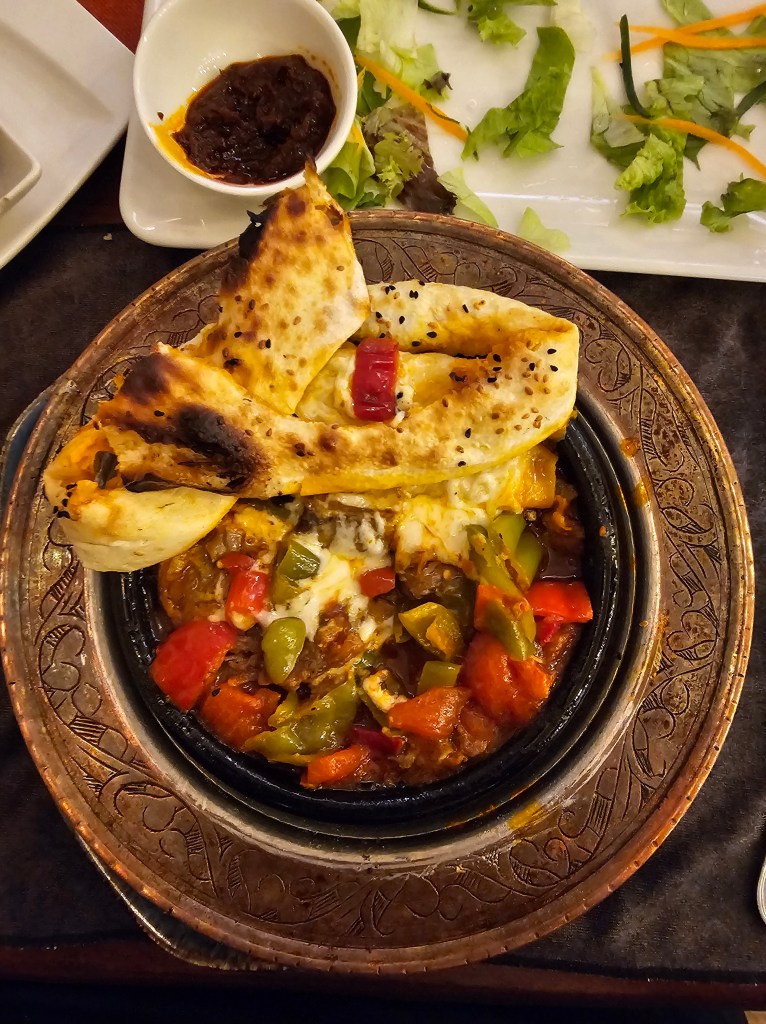
    For dinner, we headed to a rooftop restaurant for our first of many kebabs.

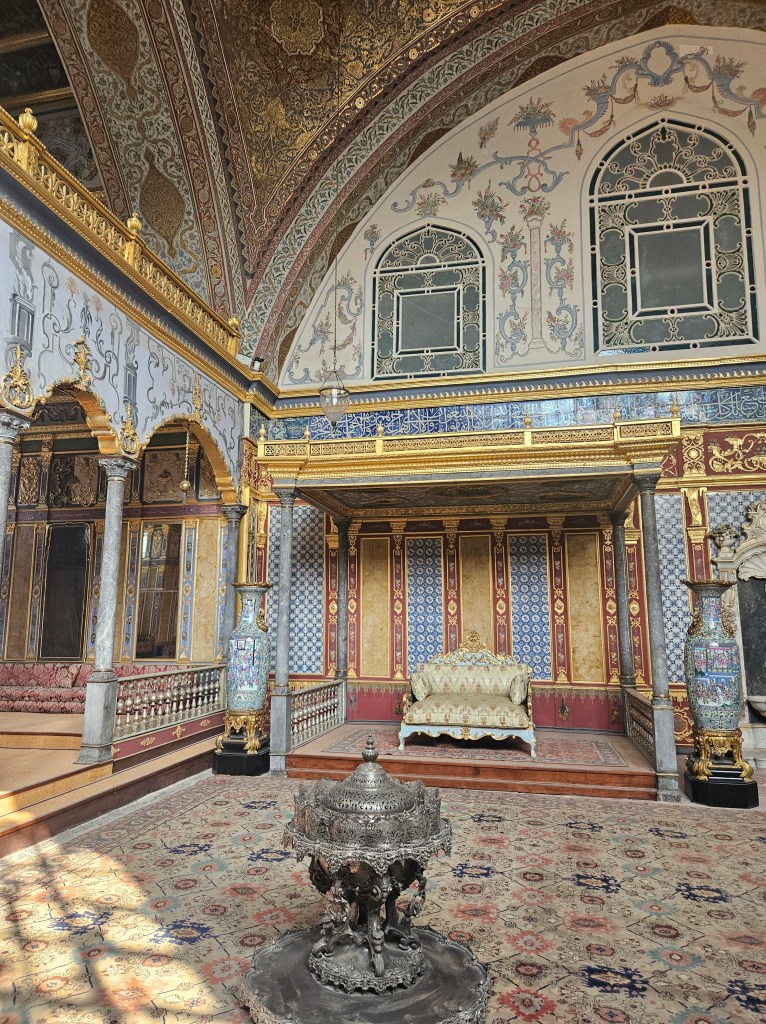
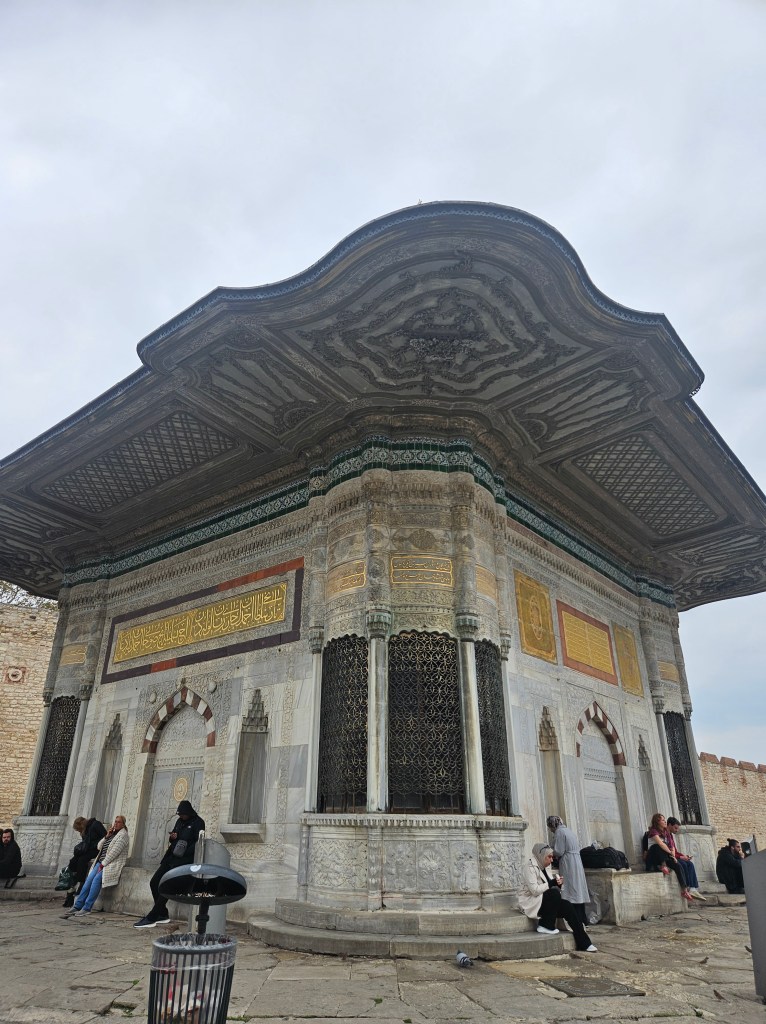
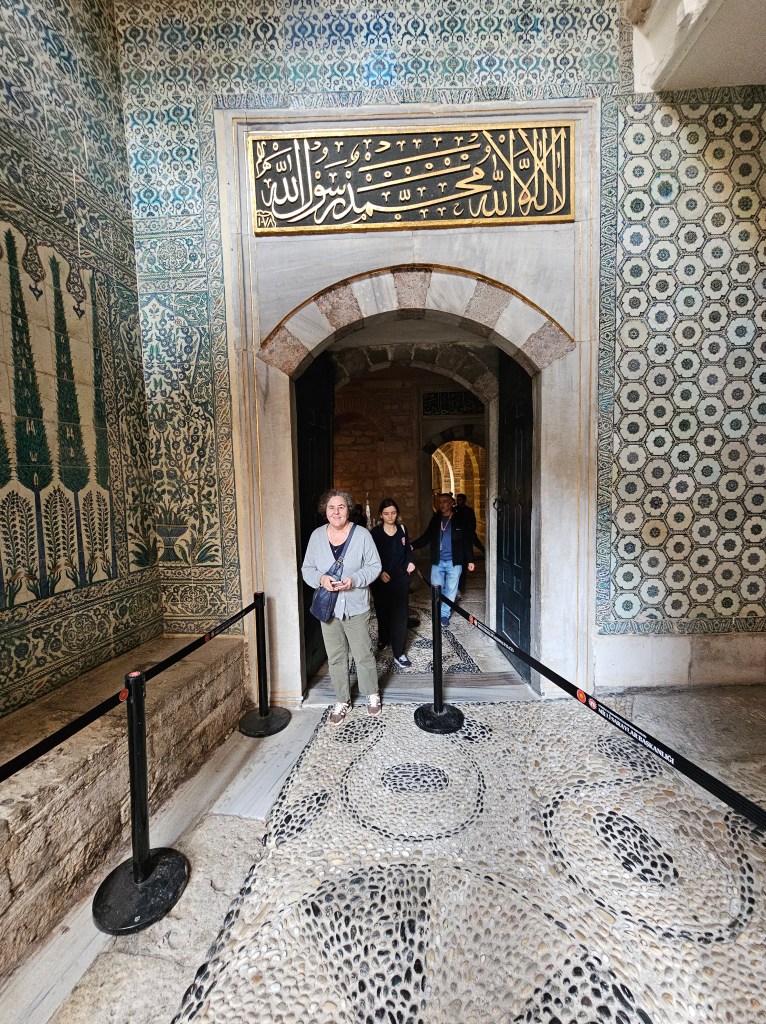
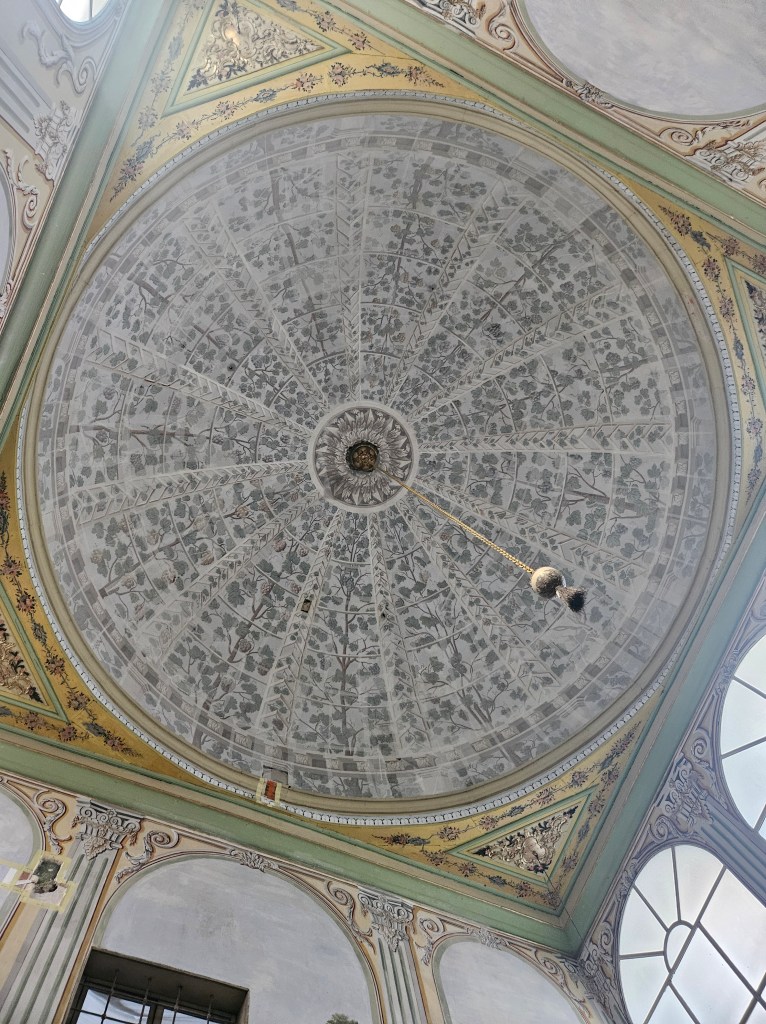
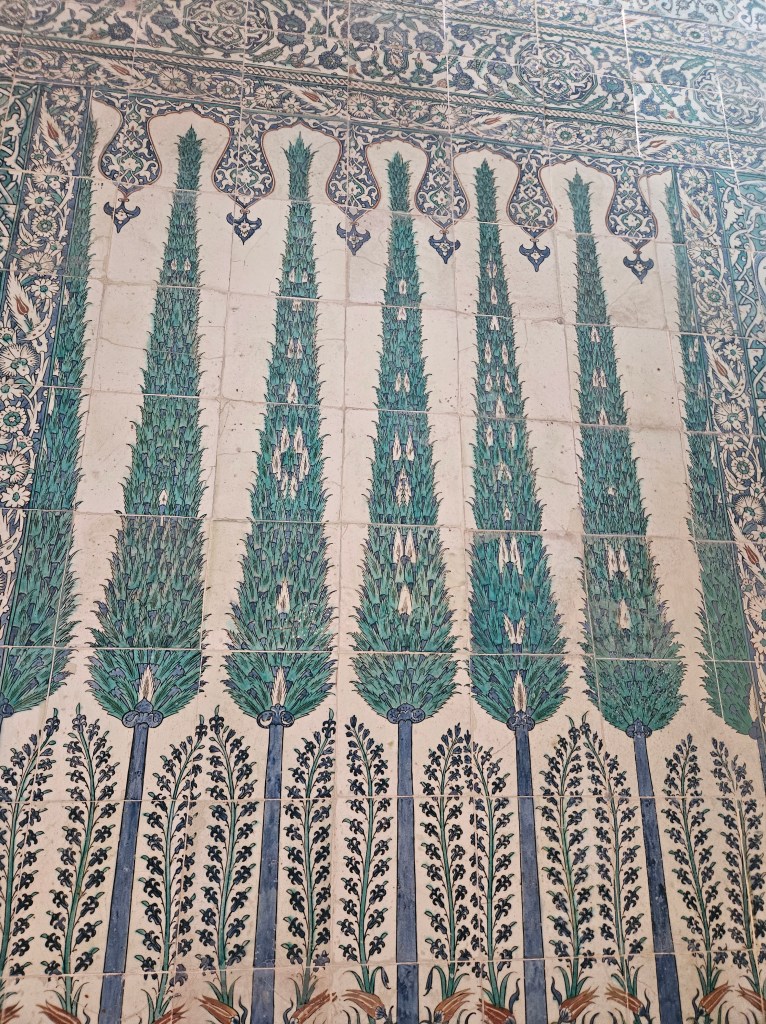
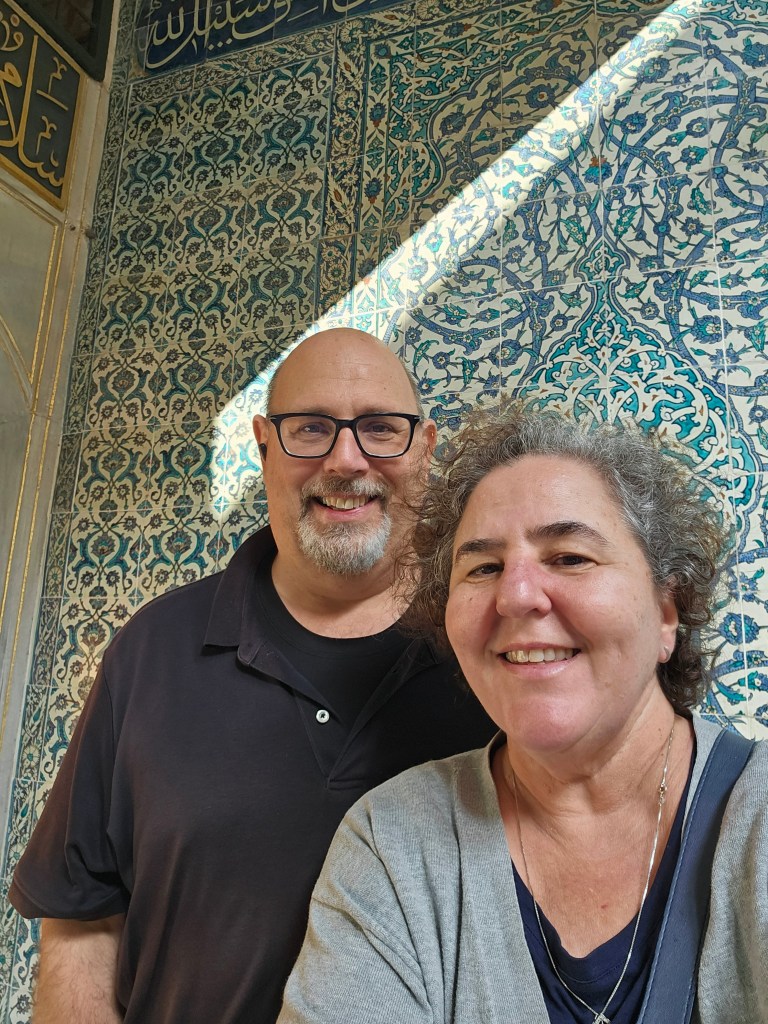
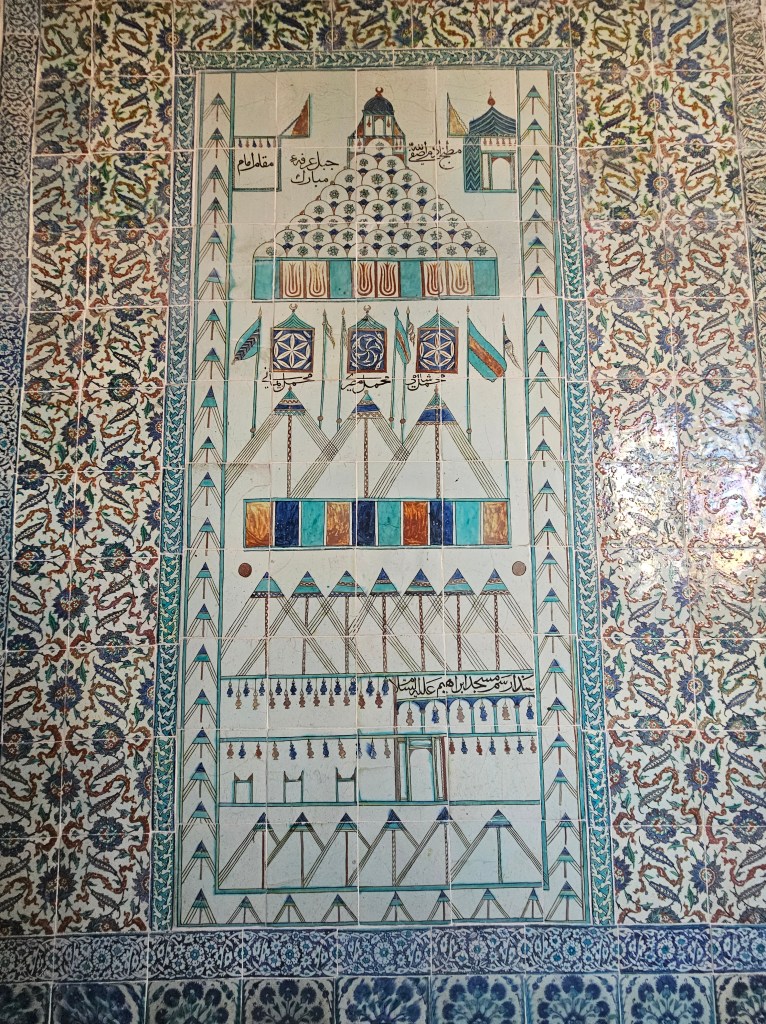
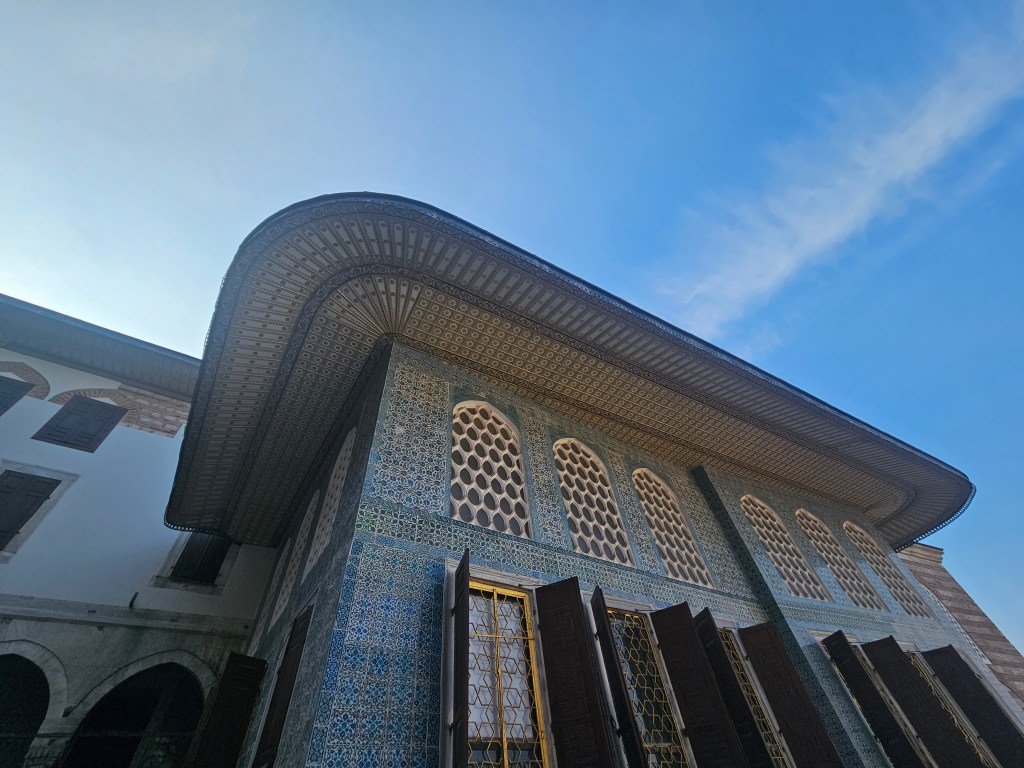
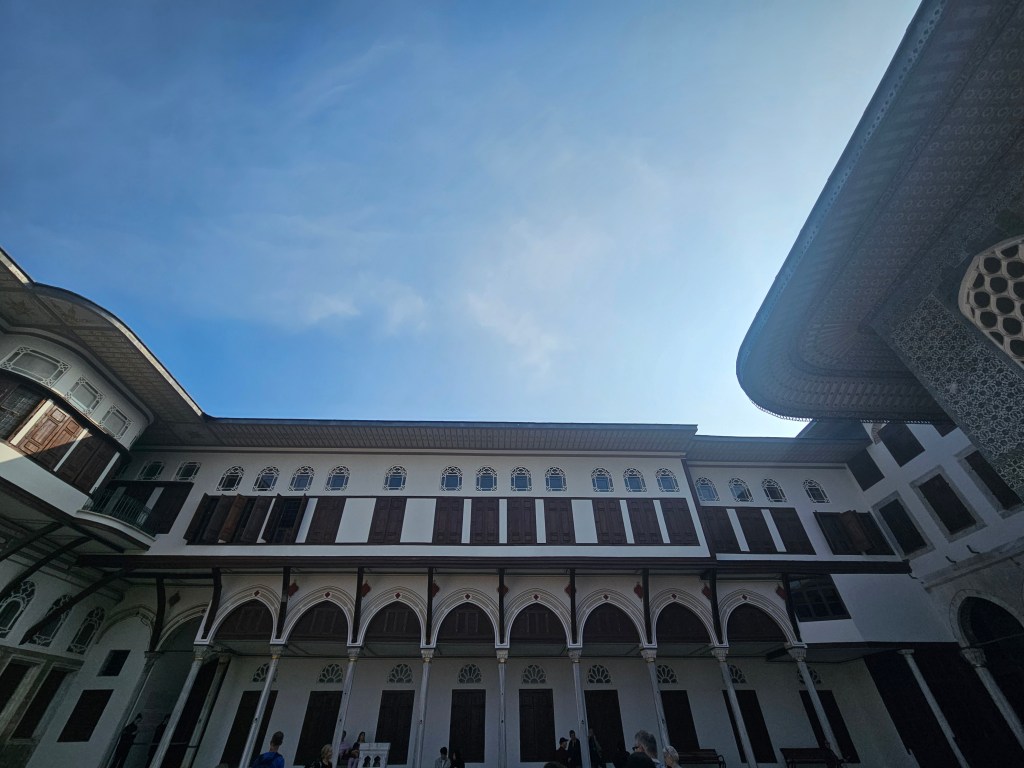
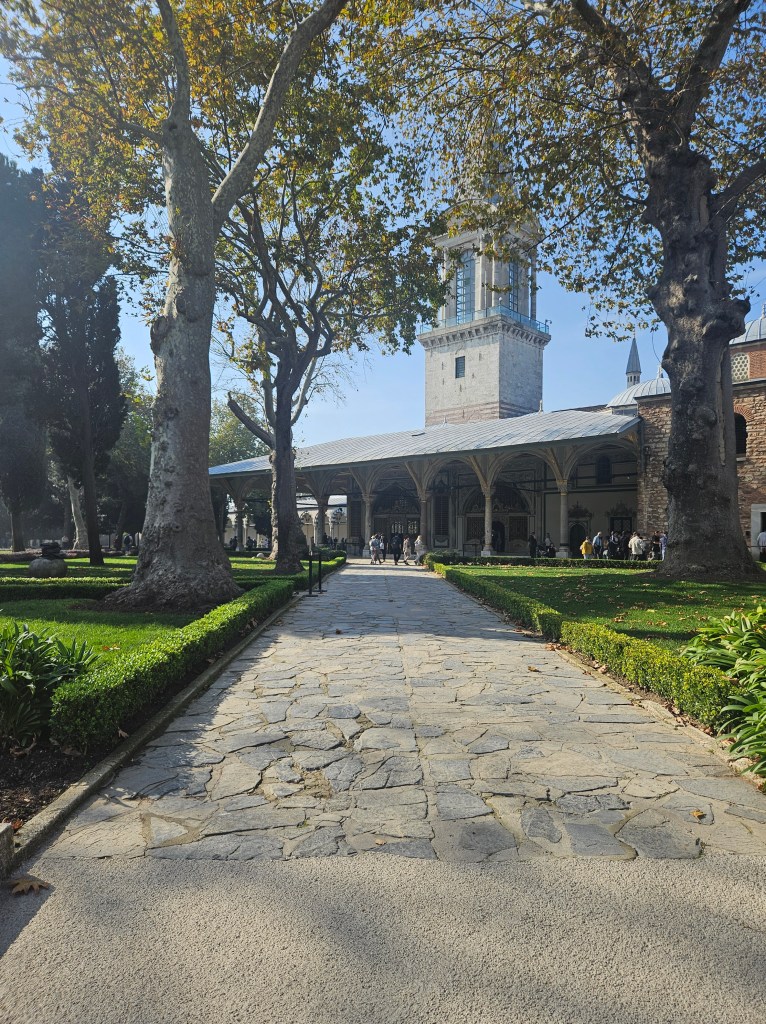
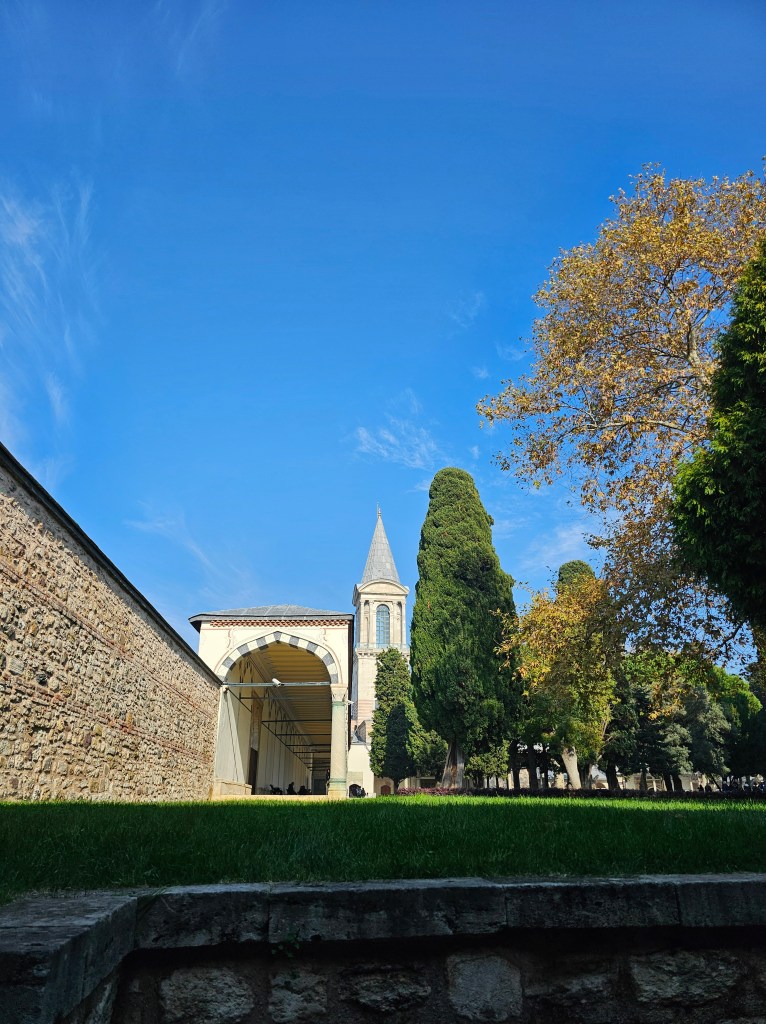
    On Monday, we started out big: Topkapi Palace. Topaki, encompassing many buildings, served as the royal residence and administrative center of the sultans from the 15th through 19th century.

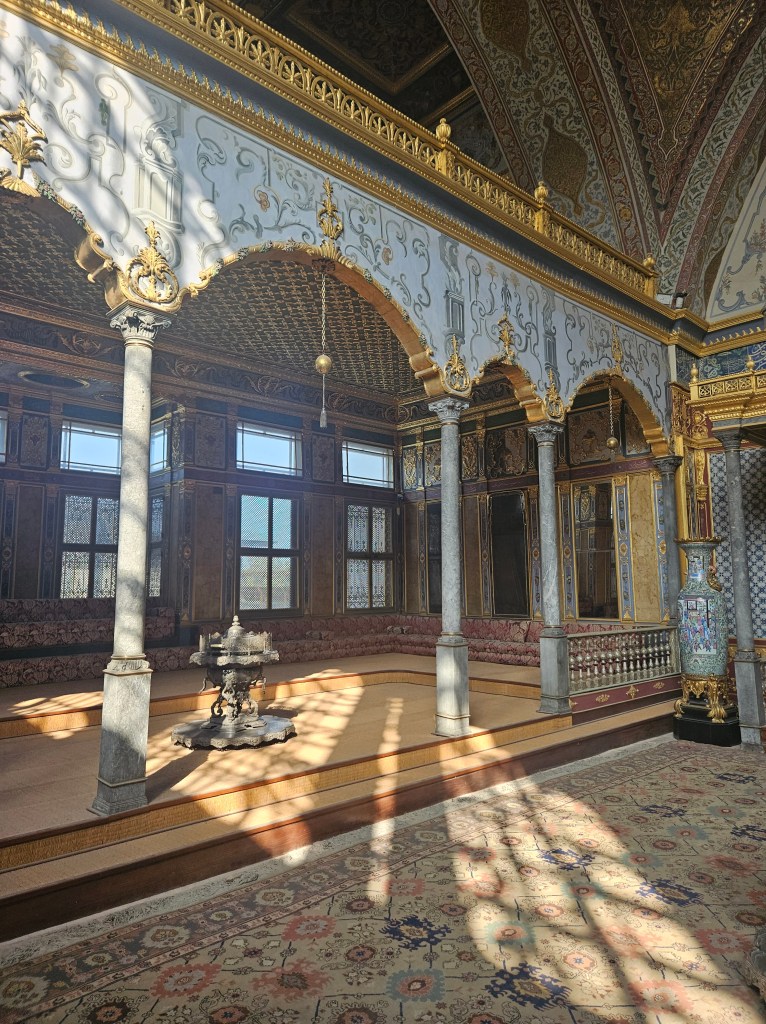
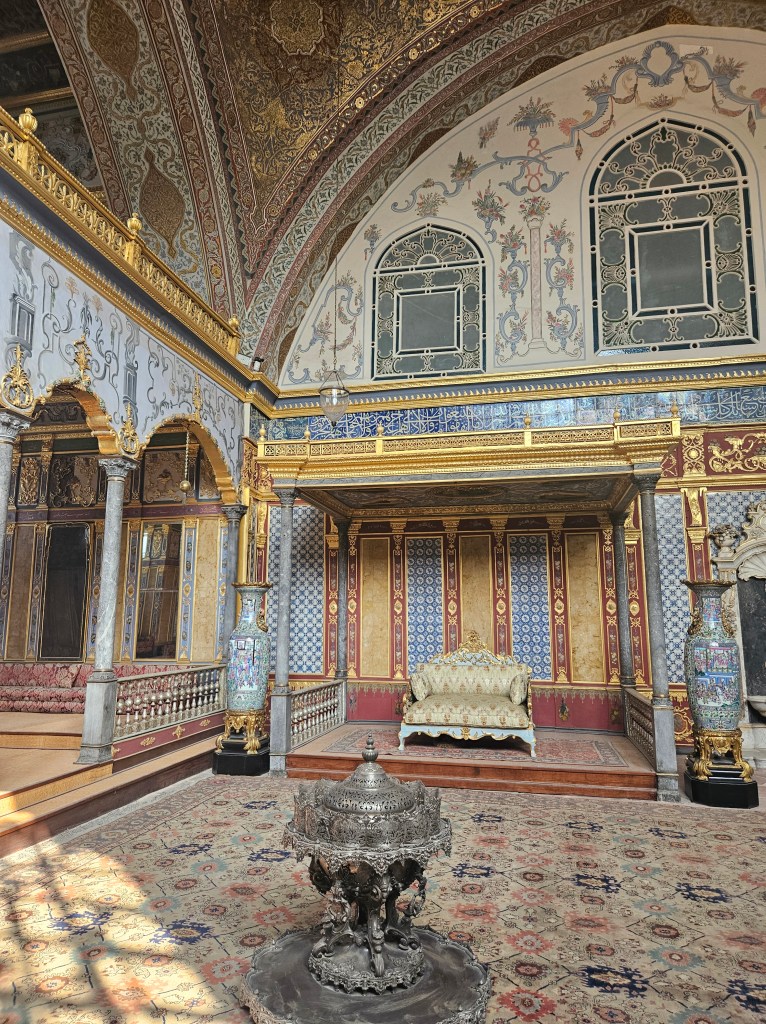
    Our first stop was the amazingly beautiful Harem complex

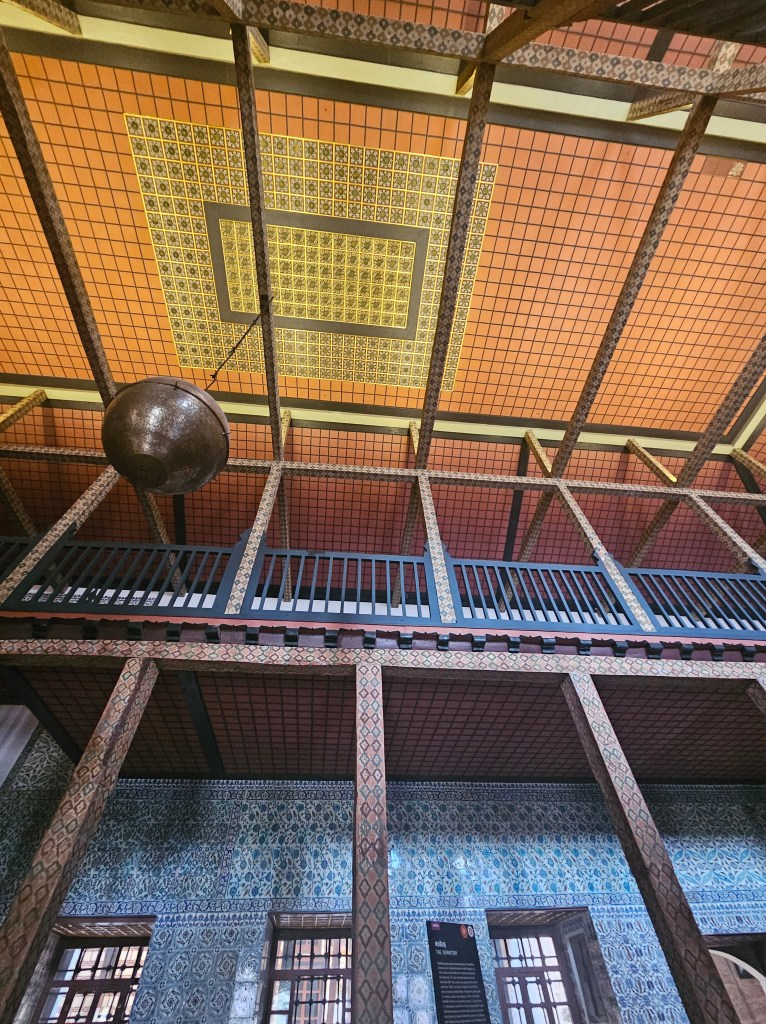
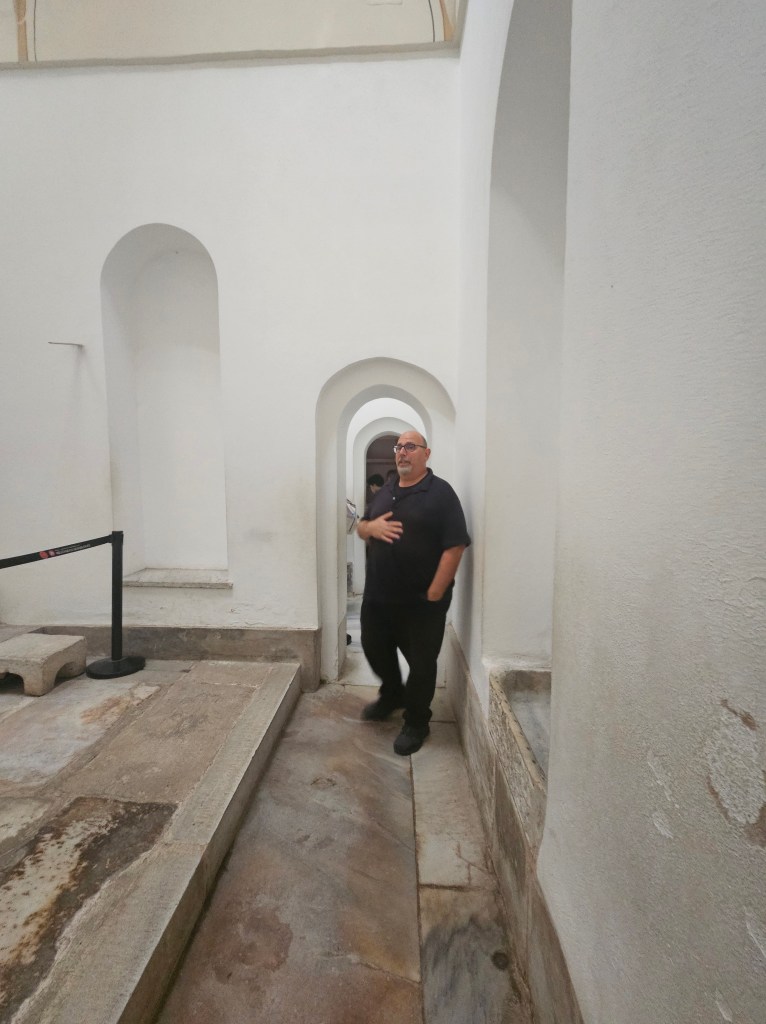
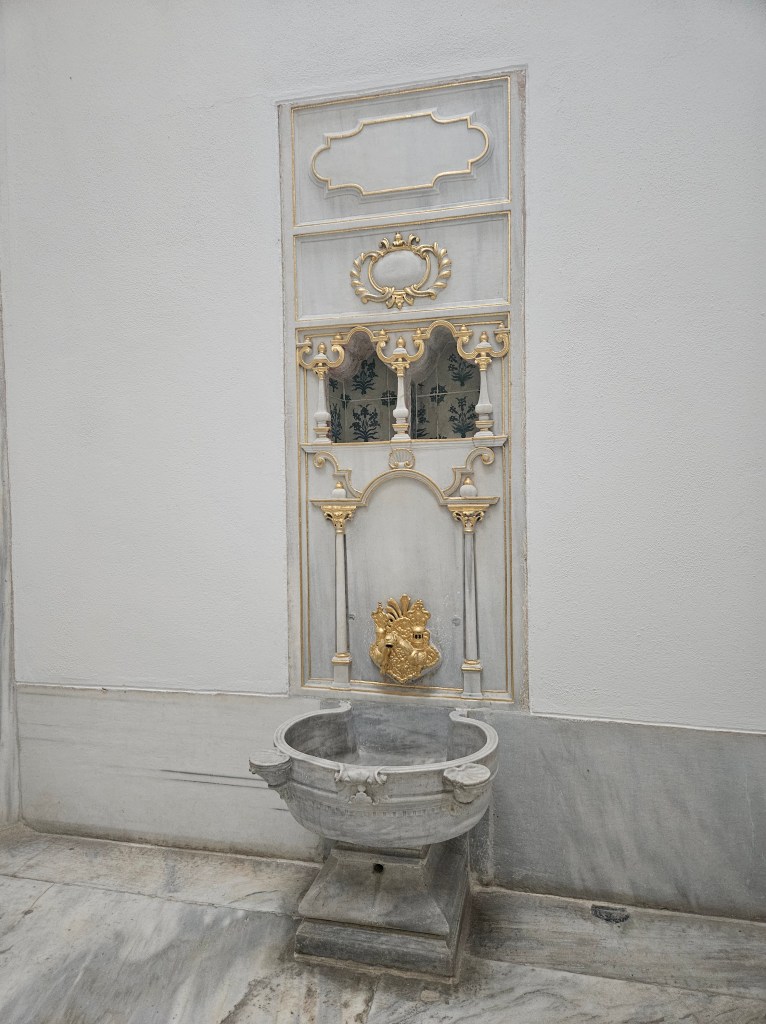
    The Harem had spaces for eunuchs, wives, concubines, children, the Queen Mother, the Sultan, servants, and other palace folks. Many of the spaces were built to ensure privacy. The Sultan and Queen Mother had private bathrooms with sophisticated plumbing.

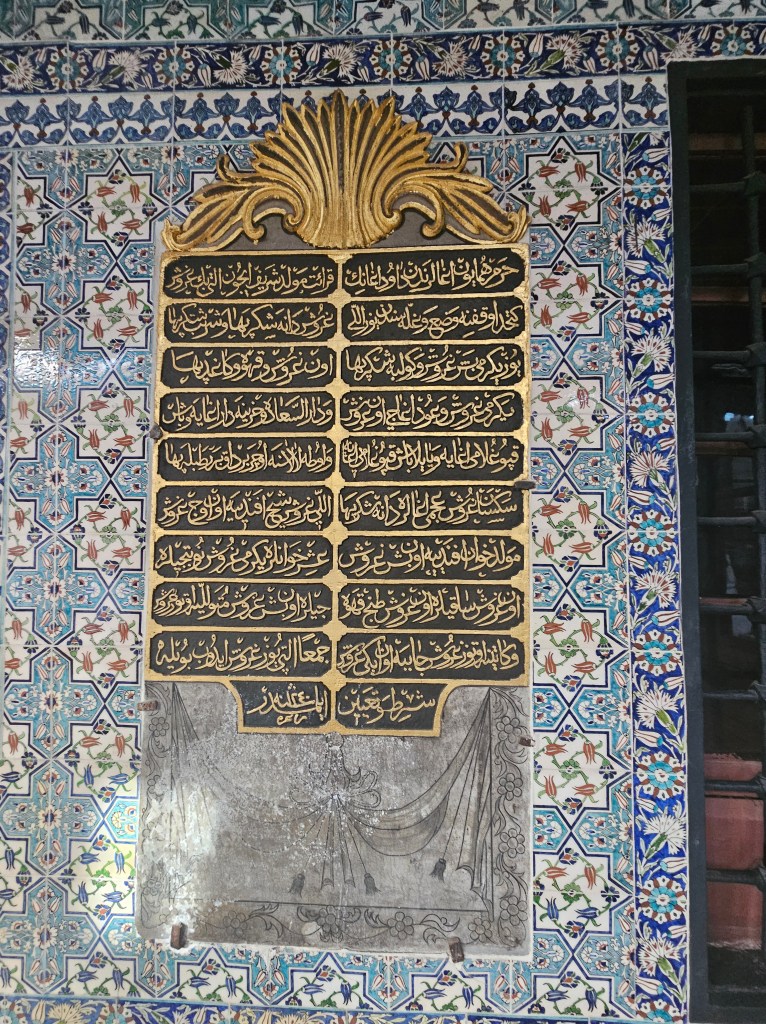
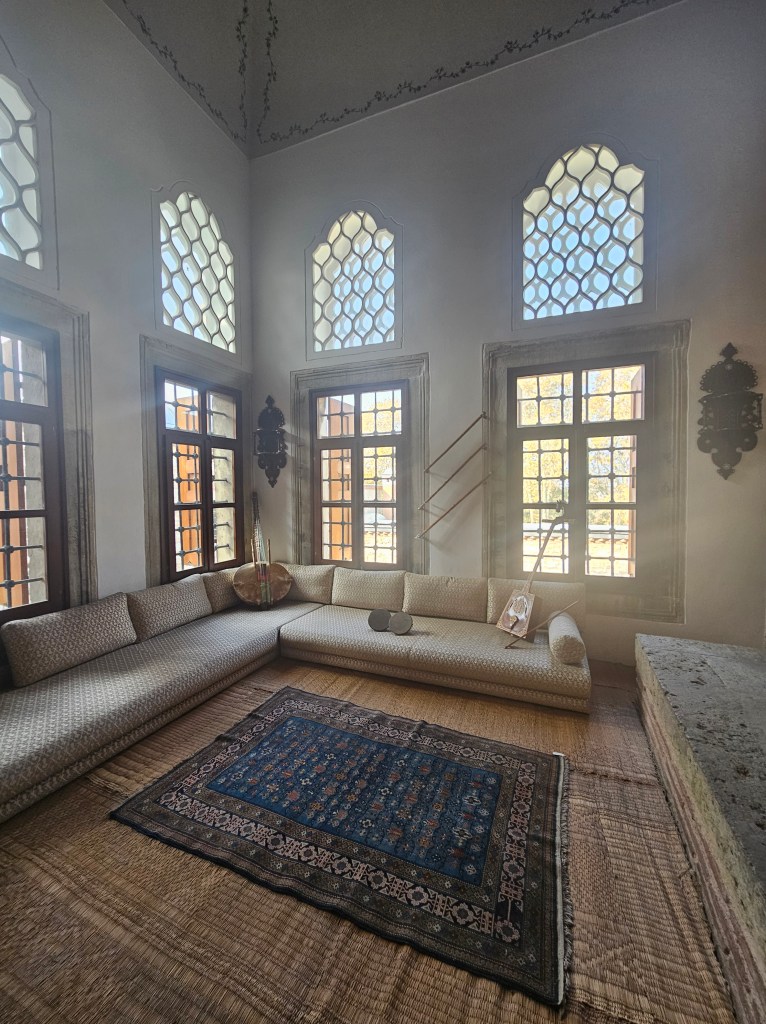
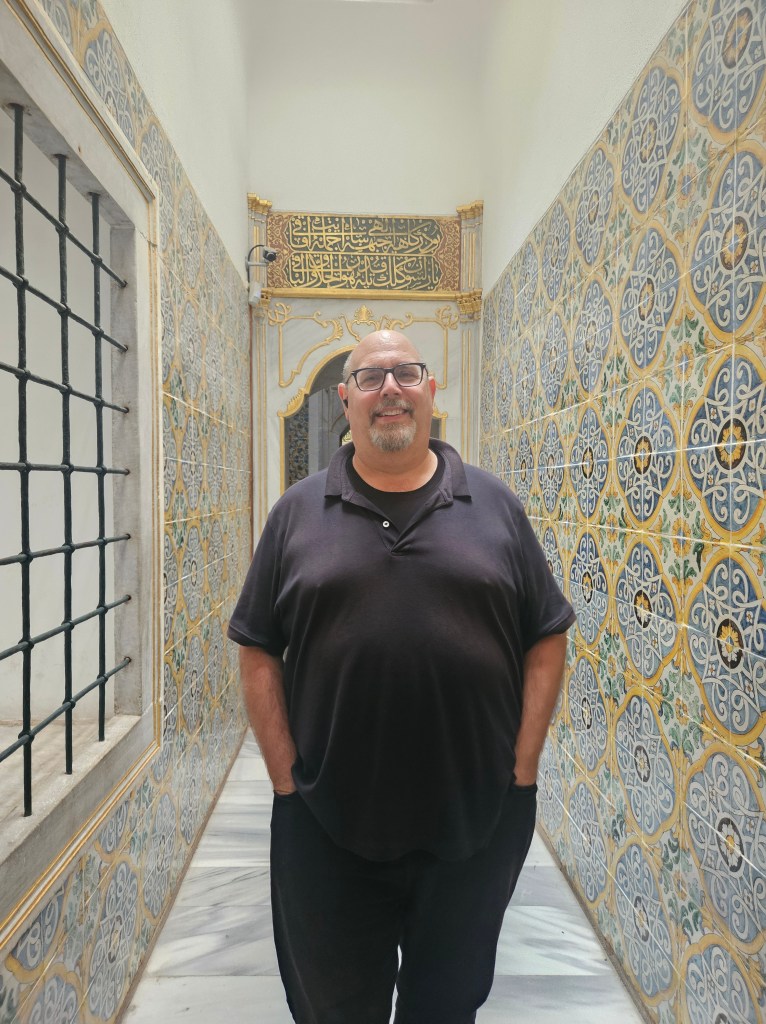
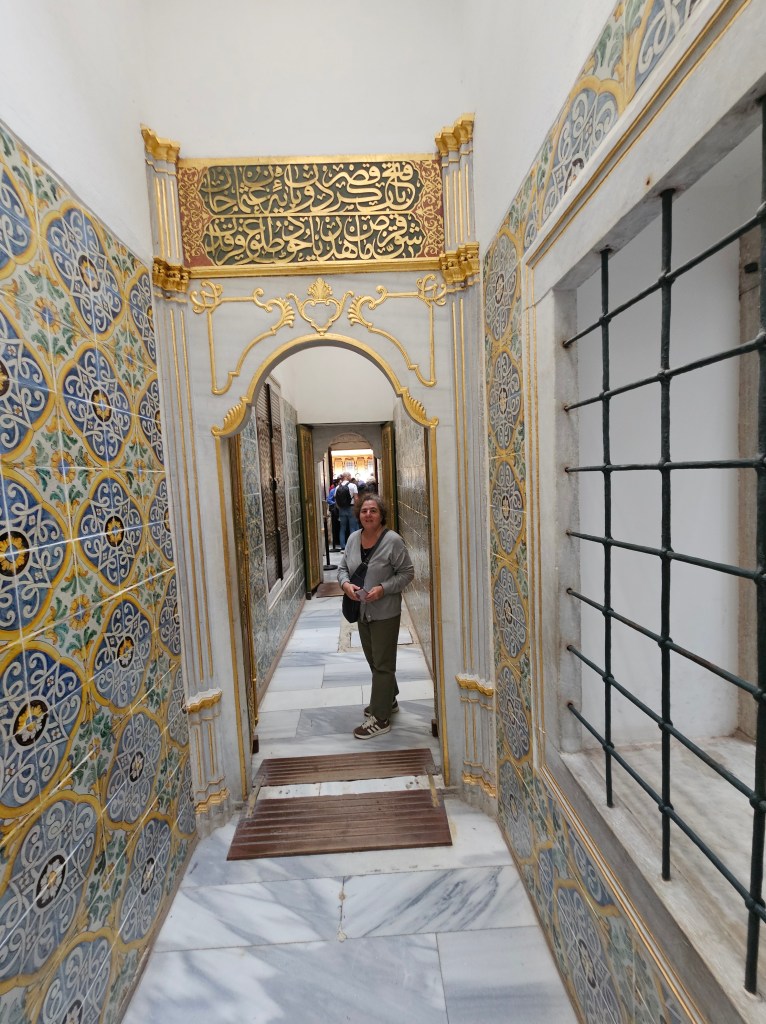
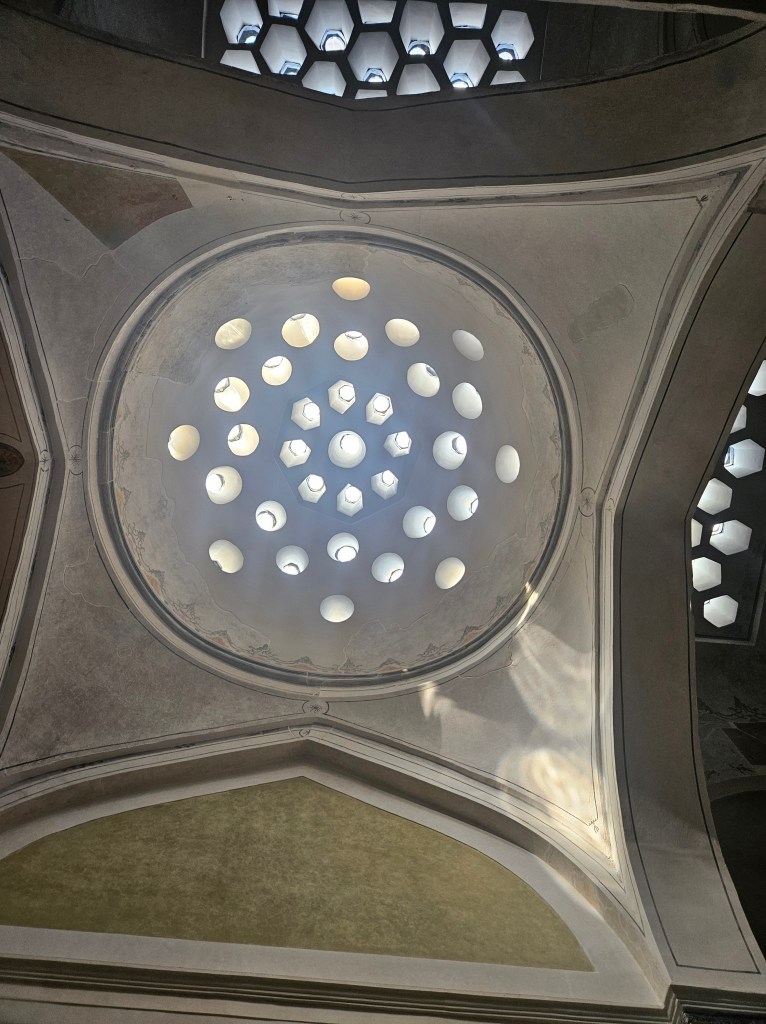
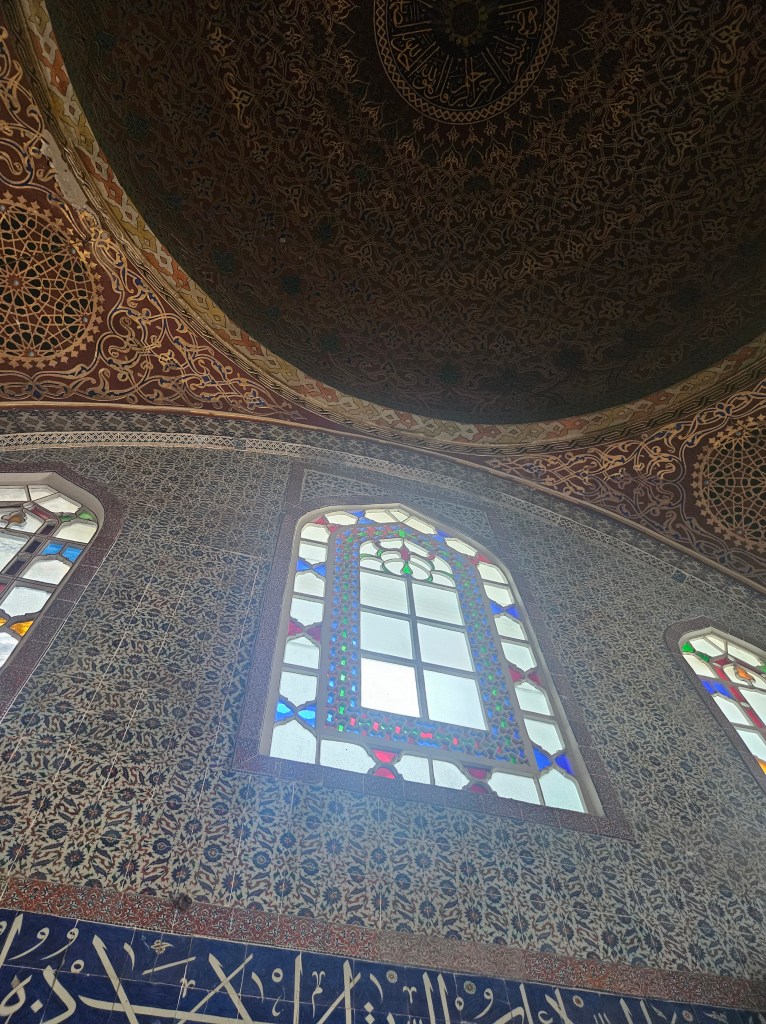
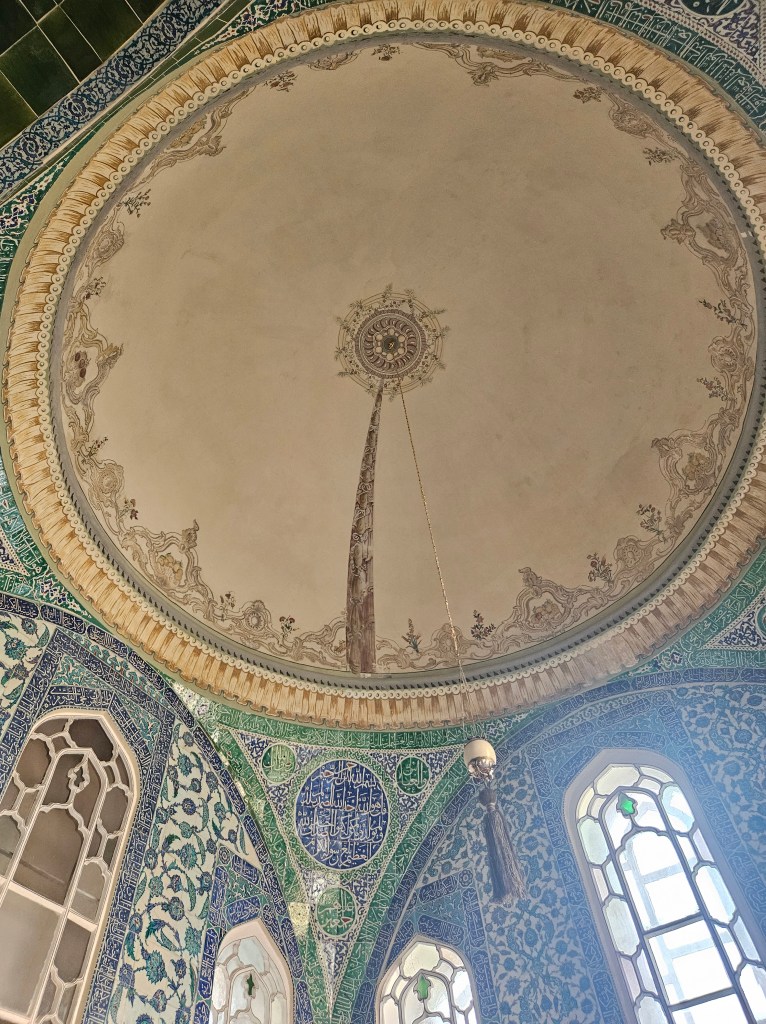
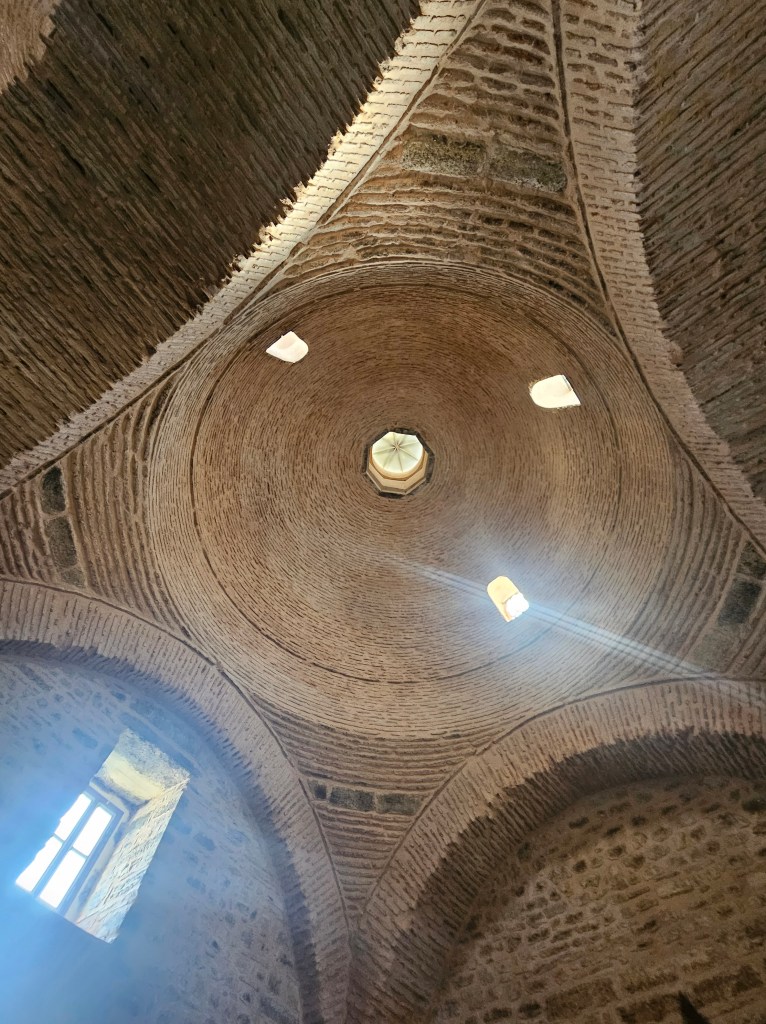
    The details are astounding. Every inch of some of the rooms are covered in tile. We may want to tile everything now. Domes created a soaring, light feeling.

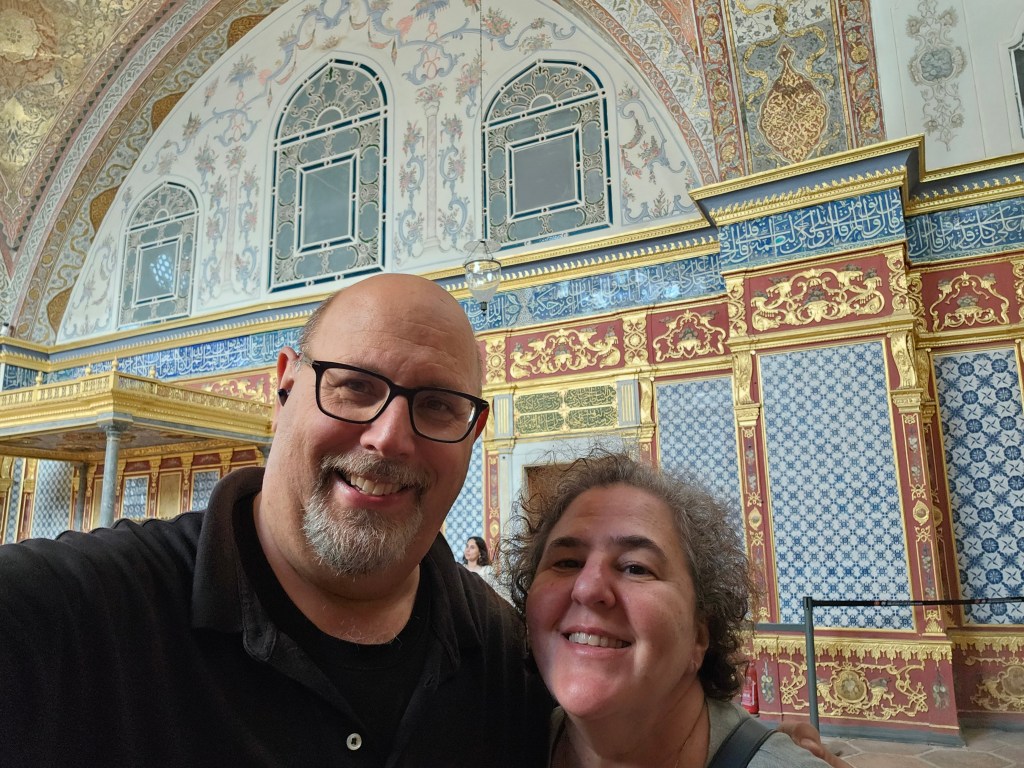
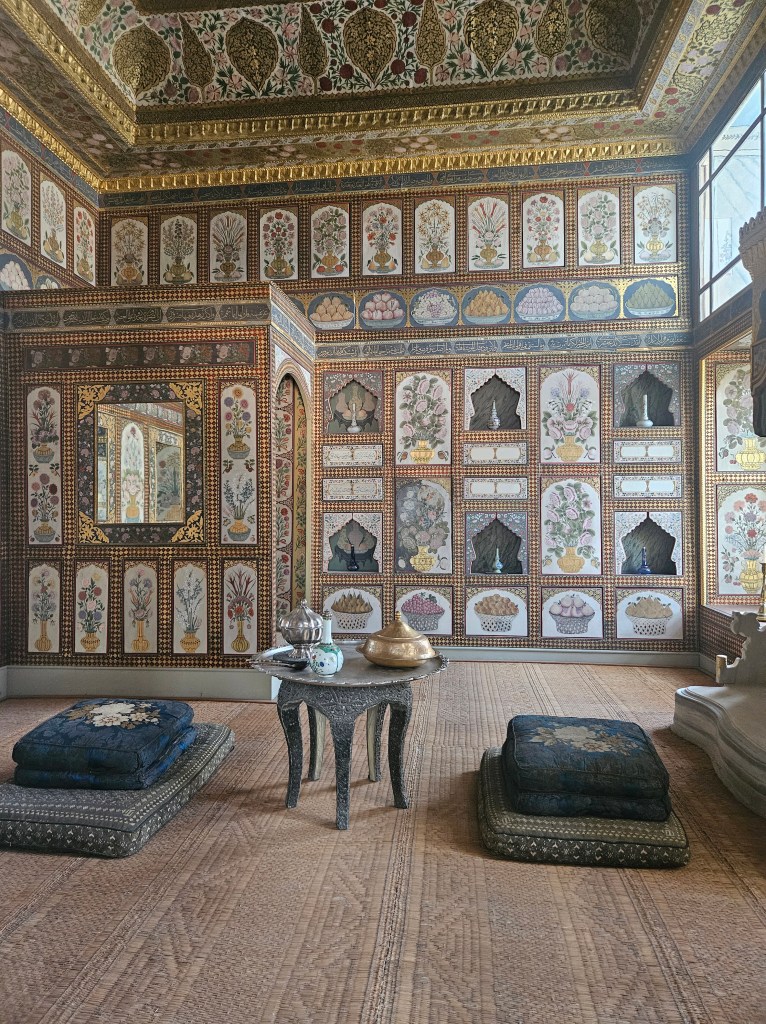
    Still in the Harem! There were plenty of tourists, including lots of tour groups, but we were able to take our time exploring the rooms. A favorite was the Fruit Room

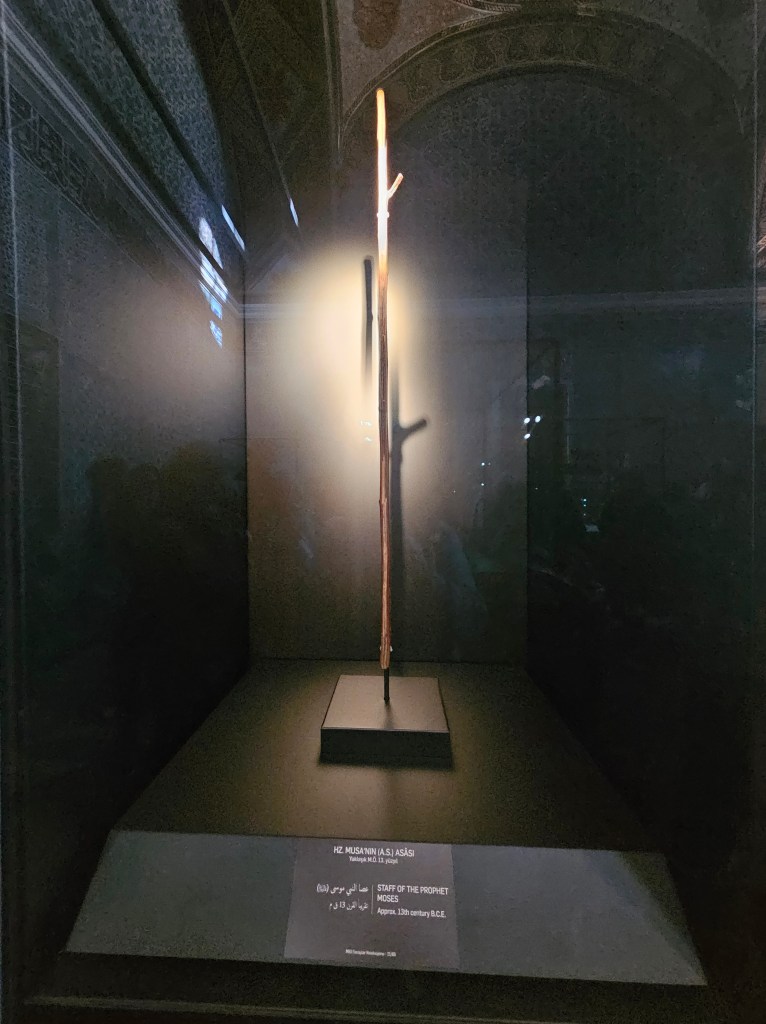
    After the Harem, we wandered to the Sacred Relics building, which required modest dress out of respect to the items inside, including many attributed to the Prophet Mohammed. And also the 100% true, authentic Staff of Moses used to part the Red Sea.

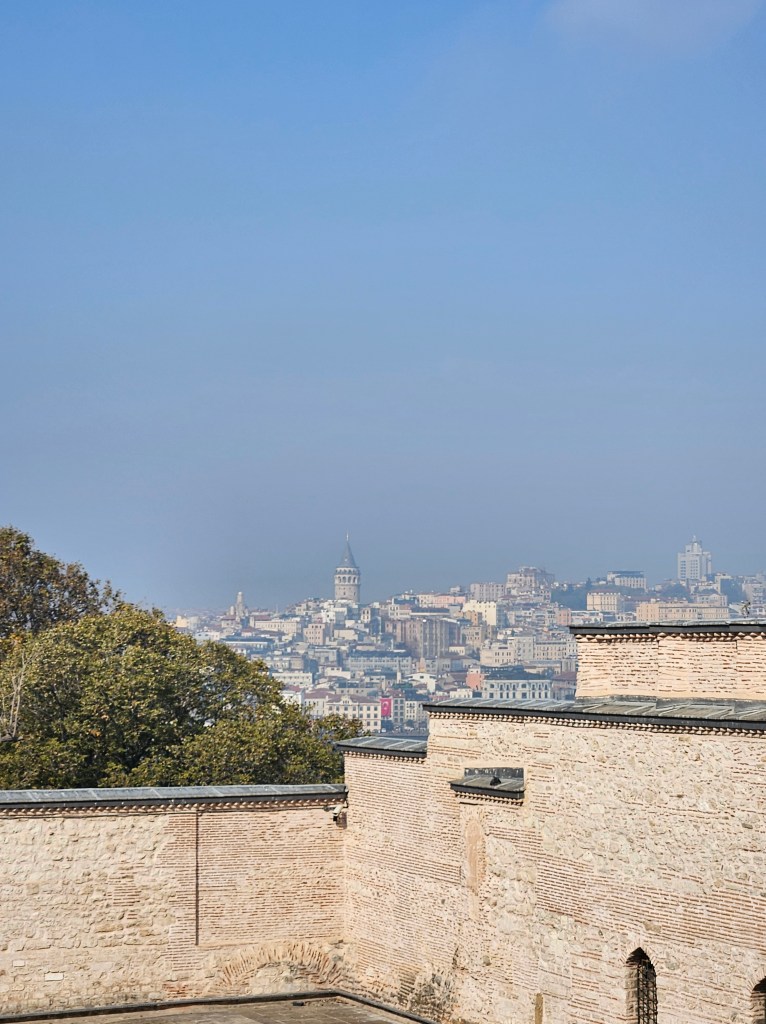
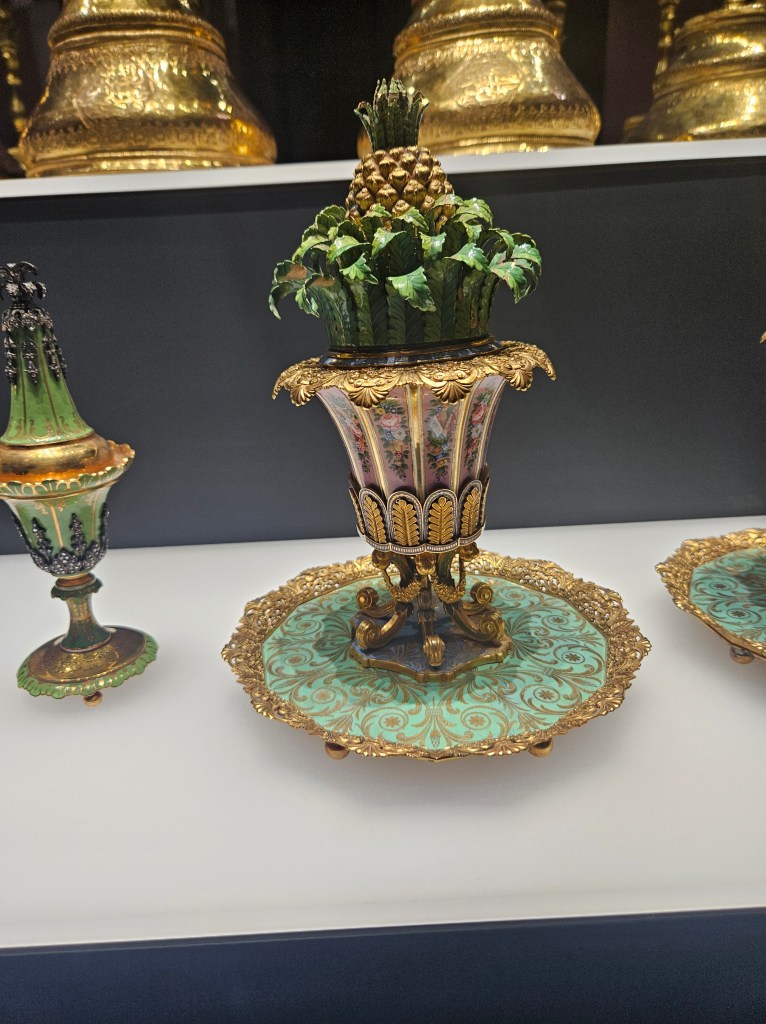
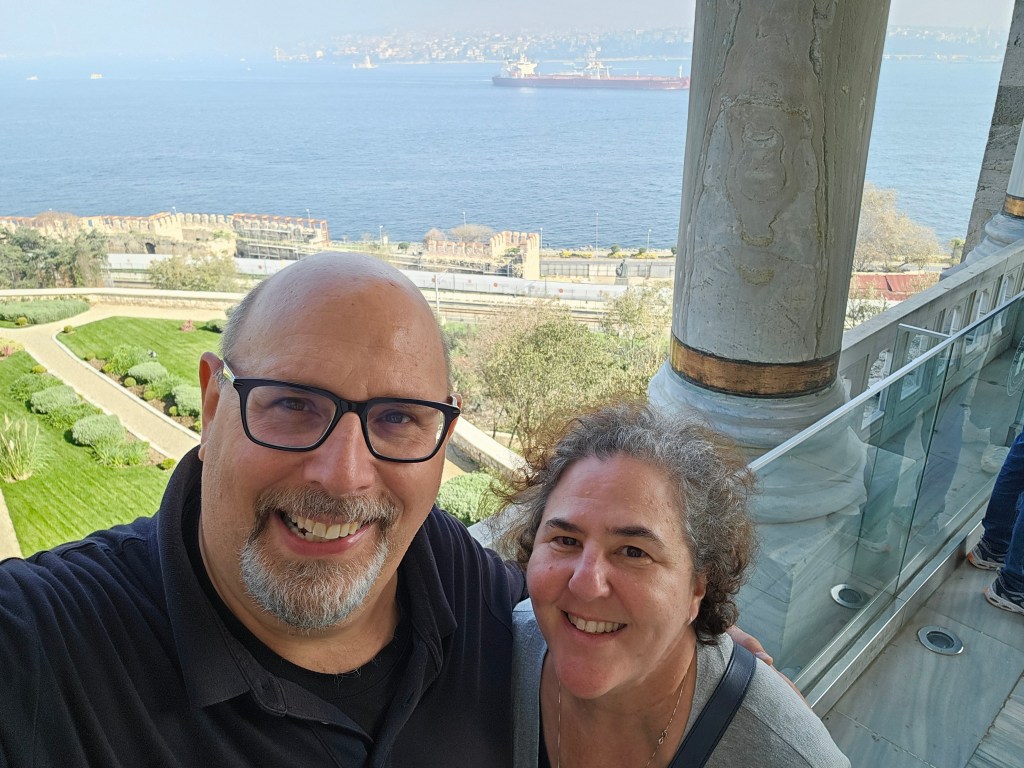
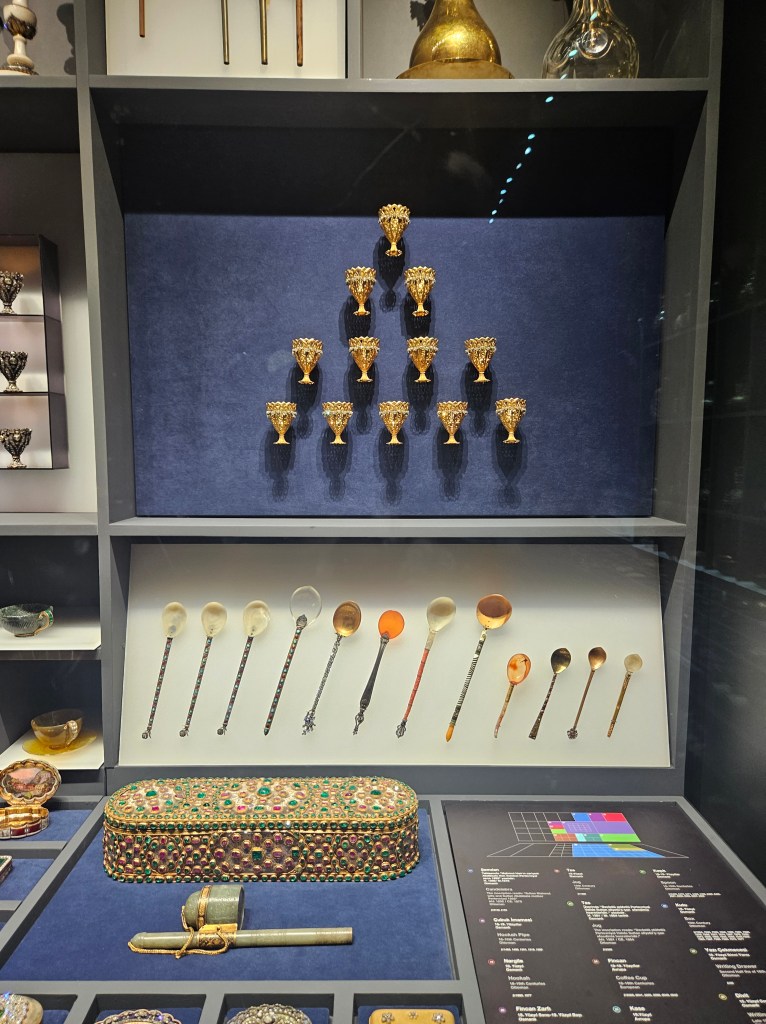
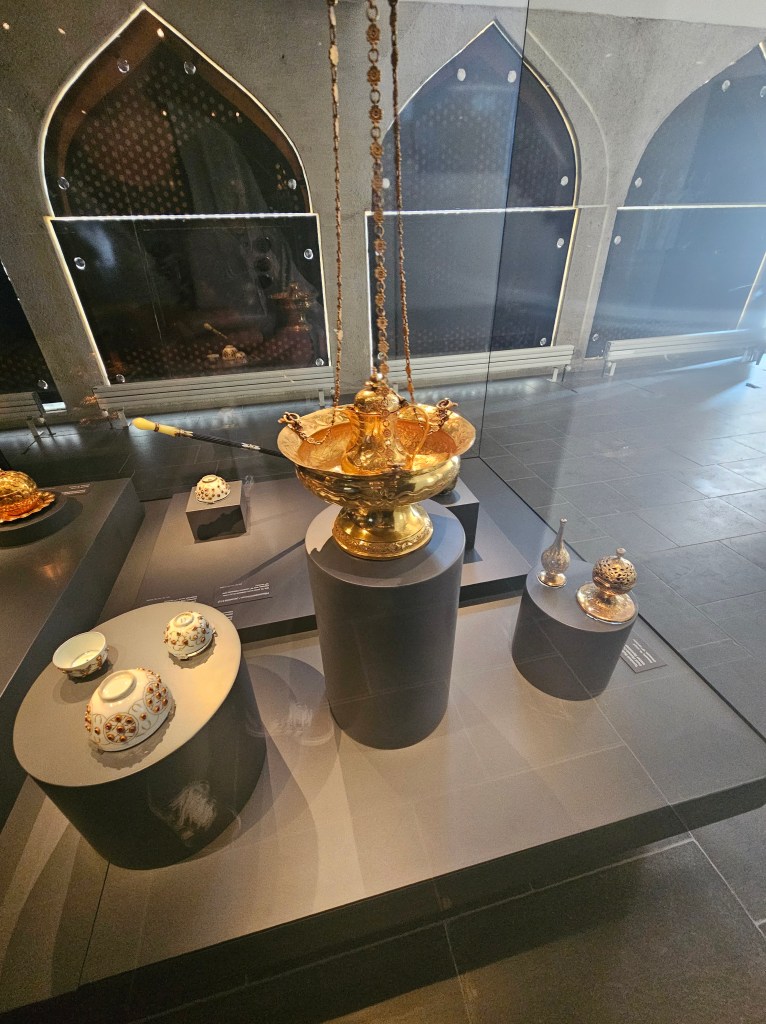
    The grounds had beautiful views of the Bosphorus. We stopped into the Treasury Room full of gems and royal objects. We didn’t notice any additional security, noting the recent Louvre reobbery, not to mention the eponymous classic heist movie, Topkapi.

    The palace kept going and going and going. We were flagging.

    Our final stop in the palace was the kitchen complex, with numerous chimneys. There were no kitchen fixtures, the rooms just held examples of dishes and cookware. One room was devoted to the history of coffee culture.

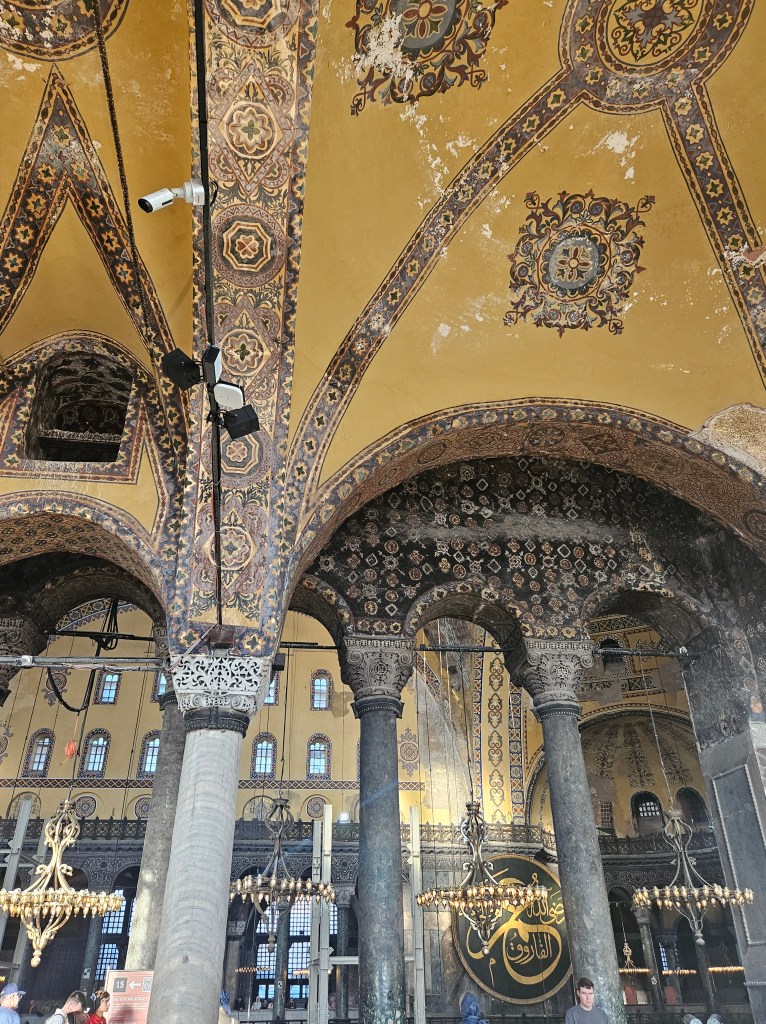
    Stepping out of Topkapi, we immediately faced Hagia Sophia. We hadn’t planned on going there that day, but couldn’t resist. We first had some lunch to revive ourselves. Note: Emily actually drank a lot of tea, which was provided freely at the end of almost every meal we ate in Istanbul. She probably doubled her lifetime tea consumption. We then headed in. Visiting Hagia Sophia had been a long time dream for Russell, who had learned about its storied history as a child.

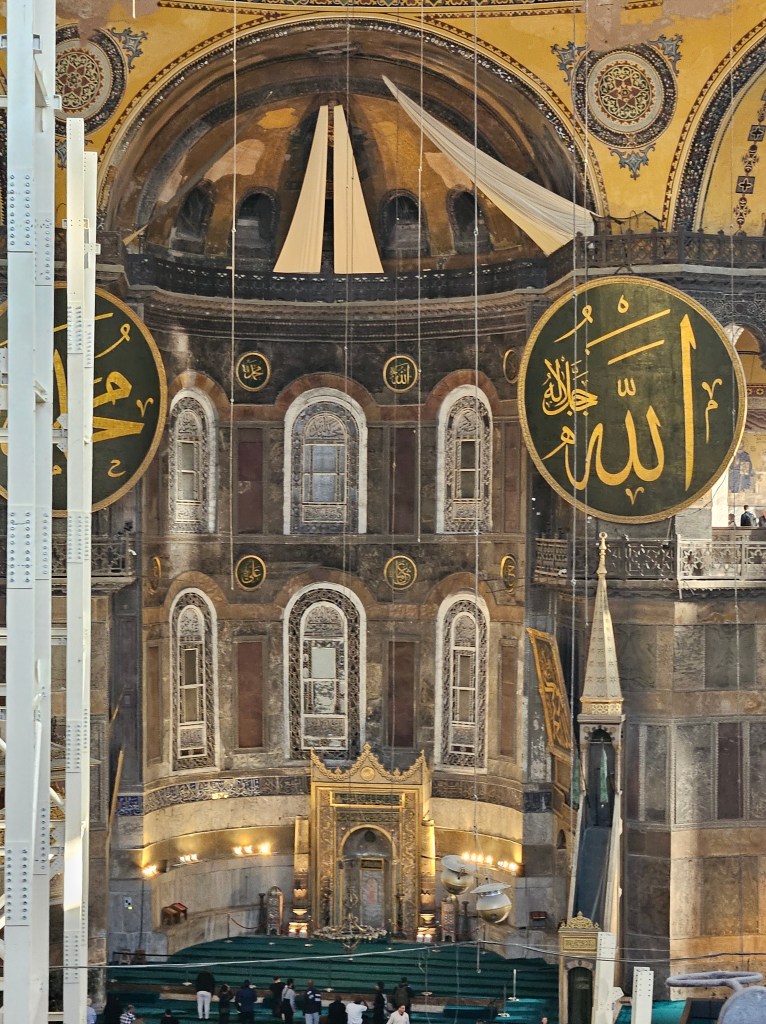
    Built as the largest church in the world under Justinian in the 6th century, Hagia Sophia was converted into a mosque in the 15th century with the conquest of Istanbul under Sultan Mehmed II. It was transformed into a museum in 1935 under Atatürk, who is still widely admired, even revered, for his modernization, and secularizing, of Turkey. Emily had visited the museum in 1988 when she was on Semester at Sea. In 2020, Erdoğan converted it back to a mosque in a show of power and religious conservatism. Worshipers can enter the bottom floor of Hagia Sophia for free; visitors are limited to the upper floor and need to buy pricy tickets.

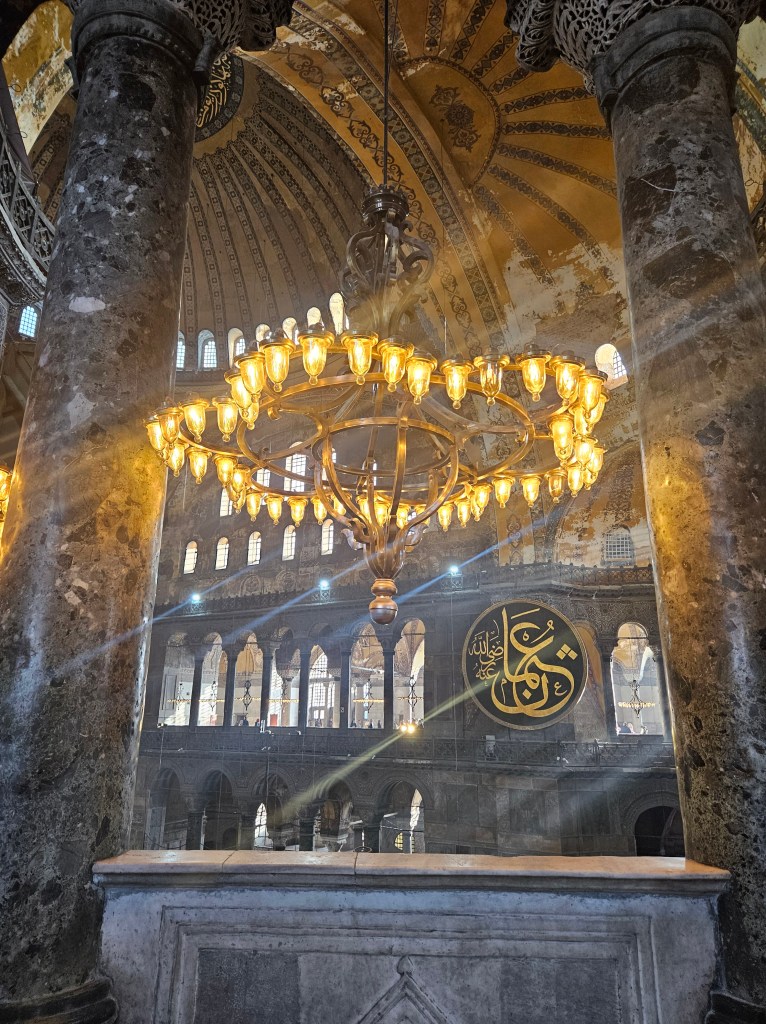
    We later learned that the bulbs in the chandeliers had been white, but were replaced with warm yellow bulbs by Ben Affleck when he filmed Argo there.

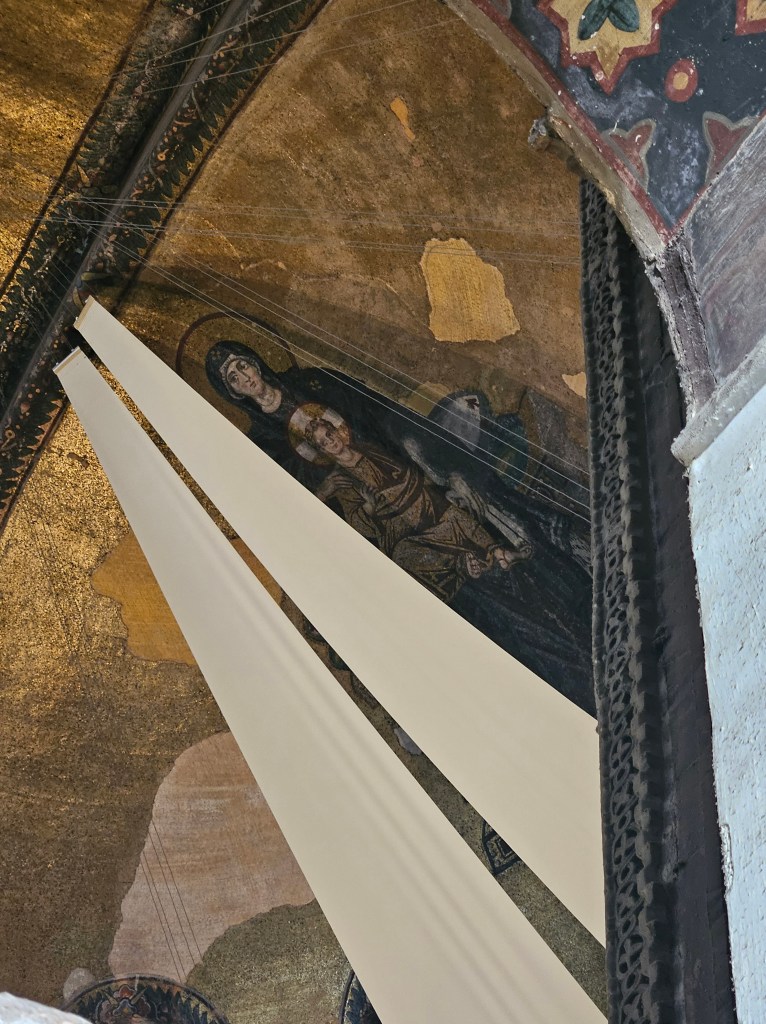
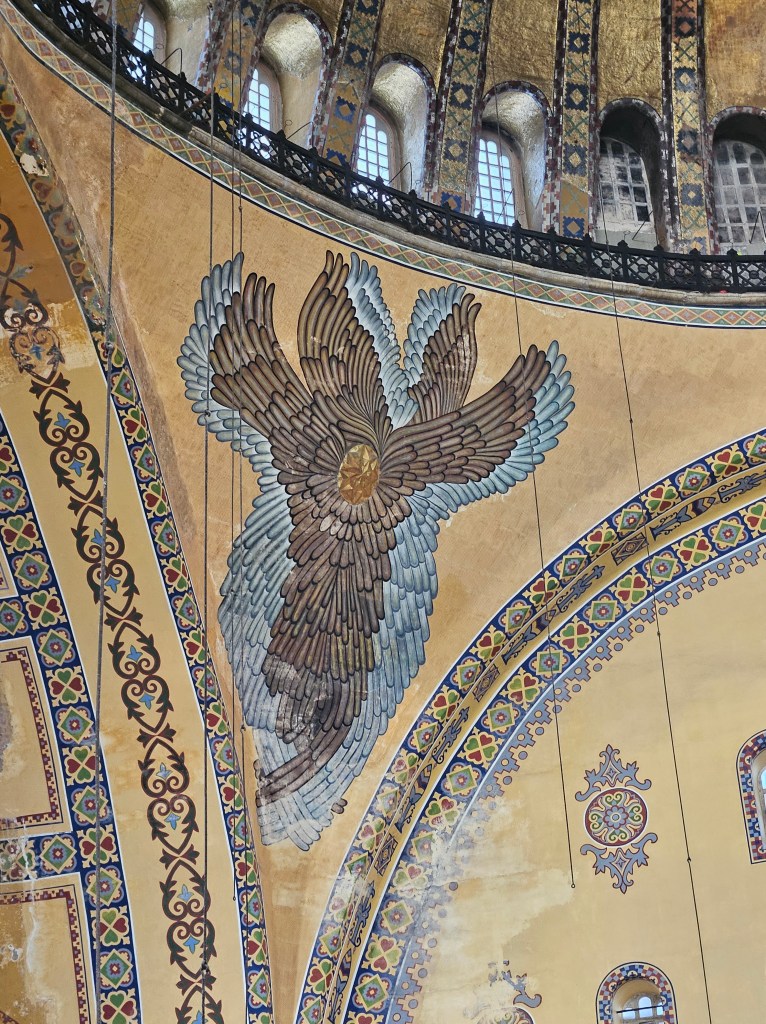
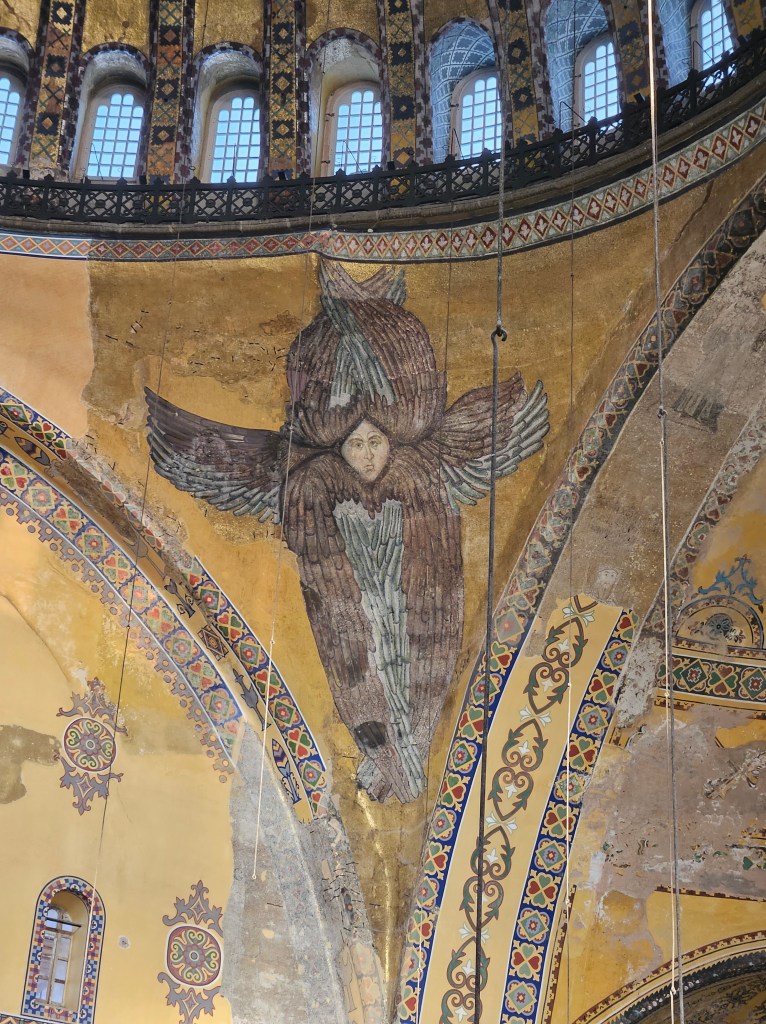
    There are still remnants of the mosaics and paintings which had adorned the church. The image of Jesus and Mary is covered by sail cloth so it is not visible by worshipers, but can be seen on the second floor.

    After visiting the building itself, we went to the Hagia Sophia Experience Museum, for which we had accidentally bought tickets. It seemed like it would be a really cheesy 3-D immersion experience, but actually gave a really good history of the building. We then walked home for desperately needed rest.

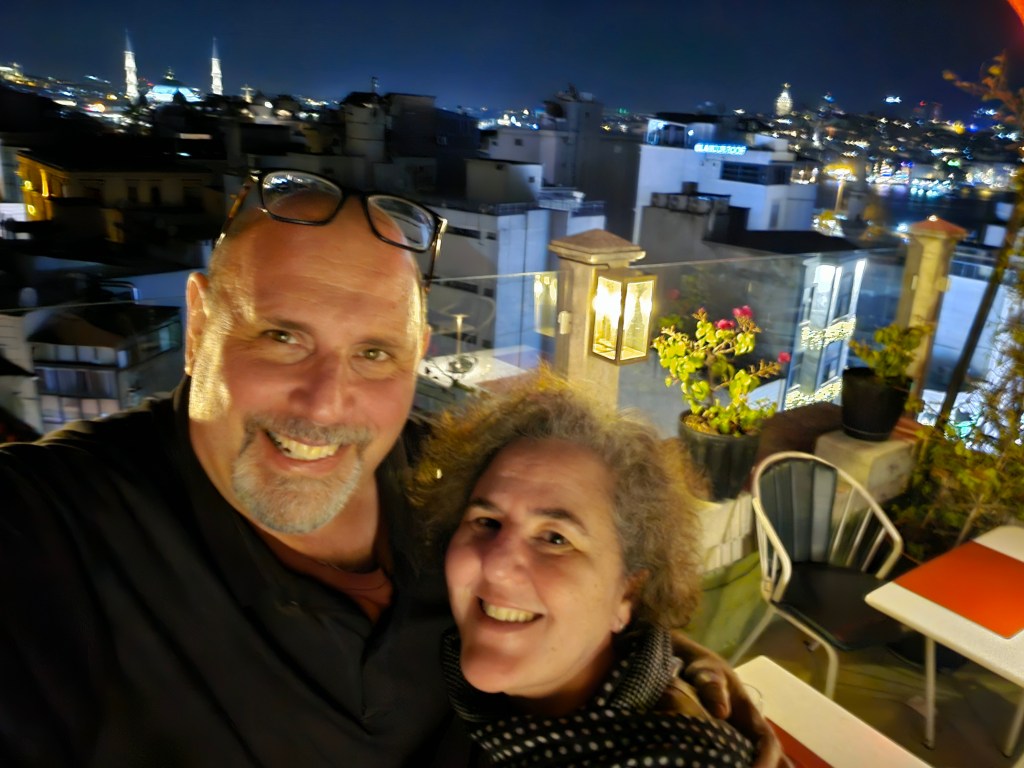
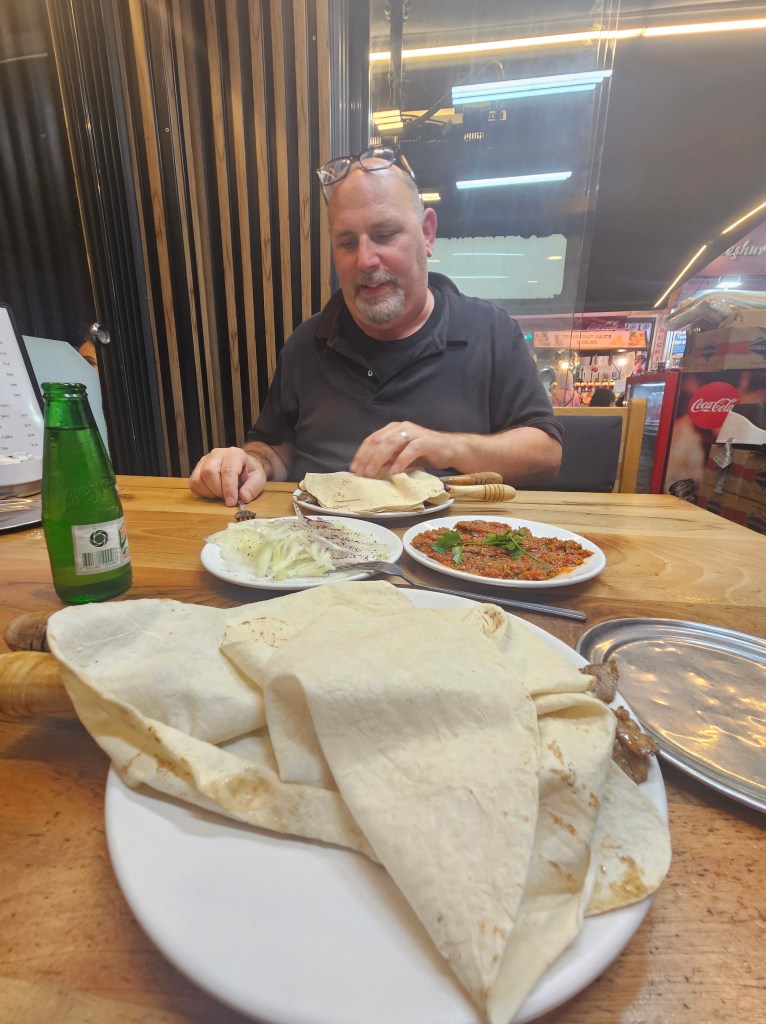
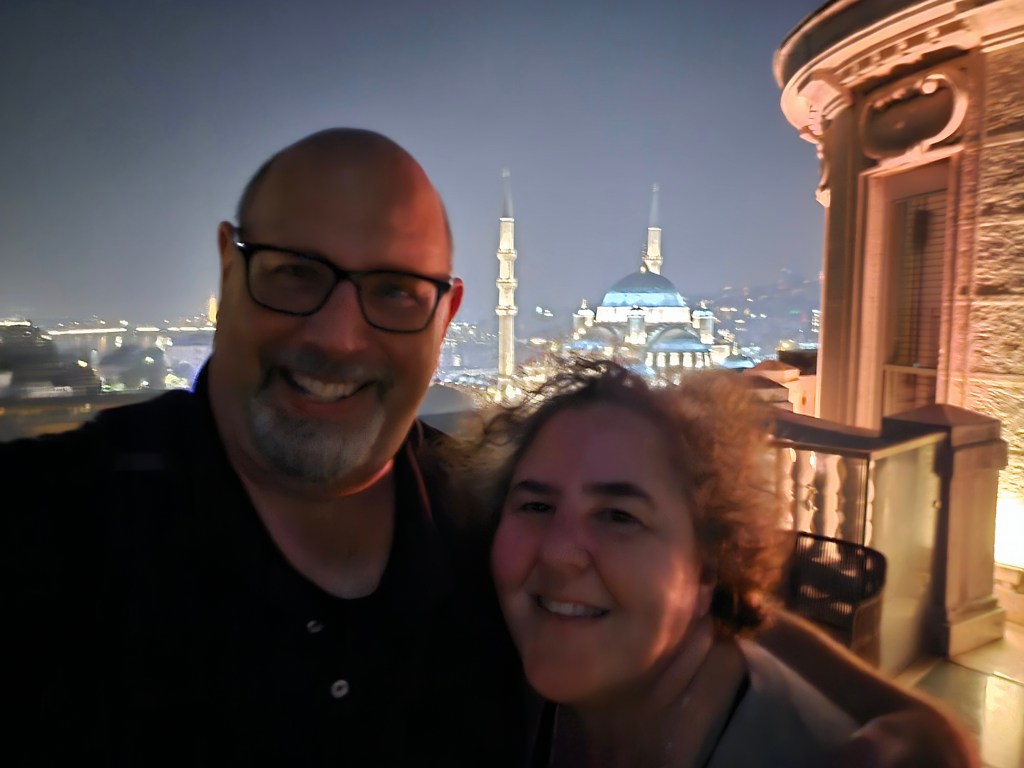
    For dinner, we went to a kebab place just down the block from our hotel that served one main dish: lamb skewers with bread. Delicious! Before bed, we went up to the narrow viewing terrace of our hotel for a nighttime view of the city. What an amazing first day!

  • On Saturday, we decided to drive back to Craiova via Sibiu, a beautiful city in Transylvania. It was supposed to add another 90 minutes to the drive, but we decided it was worth it.

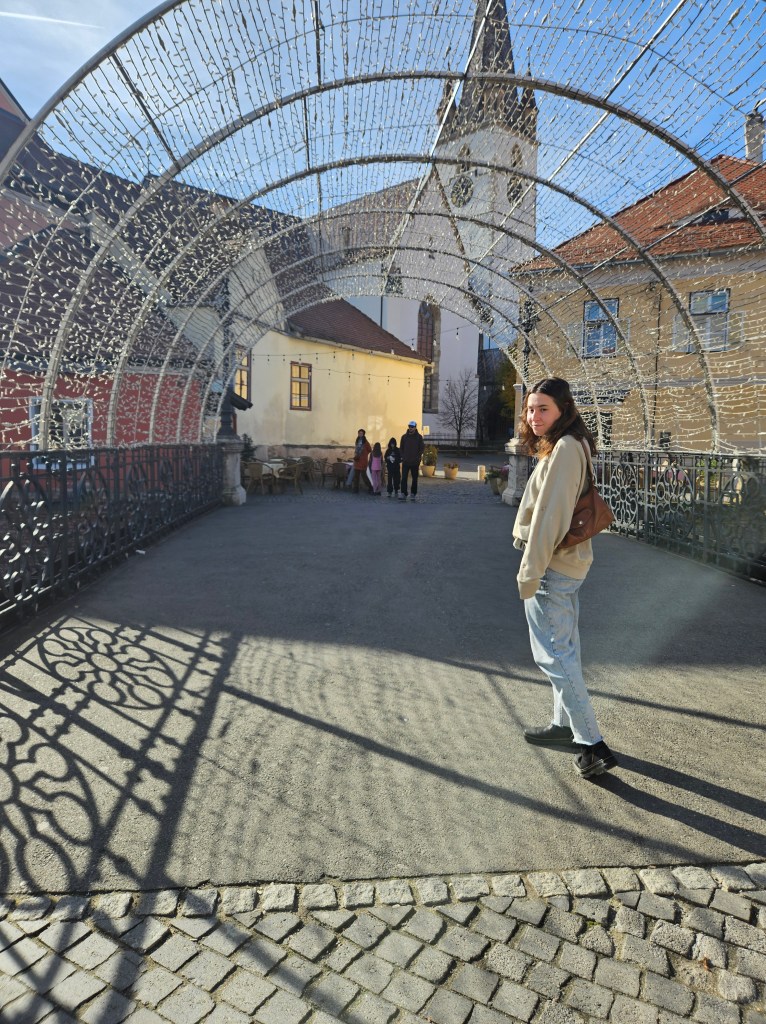
    If you tell a lie on Sibiu’s Bridge of Lies, according to legend, it will collapse. It is amazing that no one has lied on the bridge since 1859.

    We went up the Carpenter’s Tower and connecting walkway.

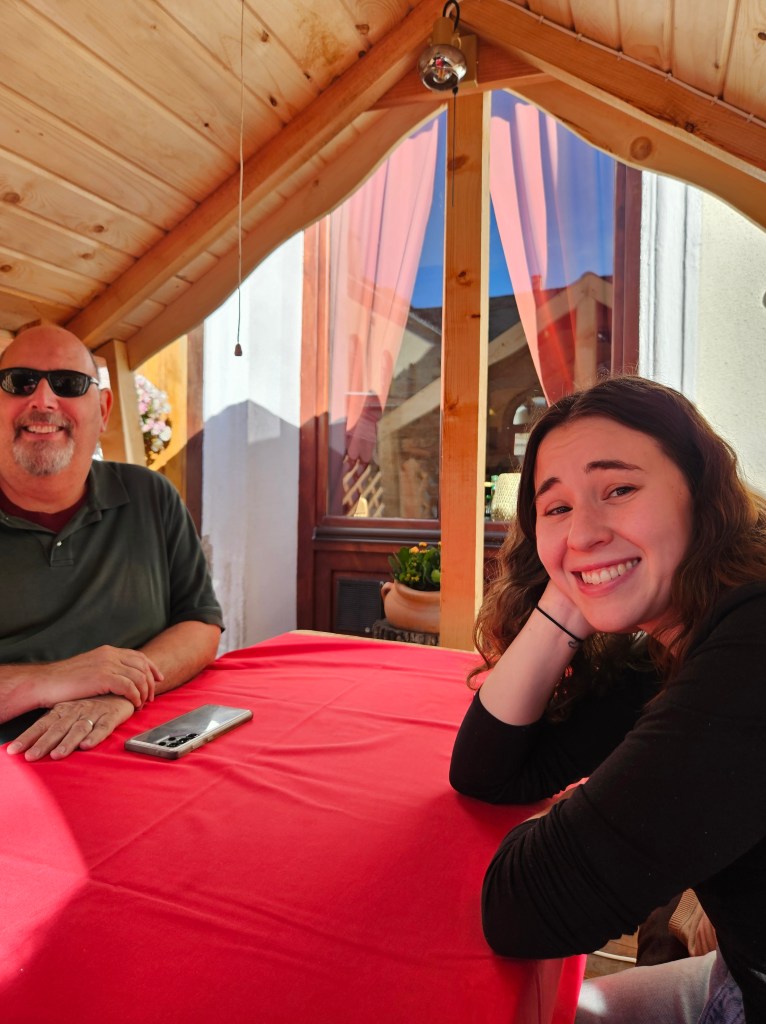
    We had lunch in a traditional Romanian restaurant which had cute outdoor huts. Romania has a lot of outdoor dining, which is really to facilitate all of the smoking. There is a lot of smoking.

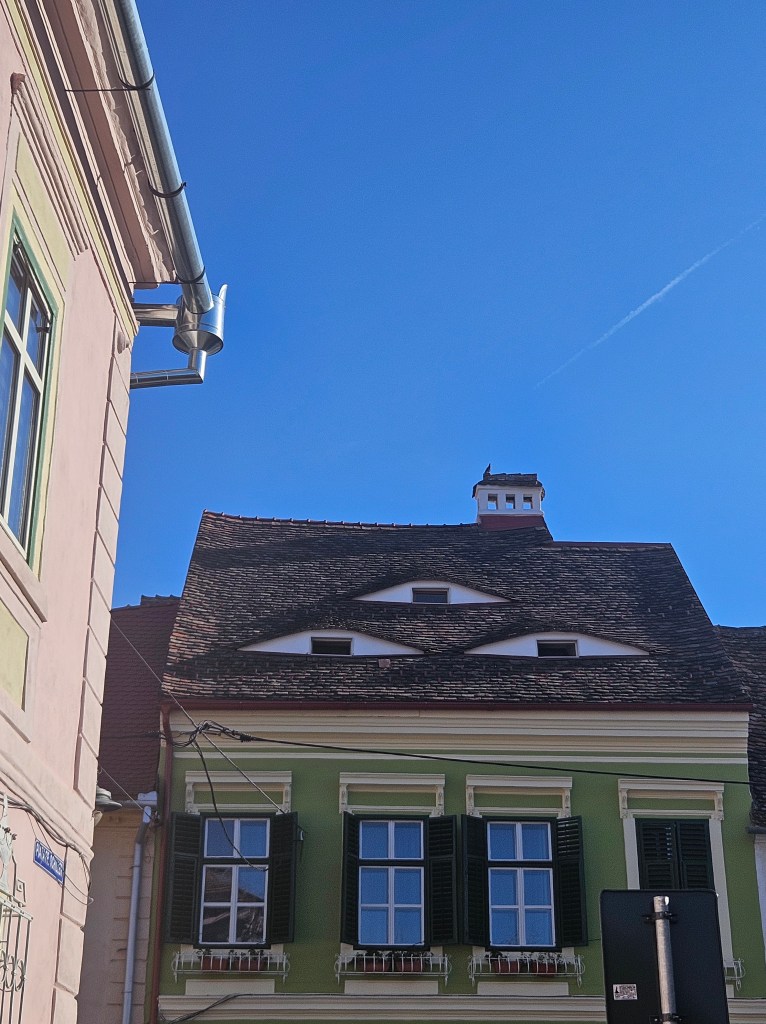
    Many of the roofs in Sibiu had eye shaped windows.

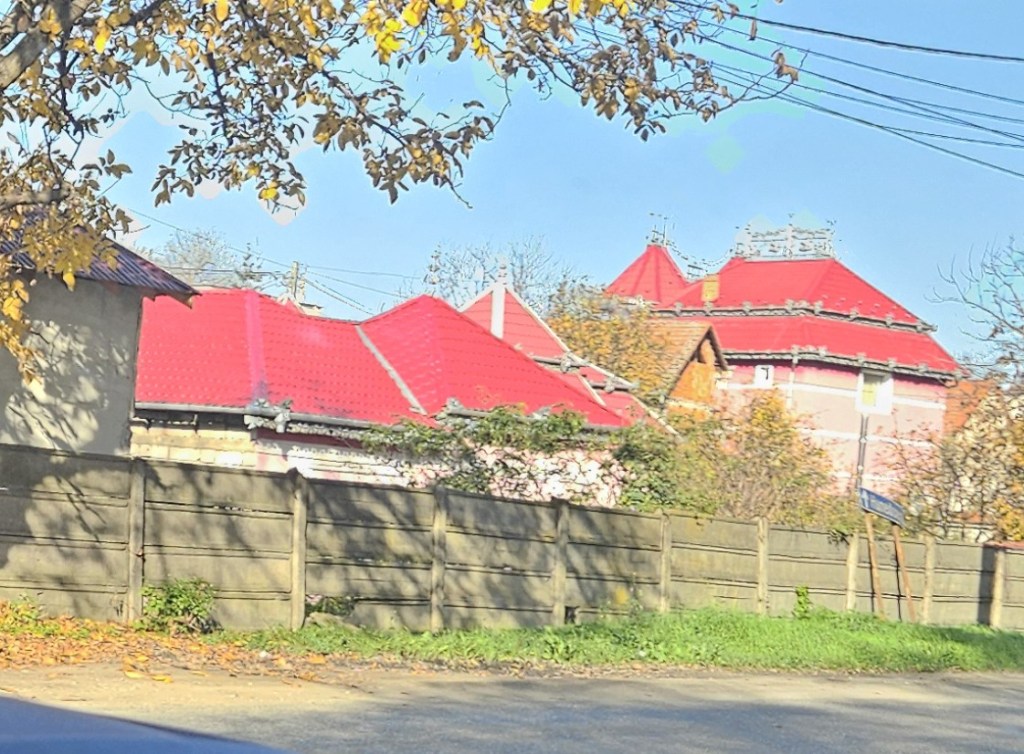
    It was time to head back to Craiova. On both the way there and back, we passed houses with very elaborate roofs. Below is a poor picture taken from our moving car, but the houses are known as Palaces and are generally built by Romani families who have returned after working overseas.

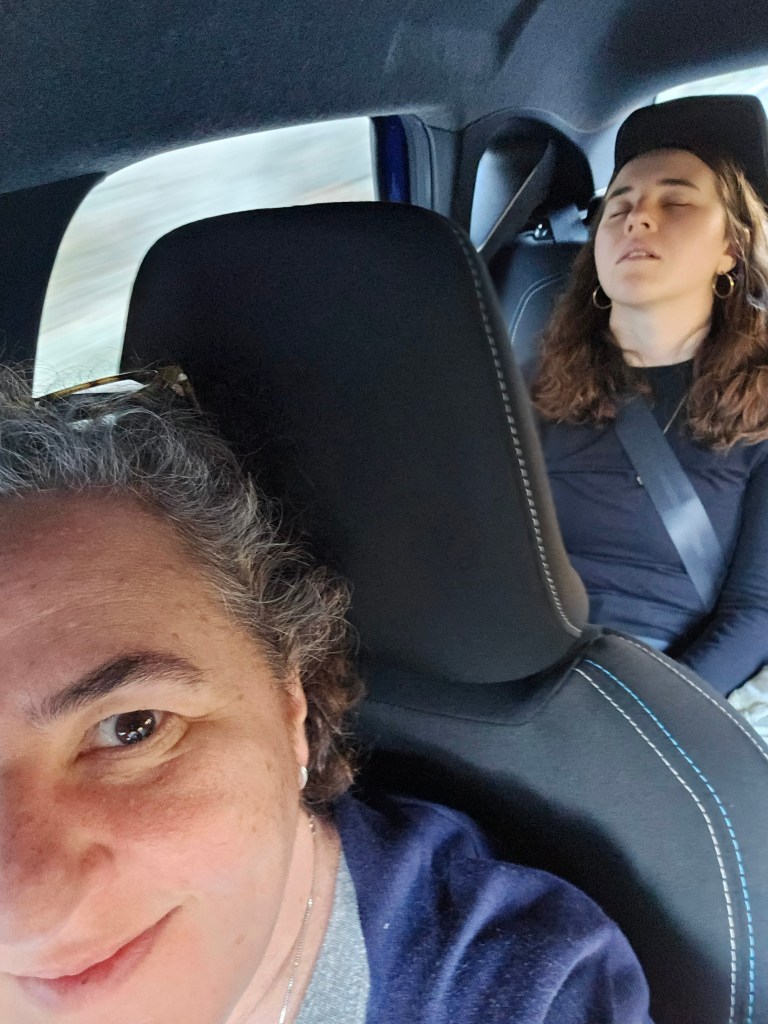
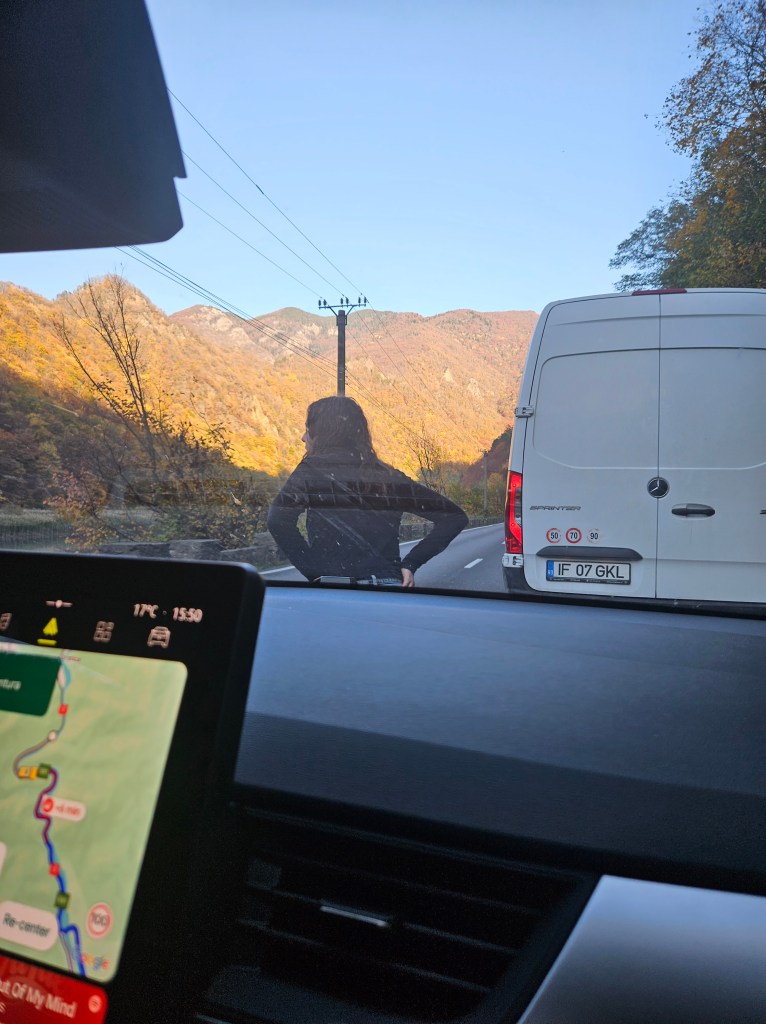
    The drive back went through the mountains, along the Olt River, and we hit terrible traffic resulting mostly from construction which reduced the highway to one lane. So we sat and sat and sat and inched forward. The delays allowed Russell to nap along with Marina, and to take some strolls along the river.

    Russell did all of the driving, since the car had a manual transmission. It was also, in Russell’s words, an asshole, beeping at us constantly for obscure reasons.

    We were all tired when we finally got back to Craiova after a wonderful, busy couple of days in Transylvania. We cobbled together dinner. And then it was time to say goodbye, as we had to leave early the next morning to drive to the airport in Bucharest and fly to Istanbul.

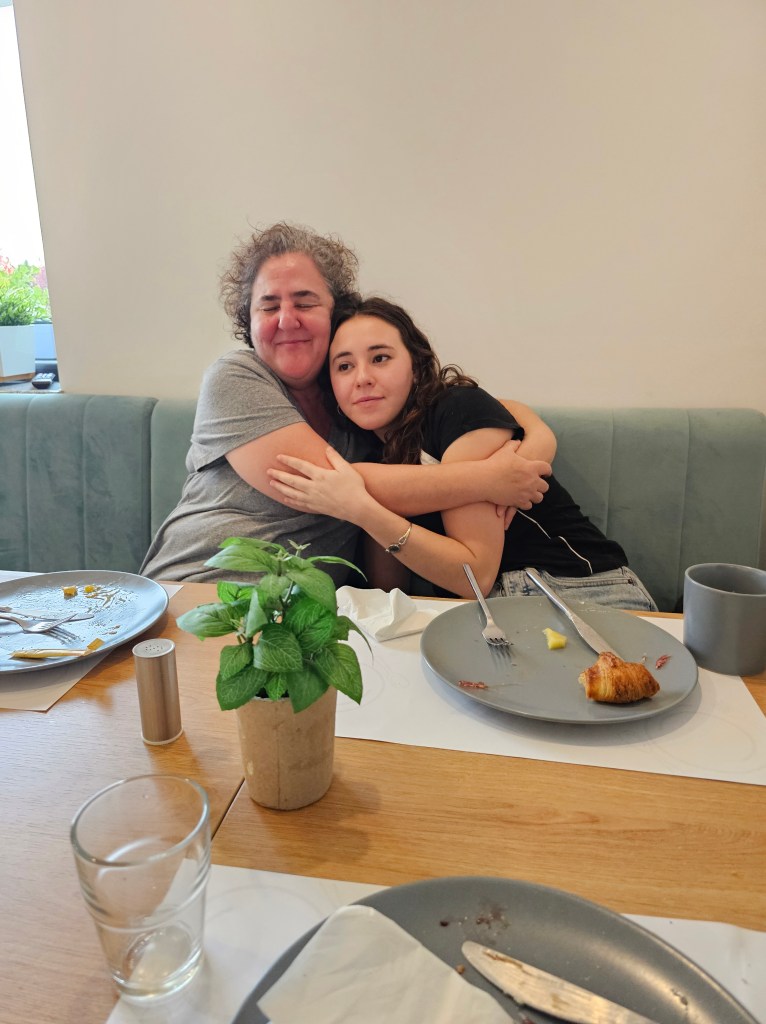
    We had a wonderful time with Marina. We saw a part of the world that we had never expected to see, and we understood the joys and challenges Marina faces in her Fulbright better than we had before. And we just had so much fun together. It was hard to say goodbye. Emily joked about it being like dropping her at Camp JRF 15 years ago. We may not see Marina again until her Fulbright is over, but we know that she is doing outstanding, impressive work.

    This point should not be understated. Marina has been dropped into an unfamiliar country, with an unfamiliar language, alone and far from friends and family. She has some support, but she’s learning to teach in a totally new context, with minimal advice and guidance, over 100 students who speak English mainly as a second language. She was told at the start of her fellowship that she would have to be flexible, since she would not know who her students were or, really, what the expectations for her are, until the term began and not even then. She has lots of students showing up for the first time after classes have been underway for weeks. And she’s doing amazing work, designing thoughtful creative classes. She has students giving speeches about monsters and what we can learn from them and thinking about rhetorical devices in Taylor Swift songs. Her students and colleagues like her. She’s taking intensive Romanian classes three or four days a week, in addition to her teaching responsibilities. She’s reaching out to new people to try to make friends and develop some community. And she’s learning to live happily in an unfamiliar city and to take pride in her hard work and her impressive successes already. She’s an amazing person and makes us very proud.
  • On Thursday, Marina only teaches one class, and has no classes on Friday (although she usually attends a Romanian culture class that day), so we took off for Transylvania. Our Airbnb in Craiova was inexpensive enough that we were comfortable keeping it through our Sunday departure, and got an Airbnb in the town of Hunedoara for two nights.

    Marina was looking forward to having some variety after arriving in Craiova almost a month before. Transylvania is famous for its castles. While this includes Bram Castle, supposedly the inspiration for Dracula’s Castle, we decided to avoid the expected crowds and head elsewhere.
    We had a four hour drive, and we absolutely did not make our trip more interesting by putting a tiny bit of deisel fuel (motorină) rather than gas (benzină) in the tank. No, why would we do that?

    The drive wound us slowly through many villages, as we watched Oltenia turn to Transylvania, with different styles. Transylvania has well-known red roofs. Lots of the villages were Romani, and we saw two funerals.

    We had our first real travel hiccup when we arrived at our Airbnb and the host was not there to meet us and did not respond to our calls and texts. We suspected that we had been scammed. After half an hour of waiting on a not very comfortable street corner, we contacted Airbnb and headed to a hotel. It turns out that we hadn’t been scammed. The host didn’t speak English and was just not appropriately responsive. In the meantime, we were refunded the Airbnb cost and the hotel was lovely.
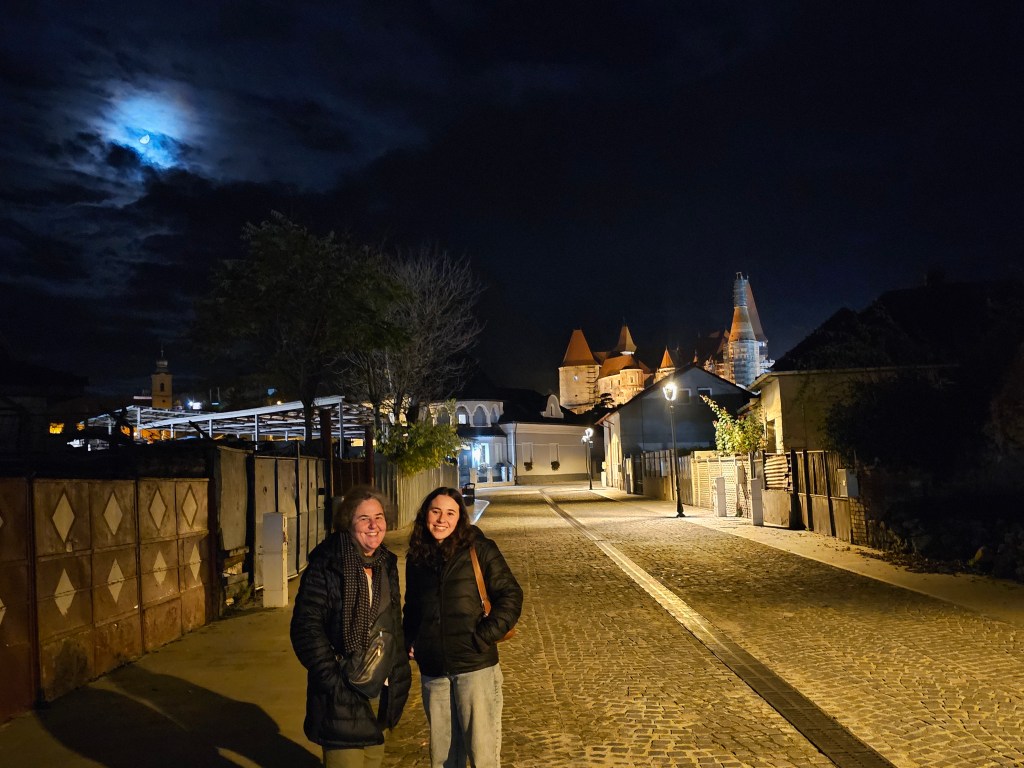
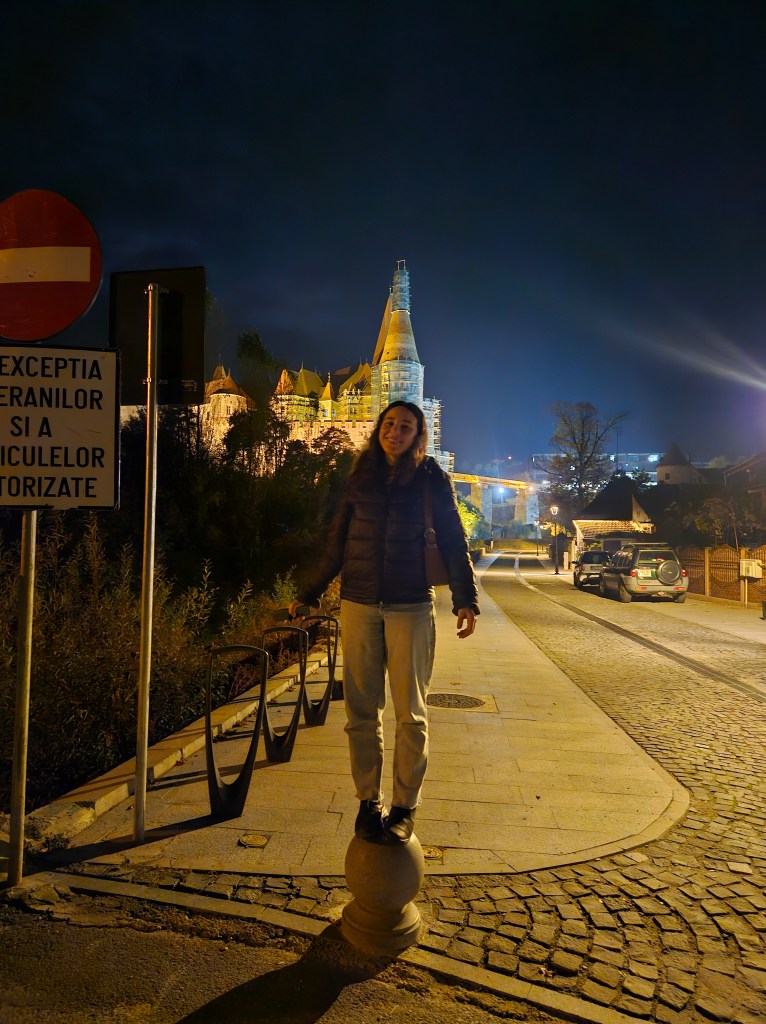
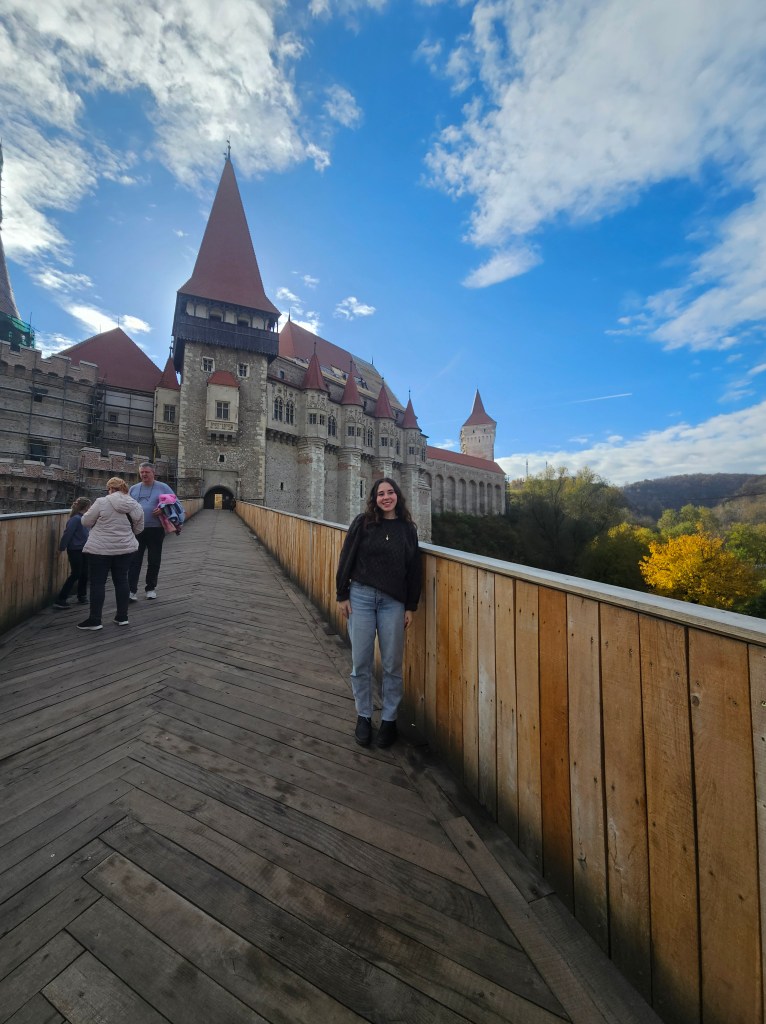
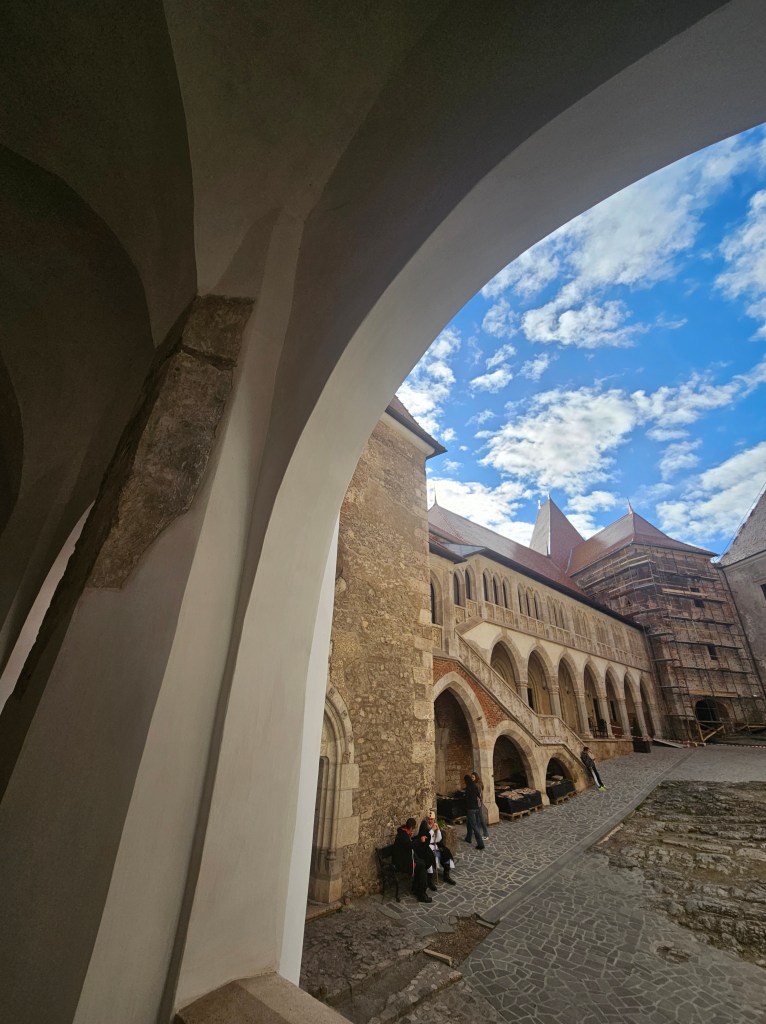
    After finally getting settled, we went out for dinner and a walk. Castelul Corvinilor (Corvin’s Castle) was beautiful and a little eerie in the moonlight.

    The next day, after the hotel breakfast, we headed back to the castle in the daylight.

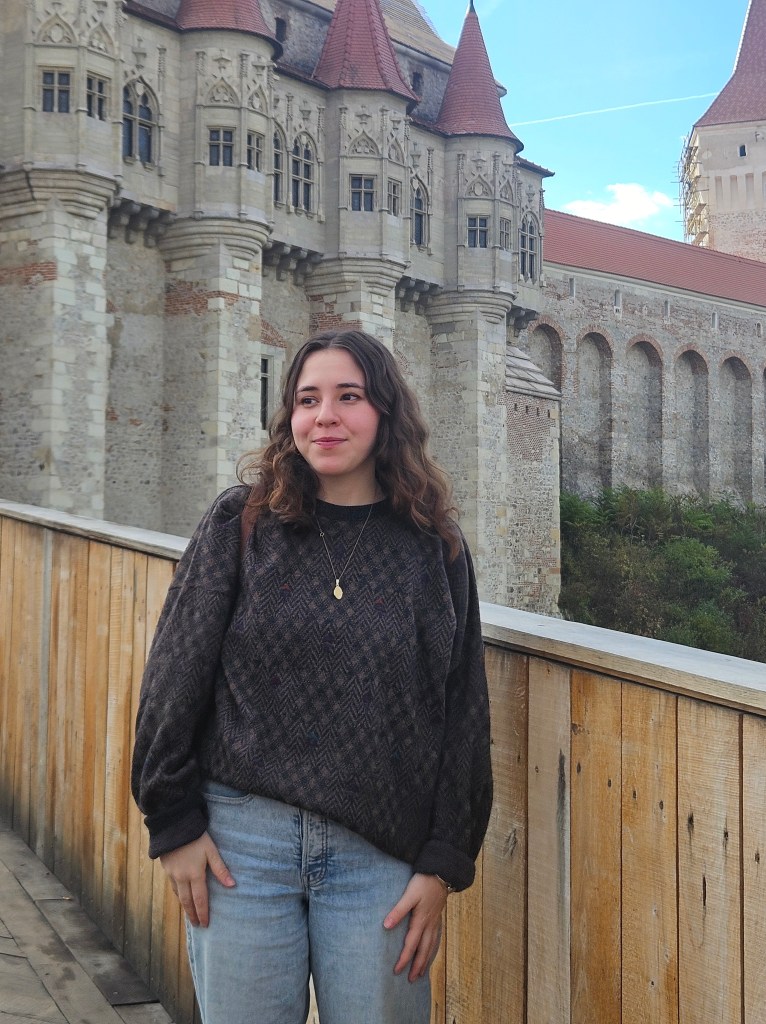
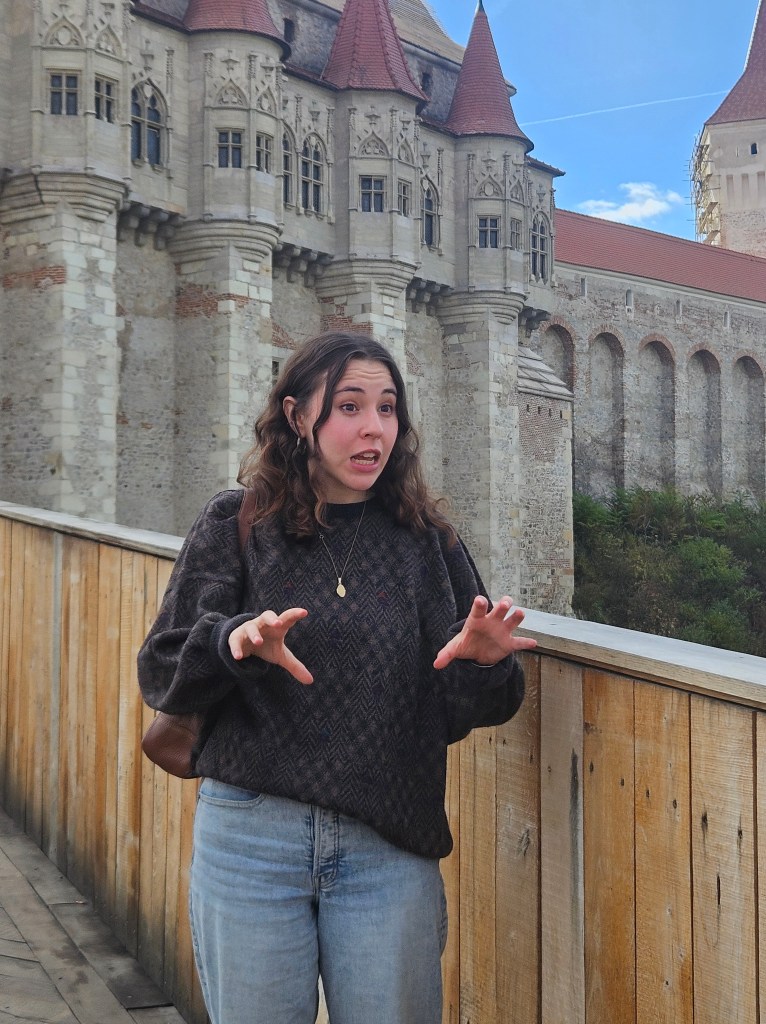
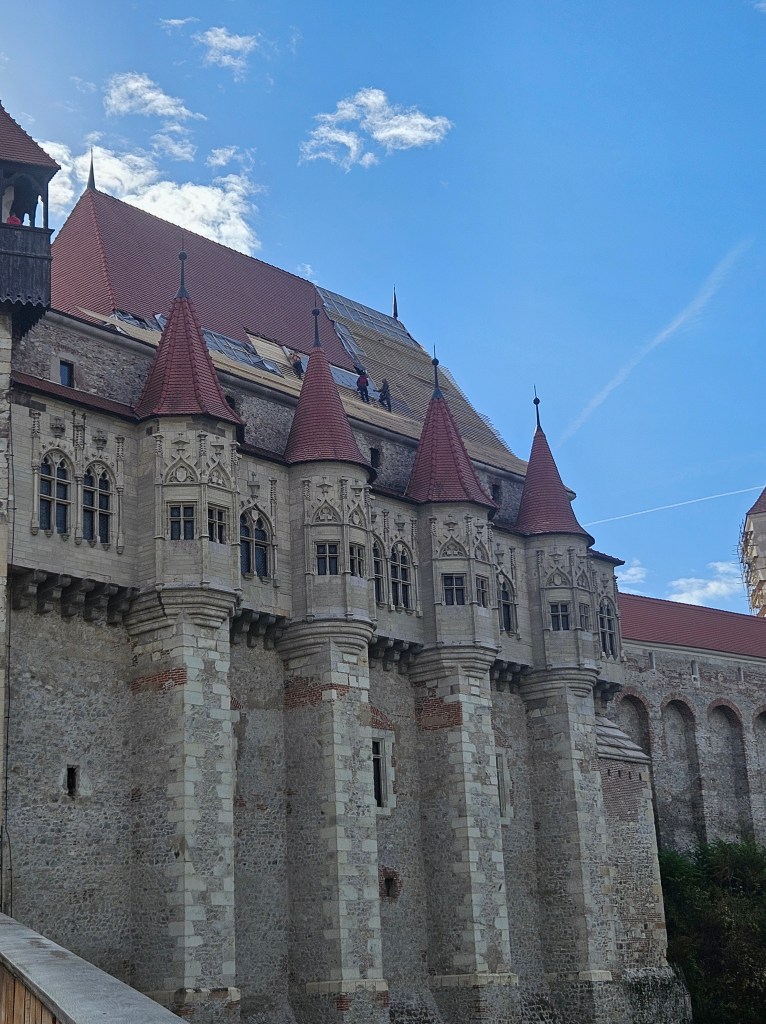
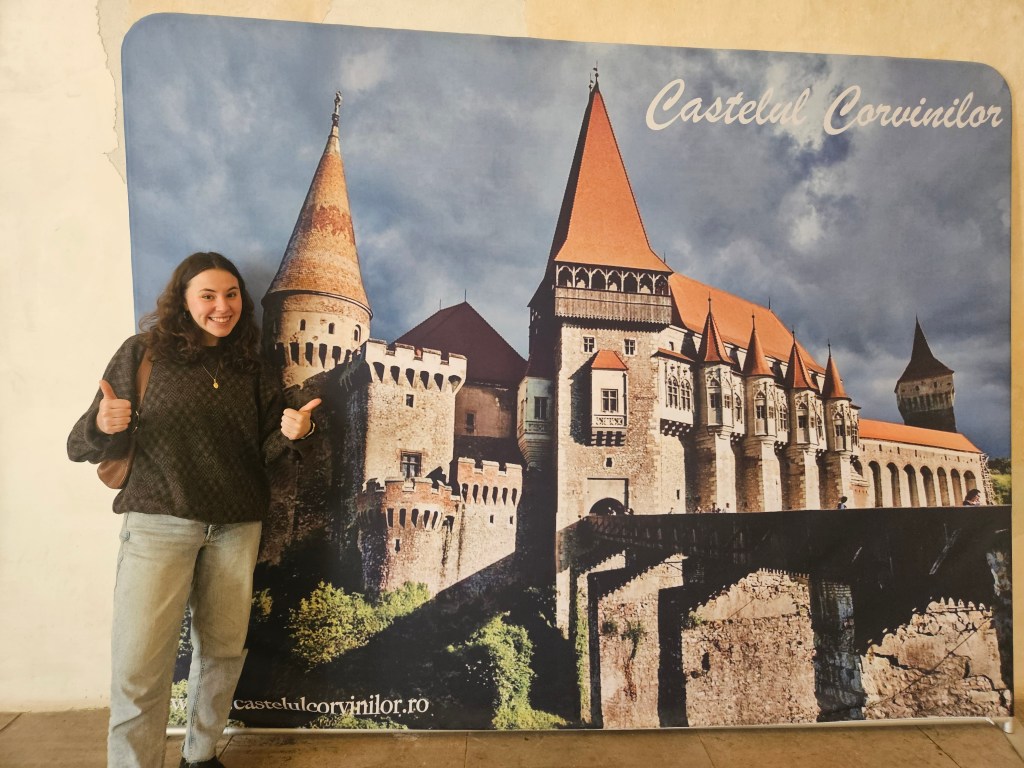
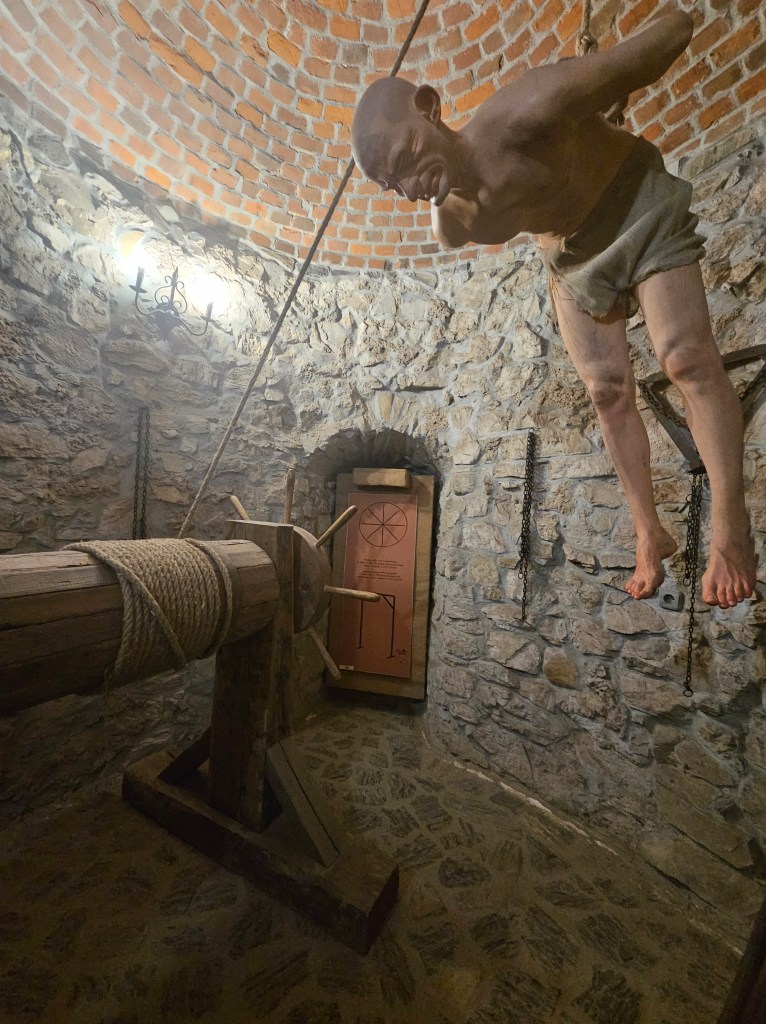
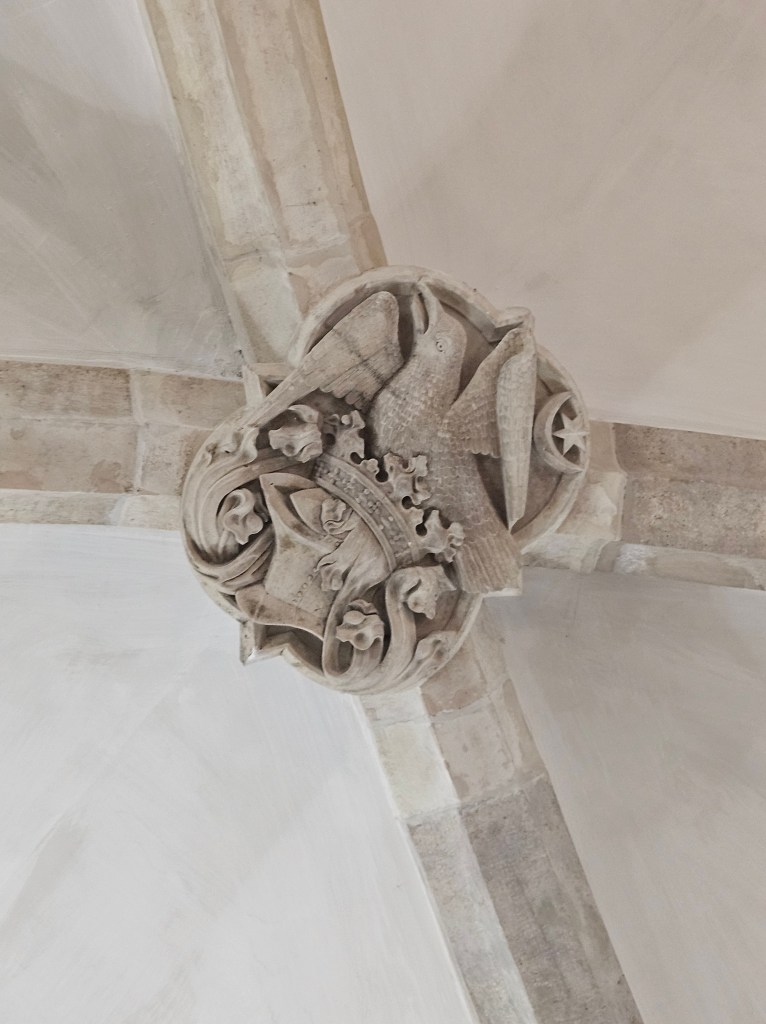
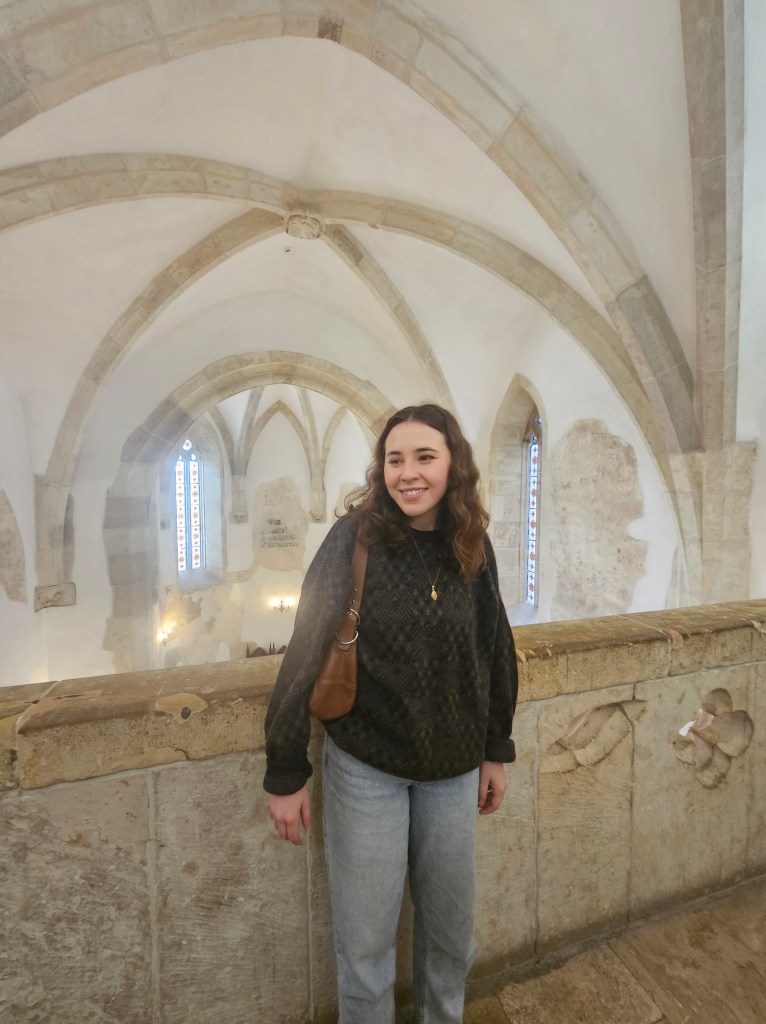
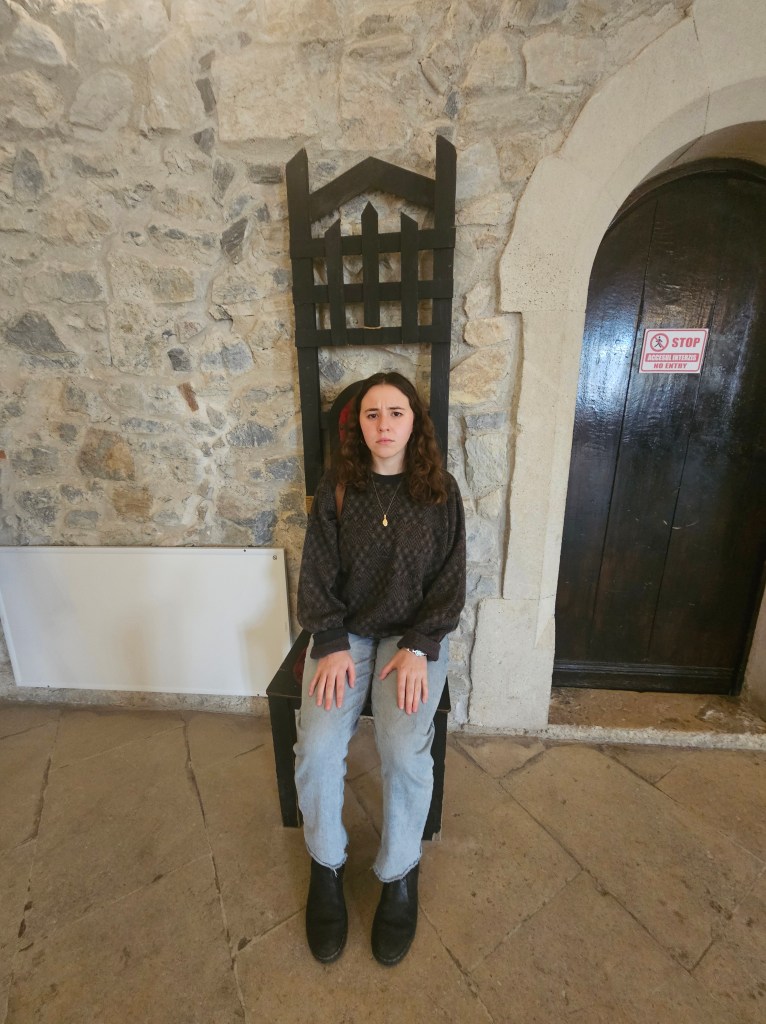
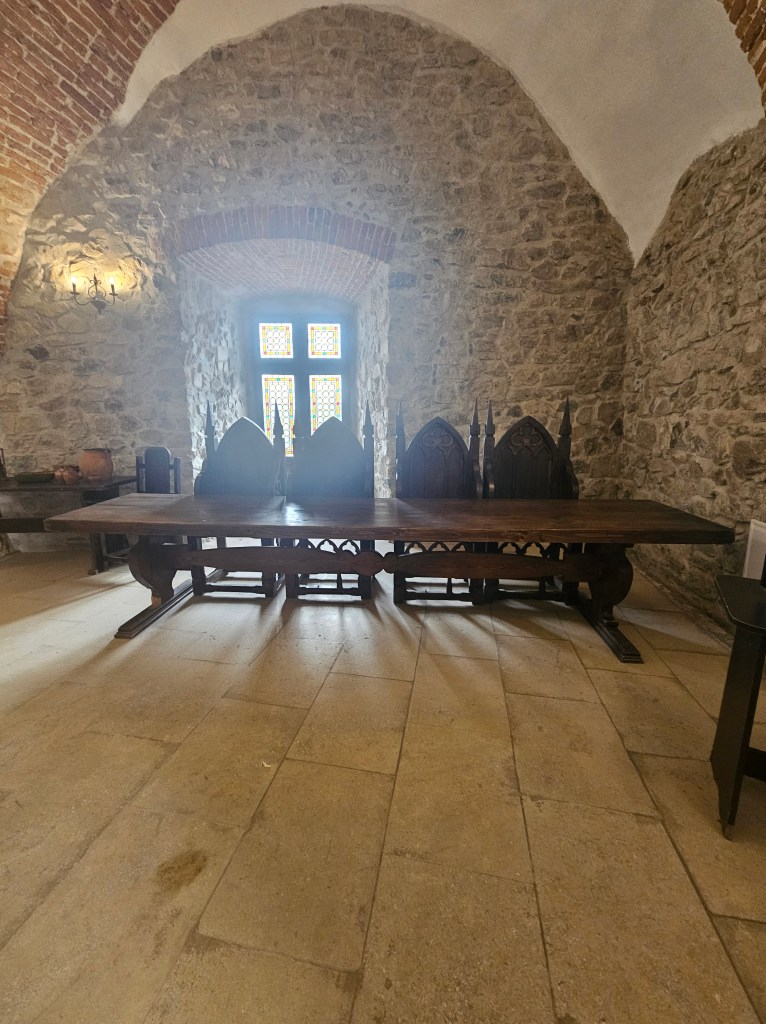
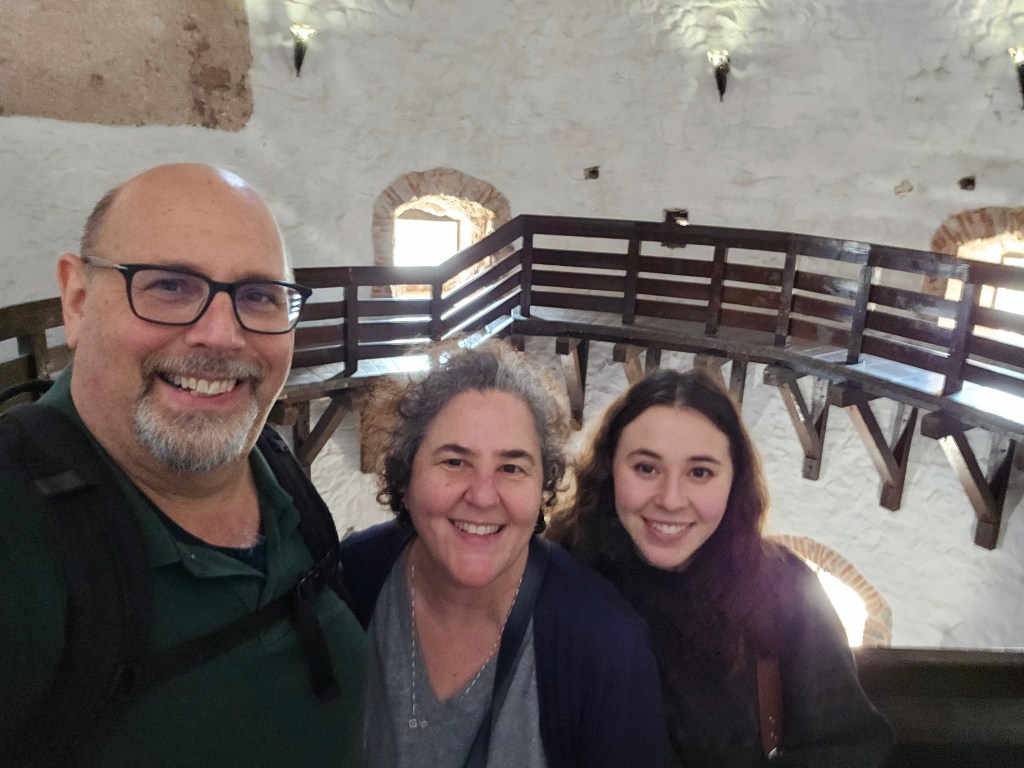
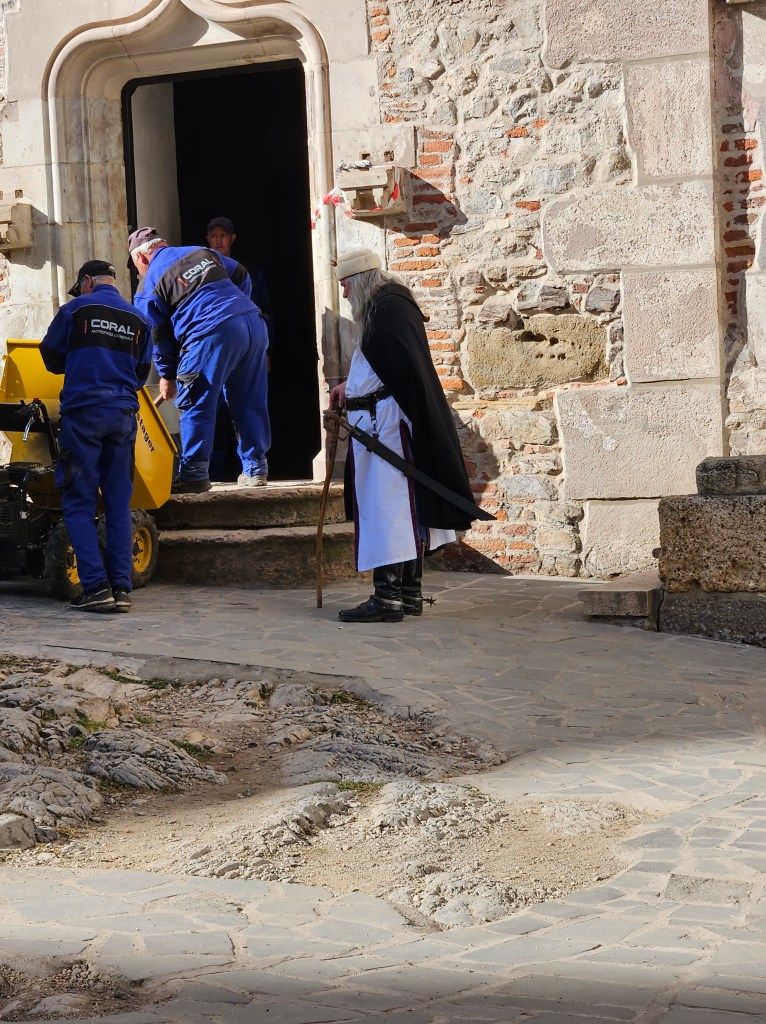
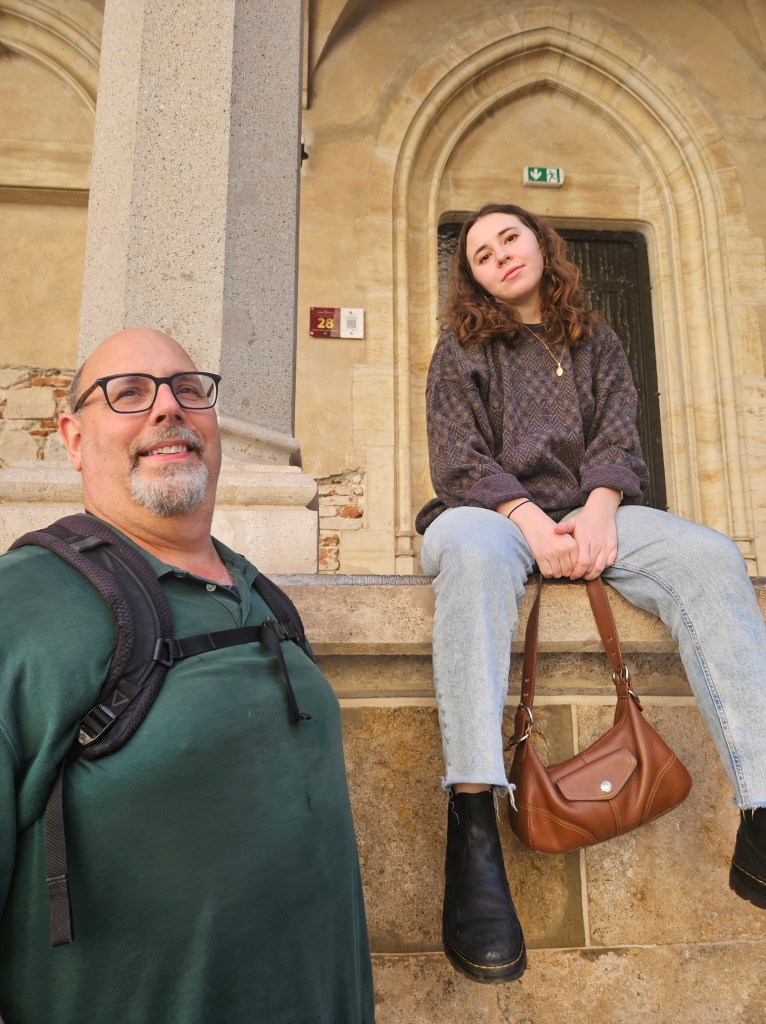
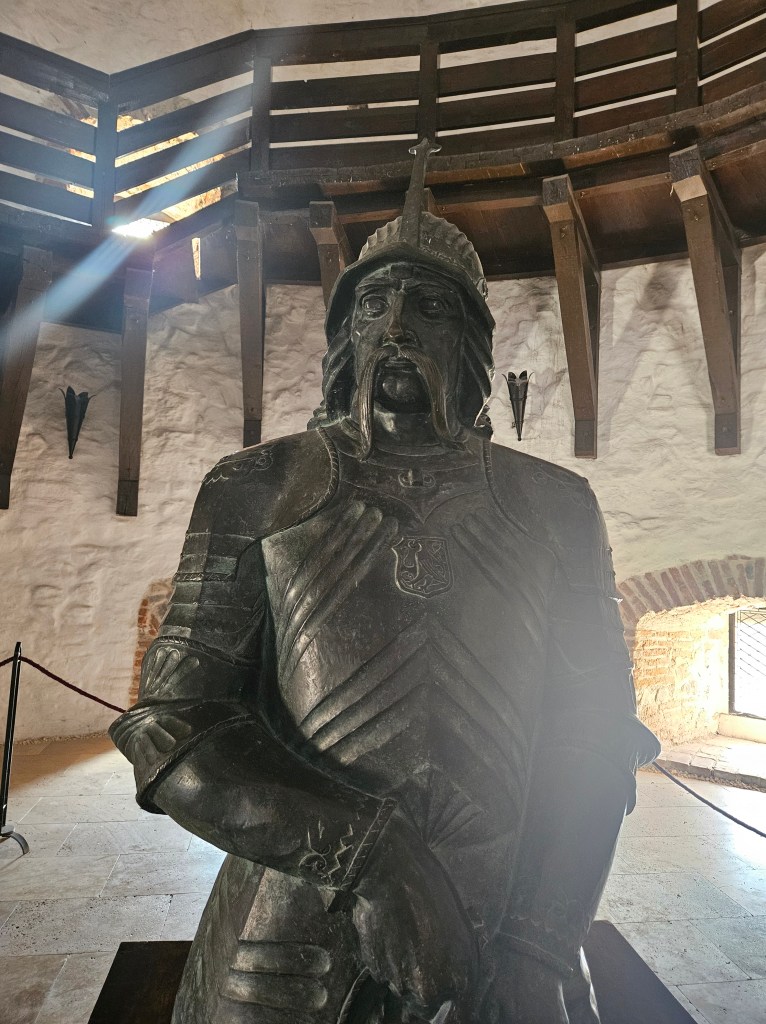
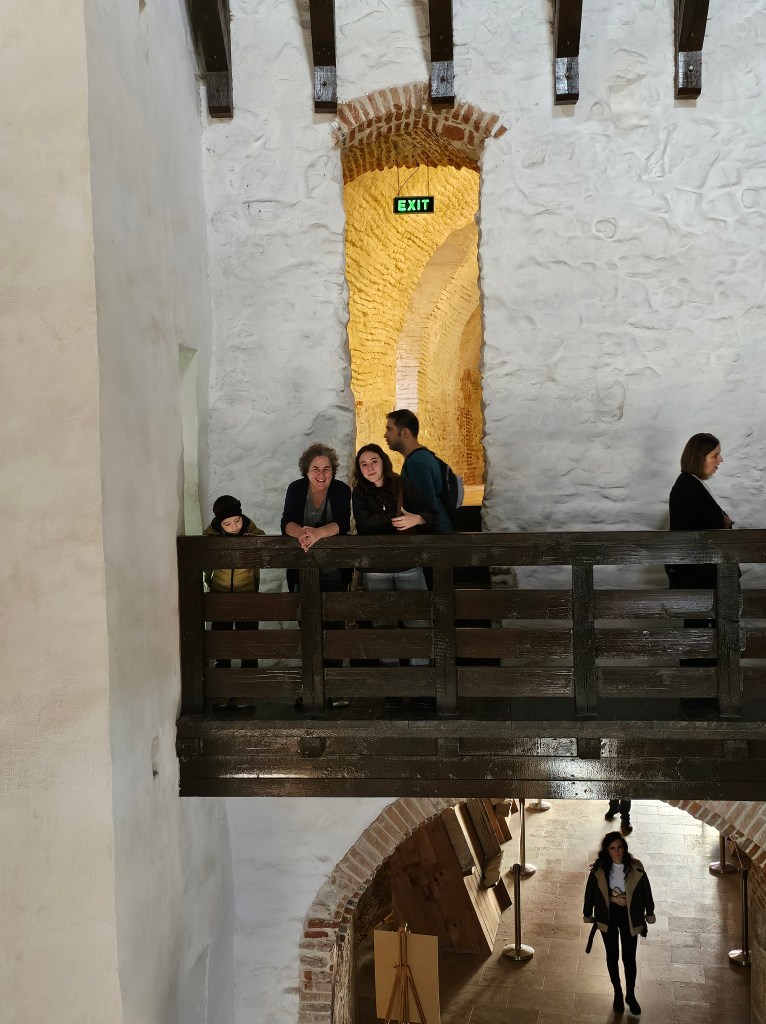
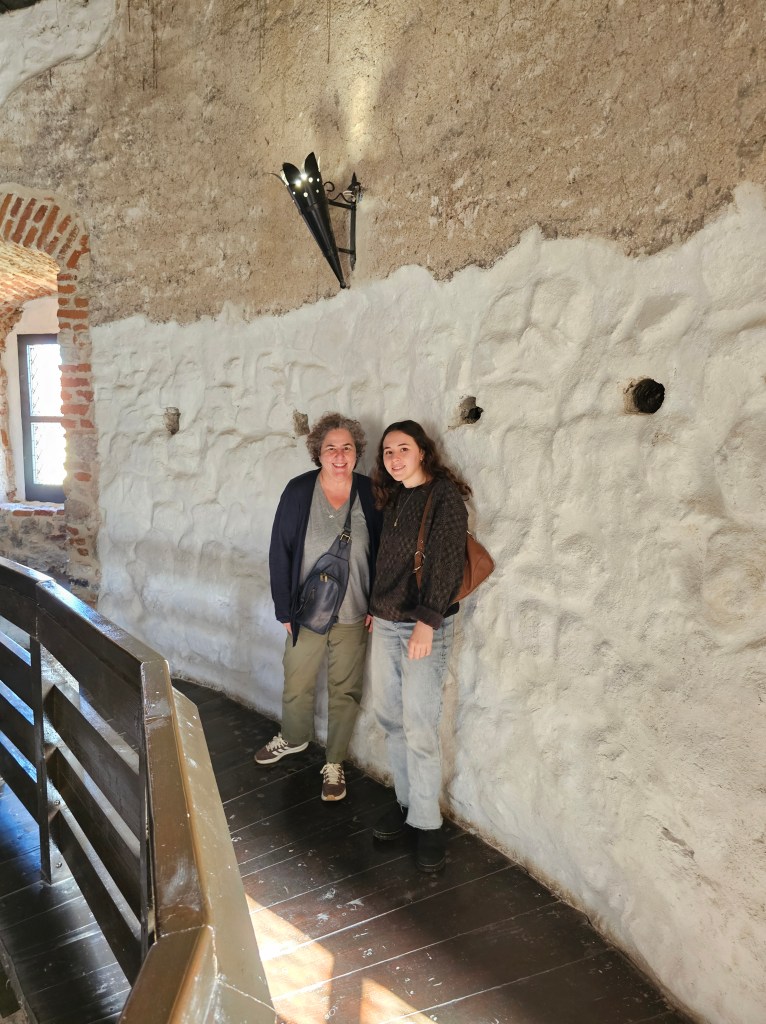
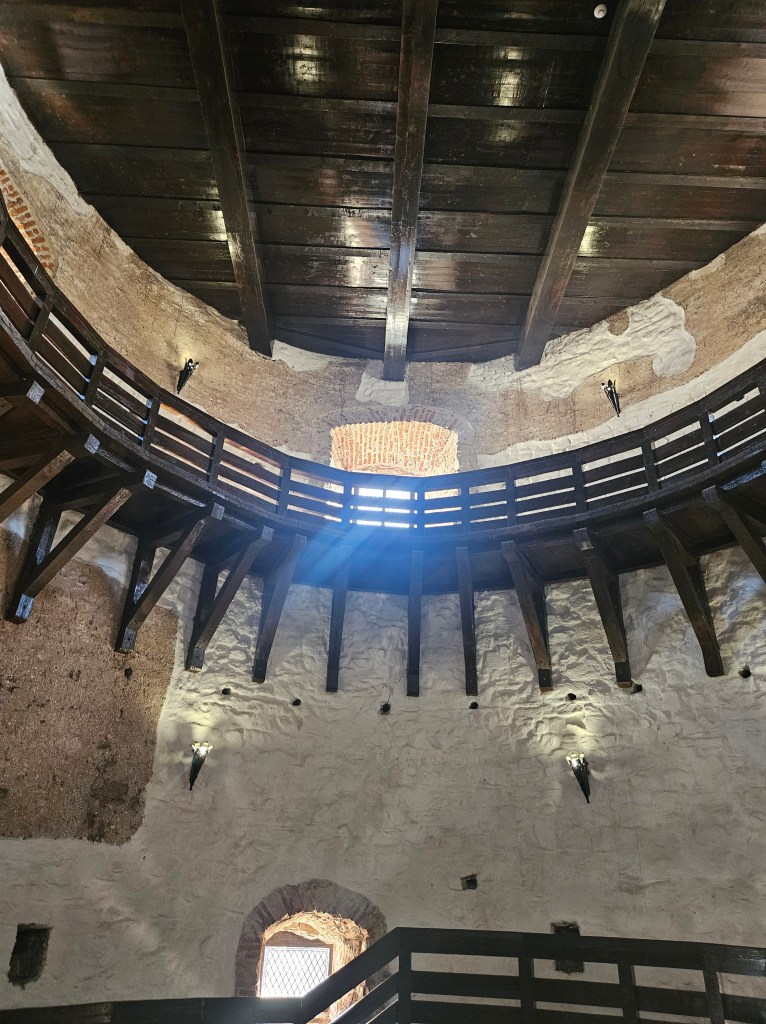
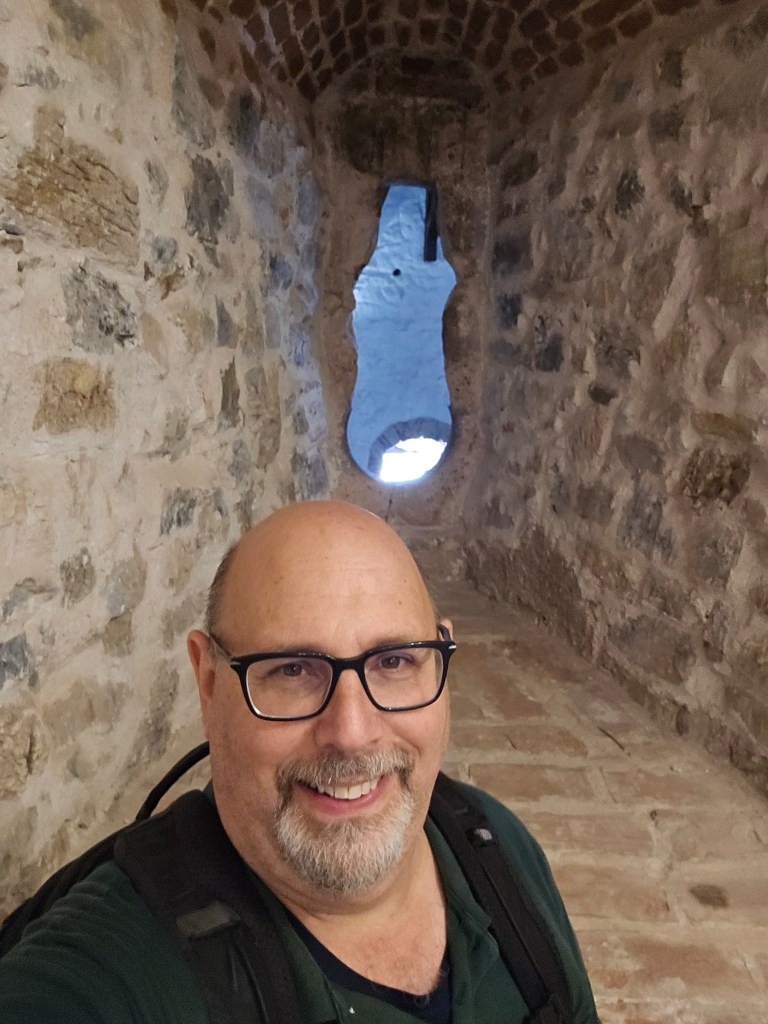
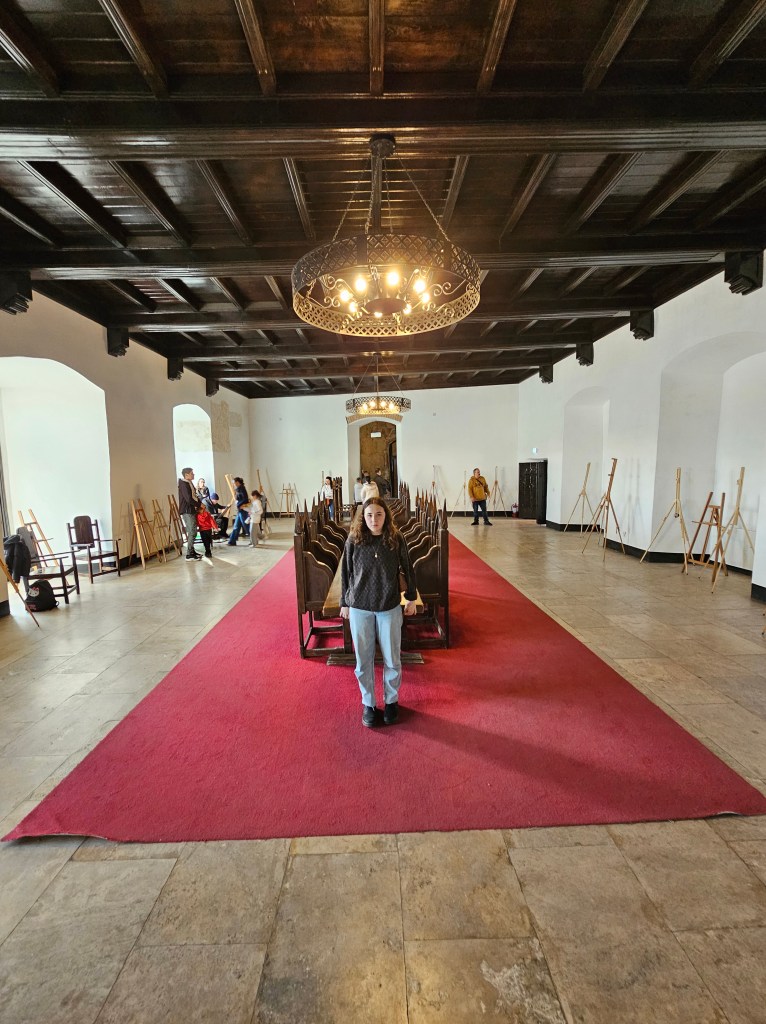
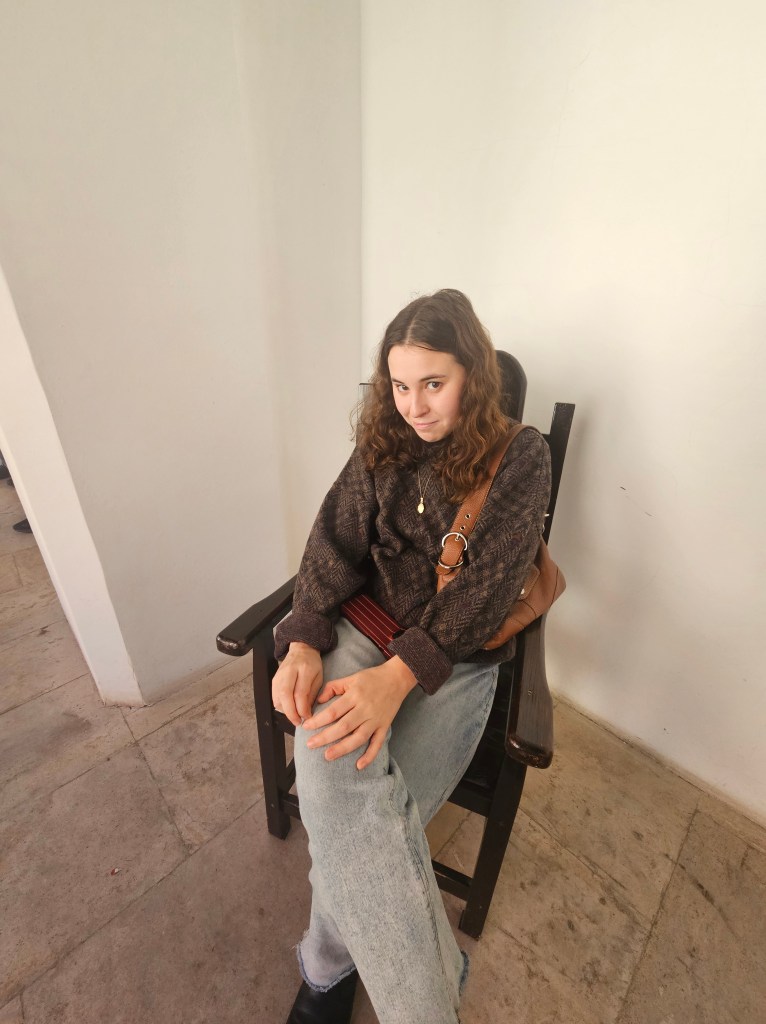
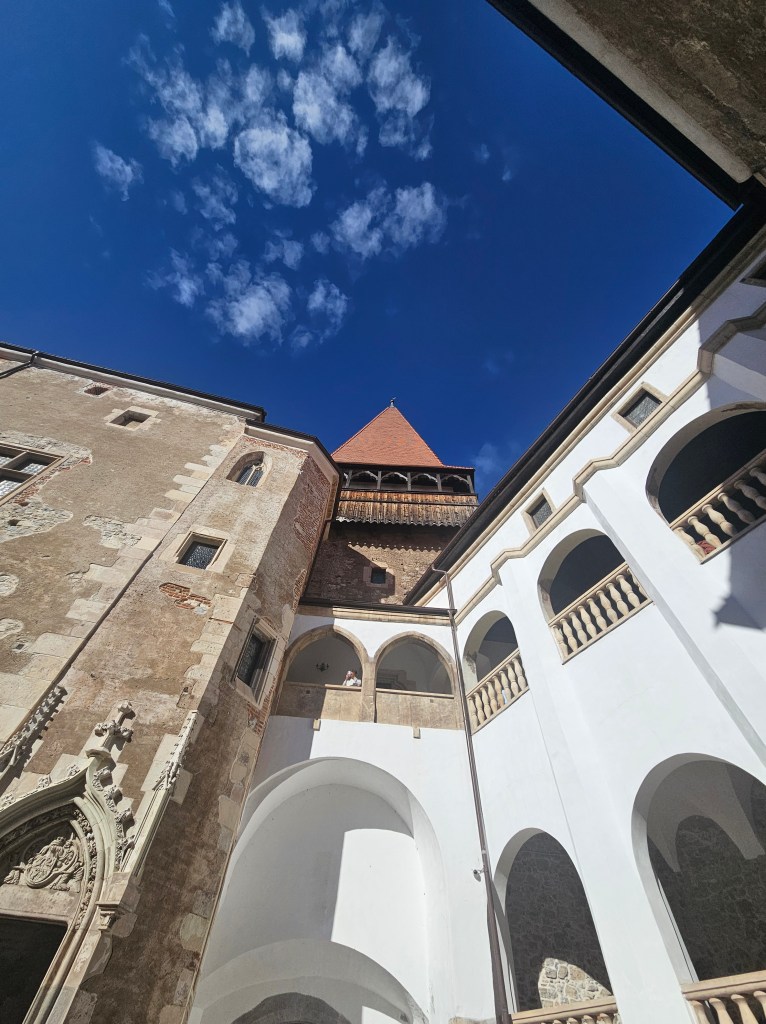
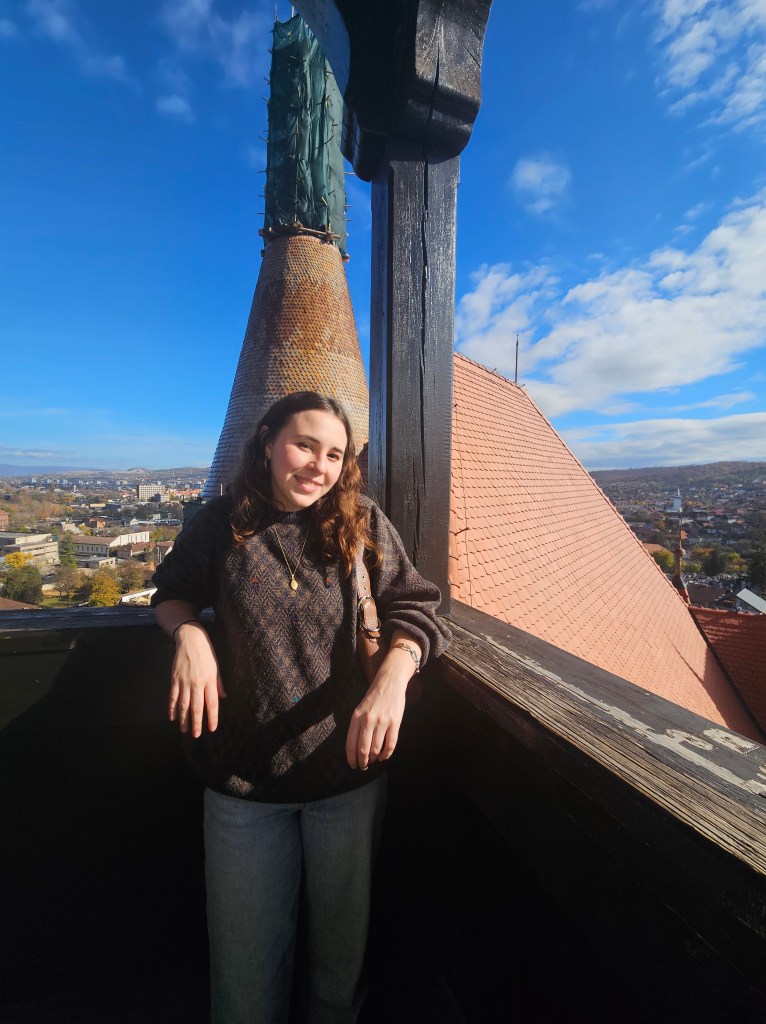
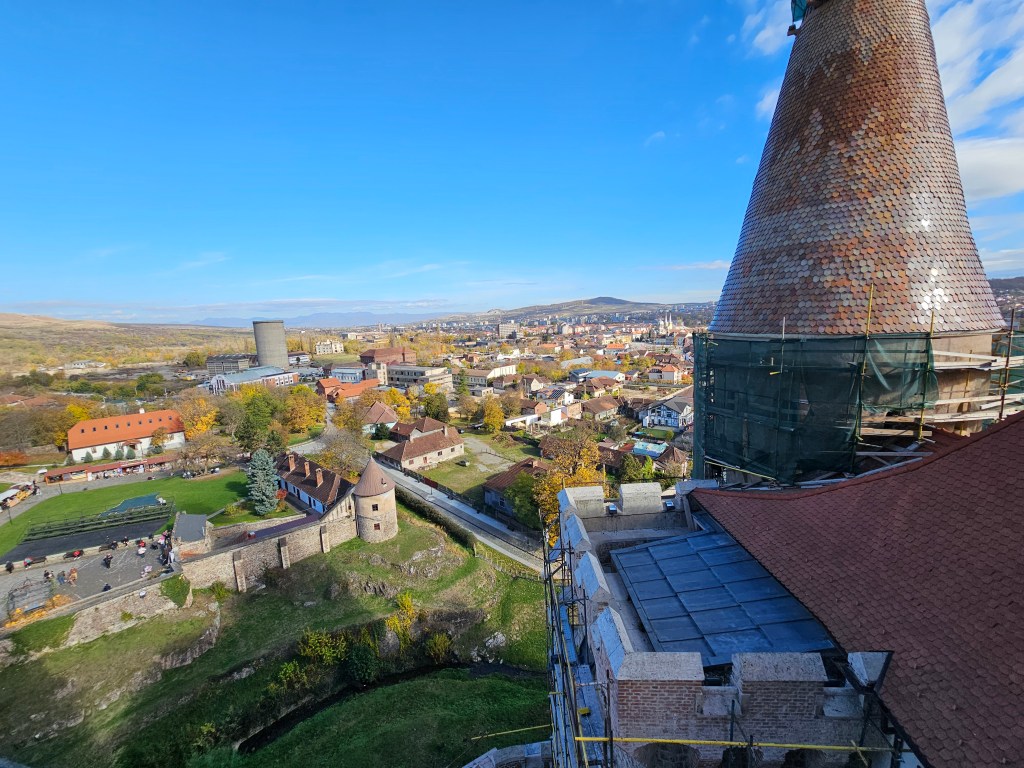
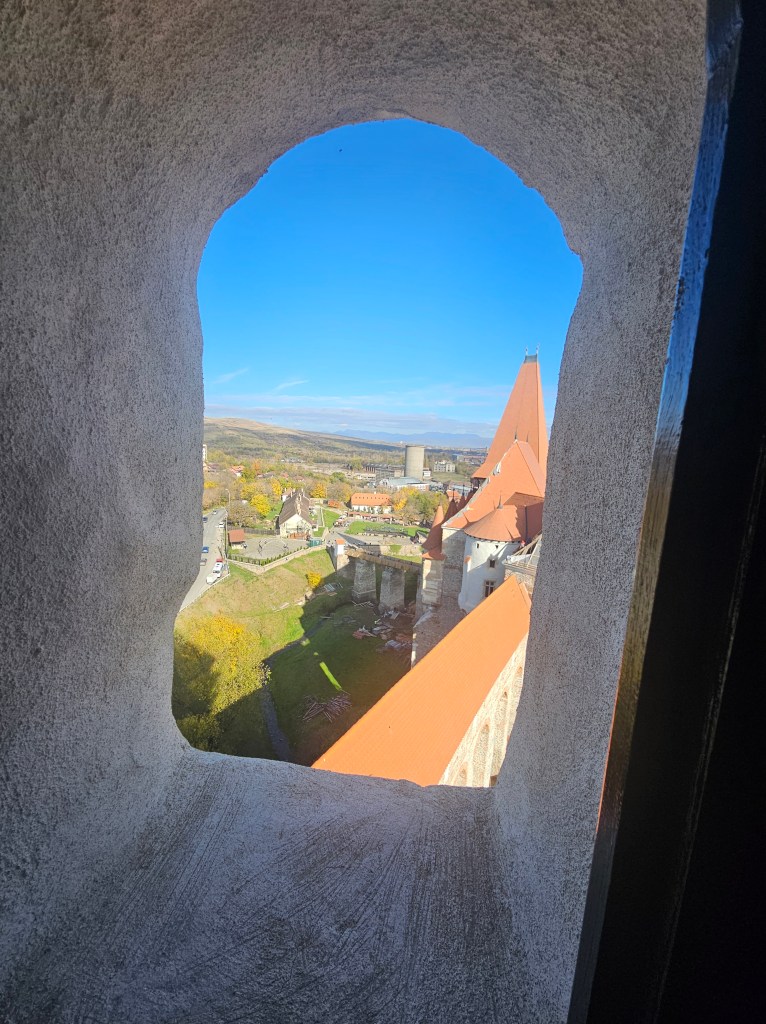
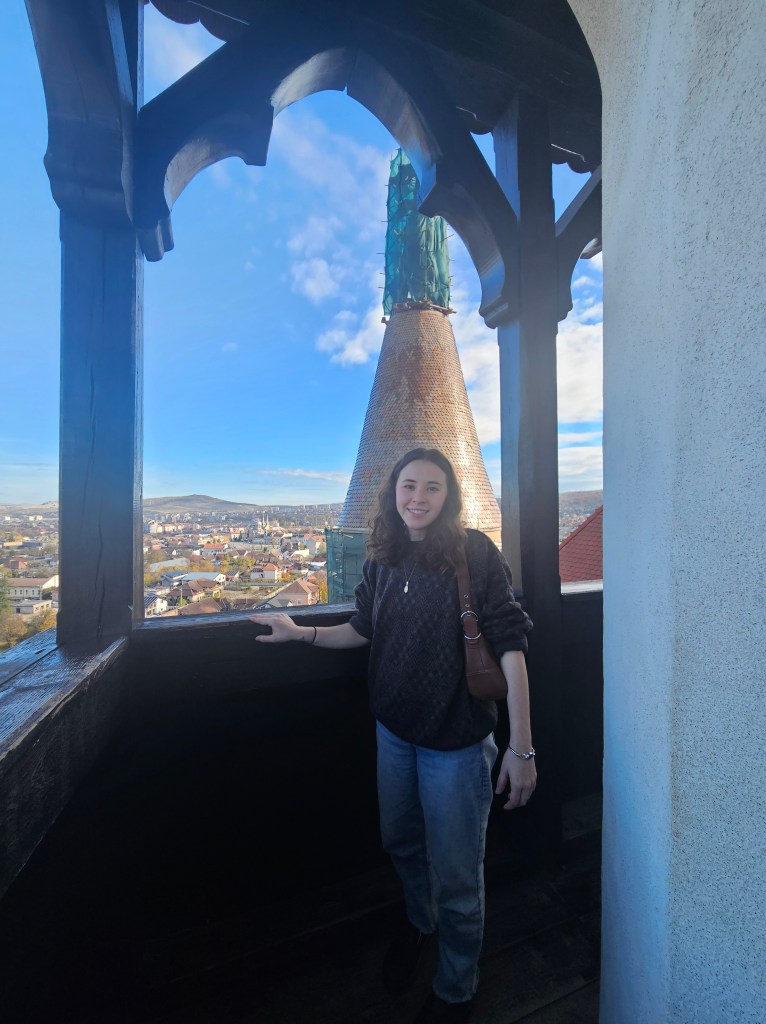
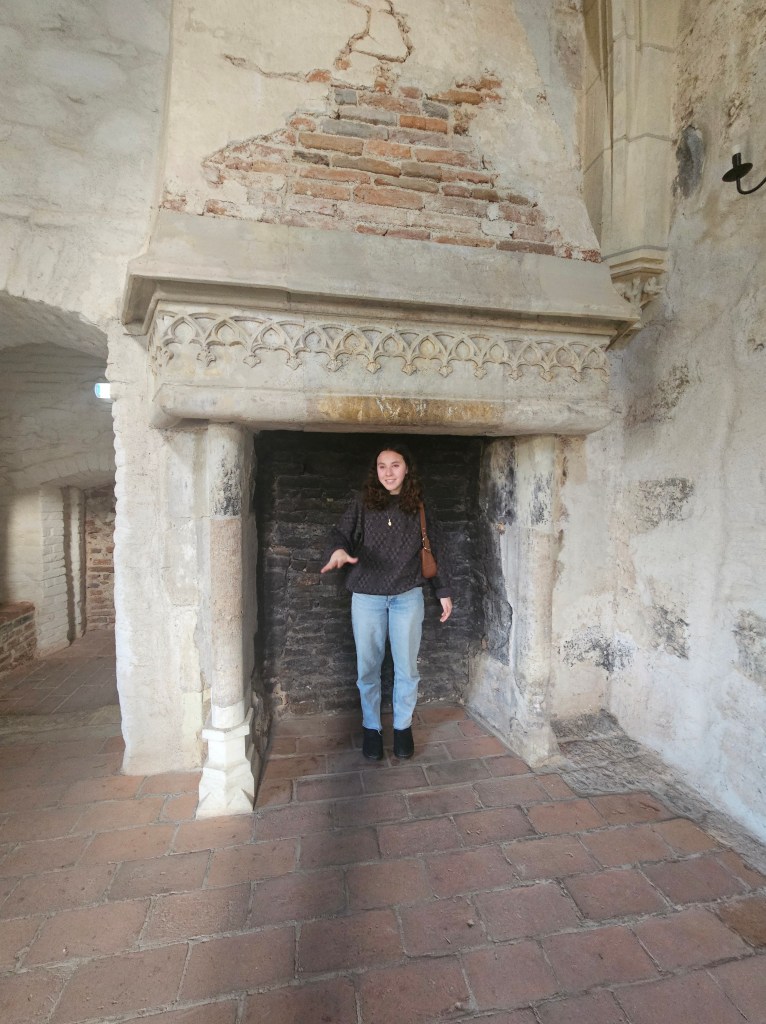
    The Gothic-Renaissance castle is one of the largest in Europe and dates to the 15th century. Legend says that Vlad the Impaler was imprisoned there. There was a handy display of torture. Mostly, it was just fun to wander around all the halls and towers. Behold many photos!

    Marina particularly enjoyed the Game of Throniness of it all.

    This was Halloween day, and for the first time in a while we ran into a bunch of Americans including a busload doing a tour of Transylvania for Halloween. It did not make us miss America. Overall, there was some Halloween acknowledgement here and there, but it’s not really a big deal in Romania.

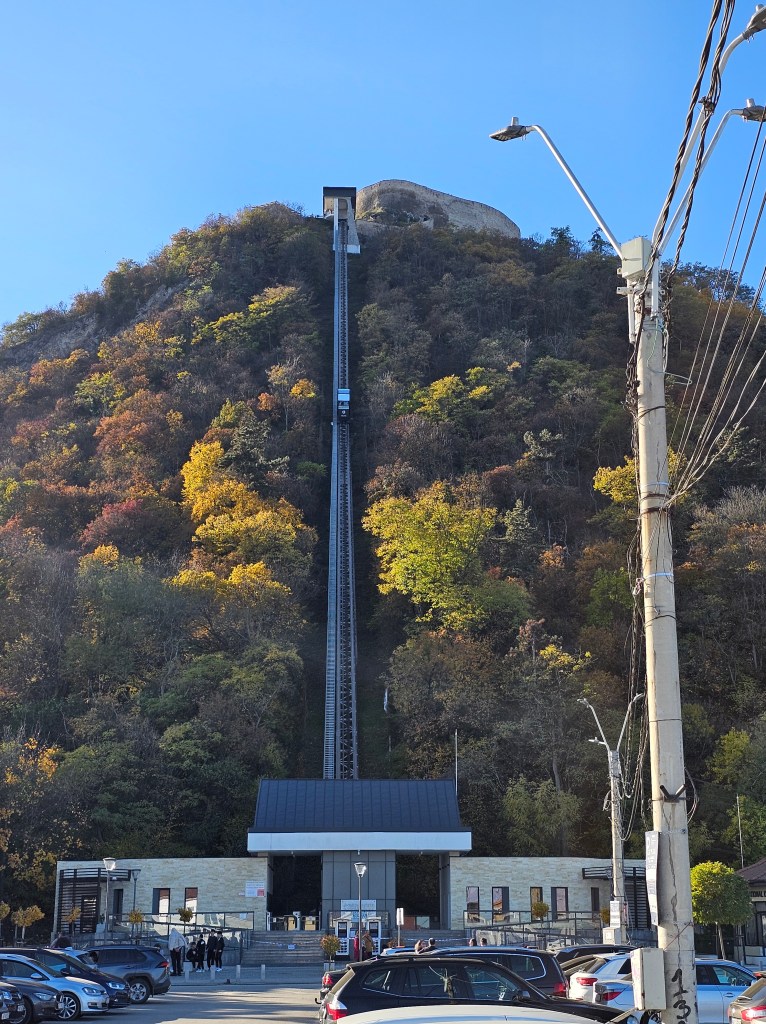
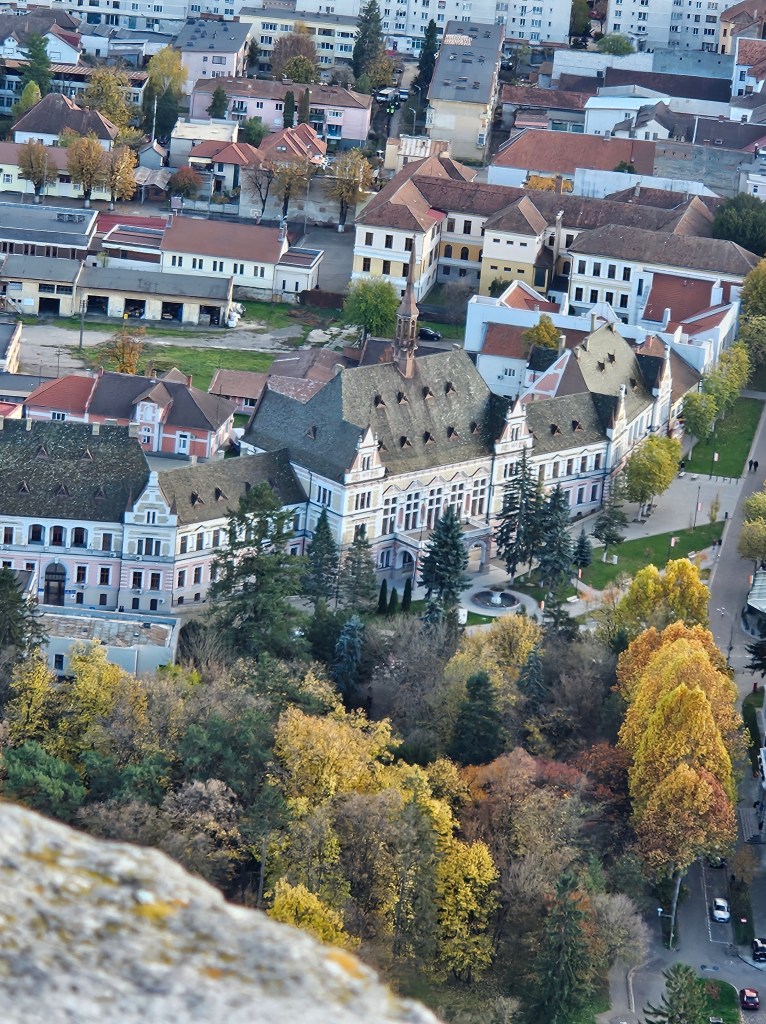
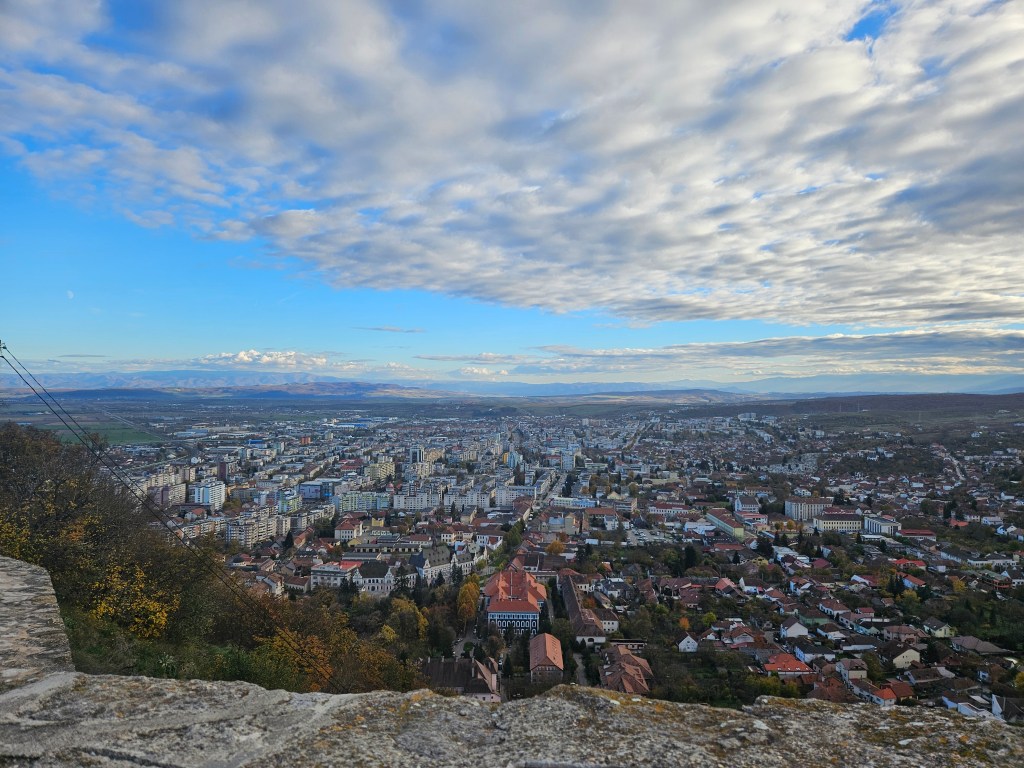
    After the castle, we had pizza for lunch in the nearby city of Deva. We debated whether we should walk up to the top of this small moutain to see the Deva fortress (the funicular was sadly not taking passengers).

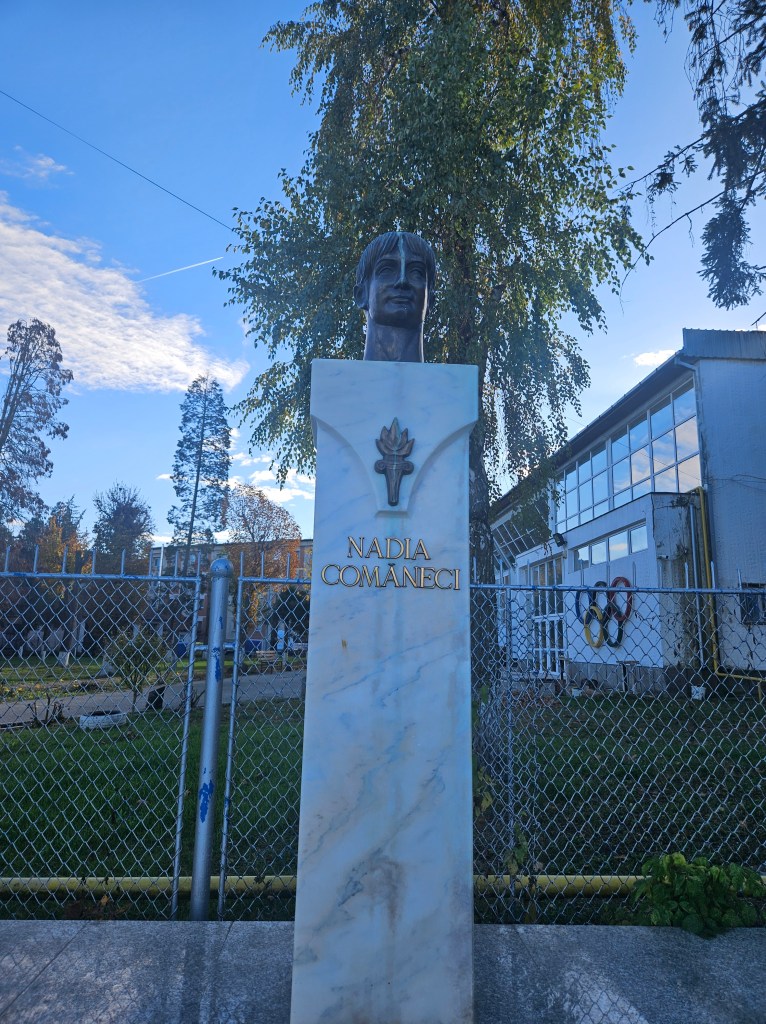
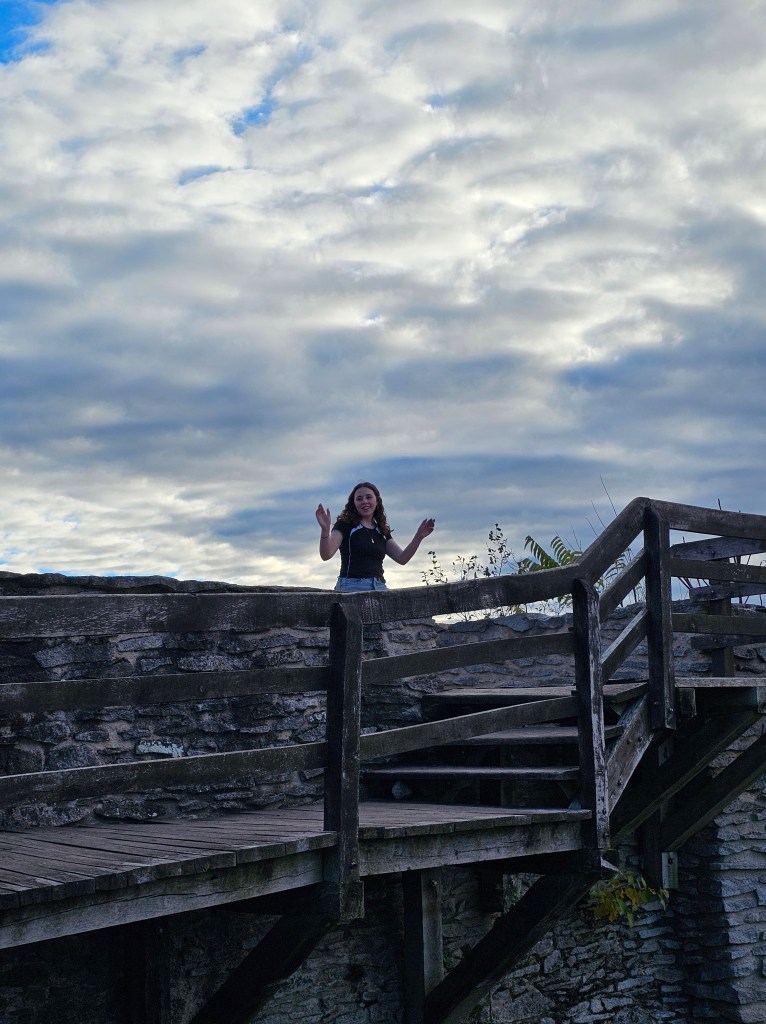
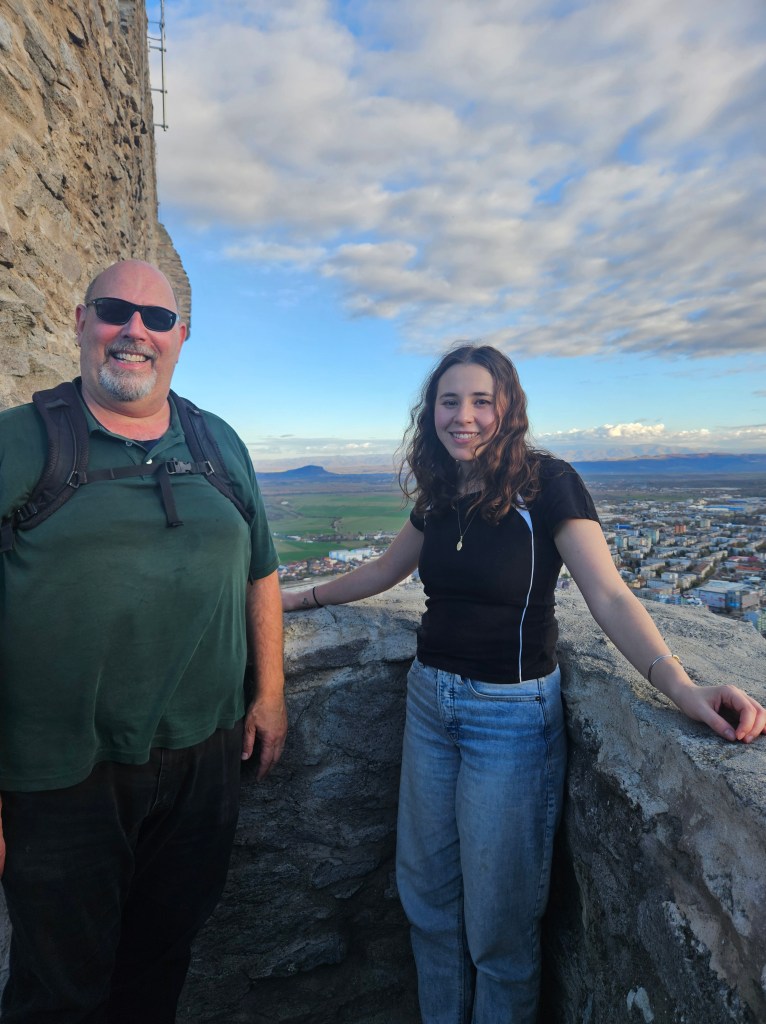
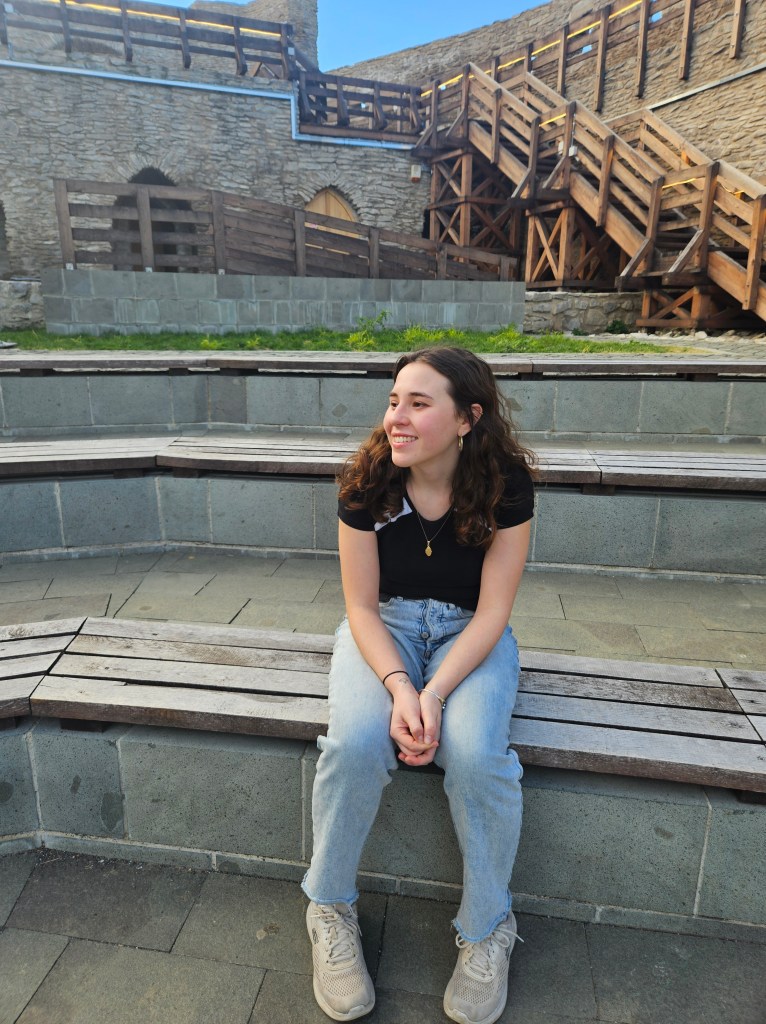
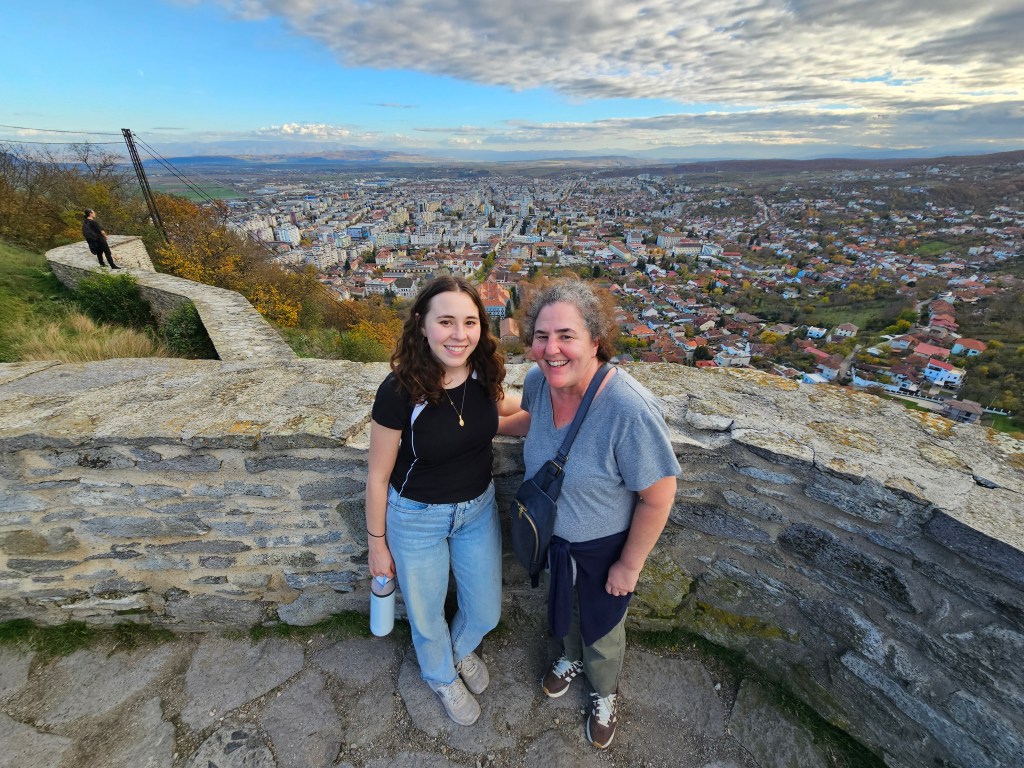
    Who were we to pass up the challege? There was not a lot of context for the fortress, but it was a lot of fun to walk around an there were beautiful views. Which we deserved, because it was a monster to go up! Many a stair. It was also near an Olympic training facility and some of us born before 1970 were excited about the Nadia Comăneci bust.

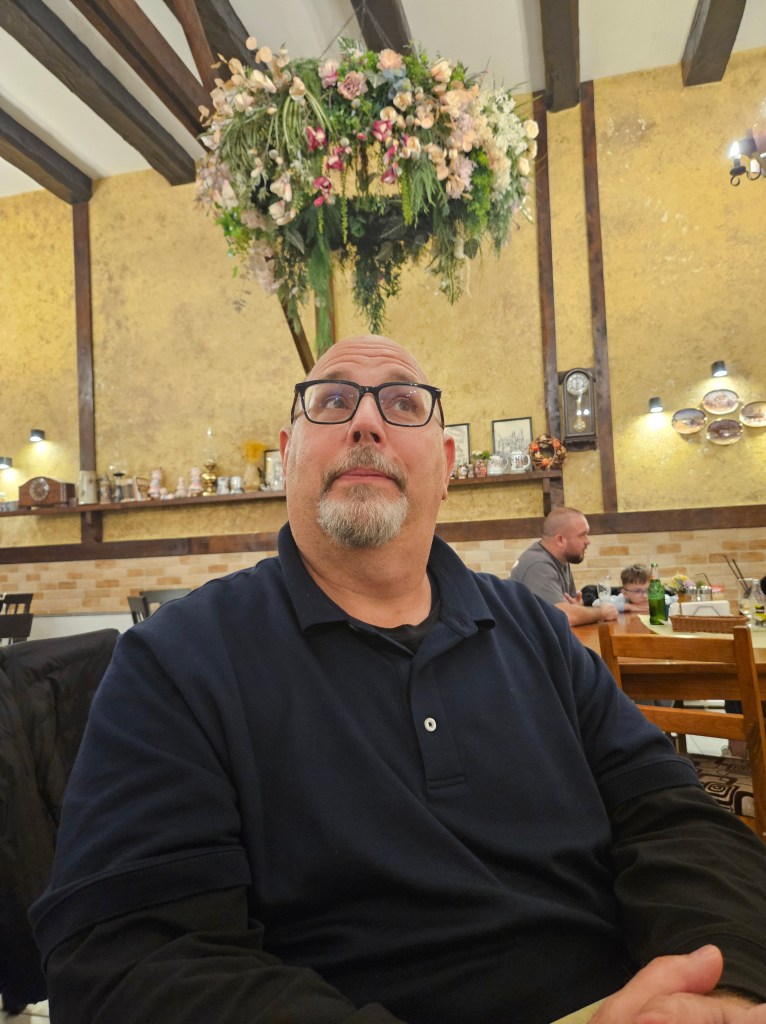
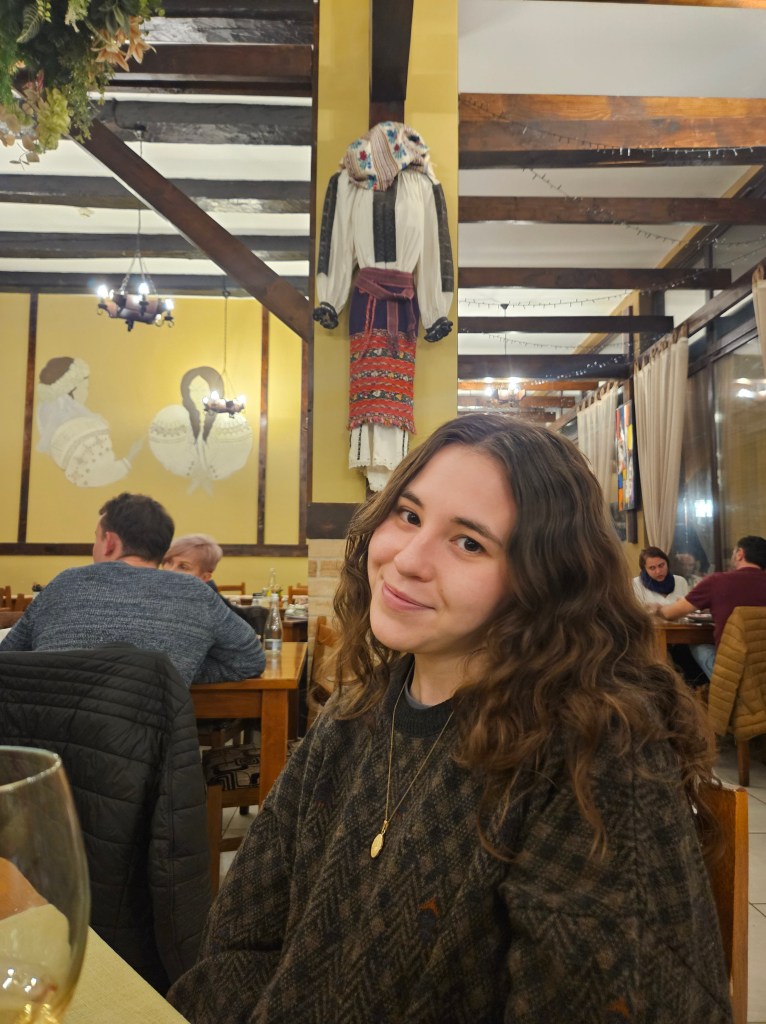
    After a little recovery time, we had a lovely dinner at a traditional Romanian restaurant. Happy Halloween!

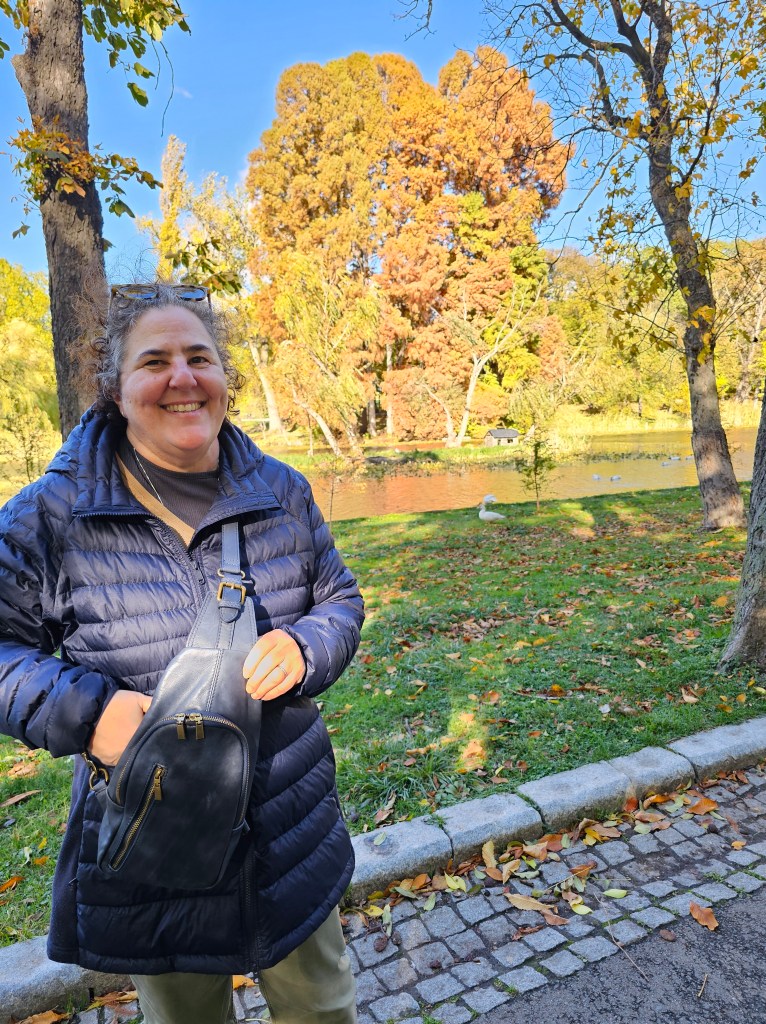
  • One of Craiova’s charms are all of its parks and gardens. While Marina had a busy day on Tuesday, teaching and taking her Romanian class, we explored Nicolae Romanescu Park, one of the largest urban parks in Eastern Europe.

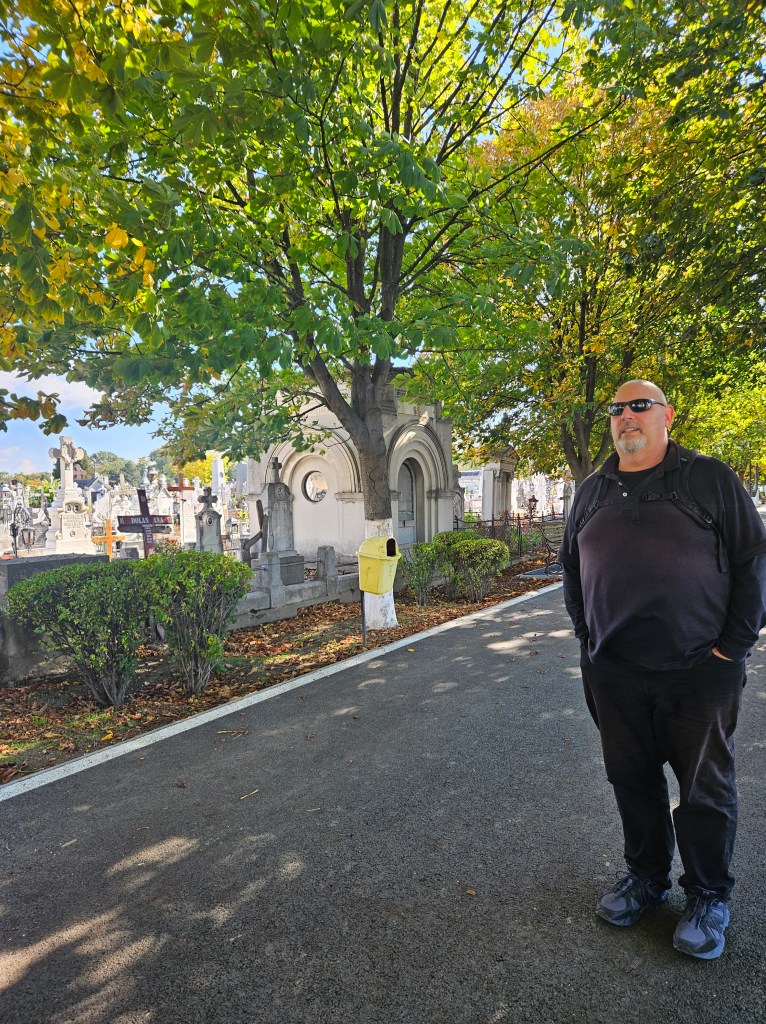
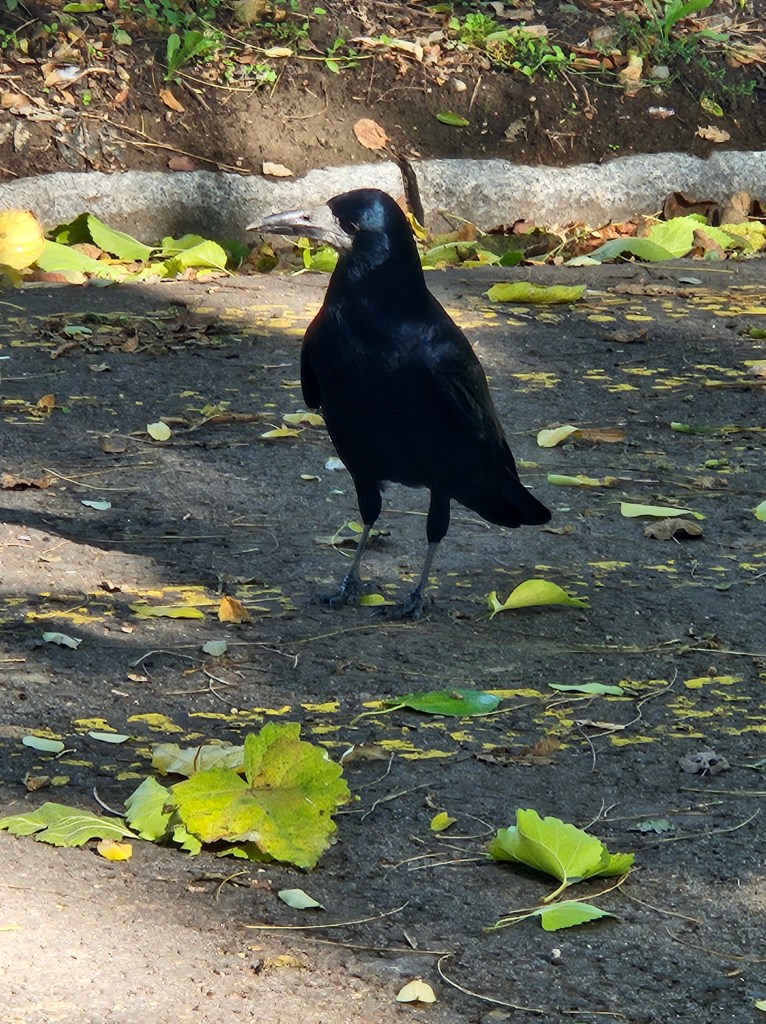
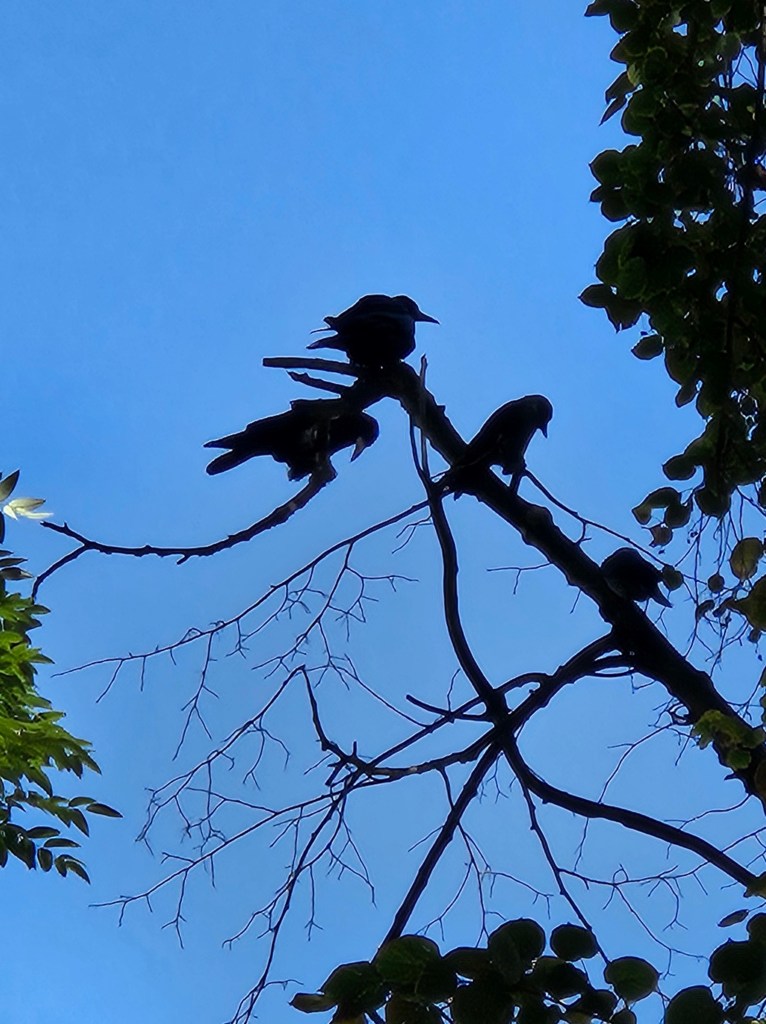
    The park is bordered by cemetaries and also houses the zoo. It is also home to a rather terrifying number of birds, primarily Eurasian jackdaws.

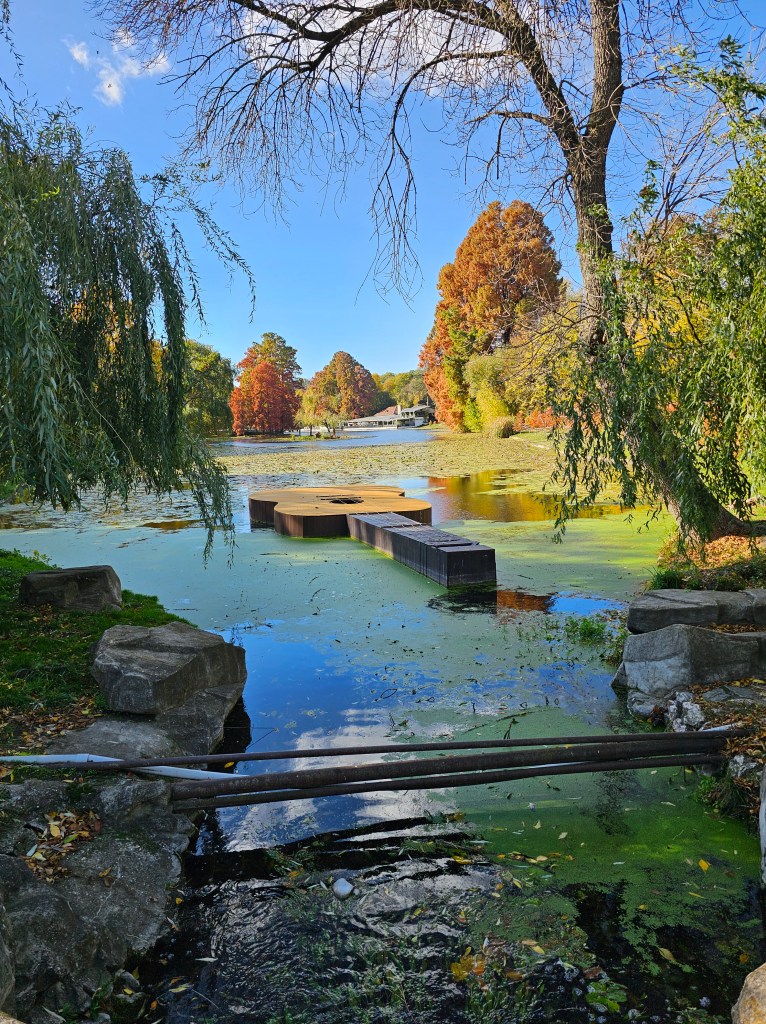
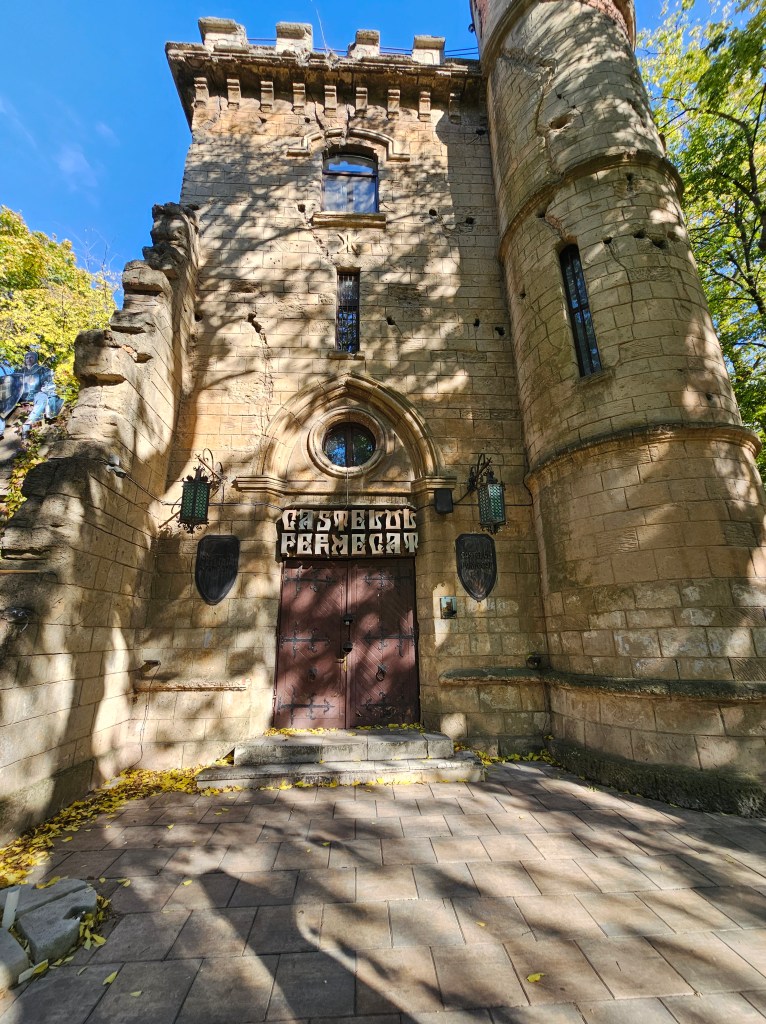
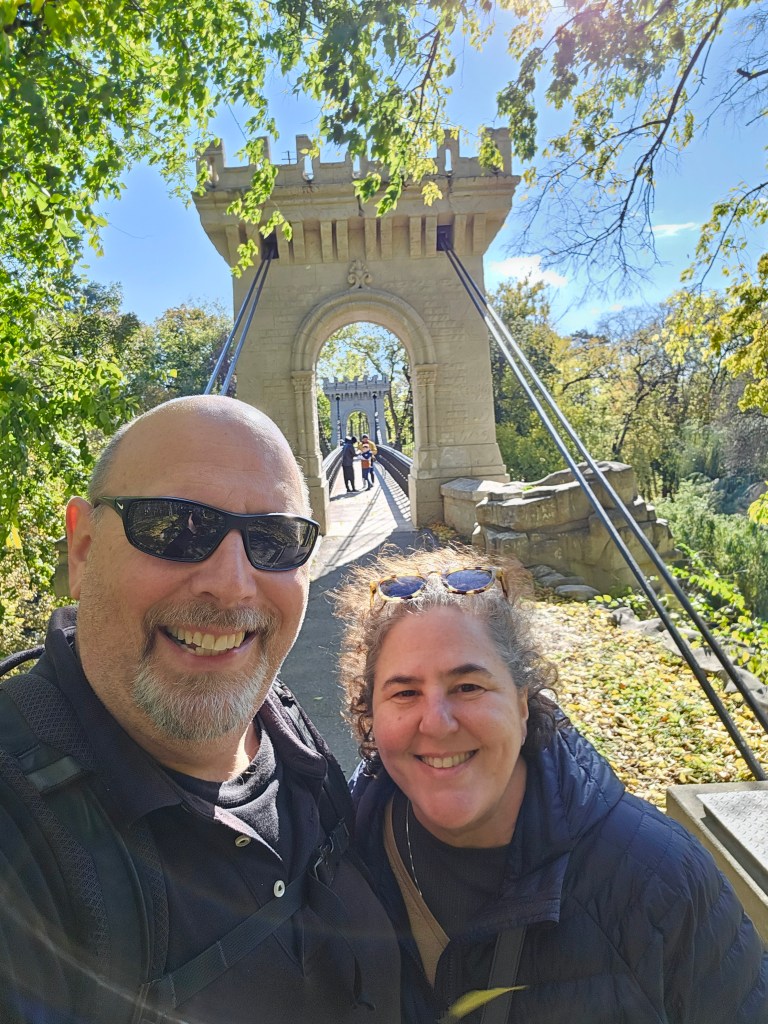
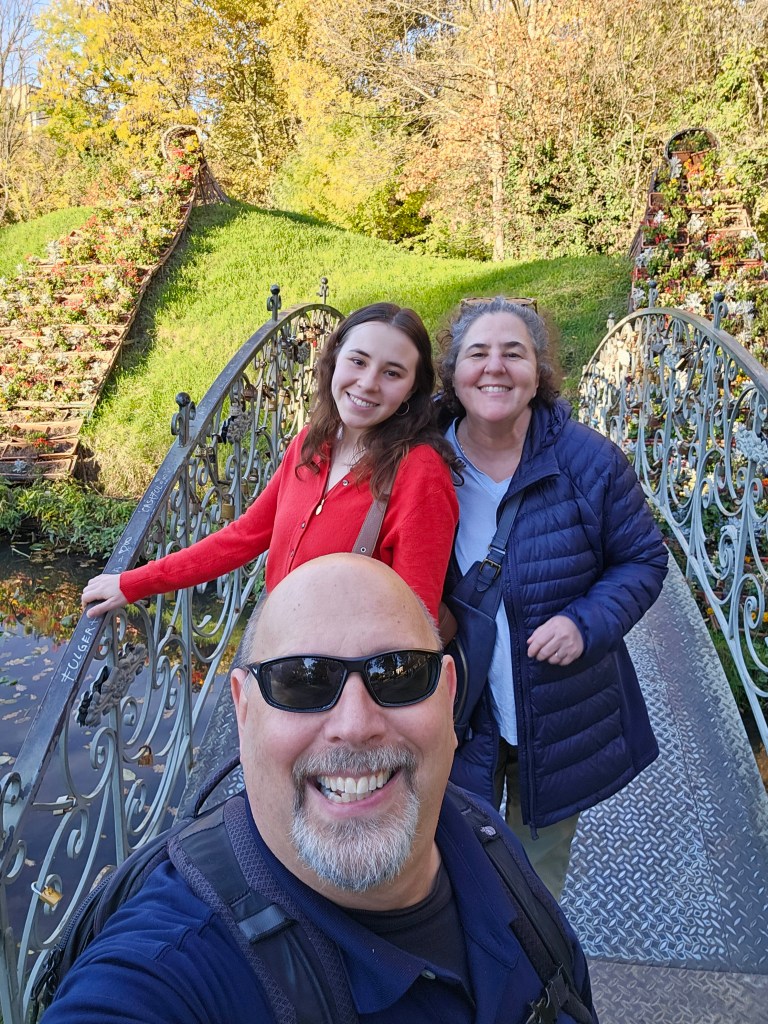
    Other highlights are a castle and a large pond, with a charming but oddly-placed guitar in it, crossed by a beautiful bridge.

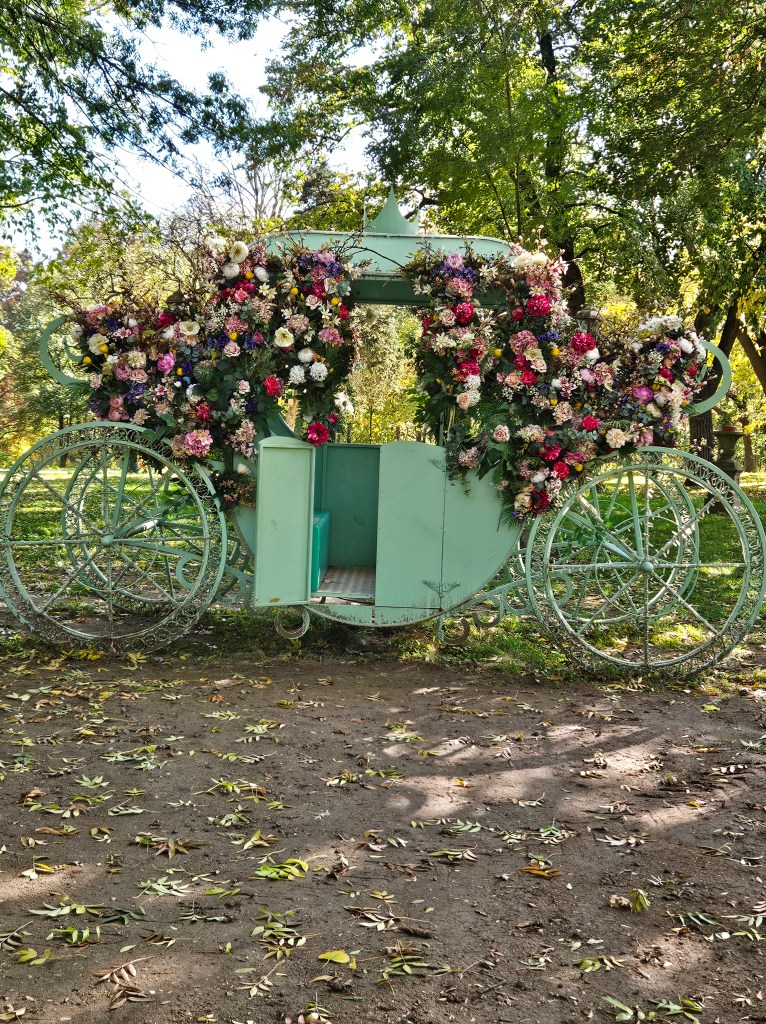
    And for some reason a flower carriage.

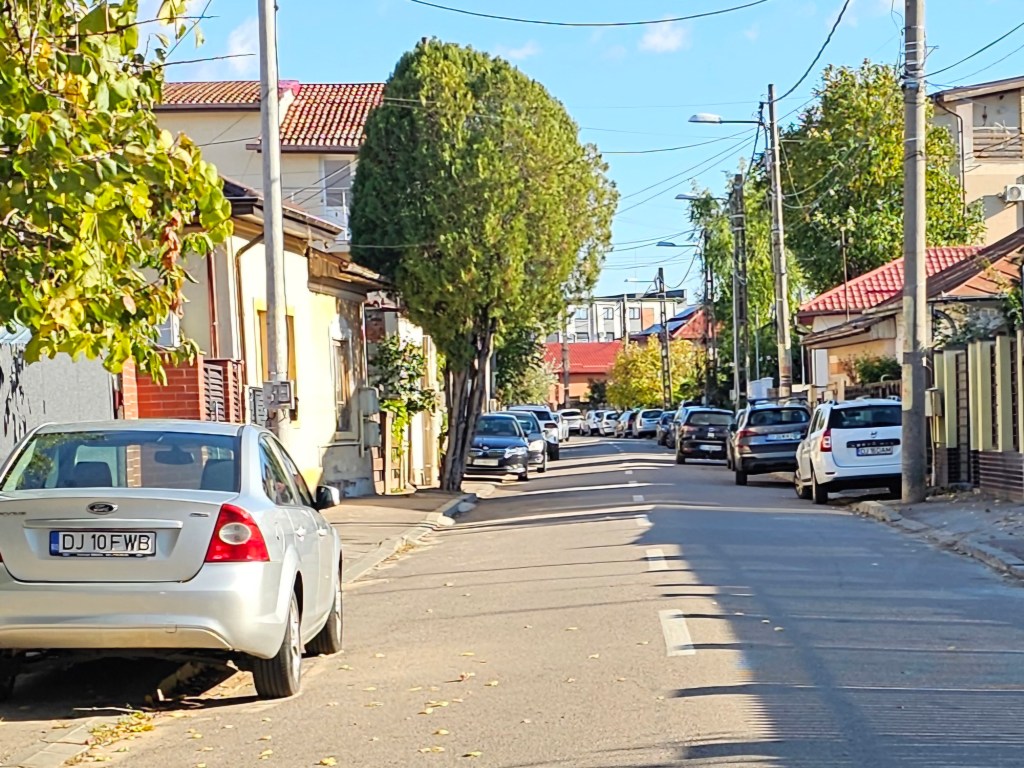
    Parking in Craiova is limited, and they deal with it by just parking on the sidewalk. Despite this, Craiova is a very walkable city.

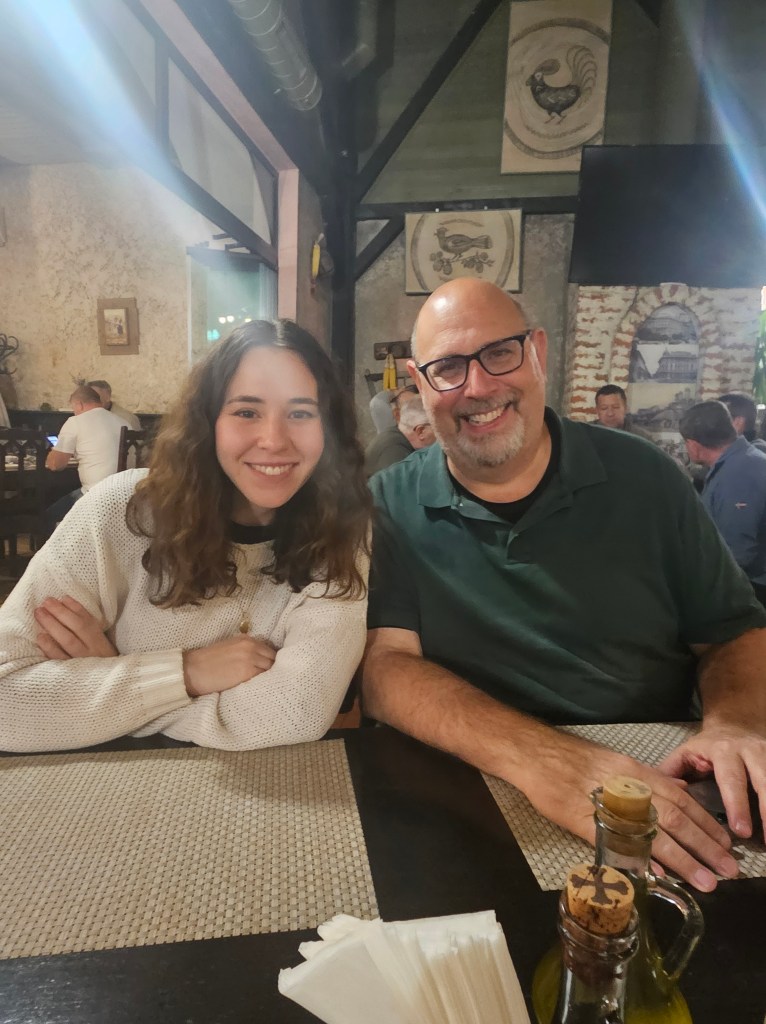
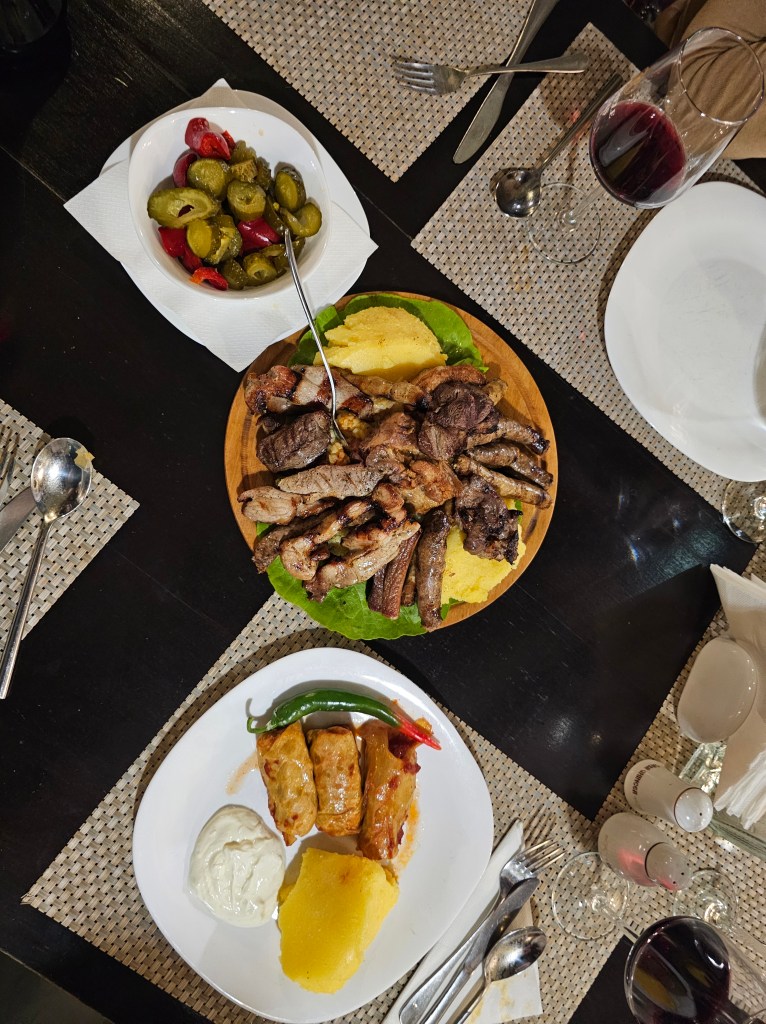
    That night, we had one of the finest meals of our travels at traditional Romanian restaurant Casa Ghincea. We had soups, polenta, stuffed cabbage, pickles and a giant pile of meat. When we tried to order more, the waiter said, “No, that’s enough,” took our menus and walked away. He was right! A Romani band played througout the night, including an instrument that was new to us, a cimbalom (here’s an example). Marina explained to us that a remaining effect of living under the Ceaușescu regime is that older people do not like having their pictures taken by strangers, having experienced so much surveillance, so we tried to be respectful.

    The next day, after Marina had Romanian class (Wednesday is a light day for her) and Russell wrote in the morning, we met up to go to the Botanical Gardens. The weather was gorgeous and it was lovely to see the park packed with folks enjoying a beautiful fall day.

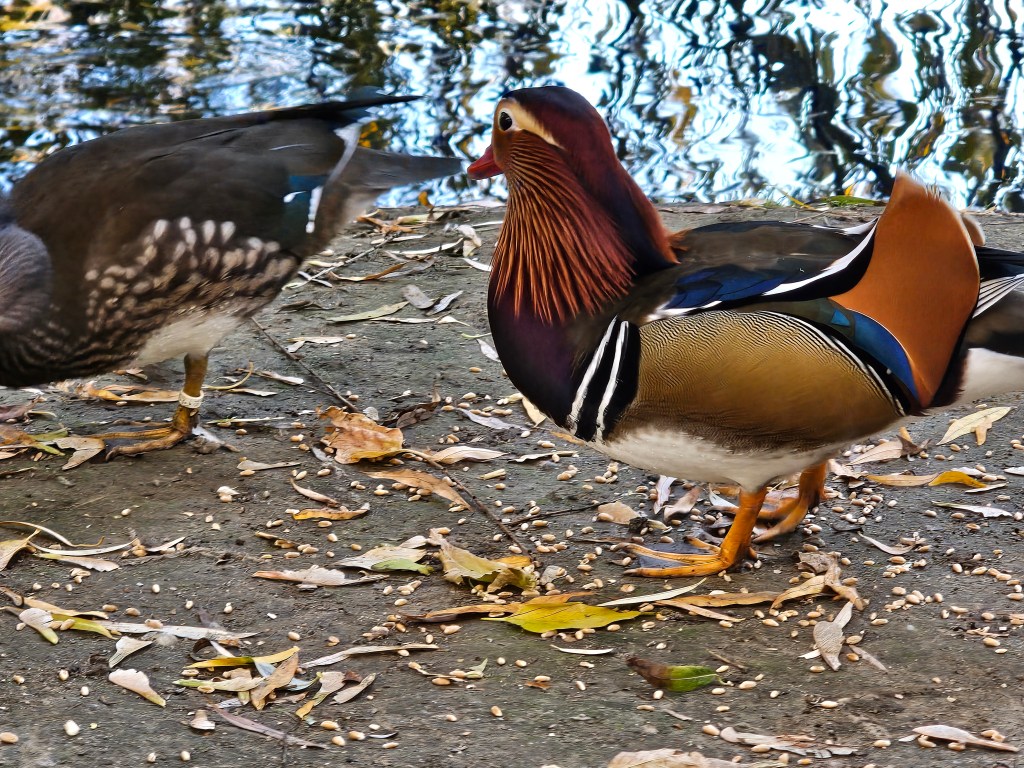
    We think this is a mandarin duck and we’re not sure why it is here.

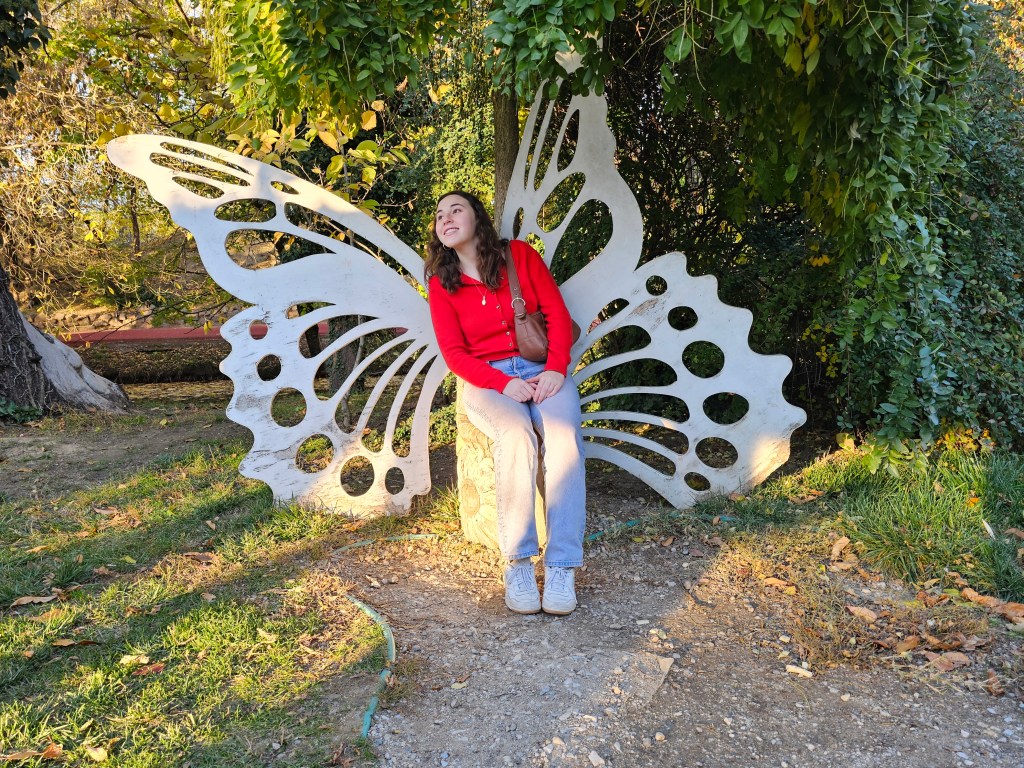
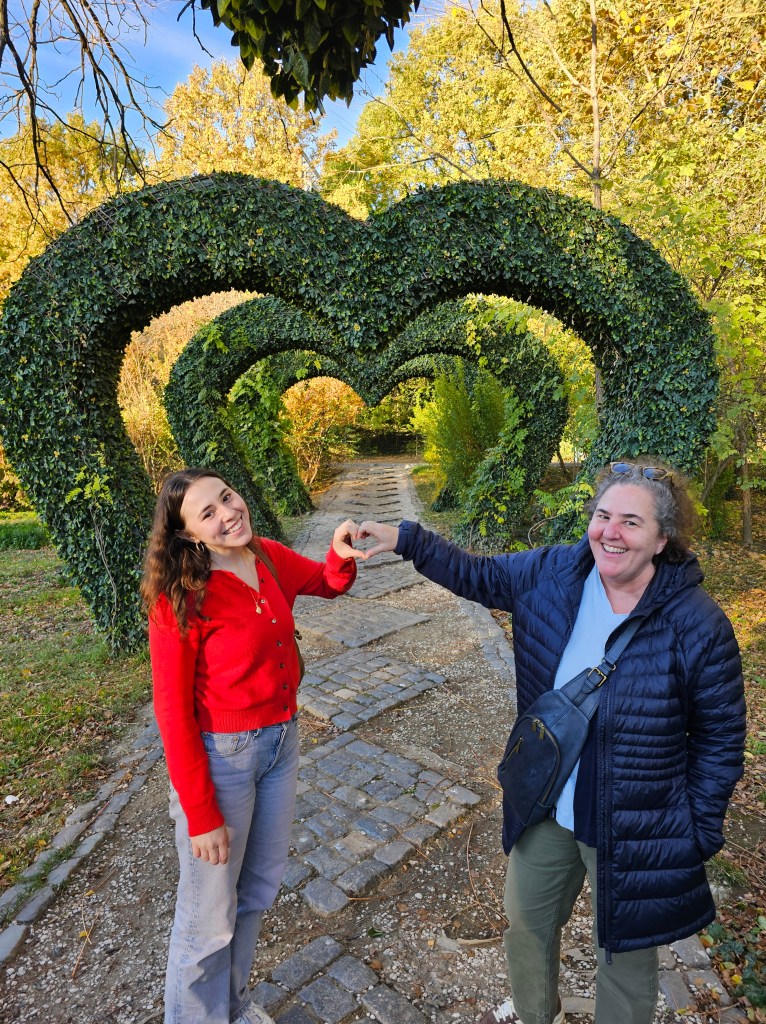
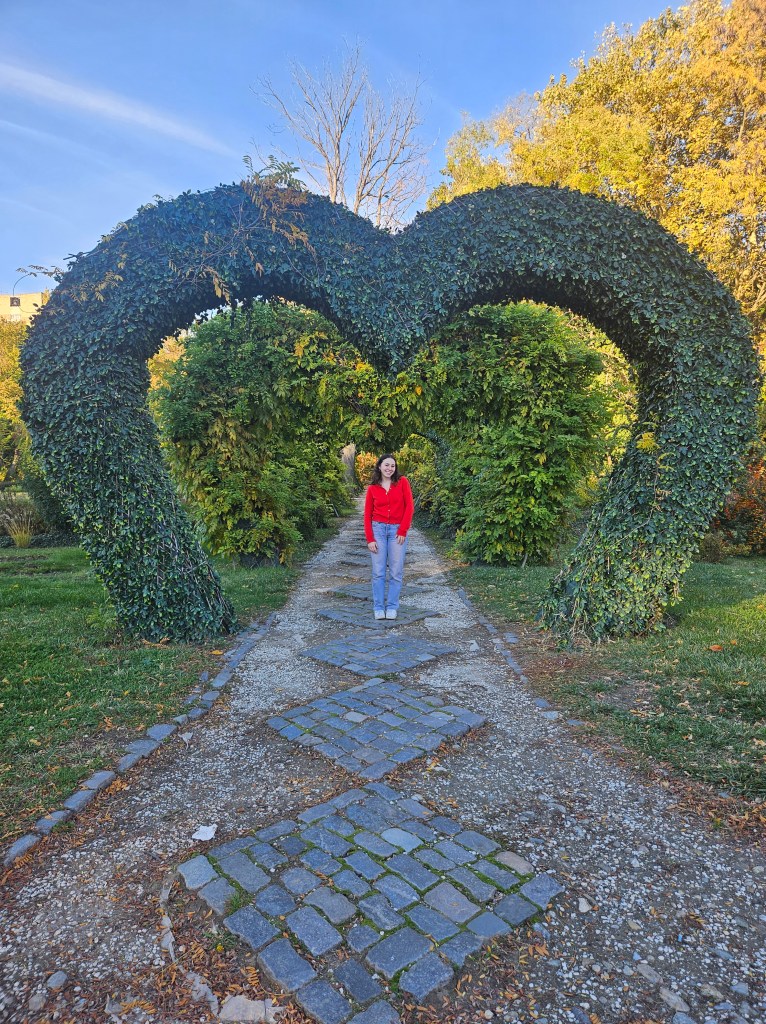
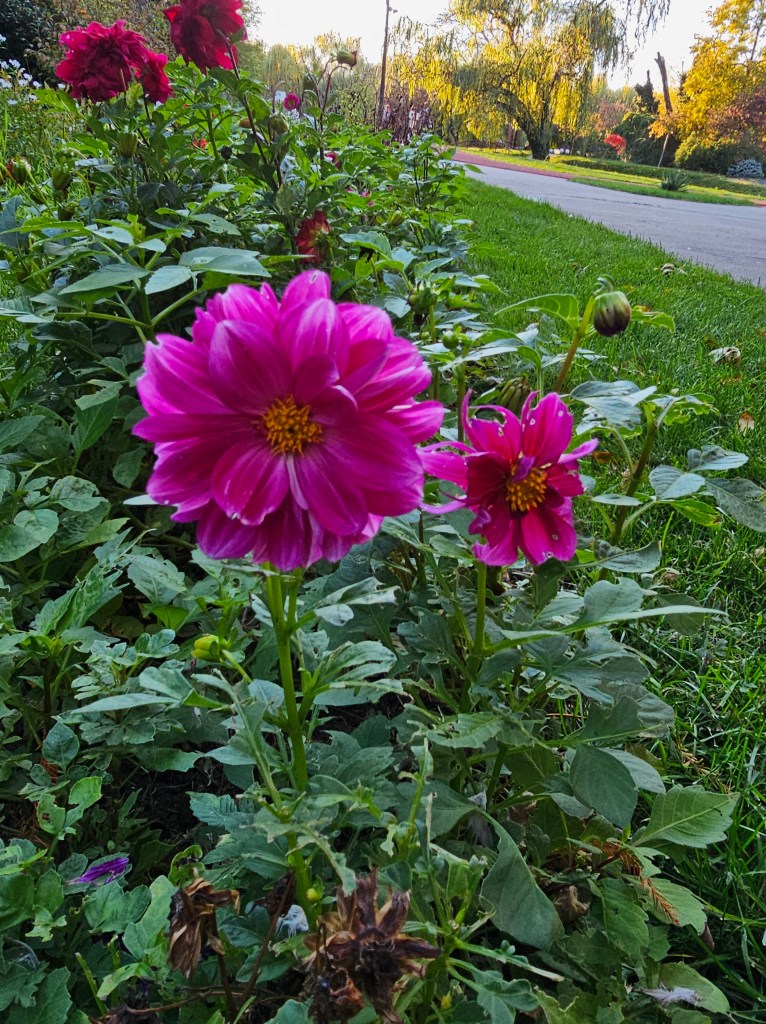
    The park had a wide variety of planted areas. Being fall, there weren’t many flowers, but plenty to see.

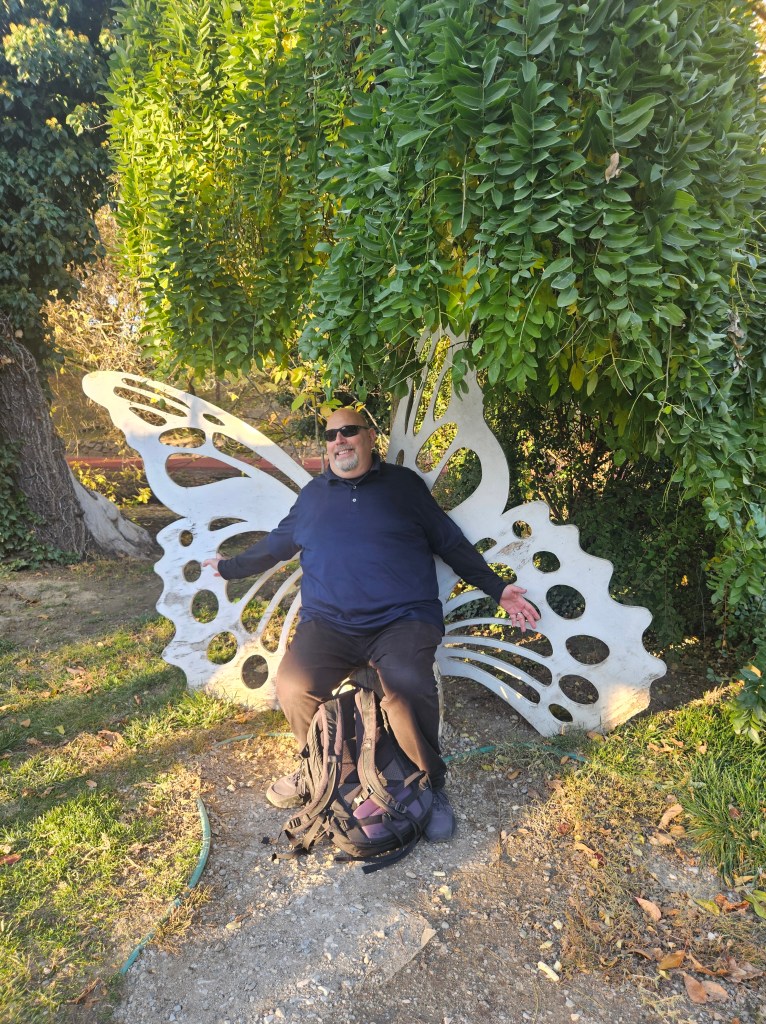
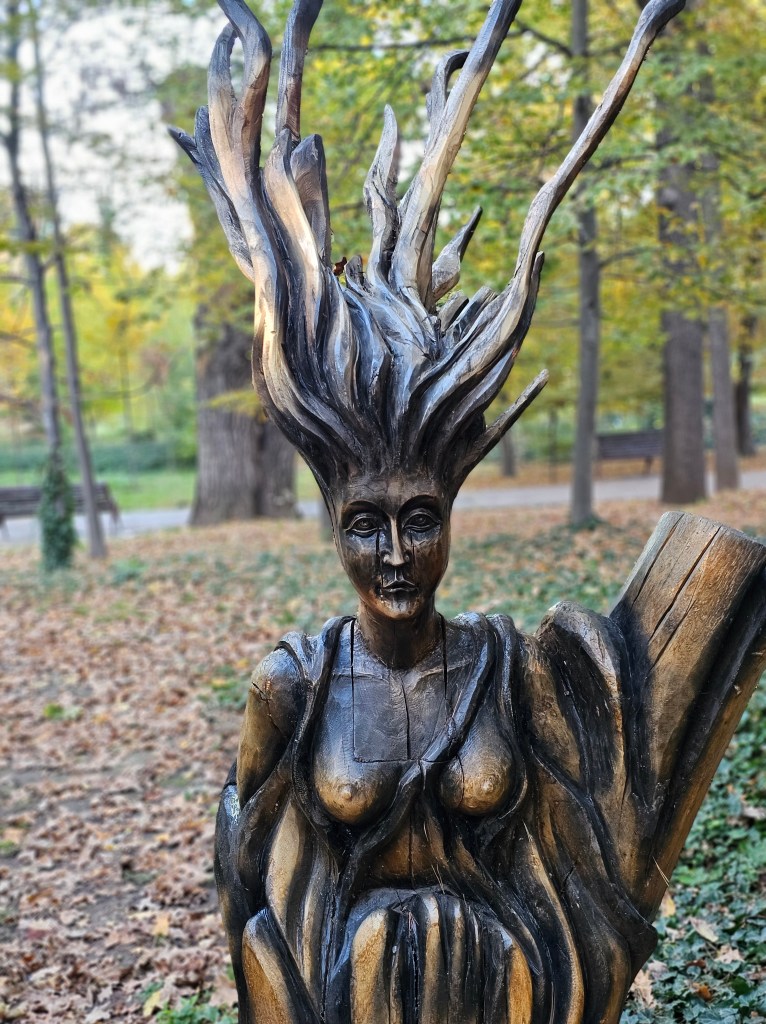
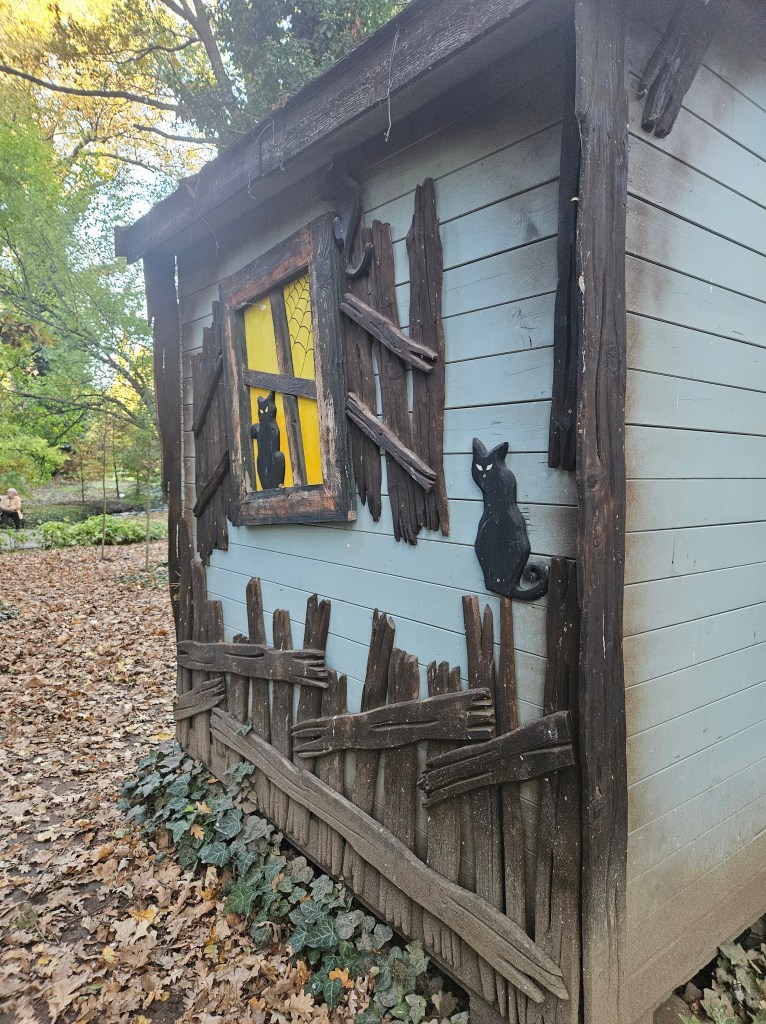
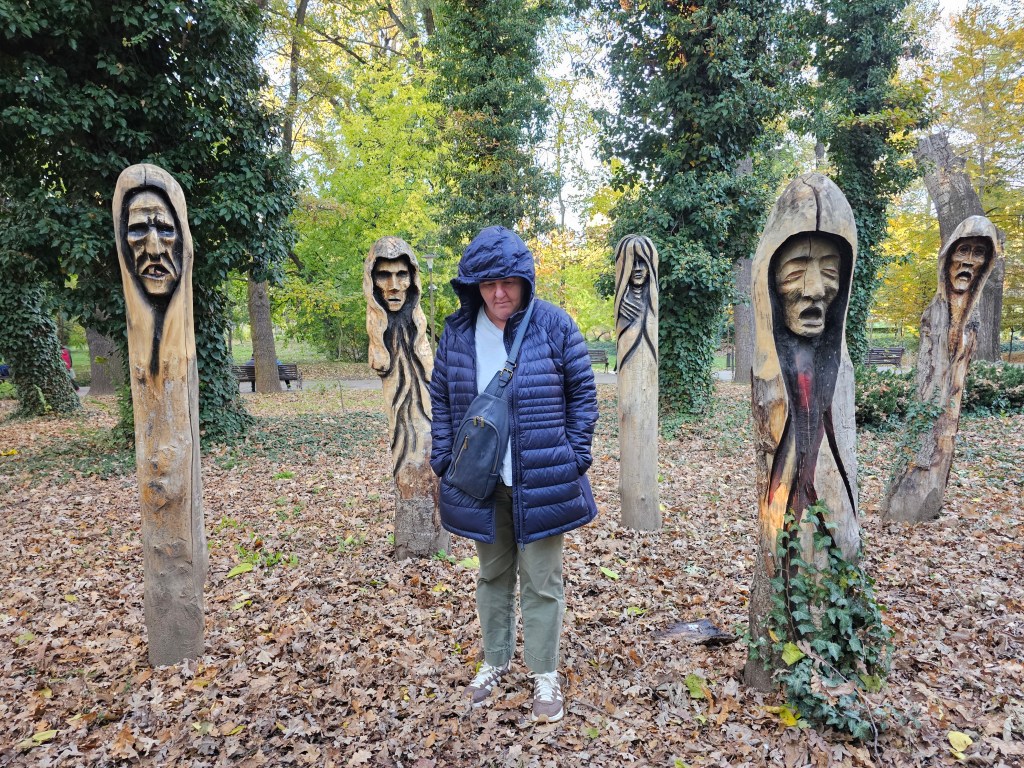
    Some of the sculptures are a little scary. We don’t think these had anything to do with Halloween.

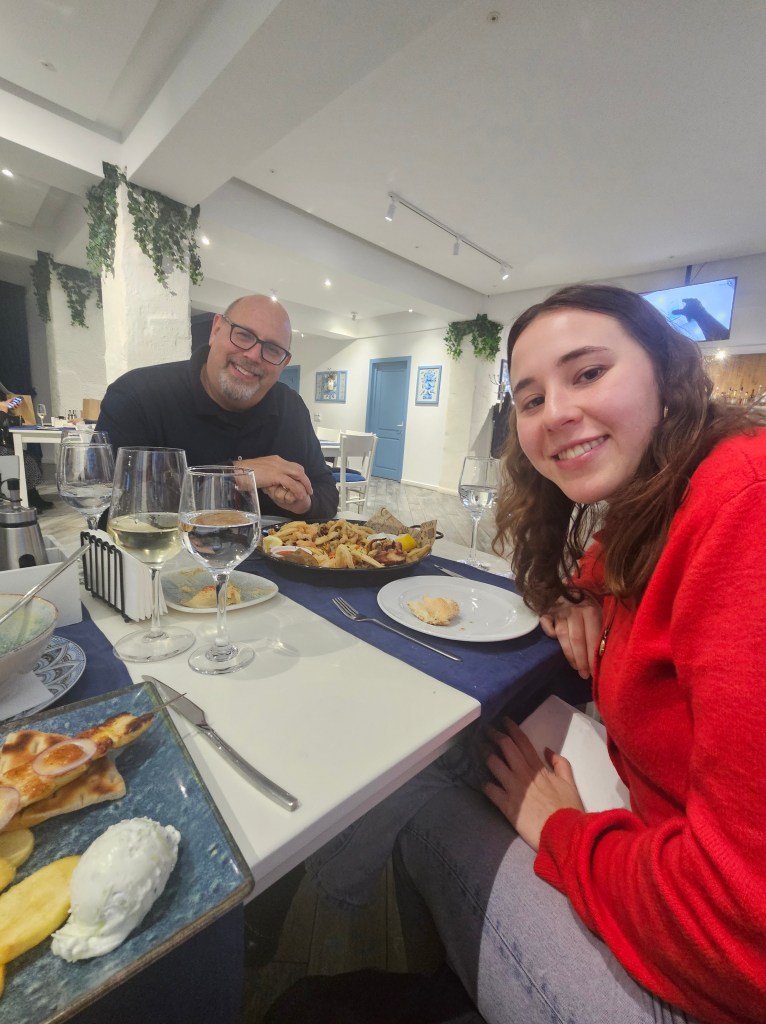
    After the garden, we relaxed at Marina’s for a bit and then went to dinner at a Greek restaurant. We were excited to go to Transylvania the next day!

    Russell hit a bit of a setback with his book-writing during the week, though it’s one of those frog-in-a-well situations, where the steps backward will lead to a better result in the end. It has been a bit of an struggle to come to terms with the fact that the ms won’t be complete by the end of the trip. But there’s good progress and plenty of time to finish once we get home.