One of the very few activities we had pre-booked for our travels was a food tour of Istanbul. We did the Taste of Two Continents tour with Yummy Istanbul, and it was fantastic.
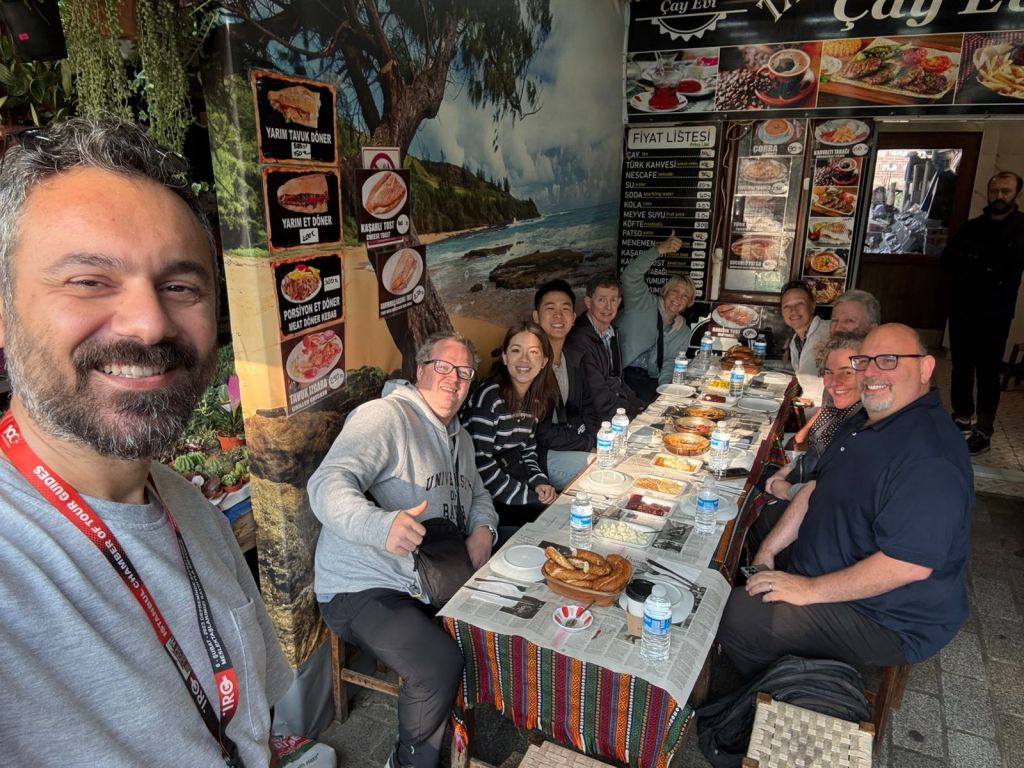
We met at 9:30 near our hotel. There were 9 of us in the group: a young Australian couple, a French Canadian and a Floridian couple near our age, and a British traveler who lives in Mexico. Our guide was Ali, and it was a great mix of people. The tour was almost 6 hours, so we had plenty of time to chat with everyone.
We started with breakfast. We went to a tea room near the Spice Market, and had a mix of food prepared there and items that Ali had brought with him. We learned that when you go to a Turkish home, your hands will be sprayed with lemon cologne before eating, and it is what the Turks used as hand sanitizer during covid. We also learned that coffee, while famous in Turkey, does not grow there. Coffee beans became very expensive during the Depression, which is when tea, which is cheaper and grown locally, became popular. Turks drink an average of eight glasses a day. Turkish coffee is served without milk, but can be ordered sweet, in which case it is prepared with sugar. You can’t stir Turkish coffee because it is unfiltered.
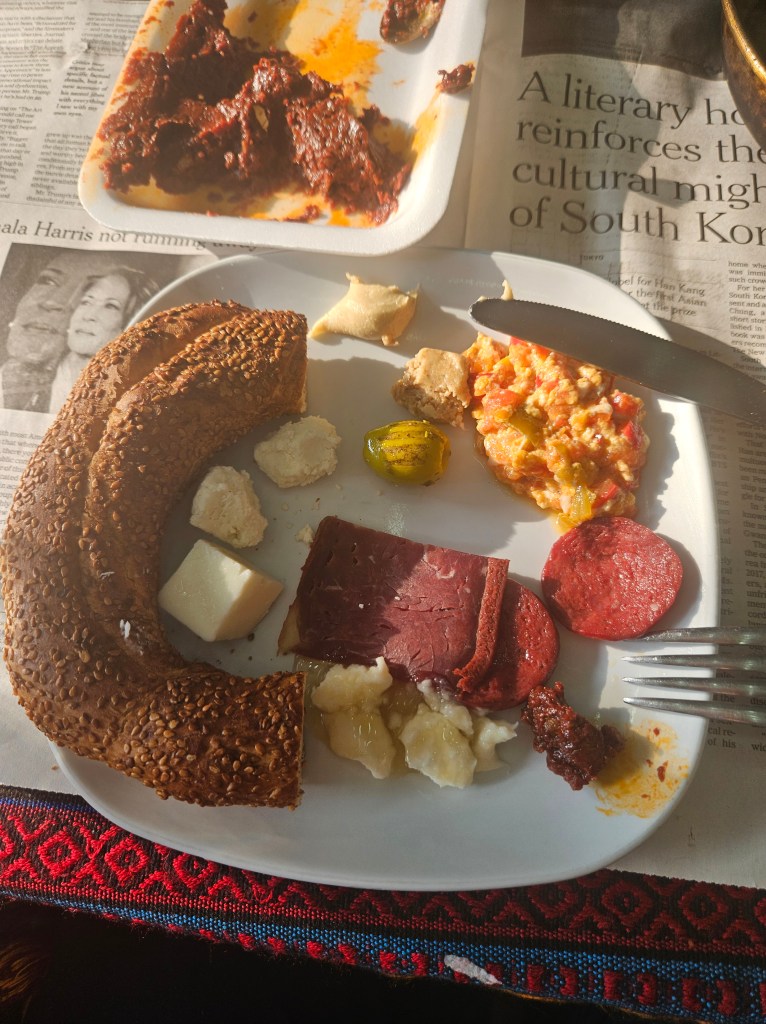
The meal consisted of simit (Turkish bagel-like bread); menemen (similar to shakshuka); grilled olives; sausage; Turkish pepperoni; Turkish pastrami (the meats are all beef); clotted cream (kaymak) with honey; crunchy and smooth hazelnut butters (like Nutella without the chocolate; two kinds of cheeses (one was called tulum); a paste made from tomatoes that’s like a thick salsa; and Turkish coffee and tea. Everything was delicious. Except the olives.
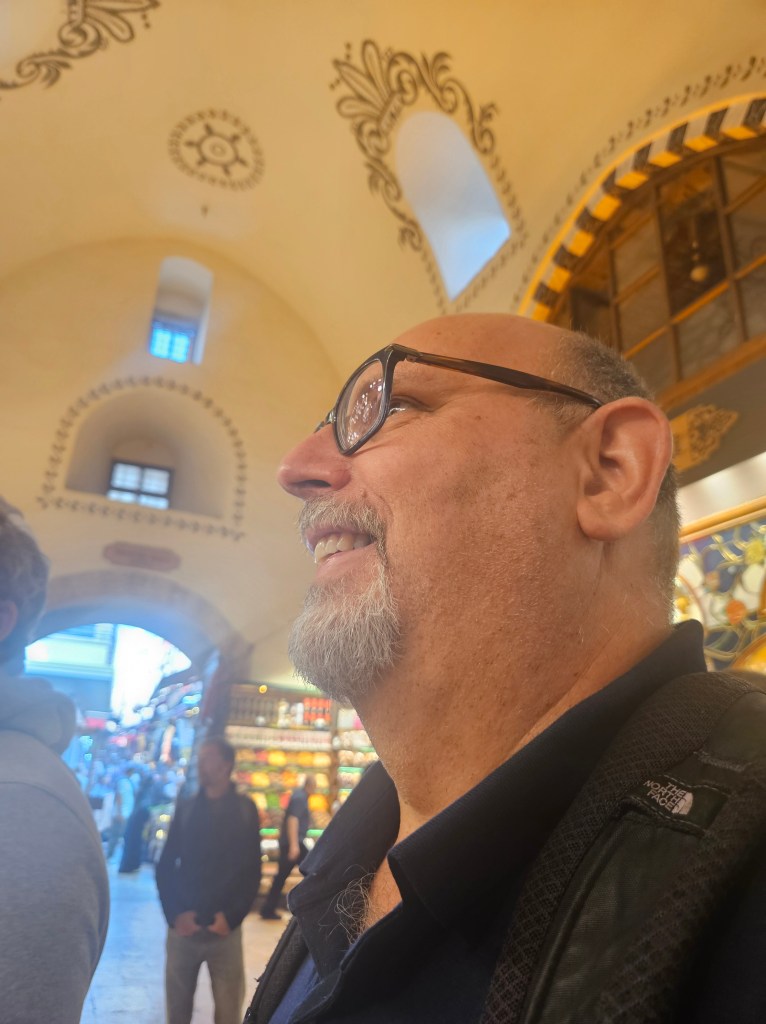
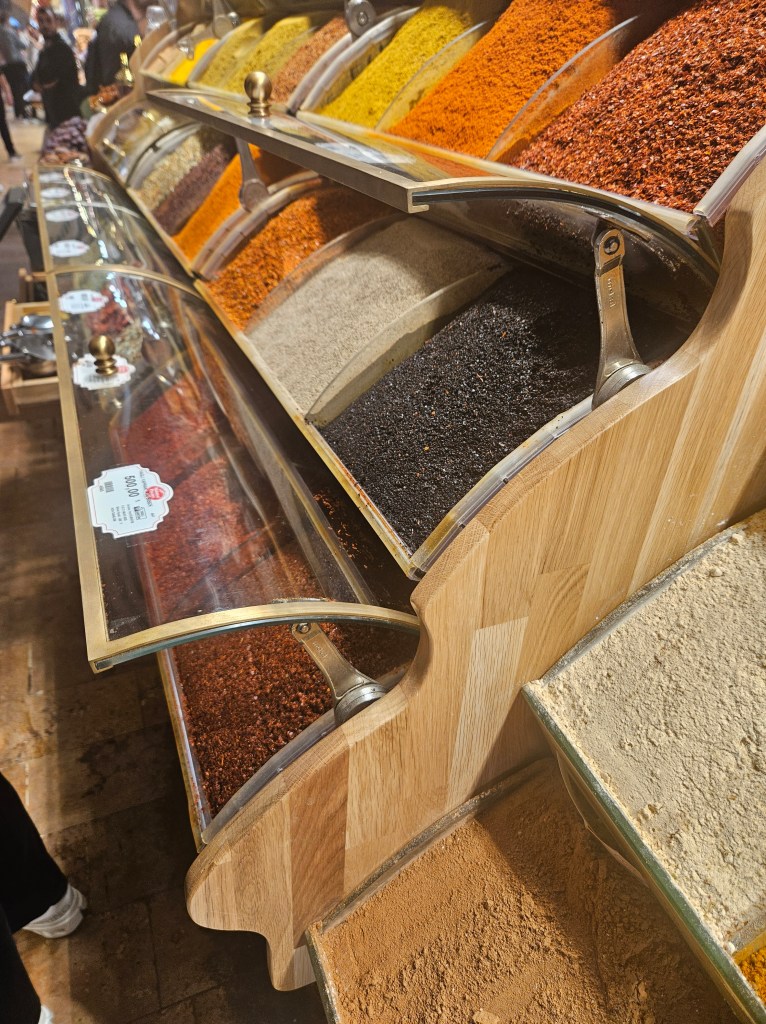
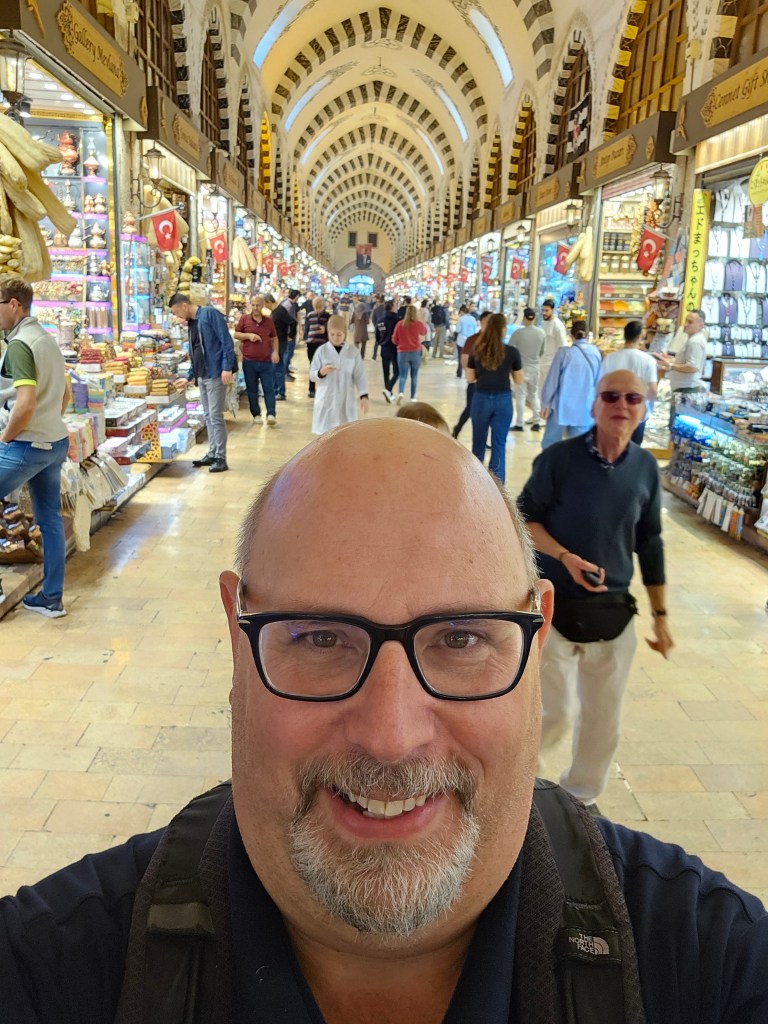
We then headed to the Spice Market, also known as the Egyptian Bazaar as it was built in the 17th century with revenues from the Egyptian arm of the Ottoman Empire. The Spice Market is much smaller than the Grand Bazaar, with 85 shops compared to over 4,000. Ali told us about the history of the market and gave us tips for shopping and bargaining in Istanbul. He took us to the Malatya Pazari stall to which returned (sort of) repeatedly for purchases later. (We learned that we had mistakenly been shopping at the stall next door, which was owned by cousins, but had the same merchandise. We didn’t really get it, but everything was delicious.) We smelled various spices, like sumac, many kinds of pepper, and oregano buds.
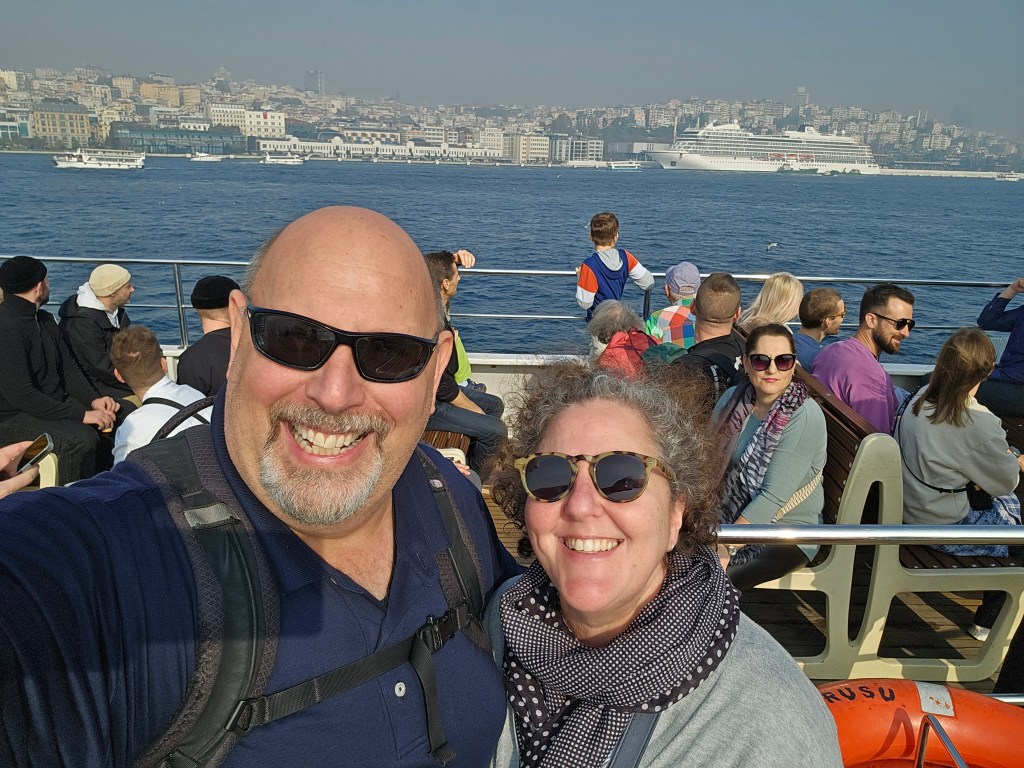
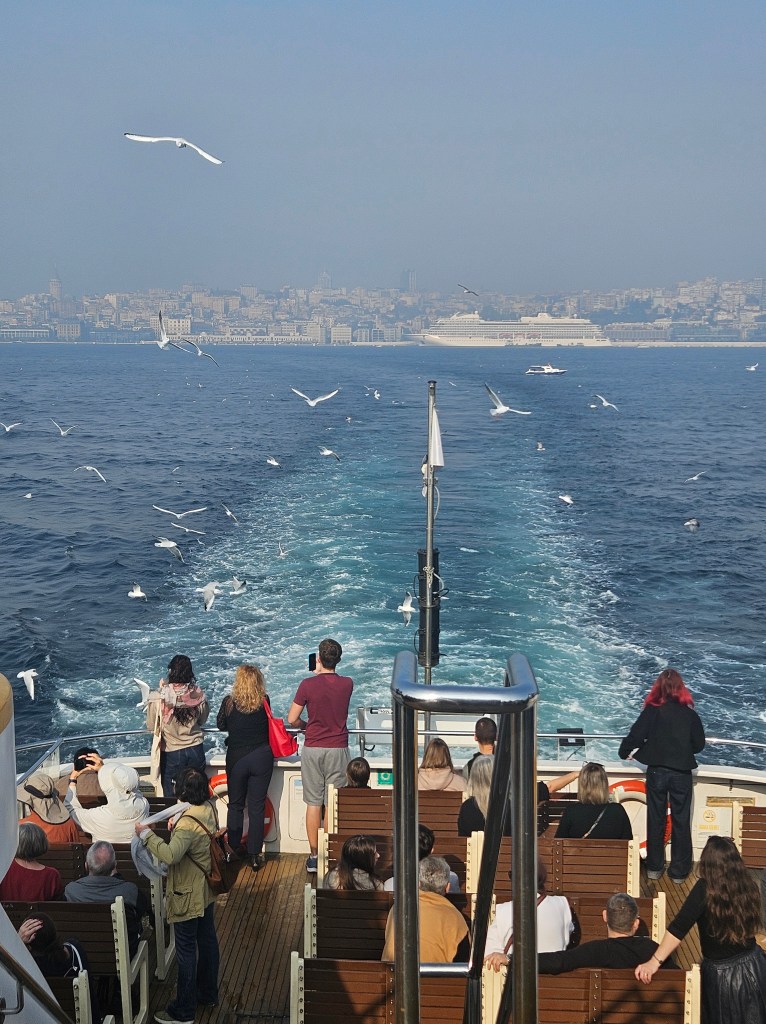
We then took the ferry to the Kadıköy neighborhood on the Asian side of Istanbul. Kadıköy is a popular place for students and younger folk to live, and it has a lively food scene.
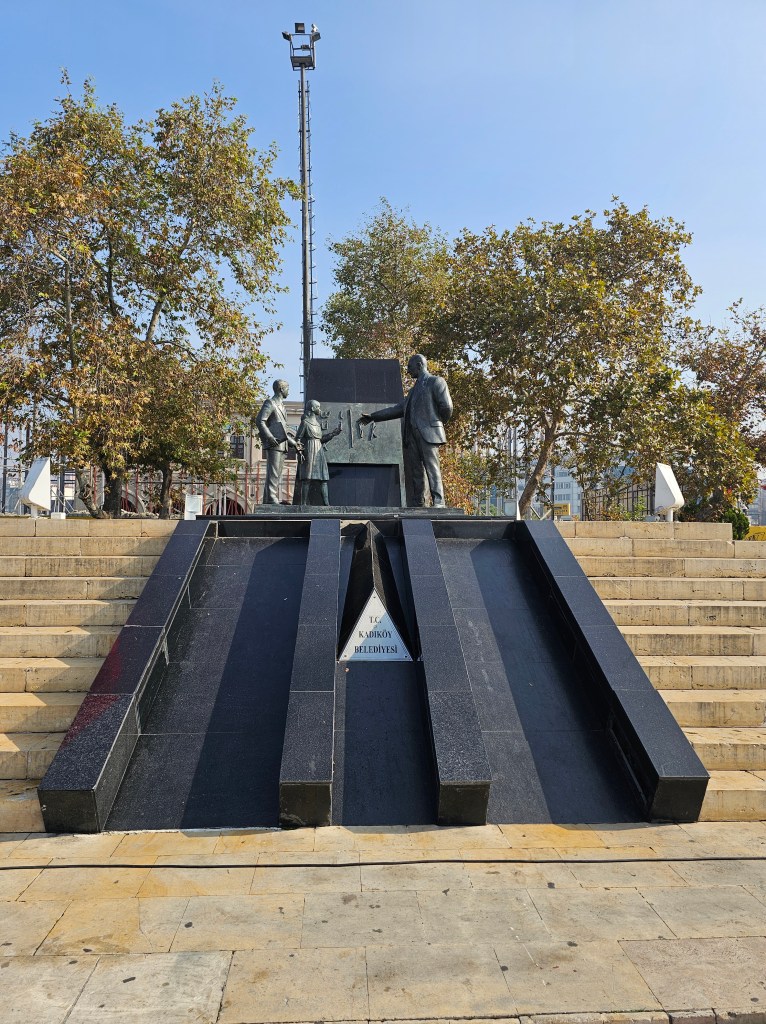
We started at a statue of Ataturk celebrating the rise of literacy under his time as leader. Ataturk instituted the use of the Latinized alphabet which was better suited to Turkish than the previously-used Arabic alphabet.
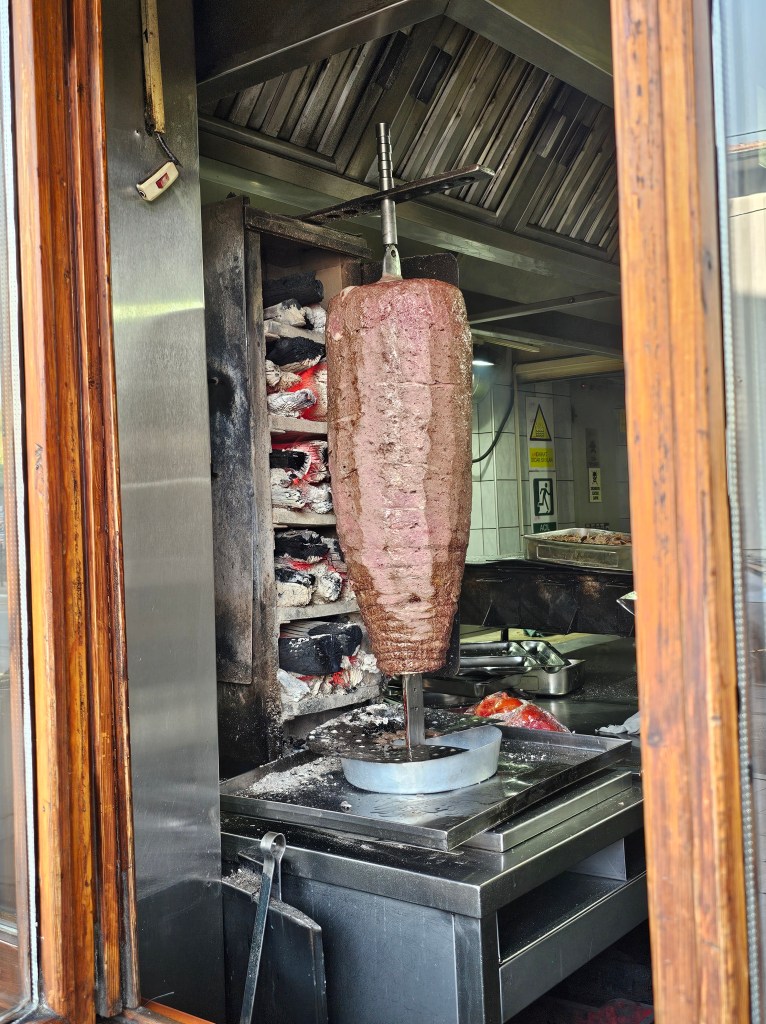
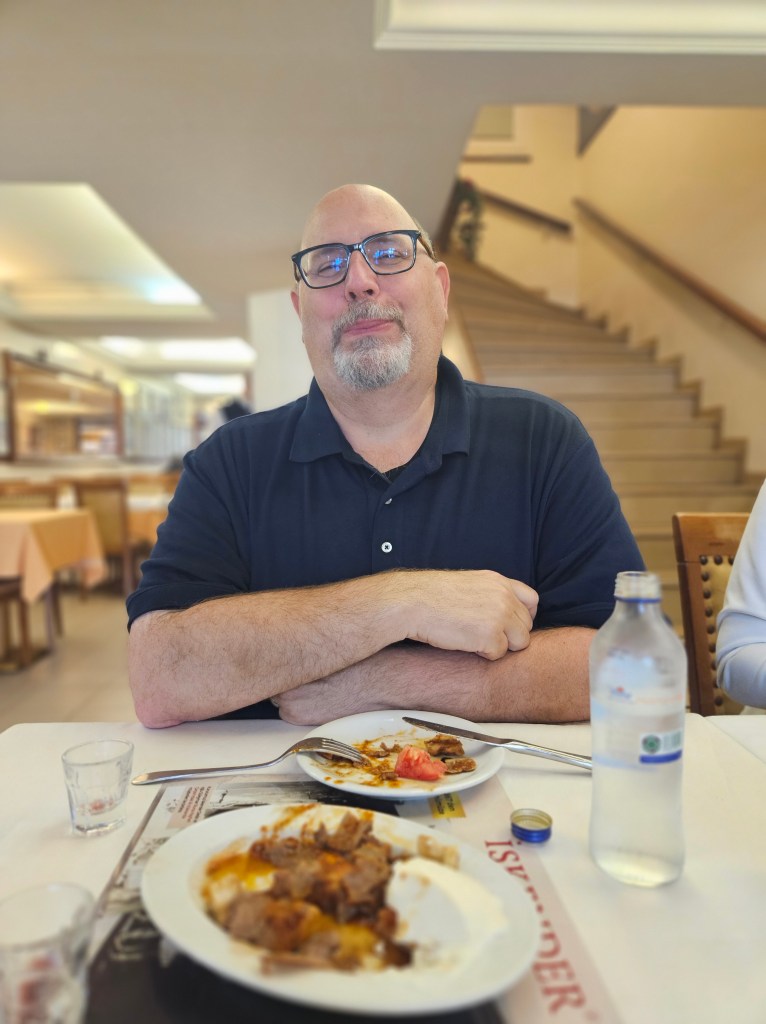
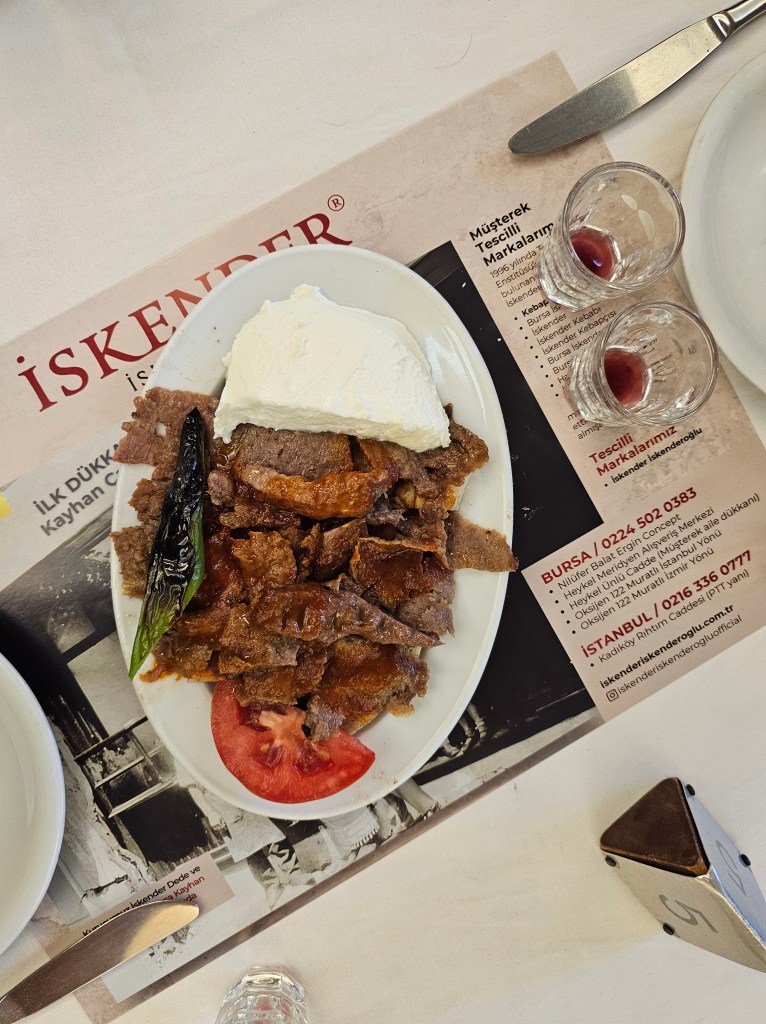
We had first lunch at Iskender, still run by the family who had invented the Iskender Kebap in the 19th century. Thin slices of of meat topped by hot butter and served with pita, grilled tomato, and yogurt. Delicious!
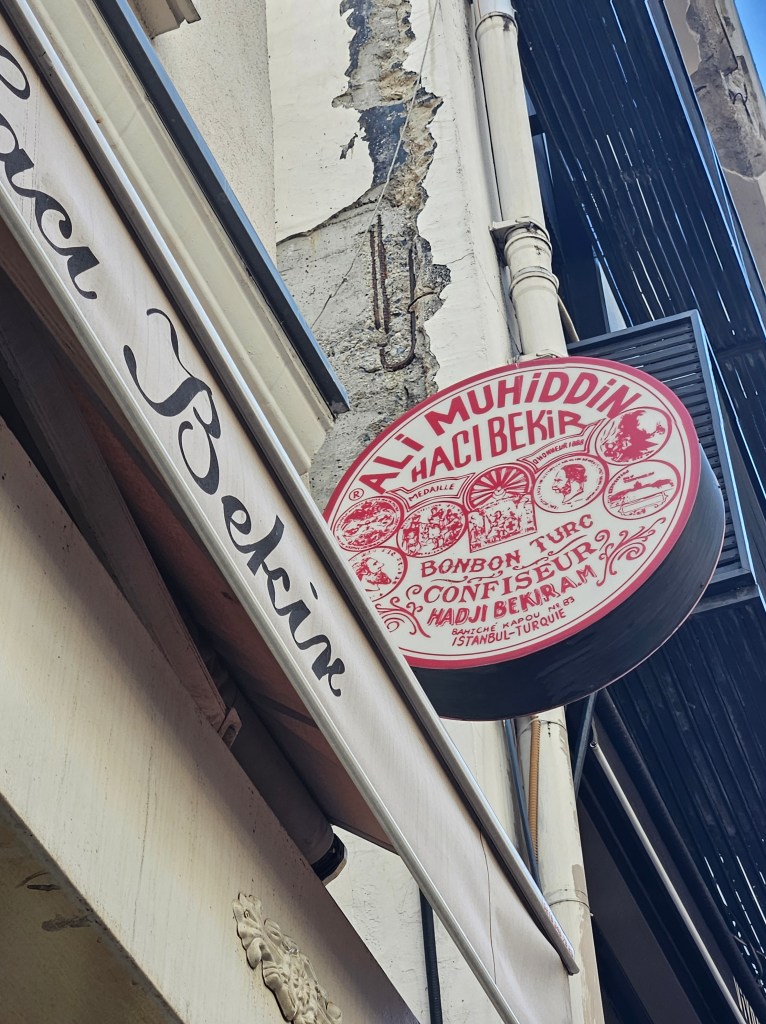
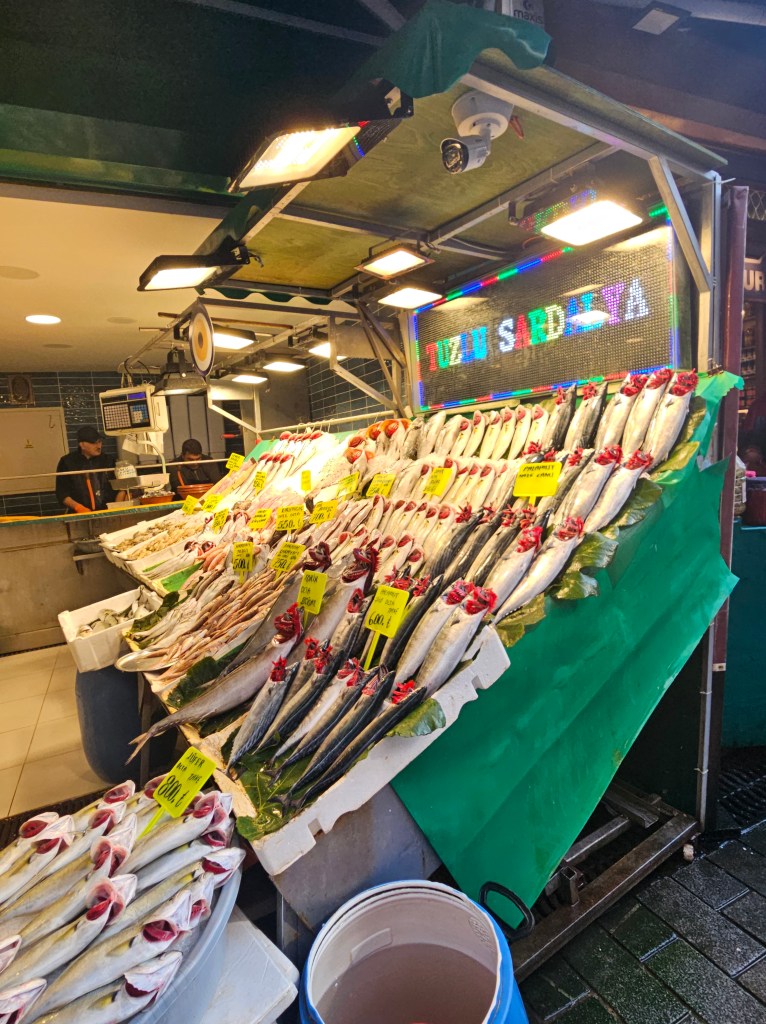
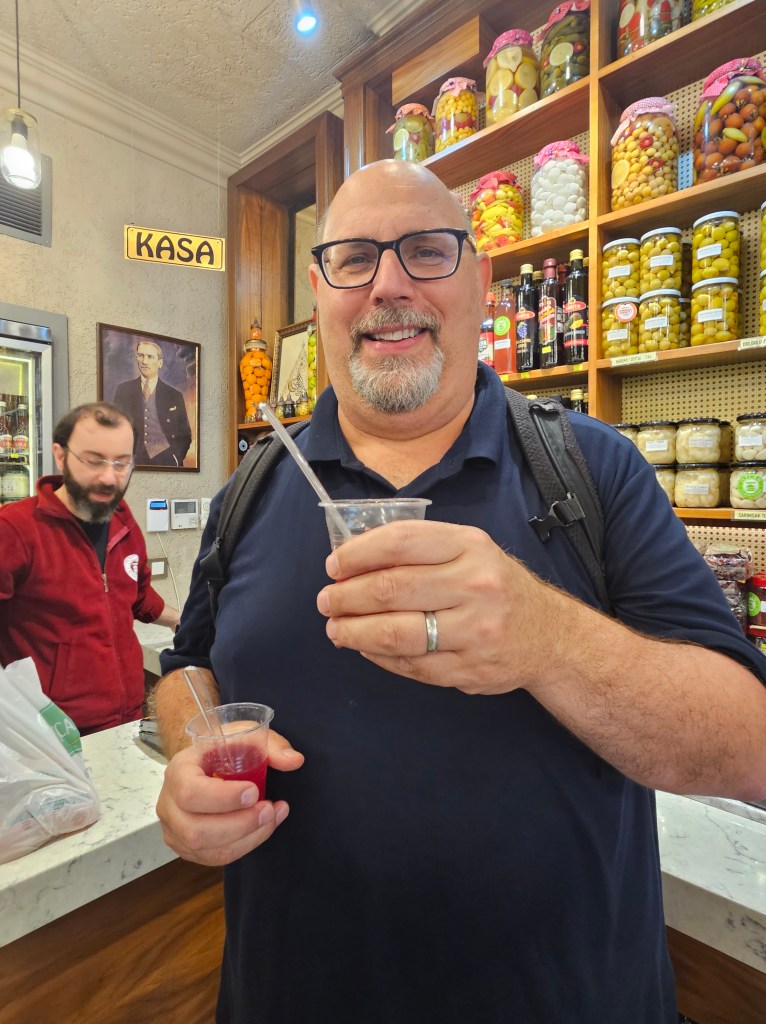
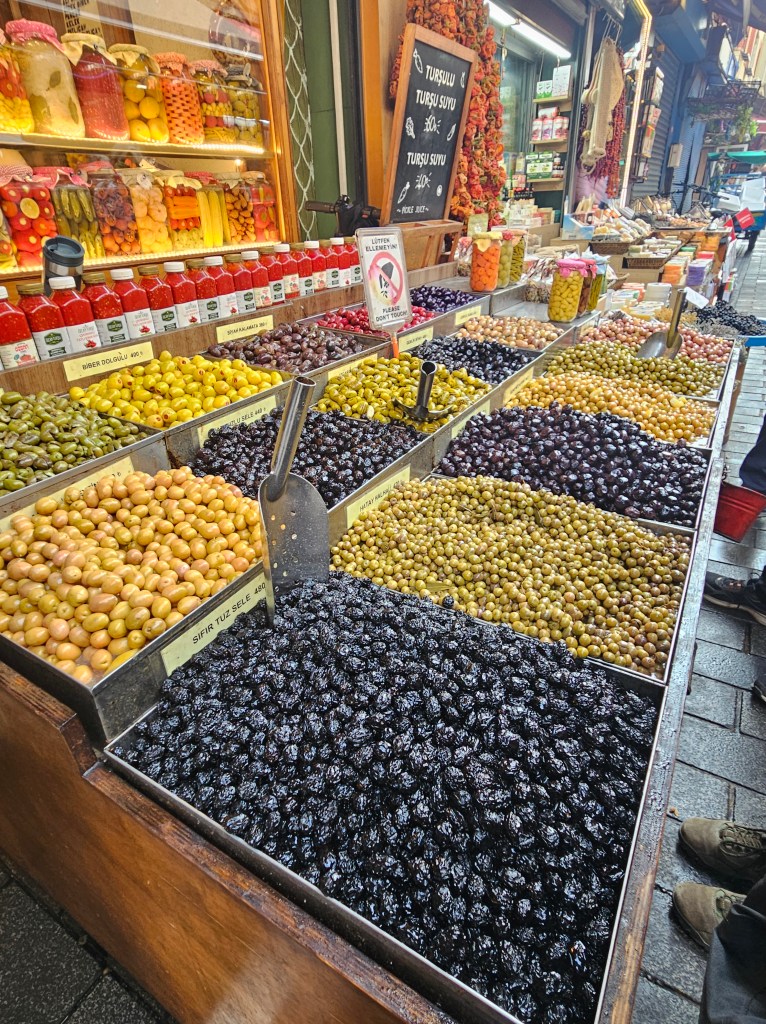
Next, we walked through shop-filled streets, including the seafood section. We stopped at the pickle shop and had pickled plums, okra, and cucumber. Best okra we had ever eaten!
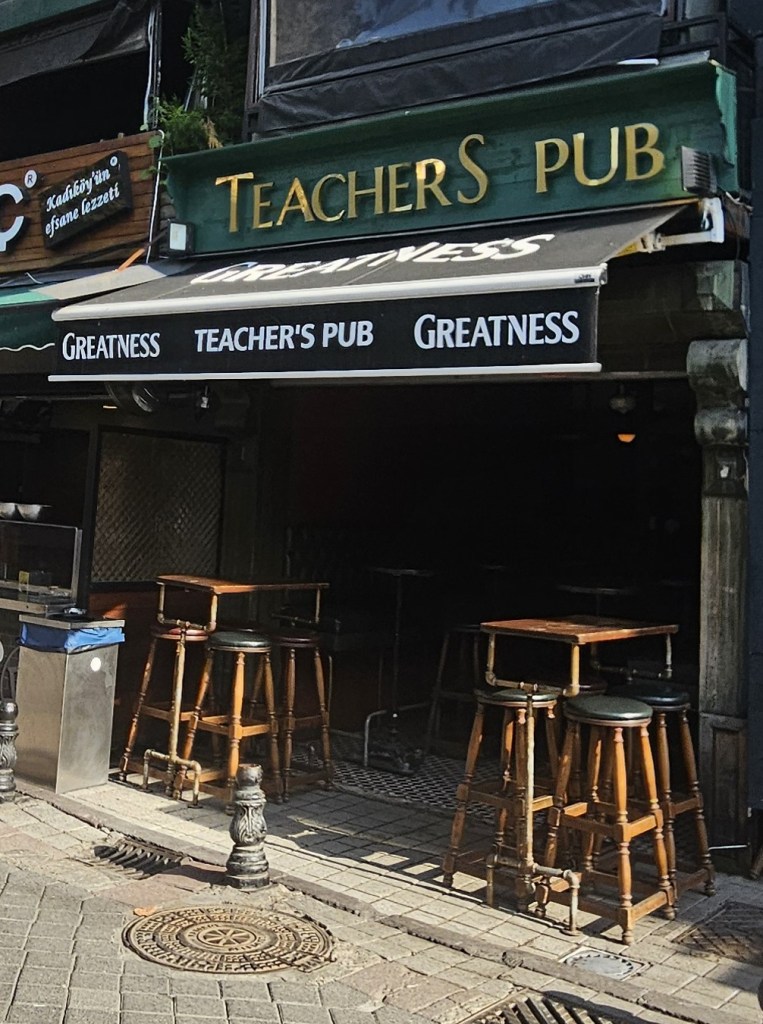
Ali told us about alcohol in Turkey. While Islam forbids alcohol, Ataturk apparently said that alcohol was forgiveable. On the other hand, pork is absolutely not forgivable. So while we didn’t see pork anywhere, plenty of restaurants had full wine, beer and cocktail lists. The law changed a while back to ban advertising alcohol, so bars now have a code system. Greatness = Guiness. Probably = Carlsberg. Responsibly = Heineken.
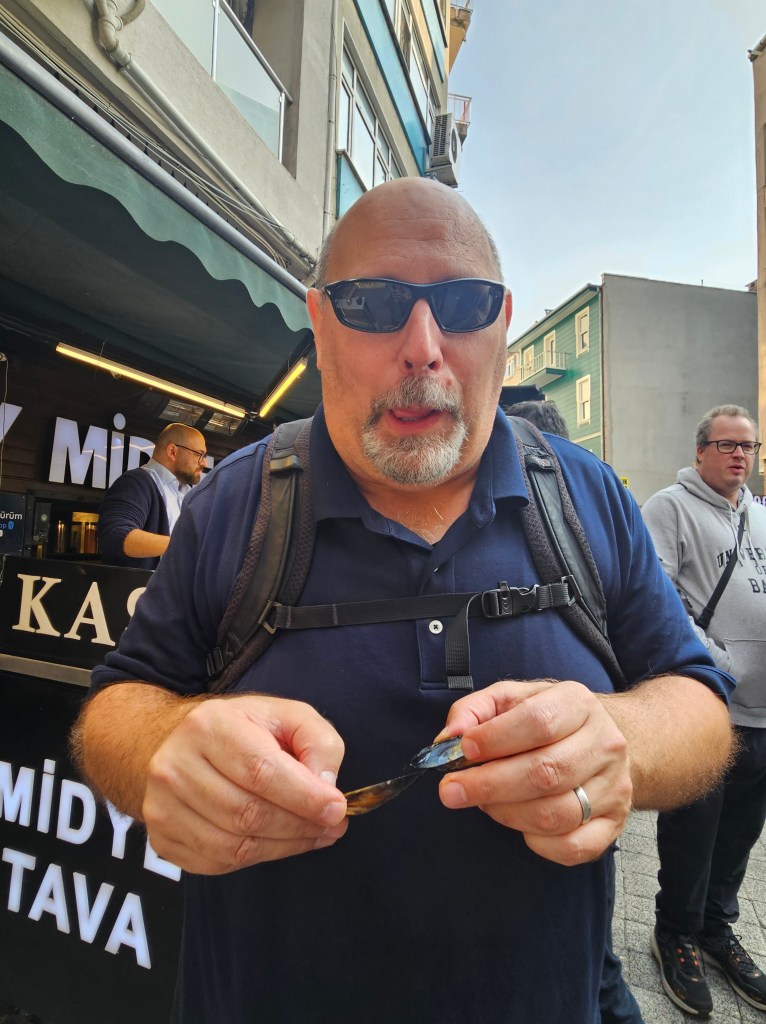
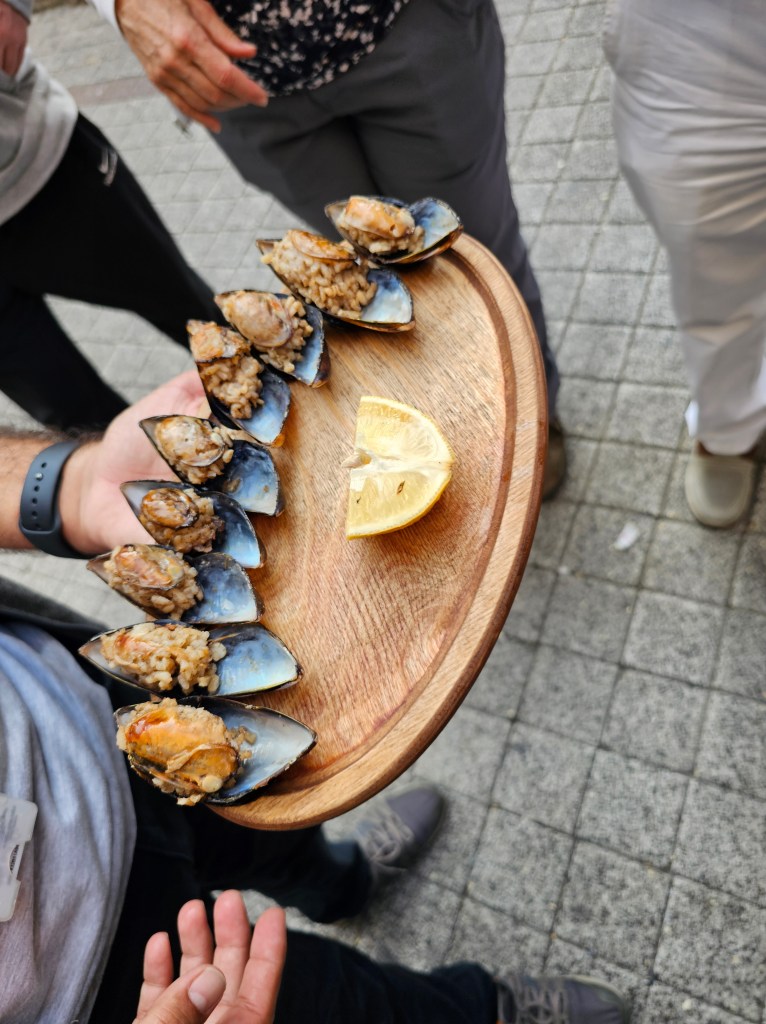
We stopped at a mussels stand, for three kinds of mussels stuffed with rice and tomato. Emily tried one. Really not a fan. Russell enjoyed them all!
We then had second lunch, with many small items like kibbeh; lahmacun (a lot like the sfiha we get at the Lebanese restaurants in Utica); and eggplant mezze. To drink, we had ayran, a salted yogurt drink, which was mixed on site. We then headed to our last stop for dessert (even though we had a dessert pastry at second lunch). We headed to Mado, for famous Turkish ice cream.
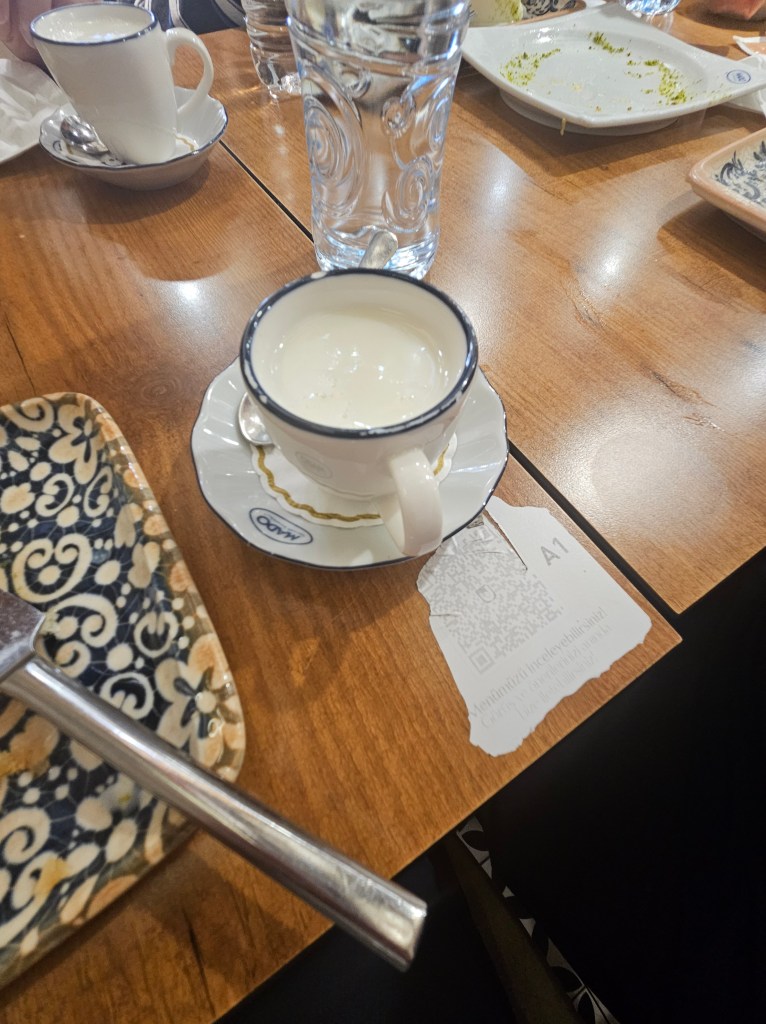

Turkish ice cream is made with salep, a power made from orchid bulbs, which gives the ice cream a stiff texture; it is eaten with a knife and fork, and is delicious. Istanbul’s street ice cream sellers are famous for doing a show when they sell ice cream, tossing and pulling it dramatically. We were served in a manner that Ali found more dignified, on plates, along with baklava. (Almost all of our meals in Istanbul ended with free baklava and tea, brought with or before the check.) We also drank warm salep, which is the orchid powder heated with milk and sugar and sprinkled with cinnamon. It is delicious, like a light egg nog. We later bought Mado’s salep mix to bring home.
We went around the table so everyone could name their favorite item of the day. Emily said the clotted cream and kibbeh. Russell said it was our guide Ali, which was cute. The group then parted ways. This tour was a highlight of all of our travels and helped us understand Istanbul and its food for the rest of our stay.
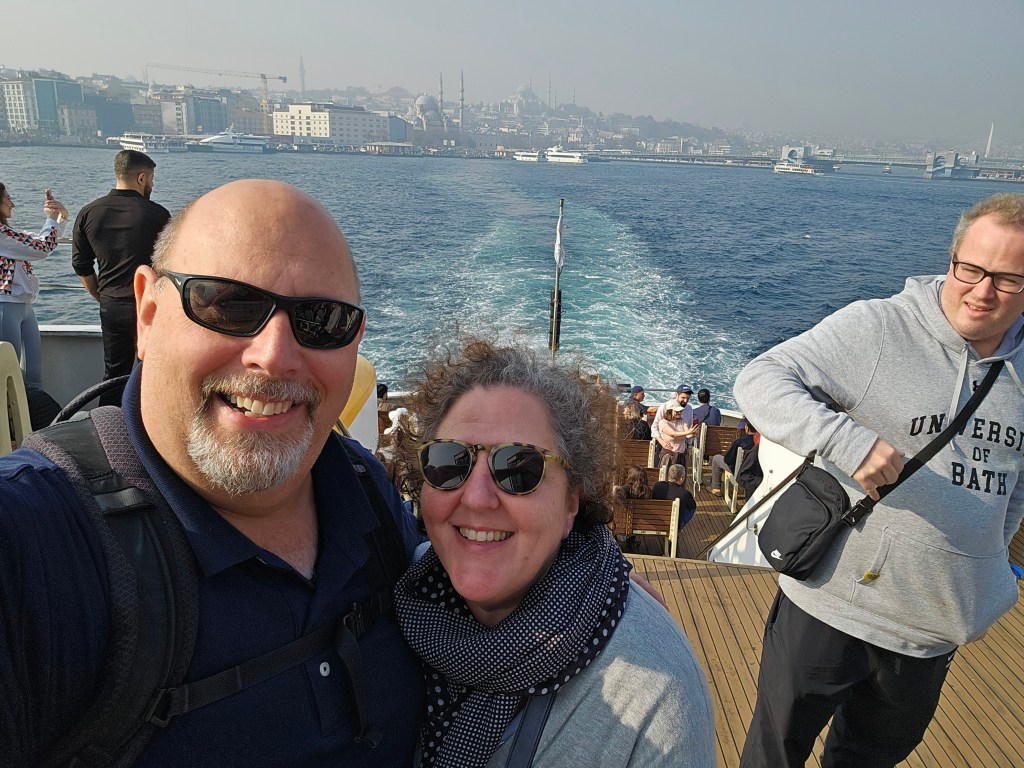
The ferry back to our neighborhood stopped in Karaköy, and we decided to get off there to wander and then would walk back across the bridge.
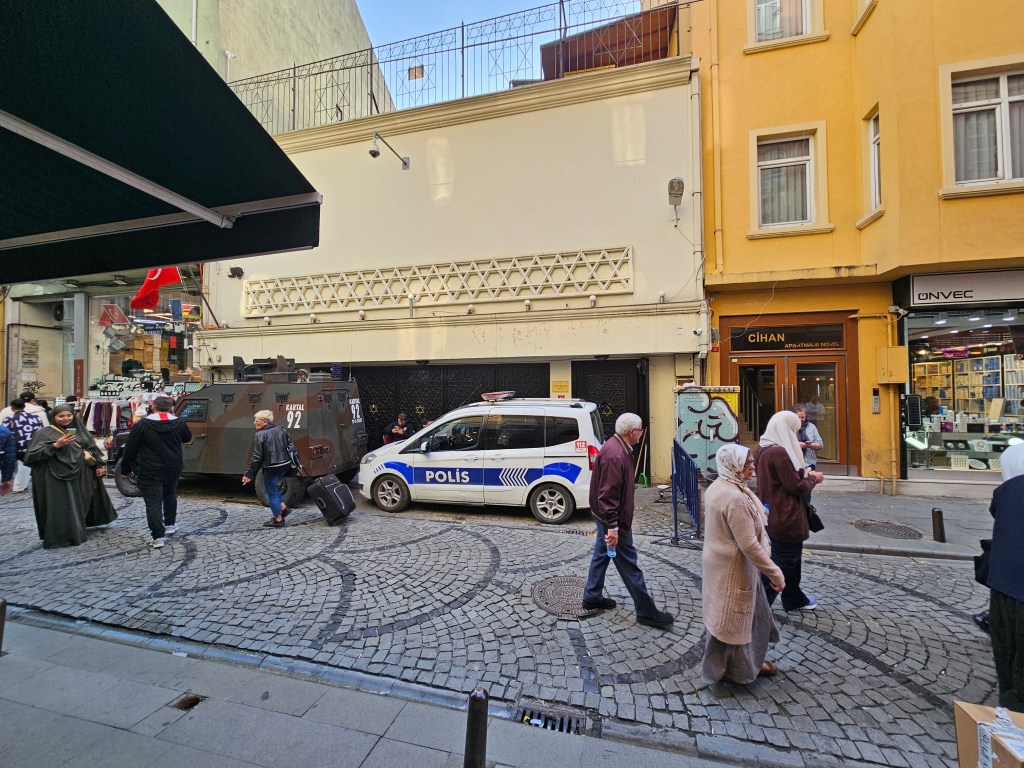
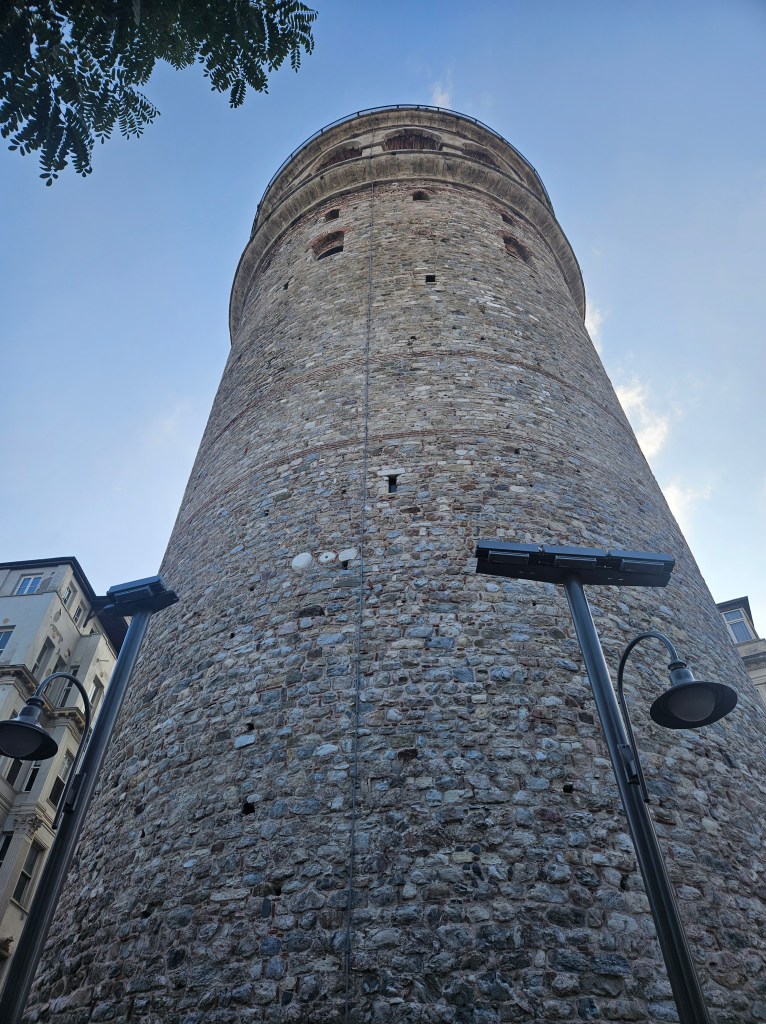
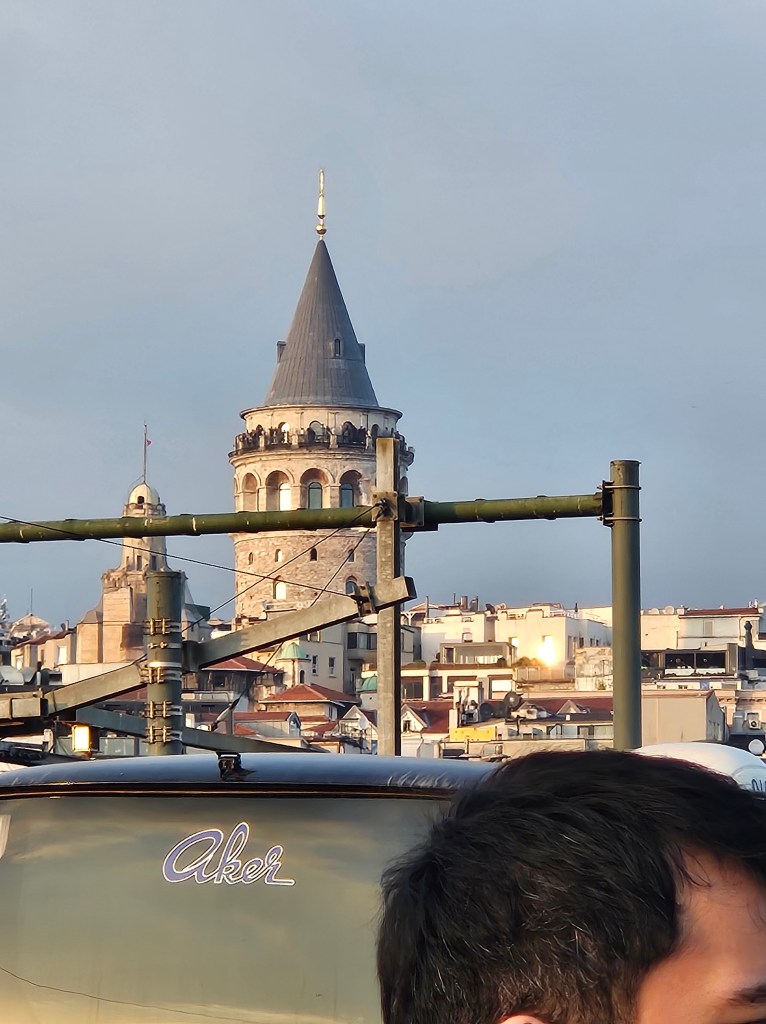
We checked out (but did not enter) the synagogue, which had pretty intense security. We then made our way to the Galata Tower.
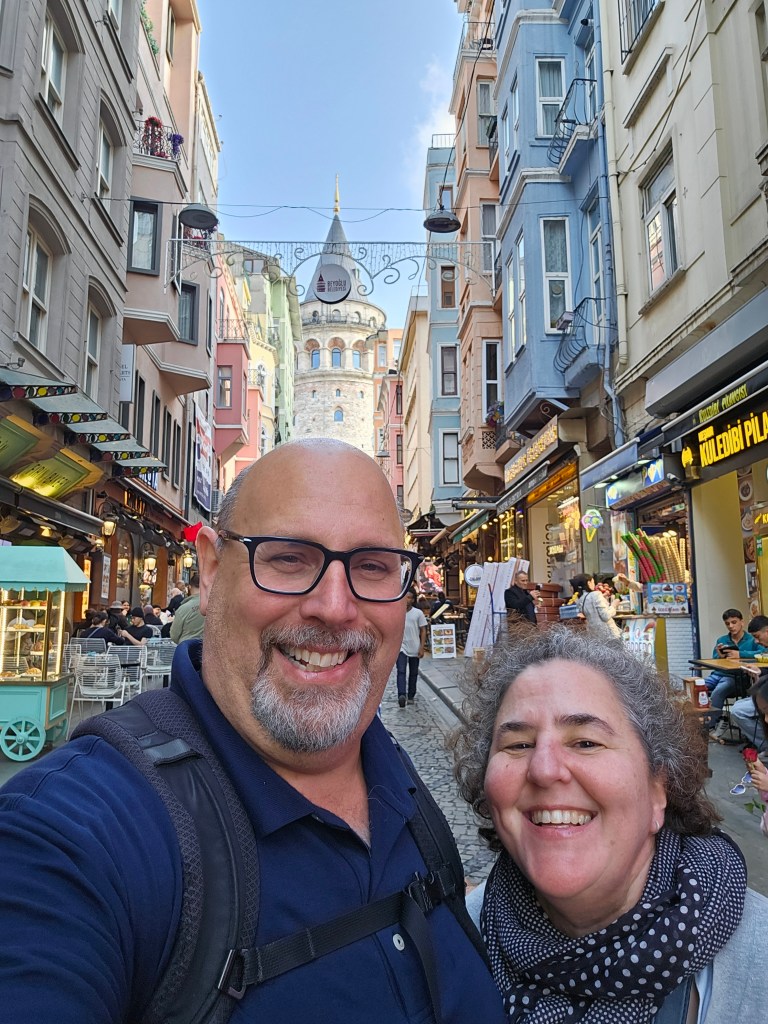
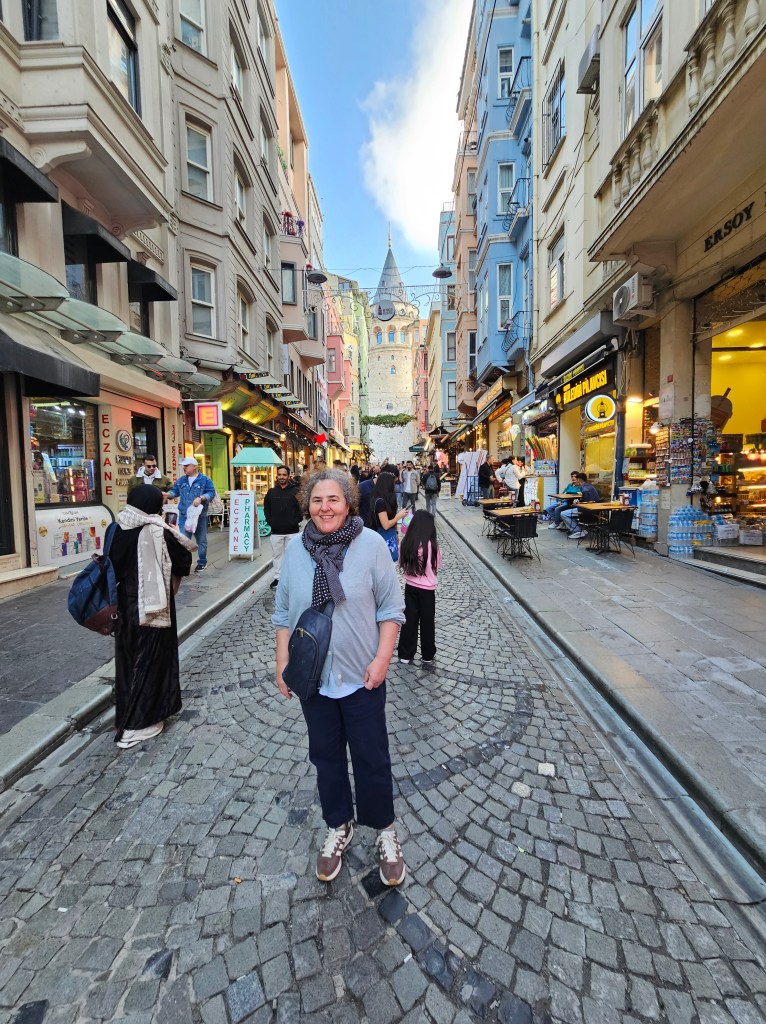
The tower was built when the neighborhood was a Genovese colony in 1384, and later served a variety of purposes including watchtower and prison. In 2020, the tower was restored and opened as a museum. Visitors take an elevator to the 6th floor and then walk up the two final flights.
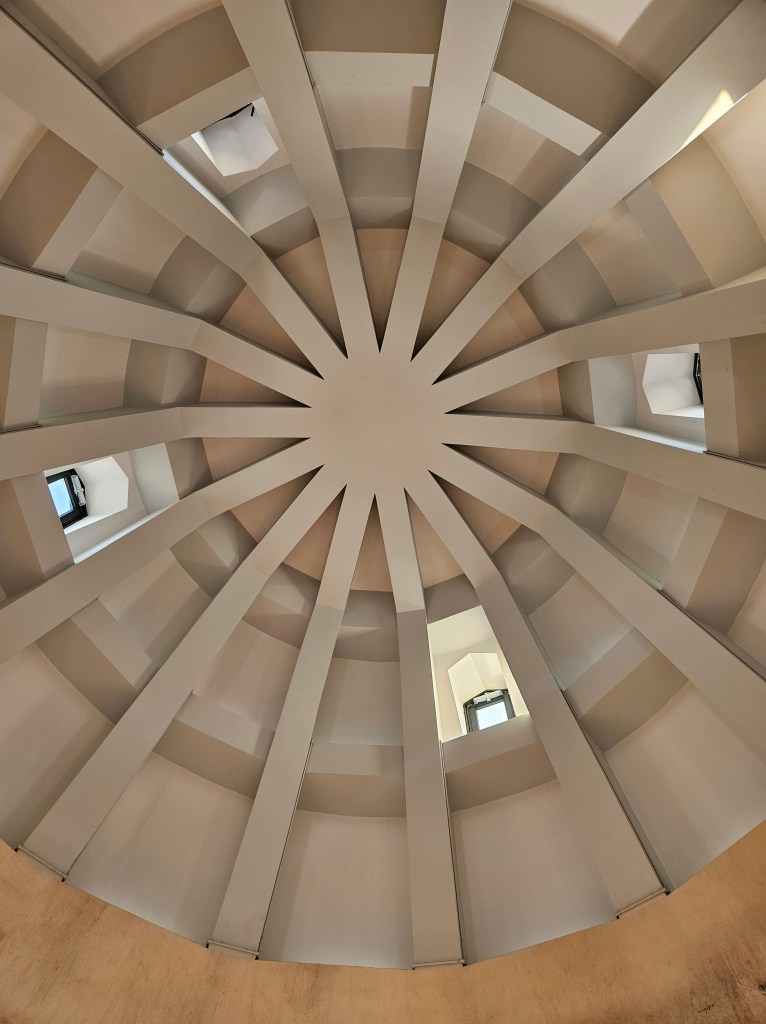
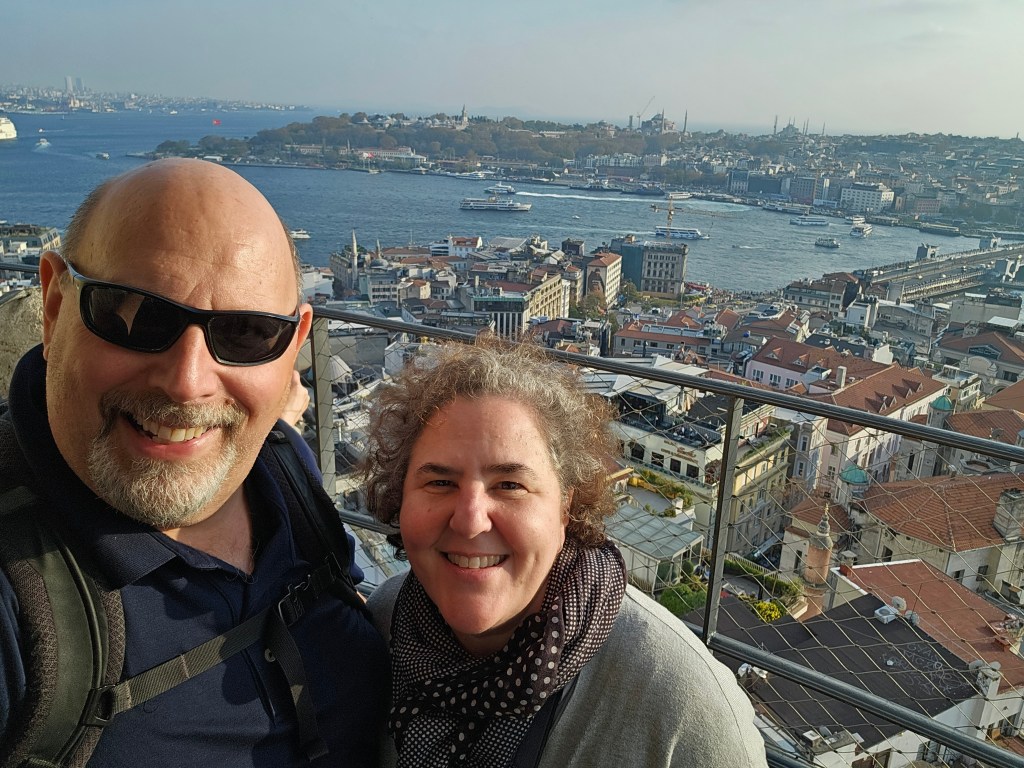
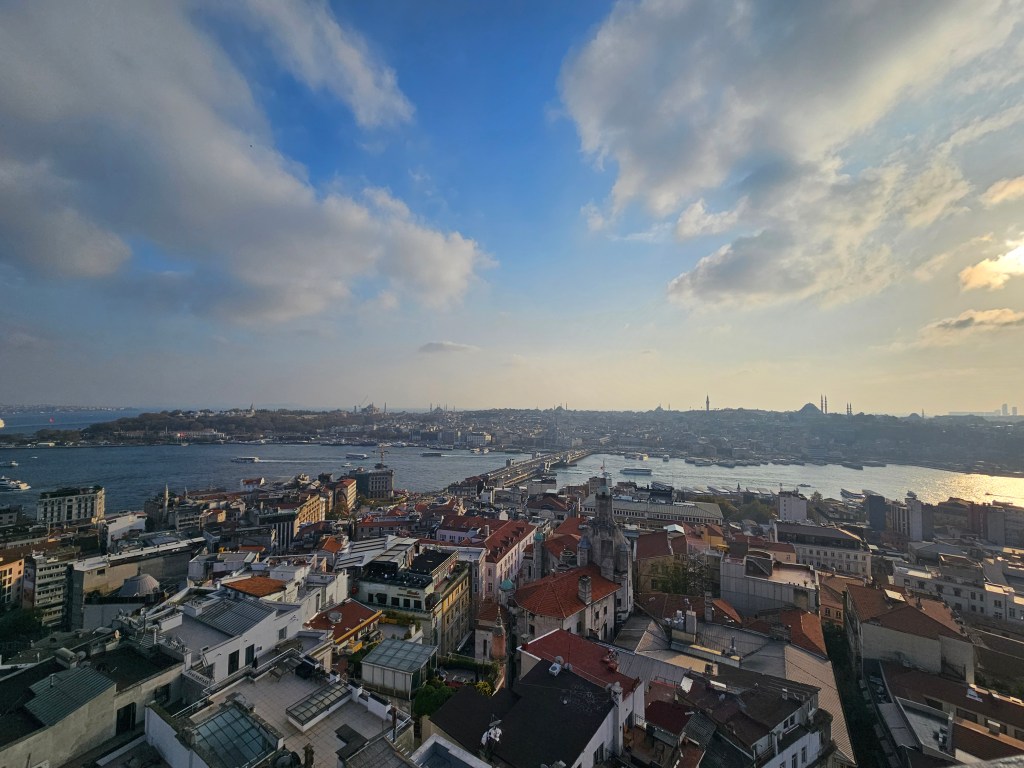
The views of the city were amazing, especially as the skies were clear.
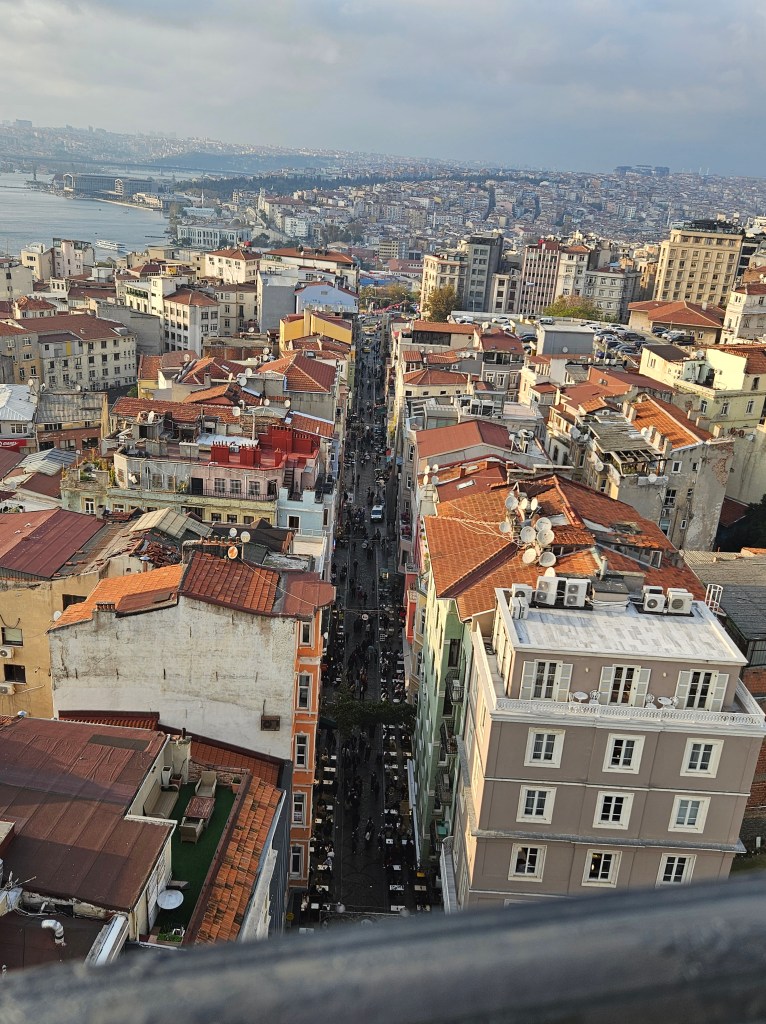
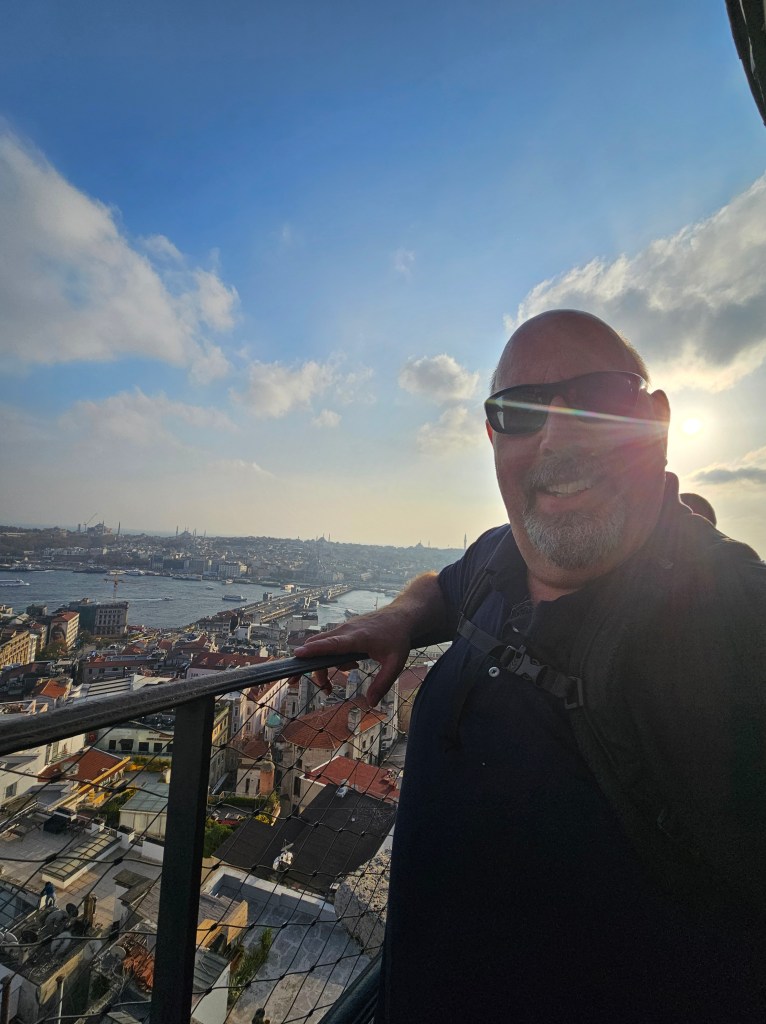
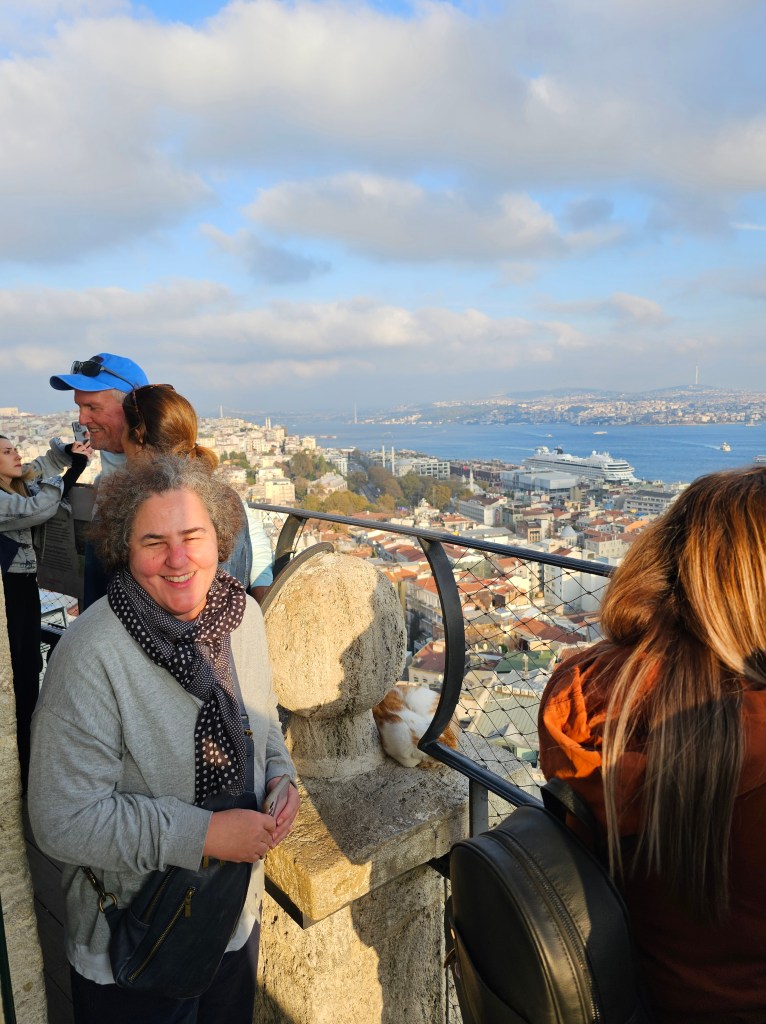
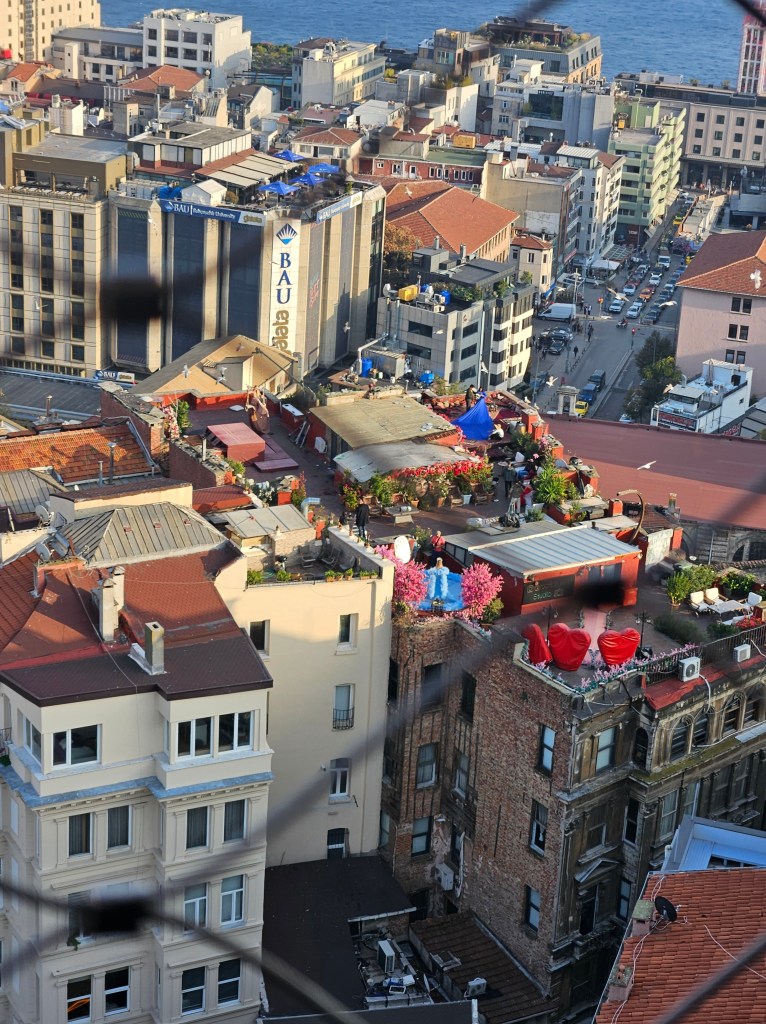
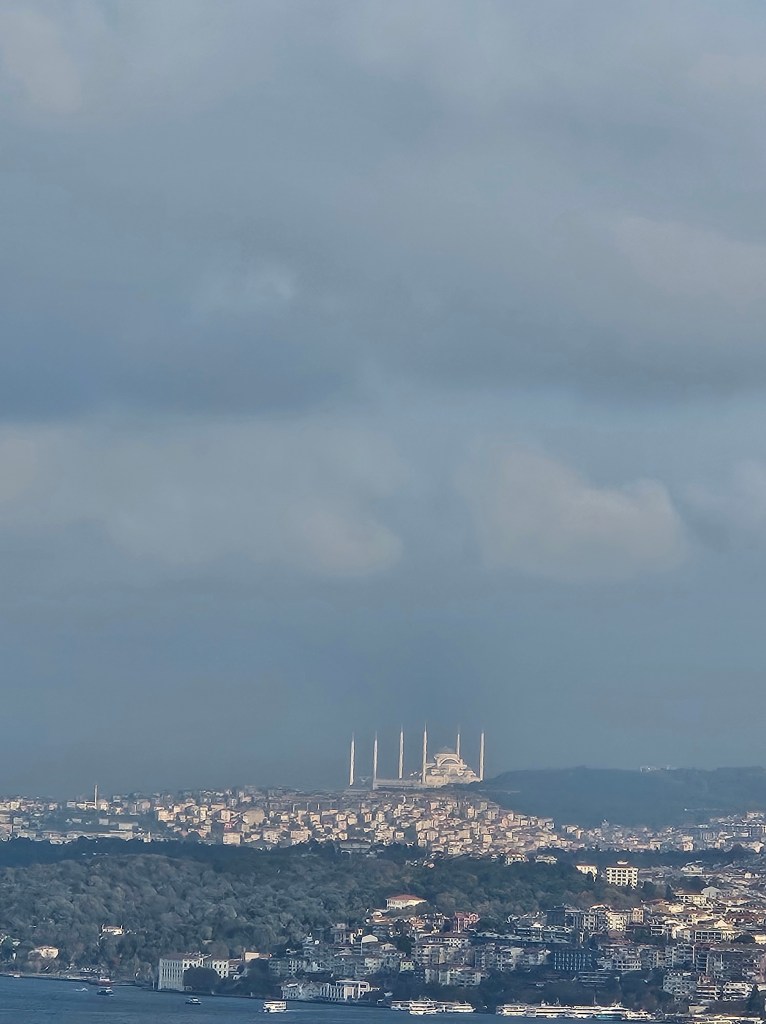
A few funny things we spotted. The rooftop with the big red hearts was hosting multiple photoshoots. The cat on the post here was making Emily very nervous. (We saw it later and it was fine.) Looking at the building with the black roof, we saw quite an adventure as the people on the roof were locked out of the entrance back inside; one of them had to climb over the roof to try to open a door. When they made it in, we all cheered, which they seemed to appreciate.
Visitors take the stairs all the way down. There are exhibits on each floor. This chain is a segment of the chain that once went across the waters of the Golden Horn to keep out invaders, a secondary security measure to the walls of the city.
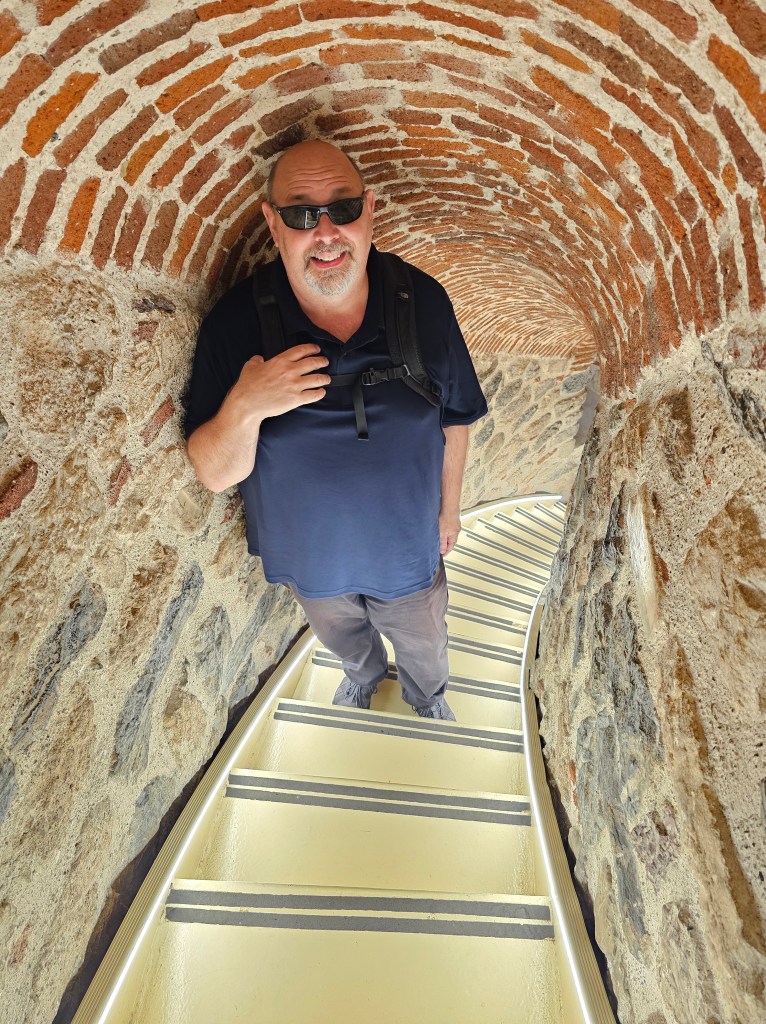

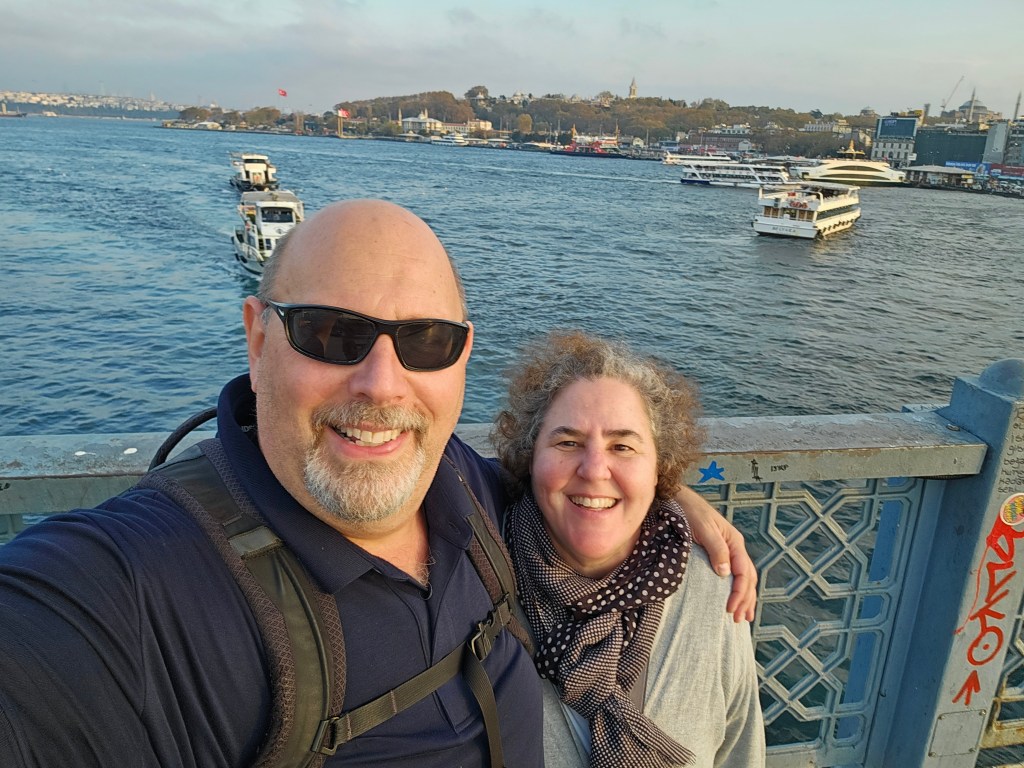
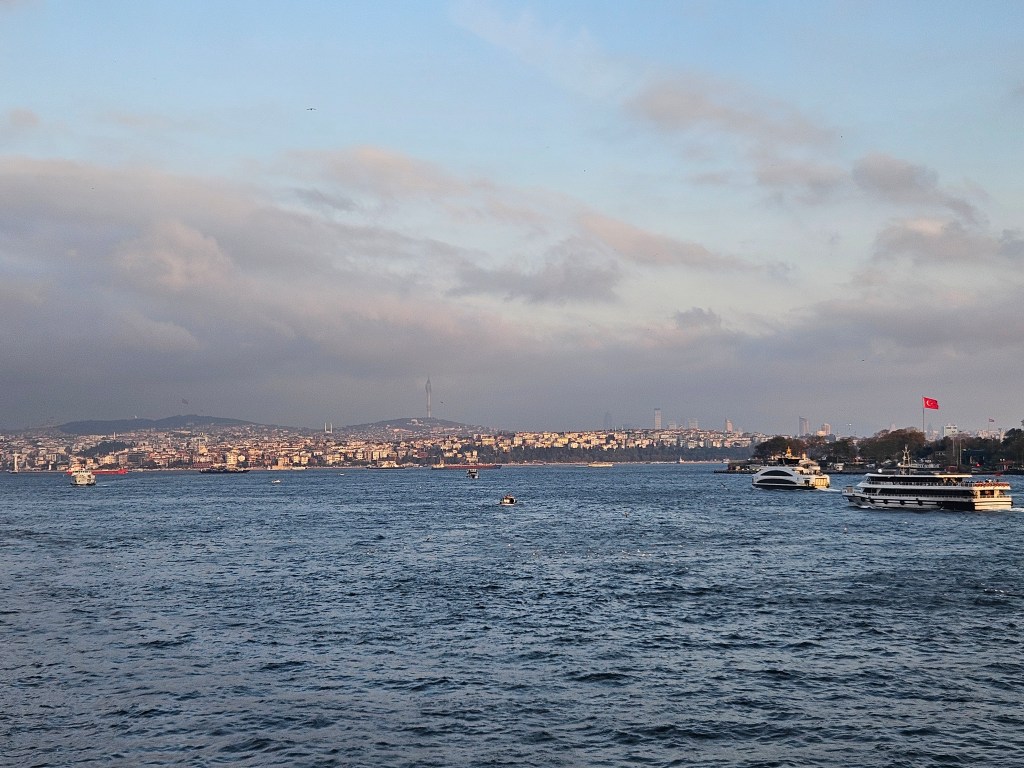
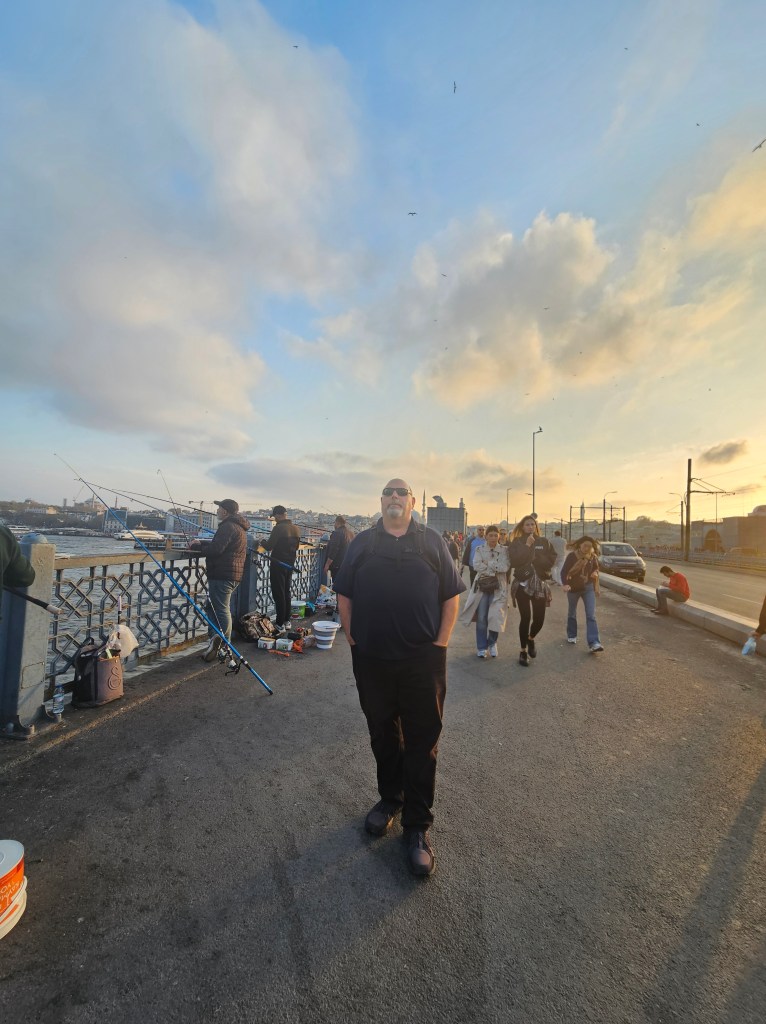
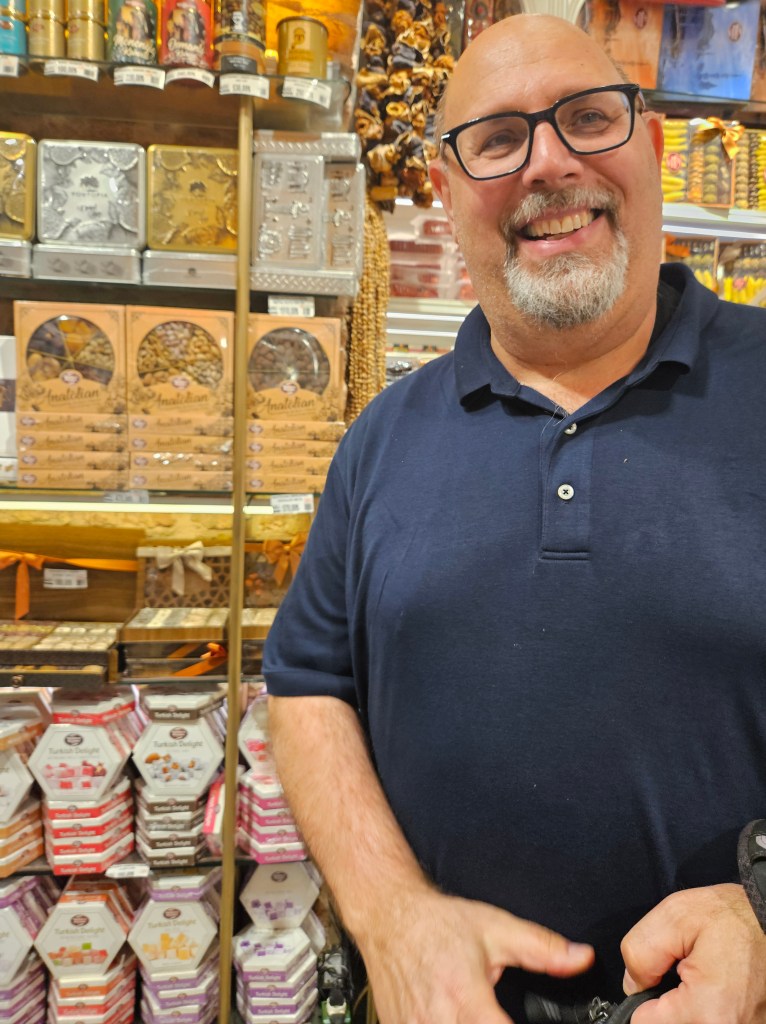
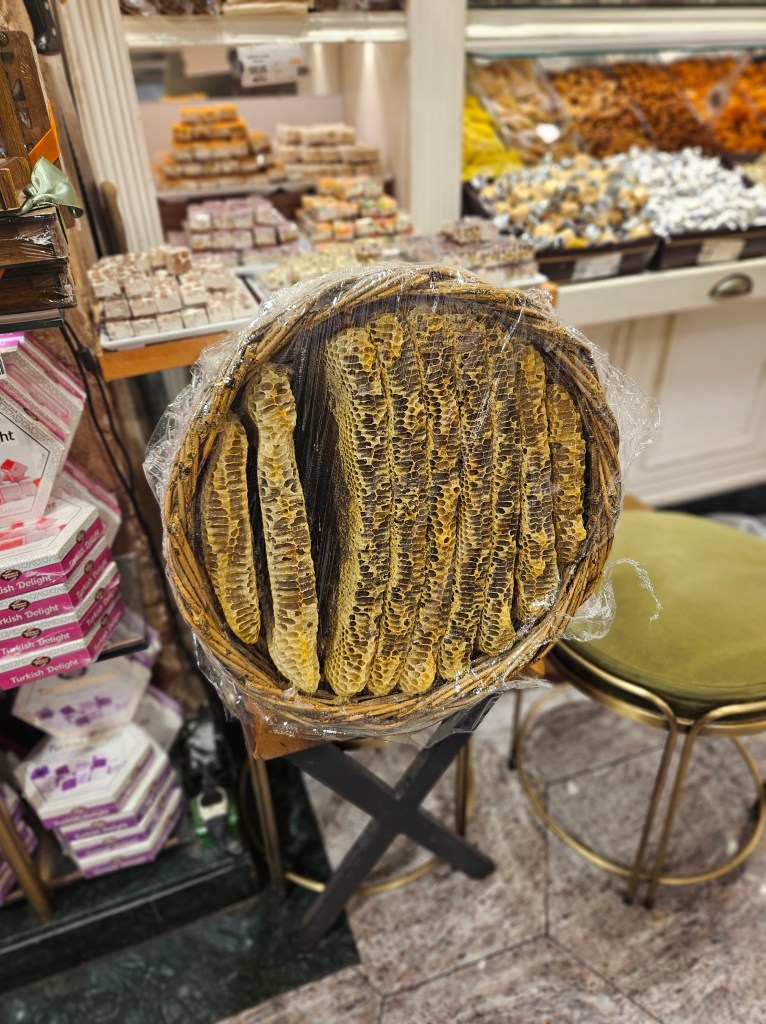
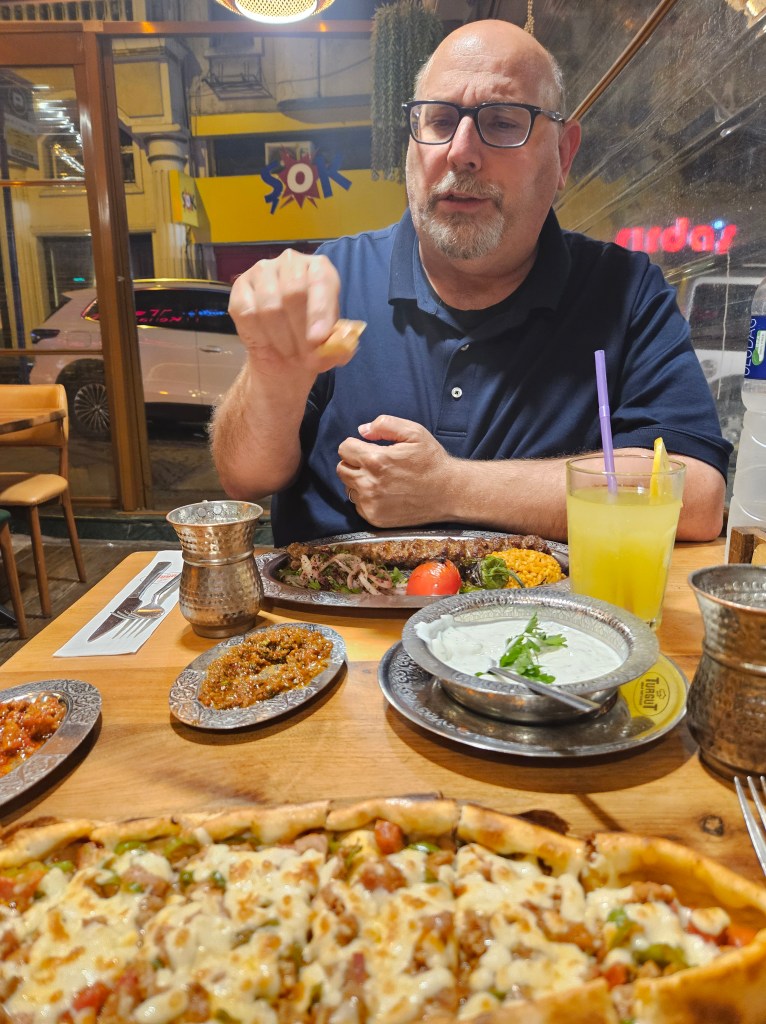
We then walked across the Galata Bridge back to our neighborhood of Eminönü. Along the way, we stopped at the Spice Market for dried fruit and nuts. Russell was starting to feel under the weather, but nuts and fruit are his happy place. For dinner, as we were finally hungry again, more delicious Turkish food!
 Emily and Russell's Travel Blog