On Thursday, we had arranged for a private tour of the Jewish Quarter of Prague. We found it edifying, depressing, and hopeful.
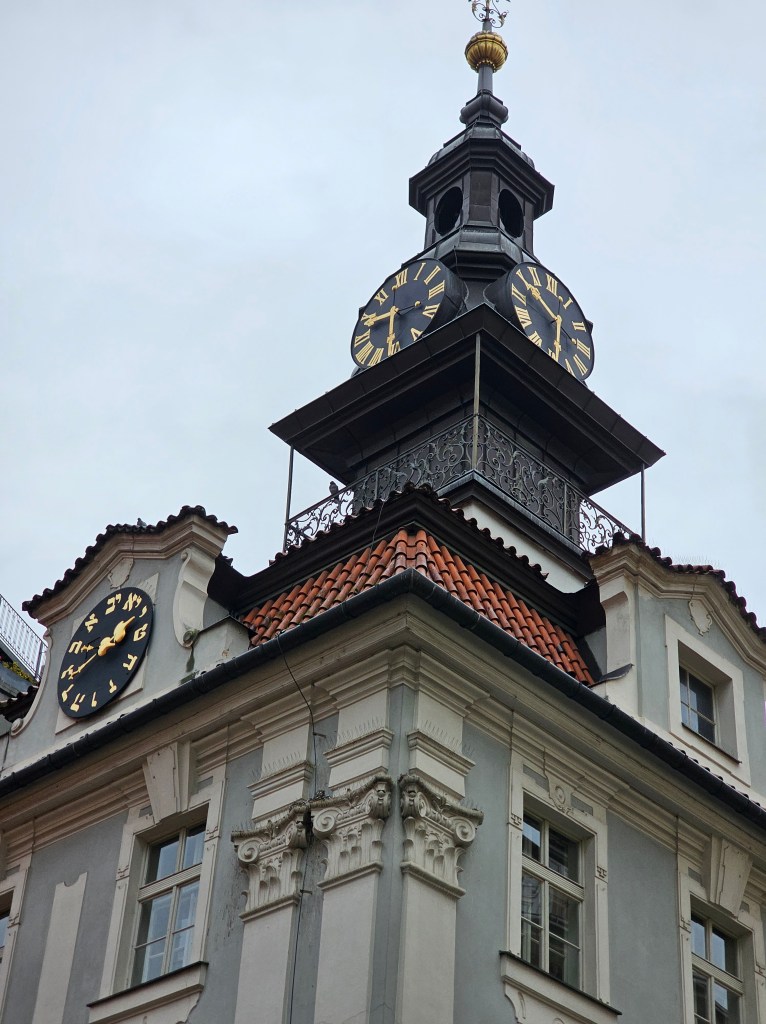
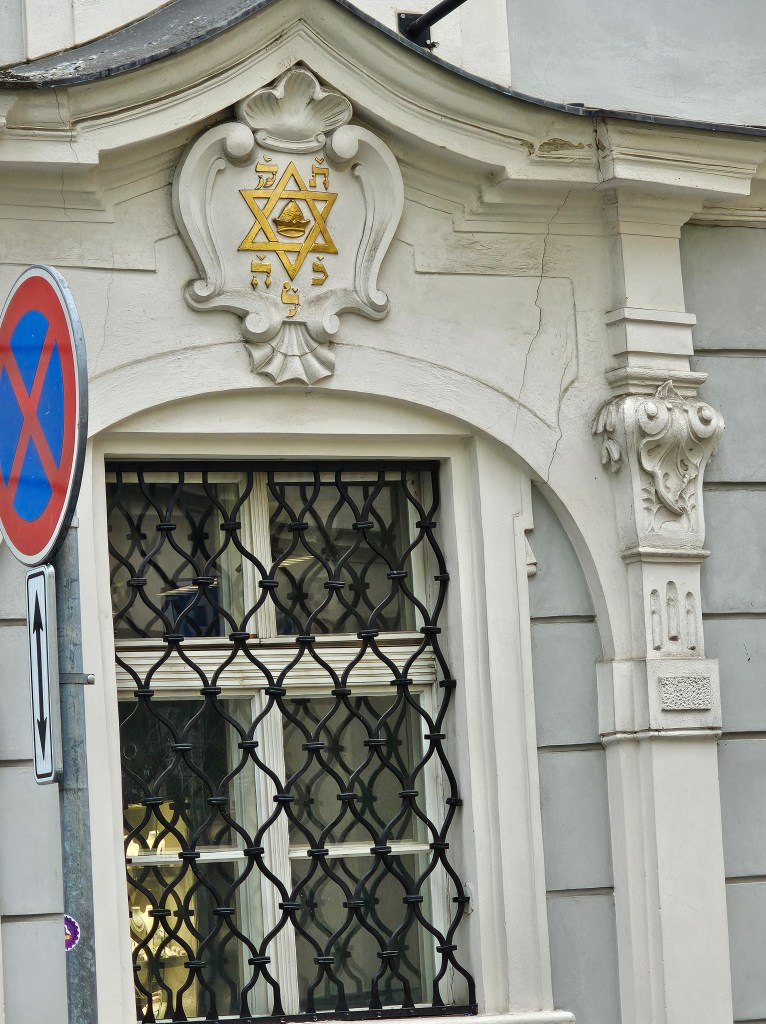
At the start of the tour, we heard the clocks of the High Synogogue, with Roman and Hebrew numerals strike, 9am. We learned that the Jewish population dated back to the 10th century traders who settled by the river. By the 13th century, the community was restricted to a defined ghetto. The yellow hat that Jewish men were obligated to wear symolizes the Jewish community and eventually became a symbol of pride; you can see a representation inside the Magen David below. This building is an active shul and is open for regular services.
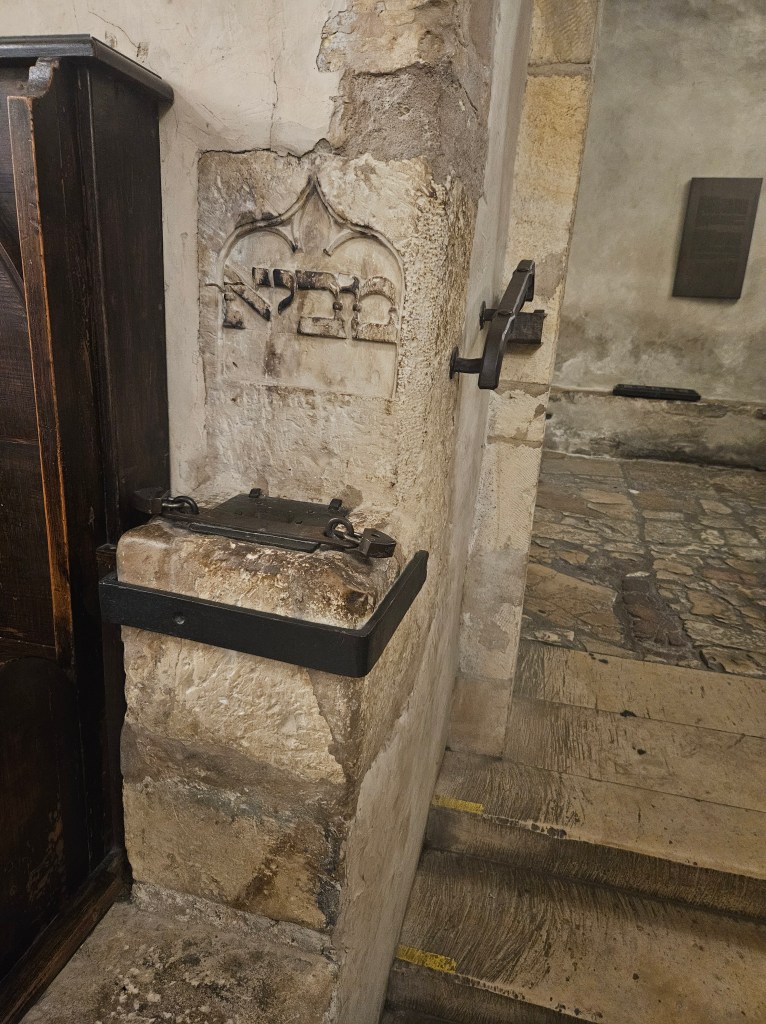
We went into the Altneuschul (Old New Synogogue), which dates to the 13th century and is still in use. It was designed by a monk who had built a nearby chapel that the Jewish leaders admired. When the synagogue was built, the Jewish leaders saw that the intersecting gothic arches formed a cross, so they had ornamental arches added lest there be any confusion. Legend has it that a golem lives in its attic.
Over the centuries, though the community thrived especially as traders, kings and queens subjected the Jews to a variety of restrictions, banishments, and heavy taxes, notably in the 18th century under Maria Theresa, sometimes repealed and reworked.

We continued to walk through the area that was the ghetto. While many of the shuls and main buildings survive, homes were destroyed in the late 19th century to make way for the striking art nouveau style apartment blocks. Currently, many high-end stores like Prada and Gucci have shops in the district. They are largely devoid of shoppers, as it was mostly Russians who had frequented these, and sanctions prevent them from spending money in Czechia. (Side note, while Czechia is the name preferred by the government, everyone we met referred to the country as the Czech Republic. Indeed our tour guide seemed perplexed by our uses of the new name.)
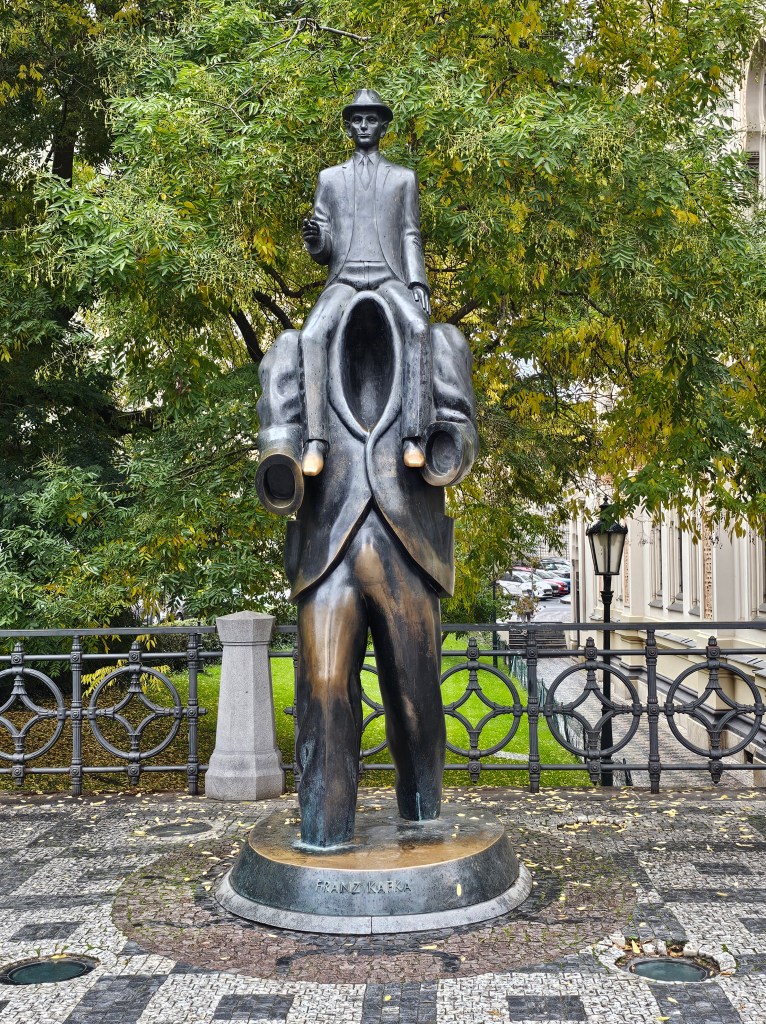
Here is a statue of one of Prague’s most famous Jewish residents, depicting Kafka as the insurance employee that was his day job and his preferred role of writer.
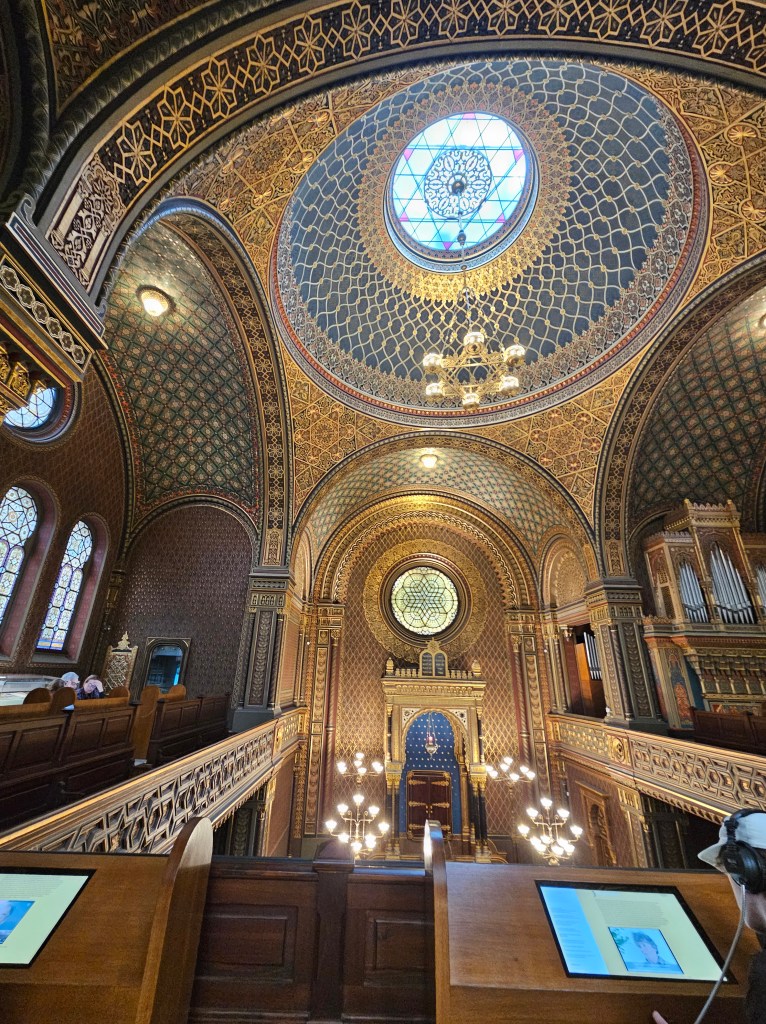
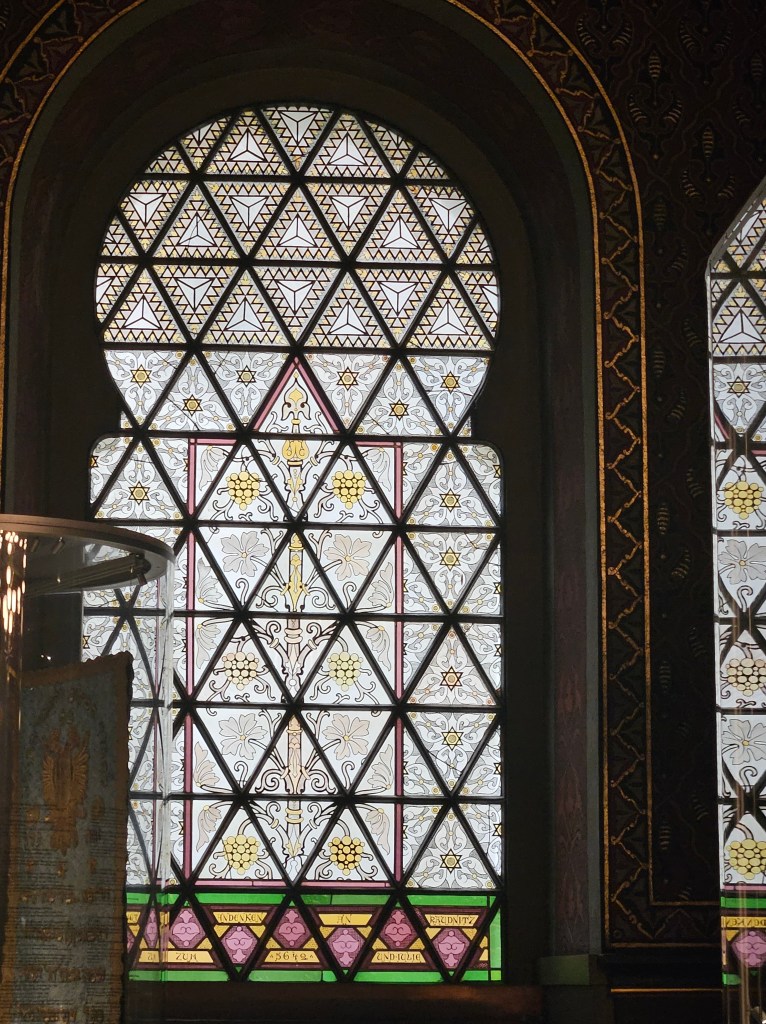
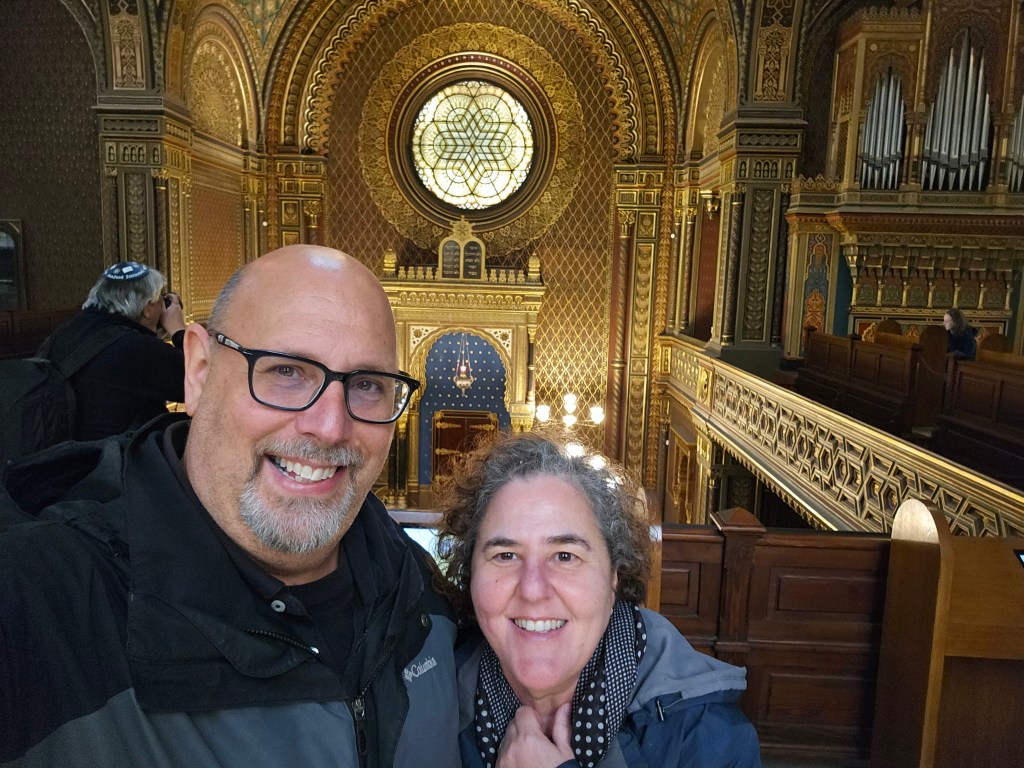
The ghetto restrictions were lifted in the mid-1800’s, and the Jewish community thrived. A new shul was built on the site of the former Old Old Synogogue. This one was designed to echo buildings in Spain which combined elements of Jewish, Islamic, and Christian traditions. The feel of the shul is closer to Conservative and Reform. A favorite detail: hamentaschen stained glass windows.
While the building is now a museum, it is rented out for weddings and events. An additional building, the Winter Shul, was built as an attachment in 1935, as a smaller, warmer sanctuary. The irony in the year is obvious. After the war, it was used to house Jewish children who had been hidden by Czech families, while their relatives were sought out.
Our guide told us about Jewish life in the 70s and 80s, with a movement among Jews to reclaim traditions while being closely surveiled by the state. The newer Jewish cemetery (not the one seen below) was the best meeting place for the community. She said that now, Prague and the Czech governments are very welcoming to the 2,000 Jews living there. We saw kosher restaurants and hotels that serve both residents and visitors.
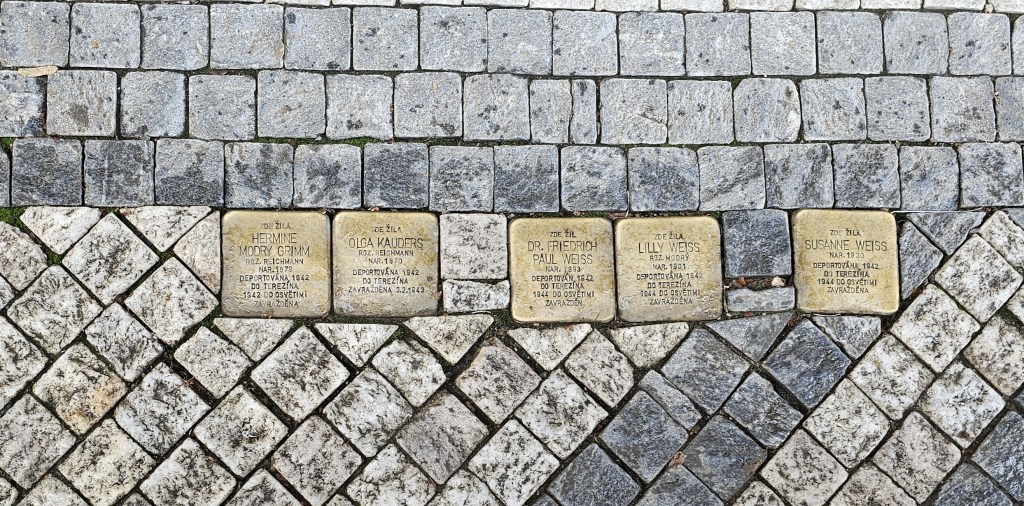
As we walked on the street, we saw brass cobble stones marking the former residences of Jews who were murdered in the Shoah. Our tour guide encouraged us to look for similar stones all over Europe.
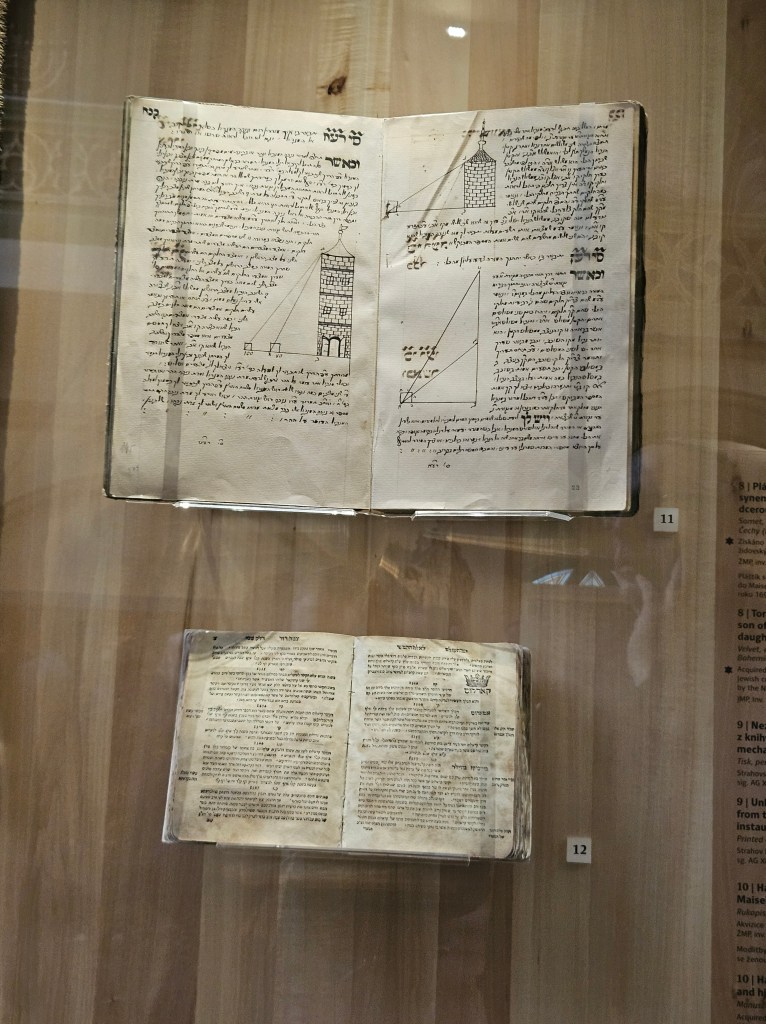
We next visited a shul, the Maisel Synagogue, that had been constructed in the 1500s for and by the wealthy Maisel family. It is also now a museum. Like all of the buildings we entered, this one is administered by the Jewish Museum of Prague. The exhibit included a book with the building plan. Russell enjoyed the trigonometry.
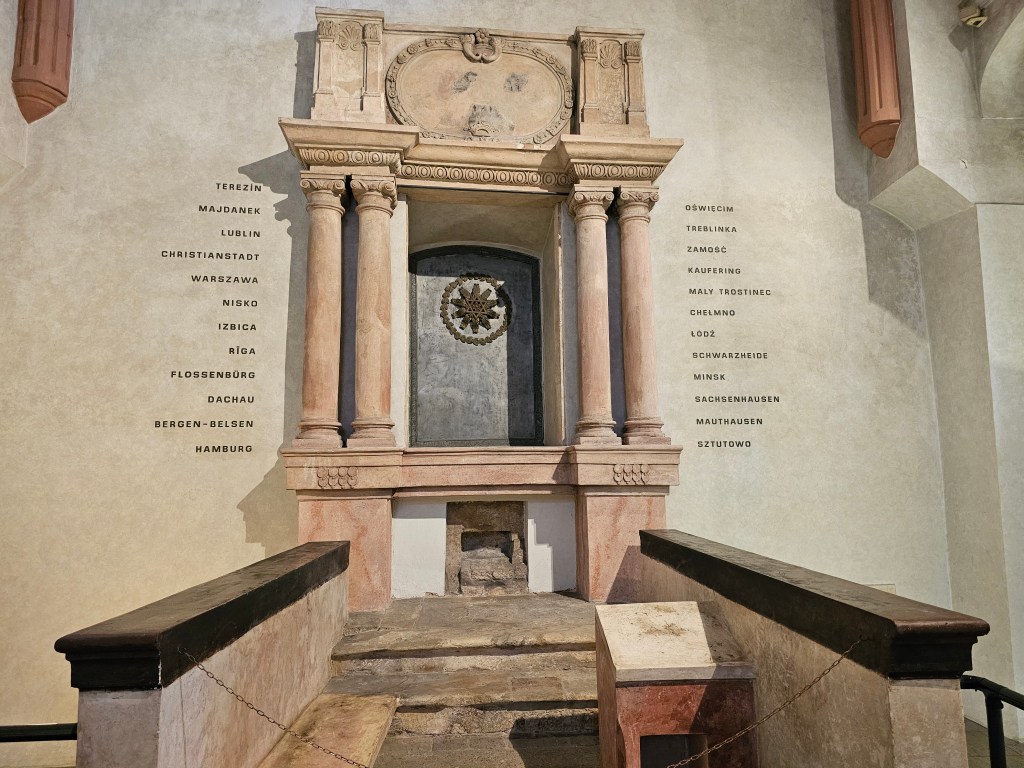
Finally, we visited the Pinkas Synagogue, which was built by the wealthy Horowitz in the 16th century. It is now a memorial to the Czech victims of the Shoah. The names of 77,297 perished are written on the walls in red and black. We didn’t take a picture. The ark is surrounded by the names of death camps. A solemn place.
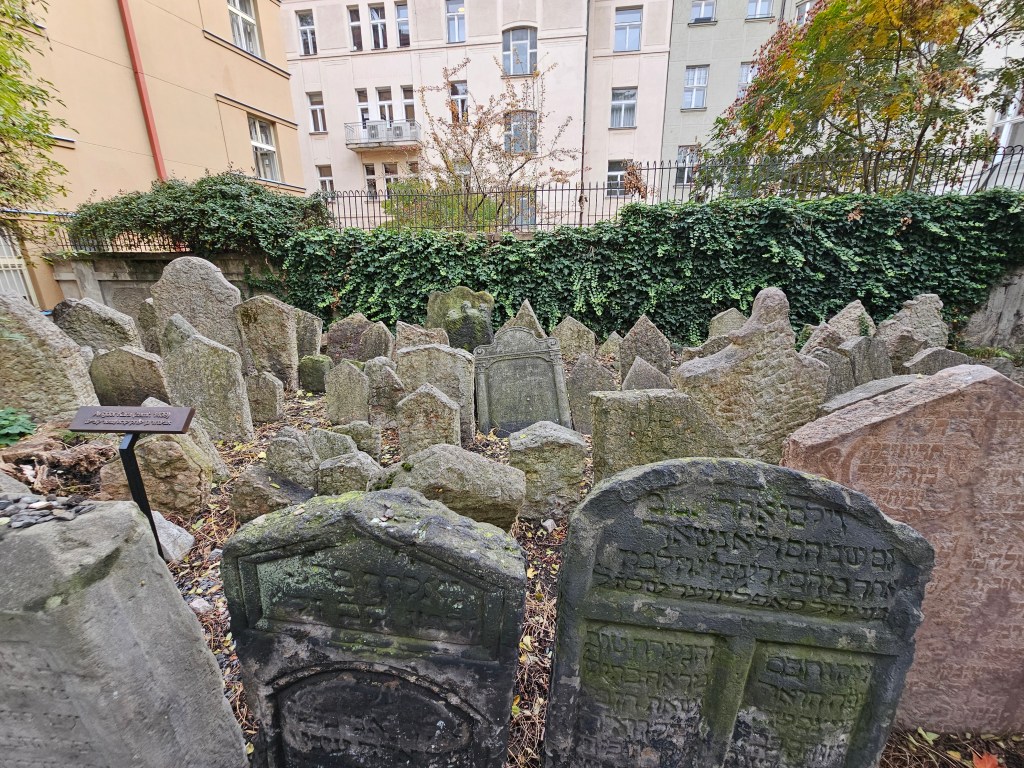
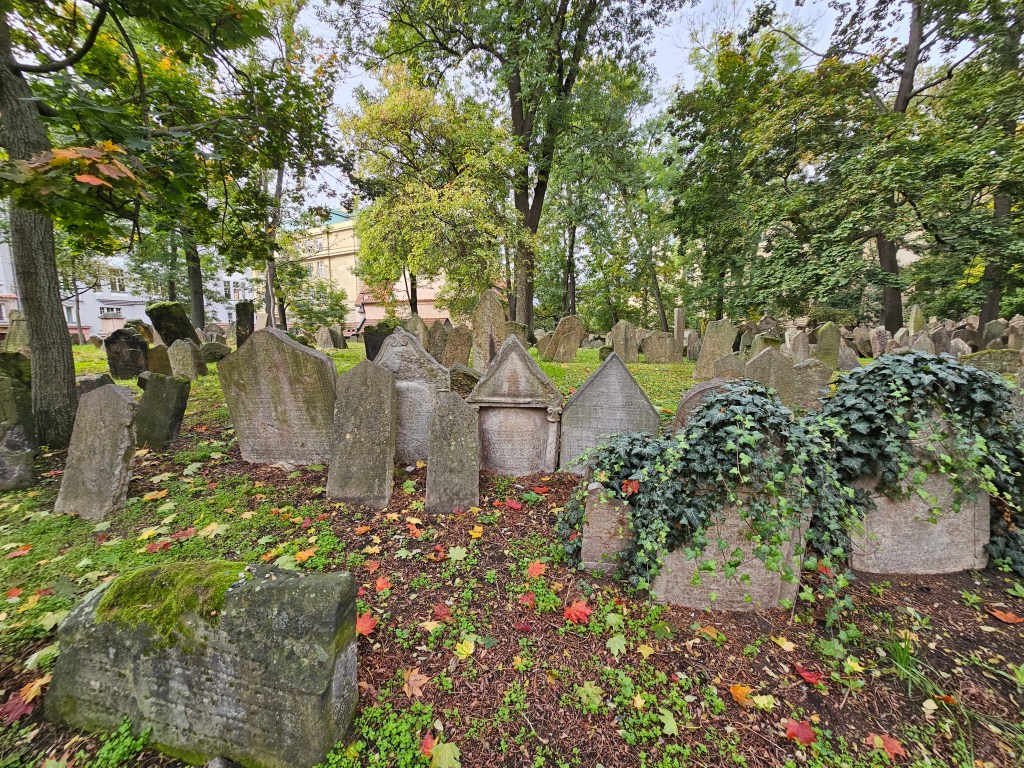
Finally, we visited the old Jewish cemetery. With very little land available to the Jews, they managed by burying in layers. When they ran out of room, they put in another layer, as many as 12 deep, and then enough earth added to remain halachalically correct. The tombstones are all akimbo, some very easy to read, others worn away by the years.
The tour was the rollercoster of Jewish European experience; rejection, acceptance, assimilation, thriving, expulsion, death, and rebuilding. It was an emotional experience. We left reminded of what the Jewish people have been through, how sad it is that we are so divided now, and yet, hopeful for the future as we always manage to survive. Am Yisrael chai.


One response to “A Walk in the Ghetto”
[…] A Walk in the Ghetto […]
LikeLike